Konda Venkatappayya
Congress leader of Guntur, known as Deshabhakta. He started the Krishna Patrika in 1902, led the movement for a separate Andhra province after 1910, and resigned from the Madras Legislative Council during non-cooperation. He headed the Guntur no-tax campaign of 1922 and was the Andhra 'dictator' of the salt satyagraha of 1930.
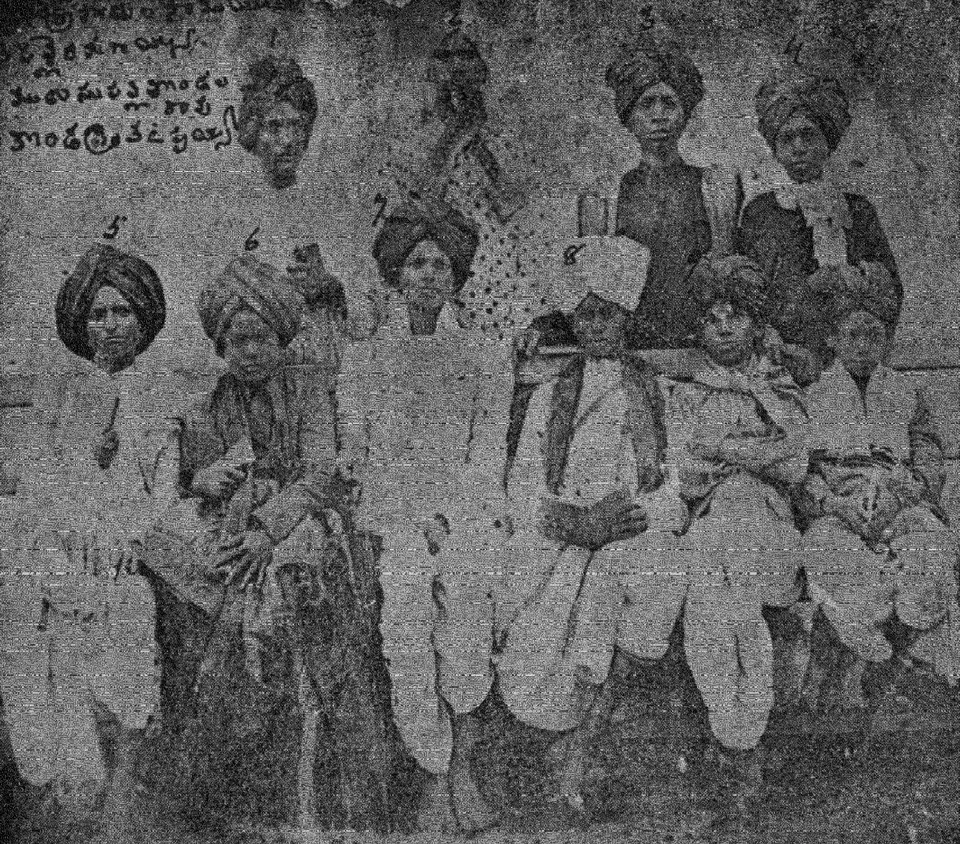
Konda Venkatappayya was a Congress leader of Guntur.1 He worked for a separate Andhra province, and led the Guntur no-tax campaign of 1922.21 In the salt satyagraha of 1930 he was the “dictator” (leader in charge) for the whole Andhra province.3
Journalist and Swadeshi leader
According to Sarojini Regani’s history of the freedom movement, Konda Venkatappayya started the Krishna Patrika in 1902.4 It was edited by Mutnuri Krishna Rao.4 It soon took up political questions, such as the treatment of Indians in South Africa.4
During the Swadeshi movement that followed the partition of Bengal, he led the campaign in Guntur with Vinjamuri Bhavanachari.5 The Criminal Investigation Department counted him among the leaders taking an important part in it.5
The Andhra movement
Regani writes that after about 1910 the extremist leaders of the Swadeshi years had been jailed or had withdrawn.2 Leadership in the Telugu districts then passed to moderates such as Konda Venkatappayya and G. Keshav Pillai of Gooty.2 They worked to build public opinion for a separate Andhra province.2 From 1911 this demand drew support from every shade of political opinion.2
In 1918 he attended the All India Congress Committee at Bombay with other Andhra delegates.6 They backed Tilak’s amendment, which tied India’s war effort to the grant of Home Rule.6
Non-cooperation and the no-tax campaign
After the Jallianwala Bagh massacre of 1919, he undertook to raise the fund of the Guntur Bar Association for victims of repression in the Punjab.7 He at first opposed Gandhi’s call to boycott the new legislatures.8 As a disciplined Congressman, Regani says, he then accepted the decision and resigned his seat in the Madras Legislative Council on 28 September 1920.8 As secretary of the Andhra Provincial Congress Committee, he toured the districts to explain non-cooperation.8
Gandhi toured the Andhra country in his company after the Vijayawada meeting of 1921.9 Venkatappayya promoted the spinning and weaving of khaddar (handspun cloth) in Guntur.9
The government restricted his work. He was among those forbidden to make speeches under section 144.10 He was arrested at Guntur on 30 July 1921 after a student demonstration.10 He was released on 2 August, because the grounds were weak.10
Early in 1922 the Guntur District Congress Committee met at Ponnur under his leadership and that of Gollapudi Sitarama Sastri.1 It decided to launch a no-tax campaign across most of the district.1 He campaigned for it, and in Pedanandipadu firka the village officers resigned together.1
Gandhi then wrote asking him to suspend the campaign until a similar one had been tried at Bardoli.11 The Andhra leaders called it off.11
Simon Commission and salt satyagraha
In the mid-1920s Venkatappayya was among the Andhra leaders who held that dominion status (self-rule within the British Empire) was enough for India.12 In 1928 he appealed on behalf of the Andhra Provincial Congress Committee for a boycott of the Simon Commission.13 He was arrested and later released.13
After the Lahore Congress, Regani relates, he led the Andhra delegates to Gandhi.14 Gandhi told them that he depended on Gujarat, Bihar and Andhra for the success of his satyagraha.14
In the salt satyagraha of 1930, the Andhra Provincial Working Committee appointed him “dictator” for the whole province, with a dictator and a war council for each district.3 Salt brine carried from the coast near Vadarevu was boiled into salt at his house in Guntur.15 He was among the leaders arrested that year.15
In 1932 he was again served with an order forbidding him to call a conference for civil disobedience.16 His part in these campaigns is also told on the page Reform, freedom & people’s movements.
Footnotes
-
Regani, Highlights (1956), pp. 89–90 (archive.org (opens in a new tab)). ↩ ↩2 ↩3 ↩4 ↩5
-
Regani, Highlights (1956), p. 49 (archive.org (opens in a new tab)). ↩ ↩2 ↩3 ↩4 ↩5
-
Regani, Highlights (1956), p. 115 (archive.org (opens in a new tab)). ↩ ↩2
-
Sarojini Regani, Highlights of the Freedom Movement in Andhra Pradesh (1956), p. 20 (archive.org (opens in a new tab)). ↩ ↩2 ↩3
-
Regani, Highlights (1956), pp. 45, 47 (archive.org (opens in a new tab)). ↩ ↩2
-
Regani, Highlights (1956), p. 56 (archive.org (opens in a new tab)). ↩ ↩2
-
Regani, Highlights (1956), p. 65 (archive.org (opens in a new tab)). ↩
-
Regani, Highlights (1956), pp. 67–69 (archive.org (opens in a new tab)). ↩ ↩2 ↩3
-
Regani, Highlights (1956), pp. 72–73 (archive.org (opens in a new tab)). ↩ ↩2
-
Regani, Highlights (1956), pp. 81, 89 (archive.org (opens in a new tab)). ↩ ↩2 ↩3
-
Regani, Highlights (1956), p. 93 (archive.org (opens in a new tab)). ↩ ↩2
-
Regani, Highlights (1956), p. 103 (archive.org (opens in a new tab)). ↩
-
Regani, Highlights (1956), pp. 109–110 (archive.org (opens in a new tab)). ↩ ↩2
-
Regani, Highlights (1956), p. 113 (archive.org (opens in a new tab)). ↩ ↩2
-
Regani, Highlights (1956), pp. 117, 119 (archive.org (opens in a new tab)). ↩ ↩2
-
Regani, Highlights (1956), p. 130 (archive.org (opens in a new tab)). ↩
Photos
References
Notes (0)
Sources (1)
Spotted an error on this page? Tell us
Last updated: