P. V. Narasimha Rao
Political leader from Andhra Pradesh. He was a member of the state assembly from 1957 to 1977 and a minister from 1962. As Chief Minister from 1971 to 1973 he faced the agitation that followed the Supreme Court's Mulki judgment of October 1972, and on 17 January 1973 the Governor reported his resignation. President's rule followed the next day. He sat in the Lok Sabha from 1977 to 1997, held several Union ministries and became Prime Minister.
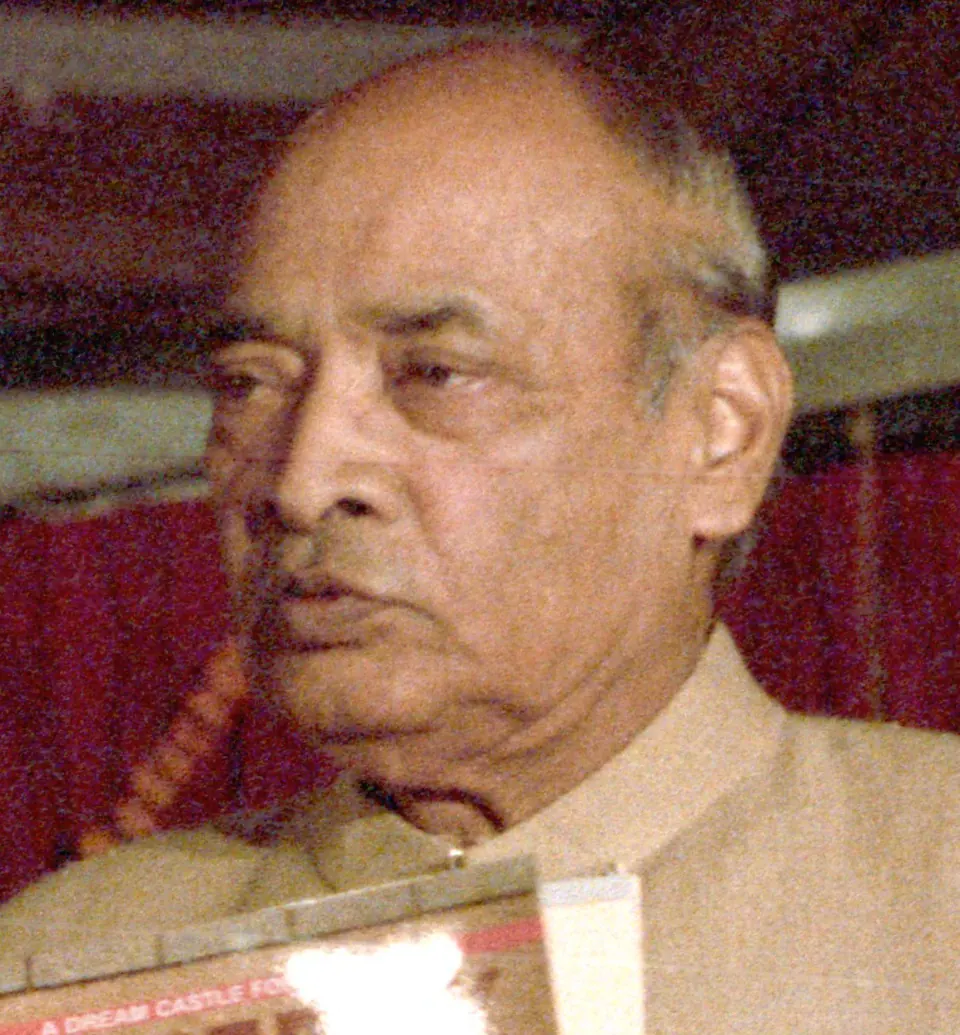
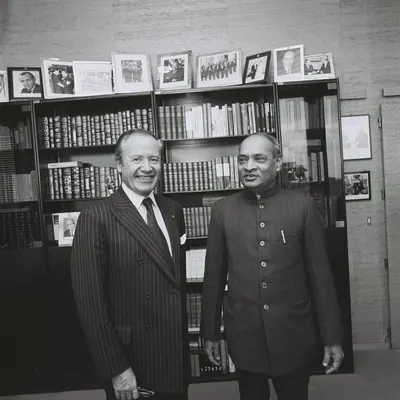
P. V. Narasimha Rao was a member of the Andhra Pradesh Legislative Assembly from 1957 to 1977.1 He was the state’s Chief Minister from 1971 to 1973, during the dispute over the Mulki rules.12 He later went into national politics and became Prime Minister of India.1
This page rests mainly on two official records.12 One is the Lok Sabha’s obituary reference (a tribute read in the House after a death) of February 2005.1 The other is a Home Ministry speech in the Lok Sabha in February 1973.2
In the state assembly and government, 1957–1971
According to the Lok Sabha’s obituary reference, he entered public life before independence and took part in the freedom struggle.1 In the state assembly he sat on the Public Accounts Committee from 1958 to 1960.1 He was a member of its Committee on Official Languages from 1958 to 1961.1
He then held these departments in the state government:1
- law and information, 1962–1964
- law and endowments (religious trusts), 1964–1967
- health and medicine, 1967
- education, 1968–19711
Chief Minister, 1971–1973
He became Chief Minister in 1971 and held the office until 1973.1 On 3 October 1972 the Supreme Court held that the Mulki rules were still in force in the Telangana area.3 These were the residence rules of the old Hyderabad State for government jobs.3
According to the Home Ministry, agitations then began in the Andhra region of the state.2 In some places there was violence, with loss of life and damage to public property.2 The leaders of the state could not agree among themselves.4
The Chief Minister and his colleagues then asked the Central Government to decide all matters about the Mulki rules.4 The Prime Minister announced the Centre’s decisions in the Lok Sabha on 27 November 1972.4 They are described on the page Andhra State & Andhra Pradesh.
The agitation soon grew again, mainly in the Andhra region.2 On 17 January 1973 the Governor reported that Narasimha Rao had resigned, with his council of ministers.2 The Governor found that no other party could form a government.2 On 18 January 1973 the President took over the government of the state (President’s rule).2
In national politics, 1977–1997
He was a member of the Lok Sabha from 1977 to 1997.1 He was elected from these constituencies:1
- Hanamkonda in Andhra Pradesh, in the Sixth and Seventh Lok Sabhas
- Ramtek in Maharashtra, in the Eighth and Ninth
- Nandyal in Andhra Pradesh, in the Tenth
- Berhampur in Orissa (now Odisha), in the Eleventh1
In 1978 he was chairman of the Lok Sabha’s Public Accounts Committee.1 He held these Union ministries:1
- external affairs, 1980–1984 and 1988–1989
- home affairs and planning, 1984
- defence, 1984–1985
- human resource development, 1985–1988
- health and family welfare, 1986–19881
After the assassination of Rajiv Gandhi, he was asked to lead the country as Prime Minister.1
Writer and translator
The obituary reference says that he knew many languages and wrote both prose and poetry.1 He translated the Telugu novel Veyi Padagalu into Hindi as Sahasr Phan.1 The title means “a thousand hoods”, and the novel had won the Jnanpith award.1
After he left politics he wrote a book called The Insider.1 He died at New Delhi on 23 December 2004, at the age of 83.1
Footnotes
-
Lok Sabha Debates, 25 February 2005, obituary references, PDF p. 1 (archive.org (opens in a new tab)). ↩ ↩2 ↩3 ↩4 ↩5 ↩6 ↩7 ↩8 ↩9 ↩10 ↩11 ↩12 ↩13 ↩14 ↩15 ↩16 ↩17 ↩18 ↩19 ↩20 ↩21 ↩22 ↩23
-
Lok Sabha Debates, 28 February 1973, statutory resolution on the Proclamation in relation to Andhra Pradesh, speech of the Minister of State for Home Affairs, cols. 230–233 (archive.org (opens in a new tab)). ↩ ↩2 ↩3 ↩4 ↩5 ↩6 ↩7 ↩8 ↩9
-
Lok Sabha Debates, 21 November 1972, calling attention on the Supreme Court judgment on the Mulki Rules, statement of the Minister of State for Home Affairs, cols. 199–201 (archive.org (opens in a new tab)). ↩ ↩2
-
Lok Sabha Debates, 27 November 1972, “Statement re. Mulki Rules” by the Prime Minister, cols. 248–249 (archive.org (opens in a new tab)). ↩ ↩2 ↩3
Photos
References
Notes (0)
Sources (4)
Spotted an error on this page? Tell us
Last updated: