Andhra State & Andhra Pradesh
The Telugu districts from 1953 to 2014: the Andhra State formed from Madras in 1953, Hyderabad State after its integration, the States Reorganisation Commission's case for and against Vishalandhra, the forming of Andhra Pradesh on 1 November 1956 with safeguards for Telangana, the disputes over those safeguards that led to the Six-Point Formula and Article 371D in 1973–74 (among them the Telangana agitation of 1969 and the agitation over the Mulki rules in 1972–73), the Srikrishna Committee of 2010, and the Andhra Pradesh Reorganisation Act of 2014.
Swipe sideways to see the whole chart; tap a bar for details.
Each bar is a ruling power in its region; time runs left to right. Dashed = approximate dates. Select a bar for details.
Show as a list
Mughals, Asaf Jahis & the British 1687–1948 CE
- Telangana
- Asaf Jahi Nizams of Hyderabad (1724–1948 CE) · British Crown (Madras Presidency) (1860–1947 CE)
- Coastal Andhra
- French East India Company (1817–1954 CE) · British Crown (Madras Presidency) (1858–1947 CE) · Madras State (1947–1953 CE)
- Rayalaseema
- Banganapalle State (c. 1724–1948 CE) · British Crown (Madras Presidency) (1858–1947 CE) · Madras State (1947–1953 CE)
- Movements
- Godavari hill risings (1879–1881 CE) · Vandemataram and Swadeshi (1905–1911 CE) · Non-cooperation (1920–1922 CE) · Salt satyagraha (1930 CE) · Hyderabad State Congress satyagraha (1938–1946 CE) · Andhra movement (c. 1911–1953 CE) · Andhra Jana Sangham and Andhra Mahasabha (1921–1946 CE) · Rampa rebellion (Alluri Sitarama Raju) (1922–1924 CE) · Quit India (1942 CE) · Telangana armed struggle (1946–1951 CE)
Reform, freedom & people's movements 1850–1956 CE
- Telangana
- Asaf Jahi Nizams of Hyderabad (1724–1948 CE) · British Crown (Madras Presidency) (1860–1947 CE) · Hyderabad State (Indian Union) (1948–1956 CE)
- Coastal Andhra
- French East India Company (1817–1954 CE) · British Crown (Madras Presidency) (1858–1947 CE) · Andhra State (1953–1956 CE) · Madras State (1947–1953 CE)
- Rayalaseema
- Banganapalle State (c. 1724–1948 CE) · Andhra State (1953–1956 CE) · British Crown (Madras Presidency) (1858–1947 CE) · Madras State (1947–1953 CE)
- Movements
- Godavari hill risings (1879–1881 CE) · Vandemataram and Swadeshi (1905–1911 CE) · Non-cooperation (1920–1922 CE) · Salt satyagraha (1930 CE) · Hyderabad State Congress satyagraha (1938–1946 CE) · Andhra movement (c. 1911–1953 CE) · Andhra Jana Sangham and Andhra Mahasabha (1921–1946 CE) · Rampa rebellion (Alluri Sitarama Raju) (1922–1924 CE) · Quit India (1942 CE) · Telangana armed struggle (1946–1951 CE)
Andhra State & Andhra Pradesh 1953–2014 CE
- Telangana
- Andhra Pradesh (united) (1956–2014 CE) · Hyderabad State (Indian Union) (1948–1956 CE)
- Coastal Andhra
- French East India Company (1817–1954 CE) · Andhra Pradesh (united) (1956–2014 CE) · Andhra State (1953–1956 CE)
- Rayalaseema
- Andhra State (1953–1956 CE) · Andhra Pradesh (united) (1956–2014 CE)
- Movements
- Telangana movement (c. 1969–1973 CE) · Jai Andhra movement (c. 1972–1973 CE)
Kingdoms and empires
Asaf Jahi Nizams of Hyderabad
Open page- Telangana: 1724–1948 CE (224 years)
Asaf Jah, viceroy of the Deccan from 1713, independent after defeating Mubariz Khan at Shakar Kheda (11 October 1724 in Irvine; 1723 in Gribble); Telangana remained the Telugu heart of the Nizam's Dominions, with the samasthans of Gadwal, Wanaparthy, Jatprole, Amarchinta and Palvancha as tributary estates. Regular districts were formed in 1865-66 and the Telugu divisions surveyed and settled by 1905; the districts were redrawn in 1905 and an Executive Council governed from November 1919. The Standstill Agreement with India was signed on 29 November 1947. Indian troops entered the state on 13 September 1948 (the Police Action); the Nizam ordered a ceasefire on 17 September, and a military governor took charge on 18 September
- Coastal Andhra: 1724–1753 CE (29 years)
The Nizam's governor at Rajahmundry collected the tribute of the coastal zamindars; Masulipatam granted to the French by Muzaffar Jang in 1750 and the lands of Nizampatnam and Kondavid by Salabat Jang in 1751; the four Circars of Mustafanagar, Ellore, Rajahmundry and Chicacole assigned to the French on 4 December 1753 to pay Bussy's army
- Rayalaseema: c. 1724–1800 CE (c. 76 years)
Nominal over much of the region (Kurnool and Cuddapah Nawabs, Maratha tribute, Morari Rao at Gooty, Haidar Ali from 1761); the Nizam gained Tipu Sultan's districts by the treaties of 1792 and 1799 and ceded them to the Company by the treaty of 12 October 1800 to pay the subsidiary force (the Ceded Districts)
- Coastal Andhra: 1759–1788 CE (29 years)
Guntur (Murtazanagar) stayed with the Nizam's brother Basalat Jang after the French were driven out; it was excluded from the cessions of 1766 and 1768, rented by the Company in 1779 and restored, and handed over to the Company only in 1788; the Nizam's claims to the Circars' payments were bought out in 1823
Rulers (10)
Capitals
Monuments (11)
Inscriptions
Sources (16)
Indian states (1947 onward)
Andhra Pradesh (united)
- Telangana: 1956–2014 CE (58 years)
Formed on 1 November 1956; divided into Telangana and Andhra Pradesh in 2014
- Coastal Andhra: 1956–2014 CE (58 years)
Formed on 1 November 1956; divided into Telangana and Andhra Pradesh in 2014
- Rayalaseema: 1956–2014 CE (58 years)
Formed on 1 November 1956; divided into Telangana and Andhra Pradesh in 2014
Sources (4)
Colonial powers
British Crown (Madras Presidency)
Open page- Coastal Andhra: 1858–1947 CE (89 years)
The East India Company's government passed to the Crown by Act of Parliament of 2 August 1858 (Maclean); the Queen's proclamation is dated 4 November (Maclean) and the transfer of the Company's territories 1 November 1858 (Sewell). Ruled through the Governor in Council at Madras, the Board of Revenue and district Collectors. Godavari and Kistna were formed in December 1859, Guntur in 1904 and West Godavari, from the old Kistna, in 1925; the hill tracts of Vizagapatam and Godavari were governed as Agencies under special laws (1839, 1879). Ended with independence in 1947
- Rayalaseema: 1858–1947 CE (89 years)
The Ceded Districts and the Carnatic districts passed to the Crown with the rest of the Company's territories in 1858. Kurnool was made a full Collectorate in 1858, Anantapur was separated from Bellary in 1882 and Chittoor was formed on 1 April 1911; the state of Banganapalle stayed under the Madras Government until the 1920s, when it was placed under an Agent to the Governor-General. Ended with independence in 1947
- Telangana: 1860–1947 CE (87 years)
Partial (the Bhadrachalam and Rekapalli taluks only): ceded by the Nizam by the treaty of 26 December 1860; administered until 1874 as part of the Upper Godavari district of the Central Provinces, then transferred to the Godavari district of Madras and made part of the Godavari Agency in 1879
Rulers (22)
- Lord Harris (1854–1859 CE)
- Sir Charles Trevelyan (1859–1860 CE)
- Sir Henry Ward (1860 CE)
- Sir William Denison (1861–1866 CE)
- Lord Napier (1866–1872 CE)
- Lord Hobart (1872–1875 CE)
… and 16 more
- Duke of Buckingham and Chandos (1875–1880 CE)
- W. P. Adam (1880–1881 CE)
- M. E. Grant Duff (1881–1886 CE)
- Robert Bourke (Lord Connemara) (1886–1890 CE)
- Lord Wenlock (1891–1896 CE)
- Sir Arthur Havelock (1896–1900 CE)
- Lord Ampthill (1900–1906 CE)
- Sir Arthur Lawley (1906–1911 CE)
- Sir Thomas Gibson-Carmichael (1911–1912 CE)
- Lord Pentland (1912–1919 CE)
- Lord Willingdon (1919–1924 CE)
- Viscount Goschen (1924–1929 CE)
- Sir George Stanley (1929–1934 CE)
- Lord Erskine (1934–1940 CE)
- Sir Arthur Hope (1940–1946 CE)
- Sir Archibald Nye (1946–1947 CE)
Sources (11)
Indian states (1947 onward)
Hyderabad State (Indian Union)
- Telangana: 1948–1956 CE (8 years)
Under Indian administration after the Police Action of September 1948: governed by a Military Governor, and from 1 December 1949 by a civil Chief Minister. It became a Part B State of the Indian Union when the Constitution came into force on 26 January 1950, with the Nizam as Rajpramukh; the first elected ministry took office after the elections of March 1952. Trifurcated on 1 November 1956, when its Telangana districts joined Andhra Pradesh
Sources (6)
Indian states (1947 onward)
Telangana
- Telangana: 2014–present (since 2014)
State of Telangana from 2014
Sources (1)
Colonial powers
French East India Company
Open page- Coastal Andhra: 1750–1759 CE (9 years)
Partial at first (Masulipatam and the island of Divi, seized in July 1750 under Muzaffar Jang's grant; Nizampatnam, Narsapur and Kondavid added by Salabat Jang in 1751-52); from December 1753 the four Northern Circars of Mustafanagar (Kondapalli), Ellore, Rajahmundry and Chicacole, granted for the pay of Bussy's army and settled by Bussy in person from July 1754. Forde routed the French at Condore (Chandurti) on 9 December 1758 and stormed Masulipatam on 7-8 April 1759; by the treaty of May 1759 Salabat Jang ceded the Masulipatam country to the English and excluded the French from the Deccan
- Coastal Andhra: c. 1765–1793 CE (c. 28 years)
Partial (Yanam only): the French factory town on the Godavari, ceded to them in 1752, reoccupied after the peace of 1763 (the restored possessions 'were not occupied before 1765'); the French possessions were also in English hands in 1778-83
- Coastal Andhra: 1817–1954 CE (137 years)
Partial (Yanam only): occupied by the English from 1793 (except 1802-03) and handed back in 1817 under the treaties of 1814-15; about 2,258 acres. The Government of India took over the French Establishments, Yanam among them, from 1 November 1954 after the agreement with France of 21 October 1954
Rulers
- Joseph François Dupleix (1750–1754 CE)
- Charles de Bussy (1754–1758 CE)
- Marquis de Conflans (1758–1759 CE)
Capitals
Sources (10)
Indian states (1947 onward)
Andhra State
- Coastal Andhra: 1953–1956 CE (3 years)
Formed on 1 October 1953 from the Telugu districts of Madras State, with its capital at Kurnool; merged into Andhra Pradesh on 1 November 1956
- Rayalaseema: 1953–1956 CE (3 years)
Formed on 1 October 1953 from the Telugu districts of Madras State, with its capital at Kurnool; merged into Andhra Pradesh on 1 November 1956
Sources (7)
Indian states (1947 onward)
Andhra Pradesh
- Coastal Andhra: 2014–present (since 2014)
Residuary state of Andhra Pradesh from 2014
- Rayalaseema: 2014–present (since 2014)
Residuary state of Andhra Pradesh from 2014
Sources (1)
Indian states (1947 onward)
Madras State
- Coastal Andhra: 1947–1953 CE (6 years)
The Telugu districts remained in Madras Province (Madras State from 1950) until Andhra State was formed in 1953
- Rayalaseema: 1947–1953 CE (6 years)
The Telugu districts remained in Madras Province (Madras State from 1950) until Andhra State was formed in 1953
Sources (2)
Kingdoms and empires
Banganapalle State
Open page- Rayalaseema: c. 1724–1948 CE (c. 224 years)
Partial (a nawabi enclave of about 255 square miles round Banganapalle in the Kurnool district). Muhammad Beg Khan, Mughal killedar of Banganapalle from the late seventeenth century, became a petty Nawab when Asaf Jah made himself independent, and Asaf Jah confirmed the jagir. Tipu Sultan occupied it from 1783 until the family, with the Nizam's troops, won it back at Tammadapalle in 1790. In 1800 the Nizam transferred his control to the East India Company, which took no tribute; the Madras government managed the indebted jagir from 1825 (1832 in the Imperial Gazetteer) to 1848 and restored it by the sanad of 1849. The ruler became a hereditary Nawab in 1876; the Madras government took over the administration on 23 February 1948
Rulers (10)
- Muhammad Beg Khan (c. 1724–1758 CE)
- Muhammad Beg Khan Laug (regent) (c. 1758–1766 CE)
- Fazl Ali Khan (Gulli Nawab) (c. 1766–1782 CE)
- Husain Ali Khan (c. 1782–1783 CE)
- Ghulam Ali Khan (Mansur-ud-daula) of Banganapalle (c. 1790–1821 CE)
- Husain Ali Khan II (c. 1821–1848 CE)
… and 4 more
- Ghulam Muhammad Ali Khan of Banganapalle (1848–1868 CE)
- Fateh Ali Khan, Nawab of Banganapalle (1868–1905 CE)
- Ghulam Ali Khan III (1905–1922 CE)
- Fazl-i-Ali Khan (1922–1948 CE)
Capitals
Sources (5)
Movements
Godavari hill risings
Open page- Coastal Andhra: 1858–1862 CE (4 years)
Subba Reddi's revolt near Yernagudem in 1858 and disturbances in the Rampa hills, 1858–1862
- Coastal Andhra: 1879–1881 CE (2 years)
The "Rampa rebellion" of 1879, put down in 1881 when its leader Chendrayya was killed
Sources (2)
Movements
Vandemataram and Swadeshi
Open page- Coastal Andhra: 1905–1911 CE (6 years)
Protests against the partition of Bengal; Bipin Chandra Pal's tour of the Telugu districts in April 1907
Sources (1)
Movements
Non-cooperation
Open page- Coastal Andhra: 1920–1922 CE (2 years)
Chirala–Perala (1921), the Palnadu forest satyagraha (1921) and the no-tax campaign of 1922 in Guntur district
Sources (1)
Movements
Salt satyagraha
Open page- Coastal Andhra: 1930 CE
Volunteers from district camps made salt on the coast at Machilipatnam, Chollangi, Mypadu, Vadarevu and elsewhere
Sources (1)
Movements
Hyderabad State Congress satyagraha
Open page- Telangana: 1938–1946 CE (8 years)
The Hyderabad State Congress, founded in 1938, was banned before its first meeting; its satyagraha began that year; the ban was lifted in 1946
Sources (1)
Movements
Telangana movement
Open page- Telangana: c. 1969–1973 CE (c. 4 years)
Agitation over the safeguards under way by January 1969 (all-party accord of 19 January; police firing at Godavarikhani on 31 January); statehood demanded at a convention of 8-9 March 1969; Prime Minister's statement of 11 April 1969 (Lok Sabha debates, 1969); Six-Point Formula of 21 September 1973
- Telangana: c. 2004–2014 CE (c. 10 years)
A "persistent demand" for a separate state acknowledged by the Home Ministry in the Lok Sabha on 13 July 2004 (its start is not dated in the sources used); the decision announced on 9 December 2009; the Srikrishna Committee, 2010; the Andhra Pradesh Reorganisation Act, 2014, in force from 2 June 2014
Sources (12)
Movements
Andhra movement
Open page- Coastal Andhra: c. 1911–1953 CE (c. 42 years)
The demand for a separate Andhra province, from about 1911; Potti Sriramulu's fast and death in 1952; Andhra State formed on 1 October 1953
- Rayalaseema: c. 1911–1953 CE (c. 42 years)
The demand for a separate Andhra province, from about 1911; Potti Sriramulu's fast and death in 1952; Andhra State formed on 1 October 1953
Sources (3)
Movements
Jai Andhra movement
Open page- Coastal Andhra: c. 1972–1973 CE (c. 1 year)
The agitation in the Andhra region against the Mulki rules, which official records date from 25 October 1972, after the Supreme Court judgment of 3 October 1972 (Lok Sabha debates, 1972-73); President's rule from 18 January 1973; settled for the time being by the Six-Point Formula of 21 September 1973 and the end of President's rule on 10 December 1973
- Rayalaseema: c. 1972–1973 CE (c. 1 year)
The agitation in the Andhra region against the Mulki rules, which official records date from 25 October 1972, after the Supreme Court judgment of 3 October 1972 (Lok Sabha debates, 1972-73); President's rule from 18 January 1973; settled for the time being by the Six-Point Formula of 21 September 1973 and the end of President's rule on 10 December 1973
Sources (6)
Movements
Andhra Jana Sangham and Andhra Mahasabha
Open page- Telangana: 1921–1946 CE (25 years)
Founded in Hyderabad in November 1921; became the Andhra Mahasabha at Jogipet in 1930; its nationalist wing merged into the Hyderabad State Congress in 1946
Sources (1)
Movements
Rampa rebellion (Alluri Sitarama Raju)
Open page- Coastal Andhra: 1922–1924 CE (2 years)
Alluri Sitarama Raju's rising in the Godavari and Vizagapatam agencies, from the raid on Chintapalli police station on 22 August 1922 to his capture and death on 7 May 1924
Sources (1)
Movements
Quit India
Open page- Coastal Andhra: 1942 CE
The "Kurnool circular"; risings at Tenali, Chirala and Bhimavaram in August 1942
Sources (2)
Movements
Telangana armed struggle
Open page- Telangana: 1946–1951 CE (5 years)
Intensified from October 1946 in Jangaon and Bhongir taluks (Regani); called off by the Communist Party in 1951 (police history)
Sources (2)
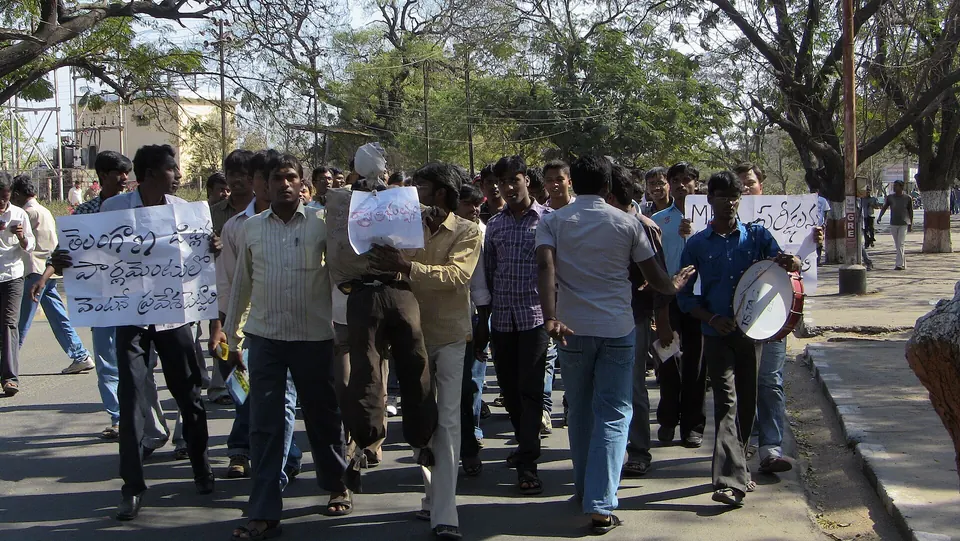
The Andhra State was inaugurated in 1953, with its government at Kurnool.1 In 1956 the Telangana districts of Hyderabad State were joined to it to form Andhra Pradesh, with Hyderabad city as the capital.2 An Act of 2014 divided the state again, into Telangana and Andhra Pradesh.3
This page follows the Telugu districts from 1953 to 2014.13 How the Andhra State came about is told on the page Reform, freedom & people’s movements.
About the sources. For the years after 1956, the project’s library holds mainly official documents. These are the report of the States Reorganisation Commission, a central committee’s report of 1969 on the safeguards given to Telangana, legislative debates, and the Act of 2014. They record decisions and the reasons given for them. But they say little about the economic and social history of the state. So this page deals mainly with political and constitutional change.
Two Telugu states, 1953–1956
The Andhra State was inaugurated on 1 October 1953.1 It was made up of the districts of Srikakulam, Visakhapatnam, East and West Godavari, Krishna, Guntur, Nellore, Kurnool, Anantapur, Kadapa (then Cuddapah) and Chittoor.1 Three taluks (sub-divisions of a district) of Bellary district were added. Its government sat at Kurnool.1
The Prime Minister made a statement on the new state in March 1953.4 It left Madras city out of the new state.4 It also promised a boundary commission later, for the borders with Madras and Mysore.4
According to the police history, the first years of the state were “more or less continually unsettled”.5 There were agitations over the site of the capital, the sharing of government waste lands (banjar), prohibition and the southern boundary.5 The communists organised occupations of banjar lands in Guntur district.5
After a vote of no confidence, the governor took over the administration on 15 November 1954.6 Mid-term elections followed early in 1955, in a tense atmosphere. The police history says this “attracted international interest”.6 Early in 1956, students in several towns demonstrated for Visalandhra, a single state of all Telugu areas. They wanted it formed at once.7
The Telangana districts were still part of Hyderabad State. In December 1949 its military government gave way to a civil chief minister, M. K. Vellodi.8 He brought four members of the Hyderabad State Congress into the administration.8 The first general elections were held in March 1952. After them, a ministry was formed under B. Ramakrishna Rao.8
In September 1952, students in Warangal began an agitation against the employment of non-mulkis (people not native to the state) in its services.9 It spread to Hyderabad and Secunderabad. There, police firing left eight people dead.9 A judicial inquiry found the firing justified.9
The States Reorganisation Commission, 1955
The States Reorganisation Commission reported in 1955. Its members were S. Fazl Ali, H. N. Kunzru and K. M. Panikkar.10 It had already recommended that two Kannada districts of Hyderabad State, Raichur and Gulbarga, go to a new Karnataka State.10 It found public feeling “overwhelming and insistent” for breaking up Hyderabad State by language.10
For the Telugu areas, the commission set out both sides of the argument.11 It listed these points in favour of Vishalandhra:11
- a state of about 32 million people, with large water, power and mineral resources
- unified control over the Krishna and Godavari projects
- Hyderabad as a ready-made capital, which would end Andhra’s search for one11
The commission also recorded the fears in Telangana:12
- Telangana’s settled revenues might be absorbed by Andhra, which was financially weaker
- its claims to the Krishna and Godavari waters might be overlooked
- its people, who were behind in education, might be “swamped and exploited by the more advanced people of the coastal area”12
Andhra leaders were ready to offer safeguards, such as a share of government jobs for Telangana.13 But the commission doubted that these would work without central supervision.13
The commission concluded that Telangana should, for the present, form a separate state called Hyderabad State.14 It could join Andhra after the general elections expected around 1961.14 For this, its legislature would have to vote for unification by a two-thirds majority.14 If public feeling in Telangana turned against unification, it would stay separate.14
The Andhra government had again claimed Madras city.15 The commission regarded that matter as settled.15
The Andhra Legislative Assembly debated the report at Kurnool on 25 November 1955.16 The Chief Minister, B. Gopala Reddi, moved the government’s motion.16 It asked the Government of India to join Telangana and Andhra at once, instead of waiting until 1961.16 It wanted Hyderabad to be the seat of the government and the High Court.16
The same motion offered Telangana these assurances:16
- its development would be treated as a special charge (duty) of the state
- it would have reserved places in government services and colleges, in proportion to its population
- its irrigation would be developed16
The formation of Andhra Pradesh, 1956
The government did not adopt the commission’s proposal for a separate Hyderabad State.17 On 20 February 1956, leaders of the two states met at the Hyderabad Guest House in New Delhi:17
- for Andhra: B. Gopala Reddy, Sanjeeva Reddy, G. Latchanna and A. Satyanarayana Raju
- for Hyderabad: B. Ramakrishna Rao, K. V. Ranga Reddy, Chenna Reddy and J. V. Narasinga Rao17
They agreed on safeguards for Telangana in a unified state. This became known as the “Gentlemen’s Agreement”.17 A note based on it was laid before the Lok Sabha on 10 August 1956.17
A central committee reproduced a version of the agreement in 1969.18 According to that version, the agreement provided for:18
- a regional committee of the Telangana members of the assembly, to deal with development, local government, education, the sale of farm land and other subjects
- Telangana to be treated as a unit for recruitment to subordinate services, for five years
- Urdu to keep its existing place in administration and the courts, for five years
- the new state’s general spending to be shared in proportion, with the rest of Telangana’s revenue kept for its development18
Andhra Pradesh was formed on 1 November 1956.2 That morning Neelam Sanjiva Reddy and his ministers took the oath of office.19 In a radio talk from Hyderabad the same day, he promised that the minorities and the employees of the Telangana region would suffer no hardship.19 He also promised that the agreement made by the leaders would be carried out to the letter.19 The Telangana districts of Hyderabad State were joined to the Andhra State, with Hyderabad city as the capital.2 These districts were Hyderabad, Medak, Mahbubnagar, Nizamabad, Warangal, Khammam, Nalgonda, Karimnagar and most of Adilabad. A few taluks moved from neighbouring districts were also added.2
The police history calls the event “of national importance” and the fulfilment of “a long-cherished dream”.2 The two administrations had to be merged. The police history describes a time of “intense departmental activity” to join two different police systems.20
Traces of the change appear in other official records. In 1956 a corpus (collection) of Telangana inscriptions was published. It names the Government of Andhra Pradesh as its publisher.21 Its foreword is dated at Hyderabad on 28 October 1956 and signed by B. Ramakrishna Rao as Chief Minister.21 The foreword treats the inscriptions of the Telugu districts of the Andhra and Hyderabad States as two separate groups.21
The editor’s preface is dated 20 October 1956.21 It describes Ramakrishna Rao as Chief Minister of Hyderabad and governor-designate (chosen as the next governor) of Kerala.21
Articles in Epigraphia Indica written in the mid-1950s place sites in Srikakulam, Kurnool and Anantapur districts “of the Andhra State”.22 A volume for 1957–58 places a findspot in Srikakulam district of Andhra Pradesh.22 In August 1960 the Madras government told its Assembly about river waters. It said it had made no recent agreement with Andhra Pradesh about bringing Andhra river waters to Madras.23
The safeguards in dispute, 1956–1974
The safeguards of 1956 became a lasting subject of dispute. The sources record the official responses, not the movements themselves.24 Most of this section rests on answers and statements given in the Lok Sabha by the Government of India.2526
The regional committee and the residence rules, 1957–1969
One of the safeguards agreed in 1956 was a regional committee for the Telangana area.25 Parliament provided for it in Article 371(1) of the Constitution, through the Seventh Amendment.25 The Andhra Pradesh Regional Committee Order, 1958 was issued on 1 February 1958, and the committee came into being that day.25
Under the order, the Governor had a special responsibility (a duty he had to see to himself) for the proper working of the committee.27 The committee’s own rules treated its proceedings as private and confidential.25 Its reports on regional Bills went to the Legislative Assembly.25
Before 1956, Hyderabad State had its own residence rules, the Mulki rules.26 Under them, a person who was not a mulki could not get a government post without the Nizam’s sanction.26 A person could become a mulki by living in the state for at least 15 years.26 The rule stayed in force after 1948.26
In 1957 Parliament passed the Public Employment (Requirement as to Residence) Act.26 Section 2 of the Act repealed the Mulki rules.26 Section 3 allowed the Central Government to make rules requiring residence in Telangana for certain posts.26
Under those rules, a candidate needed 15 years’ residence in Telangana for subordinate (lower) posts and for posts of tahsildar (head of a taluk).26 The old Mulki rules had covered all posts.26 The Act and its rules came into force in 1959, for five years.26 They were later extended twice, up to March 1974.26
On 17 March 1969 the Minister of State for Home Affairs moved a Bill in the Lok Sabha to extend the Act for five more years.28 On 28 March 1969 the Supreme Court struck down section 3 and its rules for the Telangana area.26 The case was A. V. S. Narasimha Rao and others against the State of Andhra Pradesh.26
The Telangana agitation of 1969
By January 1969 there was an agitation in the Telangana area for the proper carrying out of the safeguards.25 On 19 January 1969 the Chief Minister called the leaders of all parties in the state legislature to a meeting.25 They agreed to reserve certain posts in Telangana for people with a domicile (settled home) there.25 They also agreed to use Telangana’s surplus revenue for its development.25 In the same accord they condemned the slogan, raised in some quarters, for a separate Telangana State.25
The disturbances spread to the Singareni coal mines.29 On 31 January 1969 police opened fire on a crowd at Godavarikhani.29 They fired again at Ramakrishnapur on 4 February 1969.29 A minister told the Lok Sabha that these disturbances were “over the question of Telangana safe-guards”.29
On 8 and 9 March 1969 a Telangana People’s Convention met in Hyderabad.30 It was called by the students’ Action Committee for a separate Telangana and by the Praja Samiti.30 It passed a resolution demanding statehood for Telangana.30 According to the Home Ministry, no national party took part.30
On 10 April 1969 four leaders, among them Dr. Chenna Reddy, met the Prime Minister at her request.31 Later that month she met other leaders of the state.31 Among them were Konda Lakshman Bapuji, J. Vengala Rao and G. Latchanna.31
On 11 April 1969 the Prime Minister, Indira Gandhi, made a statement on Telangana in the Lok Sabha.32 She announced eight measures. Among them were these:32
- a high-powered committee, headed by a judge of the Supreme Court, to work out Telangana’s surplus revenue
- a Telangana Development Committee, headed by the Chief Minister, to watch over plans for the region
- a study, with a committee of jurists (legal experts), of safeguards in the Constitution for Telangana in public jobs
- review meetings every six months between the Prime Minister and the state’s leaders32
She appealed to the people of Telangana to end “the present agitation”.32
The agitation went on.31 The Union Home Minister visited Hyderabad on 7 and 8 June 1969.33 He met many groups, among them the Telangana Praja Samiti, and urged that all agitation be stopped.33 The Telangana Development Committee first met on 26 June 1969.33
By late July 1969 the committee of jurists had sent in its report.33 The state cabinet had been re-formed, with a Deputy Chief Minister from Telangana.33 The non-gazetted (lower-grade) officers of Telangana had called off their strike.33
In 1969 the Government of India set up a committee under Justice Vashishtha Bhargava of the Supreme Court.24 Its task was to find out how much of Telangana’s surplus revenue since 1 November 1956 should have been spent on its development, but had not been.24
The committee followed two earlier events:24
- an all-party accord in the state on 19 January 1969
- a statement on Telangana by the Prime Minister in the Lok Sabha on 11 April 196924
The committee heard representatives of both regions.34 They agreed that the Gentlemen’s Agreement was the basis of the inquiry, but disagreed on its terms.34 The Andhra representatives cited a clause in the original minutes. This clause had been left out of the note laid before Parliament.34 On that basis, they argued that the surpluses should be counted for five years only, or at most ten.34
The committee rejected this. It reasoned that Telangana had agreed to join only on condition of special consideration for its development.34 It reported on 25 October 1969.34
The committee put the unspent surplus of Telangana, from 1956–57 to 1967–68, at Rs. 2,834.31 lakh.35 It doubted that keeping this money for Telangana would, by itself, let the region catch up with the Andhra region.36 So it asked the state government to give Telangana enough funds to speed up its development.36
The Mulki judgment and the agitation of 1972–1973
On 3 October 1972 the Supreme Court gave another judgment.26 It held that section 2 of the 1957 Act was also invalid for the Telangana area.26 So the residence rule of the Mulki rules was still in force there.26 The Home Minister later told the Lok Sabha that the rules had revived “with retrospective effect and without any limitation”.37
The two regions now made opposite demands.26 Telangana asked for the 15-year residence rule in all government posts.26 The Andhra region wanted only the earlier, narrower safeguards to continue.26
An agitation against the Mulki rules began in the Andhra region on 25 October 1972.38 According to the Railway Minister, students at first held up trains at stations, mainly in the Vijayawada railway division.38 On 21 November 1972 crowds attacked the stations at Tenali, Ongole and Adoni.38 Police opened fire there, and a number of people died.38
The leaders of the state could not agree among themselves.39 On 27 November 1972 the Prime Minister announced the Centre’s decisions in the Lok Sabha.39 The Home Ministry later called them the five-point formula.40 They were these:39
- the Mulki residence rule would apply only to non-gazetted posts and to posts of tahsildar, civil assistant surgeon and junior engineer in Telangana
- these safeguards would end in December 1980, and in Hyderabad and Secunderabad in December 1977
- service cadres would be divided by region up to the first or second gazetted level
- Telangana students would keep their places in colleges in the twin cities
- Hyderabad and Secunderabad would have one combined police force39
The Lok Sabha passed the Mulki Rules Bill on 21 December 1972, by 233 votes to 40.41 According to the Home Ministry, the agitation then grew, mainly in the Andhra region.40
On 17 January 1973 the Governor reported that the Chief Minister, P. V. Narasimha Rao, had resigned with his council of ministers.40 The Governor found that no other party could form a government.40 On 18 January 1973 the President took over the government of the state under Article 356 (President’s rule).40 The assembly was kept suspended, not dissolved.40
The Six-Point Formula and Article 371D, 1973–1974
A further settlement came in 1973.42 In April 1974 the Tamil Nadu Assembly ratified the Constitution (Thirty-second Amendment) Bill. The minister moving it summarised its background.42 In 1957 Parliament had passed an Act reserving certain posts in Telangana for local residents.42 The Supreme Court had struck down some of its provisions.42 The working of the safeguards had caused discontent, at times in Telangana and at times in the other regions.42
On 21 September 1973, leaders of Andhra Pradesh agreed on what was called the Six-Point Formula.42 It aimed at balanced development and equal chances in education and government jobs across the state.42
The formula came out of talks with the Central Government.43 Leaders of the Congress Forum for Separate Telangana took part in them.43 Some of the state’s leaders explained the formula further in a statement of 22 October 1973.37
According to the Home Minister, the formula rested on four ideas:37
- faster development of backward areas in all parts of the state, not only Telangana
- preference for local candidates in admission to colleges, on the same basis across the state, and a central university at Hyderabad
- preference for local candidates in some lower posts, again on the same basis across the state
- an administrative tribunal for disputes in government service37
On 10 December 1973 the President revoked President’s rule in Andhra Pradesh.44 A new ministry was formed and endorsed the formula.37 J. Vengala Rao was Chief Minister from 1973 to 1978.45
On 18 December 1973 the Lok Sabha passed the amendment Bill by 311 votes to 8.37 There it was called the Constitution (Thirty-third Amendment) Bill.37 The House passed the Mulki Rules (Repeal) Bill the same day.37
The amendment put Articles 371D and 371E into the Constitution to give effect to the formula.42 It provided an administrative tribunal for service disputes and a central university for the state.42 The formula provided for winding up the regional committee. So the clause of Article 371 on which that committee rested was removed.42
The renewed demand and the Srikrishna Committee, 2004–2013
The demand for a separate Telangana State came up again.46 On 13 July 2004 the Home Ministry told the Lok Sabha that there was a persistent demand for it.46 It had received requests from many groups:46
- the Telangana Study Forum
- Telangana Congressmen
- the Osmania University Teachers’ Association
- the Telangana Praja Party, and others46
The ministry said the Union government would consider a consensus among all the parties concerned.46
On 10 December 2009 the Finance Minister, Pranab Mukherjee, spoke on Telangana in the Lok Sabha.47 He said that a decision had been taken very late the previous night, and that the Home Minister had announced it.47 He promised that all the procedures for forming a new state would be followed.47 He also said that Chandrasekhar Rao had ended his fast.47
In February 2010 the Government of India set up a five-member committee under Justice (retired) B. N. Srikrishna.48 It was to consult all parties and groups in Andhra Pradesh.48 It was to examine both the demand for a separate state and the demand to keep the state united.48 It submitted its report on 30 December 2010.4849
The Home Minister later told the Lok Sabha that the report listed six possible options:48
- keep the state as it was
- divide it into Seemandhra and Telangana, with Hyderabad as a Union Territory
- divide it into Rayala-Telangana and coastal Andhra, with Hyderabad in Rayala-Telangana
- divide it into Seemandhra and Telangana, with an enlarged Hyderabad as a Union Territory
- divide it along the existing borders, with Hyderabad as Telangana’s capital and a new capital for Seemandhra
- keep the state united, with a regional council for Telangana given powers by law48
On 6 January 2011 the Home Minister met the major parties of the state legislature.48 He asked them to study the report and form an opinion.48 In August 2011 he said that these talks were still going on.48
Division, 2014
The Home Minister, Sushilkumar Shinde, introduced the Andhra Pradesh Reorganisation Bill in the Lok Sabha on 13 February 2014.50 On 18 February 2014 the Lok Sabha passed the Andhra Pradesh Reorganisation Bill.51 There were repeated disruptions and adjournments during the debate.51 The Home Minister, Sushilkumar Shinde, moved the Bill.52 He told the House that the movement for a separate Telangana had “a long and chequered history”.52
He said movements for separate states had peaked in the late 1960s and early 1970s, both in Telangana and in the rest of Andhra.52 Agreements had settled them for the time being. But, he said, these hopes had risen again in recent years.52
The debate records both sides.53 Members from Telangana said the safeguards of 1956 had not been kept, and spoke of a long struggle for statehood.53 Members from the coastal and Rayalaseema regions argued that division weakened the linguistic basis of states.53 They asked how one city could be the capital of two states, and what compensation the remaining state would receive.53
The Rajya Sabha agreed to the Bill without any change on 20 February 2014.54
The Andhra Pradesh Reorganisation Act, 2014 received the President’s assent on 1 March 2014.3 It formed a new State of Telangana from these districts: Adilabad, Karimnagar, Medak, Nizamabad, Warangal, Rangareddi, Nalgonda, Mahbubnagar, Khammam (excluding certain villages) and Hyderabad.3 The remaining districts stayed as the State of Andhra Pradesh. The change would take effect from an “appointed day”, to be notified.3
The appointed day was 2 June 2014.55 Just before it, an ordinance of 29 May 2014 changed the borders laid down in the Act.55 It moved the mandals (sub-districts) of Khammam district needed for the Polavaram irrigation project to Andhra Pradesh.55 Bhadrachalam town stayed in Telangana.55
Hyderabad was to be the common capital of both states for up to ten years.56 After that it would be Telangana’s capital, and Andhra Pradesh would have a new one.56 An expert committee was to study sites for it.56
The Act gave Andhra Pradesh 25 Lok Sabha seats and 175 assembly seats.57 It gave Telangana 17 Lok Sabha seats and 119 assembly seats.57 With the division, the single state that had lasted from 1956 came to an end, and this site’s account closes there.
Footnotes
-
“Prime Minister’s Statement on Andhra”, 25 March 1953, printed in Madras Legislative Assembly Debates, 2 April 1953, appendix, pp. 823–825 (archive.org (opens in a new tab)); The History of the Andhra Pradesh Police (1861–1961) (1961), pp. 249–250 (archive.org (opens in a new tab)). ↩ ↩2 ↩3 ↩4 ↩5
-
History of the Andhra Pradesh Police (1961), p. 260 (archive.org (opens in a new tab)). ↩ ↩2 ↩3 ↩4 ↩5
-
The Andhra Pradesh Reorganisation Act, 2014 (Act No. 6 of 2014), ss. 2–4, pp. 1–2 (Gazette copy (opens in a new tab)). ↩ ↩2 ↩3 ↩4 ↩5
-
“Prime Minister’s Statement on Andhra”, 25 March 1953, printed in Madras Legislative Assembly Debates, 2 April 1953, appendix, pp. 822–826 (archive.org (opens in a new tab)). ↩ ↩2 ↩3
-
History of the Andhra Pradesh Police (1961), pp. 251–252 (archive.org (opens in a new tab)). ↩ ↩2 ↩3
-
History of the Andhra Pradesh Police (1961), p. 254 (archive.org (opens in a new tab)). ↩ ↩2
-
History of the Andhra Pradesh Police (1961), p. 257 (archive.org (opens in a new tab)). ↩
-
Sarojini Regani, Highlights of the Freedom Movement in Andhra Pradesh (1956), p. 234 (archive.org (opens in a new tab)). ↩ ↩2 ↩3
-
History of the Andhra Pradesh Police (1961), p. 114 (archive.org (opens in a new tab)). ↩ ↩2 ↩3
-
Report of the States Reorganisation Commission (1955), pp. 101–102 (archive.org (opens in a new tab)). ↩ ↩2 ↩3
-
Report of the States Reorganisation Commission (1955), p. 104 (archive.org (opens in a new tab)). ↩ ↩2 ↩3
-
Report of the States Reorganisation Commission (1955), p. 105 (archive.org (opens in a new tab)). ↩ ↩2
-
Report of the States Reorganisation Commission (1955), pp. 106–107 (archive.org (opens in a new tab)). ↩ ↩2
-
Report of the States Reorganisation Commission (1955), pp. 107–108 (archive.org (opens in a new tab)). ↩ ↩2 ↩3 ↩4
-
Report of the States Reorganisation Commission (1955), p. 111 (archive.org (opens in a new tab)). ↩ ↩2
-
Andhra Legislative Assembly Debates, 25 November 1955, pp. 1–2 (archive.org (opens in a new tab)). ↩ ↩2 ↩3 ↩4 ↩5 ↩6
-
Report of the Committee on Telangana Surpluses (1969), p. 5 (archive.org (opens in a new tab)). ↩ ↩2 ↩3 ↩4 ↩5
-
Report of the Committee on Telangana Surpluses (1969), Annexure B, pp. 34–35 (archive.org (opens in a new tab)). ↩ ↩2 ↩3
-
Andhra Pradesh (Telugu monthly of the Andhra Pradesh Information and Public Relations Department), Vol. 1, No. 1 (November–December 1956), p. 16 (archive.org (opens in a new tab)). ↩ ↩2 ↩3
-
History of the Andhra Pradesh Police (1961), pp. 262–263 (archive.org (opens in a new tab)). ↩
-
P. Sreenivasachar (ed.), A Corpus of Inscriptions in the Telingana Districts of Andhra Pradesh, Part III (1956), title page, foreword and preface (archive.org (opens in a new tab)). ↩ ↩2 ↩3 ↩4 ↩5
-
A. S. Gadre, “Brahmi Inscription from Salihundam”, Epigraphia Indica XXXI (1955–56), p. 88 (archive.org (opens in a new tab)); Epigraphia Indica XXXI (1955–56), PDF pp. 168, 407 (archive.org (opens in a new tab)); Epigraphia Indica XXXII (1957–58), p. 201 (archive.org (opens in a new tab)). ↩ ↩2
-
Madras Legislative Assembly: Questions and Answers, 8 August 1960, p. 21 (archive.org (opens in a new tab)). ↩
-
Report of the Committee on Telangana Surpluses (1969), resolution, p. (i), and p. 1 (archive.org (opens in a new tab)). ↩ ↩2 ↩3 ↩4 ↩5
-
Lok Sabha Debates, 14 March 1969, written answers to Unstarred Questions 3193 and 3194, cols. 196–198 (archive.org (opens in a new tab)). ↩ ↩2 ↩3 ↩4 ↩5 ↩6 ↩7 ↩8 ↩9 ↩10 ↩11
-
Lok Sabha Debates, 21 November 1972, calling attention on the Supreme Court judgment on the Mulki Rules, statement of the Minister of State for Home Affairs, cols. 199–201 (archive.org (opens in a new tab)). ↩ ↩2 ↩3 ↩4 ↩5 ↩6 ↩7 ↩8 ↩9 ↩10 ↩11 ↩12 ↩13 ↩14 ↩15 ↩16 ↩17 ↩18 ↩19 ↩20
-
Lok Sabha Debates, 11 April 1969, written answer to Unstarred Question 6094, cols. 42–44 (archive.org (opens in a new tab)). ↩
-
Lok Sabha Debates, 17 March 1969, “Public Employment (Requirement as to Residence) Amendment Bill”, cols. 201–203 (archive.org (opens in a new tab)). ↩
-
Lok Sabha Debates, 17 March 1969, written answer to Unstarred Question 3315, cols. 121–122 (archive.org (opens in a new tab)). ↩ ↩2 ↩3 ↩4
-
Lok Sabha Debates, 25 April 1969, written answer to Unstarred Question 7668, cols. 131–132 (archive.org (opens in a new tab)). ↩ ↩2 ↩3 ↩4
-
Lok Sabha Debates, 25 July 1969, written answer to Starred Question 128, cols. 33–34 (archive.org (opens in a new tab)). ↩ ↩2 ↩3 ↩4
-
Lok Sabha Debates, 11 April 1969, “Statement re: Telengana” by the Prime Minister, cols. 328–332 (archive.org (opens in a new tab)). ↩ ↩2 ↩3 ↩4
-
Lok Sabha Debates, 25 July 1969, written answer to Unstarred Question 914, cols. 158–161 (archive.org (opens in a new tab)). ↩ ↩2 ↩3 ↩4 ↩5 ↩6
-
Report of the Committee on Telangana Surpluses (1969), pp. 4–6, 31 (archive.org (opens in a new tab)). ↩ ↩2 ↩3 ↩4 ↩5 ↩6
-
Report of the Committee on Telangana Surpluses (1969), p. 27 (archive.org (opens in a new tab)). ↩
-
Report of the Committee on Telangana Surpluses (1969), p. 29 (archive.org (opens in a new tab)). ↩ ↩2
-
Lok Sabha Debates, 18 December 1973, “Constitution (Thirty-third Amendment) Bill and Mulki Rules (Repeal) Bill”, speech of the Home Minister, cols. 213–219 (archive.org (opens in a new tab)), and the motions to pass the two Bills, cols. 367–378. ↩ ↩2 ↩3 ↩4 ↩5 ↩6 ↩7 ↩8
-
Lok Sabha Debates, 24 November 1972, calling attention on damage to railway property by anti-Mulki Rules agitators, statement of the Minister of Railways, cols. 207–208 (archive.org (opens in a new tab)). ↩ ↩2 ↩3 ↩4
-
Lok Sabha Debates, 27 November 1972, “Statement re. Mulki Rules” by the Prime Minister, cols. 248–251 (archive.org (opens in a new tab)). ↩ ↩2 ↩3 ↩4
-
Lok Sabha Debates, 28 February 1973, statutory resolution on the Proclamation in relation to Andhra Pradesh, speech of the Minister of State for Home Affairs, cols. 230–233 (archive.org (opens in a new tab)). ↩ ↩2 ↩3 ↩4 ↩5 ↩6
-
Lok Sabha Debates, 21 December 1972, “Mulki Rules Bill”, motion to pass and division, cols. 347–355 (archive.org (opens in a new tab)). ↩
-
Tamil Nadu Legislative Assembly Debates, 11 April 1974, pp. 384–386 (in Tamil) (archive.org (opens in a new tab)). ↩ ↩2 ↩3 ↩4 ↩5 ↩6 ↩7 ↩8 ↩9 ↩10
-
Lok Sabha Debates, 14 November 1973, written answer to Unstarred Question 533, cols. 138–140 (archive.org (opens in a new tab)). ↩ ↩2
-
Lok Sabha Debates, 10 December 1973, “Revocation of Proclamation in relation to the State of Andhra Pradesh”, col. 335 (archive.org (opens in a new tab)). The printed text dates the Proclamation “10th December, 1972”, a slip for 1973: it was published in the Gazette of India of 10 December 1973. ↩
-
Lok Sabha Debates, 25 October 1999, obituary references, PDF pp. 2–3 (archive.org (opens in a new tab)). ↩
-
Lok Sabha, Unstarred Question 861, “Creation of Separate Telangana State”, answered 13 July 2004 (archive.org (opens in a new tab)). ↩ ↩2 ↩3 ↩4 ↩5
-
Lok Sabha Debates, 10 December 2009, “Regarding initiative taken by the Central Government to facilitate the creation of a separate state of Telengana”, PDF p. 1 (archive.org (opens in a new tab)). ↩ ↩2 ↩3 ↩4
-
Lok Sabha Debates, 5 August 2011, calling attention on the delay in the creation of Telangana State, statement of the Home Minister, PDF p. 1 (archive.org (opens in a new tab)). The online text of this statement leaves out the word “Telangana” wherever it should occur (for example, “the demand for a separate State of as well as …”). The list above supplies it. ↩ ↩2 ↩3 ↩4 ↩5 ↩6 ↩7 ↩8 ↩9
-
Lok Sabha, Unstarred Question 2494, “Srikrishna Committee on Telengana”, answered 16 August 2011 (archive.org (opens in a new tab)). ↩
-
Lok Sabha Debates, 13 February 2014, “Introduction of the Andhra Pradesh Reorganisation Bill, 2014”, PDF p. 1 (archive.org (opens in a new tab)). ↩
-
Lok Sabha Debates, 18 February 2014, “Discussion on the Andhra Pradesh Reorganisation Bill, 2014”, PDF pp. 1–2, 74 (archive.org (opens in a new tab)). ↩ ↩2
-
Lok Sabha Debates, 18 February 2014, PDF p. 2 (archive.org (opens in a new tab)). ↩ ↩2 ↩3 ↩4
-
Lok Sabha Debates, 18 February 2014, PDF pp. 6, 8, 12 (archive.org (opens in a new tab)). ↩ ↩2 ↩3 ↩4
-
Lok Sabha Debates, 21 February 2014, message from the Rajya Sabha on the Andhra Pradesh Reorganisation Bill, 2014, PDF p. 1 (archive.org (opens in a new tab)). ↩
-
Lok Sabha Debates, 8 July 2014, explanatory statement on the Andhra Pradesh Reorganisation (Amendment) Ordinance, 2014, PDF p. 1 (archive.org (opens in a new tab)). ↩ ↩2 ↩3 ↩4
-
Andhra Pradesh Reorganisation Act, 2014, ss. 5–6, pp. 2–3 (Gazette copy (opens in a new tab)). ↩ ↩2 ↩3
-
Andhra Pradesh Reorganisation Act, 2014, ss. 14, 17, p. 4 (Gazette copy (opens in a new tab)). ↩ ↩2
Milestones
- Rise of a power
- End of a power
- Inscription
- Monument
- 1953End of a power:Madras State
- 1953Rise of a power:Andhra State
- 1954End of a power:French East India Company
- 1956End of a power:Andhra State
- 1956End of a power:Hyderabad State (Indian Union)
- 1956Rise of a power:Andhra Pradesh (united)
- 2014End of a power:Andhra Pradesh (united)
- 2014Rise of a power:Andhra Pradesh
- 2014Rise of a power:Telangana
Photos
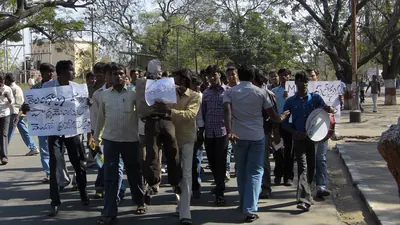 A students' rally at Osmania University, described on Commons as part of the Telangana agitation (2010–11)Photograph · 2011
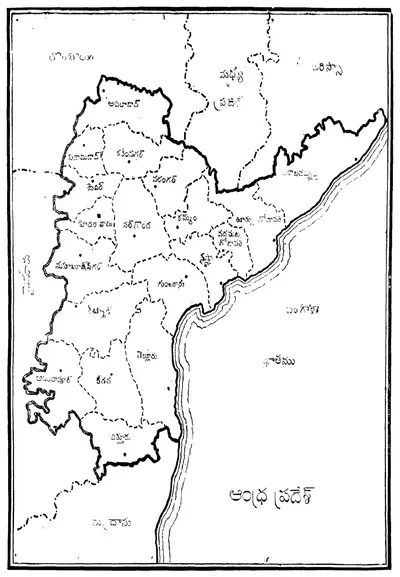 Map of Andhra Pradesh and its districts, from the state government's magazine (1956)Map · 1956
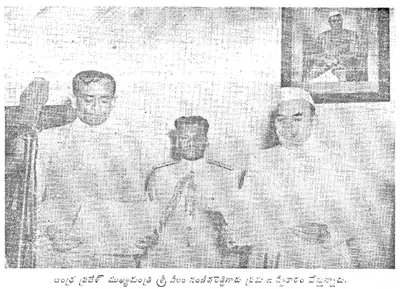 Neelam Sanjiva Reddy taking the oath as Chief Minister of Andhra Pradesh (1956)Historic photograph · 1956
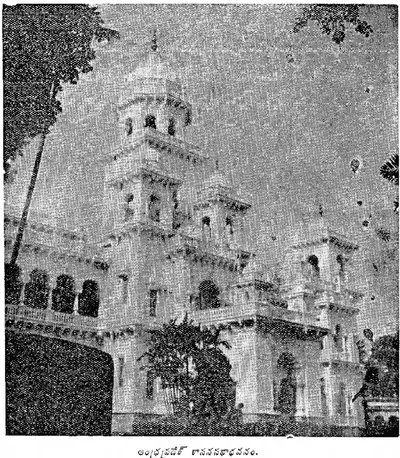 The Andhra Pradesh Legislative Assembly building, Hyderabad (1956)Historic photograph · 1956
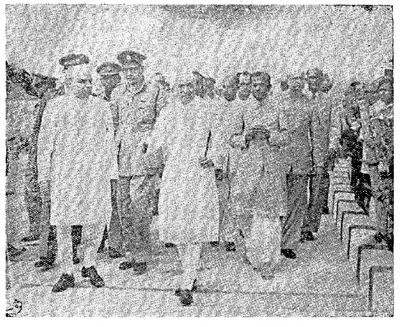 The Prime Minister with the Governor and Chief Minister of Andhra Pradesh at Begumpet airport (1956)Historic photograph · 1956
Maps
- Unified Andhra Pradesh (pre-2014)
- Present-day state borders, for orientation
- Approximate extent
The two parts that were joined on 1 November 1956 to form Andhra Pradesh. The Andhra State was formed on 1 October 1953 from eleven Telugu districts of Madras State and three taluks of Bellary, with its capital at Kurnool. The Telangana districts of Hyderabad State (Hyderabad, Medak, Mahbubnagar, Nizamabad, Warangal, Khammam, Nalgonda, Karimnagar and most of Adilabad) were joined to it in 1956, and Hyderabad city became the capital. The shaded areas are rough sketches, not surveyed boundaries.
Historical boundaries are approximate. Base map: Natural Earth (opens in a new tab) (public domain). Redrawn from: Andhra Pradesh district map (ఆంధ్రప్రదేశ్ పటము), Andhra Pradesh, Vol. 1, No. 1 (November–December 1956), p. 85 (opens in a new tab), Information and Public Relations Department, Government of Andhra Pradesh, 1956 (Public domain in India). Attributions
- Unified Andhra Pradesh (pre-2014)
- Present-day state borders, for orientation
The districts formed in the Telugu country between 1953 and 1979. Khammam was carved out of Warangal on 1 October 1953, and the Bhadrachalam taluk was moved to it from East Godavari in 1959. Prakasam was formed on 2 February 1970 from parts of Guntur, Nellore and Kurnool. Vizianagaram was formed from parts of Srikakulam and Visakhapatnam, and Rangareddi from the rural areas of Hyderabad district, at the end of the 1970s. The census of 1981 counted 23 districts. Only towns are marked; the base map has no district boundaries.
Base map: Natural Earth (opens in a new tab) (public domain).
Related
People
Ayyadevara Kaleswara Rao
1881–1962 CE
Congress leader and lawyer of Vijayawada, born in 1881. He took part in every Congress campaign from the Swadeshi movement of 1905 to Quit India, and was jailed in 1922, 1930, 1932, 1933, 1940–41 and 1942–43. He led the Swaraj Party in Andhra, helped the Hyderabad State Congress in 1947–48, and was Speaker of the Andhra Pradesh Legislative Assembly, 1956–62.
Gam Mallu Dora
1900 CE
Koya leader from Battapanukulu in the Visakhapatnam hill tracts (born 1900), one of the two chief lieutenants of Alluri Sitarama Raju in the Rampa rebellion of 1922–1924. He was captured in September 1923, sentenced to death in May 1924, and served his commuted sentence in the Andamans and an internment camp until 1937. In 1952 he was elected to the first Lok Sabha for Visakhapatnam.
Kakani Venkataratnam
1900–1972 CE
Congress leader of Krishna district (1900–1972). He was jailed in the salt satyagraha of 1930 and the civil disobedience of 1932, and detained for three years in the Quit India movement. After independence he was president of the Andhra Pradesh Congress Committee and Minister for Agriculture. He died at Vijayawada on 25 December 1972, during the movement for a separate Andhra State.
N. G. Ranga
1900 CE
Peasant leader and economist from Nidubrolu in Guntur district (born 1900). He organised ryots' associations in Andhra from 1923, founded the Andhra Socialist Party in 1934, ran schools of politics for young workers, and helped found the All India Kisan Sabha. He was jailed for organising rural ryot societies and again in 1942. In 1951 he left the Congress and founded the Krishikar Lok Party, and he sat in the Rajya Sabha from 1952.
Gora (Goparaju Ramachandra Rao)
1902–1975 CE
Teacher, social reformer and atheist of Vijayawada (1902–1975), known as Gora. A science lecturer until 1940, he was jailed in 1943 for celebrating Independence Day and detained twice during the Quit India movement. He worked against untouchability, encouraged his children to marry across caste, edited the Telugu weekly Sangham and the English monthly The Atheist, and wrote Positive Atheism.
Baddam Yella Reddy
1906–1978 CE
Telangana leader from Karimnagar district (1906–1978). He was jailed in the salt satyagraha of 1930 and in the Hyderabad State Congress satyagraha of 1938–39. He led the Andhra Mahasabha in 1946 and was a leader of the Communist Party in Hyderabad during the Telangana armed struggle. Later he sat in the Lok Sabha, the Rajya Sabha and the Andhra Pradesh assembly.
Makhdoom Mohiuddin
1908–1969 CE
Urdu poet, trade union leader and communist of Hyderabad (1908–1969). He was secretary of the Communist Party in Hyderabad State, was jailed in 1944 for a speech, and was named by the Hyderabad government in 1949 as a member of the communists' State Committee during the Telangana armed struggle. From 1957 until his death he led the communist group in the Andhra Pradesh Legislative Council.
Puchalapalli Sundarayya
1913 CE
Communist leader from Alaganipadu in Nellore district (born 1913). He left his studies for the national movement in 1930, was a member of the Communist Party's Central Committee from 1934, led the left wing of the Andhra Socialist Party, and kept in touch with the Telangana communists during the struggle of 1946–1948. He sat in the Rajya Sabha from 1952.
Devulapalli Venkateswara Rao
1917–1984 CE
Communist leader of Nalgonda district (1917–1984) and historian of the Telangana armed struggle. Expelled from Osmania University in the Vandemataram strike, he joined the Communist Party in 1939, led its Nalgonda district committee and joined its state secretariat in March 1948. He sat in the Lok Sabha from 1957 to 1962, later led a revolutionary communist group, and spent long years underground and in jail. His Telugu history of the struggle was published in 1988, after his death.
Arutla Lakshminarasimha Reddy
1918–1976 CE
Lawyer and communist leader from Kolanupaka in Nalgonda district (1918–1976). He organised campaigns against the jagirdars in Nalgonda in 1936–37, led a batch in the Hyderabad State Congress satyagraha of October 1938 and was jailed until April 1939. He joined the Communist Party in 1940, sat on the working committee of the Andhra Mahasabha, and was wanted by the Nizam's government in 1947. He later served in both houses of the Andhra Pradesh legislature.
Arutla Kamala Devi
1921 CE
Communist worker from Bhongir taluk of Nalgonda district, born in 1921. She was general secretary of the Hyderabad Women's Association in 1942–44 and worked underground in the Telangana struggle of 1946–48, organising women against the Razakars. She was later a member of the Hyderabad and Andhra Pradesh legislative assemblies from 1952 to 1967.
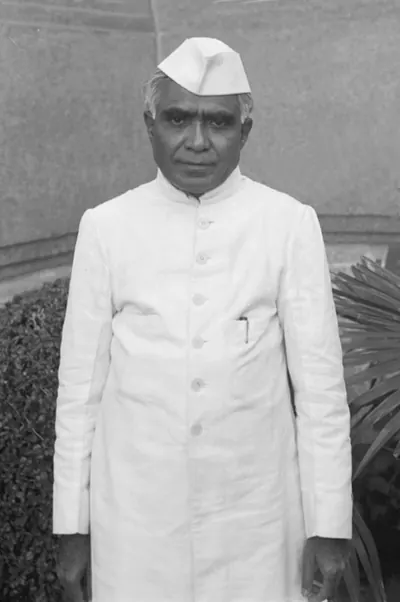
Burgula Ramakrishna Rao
Lawyer and Congress leader of Hyderabad State. He was among the moderate leaders of the Andhra Mahasabha up to 1941, was arrested in the Quit India satyagraha of 1942 and led a satyagraha batch in May 1947. After the first general elections he became Chief Minister of Hyderabad State in 1952. He took part in the talks of February 1956 that settled the terms for joining Telangana to Andhra, and in October 1956 he was named governor of Kerala.
J. Vengala Rao
Political leader of Andhra Pradesh. He was a member of the Andhra Pradesh assembly from 1962 to 1978, Home Minister of the state from 1969 to 1971 and Chief Minister from 1973 to 1978, the years after the Six-Point Formula. He was one of the leaders who met the Prime Minister during the Telangana agitation of 1969. Later he sat in the Lok Sabha for Khammam (1984–1991) and was Union Minister of Industries.
Neelam Sanjiva Reddy
Congress leader and member for Kalahasti in the Andhra Legislative Assembly. He was Deputy Chief Minister of the Andhra State at Kurnool from 1953 to 1956 and one of the Andhra leaders who agreed the terms for the union with Telangana in February 1956. On 1 November 1956 he was sworn in as the first Chief Minister of Andhra Pradesh, and he was still Chief Minister in 1958.
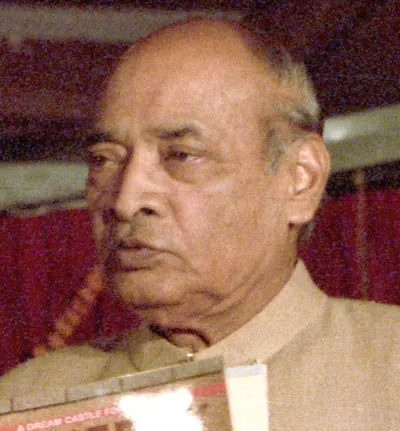
P. V. Narasimha Rao
Political leader from Andhra Pradesh. He was a member of the state assembly from 1957 to 1977 and a minister from 1962. As Chief Minister from 1971 to 1973 he faced the agitation that followed the Supreme Court's Mulki judgment of October 1972, and on 17 January 1973 the Governor reported his resignation. President's rule followed the next day. He sat in the Lok Sabha from 1977 to 1997, held several Union ministries and became Prime Minister.
Potti Sriramulu
before 1952 CE
Began a fast at Madras on 19 October 1952 for the forming of a separate Andhra State, and died on the night of 15 December 1952, the 58th day. His death set off protests across the Andhra districts. Four days later the Government of India announced that the state would be formed, and it came into being on 1 October 1953.
Tanguturi Prakasam
Barrister and Congress leader of the Telugu districts of Madras. He chaired the Madras meeting against the Rowlatt Bills in 1919, gave up his practice during non-cooperation, led the salt satyagraha in Madras city in 1930 and became Revenue Minister in 1937. He later served as Chief Minister of Madras and then as the first Chief Minister of the Andhra State. His ministry sat at Kurnool, and it fell after a vote of no confidence in November 1954.
Places
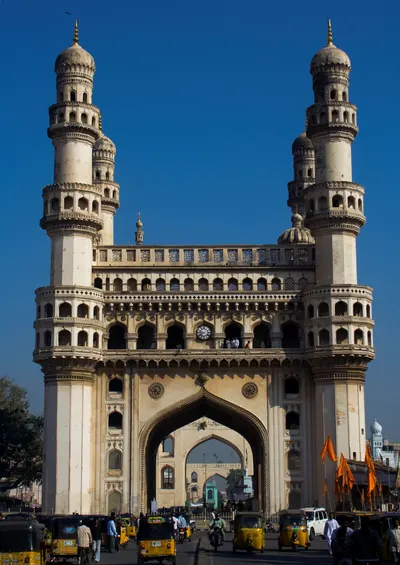
Hyderabad
City on the Musi founded by Muhammad Quli Qutb Shah around 1589–91 as Bhagnagar. It was the Qutb Shahi capital until 1687, then a Mughal provincial seat. From the 1720s it was the capital of the Asaf Jahi Nizams.
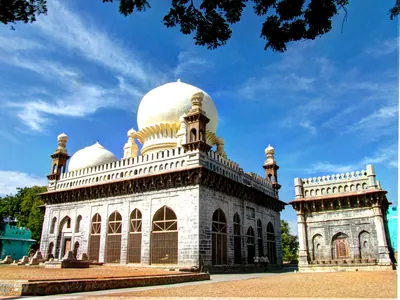
Kurnool
Walled town where the Handri meets the Tungabhadra, the headquarters of the Kurnool district. Tradition says its fort was built in Achyuta Raya's time. Early in the seventeenth century the Bijapur general Abdul Wahab took it from Gopala Raja, a grandson of Aliya Rama Raya. It was then governed from Bijapur until the Mughal conquest of 1686–88. The two-domed tomb of Abdul Wahab (1618) is its chief old building. From the Mughal conquest until 1839 Kurnool was the seat of the Pathan Nawabs of Kurnool. The French stormed the fort in 1751. In 1839 the last Nawab gave it up to a British commission, and the town became the headquarters of a British district. From 1 October 1953 Kurnool was the capital of the new Andhra State, and its Legislative Assembly met there. In November 1953 the Assembly debated moving the capital, but the resolution was lost. Andhra Pradesh, formed on 1 November 1956, had Hyderabad as its capital.
Yanam
Small town on the Godavari where the Coringa river leaves the Gautami branch. It was a French factory (trading post) from about 1750, and French territory apart from long English occupations in the wars, until the Government of India took over the French Establishments on 1 November 1954. It was famous in the eighteenth century for white long-cloth. Yanam is now a district of the Union Territory of Puducherry, surrounded by the East Godavari country.
Themes
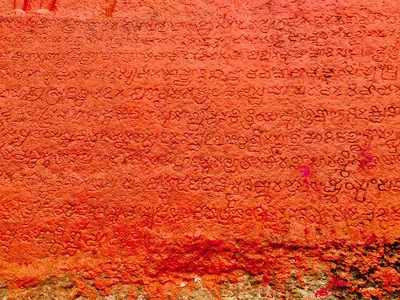
Language & literature
From Prakrit inscriptions and the first Telugu records to Nannaya, Pothana, Vemana and modern prose.
Trade & economy
Ports such as Motupalli and Machilipatnam, Golconda diamonds, tanks and farming, merchant guilds.
Crafts & textiles
Kalamkari, ikat weaving, Nirmal paintings, Kondapalli and Etikoppaka toys and other crafts.
Government & administration
Kingship, the nayankara system, village officers, land revenue and law.
Legislatures & government, 1952–2014
1952–2014 CE
The elected houses that made laws for the Telugu districts from the first general elections of 1952 to the division of 2014: the Hyderabad Legislative Assembly, the Madras Assembly and the Andhra Legislative Assembly at Kurnool, and the Andhra Pradesh Legislative Assembly and Legislative Council at Hyderabad. With the chief ministers, governors and periods of President's rule that the official records name.
How the map changed
1766–2014 CE
How the borders and districts of the Telugu country changed from the Company's take-over of the coast and Rayalaseema (1766–1800) to the division of Andhra Pradesh in 2014: the Madras districts and the Nizam's dominions, the Andhra State of 1953, the reorganisation of 1956, the boundary changes of 1959–60, the new districts of 1953–1979, and the ten districts that became Telangana.
References
Notes (0)
Sources (35)
Spotted an error on this page? Tell us
Last updated: