Chilakamarti Lakshmi Narasimham
Telugu novelist, playwright and speaker of Rajahmundry in the early 20th century, a follower of Kandukuri Veeresalingam's social reform. Jayanti Ramayya in 1913 credited him with starting the Telugu historical novel on the model of Walter Scott, drawing on Tod's Annals of Rajasthan. His plays, above all Prasanna Yadavamu and Gayopakhyanamu, were very popular, and K. Sitaramaiya notes that he wrote and spoke although he was blind.
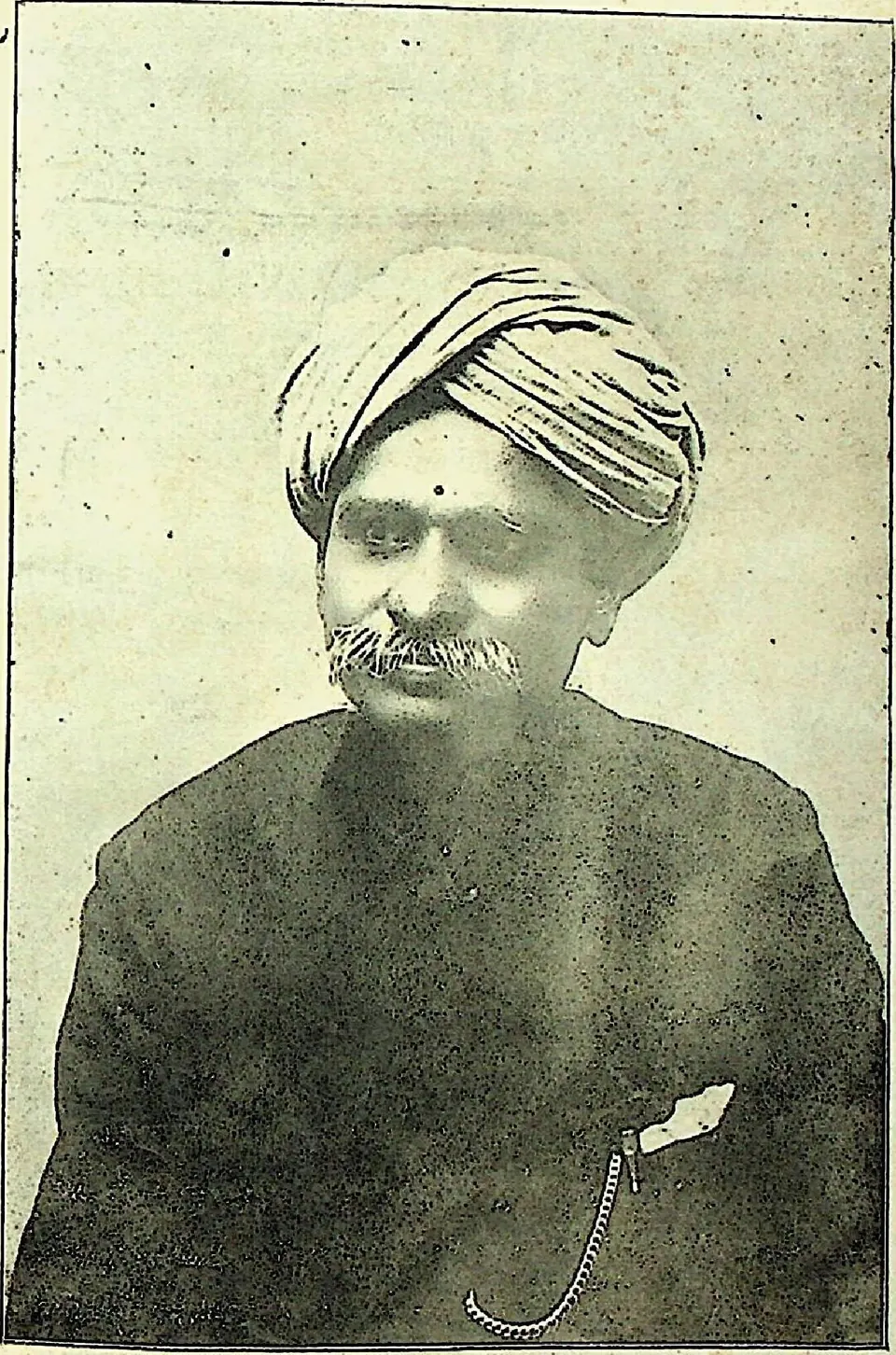
Chilakamarti Lakshmi Narasimham was a Telugu writer of Rajahmundry in the early 20th century.1 He wrote novels, plays, essays, short stories and lives of great men.2 Jayanti Ramayya, writing in 1913, credited him with starting the Telugu historical novel.1 K. Sitaramaiya counted him among the followers of Kandukuri Veeresalingam’s social reform.3
The historical novel
Jayanti Ramayya wrote A Defence of Literary Telugu in 1913.1 In a survey of the new Telugu literature, he noted a turn towards historical subjects.1 He wrote that Chilakamarti “set the example of writing historical novels after the model of Scott’s Novels”.1 His themes came mostly from Tod’s Annals of Rajasthan, which Ramayya called “that mine of historical romance”.1
P. Chenchiah and Raja M. Bhujanga Rao, in their history of Telugu literature (1928), thought little of most Telugu novels of their day.4 But they made an exception.4 In plot, interest and vividness of style, they wrote, “Ch. Lakshminarasimhan stands head and shoulders over the writers of the day”.4
K. Sitaramaiya, writing in Hyderabad in 1943, names three of his novels: Ahalyabai, Saundaryatilaka and Ramachandravijayamu.5 He adds that Chilakamarti put Tod’s book into Telugu as Rajasthana Kathavali (tales of Rajasthan).5
Plays
P. T. Raju, in 1944, wrote that his name was known throughout the country for his plays.2 Raju names Prasanna Yadavamu and Gayopakhyanamu as plays that “attained unequalled popularity”.6 Sitaramaiya names Prasanna Yadavamu and Prachanda Yadavamu.5
Reformer, speaker and patriot
Sitaramaiya placed him among the writers who followed Veeresalingam’s social reform.3 He thought him equal to Veeresalingam “in all respects”.3 He called him a very prolific writer and a great speaker.5 He also says that Chilakamarti was blind, but held his audiences with his speeches.5
Sarojini Regani, writing in 1956 on the freedom movement in Andhra, describes a public moment.7 The Bengali leader Bipin Chandra Pal spoke at Rajahmundry from 19 to 24 April 1907, and Chilakamarti translated all his lectures into Telugu.7 At that time, she writes, he composed a song that became popular in the Swadeshi movement.7 See Reform, freedom & people’s movements.
Sitaramaiya called him “a great patriot”.5 He quotes a well-known verse of his in English.5 In it India is a gentle cow, Indians are her calves crying for milk, and foreign rulers milk her dry.5 Regani describes the Swadeshi song of 1907 in the same terms.7 Raju compared him to Veeresalingam as “another voluminous writer”.2
Footnotes
-
J. Ramayya Pantulu, A Defence of Literary Telugu (1913), p. 5 (archive.org (opens in a new tab)). ↩ ↩2 ↩3 ↩4 ↩5 ↩6
-
P. T. Raju, Telugu Literature (1944), p. 58 (archive.org (opens in a new tab)). Cite-only; paraphrased. ↩ ↩2 ↩3
-
K. Sitaramaiya, A Hand Book of Telugu Literature (1943), p. 73 (archive.org (opens in a new tab)). Cite-only; paraphrased. ↩ ↩2 ↩3
-
P. Chenchiah and Raja M. Bhujanga Rao, A History of Telugu Literature (1928), p. 116 (archive.org (opens in a new tab)). ↩ ↩2 ↩3
-
Sitaramaiya, A Hand Book of Telugu Literature (1943), p. 74 (archive.org (opens in a new tab)). Cite-only; paraphrased. ↩ ↩2 ↩3 ↩4 ↩5 ↩6 ↩7 ↩8
-
Raju, Telugu Literature (1944), p. 73 (archive.org (opens in a new tab)). Cite-only; paraphrased. ↩
-
Sarojini Regani, Highlights of the Freedom Movement in Andhra Pradesh (1956), p. 33 (archive.org (opens in a new tab)). Cite-only; paraphrased. ↩ ↩2 ↩3 ↩4
Photos
References
Notes (0)
Sources (5)
Spotted an error on this page? Tell us
Last updated: