Tyagaraja
Telugu singer, poet and composer of Tiruvaiyaru in Thanjavur district, whose devotional songs (kritis and kirtanas) to Rama are sung all over South India. C. R. Day in 1891 dated him about 1820–1840 and H. A. Popley in 1921 about 1800–1850, while P. T. Raju placed him in the 18th century. Chenchiah and Bhujanga Rao called him the greatest gift of Thanjavur to Telugu literature.
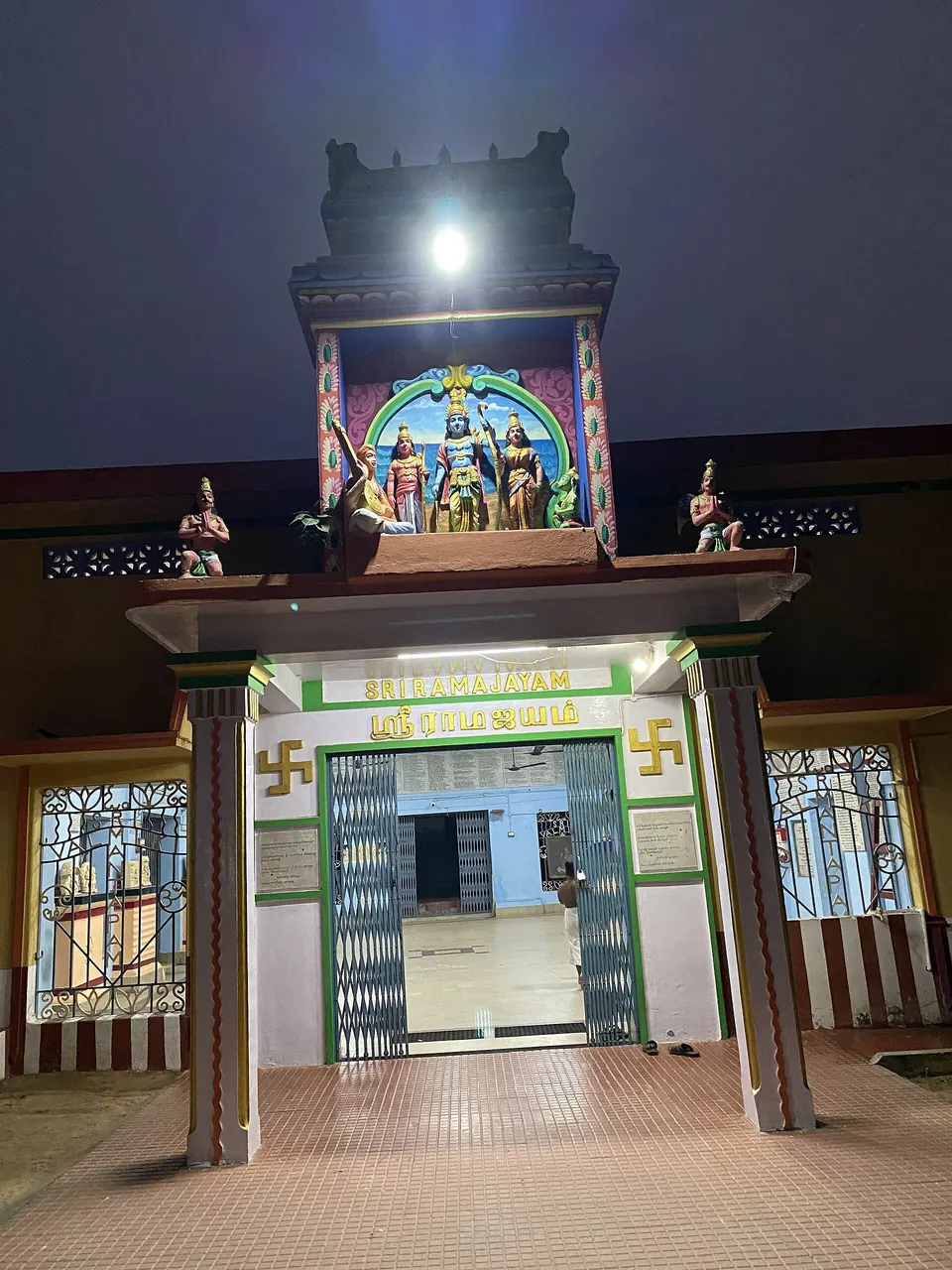
Tyagaraja was a singer, poet and composer of devotional songs in Telugu.12 He lived at Tiruvaiyaru, in the Thanjavur (then Tanjore) district of the Tamil country.3 His songs in praise of the god Rama are still sung all over South India.12 P. Chenchiah and Raja M. Bhujanga Rao called him “the greatest gift of Tanjore to the Andhra literature”.2
Life
C. R. Day wrote a survey of South Indian music in 1891.3 He described “Tiagyaraj” as a native of “Trivadi” (Tiruvaiyaru) in Thanjavur district.3 Day wrote that he was a pupil of a musician called Venkatraman Iyer.3 H. A. Popley, in The Music of India (1921), gives the teacher’s name as Sunthi Venkataraman.1 Popley names his father as Rama Brahman, “also a musical composer of some repute”.1
Popley quotes “one who remembers him”, who described him as “a tall lean man with a brown complexion”.1 He was “revered as a perfectly sincere and selfless man”.1 Popley wrote that his songs were said to have been composed on Ekadasi days, when he fasted all day.1 P. T. Raju, in 1944, wrote that he “shunned kings and their courts”.4
His songs
His songs are mostly kritis and kirtanas (devotional songs).31 Day wrote that many of them were “exceedingly popular all through India”.3 He found that Tyagaraja paid special attention to melody.3 Day printed in Western notation a song by one of his pupils, among other tunes.5
Popley called him “a creative musical genius”.1 He wrote that Tyagaraja brought in sangatis, variations on a tune that grow more elaborate each time.1 He gathered disciples, who carried on his tradition.1 Day saw him as the last of a school of musicians at Thanjavur that changed and improved the art.6
The words matter as much as the music. Chenchiah and Bhujanga Rao wrote that his kirtanas “are of the highest spirituality”.7 They found in them “fervid devotion, simple faith and reliance on Providence”.7 Raju noted that the songs are in “popular everyday Telugu”, and that most are addressed to Rama.4 K. Sitaramaiya, writing in 1943, said that his songs were thought to number some thousands.8 In his view no singer in South India failed to sing them.8
A legend
Popley records a story that the sage Narada appeared to Tyagaraja.1 In the story, Narada gave him a rare book on music, the Svararnava.1 Popley tells it as something “said”, not as fact.1
Where the sources disagree
- His dates. Day wrote that he “flourished from about 1820–1840”.3 Popley gave about 1800–1850.1 Raju wrote that he “belongs to the eighteenth century”.4
- His father. Popley names his father as Rama Brahman.1 Sitaramaiya, in a note, names “Tyagaraja’s father Girirajakavi”, whom he calls a poet of merit.8
See also Kshetrayya and Music & dance.
Footnotes
-
H. A. Popley, The Music of India (1921), p. 22 (archive.org (opens in a new tab)). ↩ ↩2 ↩3 ↩4 ↩5 ↩6 ↩7 ↩8 ↩9 ↩10 ↩11 ↩12 ↩13 ↩14 ↩15 ↩16
-
P. Chenchiah and Raja M. Bhujanga Rao, A History of Telugu Literature (1928), p. 92 (archive.org (opens in a new tab)). ↩ ↩2 ↩3
-
Day, Music of Southern India (1891), p. 155 (archive.org (opens in a new tab)). ↩ ↩2 ↩3 ↩4 ↩5 ↩6 ↩7 ↩8
-
P. T. Raju, Telugu Literature (1944), p. 49 (archive.org (opens in a new tab)). Cite-only; paraphrased. ↩ ↩2 ↩3
-
Day, Music of Southern India (1891), p. 77 (archive.org (opens in a new tab)). ↩
-
C. R. Day, The Music and Musical Instruments of Southern India and the Deccan (1891), p. 3 (archive.org (opens in a new tab)). ↩
-
Chenchiah and Bhujanga Rao, A History of Telugu Literature (1928), p. 100 (archive.org (opens in a new tab)). ↩ ↩2
-
K. Sitaramaiya, A Hand Book of Telugu Literature (1943), p. 56 (archive.org (opens in a new tab)). Cite-only; paraphrased. ↩ ↩2 ↩3
Photos
References
Notes (0)
Sources (5)
Spotted an error on this page? Tell us
Last updated: