Ghantasala
Village west of Machilipatnam in the Krishna delta, site of a large brick Buddhist stupa excavated by A. Rea in 1892. Carved limestone slabs and inscribed pillars from it survive scattered through the village.
Ghantasala is a village thirteen miles west of Machilipatnam (then Masulipatam).1 In the 19th century it belonged to the Challapalli (Tsallapalli) zamindari (landholder’s estate) of Krishna district.1
The stupa
North-east of the village, among the fields, stands a circular mound called Lanja dibba.1 In 1892 it measured about 112 feet across and 23 feet high.1 Boswell had noted it in his reports of 1870–71.1 Sewell’s Lists of 1882 recorded it only as a ruined Buddhist stupa (relic mound) that he had not visited.12
Alexander Rea excavated the mound in 1892.1 He uncovered the brick foundations of a stupa with an unusual plan of concentric and radiating walls.1 Rea dated it to a little after the later work at Amaravati.1
Sculptured slabs have been found in and around the village.34 They include a Buddha footprint slab, a chaitya slab showing a stupa, and a slab showing worship at the bodhi tree.34 They are in the same style as those of Amaravati.34 See Ghantasala stupa.
Scattered remains
The villagers had long used the stupa’s marbles.56 Octagonal piers served as boundary posts, moulded bases as grain mortars, and an umbrella stone was kept in a priest’s house.56 One pier, set up in the Jalatesvara temple, carries several inscriptions.7 Two long ones are in old Telugu characters, and on one side there is another in Pali, above one in old Telugu.7
Some slabs had their Buddhist carvings cut away and were carved again with Hindu deities, including Narasimha, Bhairava, Sarasvati and Rati.8
Other sites nearby
Rea noted other ancient sites around the village.9 Bauddhavanam, also called Dharmakota, is waste ground on the northern boundary.9 Large bricks turn up in pits there, and a brass lamp with a Telugu inscription and a small brass image of Siva had been found.9 At Polimeradibba on the southern boundary there was a demolished mound.9 Just across the boundary at Devarakota, a low circular mound about seventy feet across might be another stupa.9
Rea also described Srikakulam, a village on the Krishna about nineteen miles west of Machilipatnam.91011 Tradition names it as the first capital of the Andhra (Satavahana) kings.91011 The oldest part of its temple was an 11th-century shrine.91011 No trace of the ancient town was visible, and it was said to have been destroyed when the river shifted its channel.91011
Later notices
The Archaeological Survey recorded small repairs to the Buddhist remains at Ghantasala in 1927–28.12 A. H. Longhurst, the excavator of Nagarjunakonda, listed Ghantasala among the Buddhist settlements of the lower Krishna valley, which he thought the river then linked.13
Footnotes
-
Alexander Rea, South Indian Buddhist Antiquities (1894), p. 32 (archive.org (opens in a new tab)). ↩ ↩2 ↩3 ↩4 ↩5 ↩6 ↩7 ↩8 ↩9
-
Robert Sewell, Lists of the Antiquarian Remains in the Presidency of Madras, Vol. I (1882), p. 54 (archive.org (opens in a new tab)). ↩
-
Rea, South Indian Buddhist Antiquities (1894), p. 33 (archive.org (opens in a new tab)). ↩ ↩2 ↩3
-
Rea, South Indian Buddhist Antiquities (1894), p. 37 (archive.org (opens in a new tab)). ↩ ↩2 ↩3
-
Rea, South Indian Buddhist Antiquities (1894), p. 34 (archive.org (opens in a new tab)). ↩ ↩2
-
Rea, South Indian Buddhist Antiquities (1894), p. 36 (archive.org (opens in a new tab)). ↩ ↩2
-
Rea, South Indian Buddhist Antiquities (1894), p. 35 (archive.org (opens in a new tab)). ↩ ↩2
-
Rea, South Indian Buddhist Antiquities (1894), p. 38 (archive.org (opens in a new tab)). ↩
-
Rea, South Indian Buddhist Antiquities (1894), p. 42 (archive.org (opens in a new tab)). ↩ ↩2 ↩3 ↩4 ↩5 ↩6 ↩7 ↩8 ↩9
-
Rea, South Indian Buddhist Antiquities (1894), p. 43 (archive.org (opens in a new tab)). ↩ ↩2 ↩3 ↩4
-
James Burgess, The Buddhist Stupas of Amaravati and Jaggayyapeta (1887), pp. 3–4 (archive.org (opens in a new tab)). ↩ ↩2 ↩3 ↩4
-
H. Hargreaves (ed.), Annual Report of the Archaeological Survey of India, 1927–28 (1931), p. 4 (archive.org (opens in a new tab)). ↩
-
A. H. Longhurst, The Buddhist Antiquities of Nagarjunakonda (1938), p. 3 (archive.org (opens in a new tab)). ↩
Photos
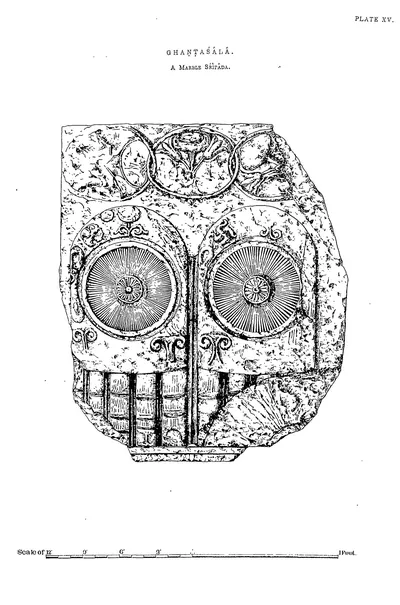 Ghantasala: a marble Sripada (Rea 1894, Pl. XV)Drawing · 1894
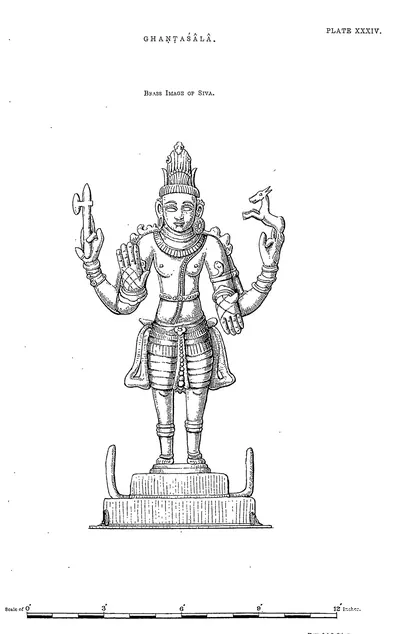 Ghantasala: brass image of Siva (Rea 1894, Pl. XXXIV)Drawing · 1894
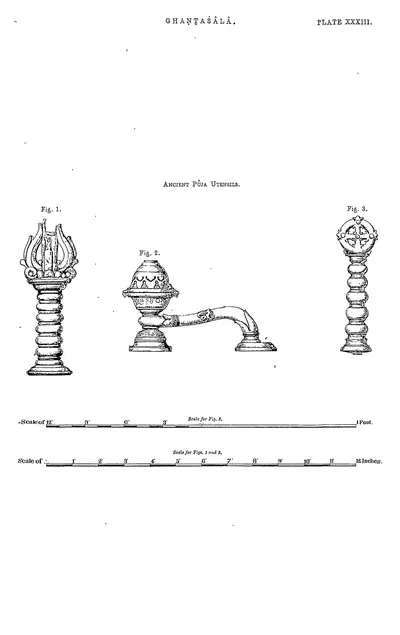 Ghantasala: brass trisula, dipa, and chakra (Rea 1894, Pl. XXXIII)Drawing · 1894
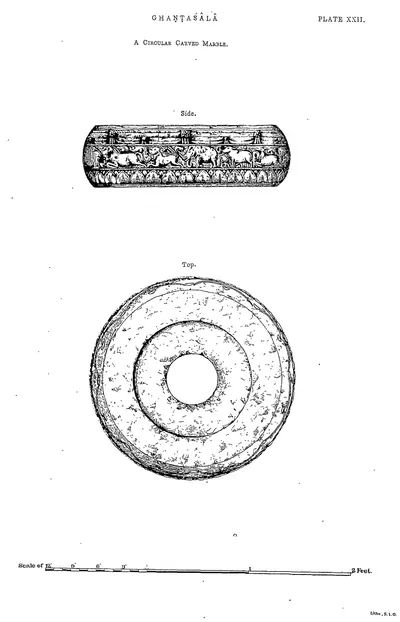 Ghantasala: carved circular band (Rea 1894, Pl. XXII)Drawing · 1894
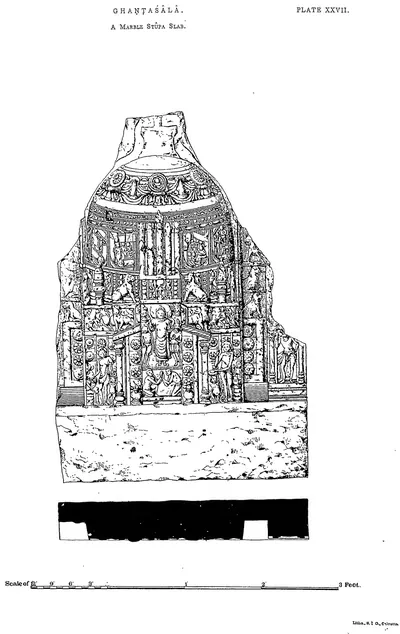 Ghantasala: chaitya slab ("A marble stupa slab") (Rea 1894, Pl. XXVII)Drawing · 1894
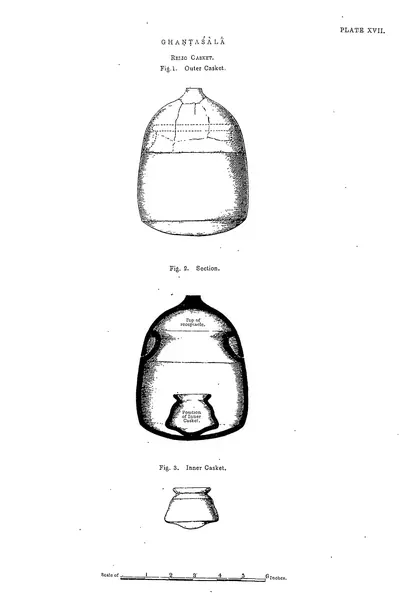 Ghantasala: earthenware relic caskets (Rea 1894, Pl. XVII)Drawing · 1894
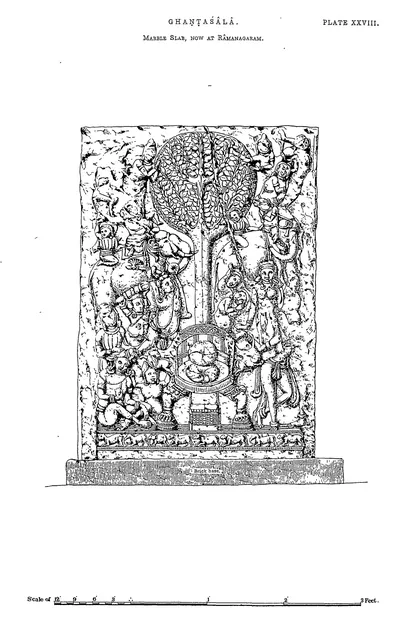 Ghantasala: figure and tree sculptured slab ("Marble slab, now at Ramanagaram") (Rea 1894, Pl. XXVIII)Drawing · 1894
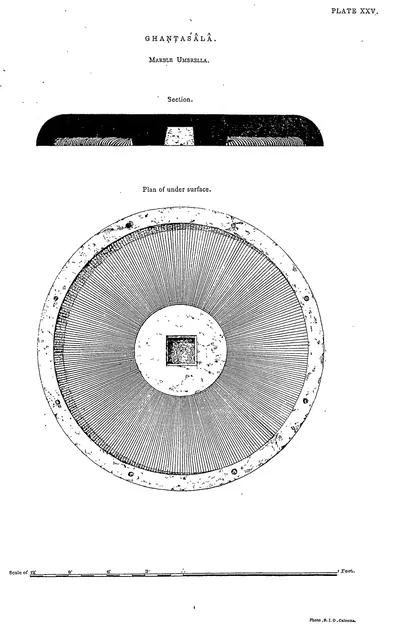 Ghantasala: marble umbrella (Rea 1894, Pl. XXV)Drawing · 1894
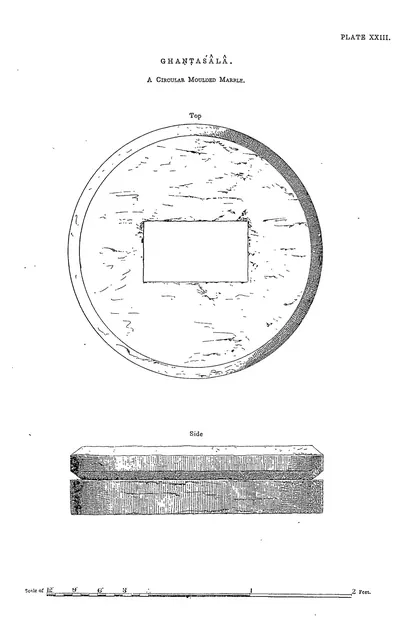 Ghantasala: moulded circular marble with square socket (Rea 1894, Pl. XXIII)Drawing · 1894
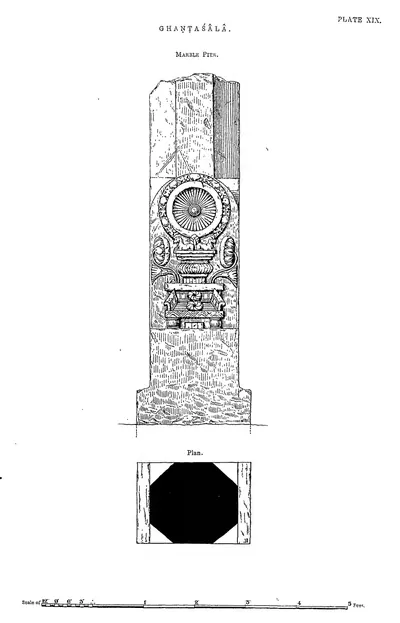 Ghantasala: pier (Rea 1894, Pl. XIX)Drawing · 1894
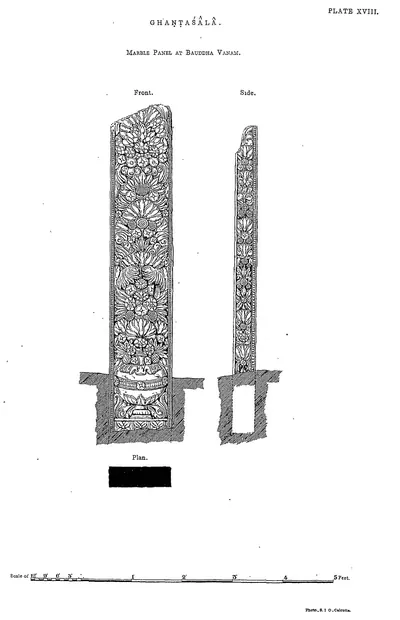 Ghantasala: pier (Rea 1894, Pl. XVIII)Drawing · 1894
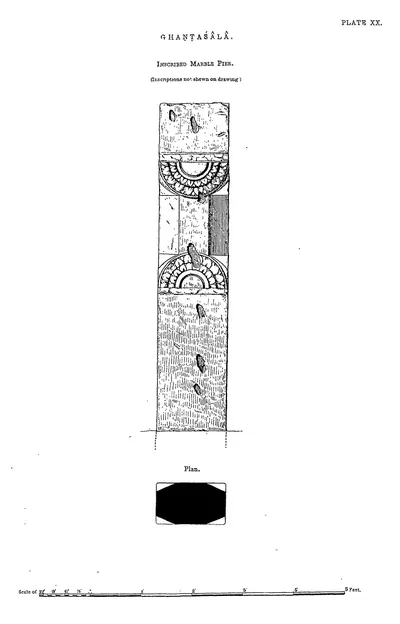 Ghantasala: pier (Rea 1894, Pl. XX)Drawing · 1894
Show all (20)
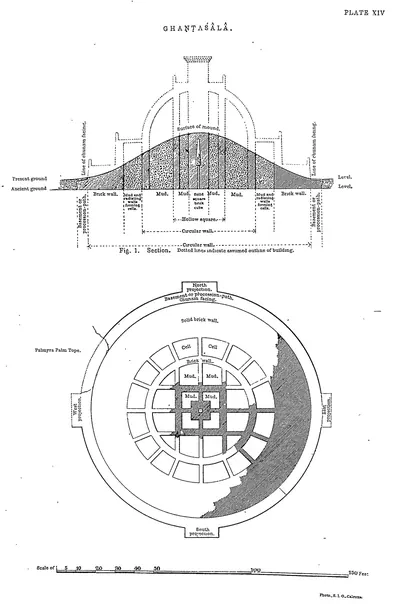 Ghantasala: plan and section of the stupa (Rea 1894, Pl. XIV)Plan · 1894
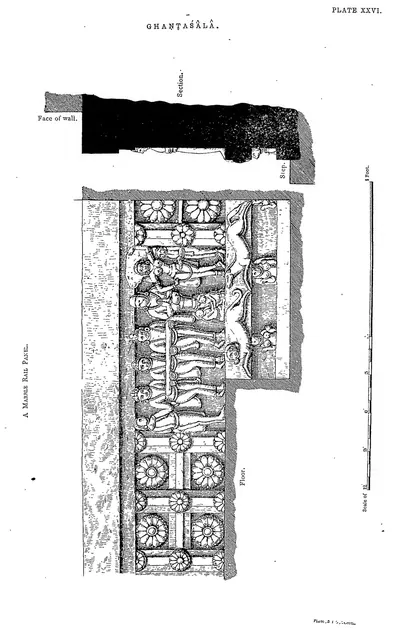 Ghantasala: sculptured rail panel (Rea 1894, Pl. XXVI)Drawing · 1894
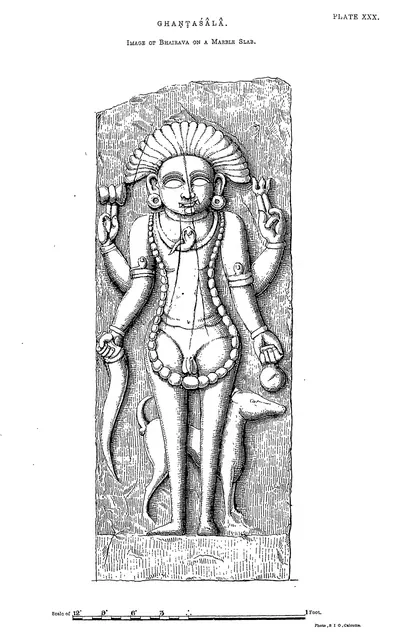 Ghantasala: slab with figure of Bhairava (Rea 1894, Pl. XXX)Drawing · 1894
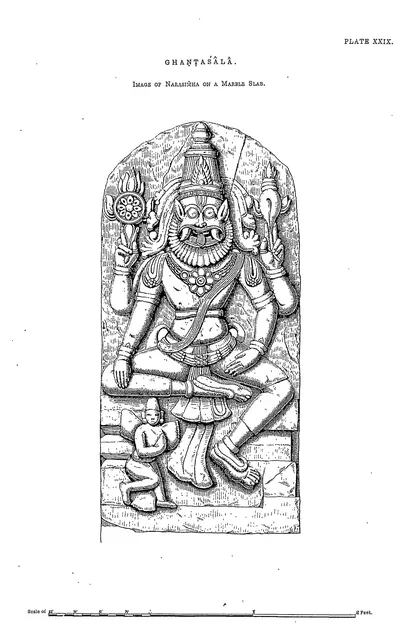 Ghantasala: slab with figure of Narasimha (Rea 1894, Pl. XXIX)Drawing · 1894
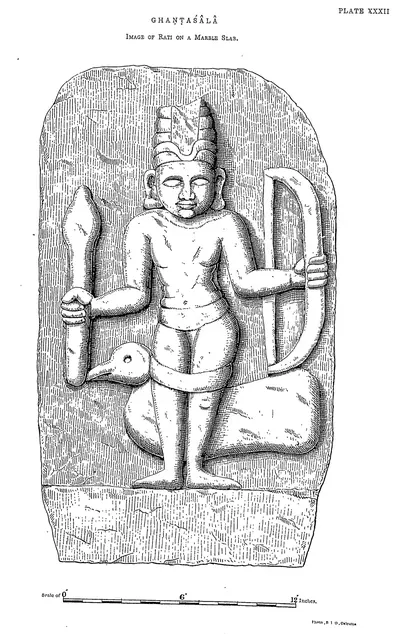 Ghantasala: slab with figure of Rati (Rea 1894, Pl. XXXII)Drawing · 1894
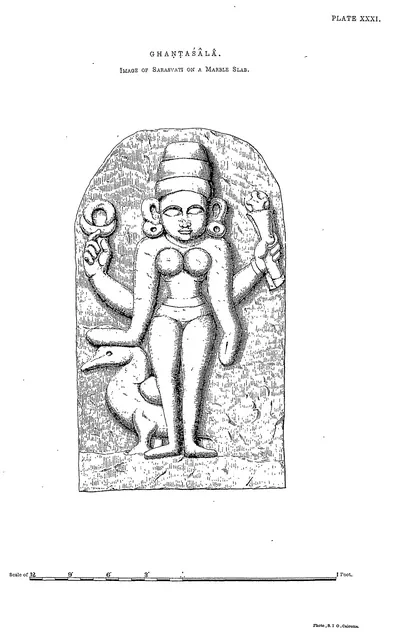 Ghantasala: slab with figure of Sarasvati (Rea 1894, Pl. XXXI)Drawing · 1894
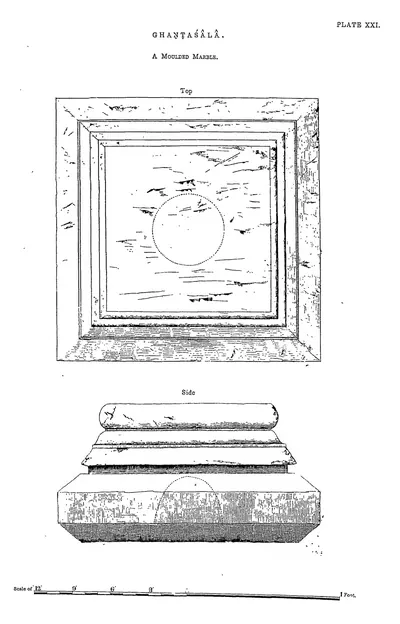 Ghantasala: square base ("A moulded marble") (Rea 1894, Pl. XXI)Drawing · 1894
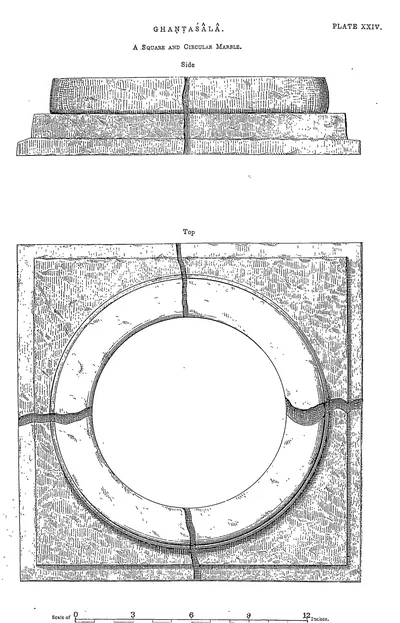 Ghantasala: square-stepped stone with circular socket (Rea 1894, Pl. XXIV)Drawing · 1894
References
Notes (0)
Sources (5)
Spotted an error on this page? Tell us
Last updated: