Kopparam
Village in the old Narasaraopet taluk of the Guntur district, near which the copper-plate grant of the 21st year of the Chalukya king Pulakesin II (probably 631) was found. The grant gives land in Karmarashtra and shows the Chalukyas of Badami granting land in the Guntur country at that time.
Kopparam is known to history for the Kopparam plates of the Chalukya king Pulakesin II, which were found near the village, in the Narasaraopet taluk of the Guntur district. K. V. Lakshmana Rao first published them, and E. Hultzsch re-edited them in 1926.1 The grant gives a field in the village of Irbuli in Karmarashtra. Lakshmana Rao placed two of the boundary roads it names, to Kondaverupur and Virparu, at Kondavidu and Vipparla in the same taluk.12 Robert Sewell dated the grant to 10 October 631.3
Footnotes
-
E. Hultzsch, “Kopparam Plates of Pulakesin II”, Epigraphia Indica XVIII (1926), p. 257 (archive.org (opens in a new tab)). ↩ ↩2
-
Hultzsch, “Kopparam Plates” (1926), p. 258 (archive.org (opens in a new tab)). ↩
-
R. Sewell, postscript to Hultzsch, “Kopparam Plates”, Epigraphia Indica XVIII (1926), p. 261 (archive.org (opens in a new tab)). ↩
Photos
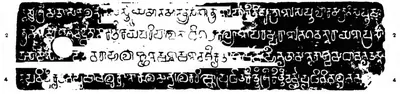 "Kopparam Plates of Pulakesin II", plate i (Epigraphia Indica XVIII, plate between pp. 258 and 259 (PDF p. 325))Inscription rubbing · 1926
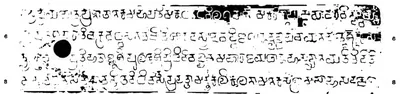 "Kopparam Plates of Pulakesin II", plate ii a (Epigraphia Indica XVIII, plate between pp. 258 and 259 (PDF p. 325))Inscription rubbing · 1926
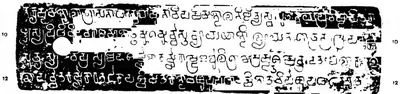 "Kopparam Plates of Pulakesin II", plate ii b (Epigraphia Indica XVIII, plate between pp. 258 and 259 (PDF p. 325))Inscription rubbing · 1926
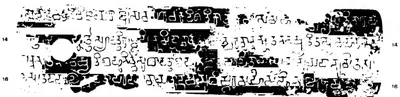 "Kopparam Plates of Pulakesin II", plate iii (Epigraphia Indica XVIII, plate between pp. 258 and 259 (PDF p. 325))Inscription rubbing · 1926
References
Notes (0)
Sources (1)
Spotted an error on this page? Tell us
Last updated: