Venkatagiri
Town in the old Nellore district, the seat of the Velugoti Rajas of Venkatagiri. Their estate was one of the great permanently settled zamindaris (landed estates) of the Madras Presidency, held under a sanad (grant) of 1802. In the 1930s it was the second town of the district, known for its fine lace-bordered saris. The Rajas built the Indra Mahal, a Town Hall and other public buildings there in the 1880s.
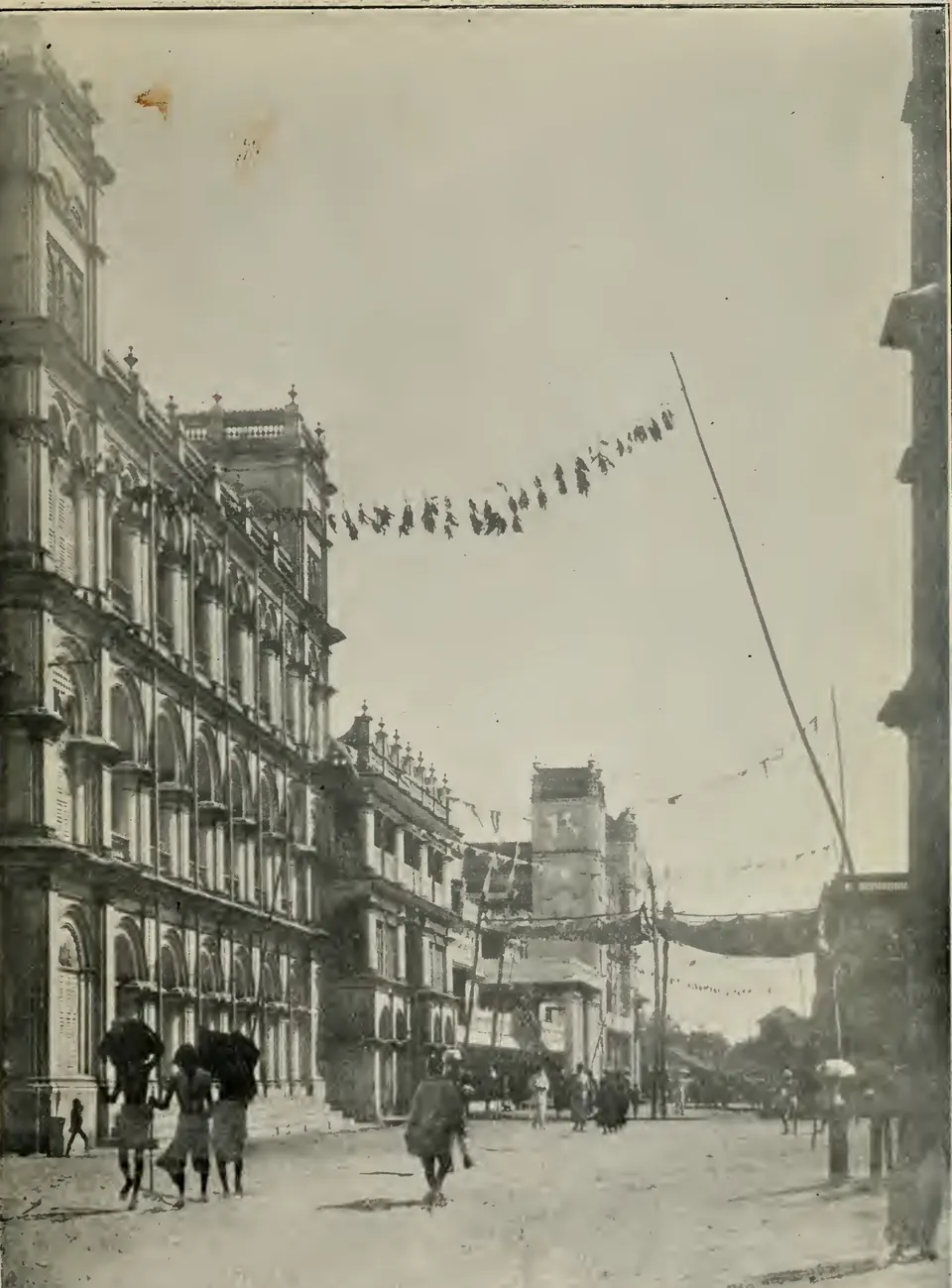
Venkatagiri is a town in the old Nellore district.1 It was the seat of the Rajas of the Velugoti family, the zamindars (landholders) of Venkatagiri.21 See Nellore.
The Nellore gazetteer, brought up to 1938, describes the Venkatagiri taluk as wholly zamindari land (land held under a landholder).21 It covered 427 square miles under the Eastern Ghats.21 The gazetteer says that the family traced its origin to a cultivator, Chevi Reddi, whose descendants served the kings of Warangal.21 About 1600, it says, one of them took the Venkatagiri fort, which became the family’s headquarters.21
The gazetteer adds that the estate was held under a sanad (grant) of 1802.21 Its peshkash (yearly tribute), with cesses (extra charges), came to Rs. 4,26,000 in 1930–31.21
The town
In the 1930s, the same gazetteer says, Venkatagiri was the only important town of the taluk.1 It was next in size to Nellore in the district, with 15,372 people.1 It was the seat of the zamindar, and it had a large tank.1 A large community of weavers made fine lace-bordered saris and dhotis there.1 It was reached by road from Nayudupeta, and by a railway station two miles away.1
The family history of 1922 records the buildings of Rajagopala Krishna Yachendra, Raja from 1879.345 The Indra Mahal was begun in 1880.345 On 22 July 1883 the Governor of Madras, Sir Mountstuart Grant Duff, laid the foundation stone of the Town Hall, when he opened the Indra Mahal.345 The Raja also built a Victoria Jubilee rest-house near the railway station.345
One of the Raja’s brothers, the later Maharaja of Bobbili, was born at Venkatagiri in 1862.6 See British Crown (Madras Presidency).
Footnotes
-
Gazetteer of the Nellore District (1942), p. 378 (archive.org (opens in a new tab)). ↩ ↩2 ↩3 ↩4 ↩5 ↩6 ↩7 ↩8 ↩9 ↩10 ↩11 ↩12 ↩13
-
Gazetteer of the Nellore District, brought up to 1938, Vol. A (1942), p. 377 (archive.org (opens in a new tab)). ↩ ↩2 ↩3 ↩4 ↩5 ↩6 ↩7
-
A Family History of Venkatagiri Rajas (1922), p. 124 (archive.org (opens in a new tab)). ↩ ↩2 ↩3 ↩4
-
Family History of Venkatagiri Rajas (1922), p. 125 (archive.org (opens in a new tab)). ↩ ↩2 ↩3 ↩4
-
Family History of Venkatagiri Rajas (1922), p. 126 (archive.org (opens in a new tab)). ↩ ↩2 ↩3 ↩4
-
A. Vadivelu, The Aristocracy of Southern India (1903), p. 40 (archive.org (opens in a new tab)). ↩
Photos
 "Indra-Mahal at Venkatagiri. Opened by H.E. Sir Mountstuart Elphinstone Grant Duff, G.C.I.E., on 22nd July, 1883" (Family History of Venkatagiri Rajas, 1922, plate 126a)Historic photograph · 1922
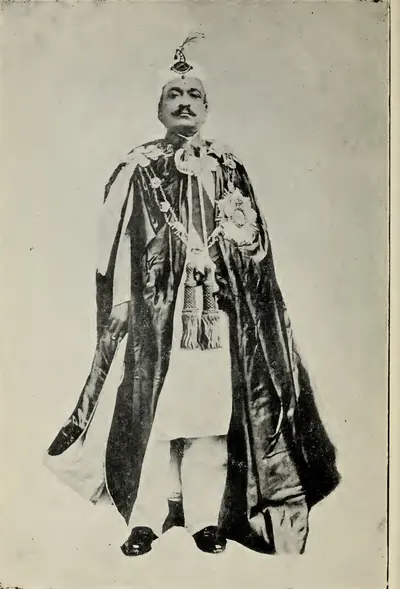 "Maharaja Sir V. Rajagopala Krishna Yachendra Bahadur, G.C.I.E. (28th Generation)" of Venkatagiri, 1857–1916 (Family History of Venkatagiri Rajas, 1922, plate 123a)Historic photograph · 1922
Related
People
References
Notes (0)
Sources (3)
Spotted an error on this page? Tell us
Last updated: