Bhimavaram inscription of Rajendra I
Incomplete inscription of the Chola king Rajendra I on the south wall of the Bhimesvara temple at Chalukya-Bhimavaram (Samalkot), in the Godavari district, written in the Tamil language but in Telugu characters. It contains only the usual historical introduction of Rajendra's Tamil inscriptions, and it is the only record of his reign in the Godavari district in V. Rangacharya's list.
This is a short inscription of the Chola king Rajendra I at Bhimavaram, now part of Samalkot.1 It is written in the Tamil language but in Telugu letters.1 It is the only record of Rajendra’s reign in the Godavari district in V. Rangacharya’s list of 1919.1
The record
The inscription, No. 466 of the collection of 1893, is on the south wall of the Bhimesvara temple.1 Rangacharya described it as “an incomplete, usual historical introduction” of Rajendra-Choladeva I.1 Its text was printed in South-Indian Inscriptions V in 1925 as No. 41.2 The editor noted that this introduction “occurs in most of the Tamil inscriptions of Rajendra Chola I”.2 He added that the next record on the same wall, which names the teacher of a king Rajendra Choda, might belong with it.2 See the Bhimesvara temple.
Rajendra and the Vengi country
Rajendra’s part in the Vengi country is known mainly from other records.34 Inscriptions on Mahendragiri, in Ganjam, record his victory over the Eastern Chalukya Vimaladitya.3 His Tiruvalangadu plates say he reached the Godavari while his general marched to the Ganges.4 See the Mahendragiri inscriptions, the Tiruvalangadu plates and the Cholas of Tanjore.
Footnotes
-
V. Rangacharya, A Topographical List of the Inscriptions of the Madras Presidency, Vol. II (1919), p. 715, Godavari No. 25 (archive.org (opens in a new tab)). ↩ ↩2 ↩3 ↩4 ↩5
-
H. Krishna Sastri (ed.), South-Indian Inscriptions (Texts), Vol. V (1925), pp. 15–16, No. 41 and note (archive.org (opens in a new tab)). ↩ ↩2 ↩3
-
V. Rangacharya, A Topographical List of the Inscriptions of the Madras Presidency, Vol. I (1919), p. 710, Ganjam No. 425 (archive.org (opens in a new tab)). ↩ ↩2
-
H. Krishna Sastri, “The Tiruvalangadu Copper-plates of the Sixth Year of Rajendra-Chola I”, South-Indian Inscriptions, Vol. III, pt. III (1920), p. 425, vv. 118–120 (archive.org (opens in a new tab)). ↩ ↩2
Photos
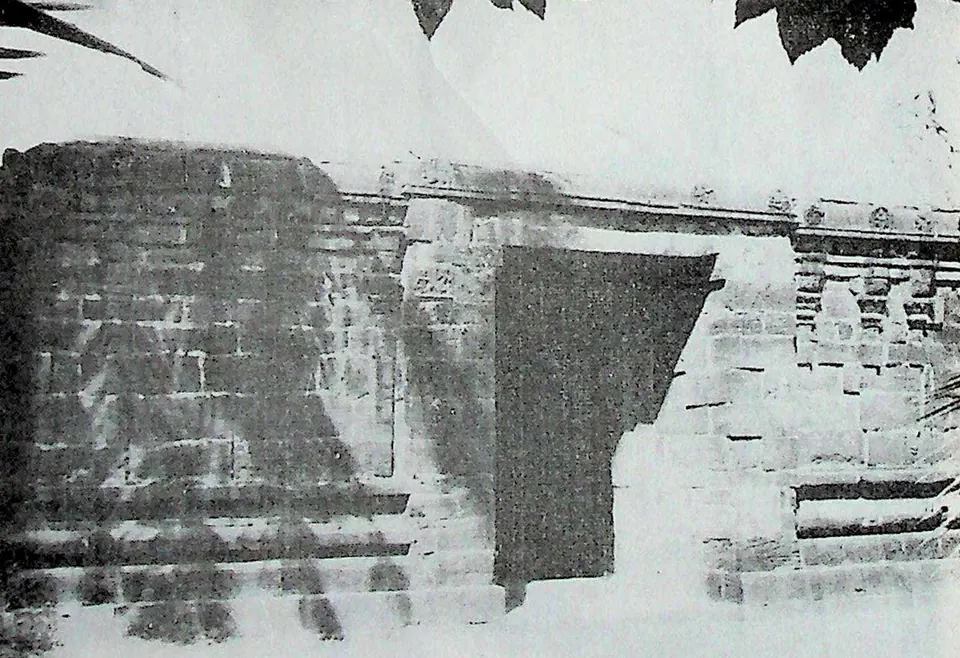
 "32. Northern Entrance to Outer Enclosure - Ch. Bhīmavaram, E. G. Dt." (M. Rama Rao, Eastern Calukyan Temples of Andhra Desa, 1964, Fig. 32 (PDF p. 95))Historic photograph · 1964
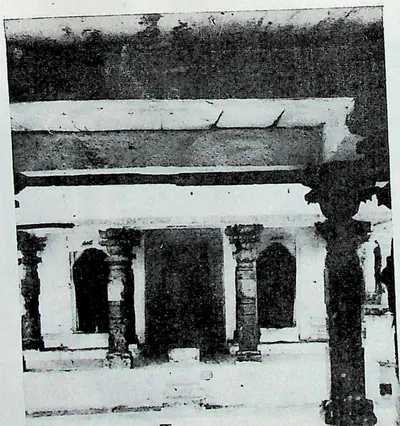 "36. Entrance to Groundfloor—Ch. Bhīmēśvara Temple—Ch. Bhīmavaram, E. G. Dt." (M. Rama Rao, Eastern Calukyan Temples of Andhra Desa, 1964, Fig. 36 (PDF p. 103))Historic photograph · 1964
References
Notes (0)
Sources (4)
Spotted an error on this page? Tell us
Last updated: