Brahma Nayudu
Hero of the Telugu ballad cycle of the Palnati Viralu (Heroes of Palnadu): the minister who led one side in the Palnadu war, fought out at Karempudi, and who is still honoured there as a form of Vishnu. He is known only from the ballads and the cult. No inscription names him, and the dates proposed for his war range from 1080 to 1386.
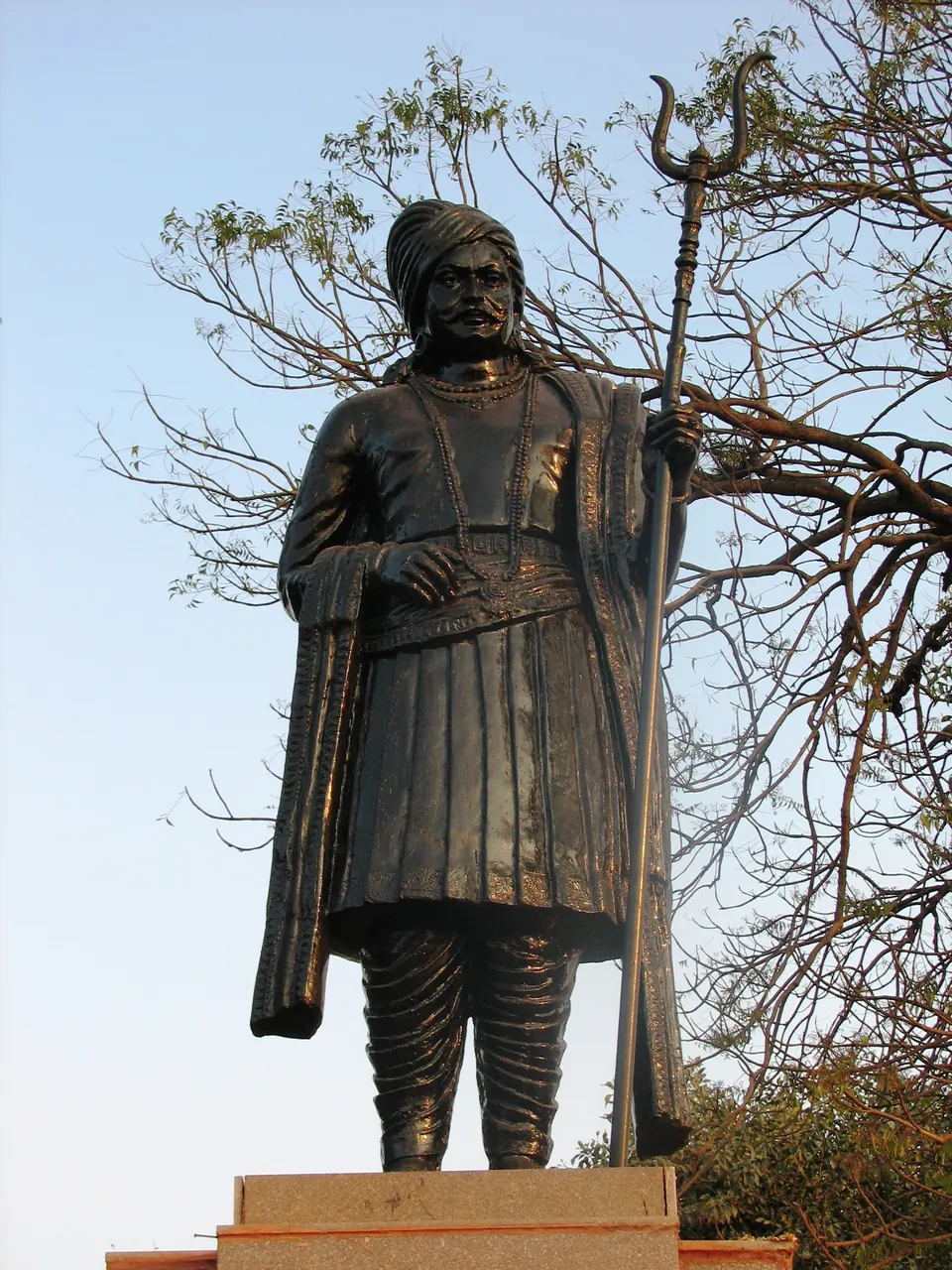
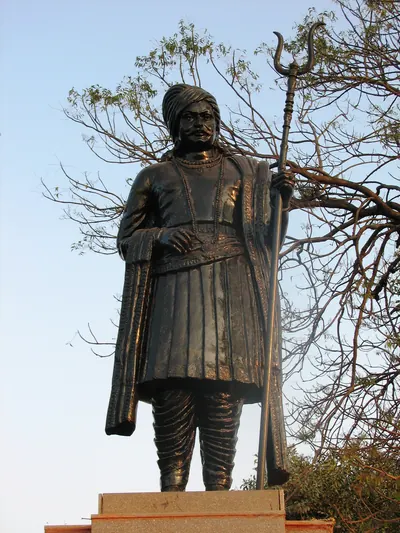
Brahma Nayudu is the central hero of the Palnati Viracharitra, the ballad cycle of the “Palnad Heroes”.1 In 1879 Robert Sewell found this cycle “fondly cherished by all the inhabitants” of the Palnadu.1 No inscription names him. What is told of him comes from the ballads and from the cult at Karempudi.23 Historians have also tried to fit the story into the history of the Haihaya chiefs of the Palnadu.23
In the ballad
Sewell summarised the version written by Mudigonda Virabhadra in 1862. In it Brahma Nayudu is the second son of Dodda Nayudu, chief minister of the king Alugu Bhupati.34 The ministers are said to belong to the Velama caste.34 The poem makes him “a miraculous child, in fact Vishnu himself”.5
The scheming Nayakuralu turned the king against him.6 He then took the young princes Balama and Devulu out of Gurazala, and founded a new city at Macherla.6 He lost a cock-fight at Gurazala by sorcery and went into exile for seven years. On his return the two sides fought a war.789 In it his son Baludu and most of his companions were killed.789
The story ends with Brahma Nayudu reviving the dead heroes and leading them in procession into the great cave of Guttikonda.10 Chilukuri Veerabhadra Rao (1912) made the war a quarrel between the half-brothers Malideva and Nalagama.1112 Brahma Nayudu served Malideva, and Nayakuralu was the champion of Nalagama.1112
Date
H. H. Wilson (1828) dated the war, “carried on by Brahma Naidu and twelve other land holders and graziers”, to 1080–1087.13 C. P. Brown (1852) put the events “about the year A.D. 1160”.14 Sewell thought the heroes flourished in the early 14th century.13 He recorded a verse at Karempudi that dates the end of the war to 1386.13
Veerabhadra Rao placed the war between 1176 and 1182, from synchronisms (matching dates) in the poem.11 P. V. Parabrahma Sastry dated the Palnadu war after 1181, as the occasion of the Kakatiya Rudradeva’s march to the coast.15 Gordon Mackenzie, in 1883, considered the early history of the Palnadu unknown, and the legends “of no historical value”.16
Worship at Karempudi
At Karempudi the temple of the heroes keeps six iron spears.17 Sewell writes that “the biggest of these is called ‘Nayudu’s spear’ or the spear of Brahma Nayudu, the chief of the Heroes”.17 Veerabhadra Rao reported the belief that Brahma Nayudu is Vishnu and is still doing penance in a cave near Karempudi, and described the yearly festival held there in Kartika. A hereditary officer called the “Brahmanayani mudrakarta” presides over it.18
V. Rangacharya noted that the inscriptions show the cult established in the time of the later Kakatiyas. A record of 1445 at Karempudi marks the spot where one of the heroes, Chilama Nayudu, planted his spear.219 Rangacharya quoted the suggestion that the chiefs shown on it “may have been later members of the family” of Brahma Nayudu and his colleagues.219 These are the heroes “mentioned in Mr. Sewell’s Chronicle of the heroes”.219
Footnotes
-
Robert Sewell, Lists of the Antiquarian Remains in the Presidency of Madras, Vol. I (1882), Appendix A, p. i (archive.org (opens in a new tab)). ↩ ↩2 ↩3 ↩4
-
V. Rangacharya, A Topographical List of the Inscriptions of the Madras Presidency, Vol. II (1919), p. 805 (archive.org (opens in a new tab)). ↩ ↩2 ↩3 ↩4 ↩5
-
Sewell, Lists of Antiquarian Remains, Vol. I (1882), Appendix A, p. ii (archive.org (opens in a new tab)). ↩ ↩2 ↩3 ↩4 ↩5 ↩6
-
Sewell, Lists of Antiquarian Remains, Vol. I (1882), Appendix A, p. iii (archive.org (opens in a new tab)). ↩ ↩2
-
Sewell, Lists of Antiquarian Remains, Vol. I (1882), Appendix A, p. iv (archive.org (opens in a new tab)). ↩
-
Sewell, Lists of Antiquarian Remains, Vol. I (1882), Appendix A, p. vi (archive.org (opens in a new tab)). ↩ ↩2
-
Sewell, Lists of Antiquarian Remains, Vol. I (1882), Appendix A, p. vii (archive.org (opens in a new tab)). ↩ ↩2
-
Sewell, Lists of Antiquarian Remains, Vol. I (1882), Appendix A, p. viii (archive.org (opens in a new tab)). ↩ ↩2
-
Sewell, Lists of Antiquarian Remains, Vol. I (1882), Appendix A, p. x (archive.org (opens in a new tab)). ↩ ↩2
-
Sewell, Lists of Antiquarian Remains, Vol. I (1882), Appendix A, p. xi (archive.org (opens in a new tab)). ↩
-
Chilukuri Veerabhadra Rao, Andhrula Charitramu, Part II (1912), p. 192 (archive.org (opens in a new tab)). In Telugu. ↩ ↩2 ↩3
-
Veerabhadra Rao, Andhrula Charitramu, Part II (1912), p. 197 (archive.org (opens in a new tab)). In Telugu. ↩ ↩2
-
H. H. Wilson, The Mackenzie Collection: A Descriptive Catalogue of the Oriental Manuscripts, Vol. I (1828), p. 305 (archive.org (opens in a new tab)). ↩
-
C. P. Brown, A Dictionary, Telugu and English (1852), preface, p. xi (archive.org (opens in a new tab)). ↩
-
P. V. Parabrahma Sastry, The Kakatiyas of Warangal (1978), p. 98. ↩
-
Gordon Mackenzie, A Manual of the Kistna District (1883), p. 9, note 1 (archive.org (opens in a new tab)). ↩
-
Sewell, Lists of Antiquarian Remains, Vol. I (1882), Appendix A, p. xv (archive.org (opens in a new tab)). ↩ ↩2
-
Veerabhadra Rao, Andhrula Charitramu, Part II (1912), p. 232 (archive.org (opens in a new tab)). In Telugu. ↩
-
Rangacharya, Topographical List, Vol. II (1919), p. 811, No. 525 (archive.org (opens in a new tab)). ↩ ↩2 ↩3
Photos
References
Notes (0)
Sources (7)
Spotted an error on this page? Tell us
Last updated: