Folk songs & oral traditions
Burrakatha, Oggu katha, Yakshaganam and the heroic ballads of Palnadu and Bobbili.
This page follows the oral traditions of the Telugu country. Ballads of local heroes, songs of the village goddesses, family histories recited at the door, puppet plays and street dramas carried history and belief from one generation to the next.12345
About the sources. The performers wrote very little of this down. What survives comes mostly from outsiders who wrote between the 1820s and the 1920s. They wrote the catalogue of Colin Mackenzie’s manuscripts, district manuals and gazetteers, and caste surveys of the Madras Presidency and Hyderabad State. Those writers often looked down on what they described. This page uses their facts, not their judgements, and says plainly where the sources are silent.
A literature of the village
In 1928 P. Chenchiah and Raja M. Bhujanga Rao wrote the first connected history of Telugu literature in English.1 They argued that beside the Sanskrit-based court poetry there had always been an older native current, which they called desi.1 In their account it was rural in outlook and simple in form. It dealt with “the domestic life of the cottage and the communal life of the village”.1 Some of its themes were maids at the well, the mother at the cradle, lovers in the moonlight, the labourer in the field, and the local hero of the tribal wars.1
They listed its kinds:1
- cradle songs, songs of the dawn, festival songs and love songs
- devotional songs (kirtanas) and harvest songs
- the songs of cart-drivers, drinking songs and songs of play
- proverbs, and stories (kathalu)
- the “sagas of local chiefs”, that is, the ballads1
C. R. Reddy wrote the foreword to the book. He called for a separate history of these native elements, and named among them “the Yaksha Ganams or village dramas”.6 He counted “ballads like Palnati Viracharitra, attributed to Srinatha” among the works “expressive of the true Andhra soul”.6
Sixty years earlier, the Vizagapatam district manual had noticed the same divide. Besides the written poetry, it said, there were ballads (kathalu) “of great length, framed in a peculiar chant”.7 These, it said, “are chiefly preserved by oral recitations; they are everywhere popular, though despised, as illiterate, by professed scholars”.7 Chenchiah and Bhujanga Rao noted that this popular literature usually used the two-line dvipada metre. Srinatha’s Palnati Vira Charitra was composed in it.8
The heroes of Palnadu
The best-recorded Telugu heroic cycle is the story of the Palnati Viralu, the heroes of Palnadu. Palnadu is the hilly country on the right bank of the Krishna, in the west of Guntur district. Nagarjunakonda lies in the same tract. Mackenzie’s collection held a paper manuscript of the Palnad Vira Cheritra.9 It was catalogued in 1828 as the account of a seven years’ war.9 Brahma Naidu “and twelve other land holders and graziers” waged it against the towns of Gurazala and Macherla.9 It was a war “which originated in a dispute at a cock-fight”.9
Robert Sewell toured Palnadu in 1879. He wrote that the heroes’ “memory is fondly cherished by all the inhabitants”.10 Temples had been built in their honour, poems written about their deeds, villages named after them, and songs sung.10 He wrote that “Hindus and Mussalmans vie with one another to do them reverence on their grand festival day once a year”.10
Sewell borrowed the latest version of the poem and printed a summary of it.11 Mudigonda Virabhadra wrote this version in 1862, and it was said to gather up the local legends.11 In outline, the story runs like this:11
- Brahma Nayudu, son of the chief minister Dodda Nayudu, served as minister to the ruler of Palnadu.
- Through the plots of a woman named Nayakurala, the king treated him badly.
- He took the king’s two sons and left the country.
- After seven years he came back to claim half the kingdom for them. When this was refused, war followed.11
Brahma Nayudu’s young son Baludu was, Sewell said, “the popular pet”.11 At the poem’s end, the heroes are raised from the dead and go in procession to the cave at Guttikonda. There Brahma Nayudu takes on his true form as Vishnu, and the heroes become gods.12
At Karempudi, Sewell found the heroes’ temple beside the Nagileru stream.13 Local tradition said that a Muslim noble had paid for the temple, out of admiration for Brahma Nayudu. His grave and his brother’s lay within its walls.13 Muslims, Sewell recorded, took part in the yearly festival and paid their respects to the souls of the heroes.13
The temple kept six iron spears said to have belonged to the heroes.14 The largest was called “Nayudu’s spear” and the smallest was Baludu’s.14 Once a year the town held a great cock-fighting festival.14 The whole story turns on a cock-fight. So Sewell thought the people kept the custom up as a point of honour.14
The Kistna district manual of 1883 added that the ballads “abound in demon-horses, miraculous cocks, enchanted tigers and all the usual paraphernalia of fairy tales”.15 It warned that a version written in 1862 could not show what had been sung centuries before.15
The sources do not agree on when the heroes lived:91617
- The Mackenzie catalogue dated the war to 1080–1087.9
- An old village accountant at Karempudi recited to Sewell a traditional verse. It gave Saka 1308 (1386 CE; Saka is an Indian way of counting years) for the war’s end.16
- But an inscription of 1333 already called a temple hall the “Mandapam of the Karempudi Heroes”. Sewell himself placed the chiefs in the early fourteenth century.16
- P. V. Parabrahma Sastry, writing in 1978, took the story to be about the chiefs Nalagamaraja and his half-brother Malidevaraja.17 They lived at the time of the Kakatiya king Rudradeva.17 He described the Palnati Vira Charitra as a ballad in dvipada ascribed to Srinatha.17
Katama Raju and the herders’ wars
A second herders’ cycle, the Katama Raja Cheritra, appears in the same Mackenzie catalogue.18 It calls this “a long account, in which fact and fiction are curiously blended”.18 It tells of a war between Katama Raja, ruler of Yeragada, and Siddhi Raja of Nellore. The war began when Katama’s herds strayed onto Siddhi Raja’s pastures.18 At one point in the story, the cows themselves charge the enemy. Both leaders die in the last battle.18
Edgar Thurston collected a legend among the Gollas, the Telugu herding community.19 It tells of five brothers, Katama Raju among them, who were killed with all their sheep by the Rajas of Nellore.19 One brother survived. Among his followers, the legend says, were the ancestors of the men who still recited the Gollas’ family histories.19
Other followers were ancestors of men who painted the story of the Golla kings’ destruction on large cloths.19 They showed these cloths to the Gollas once a year. After the Telugu New Year they went round the Golla villages to collect their dues.19
In Hyderabad State, Syed Siraj ul Hassan described a group of Gollas who served the rest of the community as family bards and keepers of family histories.20 They were known for “singing and extolling the history and renown of the families” of their patrons.20 They hung a sari printed with dolls as a curtain before their huts. In various disguises, they danced and sang before the gods.20
Bobbili, 1757
The other great Telugu ballad subject is the fall of Bobbili in the Visakhapatnam (then Vizagapatam) country.21 The district gazetteer of 1907 follows the historian Robert Orme.21 It tells how the French commander Bussy stormed the fort of Ranga Rao of Bobbili on 24 January 1757. With him was the army of Vijayarama Razu of Vizianagaram.21
The defenders saw that the fort would fall. They killed their own women and children, then fought on until Ranga Rao and nearly all his men were dead.21 One infant son was saved.21 Three nights later, two of Ranga Rao’s soldiers crept into Vijayarama Razu’s tent and stabbed him to death.21
The gazetteer noted “the popular ballad on the subject which is still sung all over the district”.22 In the ballad, the killing is credited to a single man, Tandra Papayya, an officer of the fort at Rajam.22 The Maharaja of Bobbili put up an inscribed obelisk (stone pillar) on the fort site in 1891. In 1900 the Velamas of Bobbili built a hall named after Papayya.22
The siege was remembered across the Telugu country:7232425
- The Vizagapatam manual of 1869 called the Bobbili Ranga Rao Charitra “the favorite ballad here”.7
- The Godavari manual of 1878 said the siege “still lives in the traditions and in the ballads of the people”.23
- The Kurnool manual of 1886 named the Bobbili katha first among the stories of the ballad-reciters there. Next to it was the story of the British resumption (taking back) of Kurnool.24
- The family history of the Bobbili zamindars (landholders), published in 1907, said ballads of the siege were sung “in every part of the Telugu-speaking country”.25
Even the date varies.26 Chenchiah and Bhujanga Rao give 1756 for the war, which the poet Dittakavi Narayana praised in verse.26 The Bobbili family history gives 1758 in one place.26
Singers and their songs
The Visakhapatnam Dasaris were a Vaishnava community. In 1909 they were described as “the most popular among ballad-singers”.27 They travelled in pairs, “one singing, while the other plays, and joins in the chorus”.27 Their favourite songs were these:27
- the Bobbilipata
- a song about Ammi Nayudu, a cruel village headman of Palkonda taluk who was killed by one of his dependants
- a song about Lakshmamma, a Velama woman put to death by her husband for breaking a marriage custom
- a song about Yerakamma of Srungavarapukota, who died by sati (burning on her husband’s funeral fire) and became the local goddess27
In Anantapur, the district gazetteer of 1905 found ballads still sung in honour of Thomas Munro.28 He had been the Principal Collector of the Ceded Districts, and the people remembered him as almost divine.28
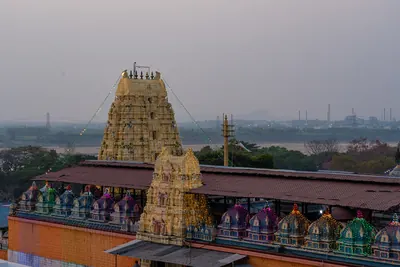
In the Krishna country, a printed book of ballads, Ramdas Khaidu, told the story of Gopanna.29 He was a revenue officer who improved the Rama temple at Bhadrachalam with public money. Abul Hasan Tana Shah jailed him, and he was freed when Rama and Lakshmana paid his debt.29 The manual says it was “sung by many devout Hindus with much feeling”.29
Other communities kept memory as a hereditary calling. The Madras census of 1891 described the Bhatrazus as “a class of professional bards, spread all over the Telugu districts”.30 They were “well versed in folklore, and in the family histories and legends of the ancient Rajahs”.30 W. Francis recorded their own tradition. It said that Prataparudra of Warangal had invited them south.30 After Warangal fell, they seem to have become court bards to the Reddi and Velama chiefs.30
In the Telugu districts of Hyderabad State, the Bhatrazus were hereditary bards of the Velama and Kapu families.31 Siraj ul Hassan noted that they “have produced some of the most eminent poets in Telugu literature”.31 By 1920 many had taken to farming, and a few to government service.31 In Anantapur they still toured the villages in 1905. There they made up verses on the spot in praise of the leading householders.32
The Pichakuntalas of Telangana and Kurnool recited the gotras (clan lines) and family histories of Kapu and Golla families.3 Two of their sub-groups took their names from the bell and the pipe they played as they went.3
Many songs belonged to the worship of the village goddesses. Henry Whitehead described a goddess festival in the Telugu country.2 There, Asadis chanted the praises of the goddess while the sacrifices were offered. They were families within the Mala community with a hereditary right to this office.2 They sang “a long chant in honour of the deity” through the night.2
Thurston recorded several such customs:33
- Telugu fishing families hired Mala Pambalas to recite the legend of their goddess Kamamma.
- Toddy-drawing families hired Pambalas and Bainedus, “musicians and story-tellers”, to recite the story of Ankamma.33 As they did so, they drew designs in five colours on the ground.
- Among the Madigas, the stories of Ankamma and Matangi were recited at night after a funeral.33
The Dakkalis, attached to the Madiga community, sang songs in praise of the Madigas themselves.34 In the Godavari district, the Mailaris carried an image of the goddess Kanyakamma and sang her praises. The Viramushtis were wrestlers and bards.35 Both groups were attached to the Komati merchant community.35
Plays, puppets and street theatre
The records describe several kinds of popular drama, though rarely by the names used today. Thurston noted the Bhagavatulu as “play-actors in the Telugu country”.36 They had this name because they performed stories from the Bhagavatam.36 Some Madigas, called Sindhuvallu, acted scenes from the Mahabharata and Ramayana, or the story of Ankalamma.37
The Kurnool manual listed the Bingivandlu, “who themselves act and play as dramatists”.24 In Nellore, on the night of Mukkoti Ekadasi, people stayed awake watching “dramatic performance in the houses or streets”.5
Puppet theatre was widespread. The Killekyatas were a Marathi-speaking people who travelled through the Telugu and Kannada countries.4 Their figures were painted on fine tanned deer-skin. The limbs were jointed with wire and moved with bamboo sticks behind a screen, “to the accompaniment of songs”.4 Their stories came from the Ramayana and Mahabharata.4
In Anantapur the Killekyatas were the usual travelling players.38 They were paid in money, or in oil for the footlights.38 The story of Desing Raja of Gingee was among their favourite plays.38
In Kadapa (then Cuddapah), the bommalatam (puppet play) used dolls of oiled paper held against a lit cotton screen.39 Singers behind the screen told the story.39 The favourite play in the black-cotton country was about the god Obalapati of the Nallamalais and a Chenchu girl.39 According to an account quoted in the gazetteer, this play had come from Nellore only some twenty years earlier.39 Shadow puppets were “very common” in the Godavari district.40
In Visakhapatnam, boys dressing up at the village goddess festivals had grown into regular plays.41 A favourite told of a greedy tahsildar (revenue officer) who was ruined and finally dismissed by the Nawab.41 Puppet shows on strings of the Ramayana were also given. The Raja of Vizianagaram had brought in north Indian-style Ramayana pageants at Dasara.41
Tribal songs and dances
In the Godavari agency, the Koyas danced at their harvest feasts and weddings.42 The men wore straw head-dresses set with buffalo horns, and chanted as they danced.42
Among the Raj Gonds of Hyderabad State, Siraj ul Hassan wrote, the Pardhans served as keepers of family histories and as bards.43 They played a kind of fiddle, “singing the exploits and great deeds of their rajas and heroes”.43 No Raj Gond wedding or funeral could take place without one. The Thotis, in turn, were the wandering singers of the Pardhans.43
Christoph von Fürer-Haimendorf lived among the Chenchus of the Nallamalai plateau.44 He concluded that they seemed to have no songs of their own. Mothers made up their lullabies as they went.44 The men told him that they never sang, but only shouted as they danced.44 Young girls did sing a circle-song about Rama, learnt from the plains. The adults’ one shared entertainment was dancing in the mohua flower season.44
Into the twentieth century
Song also served new causes. During the Swadeshi campaign of 1907, the poet Chilakamarti Lakshmi Narasimham wrote a song comparing India to a milch cow whose calves were robbed of their milk.45 It became widely popular (see Reform, freedom & people’s movements).45
After the integration of Hyderabad, the state’s information department sent a drama troupe into the districts affected by the Communist rising in 1948–50.46 It staged plays and Burra kathas in Telugu against the rising.46 Its report counted 125 performances, watched by nearly 400,000 villagers. It said the Communists tried to stop people from attending.46
What this page does not cover
The sources in this library are thin on several of the forms named in this page’s summary:
- Burrakatha. The only mention found is the government’s use of Burra kathas in 1948–50, given above. No source here describes its origins, its form, or its use by the left-wing cultural movement.
- Oggu katha. No source here describes it by name. Siraj ul Hassan records that the Kurumas of Telangana worshipped Mallanna and Beerappa with priests from their own community.47 But he says nothing of their sung stories.47
- Yakshaganam. C. R. Reddy mentions “Yaksha Ganams or village dramas”,6 and play-actors are noted above, but beyond these, no source here gives its texts, performers or history.
- Festival songs such as those of Bathukamma and Bonalu, women’s work songs, and the folk traditions of the Telugu country after 1956 are not covered by any source used here.
About the sources. Better sources would include the Telugu folklore collections of the twentieth century and the records of the Andhra and Telangana cultural movements. Dance traditions are covered on Music & dance, and the village goddesses on Religion & philosophy.
Footnotes
-
P. Chenchiah and Raja M. Bhujanga Rao, A History of Telugu Literature (1928), p. 40 (archive.org (opens in a new tab)). ↩ ↩2 ↩3 ↩4 ↩5 ↩6 ↩7
-
Henry Whitehead, The Village Gods of South India (2nd ed., 1921), pp. 44, 50, 53 (archive.org (opens in a new tab)). ↩ ↩2 ↩3 ↩4
-
Siraj ul Hassan, Castes and Tribes of the Nizam’s Dominions (1920), pp. 568–569 (archive.org (opens in a new tab)); Chetty, Kurnool (1886), p. 140 (archive.org (opens in a new tab)). ↩ ↩2 ↩3
-
Thurston and Rangachari, Castes and Tribes, Vol. III (1909), p. 293 (archive.org (opens in a new tab)). ↩ ↩2 ↩3 ↩4
-
John A. C. Boswell, A Manual of the Nellore District (1873), p. 192 (archive.org (opens in a new tab)). ↩ ↩2
-
C. R. Reddy, foreword to Chenchiah and Bhujanga Rao, A History of Telugu Literature (1928), p. 7 (archive.org (opens in a new tab)). ↩ ↩2 ↩3
-
D. F. Carmichael, A Manual of the District of Vizagapatam (1869), p. 80 and note (archive.org (opens in a new tab)). ↩ ↩2 ↩3 ↩4
-
Chenchiah and Bhujanga Rao, History of Telugu Literature (1928), p. 98 (archive.org (opens in a new tab)). ↩
-
H. H. Wilson, The Mackenzie Collection, Vol. I (1828), p. 305 (archive.org (opens in a new tab)). ↩ ↩2 ↩3 ↩4 ↩5 ↩6
-
Robert Sewell, Lists of the Antiquarian Remains in the Presidency of Madras, Vol. I (1882), Appendix A, p. i (archive.org (opens in a new tab)). ↩ ↩2 ↩3
-
Sewell, Lists of Antiquarian Remains (1882), App. A, pp. i–ii (archive.org (opens in a new tab)). ↩ ↩2 ↩3 ↩4 ↩5
-
Sewell, Lists of Antiquarian Remains (1882), App. A, pp. x–xi (archive.org (opens in a new tab)). ↩
-
Sewell, Lists of Antiquarian Remains (1882), App. A, p. xiii (archive.org (opens in a new tab)). ↩ ↩2 ↩3
-
Sewell, Lists of Antiquarian Remains (1882), App. A, p. xv (archive.org (opens in a new tab)); Gordon Mackenzie, A Manual of the Kistna District (1883), pp. 161–162 (archive.org (opens in a new tab)). ↩ ↩2 ↩3 ↩4
-
Mackenzie, Kistna District (1883), pp. 151–152 (archive.org (opens in a new tab)). ↩ ↩2
-
Sewell, Lists of Antiquarian Remains (1882), App. A, pp. i–ii (archive.org (opens in a new tab)). ↩ ↩2 ↩3
-
P. V. Parabrahma Sastry, The Kakatiyas of Warangal (1978), p. 11. ↩ ↩2 ↩3 ↩4
-
Wilson, The Mackenzie Collection, Vol. I (1828), pp. 304–305 (archive.org (opens in a new tab)). ↩ ↩2 ↩3 ↩4
-
Edgar Thurston and K. Rangachari, Castes and Tribes of Southern India, Vol. II (1909), p. 292 (archive.org (opens in a new tab)). ↩ ↩2 ↩3 ↩4 ↩5
-
Syed Siraj ul Hassan, The Castes and Tribes of H.E.H. the Nizam’s Dominions, Vol. I (1920), p. 208 (archive.org (opens in a new tab)). ↩ ↩2 ↩3
-
W. Francis, Madras District Gazetteers: Vizagapatam, Vol. I (1907), pp. 238–240 (archive.org (opens in a new tab)). ↩ ↩2 ↩3 ↩4 ↩5 ↩6
-
Francis, Vizagapatam (1907), p. 241 (archive.org (opens in a new tab)). ↩ ↩2 ↩3
-
Henry Morris, A Descriptive and Historical Account of the Godavery District (1878), p. 232 (archive.org (opens in a new tab)). ↩ ↩2
-
N. G. Chetty, A Manual of the Kurnool District (1886), p. 140 (archive.org (opens in a new tab)); quoted in Thurston and Rangachari, Castes and Tribes, Vol. I (1909), p. 133 (archive.org (opens in a new tab)). ↩ ↩2 ↩3
-
V. S. Ranga Rao, Maharaja of Bobbili, A Revised and Enlarged Account of the Bobbili Zemindari (1907), p. 57 (archive.org (opens in a new tab)). ↩ ↩2
-
Chenchiah and Bhujanga Rao, History of Telugu Literature (1928), p. 90 (archive.org (opens in a new tab)); Ranga Rao, Bobbili Zemindari (1907), p. 8 (archive.org (opens in a new tab)). ↩ ↩2 ↩3
-
Thurston and Rangachari, Castes and Tribes, Vol. II (1909), pp. 118–119 (archive.org (opens in a new tab)); Francis, Vizagapatam (1907), p. 84 (archive.org (opens in a new tab)). ↩ ↩2 ↩3 ↩4
-
W. Francis, Madras District Gazetteers: Anantapur (1905), p. 112 (archive.org (opens in a new tab)). ↩ ↩2
-
Mackenzie, Kistna District (1883), pp. 37–38 (archive.org (opens in a new tab)). ↩ ↩2 ↩3
-
Thurston and Rangachari, Castes and Tribes, Vol. I (1909), pp. 224–225 (archive.org (opens in a new tab)). ↩ ↩2 ↩3 ↩4
-
Siraj ul Hassan, Castes and Tribes of the Nizam’s Dominions (1920), pp. 56, 59 (archive.org (opens in a new tab)). ↩ ↩2 ↩3
-
Francis, Anantapur (1905), p. 36 (archive.org (opens in a new tab)). ↩
-
Thurston and Rangachari, Castes and Tribes, Vol. I (1909), p. 221 (archive.org (opens in a new tab)); Vol. II (1909), p. 256 (archive.org (opens in a new tab)); Vol. IV (1909), p. 323 (archive.org (opens in a new tab)). ↩ ↩2 ↩3
-
Thurston and Rangachari, Castes and Tribes, Vol. IV (1909), p. 324 (archive.org (opens in a new tab)). ↩
-
F. R. Hemingway, Madras District Gazetteers: Godavari, Vol. I (1907), p. 55 (archive.org (opens in a new tab)). ↩ ↩2
-
Thurston and Rangachari, Castes and Tribes, Vol. I (1909), pp. 222–223 (archive.org (opens in a new tab)). ↩ ↩2
-
Thurston and Rangachari, Castes and Tribes, Vol. IV (1909), p. 315 (archive.org (opens in a new tab)). ↩
-
Francis, Anantapur (1905), p. 32 (archive.org (opens in a new tab)). ↩ ↩2 ↩3
-
C. F. Brackenbury, Madras District Gazetteers: Cuddapah, Vol. I (1915), p. 63 (archive.org (opens in a new tab)). ↩ ↩2 ↩3 ↩4
-
Hemingway, Godavari (1907), p. 45 (archive.org (opens in a new tab)). ↩
-
Francis, Vizagapatam (1907), pp. 70–71 (archive.org (opens in a new tab)). ↩ ↩2 ↩3
-
Hemingway, Godavari (1907), p. 65 (archive.org (opens in a new tab)). ↩ ↩2
-
Siraj ul Hassan, Castes and Tribes of the Nizam’s Dominions (1920), p. 219 (archive.org (opens in a new tab)). ↩ ↩2 ↩3
-
Christoph von Fürer-Haimendorf, The Chenchus: Jungle Folk of the Deccan (1943), pp. 237–241 (archive.org (opens in a new tab)). ↩ ↩2 ↩3 ↩4
-
Sarojini Regani, Highlights of the Freedom Movement in Andhra Pradesh (1956), p. 33 (archive.org (opens in a new tab)). ↩ ↩2
-
Report on the Administration of Hyderabad State, September 1948 – March 1950 (1950), p. 156 (archive.org (opens in a new tab)). ↩ ↩2 ↩3
-
Siraj ul Hassan, Castes and Tribes of the Nizam’s Dominions (1920), pp. 363, 368 (archive.org (opens in a new tab)). ↩ ↩2
Photos
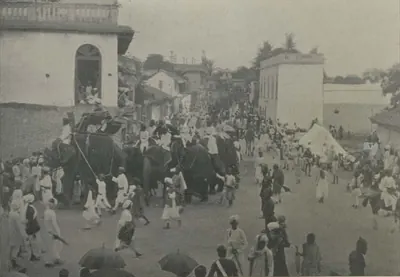 Hyderabad: "Langar Procession (Arab Chiefs)" (Campbell 1898, p. 269)Historic photograph · 1898
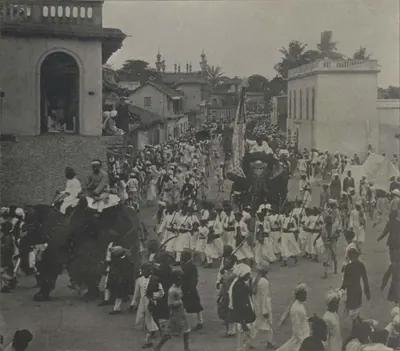 Hyderabad: "Langar Procession (Arab Standard)" (Campbell 1898, p. 271)Historic photograph · 1898
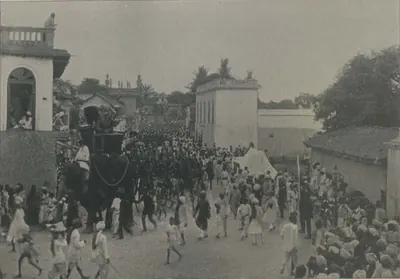 Hyderabad: "Langar Procession (City Kotwal and Police)" (Campbell 1898, p. 267)Historic photograph · 1898
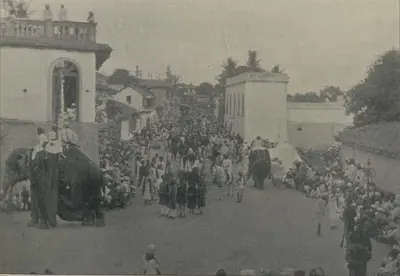 Hyderabad: "Langar Procession (Elephant Standard-Bearer)" (Campbell 1898, p. 267)Historic photograph · 1898
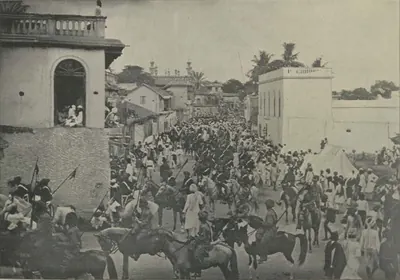 Hyderabad: "Langar Procession (Irregular Cavalry)" (Campbell 1898, p. 269)Historic photograph · 1898
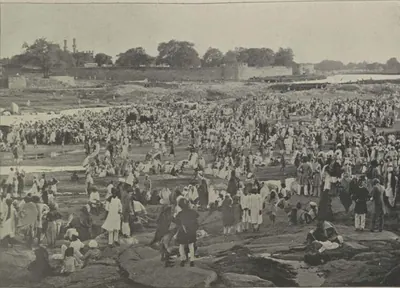 Hyderabad: "The Mohurrum (Tenth Day)" (Campbell 1898, p. 264)Historic photograph · 1898
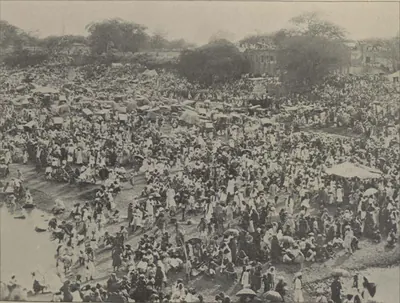 Hyderabad: "The Mohurrum, Hyderabad" (Campbell 1898, p. 263)Historic photograph · 1898
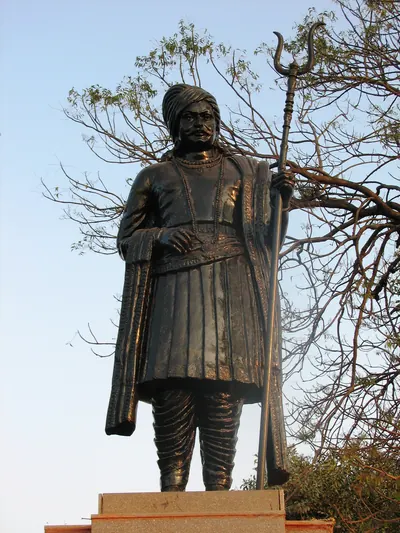 Statue of Brahma Nayudu on the Tank Bund, Hyderabad (photograph by Chavakiran, Wikimedia Commons)Photograph
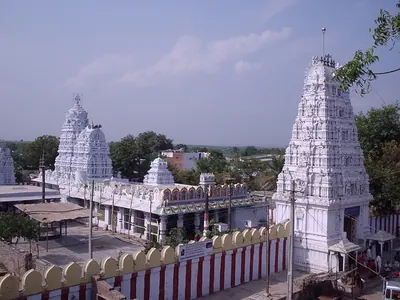
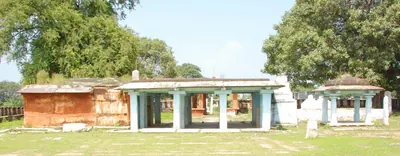 Veerula Gudi, the shrine of the Palnad heroes at Karempudi (photograph by Pavuluri satishbabu 123, 2014, Wikimedia Commons)Photograph · 2014
Related
Dynasties
People
Brahma Nayudu
Hero of the Telugu ballad cycle of the Palnati Viralu (Heroes of Palnadu): the minister who led one side in the Palnadu war, fought out at Karempudi, and who is still honoured there as a form of Vishnu. He is known only from the ballads and the cult. No inscription names him, and the dates proposed for his war range from 1080 to 1386.
Gopalakrishna Ranga Rao of Bobbili
before 1757 CE
Chief of Bobbili, a Velama house in the Vizagapatam country. He refused Bussy's demand that he give up his family's old fort in exchange for other lands. Bussy and the Raja of Vizianagaram stormed Bobbili on 24 January 1757. Ranga Rao had the women and children of the fort killed and died fighting on the walls with his men, but his infant son was saved. Three nights later two of his soldiers killed the Raja of Vizianagaram in his tent. The siege is remembered in the Telugu ballad of Bobbili.
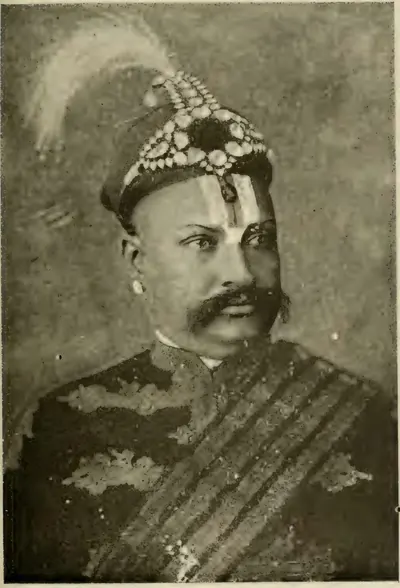
Kancherla Gopanna (Bhakta Ramadas)
A Telugu devotee of Rama, remembered as Ramadas. He was a revenue officer who spent government money on the Rama temple at Bhadrachalam on the Godavari and was imprisoned for it. In the legend, he was freed when Rama and Lakshmana paid his debt to the king. He is credited with the Dasarathi Sataka and with devotional songs. Writers of the nineteenth and early twentieth centuries make him a nephew of Madanna and an officer of Abul Hasan Qutb Shah. The Godavari district gazetteer of 1907 places him about 1725 under the Nizams.
Tenali Ramakrishna
Telugu poet, author of the Panduranga Mahatmyamu. Tradition counts him among the Ashtadiggajas of Krishnadeva Raya's court, and he is famous throughout the Telugu country as a jester. The record is thin. He first wrote as Tenali Ramalinga, a Saiva, before turning Vaishnava. The evidence of his patrons and contemporaries places him in the later sixteenth century, at the court of the Aravidu kings, rather than under Krishnadeva Raya. The jests told of him are folklore.
Places
Bhadrachalam
Temple town on the Godavari, held to be a place where Rama lived after the abduction of Sita. Its temple of Rama is linked with Kancherla Gopanna, remembered as Ramadas, who is said to have spent the revenue on the shrine and to have been imprisoned for it. The Kistna manual (1883) makes him a nephew of Madanna under the last Qutb Shahi king. The Godavari gazetteer (1907) places him about 1725, as an official of the Nizam.
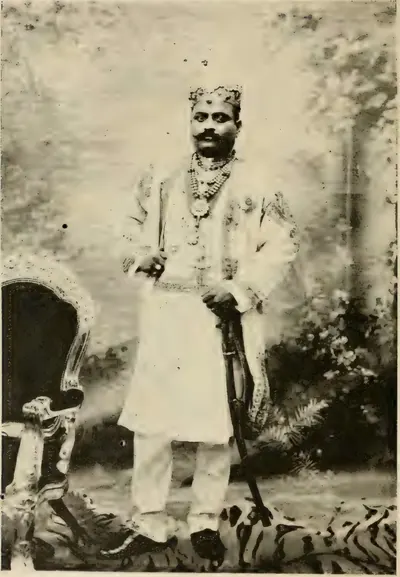
Bobbili
Town in the Vizagapatam (now Vizianagaram) country, seat of the Velama zamindars who bore the title Ranga Rao. Bussy and the Raja of Vizianagaram stormed its mud fort on 24 January 1757, when the defenders killed their families and died on the walls. The siege lives on in the Telugu ballad of Bobbili. The family recovered its lands in 1794, and the estate was settled permanently with it in 1801–02.
Gurazala
Town in the Palnadu, west of Dachepalle. An inscription of 1129 calls it Madhavipattana; in it Beta Birudankarudra, a Haihaya feudatory (subordinate chief) of the Western Chalukyas, gave land to a temple there. In the ballad of the Palnadu heroes it is the capital of King Alugu Bhupati and of Nayakuralu, from which Brahma Nayudu broke away.
Karempudi
Town on the Nagileru river in the Palnadu, west of Guntur. It is remembered as the battlefield of the Palnadu heroes and the seat of their cult. Its temple of the heroes, described by Robert Sewell in 1879, has inscriptions of 1324 and 1333. A minister of the Velanati chief Gonka II built a temple of Suresvara there in 1154.
Macherla
Town on the Chandravanka in the west of the Palnadu. A Sanskrit and Telugu inscription of 1111 calls it Mahadevi-tataka and records the gift of the Haihaya chief Beta, of the Chagi family, to a temple there. The ballad of the Palnadu heroes makes it the city founded by Brahma Nayudu, and 19th-century writers called it the capital of the Palnadu heroes.
Monuments
References
Notes (0)
Sources (23)
Spotted an error on this page? Tell us
Last updated: