Ghulam Ali Khan III of Banganapalle
Saiyid Ghulam Ali Khan, eldest son of the Nawab Fateh Ali Khan, was Nawab of Banganapalle from 1905 to 1922. He was born in October 1873 and educated privately at Banganapalle and Kurnool. When his father was removed for misgovernment and died in 1905, he was recognised as heir, but the State stayed under an Assistant Political Agent, who trained him, until December 1908. The 1961 Census handbook says his reign brought reforms, the spread of schooling and the start of industry, trade and mining. He died in 1922, in January according to the Memoranda on the Indian States, and was followed by his eldest son, Fazl-i-Ali Khan.
Download
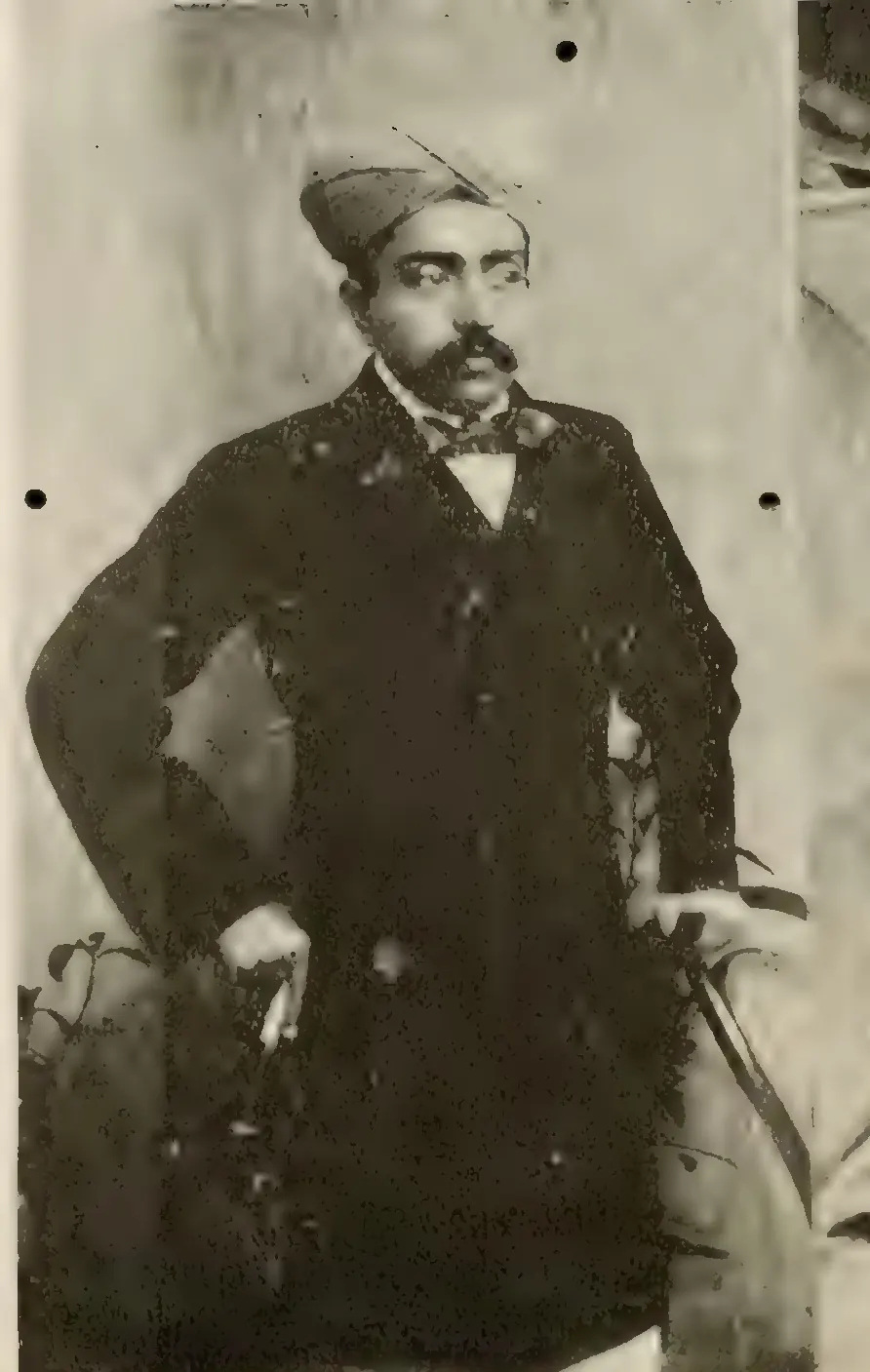
Saiyid Ghulam Ali Khan was the Nawab of Banganapalle from 1905 to 1922.1 Before he took full power, a British officer trained him in the work of government.2 See the Banganapalle State and his father, Fateh Ali Khan.
Youth
A. Vadivelu’s family history (1903) says that “in October 1873, Saiyid Ghulam Ali Khan Bahadur, the heir-apparent was born”.3 His birth was greeted with great joy.3 A tutor taught him English, Hindustani, Persian and other subjects.3 Vadivelu calls him “an intrepid rider, and a capital huntsman”.3 On 7 December 1900 he married the daughter of his uncle, Saiyid Murtuza Ali Khan.3
Vadivelu adds that he had a taste for history.34 He kept “a large collection of historical and biographical works both in English and Urdu”.4 The Imperial Gazetteer (1908) says that he was “educated privately at Banganapalle and Kurnool”.5
A ruler in training, 1905–1908
His father, the Nawab Fateh Ali Khan, ran up heavy debts.1 The Memoranda on the Indian States (1934) say that on 1 February 1905 the Madras government took over the State for a time.1 They give its reasons: the Nawab had impoverished the administration, ignored the government’s advice and blocked reforms.1 Fateh Ali Khan died on 22 April 1905.12
The Imperial Gazetteer says that his son, then thirty-one years old, succeeded him.5 His succession was recognised, but he had not yet received a sanad (deed of grant).5 Meanwhile the Assistant Political Agent went on running the State.5
The District Census Handbook of Kurnool (1961, printed 1964) names this officer as Molony, of the Indian Civil Service.2 The young Nawab was placed under his care, so that Molony could train him in the work of government.2 On 17 December 1908, the handbook says, the Governor of Madras, Arthur Lawley, gave him full ruling powers at a special durbar (court ceremony) at Banganapalle.2
His reign, 1908–1922
The Census handbook praises his rule.26 It says that he took an active interest in the affairs of the State.2 His reign saw the start of many reforms and the spread of schooling.6 In the handbook’s words, “industry, commerce and mining took roots”.6
He died in 1922.16 His eldest son, Fazl-i-Ali Khan, followed him.16 See Fazl-i-Ali Khan.
Where the sources disagree
- The handover of power. The Memoranda say that the Madras government handed the State over to him on 19 December 1908.1 The Census handbook says he received full ruling powers on 17 December 1908.2
- His death. The Memoranda say that he died on 22 January 1922.1 The Census handbook says that he died in July 1922.6
Footnotes
-
Memoranda on the Indian States, 1934 (Delhi, 1934), p. 139, Madras States Agency, “Banganapalle” (archive.org (opens in a new tab)). ↩ ↩2 ↩3 ↩4 ↩5 ↩6 ↩7 ↩8 ↩9
-
A. Chandra Sekhar, Census of India 1961, Andhra Pradesh: District Census Handbook, Kurnool District (1964), p. xxxi (PDF p. 52) (censusindia.gov.in (opens in a new tab)). Paraphrased (Public domain in India). ↩ ↩2 ↩3 ↩4 ↩5 ↩6 ↩7 ↩8
-
A. Vadivelu, The Aristocracy of Southern India (1903), p. 30 (archive.org (opens in a new tab)). ↩ ↩2 ↩3 ↩4 ↩5 ↩6
-
Vadivelu, Aristocracy of Southern India (1903), p. 31 (archive.org (opens in a new tab)). ↩ ↩2
-
Imperial Gazetteer of India, Provincial Series: Madras, Vol. II (1908), p. 474, “Banganapalle State” (archive.org (opens in a new tab)). ↩ ↩2 ↩3 ↩4
-
Chandra Sekhar, District Census Handbook, Kurnool (1964), p. xxxii (PDF p. 53) (censusindia.gov.in (opens in a new tab)). Paraphrased (Public domain in India). ↩ ↩2 ↩3 ↩4 ↩5 ↩6
Photos
Related
Dynasties
References
Notes (0)
Sources (4)
Spotted an error on this page? Tell us
Last updated: