Banganapalle
Town in the Erramala valley of the old Kurnool district. It was the capital of the small nawabi state of Banganapalle, from the time of the Mughal killedar (fort commander) Muhammad Beg Khan in the early eighteenth century until the Madras government took over its administration in February 1948. It was known for its gardens and orchards on the Jurreru stream, its mangoes, oranges and lacquerware, and an old diamond mine near the town. It lay on the road from Gooty to Cumbum, and declined after the railway bypassed it.
Banganapalle lies in the valley of the Jurreru stream, east of the Erramala hills, in what was the Kurnool district. It was the capital of the small Banganapalle State, whose rulers held it under the Nizam, Tipu Sultan and the British until 1948.12 The state’s Mughal killedar (fort commander), Muhammad Beg Khan, became a petty Nawab when the first Nizam made himself independent.12
The Kurnool district manual of 1886 put the town “250 miles from Madras, 50 from Kurnool, and 30 from Tadpatri Railway Station”.31 It called Banganapalle the only place in its small state with more than 5,000 people.31 It had 6,230 people in 1881.31 See Kurnool.
The town and its gardens
The manual says that the Jurreru “flows for a great distance through the jaghire of Banganapalle”.4 There it is used “for irrigating the numerous gardens and orchards for which Banganapalle is noted”.4
The Imperial Gazetteer (1908) says that the country was bare “except in the west and round Banganapalle, where the Nawab has planted groves of trees”.56 It lists the chief exports of the State as “cholam” (a millet), “ghi, skins, mangoes, oranges and lacquer-ware”.56 It adds: “For the last three of these the town of Banganapalle is noted.”56
At Yaganti, at the foot of the hills, there was a perennial spring (one that flows all year).7 It watered “a fine garden of mango, cocoanut, and other fruit trees” by the temple there.7
According to the manual, “About a mile from the town is a small diamond mine”.3 It “formerly yielded some valuable stones but is not worked now”.3 The Imperial Gazetteer describes a strip of conglomerate (a rock made of pebbles) west of the town “which has been mined for diamonds for many generations”.8
Nandavaram lay in Banganapalle territory, on the edge of the Nandyal taluk.9 The Nandavarika Brahmins regarded it as their original settlement.9
Fort and court
The Nawabs lived in a fort with a palace. Queen Victoria’s jubilee was celebrated at Banganapalle in 1887.1011 A. Vadivelu writes that the Nawab held a durbar (formal court) and released prisoners from the State jail.1011 He fired “a salute of 31 guns from the ramparts of the Fort”.1011 He also had “the palace, public buildings, and the houses generally” illuminated (lit up).1011
The manual mentions a small festival “in honor of Maula Ali”.7 The Nawab (“Nabob”) had “lately established” it “at a tomb newly built in the hills near the kusba” (the chief town).7
Decline
In 1800 the Nizam ceded a schedule (list) of districts to the Company.12 Among the lands he had gained by the treaty of Srirangapatna (then Seringapatam) of 1792, it lists “Bungumpully and Chunchunmullah, 2 Talooks”.12
The Imperial Gazetteer says that the town “was formerly a place of some importance owing to its position on the main road from Gooty to Cumbum”.13 But “it has declined greatly since the opening of the Southern Mahratta Railway”.13 Its population was then “less than 4,000”.13 See Gooty.
Footnotes
-
Chetty, Kurnool District (1886), p. 246 (archive.org (opens in a new tab)). ↩ ↩2 ↩3 ↩4 ↩5
-
Chetty, Kurnool District (1886), p. 247 (archive.org (opens in a new tab)). ↩ ↩2
-
Narahari Gopalakristnamah Chetty, A Manual of the Kurnool District (1886), p. 245 (archive.org (opens in a new tab)). ↩ ↩2 ↩3 ↩4 ↩5
-
Chetty, Kurnool District (1886), p. 15 (archive.org (opens in a new tab)). ↩ ↩2
-
Imperial Gazetteer of India, Provincial Series: Madras, Vol. II (1908), p. 471, “Banganapalle State” (archive.org (opens in a new tab)). ↩ ↩2 ↩3
-
Imperial Gazetteer: Madras, Vol. II (1908), p. 475 (archive.org (opens in a new tab)). ↩ ↩2 ↩3
-
Chetty, Kurnool District (1886), p. 251 (archive.org (opens in a new tab)). ↩ ↩2 ↩3 ↩4
-
Imperial Gazetteer: Madras, Vol. II (1908), p. 472 (archive.org (opens in a new tab)). ↩
-
Chetty, Kurnool District (1886), p. 19 (archive.org (opens in a new tab)). ↩ ↩2
-
A. Vadivelu, The Aristocracy of Southern India (1903), p. 26 (archive.org (opens in a new tab)). ↩ ↩2 ↩3 ↩4
-
Vadivelu, Aristocracy of Southern India (1903), p. 27 (archive.org (opens in a new tab)). ↩ ↩2 ↩3 ↩4
-
C. U. Aitchison, A Collection of Treaties, Engagements and Sanads, Vol. VIII (1892), Part II, p. 332, schedule to the treaty of 12 October 1800 (archive.org (opens in a new tab)). ↩ ↩2
-
Imperial Gazetteer: Madras, Vol. II (1908), p. 474 (archive.org (opens in a new tab)). ↩ ↩2 ↩3
Photos
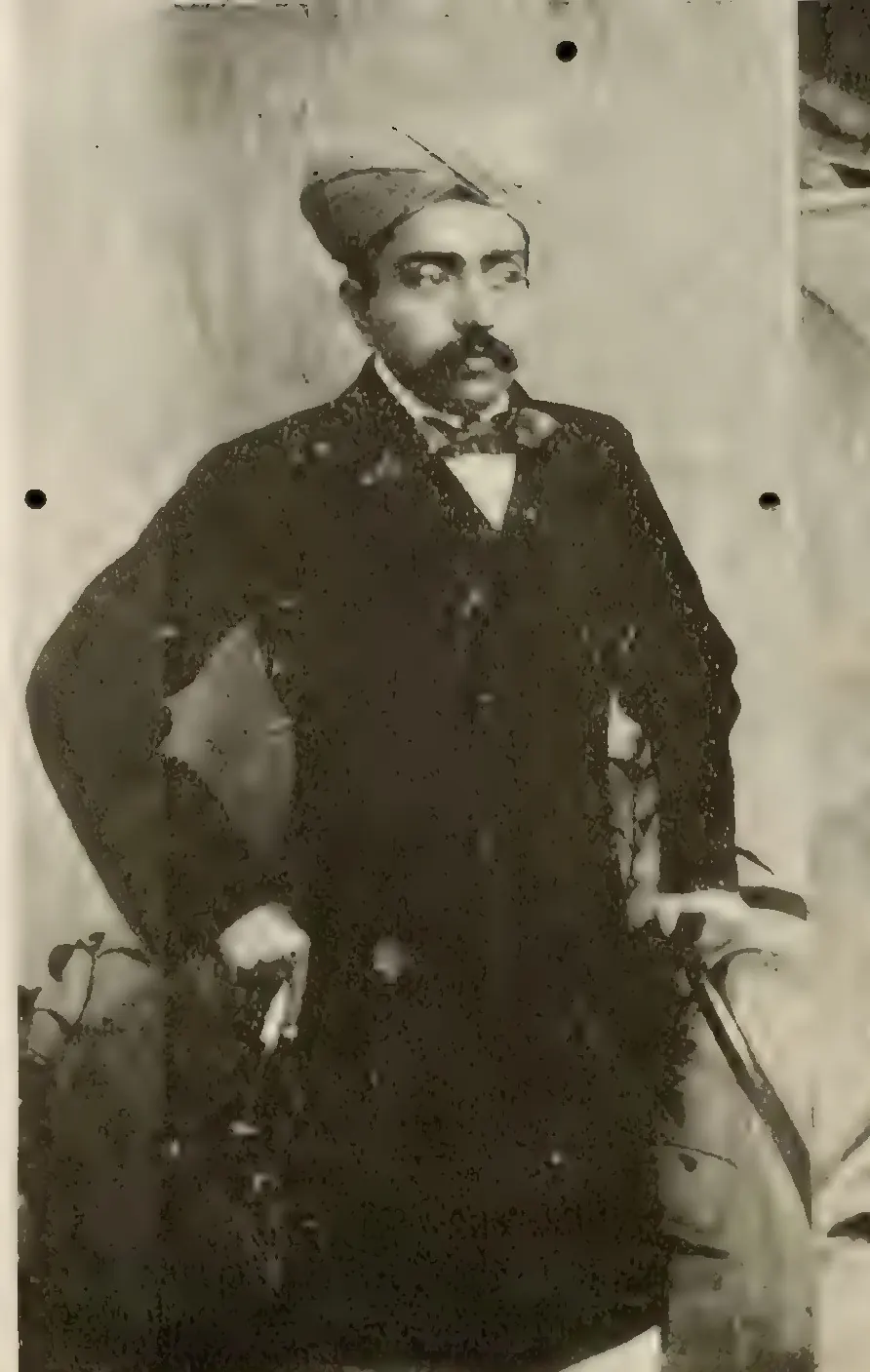
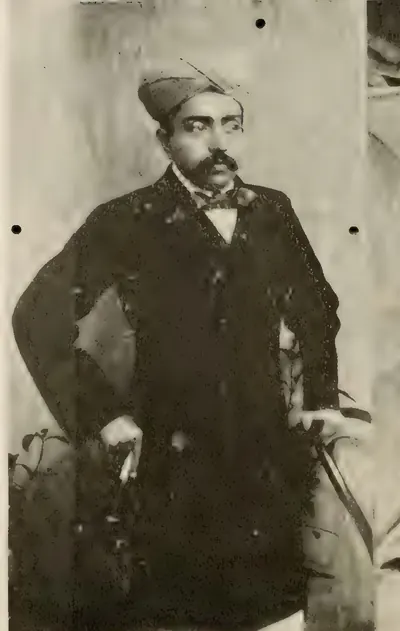 "H. H. The First Prince Of Banganapally": Saiyid Ghulam Ali Khan, eldest son of the Nawab Fateh Ali Khan and Nawab from 1905 (Vadivelu 1903, plate facing p. 31)Historic photograph · 1903
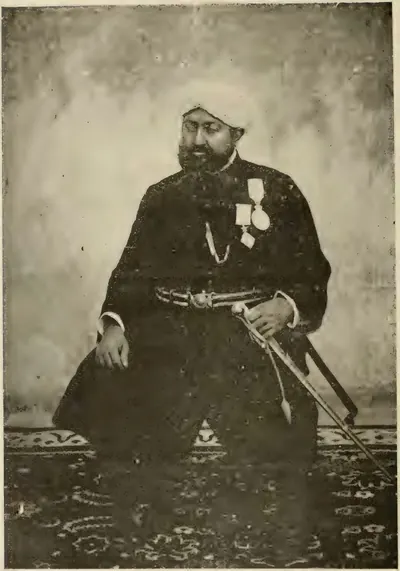 "H. H. The Nawab of Banganapally, C. S. I.": the Nawab Saiyid Fateh Ali Khan of Banganapalle (Vadivelu 1903, plate facing p. 1)Historic photograph · 1903
Related
Dynasties
People
Asad Ali Khan (Muzaffar-ul-Mulk) of Banganapalle
c. 1783–1815 CE
Co-ruler of the Banganapalle jagir (land grant) in the late eighteenth century, titled Muzaffar-ul-Mulk. Through his mother he was a grandson of the line of the Mughal killedar (fort commander) Muhammad Beg Khan. He held Chenchelimala and managed Banganapalle for his young nephews. When Tipu Sultan seized the jagir in 1783, he took refuge with a poligar. In 1790, with troops from the Nizam, he and his nephew Ghulam Ali Khan beat Tipu's officer at Tammadapalle and recovered the country. He served the Nizam against Tipu in 1791 and was briefly subahdar of Cuddapah. In 1800 the Nizam stipulated with the Company that the jagir should be continued to him and his nephew.
Ghulam Ali Khan (Mansur-ud-daula) of Banganapalle
c. 1790–1822 CE
Jagirdar (holder of the land grant) of Banganapalle from 1790 to the early 1820s, titled Mansur-ud-daula. The family later regarded him as the founder of the State. A son of Husain Ali Khan, he was confirmed in the jagir by Tipu Sultan in 1783 and at once expelled. With his uncle Asad Ali Khan and troops from the Nizam he won it back at Tammadapalle in 1790. He lived mostly at Hyderabad and fought in the Nizam's army, and he lost the use of his right hand against the Marathas. Under the cession of 1800 the jagir passed under the Company's control free of tribute. Before his death he divided villages among his relatives as sub-jagirs and placed his son Husain Ali Khan on the musnad (throne).
Ghulam Muhammad Ali Khan of Banganapalle
1848–1868 CE
Jagirdar of Banganapalle from 1848 to 1868, called Ghulam Ali Khan in the treaties and in the family history. A grandson of Mansur-ud-daula, he was adopted by his uncle Husain Ali Khan and married to his daughter. In 1848 the Madras government handed back the jagir after clearing the family's debts, but Husain Ali Khan died before his sanad (grant) was issued. Ghulam Ali Khan received the sanad of 1849, with civil and criminal jurisdiction short of the death penalty. In 1862 he received the Crown's sanad permitting succession under Muslim law. He was made a Companion of the Star of India and died on 7 October 1868.
Fateh Ali Khan, Nawab of Banganapalle
1868–1905 CE
Ruler of Banganapalle from 1868 to 1905, and its first ruler to hold the hereditary title of Nawab, granted in 1876. He was born in 1848, a nephew and son-in-law of Ghulam Muhammad Ali Khan. The Madras government accepted him over the claims of his uncle's widow and of a son-in-law. He was made a Companion of the Star of India. He reorganised the State's courts, police, jail and dispensary, and borrowed three lakhs of rupees from the government in 1877. In January 1905 he was removed from the direct running of the State for bad government, and he died three months later.
References
Notes (0)
Sources (4)
Spotted an error on this page? Tell us
Last updated: