Banganapalle State
A small Shia nawabi state of about 255 square miles round the town of Banganapalle, in the Erramala valley of the Kurnool district. One family held it from the early eighteenth century until 1948. Muhammad Beg Khan, the Mughal killedar (fort commander), became a petty Nawab when the first Nizam made himself independent, and the Nizam confirmed the jagir (land grant). Tipu Sultan occupied it from 1783 until the family, with the Nizam's troops, won it back at Tammadapalle in 1790. In 1800 the Nizam transferred his control to the East India Company, which took no tribute. The Madras government managed the indebted jagir from the 1820s or 1830s until 1848, and restored it under a sanad of 1849. The ruler received the hereditary title of Nawab in 1876. The Madras government took over the administration on 23 February 1948.
Swipe sideways to see the whole chart; tap a bar for details.
Each bar is a ruling power in its region; time runs left to right. Dashed = approximate dates. Select a bar for details.
Show as a list
Vijayanagara & the Qutb Shahis 1336–1687 CE
- Telangana
- Adil Shahis of Bijapur (c. 1489–1686 CE) · Qutb Shahis of Golconda (c. 1518–1687 CE)
- Coastal Andhra
- Qutb Shahis of Golconda (c. 1524–1687 CE)
- Rayalaseema
- Vijayanagara Empire (c. 1336–1646 CE) · Marathas (c. 1677–1687 CE) · Adil Shahis of Bijapur (c. 1568–1686 CE) · Qutb Shahis of Golconda (c. 1579–1687 CE) · Mughal Empire (c. 1686–1724 CE)
Mughals, Asaf Jahis & the British 1687–1948 CE
- Telangana
- Asaf Jahi Nizams of Hyderabad (1724–1948 CE) · British Crown (Madras Presidency) (1860–1947 CE) · Mughal Empire (1687–1724 CE)
- Coastal Andhra
- Nawabs of the Carnatic (Arcot) (c. 1710–1801 CE) · French East India Company (1817–1954 CE) · Mughal Empire (1687–1724 CE) · British Crown (Madras Presidency) (1858–1947 CE) · Asaf Jahi Nizams of Hyderabad (1724–1753 CE) · East India Company (1759–1858 CE) · Madras State (1947–1953 CE)
- Rayalaseema
- Nawabs of Kurnool (c. 1690–1839 CE) · British Crown (Madras Presidency) (1858–1947 CE) · Nawabs of the Carnatic (Arcot) (c. 1710–1801 CE) · Madras State (1947–1953 CE) · Nawabs of Cuddapah (c. 1714–1779 CE) · East India Company (1792–1858 CE) · Mughal Empire (c. 1686–1724 CE) · Morari Rao Ghorpade of Gooty (c. 1741–1776 CE) · Banganapalle State (c. 1724–1948 CE) · Asaf Jahi Nizams of Hyderabad (c. 1724–1800 CE) · Marathas (c. 1743–1774 CE) · Mysore under Haidar Ali and Tipu Sultan (c. 1762–1799 CE)
- Movements
- Godavari hill risings (1858–1862 CE) · Vandemataram and Swadeshi (1905–1911 CE) · Non-cooperation (1920–1922 CE) · Salt satyagraha (1930 CE) · Hyderabad State Congress satyagraha (1938–1946 CE) · Andhra movement (c. 1911–1953 CE) · Andhra Jana Sangham and Andhra Mahasabha (1921–1946 CE) · Rampa rebellion (Alluri Sitarama Raju) (1922–1924 CE) · Quit India (1942 CE) · Telangana armed struggle (1946–1951 CE)
Reform, freedom & people's movements 1850–1956 CE
- Telangana
- Asaf Jahi Nizams of Hyderabad (1724–1948 CE) · British Crown (Madras Presidency) (1860–1947 CE) · Hyderabad State (Indian Union) (1948–1956 CE)
- Coastal Andhra
- French East India Company (1817–1954 CE) · British Crown (Madras Presidency) (1858–1947 CE) · Andhra State (1953–1956 CE) · East India Company (1759–1858 CE) · Madras State (1947–1953 CE)
- Rayalaseema
- British Crown (Madras Presidency) (1858–1947 CE) · Andhra State (1953–1956 CE) · Madras State (1947–1953 CE) · East India Company (1792–1858 CE) · Banganapalle State (c. 1724–1948 CE)
- Movements
- Godavari hill risings (1858–1862 CE) · Vandemataram and Swadeshi (1905–1911 CE) · Non-cooperation (1920–1922 CE) · Salt satyagraha (1930 CE) · Hyderabad State Congress satyagraha (1938–1946 CE) · Andhra movement (c. 1911–1953 CE) · Andhra Jana Sangham and Andhra Mahasabha (1921–1946 CE) · Rampa rebellion (Alluri Sitarama Raju) (1922–1924 CE) · Quit India (1942 CE) · Telangana armed struggle (1946–1951 CE)
Andhra State & Andhra Pradesh 1953–2014 CE
- Telangana
- Andhra Pradesh (united) (1956–2014 CE) · Hyderabad State (Indian Union) (1948–1956 CE)
- Coastal Andhra
- French East India Company (1817–1954 CE) · Andhra Pradesh (united) (1956–2014 CE) · Andhra State (1953–1956 CE)
- Rayalaseema
- Andhra State (1953–1956 CE) · Andhra Pradesh (united) (1956–2014 CE)
- Movements
- Telangana movement (c. 1969–1973 CE) · Jai Andhra movement (c. 1972–1973 CE)
Sultanates
Adil Shahis of Bijapur
Open page- Telangana: c. 1489–1686 CE (c. 197 years)
After the Bahmani break-up part of Mahbubnagar district went to Bijapur (the rest to Golconda) and stayed with it until Aurangzeb annexed Bijapur in 1686; the Raichur district article likewise passes Raichur (which then included the Alampur taluk and Gadwal) from the Bahmanis to the Adil Shahis.
- Rayalaseema: c. 1568–1686 CE (c. 118 years)
Partial, the western uplands only. Adoni taken by Ali Adil Shah's general Ankus Khan in 1568 after a failed siege in 1535-37; Penukonda besieged in the 1570s (dates disputed) and taken in 1652 (Mackenzie MS); Kurnool taken from Gopala Raja early in the 17th century and governed by Abdul Wahab (d. 1618) and later deputies, Siddi Jauhar holding it as his jagir about 1660; the Bellary and Anantapur uplands held through governors and tributary poligars; Bijapur's rights there passed to Shivaji in 1677-80 (Francis); Bijapur fell to Aurangzeb on 12 September 1686, but Siddi Masud held Adoni until 1688 (Sarkar) or 1687 (Bellary gazetteer)
Rulers (9)
Capitals
Monuments
Sources (11)
Kingdoms and empires
Asaf Jahi Nizams of Hyderabad
Open page- Telangana: 1724–1948 CE (224 years)
Asaf Jah, viceroy of the Deccan from 1713, independent after defeating Mubariz Khan at Shakar Kheda (11 October 1724 in Irvine; 1723 in Gribble); Telangana remained the Telugu heart of the Nizam's Dominions, with the samasthans of Gadwal, Wanaparthy, Jatprole, Amarchinta and Palvancha as tributary estates. Regular districts were formed in 1865-66 and the Telugu divisions surveyed and settled by 1905; the districts were redrawn in 1905 and an Executive Council governed from November 1919. The Standstill Agreement with India was signed on 29 November 1947. Indian troops entered the state on 13 September 1948 (the Police Action); the Nizam ordered a ceasefire on 17 September, and a military governor took charge on 18 September
- Coastal Andhra: 1724–1753 CE (29 years)
The Nizam's governor at Rajahmundry collected the tribute of the coastal zamindars; Masulipatam granted to the French by Muzaffar Jang in 1750 and the lands of Nizampatnam and Kondavid by Salabat Jang in 1751; the four Circars of Mustafanagar, Ellore, Rajahmundry and Chicacole assigned to the French on 4 December 1753 to pay Bussy's army
- Rayalaseema: c. 1724–1800 CE (c. 76 years)
Nominal over much of the region (Kurnool and Cuddapah Nawabs, Maratha tribute, Morari Rao at Gooty, Haidar Ali from 1761); the Nizam gained Tipu Sultan's districts by the treaties of 1792 and 1799 and ceded them to the Company by the treaty of 12 October 1800 to pay the subsidiary force (the Ceded Districts)
- Coastal Andhra: 1759–1788 CE (29 years)
Guntur (Murtazanagar) stayed with the Nizam's brother Basalat Jang after the French were driven out; it was excluded from the cessions of 1766 and 1768, rented by the Company in 1779 and restored, and handed over to the Company only in 1788; the Nizam's claims to the Circars' payments were bought out in 1823
Rulers (10)
Capitals
Monuments (11)
Inscriptions
Sources (16)
Indian states (1947 onward)
Andhra Pradesh (united)
- Telangana: 1956–2014 CE (58 years)
Formed on 1 November 1956; divided into Telangana and Andhra Pradesh in 2014
- Coastal Andhra: 1956–2014 CE (58 years)
Formed on 1 November 1956; divided into Telangana and Andhra Pradesh in 2014
- Rayalaseema: 1956–2014 CE (58 years)
Formed on 1 November 1956; divided into Telangana and Andhra Pradesh in 2014
Sources (4)
Sultanates
Qutb Shahis of Golconda
Open page- Telangana: c. 1518–1687 CE (c. 169 years)
Sultan Quli governed Telingana for the Bahmanis from 1493-95 and declared independence in 1512 (Ferishta, Haig, IG Hyderabad) or 1518 (Bilgrami, from the Golconda mosque inscription of AH 924); he took the forts of the Telugu chiefs, among them Rachakonda, Devarakonda and, from Shitab Khan, Warangal and Khammam (1519-1525 per Bilgrami). Tributary to the Mughals from 1635-36 (khutba and coins in Shah Jahan's name; two lakhs of huns a year). Hyderabad taken by the Mughals in 1656 and 1685; Golconda surrendered on 21 September 1687 (Old Style) and was annexed
- Coastal Andhra: c. 1524–1687 CE (c. 163 years)
Sultan Quli took Kondapalli and fixed the Godavari as his frontier with Orissa (Ellore ceded) some time before his 1530 campaign, and a 1524 record shows him granting villages near Kondapalli and Bezwada; the Godavari gazetteer and IG Madras date the Krishna-Godavari doab to c. 1540 or 'before 1543', and the IG Madras Kistna article to after 1565.
- Rayalaseema: c. 1579–1687 CE (c. 108 years)
Partial; the sources disagree on when Golconda's hold began. IG Madras says Kurnool and Cuddapah were overrun soon after 1565. The Kurnool Manual dates the campaigns that took Gurramkonda (1579) and Gandikota, Nandyal and Musalimadugu (c. 1590). The Cuddapah gazetteer says Golconda only turned to Cuddapah in the early 17th century and never really conquered it. Chandragiri fell to Golconda in 1646.
Rulers (8)
Capitals
Monuments (13)
Inscriptions (7)
- Epitaph of Sultan Quli, Golconda (1543)
- Makka Darwaza inscription, Golconda (1559)
- Jami Masjid inscription, Hyderabad
- Epitaph of Muhammad Quli Qutb Shah, Golconda (1612)
- Ma Saheba tank inscriptions (1625)
- Musa Burj inscription, Golconda fort (1666–67)
… and 1 more
Sources (23)
Colonial powers
British Crown (Madras Presidency)
Open page- Coastal Andhra: 1858–1947 CE (89 years)
The East India Company's government passed to the Crown by Act of Parliament of 2 August 1858 (Maclean); the Queen's proclamation is dated 4 November (Maclean) and the transfer of the Company's territories 1 November 1858 (Sewell). Ruled through the Governor in Council at Madras, the Board of Revenue and district Collectors. Godavari and Kistna were formed in December 1859, Guntur in 1904 and West Godavari, from the old Kistna, in 1925; the hill tracts of Vizagapatam and Godavari were governed as Agencies under special laws (1839, 1879). Ended with independence in 1947
- Rayalaseema: 1858–1947 CE (89 years)
The Ceded Districts and the Carnatic districts passed to the Crown with the rest of the Company's territories in 1858. Kurnool was made a full Collectorate in 1858, Anantapur was separated from Bellary in 1882 and Chittoor was formed on 1 April 1911; the state of Banganapalle stayed under the Madras Government until the 1920s, when it was placed under an Agent to the Governor-General. Ended with independence in 1947
- Telangana: 1860–1947 CE (87 years)
Partial (the Bhadrachalam and Rekapalli taluks only): ceded by the Nizam by the treaty of 26 December 1860; administered until 1874 as part of the Upper Godavari district of the Central Provinces, then transferred to the Godavari district of Madras and made part of the Godavari Agency in 1879
Rulers (22)
- Lord Harris (1854–1859 CE)
- Sir Charles Trevelyan (1859–1860 CE)
- Sir Henry Ward (1860 CE)
- Sir William Denison (1861–1866 CE)
- Lord Napier (1866–1872 CE)
- Lord Hobart (1872–1875 CE)
… and 16 more
- Duke of Buckingham and Chandos (1875–1880 CE)
- W. P. Adam (1880–1881 CE)
- M. E. Grant Duff (1881–1886 CE)
- Robert Bourke (Lord Connemara) (1886–1890 CE)
- Lord Wenlock (1891–1896 CE)
- Sir Arthur Havelock (1896–1900 CE)
- Lord Ampthill (1900–1906 CE)
- Sir Arthur Lawley (1906–1911 CE)
- Sir Thomas Gibson-Carmichael (1911–1912 CE)
- Lord Pentland (1912–1919 CE)
- Lord Willingdon (1919–1924 CE)
- Viscount Goschen (1924–1929 CE)
- Sir George Stanley (1929–1934 CE)
- Lord Erskine (1934–1940 CE)
- Sir Arthur Hope (1940–1946 CE)
- Sir Archibald Nye (1946–1947 CE)
Sources (11)
Indian states (1947 onward)
Telangana
- Telangana: 2014–present (since 2014)
State of Telangana from 2014
Sources (1)
Kingdoms and empires
Mughal Empire
Open page- Rayalaseema: c. 1686–1724 CE (c. 38 years)
Kurnool passed to the emperor with the Bijapur provinces in 1686 and was later the jagir of Daud Khan Panni and his brother; Adoni (renamed Imtiyazgarh, a Mughal mint) surrendered by Masaud Khan; the uplands of the Haidarabadi Karnatak (Cuddapah, Gandikota, Gooty, Sidhout) came with Golconda in 1687; Anantapur added to the subah of Bijapur; poligars largely independent (Cuddapah gazetteer); Francis dates the Nizam's independence to 1723
- Telangana: 1687–1724 CE (37 years)
Golconda taken on 21 September 1687 and the kingdom annexed as the subah of Haidarabad, governed from Hyderabad by subahdars (Mahabat Khan, Ruhullah Khan, Jan Sipar Khan, Rustam Dil Khan, Yusuf Khan, Mubariz Khan); Kam Bakhsh held Hyderabad as a rival emperor in 1708 until his defeat on 13 January 1709; Mubariz Khan was killed by Nizam-ul-Mulk at Shakar Kheda in October 1724
- Coastal Andhra: 1687–1724 CE (37 years)
Kondapalli gained by bribery in July 1687; Guntur (Murtazanagar), Kondapalli (Mustafanagar), Ellore, Rajahmundry and Chicacole formed the Northern Circars, with Masulipatam as their chief town and a Mughal mint; the Qutb Shahi assessment of 1635 was kept on Aurangzeb's records (Grant)
Rulers
- Shah Jahan (1628–1658 CE)
- Aurangzeb (Alamgir) (1658–1707 CE)
- Bahadur Shah (Shah Alam I) (1707–1712 CE)
- Jahandar Shah (1712–1713 CE)
- Farrukhsiyar (1713–1719 CE)
- Muhammad Shah (1719–1748 CE)
Inscriptions
Sources (14)
Indian states (1947 onward)
Hyderabad State (Indian Union)
- Telangana: 1948–1956 CE (8 years)
Under Indian administration after the Police Action of September 1948: governed by a Military Governor, and from 1 December 1949 by a civil Chief Minister. It became a Part B State of the Indian Union when the Constitution came into force on 26 January 1950, with the Nizam as Rajpramukh; the first elected ministry took office after the elections of March 1952. Trifurcated on 1 November 1956, when its Telangana districts joined Andhra Pradesh
Sources (6)
Kingdoms and empires
Nawabs of the Carnatic (Arcot)
Open page- Coastal Andhra: c. 1710–1801 CE (c. 91 years)
Partial (Nellore and Ongole, the Palnad, the jagir of Udayagiri and the tributary zamindaris of Venkatagiri and Kalahasti). Saadatullah Khan became Nawab of the Carnatic, the coast from Guntur to the Coleroon, in 1710 (Orme) or 1713 (Wilks), and his fauzdar governed Nellore; he granted the Udayagiri jagir in 1720. Under Muhammad Ali Walajah (1749-95) his brother Najib-ullah held Nellore, rebelled in 1757 and was dislodged by an English force in 1762. The revenues were assigned to the Company in 1781-85 and managed by it in 1790-92; by the treaty of 31 July 1801 Azim-ud-daula handed over the government of the Carnatic, and Nellore, Ongole and the Palnad became British
- Rayalaseema: c. 1710–1801 CE (c. 91 years)
Partial (Chittoor taluks). The Nawabs at Arcot, first as deputies under the Nizam, took tribute from the Chittoor and Chendragiri poligars and the Kalahasti and Karvetnagar zamindars; Muhammad Ali gave Chittoor and Chendragiri to his brother Abdul Wahab as a jagir, and the Carnatic was handed to the Company on 31 July 1801.
Rulers
- Saadatullah Khan (c. 1710–1732 CE)
- Dost Ali Khan (1732–1740 CE)
- Safdar Ali Khan (c. 1740–1742 CE)
- Anwar-ud-din Khan (1744–1749 CE)
- Muhammad Ali Khan Walajah (1749–1795 CE)
- Umdat-ul-Umara (1795–1801 CE)
Capitals
Sources (11)
Colonial powers
French East India Company
Open page- Coastal Andhra: 1750–1759 CE (9 years)
Partial at first (Masulipatam and the island of Divi, seized in July 1750 under Muzaffar Jang's grant; Nizampatnam, Narsapur and Kondavid added by Salabat Jang in 1751-52); from December 1753 the four Northern Circars of Mustafanagar (Kondapalli), Ellore, Rajahmundry and Chicacole, granted for the pay of Bussy's army and settled by Bussy in person from July 1754. Forde routed the French at Condore (Chandurti) on 9 December 1758 and stormed Masulipatam on 7-8 April 1759; by the treaty of May 1759 Salabat Jang ceded the Masulipatam country to the English and excluded the French from the Deccan
- Coastal Andhra: c. 1765–1793 CE (c. 28 years)
Partial (Yanam only): the French factory town on the Godavari, ceded to them in 1752, reoccupied after the peace of 1763 (the restored possessions 'were not occupied before 1765'); the French possessions were also in English hands in 1778-83
- Coastal Andhra: 1817–1954 CE (137 years)
Partial (Yanam only): occupied by the English from 1793 (except 1802-03) and handed back in 1817 under the treaties of 1814-15; about 2,258 acres. The Government of India took over the French Establishments, Yanam among them, from 1 November 1954 after the agreement with France of 21 October 1954
Rulers
- Joseph François Dupleix (1750–1754 CE)
- Charles de Bussy (1754–1758 CE)
- Marquis de Conflans (1758–1759 CE)
Capitals
Sources (10)
Indian states (1947 onward)
Andhra State
- Coastal Andhra: 1953–1956 CE (3 years)
Formed on 1 October 1953 from the Telugu districts of Madras State, with its capital at Kurnool; merged into Andhra Pradesh on 1 November 1956
- Rayalaseema: 1953–1956 CE (3 years)
Formed on 1 October 1953 from the Telugu districts of Madras State, with its capital at Kurnool; merged into Andhra Pradesh on 1 November 1956
Sources (7)
Indian states (1947 onward)
Andhra Pradesh
- Coastal Andhra: 2014–present (since 2014)
Residuary state of Andhra Pradesh from 2014
- Rayalaseema: 2014–present (since 2014)
Residuary state of Andhra Pradesh from 2014
Sources (1)
Colonial powers
East India Company
Open page- Coastal Andhra: 1759–1858 CE (99 years)
Partial at first: the Masulipatam and Nizampatam Circars ceded by Salabat Jang on 14 May 1759 after Forde's defeat of the French. The emperor Shah Alam granted the five Northern Circars on 12 August 1765; by the treaties of 12 November 1766 and 23 February 1768 the Nizam ceded Kondapalli, Ellore, Rajahmundry and Chicacole for a yearly payment (capitalised in 1823), Guntur following in September 1788. Governed through renters until 1769, Chiefs and Councils at Masulipatam and Vizagapatam until 1794, then Collectors; the zamindaris were permanently settled in 1802-03. Nellore, Ongole and the Palnad came with the Carnatic from the Nawab of Arcot on 31 July 1801. Transferred to the Crown in 1858
- Rayalaseema: 1792–1858 CE (66 years)
Partial at first: Kangundi came to the Company with the Baramahal in 1792, when it also began collecting the Kalahasti and Karvetnagar tribute for the Nawab; Punganur and Venkatagirikota (Palmaner) followed from Tipu's lands in 1799. On 12 October 1800 the Nizam ceded the territories he had gained from Mysore in 1792 and 1799, the Ceded Districts of Bellary (with Anantapur) and Cuddapah, with the tribute of the Nawab of Kurnool; Thomas Munro, Principal Collector 1800-1807, reduced the poligars and made the ryotwari settlement. The Nawab of Arcot's Chittoor and Chendragiri country came with the Carnatic in 1801, and the Kurnool Nawab's jagir was annexed in 1839. Transferred to the Crown in 1858
Rulers (23)
- George Pigot (1755–1763 CE)
- Robert Palk (1763–1767 CE)
- Charles Bourchier (1767–1770 CE)
- Josias Du Pré (1770–1773 CE)
- Alexander Wynch (1773–1775 CE)
- Lord Pigot (1775–1776 CE)
… and 17 more
- Sir Thomas Rumbold (1778–1780 CE)
- Lord Macartney (1781–1785 CE)
- Sir Archibald Campbell (1786–1789 CE)
- William Medows (1790–1792 CE)
- Sir Charles Oakeley (1792–1794 CE)
- Lord Hobart (1794–1798 CE)
- Lord Clive (Edward Clive) (1798–1803 CE)
- Lord William Bentinck (1803–1807 CE)
- Sir George Barlow (1807–1813 CE)
- Hugh Elliot (1814–1820 CE)
- Sir Thomas Munro (1820–1827 CE)
- Stephen Rumbold Lushington (1827–1832 CE)
- Sir Frederick Adam (1832–1837 CE)
- Lord Elphinstone (1837–1842 CE)
- Marquis of Tweeddale (1842–1848 CE)
- Sir Henry Pottinger (1848–1854 CE)
- Lord Harris (1854–1859 CE)
Capitals
Monuments
Sources (10)
Indian states (1947 onward)
Madras State
- Coastal Andhra: 1947–1953 CE (6 years)
The Telugu districts remained in Madras Province (Madras State from 1950) until Andhra State was formed in 1953
- Rayalaseema: 1947–1953 CE (6 years)
The Telugu districts remained in Madras Province (Madras State from 1950) until Andhra State was formed in 1953
Sources (2)
Kingdoms and empires
Vijayanagara Empire
Open page- Rayalaseema: c. 1336–1646 CE (c. 310 years)
Founded c. 1335-36; Bukka I held Penukonda and Gooty (records of 1352 and a Gooty rock inscription) and his minister built the Bukkarayasamudram tank near Anantapur in 1364; Cuddapah in the 14th century; Kurnool wholly annexed under Krishnadeva Raya. After Talikota (1565) the kings ruled from Penukonda, which held out against Bijapur in 1577 and Golconda in 1589; the country north of Penukonda was lost after Sriranga I's capture (c. 1579-80); Venkatapati II moved to Chandragiri c. 1592; Golconda held the Cuddapah district and took Chandragiri (Chittoor) in 1646. Bijapur and Golconda took most of the region piecemeal after 1565
- Coastal Andhra: c. 1350–1579 CE (c. 229 years)
Vijayanagara officers kept Guntur (Kondavidu, Vinukonda, Bellamkonda) and the governor of Udayagiri kept Nellore after Talikota; Golconda took Kondavidu in April 1579 (Kistna Manual) or 1580 (a Guntur record of 1592 cited by Sewell), though Sewell thinks Guntur was already under Muslim rule by 1576 and the Nellore Manual says the Muslims held Nellore from 1565.
- Telangana: c. 1563–1565 CE (c. 2 years)
To end the confederate invasion of Golconda, Ibrahim Qutb Shah let Rama Raja keep the forts of Ghanpur and Panagal (Mahbubnagar) until Talikota; Ferishta places this after the Kalyani campaign of the early 1560s, the Kistna Manual dates it to 1557.
Rulers (24)
- Harihara I (Vijayanagara) (c. 1336–1355 CE)
- Bukka I (Vijayanagara) (1355–1377 CE)
- Harihara II (1377–1404 CE)
- Bukka II (1404–1406 CE)
- Deva Raya I (1406–1422 CE)
- Vijaya (Bukka III) (1422 CE)
… and 18 more
- Deva Raya II (Vijayanagara) (1422–1446 CE)
- Mallikarjuna (1446–1465 CE)
- Virupaksha (1465–1485 CE)
- Saluva Narasimha (1485–1492 CE)
- Immadi Narasimha (1492–1505 CE)
- Narasa Nayaka (c. 1505 CE)
- Vira Narasimha (1505–1509 CE)
- Krishnadeva Raya (1509–1529 CE)
- Achyuta Raya (1529–1542 CE)
- Venkata I (1542 CE)
- Sadasiva (c. 1542–1569 CE)
- Tirumala (Aravidu) (c. 1569–1572 CE)
- Sriranga I (1572–1586 CE)
- Venkatapati II (Vijayanagara) (1586–1614 CE)
- Sriranga II (1614 CE)
- Rama Deva (1614–1630 CE)
- Pedda Venkata (1630–1642 CE)
- Sriranga III (c. 1642–1670 CE)
Monuments (7)
- Penukonda fort and Gagan Mahal
- Kalahastisvara temple, Srikalahasti
- Virabhadra temple, Lepakshi
- Chandragiri fort and Raja Mahal
- Gooty fort
- Narasimha temples, Ahobilam
… and 1 more
Inscriptions (14)
- Penukonda fort inscription (1354)
- Gooty rock inscription of Bukka I
- Bitragunta grant of Sangama II (1356)
- Bukkarayasamudram tank inscription (1364)
- Tirumala inscriptions of Krishnadeva Raya and his queens (1513–1514)
- Amaravati inscription of Krishnadeva Raya (1515)
… and 8 more
- Mangalagiri and Kaza pillar inscriptions (1515–1518)
- Simhachalam inscriptions of Krishnadeva Raya (1516–1519)
- Srikalahasti inscription of Krishnadeva Raya (1516)
- Kondavidu pillar inscription of Nadindla Gopa (1520)
- Lepakshi temple inscriptions of Achyuta Raya's reign (1533–1538)
- Kanuma grant of Sadasiva (1548)
- Penukonda inscription of Channappa Nayudu (1577)
- Ahobilam inscription of Sriranga I (1584)
Sources (20)
Kingdoms and empires
Marathas
Open page- Rayalaseema: c. 1677–1687 CE (c. 10 years)
Partial (the Bellary and Anantapur uplands). Shivaji crossed the Krishna near Kurnool in March 1677, went to Srisailam and sent his army south through the Cuddapah country; Gribble says he took and garrisoned poligars' forts in the Cuddapah and Bellary districts. On his return he took Bellary fort after a 27-day siege (1677-78). In 1680 Bijapur formally ceded its rights over the country round Kopal and Bellary and the poligars paid him tribute (chauth), until Aurangzeb overthrew Maratha power in the district in 1687
- Rayalaseema: c. 1743–1774 CE (c. 31 years)
Partial. The Cuddapah gazetteer says the Nizam ceded Penukonda to the Marathas in 1743 (Grant Duff and the Anantapur gazetteer give Gooty and Penukonda to Morari Rao instead). After Balwant Rao killed the Nawab of Cuddapah near Cuddapah on 24 September 1757 the Marathas held Gurramkonda and Punganur (1755 in Gribble). Gurramkonda went to Haidar Ali through Mir Sahib in 1766-67, was retaken by Trimbak Rao after a two-month siege in 1771 and confirmed to the Marathas by the treaty of 1772, and was lost with Punganur, Sira and Madhugiri to Tipu and Haidar in 1773-74
Rulers
- Shivaji (1674–1680 CE)
- Sambhaji (1680–1689 CE)
- Rajaram (1689–1700 CE)
- Shahu (1708–1749 CE)
Sources (11)
Kingdoms and empires
Nawabs of Kurnool
Open page- Rayalaseema: c. 1690–1839 CE (c. 149 years)
Partial (Kurnool proper, the taluks of Ramallakota, Nandikotkur, Nandyal and Sirvel). The Mughals took Kurnool in 1686-88 and gave it as a jagir to the Pathan general Daud Khan Panni in the latter part of the seventeenth century (about 1698 in Burhanuddin); his kinsman Ibrahim Khan seized the fort in 1715, and his son Alif Khan acknowledged Asaf Jah in 1724. The French and Salabat Jang stormed Kurnool in March 1751 and held it for the Nizam until Ranmast (Munawwar) Khan recovered it in 1752. The Nawabs paid tribute to the Nizam and, from 1769, to Haidar Ali and Tipu Sultan; in 1800 the Nizam ceded the tribute to the Company, which fixed it in 1804 at a lakh and a quarter of Gadwal rupees, then a lakh. The last Nawab, Ghulam Rasul Khan, was deposed in 1839 and the jagir annexed
Rulers (8)
- Daud Khan Panni (c. 1690–1715 CE)
- Ibrahim Khan (1715–1724 CE)
- Alif Khan (1724–1733 CE)
- Himmat Bahadur Khan (Nawab of Kurnool) (1733–1751 CE)
- Ranmast Khan (Munawwar Khan, Nawab of Kurnool) (1752–1792 CE)
- Alif Khan II (Nawab of Kurnool) (1792–1815 CE)
… and 2 more
- Munawwar Khan II (1815–1823 CE)
- Ghulam Rasul Khan (Nawab of Kurnool) (1823–1839 CE)
Capitals
Sources (6)
Kingdoms and empires
Nawabs of Cuddapah
Open page- Rayalaseema: c. 1714–1779 CE (c. 65 years)
Partial (the Cuddapah uplands, the circars of Sidhout, Gandikota, Gurramkonda and Cumbum, with the poligar of Punganur as tributary). Pathan (Miana) Nawabs under the Mughals and the Nizams; Abdul Nabi Khan, governor from 1714, was the first to assert real control and raided the Baramahal. After the Maratha general Balwant Rao killed the Nawab Abdul Majid Khan in 1757, Gurramkonda went to the Marathas. The last Nawab, Abdul Halim Khan (from 1761), surrendered to Haidar Ali at Sidhout on 27 May 1779 (Wilks; 1778 in Gribble's local chronology and Brown, 1780 in the Cuddapah gazetteer, 1777 in Kirmani)
Rulers
- Abdul Nabi Khan (Nawab of Cuddapah) (c. 1714–1732 CE)
- Abdul Majid Khan (c. 1732–1757 CE)
- Mohsin Khan (c. 1757–1761 CE)
- Abdul Halim Khan (Nawab of Cuddapah) (1761–1779 CE)
Capitals
Sources (7)
Kingdoms and empires
Morari Rao Ghorpade of Gooty
Open page- Rayalaseema: c. 1741–1776 CE (c. 35 years)
Partial (Gooty, Penukonda, Madakasira, Kodikonda and Tadpatri, with tribute from the Anantapur poligars). The Maratha Morari Rao Ghorpade made the Madakasira poligar pay tribute in 1741, was recognised as chief of Gooty by the first Nizam in 1743-44 and settled there about 1746 (permanent seat 1754). Haidar Ali took Penukonda, Madakasira and Kodikonda in 1762; Morari Rao recovered some forts after the Maratha peace of 1765. Gooty fell to Haidar early in April 1776 (Wilks; 1775 in the Anantapur gazetteer), and Morari Rao died a prisoner at Kabbaldurga
Rulers
Capitals
Sources (5)
Kingdoms and empires
Banganapalle State
Open page- Rayalaseema: c. 1724–1948 CE (c. 224 years)
Partial (a nawabi enclave of about 255 square miles round Banganapalle in the Kurnool district). Muhammad Beg Khan, Mughal killedar of Banganapalle from the late seventeenth century, became a petty Nawab when Asaf Jah made himself independent, and Asaf Jah confirmed the jagir. Tipu Sultan occupied it from 1783 until the family, with the Nizam's troops, won it back at Tammadapalle in 1790. In 1800 the Nizam transferred his control to the East India Company, which took no tribute; the Madras government managed the indebted jagir from 1825 (1832 in the Imperial Gazetteer) to 1848 and restored it by the sanad of 1849. The ruler became a hereditary Nawab in 1876; the Madras government took over the administration on 23 February 1948
Rulers (10)
- Muhammad Beg Khan (c. 1724–1758 CE)
- Muhammad Beg Khan Laug (regent) (c. 1758–1766 CE)
- Fazl Ali Khan (Gulli Nawab) (c. 1766–1782 CE)
- Husain Ali Khan (c. 1782–1783 CE)
- Ghulam Ali Khan (Mansur-ud-daula) of Banganapalle (c. 1790–1821 CE)
- Husain Ali Khan II (c. 1821–1848 CE)
… and 4 more
- Ghulam Muhammad Ali Khan of Banganapalle (1848–1868 CE)
- Fateh Ali Khan, Nawab of Banganapalle (1868–1905 CE)
- Ghulam Ali Khan III (1905–1922 CE)
- Fazl-i-Ali Khan (1922–1948 CE)
Capitals
Sources (5)
Kingdoms and empires
Mysore under Haidar Ali and Tipu Sultan
Open page- Rayalaseema: c. 1762–1799 CE (c. 37 years)
Partial (the Anantapur, Bellary and Cuddapah uplands). Haidar Ali, master of Mysore from 1761, took Penukonda, Madakasira and Kodikonda from Morari Rao of Gooty in 1762 (some went back to Morari Rao in 1764-66). Gurramkonda came to him through Mir Sahib in 1768, was lost to the Marathas in 1771 and recovered by Tipu in 1773-74. He took Bellary in 1775 and Gooty in April 1776 (1775 in the Anantapur gazetteer), and the Nawab of Cuddapah surrendered at Sidhout on 27 May 1779 (1780 in the Cuddapah gazetteer); the Nawab of Kurnool and the poligars of the Bellary and Anantapur country paid him tribute. By the treaty of 18 March 1792 Tipu ceded the Cuddapah taluks, Gurramkonda, Bellary and the Gooty taluks of Tadpatri and Tadimarri to the Nizam; Gooty, Penukonda, Madakasira, Anantapur and the rest of Gurramkonda went to the Nizam after Tipu's death in May 1799, and the Nizam ceded both gains to the Company in 1800
Rulers
Sources (7)
Movements
Godavari hill risings
Open page- Coastal Andhra: 1858–1862 CE (4 years)
Subba Reddi's revolt near Yernagudem in 1858 and disturbances in the Rampa hills, 1858–1862
- Coastal Andhra: 1879–1881 CE (2 years)
The "Rampa rebellion" of 1879, put down in 1881 when its leader Chendrayya was killed
Sources (2)
Movements
Vandemataram and Swadeshi
Open page- Coastal Andhra: 1905–1911 CE (6 years)
Protests against the partition of Bengal; Bipin Chandra Pal's tour of the Telugu districts in April 1907
Sources (1)
Movements
Non-cooperation
Open page- Coastal Andhra: 1920–1922 CE (2 years)
Chirala–Perala (1921), the Palnadu forest satyagraha (1921) and the no-tax campaign of 1922 in Guntur district
Sources (1)
Movements
Salt satyagraha
Open page- Coastal Andhra: 1930 CE
Volunteers from district camps made salt on the coast at Machilipatnam, Chollangi, Mypadu, Vadarevu and elsewhere
Sources (1)
Movements
Hyderabad State Congress satyagraha
Open page- Telangana: 1938–1946 CE (8 years)
The Hyderabad State Congress, founded in 1938, was banned before its first meeting; its satyagraha began that year; the ban was lifted in 1946
Sources (1)
Movements
Telangana movement
Open page- Telangana: c. 1969–1973 CE (c. 4 years)
Agitation over the safeguards under way by January 1969 (all-party accord of 19 January; police firing at Godavarikhani on 31 January); statehood demanded at a convention of 8-9 March 1969; Prime Minister's statement of 11 April 1969 (Lok Sabha debates, 1969); Six-Point Formula of 21 September 1973
- Telangana: c. 2004–2014 CE (c. 10 years)
A "persistent demand" for a separate state acknowledged by the Home Ministry in the Lok Sabha on 13 July 2004 (its start is not dated in the sources used); the decision announced on 9 December 2009; the Srikrishna Committee, 2010; the Andhra Pradesh Reorganisation Act, 2014, in force from 2 June 2014
Sources (12)
Movements
Andhra movement
Open page- Coastal Andhra: c. 1911–1953 CE (c. 42 years)
The demand for a separate Andhra province, from about 1911; Potti Sriramulu's fast and death in 1952; Andhra State formed on 1 October 1953
- Rayalaseema: c. 1911–1953 CE (c. 42 years)
The demand for a separate Andhra province, from about 1911; Potti Sriramulu's fast and death in 1952; Andhra State formed on 1 October 1953
Sources (3)
Movements
Jai Andhra movement
Open page- Coastal Andhra: c. 1972–1973 CE (c. 1 year)
The agitation in the Andhra region against the Mulki rules, which official records date from 25 October 1972, after the Supreme Court judgment of 3 October 1972 (Lok Sabha debates, 1972-73); President's rule from 18 January 1973; settled for the time being by the Six-Point Formula of 21 September 1973 and the end of President's rule on 10 December 1973
- Rayalaseema: c. 1972–1973 CE (c. 1 year)
The agitation in the Andhra region against the Mulki rules, which official records date from 25 October 1972, after the Supreme Court judgment of 3 October 1972 (Lok Sabha debates, 1972-73); President's rule from 18 January 1973; settled for the time being by the Six-Point Formula of 21 September 1973 and the end of President's rule on 10 December 1973
Sources (6)
Movements
Andhra Jana Sangham and Andhra Mahasabha
Open page- Telangana: 1921–1946 CE (25 years)
Founded in Hyderabad in November 1921; became the Andhra Mahasabha at Jogipet in 1930; its nationalist wing merged into the Hyderabad State Congress in 1946
Sources (1)
Movements
Rampa rebellion (Alluri Sitarama Raju)
Open page- Coastal Andhra: 1922–1924 CE (2 years)
Alluri Sitarama Raju's rising in the Godavari and Vizagapatam agencies, from the raid on Chintapalli police station on 22 August 1922 to his capture and death on 7 May 1924
Sources (1)
Movements
Quit India
Open page- Coastal Andhra: 1942 CE
The "Kurnool circular"; risings at Tenali, Chirala and Bhimavaram in August 1942
Sources (2)
Movements
Telangana armed struggle
Open page- Telangana: 1946–1951 CE (5 years)
Intensified from October 1946 in Jangaon and Bhongir taluks (Regani); called off by the Communist Party in 1951 (police history)
Sources (2)
Reigns
Each bar is one ruler’s reign; time runs left to right. c. = approximate date.
- Muhammad Beg Khanc. 1724–1758 CE · c. 34 yrs
- Muhammad Beg Khan Laug (regent)c. 1758–1766 CE · c. 8 yrs
- Fazl Ali Khan (Gulli Nawab)c. 1766–1782 CE · c. 16 yrs
- Husain Ali Khanc. 1782–1783 CE · c. 1 yr
- Ghulam Ali Khan (Mansur-ud-daula) of Banganapallec. 1790–1821 CE · c. 31 yrs
- Husain Ali Khan IIc. 1821–1848 CE · c. 27 yrs
- Ghulam Muhammad Ali Khan of Banganapalle1848–1868 CE · 20 yrs
- Fateh Ali Khan, Nawab of Banganapalle1868–1905 CE · 37 yrs
- Ghulam Ali Khan III1905–1922 CE · 17 yrs
- Fazl-i-Ali Khan1922–1948 CE · 26 yrs
Following the Kurnool manual (1886) to 1868, with the Imperial Gazetteer (1908) and the Memoranda on the Indian States (1934) after that. Muhammad Beg Khan held the fort as killedar from the late seventeenth century; the chart starts with the first Nizam's independence (1724), when he became a petty Nawab. The years of Gulli Nawab and of the elder Husain Ali Khan are worked back from the manual's reign lengths. Tipu Sultan held the jagir from 1783 to 1790; Ghulam Ali Khan shared it with his uncle Asad Ali Khan (Muzaffar-ul-Mulk) until about 1815. Husain Ali Khan II held the title while the Madras government managed the jagir (from 1825 in the manual, from 1832 in the Imperial Gazetteer) until 1848. See 'Where the sources disagree'.
Family tree
The rulers and the relatives who explain the succession. Every line rests on a cited statement on a person page; the sources are listed below the tree. Select a card to open that page.
- parent and child
- marriage
- adoption
- the sources disagree (see below)
- brother or sister
- order of succession
Generation 1
- 1Muhammad Beg Khanc. 1724–1758 CEKilledar of Banganapalle from the late seventeenth century; recognised by the first Nizam; died about 1758
Generation 2
- Fazl Ali KhanSon of Muhammad Beg Khan; died before his fatherSon of Muhammad Beg Khan
Generation 3
- 3Fazl Ali Khan (Gulli Nawab)c. 1766–1782 CESucceeded his grandfather as a boy of ten; died 1782 without childrenSon of Fazl Ali KhanBrother of Avautul Batul Khanum
- Saiyid Muhammad Khan NagadiPersian, formerly in the service of Saadatullah Khan of ArcotHusband of Avautul Batul Khanum
- Avautul Batul KhanumSister of Gulli NawabSister of Fazl Ali Khan (Gulli Nawab)Wife of Saiyid Muhammad Khan Nagadi
Generation 4
- 4Husain Ali Khanc. 1782–1783 CEGiven Banganapalle by Gulli Nawab; served Haidar Ali; died about 1782–83Son of Saiyid Muhammad Khan Nagadi and Avautul Batul Khanum
- Asad Ali Khan (Muzaffar-ul-Mulk) of BanganapalleSon of Saiyid Muhammad Khan Nagadi and Avautul Batul Khanum
Generation 5
- 5Ghulam Ali Khan (Mansur-ud-daula)c. 1790–1821 CESon of Husain Ali Khan
- Mustafa Ali Khan, Ahmad Ali Khan, Fateh Ali KhanYounger sons of Husain Ali Khan; Fateh Ali Khan was killed at Tammadapalle (1790)Sons of Husain Ali Khan
Generation 6
- 6Husain Ali Khan IIc. 1821–1848 CEPlaced on the musnad in his father's lifetime; the jagir was restored to him in 1848, but he died before his sanad was issuedSon of Ghulam Ali Khan (Mansur-ud-daula)
- Fateh Ali KhanSecond son of Ghulam Ali Khan; held a jagir at HyderabadSon of Ghulam Ali Khan (Mansur-ud-daula)
Generation 7
- Imdad Husaini BegumDaughter of Husain Ali Khan II; claimed the succession in 1868Daughter of Husain Ali Khan IIWife of Ghulam Muhammad Ali Khan
- 7Ghulam Muhammad Ali Khan1848–1868 CESon of Fateh Ali KhanSon of Husain Ali Khan IIHusband of Imdad Husaini Begum
- Asad Ali KhanElder son of Fateh Ali Khan; passed over in 1849Son of Fateh Ali Khan
Generation 8
- 8Fateh Ali Khan1868–1905 CESon of Asad Ali Khan
Generation 9
- 9Ghulam Ali Khan III1905–1922 CEBorn 1873; succeeded his father in 1905Son of Fateh Ali Khan
Sources for every line of the tree
- Muhammad Beg Khan → Fazl Ali Khan (parent and child)
- The same manual makes Gulli Nawab the grandson of Muhammad Beg Khan, the first killedar (fort commander) of Banganapalle. →
- Narahari Gopalakristnamah Chetty, A Manual of the Kurnool District (1886), p. 247 and note (archive.org (opens in a new tab)).
- The same manual makes Gulli Nawab the grandson of Muhammad Beg Khan, the first killedar (fort commander) of Banganapalle. →
- Fazl Ali Khan → Fazl Ali Khan (Gulli Nawab) (parent and child)
- The same manual makes Gulli Nawab the grandson of Muhammad Beg Khan, the first killedar (fort commander) of Banganapalle. →
- Narahari Gopalakristnamah Chetty, A Manual of the Kurnool District (1886), p. 247 and note (archive.org (opens in a new tab)).
- The same manual makes Gulli Nawab the grandson of Muhammad Beg Khan, the first killedar (fort commander) of Banganapalle. →
- Fazl Ali Khan (Gulli Nawab) · Avautul Batul Khanum (brother or sister)
- According to Chetty's manual, Asad Ali Khan and his elder brother Husain Ali Khan were the sons of Saiyid Muhammad Khan Nagadi. →
- Narahari Gopalakristnamah Chetty, A Manual of the Kurnool District (1886), p. 247 and note (archive.org (opens in a new tab)).
- According to Chetty's manual, Asad Ali Khan and his elder brother Husain Ali Khan were the sons of Saiyid Muhammad Khan Nagadi. →
- Saiyid Muhammad Khan Nagadi · Avautul Batul Khanum (marriage)
- According to Chetty's manual, Asad Ali Khan and his elder brother Husain Ali Khan were the sons of Saiyid Muhammad Khan Nagadi. →
- Narahari Gopalakristnamah Chetty, A Manual of the Kurnool District (1886), p. 247 and note (archive.org (opens in a new tab)).
- According to Chetty's manual, Asad Ali Khan and his elder brother Husain Ali Khan were the sons of Saiyid Muhammad Khan Nagadi. →
- Saiyid Muhammad Khan Nagadi and Avautul Batul Khanum → Husain Ali Khan and Asad Ali Khan (Muzaffar-ul-Mulk) of Banganapalle (parent and child)
- According to Chetty's manual, Asad Ali Khan and his elder brother Husain Ali Khan were the sons of Saiyid Muhammad Khan Nagadi. →
- Narahari Gopalakristnamah Chetty, A Manual of the Kurnool District (1886), p. 247 and note (archive.org (opens in a new tab)).
- According to Chetty's manual, Asad Ali Khan and his elder brother Husain Ali Khan were the sons of Saiyid Muhammad Khan Nagadi. →
- Husain Ali Khan → Ghulam Ali Khan (Mansur-ud-daula) and Mustafa Ali Khan, Ahmad Ali Khan, Fateh Ali Khan (parent and child)
- Ghulam Ali Khan was the eldest of the four sons of Husain Ali Khan. →
- Chetty, Kurnool District (1886), p. 247 (archive.org (opens in a new tab)).
- Ghulam Ali Khan was the eldest of the four sons of Husain Ali Khan. →
- Ghulam Ali Khan (Mansur-ud-daula) → Husain Ali Khan II and Fateh Ali Khan (parent and child)
- He had two sons, Husain Ali Khan and Fateh Ali Khan. →
- Narahari Gopalakristnamah Chetty, A Manual of the Kurnool District (1886), p. 248 (archive.org (opens in a new tab)).
- He had two sons, Husain Ali Khan and Fateh Ali Khan. →
- Fateh Ali Khan → Ghulam Muhammad Ali Khan and Asad Ali Khan (parent and child)
- Ghulam Muhammad Ali Khan was the younger son of Fateh Ali Khan, the second son of Ghulam Ali Khan (Mansur-ud-daula). →
- Vadivelu, Aristocracy of Southern India (1903), p. 9 (archive.org (opens in a new tab)).
- Vadivelu, Aristocracy of Southern India (1903), p. 16, quoting the Madras government's order on the succession of 1868 (archive.org (opens in a new tab)).
- Ghulam Muhammad Ali Khan was the younger son of Fateh Ali Khan, the second son of Ghulam Ali Khan (Mansur-ud-daula). →
- Husain Ali Khan II → Imdad Husaini Begum (parent and child)
- His uncle Husain Ali Khan, who had no son, adopted him and married him to his daughter, Imdad Husaini Begum. →
- Vadivelu, Aristocracy of Southern India (1903), p. 9 (archive.org (opens in a new tab)).
- A. Vadivelu, The Aristocracy of Southern India (1903), p. 10 (archive.org (opens in a new tab)).
- His uncle Husain Ali Khan, who had no son, adopted him and married him to his daughter, Imdad Husaini Begum. →
- Husain Ali Khan II → Ghulam Muhammad Ali Khan (adoption)
- His uncle Husain Ali Khan, who had no son, adopted him and married him to his daughter, Imdad Husaini Begum. →
- Vadivelu, Aristocracy of Southern India (1903), p. 9 (archive.org (opens in a new tab)).
- A. Vadivelu, The Aristocracy of Southern India (1903), p. 10 (archive.org (opens in a new tab)).
- His uncle Husain Ali Khan, who had no son, adopted him and married him to his daughter, Imdad Husaini Begum. →
- Ghulam Muhammad Ali Khan · Imdad Husaini Begum (marriage)
- His uncle Husain Ali Khan, who had no son, adopted him and married him to his daughter, Imdad Husaini Begum. →
- Vadivelu, Aristocracy of Southern India (1903), p. 9 (archive.org (opens in a new tab)).
- A. Vadivelu, The Aristocracy of Southern India (1903), p. 10 (archive.org (opens in a new tab)).
- His uncle Husain Ali Khan, who had no son, adopted him and married him to his daughter, Imdad Husaini Begum. →
- Asad Ali Khan → Fateh Ali Khan (parent and child)
- Fateh Ali Khan was the son of Asad Ali Khan, the elder brother of Ghulam Muhammad Ali Khan. →
- Vadivelu, Aristocracy of Southern India (1903), p. 13 (archive.org (opens in a new tab)).
- Vadivelu, Aristocracy of Southern India (1903), p. 15, quoting the Madras government's order on the succession (archive.org (opens in a new tab)).
- Fateh Ali Khan was the son of Asad Ali Khan, the elder brother of Ghulam Muhammad Ali Khan. →
- Fateh Ali Khan → Ghulam Ali Khan III (parent and child)
- By his first wife he had three sons, Ghulam Ali Khan, Asad Ali Khan and Husain Ali Khan, and a daughter. →
- Vadivelu, Aristocracy of Southern India (1903), p. 14 (archive.org (opens in a new tab)).
- By his first wife he had three sons, Ghulam Ali Khan, Asad Ali Khan and Husain Ali Khan, and a daughter. →
A line from one parent only means that the cited sources name no other parent.
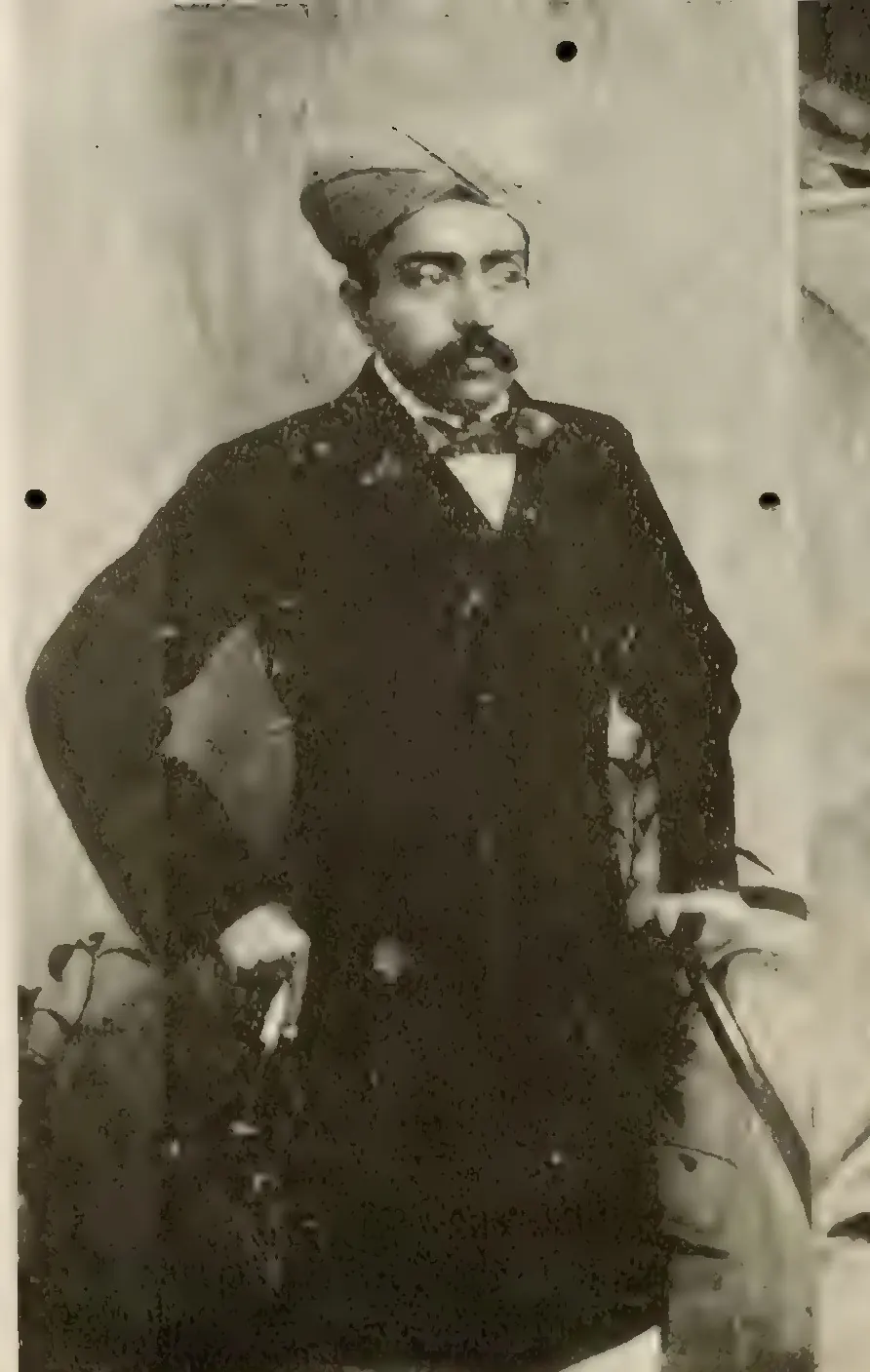
Banganapalle was a small state round the town of Banganapalle, in the Kurnool district. It was one of the five Native States in political relations with the Government of Madras. The others were Travancore, Cochin, Pudukkottai and Sandur. The Imperial Gazetteer (1908) describes it as lying “on the tableland of the Southern Deccan within Kurnool District”.12 It had an area of 255 square miles in two separate parts.12 The main part ran from the Rampur pass over the Erramalas east to the town of Banganapalle, and south along the Kunderu.12
Its Political Agent was the Collector of Kurnool.2 The gazetteer adds: “Banganapalle was a feudal estate at the time when it was ceded by the Nizam to the Company, and its position was continued.”1 See Banganapalle and Kurnool.
The sources
The Kurnool district manual of 1886 gives a connected account of the family, from its own traditions.3 It is in the manual’s last chapter, “Descriptive Account of Banganapalle”.3 The Imperial Gazetteer (Vol. II, 1908) revised this account from the family’s title-deeds and the Madras records.45 It found several of the traditions unsupported.45
Aitchison’s Collection of Treaties, Engagements and Sanads (Volume VIII, 1892) prints the official narrative and the sanads (deeds of grant) of 1849 and 1862.67 A. Vadivelu’s Aristocracy of Southern India (1903) opens with a long family history written with the Nawab’s help.89 It prints the government’s orders on the succession of 1868.89 The Memoranda on the Indian States (1934) and the Government of India’s White Paper on Indian States (1950) carry the story to the end.1011
Origins
The manual says that “towards the close of the seventeenth century Muhammad Beg Khan, a relative of Mubaraz Khan (a Vazier of Aurangzebe), was appointed as Killadar of Banganapalle”.12 His brother Fazl Ali Khan was made killedar (fort commander) of the neighbouring fort of Chenchelimala.12 When the brother died, the two charges were joined.12
When Asaf Jah, the first Nizam, “assumed sovereign powers”, Muhammad Beg Khan “became a petty chieftain or nabob”.1213 The manual goes on: “In the course of his southern tour, it is said, Asaf Ja recognised Muhammad Beg’s title and granted the territory in jaghire.”1213 Muhammad Beg Khan died at Banganapalle about 1172 of the Hijra (1758).1213 The Imperial Gazetteer adds that a document “still preserved at Banganapalle bears the seal of Muhammad Beg Khan and the date 1131 Hijra (A.D. 1718–19)”.4 See Nizam-ul-Mulk Asaf Jah I and the Mughals in the Telugu country.
The jagir (land grant) was already established by the middle of the century. In 1750, the Kurnool manual says, Nasir Jang’s envoy Saif-ud-din asked for “the village of Banganapalle” as his reward.14 But Nasir Jang was “unwilling to oust the Jaghiredar of Banganapalle”, and asked him to choose another village.14 See Nasir Jang.
Gulli Nawab and his nephews
Muhammad Beg Khan’s son, Fazl Ali Khan, had died before him.13 So he was succeeded by his grandson, also called Fazl Ali Khan, “alias Gulli Nabob, a boy of ten years of age”.13 For eight years a relative by marriage, Muhammad Beg Khan Laug, seized the power.13 Then the young Nawab drove him out.13
Gulli Nawab married his sister to a Persian, Saiyid Muhammad Khan Nagadi, who had served Saadatullah Khan of Arcot.13 He gave Banganapalle to their elder son, Husain Ali Khan, and Chenchelimala to the younger, Asad Ali Khan.13 He died in 1197 of the Hijra (1782), “after a reign of sixteen years”.13
In his time, the manual says, Haidar Ali of Mysore “invaded the country and reduced the Nabob to submission”.13 “The Nabob was then paying tribute to the Kurnool Nabob, which was now abolished.”13 See Haidar Ali, Saadatullah Khan and the Nawabs of Kurnool.
The oldest title-deed the family could show the Imperial Gazetteer’s compilers was dated 1761.4 It recorded “that the Nizam in that year appointed one Husain Ali Khan as Kiladar (commandant) and Faujdar (magistrate) of Banganapalle”.4 It also recorded “the removal of one Muhammad Beg Khan”.4 See Asad Ali Khan.
Tipu Sultan, 1783–1790
Husain Ali Khan’s four sons were minors when he died, and their uncle Asad Ali Khan managed the country for them. In 1783, the manual says, “Tipu Sultan of Mysore summoned Asaad Ali Khan to appear before him”.13 Asad Ali Khan refused and took refuge with the poligar (local chief) of Mutialpad.13 Tipu then “took possession of the territory and appointed one Muhammad Yusuf as Killadar of Banganapalle”.13 Yusuf held it for seven years.13
The Imperial Gazetteer found that Tipu had in fact confirmed the jagir to Husain Ali Khan’s son Ghulam Ali Khan.4 He did so by a letter of 1783, “at the beginning of Tipu’s reign”.4 Then he “at once resumed the jagir, and expelled Ghulam Ali Khan”.4 A letter of 1790 “to the Kiladar of Banganapalle, is addressed to one Yusuf”.4 See Tipu Sultan and Mysore under Haidar Ali and Tipu Sultan.
The widow and her sons had fled to Hyderabad. They came back “with some force supplied by the Nizam and expelled Yusuf”.13 Tipu sent a Mysore force to retake the town.13 It “was met and a battle fought at Tammadapalle, near Banganapalle, in Hejairi 1203 (A.D. 1790)”.13 In that battle “Qutb was defeated and Asaad Ali Khan was victorious”.13 Tipu, the manual adds, did not try again, “as he had to look after troubles nearer home”.1315
The Nizam and the Company, 1790–1848
Ghulam Ali Khan, later titled Mansur-ud-daula, took Banganapalle, and his uncle took Chenchelimala. Asad Ali Khan joined the Nizam’s army against Tipu in 1791 and was for a time subahdar (governor) of Kadapa (then Cuddapah).1516 Ghulam Ali Khan lived mostly at Hyderabad and fought in the Nizam’s wars.1516 See Ghulam Ali Khan.
The manual says: “In 1800, the Nizam transferred his control over Banganapalle to the British Government when he ceded the districts of Cuddapah and Bellary.”15 The schedule of that treaty lists “Bungumpully and Chunchunmullah, 2 Talooks” among the Nizam’s gains of 1792.17
The Nizam laid down that the jagir should be continued to Asad Ali Khan and Ghulam Ali Khan, because it “was the sole means of subsistence of a numerous family”.5 The Company agreed.5 It neither took tribute nor, at first, used any authority there.5 The manual says that the treaty schedules had rated the territory at 45,000 Kanthirayi pagodas, “or Rs. 1,31,250”.15 At the Nizam’s request the tribute “was remitted by the British Government”.15 See Kadapa.
The family soon fell into debt.15 The manual blames this chiefly on Asad Ali Khan’s time as subahdar of Kadapa.15
Aitchison says that by 1825 “disorders” and “frequent complaints” led the government to propose annexing the jagir, with a pension for the family.6 The jagirdar (holder of the land grant) refused the pension and protested.6 When the Nizam’s condition of 1800 came to light, the Court of Directors decided that he was entitled to be treated “as an hereditary jagirdar”.6 The Collector of Cuddapah was told to settle the creditors’ claims, “to whom three-fourths of the net revenue were allotted”.6
The Imperial Gazetteer tells it differently.5 In its account the jagirdar was driven out of the country in 1831.5 The government took back the jagir in 1832 and proclaimed this in 1835.5 It says that “from 1835 to 1848 the State was accordingly administered by the Madras Government”, until the Court of Directors ruled in 1838 that the resumption must be cancelled.5 Both agree that the jagir was restored in 1848.65
The sanads of 1849 and 1862
The jagir was restored to Husain Ali Khan, who died before his sanad could be issued.6718 So the sanad of 20 March 1849 went to his nephew, adopted son and son-in-law, Ghulam Muhammad Ali Khan.6718 It confirmed the jagir “free of peshcush and pecuniary demand”, that is, free of tribute and money claims.6718
The sanad gave him “the general management of the revenue and police” and civil justice.6718 It also gave him criminal justice, but he was to “abstain from the punishment of mutilating criminals”.6718 He was not to execute anyone without the government’s sanction.6718
In 1862 Lord Canning’s sanad promised that the British Government would “permit and confirm any succession to your State which may be legitimate according to Mahomedan law”.18 See Ghulam Muhammad Ali Khan.
The Nawabs, 1868–1948
Ghulam Muhammad Ali Khan died in October 1868.1920 The government recognised his nephew and son-in-law Fateh Ali Khan as heir.1920 It chose him over the claims of the widow and of a son-in-law.1920 “The title of Nawab was granted to the jagirdar in 1876 as an hereditary distinction. He is not entitled to a salute.”19
In January 1905, “in consequence of his misgovernment”, Fateh Ali Khan was removed from the direct administration.21 It passed to an Assistant Political Agent.21 He died three months later.21 His son Saiyid Ghulam Ali Khan, then thirty-one, succeeded him.21 See Fateh Ali Khan.
The Memoranda on the Indian States of 1934 name the ruler as “Nawab Saiyid Fazl-i-Ali Khan Bahadur”, a Shia, born on 9 November 1901.10 He had succeeded on 22 January 1922.10 The Memoranda give the State’s area as 275 square miles and its average yearly revenue as 4,58,000 rupees.10
Territory
The Imperial Gazetteer gives the State’s borders:2
- the Ramallakota and Nandyal taluks on the north2
- Nandyal and Koilkuntla on the east and south2
- Pattikonda and Koilkuntla on the west2
A detached block of three hill villages, about twenty square miles, lay inside Koilkuntla.2 The State had 63 villages and no town.21 Its population fell from 45,208 in 1871 to 30,754 in 1881, after the great famine.21 It recovered only to 32,264 by 1901.21
Telugu was spoken by 81 per cent of the people, and Hindustani was more common than in Kurnool.21 The ruling family was Shia, and the Muslims of the State were mostly Sunni.1221
Administration and revenue
In 1886 the Nawab governed with “a manager on Rs. 100 and a magistrate on Rs. 50”.22 He ruled through these courts and offices:22
- a Sadar Court, over which he presided himself
- a munsif’s court (a lower civil court) for suits up to 3,000 rupees
- a magistrate’s court
- a revenue office, lately merged with the Sadar Court22
The manual says: “The rates of land assessment are not settled and vary with the wishes of the Nabob”.2223 They sometimes rose to 12 rupees an acre on dry land and 30 on wet.2223 The land revenue in 1883–84, including the sub-jagirs, was 1,71,099 rupees.2223 Other heads brought in 30,465, among them excise, salt compensation, stamps, tolls and road cess.2223
Thirteen sub-jagirdars (holders of smaller grants), several of them living at Hyderabad, held 28 villages with an income of 1,14,589 rupees.24 The sub-jagirs went back to Ghulam Ali Khan’s settlement of 1820, which gave villages to his cousins and other relatives.2526 They were resumed under the government’s management and granted again in 1848.2526 They were “finally resumed by the Madras Government” in 1905, and the holders received pensions.2526
By then the Penal Code and the civil and criminal procedure codes of British India had been adopted as laws of the State.2526 In 1904–05 the receipts were 96,000 rupees.2526 More than half the spending went on “the Nawab’s household and family”.2526
Army and forts
The State kept no army of any size. Aitchison records that “in 1891 the jagirdar had a force of 103 irregular footmen or police, and 2 unmounted guns of an obsolete pattern”.19 The Nawab’s home at Banganapalle was a fort.27 Vadivelu says that at Queen Victoria’s jubilee in 1887 a salute of 31 guns was fired “from the ramparts of the Fort”.27 In 1904–05 the police numbered 5 head constables, 59 constables and a bugler, with 131 village watchmen.26
Coins and stamps
No source in the library describes a coinage of Banganapalle. The Nawab ran his own stamp revenue, “adopting the Indian Stamp Act as his model”.25 “The State post office was amalgamated with the British postal system on January 1, 1900, when the Nawab issued a Regulation applying the provisions of the Indian Post Office Act to Banganapalle.”25
The end, 1948
The White Paper on Indian States (1950) records that the Nawab of Banganapalle signed a merger agreement on 18 February 1948.1128 It was in the same form as the agreements signed by the rulers of the small States of Orissa and the Central Provinces.1128 The government of the Madras Province took over the administration of the State on 23 February 1948.1128 The White Paper’s table of privy purses (yearly allowances to former rulers) gives the Nawab of Banganapalle 53,000 rupees a year.29 See Andhra State and Andhra Pradesh.
Where the sources disagree
- Muhammad Beg Khan. The Kurnool manual and Vadivelu make him a relative of Aurangzeb’s minister Mubariz Khan, appointed by the Mughals.123031 Aitchison calls him “son of Aurangzeb’s Grand Wazir”.6 The Imperial Gazetteer used the family’s manuscripts.4 It makes the Muhammad Beg Khan of the seal of 1718–19 the adopted son of a man of the same name.4 That man was appointed killedar “by the Sultan of Bijapur in the last half of the seventeenth century”.4 Vadivelu has Bijapur grant Banganapalle in 1643 to a general, Siddu Simbul.3031
- Husain Ali Khan’s appointment. The manual says that Gulli Nawab gave Banganapalle to his nephew Husain Ali Khan.13 The Imperial Gazetteer says that the family’s oldest deed records the Nizam appointing Husain Ali Khan killedar and faujdar in 1761 in place of a Muhammad Beg Khan.4 That is three years after the manual’s date for Muhammad Beg’s death.134 Vadivelu says that Husain Ali Khan succeeded a relative named Ghulam Ali Khan and served Haidar Ali.31
- Tammadapalle. The manual dates the battle to 1203 of the Hijra (1790).13 The Imperial Gazetteer dates it to about seven years after Ghulam Ali Khan’s expulsion of 1783.4 Vadivelu gives “1205 (Hijri), or 1787 A. D.” and calls the victorious uncle Husain Ali Khan, not Asad Ali Khan.16
- The rating of 1800. The manual gives 45,000 Kanthirayi pagodas.15 The schedule to the treaty of 1800 in Aitchison rates “Bungumpully and Chunchunmullah” at 41,804 pagodas.17
- The government’s management. The manual says that the Madras government took over the management in 1825 because the Nawab could not pay his creditors.15 Vadivelu says it did so “at the request of the Nawab himself” from 1825.32 Aitchison speaks of a proposal of 1825 to annex the jagir.6 The Imperial Gazetteer dates the resumption to 1832 and the direct administration to 1835–1848.5
- Death of Mansur-ud-daula. The manual dates it to 1824, and Vadivelu to 1822.1533 The Imperial Gazetteer calls Ghulam Ali Khan “the sole jagirdar after 1815” and dates his settlement of the sub-jagirs to 1820.25
- The title of Nawab. Aitchison, the manual, the Imperial Gazetteer and Lethbridge date it to 1876.19222134 Thurston’s Madras Presidency (1913) dates it to 1871.35
- Area. The manual gives about 275 square miles.3 The Imperial Gazetteer and Aitchison give 255.219 Lethbridge gives 166, and the Memoranda of 1934 give 275.3410
Footnotes
-
Imperial Gazetteer of India, Provincial Series: Madras, Vol. I (1908), p. 84 (archive.org (opens in a new tab)). ↩ ↩2 ↩3 ↩4
-
Imperial Gazetteer of India, Provincial Series: Madras, Vol. II (1908), p. 471, “Banganapalle State” (archive.org (opens in a new tab)). ↩ ↩2 ↩3 ↩4 ↩5 ↩6 ↩7 ↩8 ↩9 ↩10
-
Narahari Gopalakristnamah Chetty, A Manual of the Kurnool District (1886), p. 245, Chapter XIX (archive.org (opens in a new tab)). ↩ ↩2 ↩3
-
Imperial Gazetteer: Madras, Vol. II (1908), p. 472 (archive.org (opens in a new tab)). ↩ ↩2 ↩3 ↩4 ↩5 ↩6 ↩7 ↩8 ↩9 ↩10 ↩11 ↩12 ↩13 ↩14 ↩15 ↩16
-
Imperial Gazetteer: Madras, Vol. II (1908), p. 473 (archive.org (opens in a new tab)). ↩ ↩2 ↩3 ↩4 ↩5 ↩6 ↩7 ↩8 ↩9 ↩10 ↩11
-
C. U. Aitchison, A Collection of Treaties, Engagements and Sanads, Vol. VIII (1892), Part I, p. 97, “Banganapalle” (archive.org (opens in a new tab)). ↩ ↩2 ↩3 ↩4 ↩5 ↩6 ↩7 ↩8 ↩9 ↩10 ↩11 ↩12 ↩13 ↩14
-
Aitchison, Treaties, Vol. VIII (1892), Part I, p. 99, Sanad No. XVIII (1849) (archive.org (opens in a new tab)). ↩ ↩2 ↩3 ↩4 ↩5 ↩6 ↩7
-
A. Vadivelu, The Aristocracy of Southern India (1903), p. 1 (archive.org (opens in a new tab)). ↩ ↩2
-
Vadivelu, Aristocracy of Southern India (1903), p. 14 (archive.org (opens in a new tab)). ↩ ↩2
-
Memoranda on the Indian States, 1934 (Delhi, 1934), p. 138, Madras States Agency (archive.org (opens in a new tab)). ↩ ↩2 ↩3 ↩4 ↩5
-
Ministry of States, White Paper on Indian States (revised ed., 1950), p. 44, para. 107 (archive.org (opens in a new tab)). ↩ ↩2 ↩3 ↩4
-
Chetty, Kurnool District (1886), p. 246 (archive.org (opens in a new tab)). ↩ ↩2 ↩3 ↩4 ↩5 ↩6 ↩7 ↩8
-
Chetty, Kurnool District (1886), p. 247 and note (archive.org (opens in a new tab)). ↩ ↩2 ↩3 ↩4 ↩5 ↩6 ↩7 ↩8 ↩9 ↩10 ↩11 ↩12 ↩13 ↩14 ↩15 ↩16 ↩17 ↩18 ↩19 ↩20 ↩21 ↩22 ↩23 ↩24
-
Chetty, Kurnool District (1886), p. 32 (archive.org (opens in a new tab)). ↩ ↩2
-
Chetty, Kurnool District (1886), p. 248 (archive.org (opens in a new tab)). ↩ ↩2 ↩3 ↩4 ↩5 ↩6 ↩7 ↩8 ↩9 ↩10 ↩11
-
Vadivelu, Aristocracy of Southern India (1903), p. 8 (archive.org (opens in a new tab)). ↩ ↩2 ↩3
-
Aitchison, Treaties, Vol. VIII (1892), Part II, p. 332, schedule to the treaty of 12 October 1800 (archive.org (opens in a new tab)). ↩ ↩2
-
Aitchison, Treaties, Vol. VIII (1892), Part I, p. 100, Sanads Nos. XVIII–XIX (archive.org (opens in a new tab)). ↩ ↩2 ↩3 ↩4 ↩5 ↩6 ↩7
-
Aitchison, Treaties, Vol. VIII (1892), Part I, p. 98 (archive.org (opens in a new tab)). ↩ ↩2 ↩3 ↩4 ↩5 ↩6 ↩7
-
Vadivelu, Aristocracy of Southern India (1903), p. 18 (archive.org (opens in a new tab)). ↩ ↩2 ↩3
-
Imperial Gazetteer: Madras, Vol. II (1908), p. 474 (archive.org (opens in a new tab)). ↩ ↩2 ↩3 ↩4 ↩5 ↩6 ↩7 ↩8 ↩9 ↩10
-
Chetty, Kurnool District (1886), p. 249 (archive.org (opens in a new tab)). ↩ ↩2 ↩3 ↩4 ↩5 ↩6 ↩7 ↩8
-
Chetty, Kurnool District (1886), p. 250 (archive.org (opens in a new tab)). ↩ ↩2 ↩3 ↩4
-
Chetty, Kurnool District (1886), p. 252 (archive.org (opens in a new tab)). ↩
-
Imperial Gazetteer: Madras, Vol. II (1908), p. 477 (archive.org (opens in a new tab)). ↩ ↩2 ↩3 ↩4 ↩5 ↩6 ↩7 ↩8 ↩9
-
Imperial Gazetteer: Madras, Vol. II (1908), p. 478 (archive.org (opens in a new tab)). ↩ ↩2 ↩3 ↩4 ↩5 ↩6 ↩7
-
Vadivelu, Aristocracy of Southern India (1903), p. 27 (archive.org (opens in a new tab)). ↩ ↩2
-
White Paper on Indian States (1950), p. 179, Appendix XI, note (archive.org (opens in a new tab)). ↩ ↩2 ↩3
-
White Paper on Indian States (1950), p. 389, Appendix LIX (archive.org (opens in a new tab)). ↩
-
Vadivelu, Aristocracy of Southern India (1903), p. 5 (archive.org (opens in a new tab)). ↩ ↩2
-
Vadivelu, Aristocracy of Southern India (1903), p. 6 (archive.org (opens in a new tab)). ↩ ↩2 ↩3
-
Vadivelu, Aristocracy of Southern India (1903), p. 10 (archive.org (opens in a new tab)). ↩
-
Vadivelu, Aristocracy of Southern India (1903), p. 9 (archive.org (opens in a new tab)). ↩
-
Roper Lethbridge, The Golden Book of India (1893), p. 50 (archive.org (opens in a new tab)). ↩ ↩2
-
Edgar Thurston, The Madras Presidency, with Mysore, Coorg and the Associated States (1913), p. 5 (archive.org (opens in a new tab)). ↩
Photos
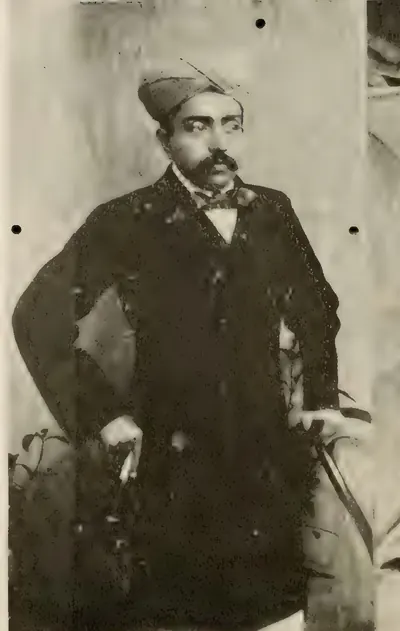 "H. H. The First Prince Of Banganapally": Saiyid Ghulam Ali Khan, eldest son of the Nawab Fateh Ali Khan and Nawab from 1905 (Vadivelu 1903, plate facing p. 31)Historic photograph · 1903
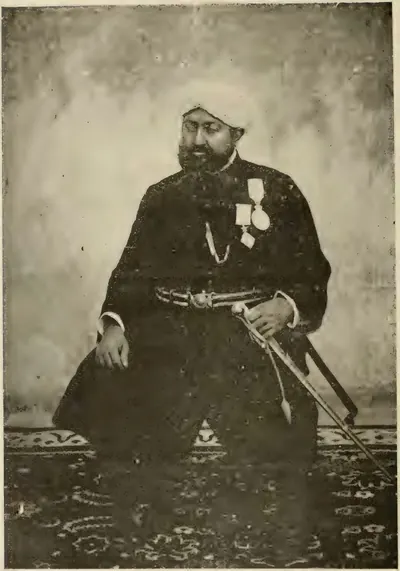 "H. H. The Nawab of Banganapally, C. S. I.": the Nawab Saiyid Fateh Ali Khan of Banganapalle (Vadivelu 1903, plate facing p. 1)Historic photograph · 1903
Related
People
Asad Ali Khan (Muzaffar-ul-Mulk) of Banganapalle
c. 1783–1815 CE
Co-ruler of the Banganapalle jagir (land grant) in the late eighteenth century, titled Muzaffar-ul-Mulk. Through his mother he was a grandson of the line of the Mughal killedar (fort commander) Muhammad Beg Khan. He held Chenchelimala and managed Banganapalle for his young nephews. When Tipu Sultan seized the jagir in 1783, he took refuge with a poligar. In 1790, with troops from the Nizam, he and his nephew Ghulam Ali Khan beat Tipu's officer at Tammadapalle and recovered the country. He served the Nizam against Tipu in 1791 and was briefly subahdar of Cuddapah. In 1800 the Nizam stipulated with the Company that the jagir should be continued to him and his nephew.
Ghulam Ali Khan (Mansur-ud-daula) of Banganapalle
c. 1790–1822 CE
Jagirdar (holder of the land grant) of Banganapalle from 1790 to the early 1820s, titled Mansur-ud-daula. The family later regarded him as the founder of the State. A son of Husain Ali Khan, he was confirmed in the jagir by Tipu Sultan in 1783 and at once expelled. With his uncle Asad Ali Khan and troops from the Nizam he won it back at Tammadapalle in 1790. He lived mostly at Hyderabad and fought in the Nizam's army, and he lost the use of his right hand against the Marathas. Under the cession of 1800 the jagir passed under the Company's control free of tribute. Before his death he divided villages among his relatives as sub-jagirs and placed his son Husain Ali Khan on the musnad (throne).
Ghulam Muhammad Ali Khan of Banganapalle
1848–1868 CE
Jagirdar of Banganapalle from 1848 to 1868, called Ghulam Ali Khan in the treaties and in the family history. A grandson of Mansur-ud-daula, he was adopted by his uncle Husain Ali Khan and married to his daughter. In 1848 the Madras government handed back the jagir after clearing the family's debts, but Husain Ali Khan died before his sanad (grant) was issued. Ghulam Ali Khan received the sanad of 1849, with civil and criminal jurisdiction short of the death penalty. In 1862 he received the Crown's sanad permitting succession under Muslim law. He was made a Companion of the Star of India and died on 7 October 1868.
Fateh Ali Khan, Nawab of Banganapalle
1868–1905 CE
Ruler of Banganapalle from 1868 to 1905, and its first ruler to hold the hereditary title of Nawab, granted in 1876. He was born in 1848, a nephew and son-in-law of Ghulam Muhammad Ali Khan. The Madras government accepted him over the claims of his uncle's widow and of a son-in-law. He was made a Companion of the Star of India. He reorganised the State's courts, police, jail and dispensary, and borrowed three lakhs of rupees from the government in 1877. In January 1905 he was removed from the direct running of the State for bad government, and he died three months later.
References
Notes (0)
Sources (9)
Spotted an error on this page? Tell us
Last updated: