Vajrahasta III (Eastern Ganga)
Eastern Ganga king of Kalinga, crowned on 3 May 1038. His Nadagam plates of 1058 give the earliest exactly dated event in the history of the later Gangas, and a family tree of his predecessors. He styled himself lord of the Three Kalingas and issued his grants from Kalinganagara. He was the grandfather of Anantavarman Chodaganga. Historians number him Vajrahasta III or Vajrahasta V.
Vajrahasta III was a Ganga king of Kalinga who was anointed, by G. V. Ramamurti’s calculation, on 3 May 1038.12 He called himself “lord of the Three Kalingas”.12 Ramamurti made him the grandfather of Anantavarman Chodaganga.34
Family
Vajrahasta III was born, according to his Nadagam plates, to Kamarnava, “the eldest son of the excellent king Vajrahasta”.2 His mother was Vinayamahadevi, “who was born in the Vaidumba family”.2 The plates list his predecessors with the length of their reigns. His grandfather Vajrahasta, who bore the second name Aniyankabhima, ruled for thirty-five years.56 Then his sons ruled in turn:56
- the eldest, Kamarnava, for half a year56
- Gundama for three years56
- their half-brother Madhu-Kamarnava for nineteen years56
G. V. Ramamurti, who edited the plates in 1897, set this list beside the longer family tree in a grant of Anantavarman Chodaganga of Saka 1040 (Saka is an Indian way of counting years).7 He found so many differences that he preferred the Nadagam list.7 See the Nadagam plates.
The numbering of the kings named Vajrahasta differs between editors. V. Rangacharya pointed out that the donor of the Nadagam plates is “Vajrahasta III according to one and Vajrahasta V according to the other”.4 He added that his parentage is also given differently.4 Robert Sewell called him Vajrahasta V.8 His son was Rajaraja I, and Ramamurti made him the grandfather of Anantavarman Chodaganga.34
Coronation and reign
The Nadagam plates give the moment of his anointing as Saka 960, on Sunday, the third tithi (lunar day) of the bright fortnight. The sun was then in Vrishabha, the moon in Rohini, and the lagna (rising sign) in Dhanus. Ramamurti calculated this as 3 May 1038, “8h 27m P.M.”.12 Like the coronation date of Anantavarman Chodaganga, he called it “a certain, reliable land-mark in the chronology of the Gangas”.12 He also called it “the earliest known date of this dynasty”.12
Ramamurti allowed him a reign of thirty years.3 Sewell’s genealogy dates it from 1038 to 1070, when his son was crowned.8
In the plates he is called Paramamahesvara, Paramabhattaraka, Maharajadhiraja and “lord of the Three Kalingas”.12 He issues his order “from Kalinganagara” to his subjects, headed by his ministers.12
The grant itself is dated in Saka 979, on Sunday, the twelfth tithi of the bright fortnight of Phalguna.1 Ramamurti equated this with 4 March 1058.1 The grant formed twelve villages of the Erada district into a new district named after Velpura, and gave them to Pangu-Samaya.1 Three half-erased lines below the text call Samaya “my son-in-law, the Dandanayaka S[a]maya”.1
Sewell put the date a month earlier, on 8 February 1058, and rejected the equation with 4 March.9
Other records
- The Parlakimedi plates of the time of a king Vajrahasta were edited by F. Kielhorn.10 From the style of the script he assigned them to “Vajrahasta V (Circa 1035–70)”, the grandfather of Anantavarman Chodaganga.10
- At Mukhalingam a Sanskrit record of Saka 990 (1068–69) records a gift by the queen of Vajrahasta, “who was the daughter of a Haihaya king”.11
- Sewell noted a grant of about 1045 made from his capital Dantapura.1213 He also noted a copper-plate grant of 20 June 1061 of the village of Tamaracheruvu, which he attributed to the same king under the name Anantavarman-Vajrahasta.1213
Footnotes
-
G. V. Ramamurti, “Nadagam Plates of Vajrahasta; Saka-Samvat 979”, Epigraphia Indica IV (1896–97), p. 185 (archive.org (opens in a new tab)). ↩ ↩2 ↩3 ↩4 ↩5 ↩6 ↩7 ↩8 ↩9 ↩10 ↩11
-
Ramamurti, “Nadagam Plates of Vajrahasta” (1897), p. 193, translation, line 30 to line 57 (archive.org (opens in a new tab)). ↩ ↩2 ↩3 ↩4 ↩5 ↩6 ↩7 ↩8 ↩9
-
G. V. Ramamurti, “Dirghasi Inscription of Vanapati; Saka-Samvat 997”, Epigraphia Indica IV (1896–97), p. 315 (archive.org (opens in a new tab)). ↩ ↩2 ↩3
-
V. Rangacharya, A Topographical List of the Inscriptions of the Madras Presidency, Vol. I (1919), p. 684, Ganjam No. 143-A (archive.org (opens in a new tab)). ↩ ↩2 ↩3 ↩4
-
Ramamurti, “Nadagam Plates of Vajrahasta” (1897), p. 192, translation, verses 1–6 (archive.org (opens in a new tab)). ↩ ↩2 ↩3 ↩4 ↩5
-
Ramamurti, “Nadagam Plates of Vajrahasta” (1897), p. 186 and genealogical table (archive.org (opens in a new tab)). ↩ ↩2 ↩3 ↩4 ↩5
-
Ramamurti, “Nadagam Plates of Vajrahasta” (1897), p. 187 (archive.org (opens in a new tab)). ↩ ↩2
-
Sewell, Historical Inscriptions (1932), p. 358, genealogical table of the Eastern Gangas (archive.org (opens in a new tab)). Paraphrased. ↩ ↩2
-
Sewell, Historical Inscriptions (1932), p. 75 (archive.org (opens in a new tab)). Paraphrased. ↩
-
Rangacharya, Topographical List, Vol. I (1919), p. 709, Ganjam No. 422 (archive.org (opens in a new tab)). ↩ ↩2
-
Rangacharya, Topographical List, Vol. I (1919), p. 707, Ganjam No. 399 (archive.org (opens in a new tab)). ↩
-
Robert Sewell, The Historical Inscriptions of Southern India (1932), p. 71 (archive.org (opens in a new tab)). Paraphrased. ↩ ↩2
-
Sewell, Historical Inscriptions (1932), p. 76 (archive.org (opens in a new tab)). Paraphrased. ↩ ↩2
Photos
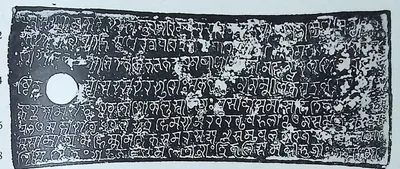 "Arasavalli Plates of Vajrahasta (III), Saka 982", first plate (lines 1-8) (Epigraphia Indica XXXII, Plate I between pp. 312 and 313, PDF p. 433)Inscription rubbing · 1959
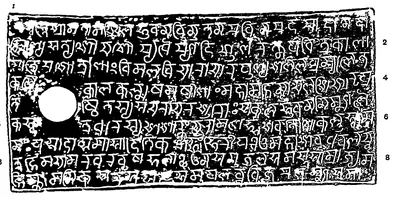 "Nadagam Plates of Vajrahasta.—Saka-Samvat 979", first plate (lines 1-9) (Epigraphia Indica IV, plates between pp. 190 and 191, PDF p. 233)Inscription rubbing · 1897
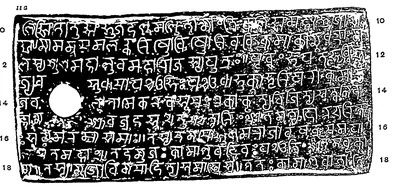 "Nadagam Plates of Vajrahasta.—Saka-Samvat 979", first side of the second plate (lines 10-18) (Epigraphia Indica IV, plates between pp. 190 and 191, PDF p. 233)Inscription rubbing · 1897
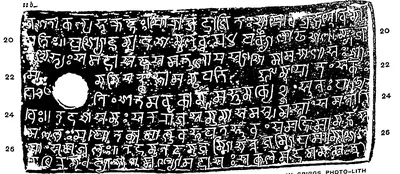 "Nadagam Plates of Vajrahasta.—Saka-Samvat 979", second side of the second plate (lines 19-27) (Epigraphia Indica IV, plates between pp. 190 and 191, PDF p. 233)Inscription rubbing · 1897
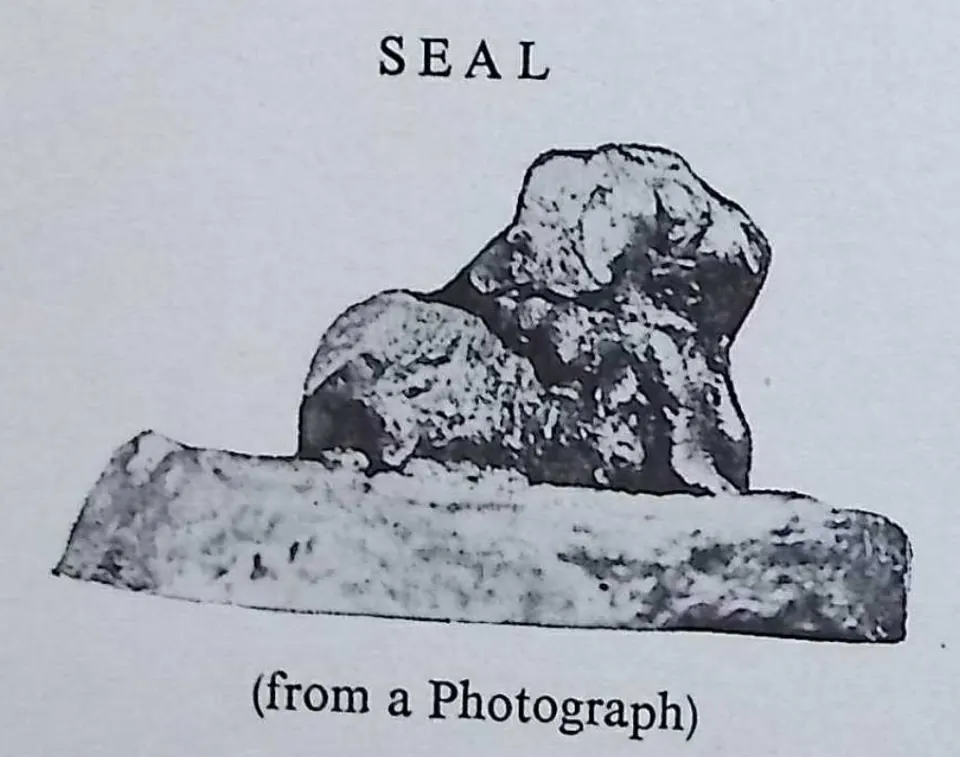
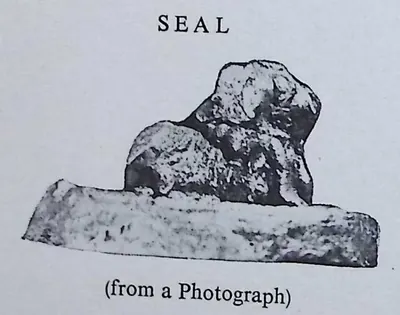 "Seal (from a Photograph)": the bull seal of the Arasavalli plates of Vajrahasta III, Saka 982 (Epigraphia Indica XXXII, PDF p. 434)Photograph · 1959
Related
Dynasties
References
Notes (0)
Sources (3)
Spotted an error on this page? Tell us
Last updated: