Eastern Gangas of Kalinga
Dynasty of Kalinga that ruled from Kalinganagara, now Mukhalingam in the Srikakulam district, and later from Orissa, from about the 6th century until 1434. Its early grants are dated in a Ganga era whose starting point is still disputed. The north of the Telugu country, the old Ganjam and Vizagapatam districts, was the heart of the kingdom. Their copper plates come from Chicacole, Achyutapuram, Jirjingi, Nadagam and Alamanda, and hundreds of their inscriptions in Telugu and Sanskrit survive at Mukhalingam, Srikurmam and Simhachalam. Anantavarman Chodaganga, a grandson of Kulottunga I, reigned from 1078 for about seventy years. The later kings fought the Kakatiyas across the Godavari, and their minister Kapilesvara founded the Gajapati dynasty in 1434.
Swipe sideways to see the whole chart; tap a bar for details.
Each bar is a ruling power in its region; time runs left to right. Dashed = approximate dates. Select a bar for details.
Show as a list
Mauryas & Satavahanas 300 BCE – 225 CE
- Telangana
- Satavahanas (c. 220 BCE – 225 CE)
- Coastal Andhra
- Satavahanas (c. 220 BCE – 225 CE)
- Rayalaseema
- Satavahanas (c. 1–225 CE)
Ikshvakus, Vishnukundins & early kingdoms 225–624 CE
- Telangana
- Vakatakas (c. 300–500 CE) · Ikshvakus (c. 225–352 CE) · Vishnukundins (c. 375–612 CE)
- Coastal Andhra
- Pallavas (c. 250–630 CE) · Ikshvakus (c. 225–350 CE) · Vishnukundins (c. 500–630 CE) · Salankayanas of Vengi (c. 300–470 CE) · Eastern Gangas of Kalinga (c. 537–1434 CE) · Eastern Chalukyas of Vengi (c. 615–973 CE) · Chalukyas of Badami (c. 615–642 CE)
- Rayalaseema
- Pallavas (c. 300–900 CE) · Telugu Cholas of Renadu (c. 550–800 CE)
Eastern Chalukyas & the Deccan powers 624–1163 CE
- Telangana
- Chalukyas of Badami (c. 655–753 CE) · Chalukyas of Mudigonda (c. 890–1218 CE) · Chalukyas of Vemulavada (c. 750–973 CE) · Kakatiyas (c. 1052–1162 CE) · Rashtrakutas of Malkhed (c. 753–973 CE) · Telugu Chodas of Kanduru (c. 1060–1160 CE) · Eastern Chalukyas of Vengi (c. 935–973 CE) · Western Chalukyas of Kalyani (c. 973–1163 CE)
- Coastal Andhra
- Pallavas (c. 250–630 CE) · Chalukyas of Badami (c. 655–680 CE) · Cholas of Tanjore (c. 999–1135 CE) · Vishnukundins (c. 500–630 CE) · Eastern Chalukyas of Vengi (c. 999–1077 CE) · Kotas of Dharanikota (c. 1100–1276 CE) · Eastern Gangas of Kalinga (c. 537–1434 CE) · Haihayas of Kona and Palnadu (c. 1073–1364 CE) · Telugu Chodas of Pottapi and Nellore (c. 1106–1316 CE) · Velanati Chodas (c. 1118–1209 CE) · Western Chalukyas of Kalyani (c. 1118–1126 CE)
- Rayalaseema
- Pallavas (c. 300–900 CE) · Cholas of Tanjore (c. 985–1268 CE) · Telugu Cholas of Renadu (c. 550–800 CE) · Western Chalukyas of Kalyani (c. 1000–1190 CE) · Chalukyas of Badami (c. 654–753 CE) · Telugu Chodas of Pottapi and Nellore (c. 1120–1268 CE) · Banas (c. 700–915 CE) · Vaidumbas (c. 750–1000 CE) · Nolamba-Pallavas (c. 750–974 CE) · Rashtrakutas of Malkhed (c. 750–973 CE)
Kakatiyas 1163–1323 CE
- Telangana
- Chalukyas of Mudigonda (c. 890–1218 CE) · Kakatiyas (c. 1163–1323 CE)
- Coastal Andhra
- Kakatiyas (c. 1185–1323 CE) · Kotas of Dharanikota (c. 1100–1276 CE) · Eastern Gangas of Kalinga (c. 537–1434 CE) · Haihayas of Kona and Palnadu (c. 1073–1364 CE) · Telugu Chodas of Pottapi and Nellore (c. 1106–1316 CE) · Velanati Chodas (c. 1118–1209 CE) · Pandyas (c. 1260–1264 CE) · Cholas of Tanjore (c. 1135–1264 CE)
- Rayalaseema
- Cholas of Tanjore (c. 985–1268 CE) · Pandyas (1285–1293 CE) · Western Chalukyas of Kalyani (c. 1000–1190 CE) · Kakatiyas (c. 1250–1323 CE) · Telugu Chodas of Pottapi and Nellore (c. 1120–1268 CE) · Hoysalas (c. 1178–1342 CE)
Nayakas, Reddis & Bahmanis 1323–1518 CE
- Telangana
- Delhi Sultanate (Tughluqs) (c. 1323–1336 CE) · Bahmani Sultanate (c. 1347–1518 CE) · Musunuri Nayakas (c. 1336–1368 CE) · Gajapatis of Orissa (c. 1459–1461 CE) · Adil Shahis of Bijapur (c. 1489–1686 CE) · Recherla Velamas (Padmanayakas) (c. 1361–1475 CE) · Shitab Khan (Sitapati) of Warangal (c. 1504–1516 CE)
- Coastal Andhra
- Vijayanagara Empire (c. 1350–1579 CE) · Delhi Sultanate (Tughluqs) (c. 1323–1326 CE) · Reddis of Rajahmundry (c. 1386–1448 CE) · Bahmani Sultanate (c. 1471–1489 CE) · Eastern Gangas of Kalinga (c. 537–1434 CE) · Gajapatis of Orissa (c. 1446–1571 CE) · Haihayas of Kona and Palnadu (c. 1073–1364 CE) · Reddis of Kondaveedu (c. 1325–1424 CE) · Musunuri Nayakas (c. 1325–1346 CE)
- Rayalaseema
- Vijayanagara Empire (c. 1336–1646 CE) · Reddis of Kondaveedu (c. 1346–1386 CE) · Hoysalas (c. 1178–1342 CE)
Vijayanagara & the Qutb Shahis 1336–1687 CE
- Telangana
- Bahmani Sultanate (c. 1347–1518 CE) · Vijayanagara Empire (c. 1563–1565 CE) · Musunuri Nayakas (c. 1336–1368 CE) · Gajapatis of Orissa (c. 1459–1461 CE) · Adil Shahis of Bijapur (c. 1489–1686 CE) · Recherla Velamas (Padmanayakas) (c. 1361–1475 CE) · Shitab Khan (Sitapati) of Warangal (c. 1504–1516 CE) · Qutb Shahis of Golconda (c. 1518–1687 CE)
- Coastal Andhra
- Vijayanagara Empire (c. 1350–1579 CE) · Reddis of Rajahmundry (c. 1386–1448 CE) · Bahmani Sultanate (c. 1471–1489 CE) · Qutb Shahis of Golconda (c. 1524–1687 CE) · Eastern Gangas of Kalinga (c. 537–1434 CE) · Gajapatis of Orissa (c. 1446–1571 CE) · Haihayas of Kona and Palnadu (c. 1073–1364 CE) · Reddis of Kondaveedu (c. 1325–1424 CE) · Musunuri Nayakas (c. 1325–1346 CE)
- Rayalaseema
- Vijayanagara Empire (c. 1336–1646 CE) · Marathas (c. 1677–1687 CE) · Reddis of Kondaveedu (c. 1346–1386 CE) · Adil Shahis of Bijapur (c. 1568–1686 CE) · Qutb Shahis of Golconda (c. 1579–1687 CE) · Hoysalas (c. 1178–1342 CE) · Mughal Empire (c. 1686–1724 CE)
Mughals, Asaf Jahis & the British 1687–1948 CE
- Telangana
- Mughal Empire (1687–1724 CE) · Asaf Jahi Nizams of Hyderabad (1724–1948 CE)
- Coastal Andhra
- Mughal Empire (1687–1724 CE) · French East India Company (1750–1759 CE) · Nawabs of the Carnatic (Arcot) (c. 1710–1801 CE) · Asaf Jahi Nizams of Hyderabad (1724–1753 CE) · East India Company (1759–1858 CE)
- Rayalaseema
- Nawabs of the Carnatic (Arcot) (c. 1710–1801 CE) · Nawabs of Cuddapah (c. 1714–1779 CE) · East India Company (1792–1858 CE) · Banganapalle State (c. 1724–1948 CE) · Mughal Empire (c. 1686–1724 CE) · Morari Rao Ghorpade of Gooty (c. 1741–1776 CE) · Nawabs of Kurnool (c. 1690–1839 CE) · Asaf Jahi Nizams of Hyderabad (c. 1724–1800 CE) · Marathas (c. 1743–1774 CE) · Mysore under Haidar Ali and Tipu Sultan (c. 1762–1799 CE)
Kingdoms and empires
Satavahanas
Open page- Telangana: c. 220 BCE – 225 CE (c. 445 years)
IG Hyderabad: rise c. 220 BCE, end about a century after Pulumayi II (acc. c. 138 CE); Sewell: by c. 170 BCE the Andhra king ruled Hyderabad as well as the Telugu tracts
- Coastal Andhra: c. 220 BCE – 225 CE (c. 445 years)
Sources disagree: IG Madras 220 BCE-236 CE; Sewell 'from at least 250 BCE' to c. 225 CE when the Pallava Bappa ended the line; Godavari gazetteer dates the known kings c. 110-220 CE, last inscriptions c. 218
- Rayalaseema: c. 1–225 CE (c. 224 years)
Sewell: about 1 CE the Andhra king ruled parts of Cuddapah and Kurnool; an inscription of Pulumayi II (c. 145 CE) in Adoni taluk proves Andhra rule there; Bellary gazetteer: the Andhras ruled that district in the 2nd century CE. When their rule here began is not recorded
Rulers (12)
- Simuka (c. 220 BCE – 197 BCE)
- Krishna (Kanha) (c. 197 BCE – 179 BCE)
- Sri Satakarni (c. 179 BCE – 169 BCE)
- Sivasvati (c. 85–113 CE)
- Gautamiputra Satakarni (c. 113–138 CE)
- Vasishthiputra Pulumavi (c. 138–170 CE)
… and 6 more
- Siva Sri Satakarni (c. 170–177 CE)
- Sivaskanda Satakarni (c. 177–184 CE)
- Yajna Sri Satakarni (c. 184–213 CE)
- Vijaya Satakarni (c. 213–219 CE)
- Chandra Sri Satakarni (c. 219–229 CE)
- Pulumavi III (c. 229–236 CE)
Capitals
Inscriptions
Sources (5)
Kingdoms and empires
Vakatakas
Open page- Telangana: c. 300–500 CE (c. 200 years)
Partial: the Adilabad, Nizamabad and Karimnagar country north of the Godavari, as part of the Vakataka lands of central India and the northern Deccan. Goel et al. (2022) place the Vakataka lands from the findspots of their 37 inscriptions and name only these three Telangana districts. Jouveau-Dubreuil (1920) claimed much more: almost the whole of the Hyderabad State, and up to Kurnool. A Vakataka princess married the Vishnukundin Madhavavarman (Chikkulla plates). No Vakataka inscription from Telangana is listed in Epigraphia Telanganica I; this span rests on modern histories. Dates follow the Sewell table (Vindhyasakti c. 275-300 to Harishena c. 465-500).
Rulers (8)
- Vindhyasakti (c. 275–300 CE)
- Pravarasena I (c. 300–330 CE)
- Rudrasena I (c. 330–340 CE)
- Prithvisena I (c. 340–390 CE)
- Rudrasena II (c. 390–395 CE)
- Pravarasena II (c. 395–420 CE)
… and 2 more
- Devasena (c. 445–465 CE)
- Harishena (c. 465–500 CE)
Sources (5)
Kingdoms and empires
Chalukyas of Badami
Open page- Coastal Andhra: c. 615–642 CE (c. 27 years)
Pulakesin II took Pishtapura (Pithapuram) and the Kolleru lake country (Aihole inscription) about 615 and left his brother Vishnuvardhana to govern Vengi, which was an independent kingdom by 632 (Fleet); his Kopparam plates grant land in Karmarashtra (Guntur) in 631, and Hultzsch read them as showing Vishnuvardhana still his subordinate then. The Vizagapatam gazetteer adds that the Badami Chalukyas had already conquered Kalinga in the 6th century.
- Rayalaseema: c. 654–753 CE (c. 99 years)
Copper-plate grants of Vikramaditya I in Kurnool (654-55, 657-58, 663); his grant names the Nalavadi district (near Madakasira, Anantapur); grants of 680 in Anantapur and Bellary; grants of Vinayaditya in the Kurnool district (Nandyal, 689-90); the Telugu Cholas of Renadu were their vassals. Fleet guessed that Kirtivarman I's enemies the Nalas lived towards Bellary and Kurnool.
- Telangana: c. 655–753 CE (c. 98 years)
Partial: the Alampur-Gadwal country. Amudalapadu plates of Vikramaditya I (Alampur taluk, 660), Gadval plates (674), Pallepadu plates of Vinayaditya (682, issued at Pangal), and inscriptions in the Alampur temples of a queen of Vikramaditya I, of Vinayaditya's reign and of Vijayaditya (704, 713). IG Hyderabad: displaced by the Rashtrakutas (Dantidurga, 753).
- Coastal Andhra: c. 655–680 CE (c. 25 years)
Partial: Nellore. Talamanchi plates of Vikramaditya I (found near Nellore, 13 July 660), a grant to his preceptor Meghacharya.
Rulers (9)
- Pulakesin I (c. 550–566 CE)
- Kirtivarman I (c. 566–597 CE)
- Mangalesa (c. 597–609 CE)
- Pulakesin II (c. 609–642 CE)
- Vikramaditya I (Chalukya of Badami) (c. 655–680 CE)
- Vinayaditya (c. 680–696 CE)
… and 3 more
- Vijayaditya (c. 696–733 CE)
- Vikramaditya II (c. 733–746 CE)
- Kirtivarman II (c. 746–757 CE)
Capitals
Monuments
Inscriptions
Sources (12)
Kingdoms and empires
Chalukyas of Mudigonda
Open page- Telangana: c. 890–1218 CE (c. 328 years)
Partial: Mudigonda (Khammam), the Manchikonda district and the Koravi (Kuravi) country, later the Visuru-nadu on the Godavari; feudatories of the Eastern Chalukyas, later of the Chalukyas of Kalyani. No record of the family is dated: start from Kusumayudha I's part in Chalukya-Bhima I's coronation (892), end from Parabrahma Sastry's identification of Kusumaditya and Nagati in a record of 1218. Driven out by the Kakatiyas (Recherla Rudra; Ganapatideva).
Rulers (13)
- Kokiraja (c. 865–890 CE)
- Kusumayudha I (c. 890–915 CE)
- Bijayita (c. 915–940 CE)
- Kusumayudha II (c. 940–965 CE)
- Vijayaditya (c. 965–990 CE)
- Kusumayudha III (c. 990–1015 CE)
… and 7 more
- Nijjiyaraja (c. 1015–1040 CE)
- Kusumayudha IV (Chalukya of Mudigonda) (c. 1040–1065 CE)
- Beta (c. 1065–1090 CE)
- Kusumayudha V (c. 1090–1110 CE)
- Bottu-Beta (c. 1110–1140 CE)
- Kusumaditya (Chalukya of Mudigonda) (c. 1140–1165 CE)
- Nagati (c. 1165–1196 CE)
Capitals
Inscriptions
Sources (4)
Sultanates
Delhi Sultanate (Tughluqs)
Open page- Telangana: c. 1323–1336 CE (c. 13 years)
Province of Tilang after Ulugh Khan (Muhammad bin Tughluq) took Warangal and renamed it Sultanpur (1321 by Barani's date for the campaign, 1323 in Haig and the editors of the Vilasa grant). Earlier Khalji campaigns (1303, 1309-10, 1318) ended in failure or tribute and are not drawn. Lost to a Hindu rising under Kanya Naik (Kapaya Nayaka) soon after the cholera of 1335 (Barani), about 1336-37 (modern historians) or in 1343-44 (Ferishta)
- Coastal Andhra: c. 1323–1326 CE (c. 3 years)
Brief hold on the Godavari delta and the coast: mosque at Rajahmundry built in 1324 by Ulugh Khan's servant Salar Ulwi; the coast retaken by Prolaya Nayaka and his allies between 1325 and 1326
Rulers
- Ala-ud-din Khalji (1296–1316 CE)
- Qutb-ud-din Mubarak Shah (1316–1320 CE)
- Ghiyas-ud-din Tughluq (1320–1325 CE)
- Muhammad bin Tughluq (1325–1351 CE)
Sources (7)
Sultanates
Bahmani Sultanate
Open page- Telangana: c. 1347–1518 CE (c. 171 years)
Western Telangana from 1347 (Kaulas taken or ceded; Bhongir taken late in Bahman Shah's reign, the province of Bidar reaching east to Bhongir); Golconda ceded under Muhammad Shah I (1362 Bilgrami; 1364-65 Haig, IG); Warangal taken in AH 828 (end of 1424 per Haig, 1422 per IG, 1425 per the Kistna Manual) and the rayas of Devarakonda and Rachakonda made tributary. Partial afterwards (Telugu chiefs regained districts under Ahmad I; Devarakonda relieved by Orissa 1459; Warangal held by the Gajapatis 1460 and by Shitab Khan from 1504). Governed for Mahmud Shah by Sultan Quli from 1495-96 until his independence (1512 per Haig; 1518 per Bilgrami, from the Golconda mosque inscription of AH 924)
- Coastal Andhra: c. 1471–1489 CE (c. 18 years)
Rajahmundry and Kondapalli (Ferishta) or Kondavidu (Haig, Burhan-i Ma'asir) taken by Malik Hasan Bahri in AH 876 (1471-72), on the invitation of a claimant to the Orissan throne (the Godavari gazetteer says Purushottama ceded the two districts); Muhammad Shah III at Rajahmundry for nearly three years after his Orissa campaign of 1478, and raided Masulipatam and Kanchi in 1481; Telingana split into the provinces of Rajahmundry and Warangal; Rajahmundry still Bahmani in 1486; the Godavari-Krishna country recovered by the Gajapati Purushottama by 1489
Rulers (18)
- Ala-ud-din Hasan Bahman Shah (1347–1358 CE)
- Muhammad Shah I (1358–1375 CE)
- Mujahid Shah (1375–1378 CE)
- Daud Shah (1378 CE)
- Muhammad Shah II (1378–1397 CE)
- Ghiyas-ud-din (1397 CE)
… and 12 more
- Shams-ud-din Daud (1397 CE)
- Firuz Shah (1397–1422 CE)
- Ahmad Shah I (1422–1435 CE)
- Ala-ud-din Ahmad Shah II (1435–1458 CE)
- Humayun Shah (1458–1461 CE)
- Nizam Shah (1461–1463 CE)
- Muhammad Shah III (1463–1482 CE)
- Mahmud Shah Bahmani (1482–1518 CE)
- Ahmad Shah (c. 1518–1521 CE)
- Ala-ud-din (c. 1521–1523 CE)
- Wali-ullah Shah (c. 1523–1525 CE)
- Kalim-ullah Shah (c. 1525–1527 CE)
Inscriptions
Sources (12)
Kingdoms and empires
Vijayanagara Empire
Open page- Rayalaseema: c. 1336–1646 CE (c. 310 years)
Founded c. 1335-36; Bukka I held Penukonda and Gooty (records of 1352 and a Gooty rock inscription) and his minister built the Bukkarayasamudram tank near Anantapur in 1364; Cuddapah in the 14th century; Kurnool wholly annexed under Krishnadeva Raya. After Talikota (1565) the kings ruled from Penukonda, which held out against Bijapur in 1577 and Golconda in 1589; the country north of Penukonda was lost after Sriranga I's capture (c. 1579-80); Venkatapati II moved to Chandragiri c. 1592; Golconda held the Cuddapah district and took Chandragiri (Chittoor) in 1646. Bijapur and Golconda took most of the region piecemeal after 1565
- Coastal Andhra: c. 1350–1579 CE (c. 229 years)
Vijayanagara officers kept Guntur (Kondavidu, Vinukonda, Bellamkonda) and the governor of Udayagiri kept Nellore after Talikota; Golconda took Kondavidu in April 1579 (Kistna Manual) or 1580 (a Guntur record of 1592 cited by Sewell), though Sewell thinks Guntur was already under Muslim rule by 1576 and the Nellore Manual says the Muslims held Nellore from 1565.
- Telangana: c. 1563–1565 CE (c. 2 years)
To end the confederate invasion of Golconda, Ibrahim Qutb Shah let Rama Raja keep the forts of Ghanpur and Panagal (Mahbubnagar) until Talikota; Ferishta places this after the Kalyani campaign of the early 1560s, the Kistna Manual dates it to 1557.
Rulers (24)
- Harihara I (Vijayanagara) (c. 1336–1355 CE)
- Bukka I (Vijayanagara) (1355–1377 CE)
- Harihara II (1377–1404 CE)
- Bukka II (1404–1406 CE)
- Deva Raya I (1406–1422 CE)
- Vijaya (Bukka III) (1422 CE)
… and 18 more
- Deva Raya II (Vijayanagara) (1422–1446 CE)
- Mallikarjuna (1446–1465 CE)
- Virupaksha (1465–1485 CE)
- Saluva Narasimha (1485–1492 CE)
- Immadi Narasimha (1492–1505 CE)
- Narasa Nayaka (c. 1505 CE)
- Vira Narasimha (1505–1509 CE)
- Krishnadeva Raya (1509–1529 CE)
- Achyuta Raya (1529–1542 CE)
- Venkata I (1542 CE)
- Sadasiva (c. 1542–1569 CE)
- Tirumala (Aravidu) (c. 1569–1572 CE)
- Sriranga I (1572–1586 CE)
- Venkatapati II (Vijayanagara) (1586–1614 CE)
- Sriranga II (1614 CE)
- Rama Deva (1614–1630 CE)
- Pedda Venkata (1630–1642 CE)
- Sriranga III (c. 1642–1670 CE)
Monuments (7)
- Penukonda fort and Gagan Mahal
- Kalahastisvara temple, Srikalahasti
- Virabhadra temple, Lepakshi
- Chandragiri fort and Raja Mahal
- Gooty fort
- Narasimha temples, Ahobilam
… and 1 more
Inscriptions (14)
- Penukonda fort inscription (1354)
- Gooty rock inscription of Bukka I
- Bitragunta grant of Sangama II (1356)
- Bukkarayasamudram tank inscription (1364)
- Tirumala inscriptions of Krishnadeva Raya and his queens (1513–1514)
- Amaravati inscription of Krishnadeva Raya (1515)
… and 8 more
- Mangalagiri and Kaza pillar inscriptions (1515–1518)
- Simhachalam inscriptions of Krishnadeva Raya (1516–1519)
- Srikalahasti inscription of Krishnadeva Raya (1516)
- Kondavidu pillar inscription of Nadindla Gopa (1520)
- Lepakshi temple inscriptions of Achyuta Raya's reign (1533–1538)
- Kanuma grant of Sadasiva (1548)
- Penukonda inscription of Channappa Nayudu (1577)
- Ahobilam inscription of Sriranga I (1584)
Sources (20)
Kingdoms and empires
Mughal Empire
Open page- Rayalaseema: c. 1686–1724 CE (c. 38 years)
Kurnool passed to the emperor with the Bijapur provinces in 1686 and was later the jagir of Daud Khan Panni and his brother; Adoni (renamed Imtiyazgarh, a Mughal mint) surrendered by Masaud Khan; the uplands of the Haidarabadi Karnatak (Cuddapah, Gandikota, Gooty, Sidhout) came with Golconda in 1687; Anantapur added to the subah of Bijapur; poligars largely independent (Cuddapah gazetteer); Francis dates the Nizam's independence to 1723
- Telangana: 1687–1724 CE (37 years)
Golconda taken on 21 September 1687 and the kingdom annexed as the subah of Haidarabad, governed from Hyderabad by subahdars (Mahabat Khan, Ruhullah Khan, Jan Sipar Khan, Rustam Dil Khan, Yusuf Khan, Mubariz Khan); Kam Bakhsh held Hyderabad as a rival emperor in 1708 until his defeat on 13 January 1709; Mubariz Khan was killed by Nizam-ul-Mulk at Shakar Kheda in October 1724
- Coastal Andhra: 1687–1724 CE (37 years)
Kondapalli gained by bribery in July 1687; Guntur (Murtazanagar), Kondapalli (Mustafanagar), Ellore, Rajahmundry and Chicacole formed the Northern Circars, with Masulipatam as their chief town and a Mughal mint; the Qutb Shahi assessment of 1635 was kept on Aurangzeb's records (Grant)
Rulers
- Shah Jahan (1628–1658 CE)
- Aurangzeb (Alamgir) (1658–1707 CE)
- Bahadur Shah (Shah Alam I) (1707–1712 CE)
- Jahandar Shah (1712–1713 CE)
- Farrukhsiyar (1713–1719 CE)
- Muhammad Shah (1719–1748 CE)
Inscriptions
Sources (14)
Kingdoms and empires
Ikshvakus
Open page- Coastal Andhra: c. 225–350 CE (c. 125 years)
Lower Krishna valley (Vijayapuri at Nagarjunakonda, Jaggayyapeta, Uppugundur); four kings known; dated inscriptions of 273–74 and 333–34 (Sircar), with an Abhira interlude about 278–79
- Telangana: c. 225–352 CE (c. 127 years)
Partial: the lower Krishna valley on the Nalgonda side. Inscriptions of the Ikshvaku kings Chamtamula and Rudrapurushadatta at Phanigiri (Nalgonda); the editors of Epigraphia Telanganica date Rudrapurushadatta's pillar to 352 and take it as the end of Ikshvaku rule.
Rulers
Capitals
Monuments
Inscriptions
Sources (5)
Kingdoms and empires
Vishnukundins
Open page- Telangana: c. 375–612 CE (c. 237 years)
Partial: the early kingdom north of Srisailam (Nalgonda and Mahabubnagar), with its capital at Keesaragutta near Hyderabad or at Indrapura (Indrapala Gutta near Tummalagudem, Nalgonda); the capital later moved to Trivaranagara (Tiruvuru). The Tummalagudem plates of Govindavarman (37th year) and Vikramendravarman II (Saka 488, 566-67) were found in Nalgonda. The early dates (Indravarman c. 375-400) and the end in 612 follow Goel et al.
- Coastal Andhra: c. 500–630 CE (c. 130 years)
Krishna-Godavari country; later capital Lendulura (Denduluru near Vengi); grants from the Godavari delta, Tenali taluk and the Vizianagaram region, and a pillar at Velpuru south of the Krishna. Dates disputed: K. V. Lakshman Rao (in Sewell 1932) about 357-610; Panchamukhi (1936) about 500 to the Chalukya conquest of 621-631; Mirashi puts Madhavavarman I about 510-568; Sircar (1939) about 500-670 and an end later still
Rulers (7)
- Vikramahendra (c. 500–520 CE)
- Govindavarman (c. 520–535 CE)
- Madhavavarman (Vishnukundin) (c. 535–585 CE)
- Madhavavarman II (Vishnukundin) (c. 585–615 CE)
- Vikramendravarman I (c. 615–625 CE)
- Indravarman (Vishnukundin) (c. 625–655 CE)
Capitals
Inscriptions (7)
- Chikkulla plates of Vikramendravarman II
- Ipur plates (set I) of Govindavarman's son Madhavavarman
- Ipur plates (set II) of Madhavavarman II
- Khanapur plates of Madhavavarman
- Polamuru plates of Madhavavarman Janashraya
- Ramatirtham plates of Indravarman
… and 1 more
Sources (8)
Kingdoms and empires
Chalukyas of Vemulavada
Open page- Telangana: c. 750–973 CE (c. 223 years)
Partial: the Sabbi Thousand (Karimnagar), capital Vemulavada (Lembulavataka), as Rashtrakuta feudatories; Podana (Bodhan) under the founder Yuddhamalla I (Venkataramanayya). Dated records: Chennur 940, Parbhani plates 966, Repaka 968. Ended when the Chalukyas of Kalyani took Telangana between 966 and 973.
Rulers (10)
- Vinayaditya-Yuddhamalla I (Chalukya of Vemulavada) (c. 750–775 CE)
- Arikesari I (c. 775–800 CE)
- Narasimha I (c. 800–825 CE)
- Yuddhamalla II (c. 825–850 CE)
- Baddega I Soladaganda (Chalukya of Vemulavada) (c. 850–895 CE)
- Yuddhamalla III (c. 895–915 CE)
Capitals
Monuments
Inscriptions
Sources (3)
Kingdoms and empires
Kakatiyas
Open page- Telangana: c. 1052–1162 CE (c. 110 years)
Partial: feudatory chiefs of Anumakonda (Hanamkonda) under the Chalukyas of Kalyani. Prola I received the Anumakonda district as a permanent fief from Someshvara I (record of 1053); Prola II's last record as a subordinate is of 1149; Rudradeva subdued the other Telangana chiefs c. 1157–62 (Parabrahma Sastry). Earlier members served the Rashtrakutas (Mangallu grant, c. 956) according to Parabrahma Sastry, a link rejected by Venkataramanayya and Somasekhara Sarma (1960).
- Telangana: c. 1163–1323 CE (c. 160 years)
Sovereign from Rudradeva's Anumakonda inscription of January 1163; capital moved to Orugallu (Warangal) under Ganapatideva. Warangal taken by Ulugh Khan in 1323 (Parabrahma Sastry, after Isami); Barani and the Imperial Gazetteer give 1321.
- Coastal Andhra: c. 1185–1323 CE (c. 138 years)
Rudradeva subdued the Kotas of Dharanikota and the Kondapadumatis (Tripurantakam grant 1185); Ganapatideva annexed Divi (1203) and Velanadu (records from 1209; Jaya governor 1213) and held the coast from the Godavari to the Penna; Kakatiya records at Draksharama from 1212, but the Eastern Gangas held the region north of the Godavari c. 1230–33 and again c. 1262–78; the Telugu Chodas of Nellore were allies; Nellore was lost to the Pandyas c. 1263 and recovered under Prataparudra.
- Rayalaseema: c. 1250–1323 CE (c. 73 years)
Through the Kayastha chiefs (Gangaya Sahini, bahattara-niyogadhipati c. 1250, capital Valluru in Cuddapah); Ambadeva independent c. 1272–1291, until Prataparudra's armies retook Tripurantakam (between 13 June and 11 August 1291) and the Kayastha lands within about eight years.
Rulers (11)
Capitals
Monuments (16)
Inscriptions (36)
- Kazipet Dargah pillar inscription
- Matedu inscription of Vemabola Malle-nayaka
- Gudur pillar inscriptions of the Viriyala family
- Thousand Pillar Temple inscription of Rudradeva
- Karimnagar inscription of Gangadhara
- Warangal fort inscription of Rudradeva
… and 30 more
- Pillalamarri inscription of Recherla Nami-reddi
- Kondaparti inscription of Malyala Chaunda
- Inugurti pillar inscription of Natavadi Rudra
- Bayyaram tank inscription of Mailama
- Chebrolu inscription of Jaya
- Palampet pillar inscription of Recherla Rudra
- Ganapavaram inscription of Devapala
- Warangal toll inscription of Ganapatideva
- Ganapesvaram inscription of Jaya
- Upparapalli pillar inscription of Kataya
- Motupalli pillar inscription of Ganapatideva
- Pakhal lake inscription of Jagadala Mummadi
- Rayaparti fragment of Saka 1169
- Ekamranatha temple inscription of Ganapati
- Nayanapalle inscription of Ganapatideva
- Durgi inscription of Gangaya-sahini
- Sarngapuram plates of Sarngadhara
- Bothpur tank inscription of Malyala Gunda
- Garavapadu plates of Ganapatideva
- Malkapuram pillar inscription of Rudramadevi
- Kotagiri plates of Viryala Sura
- Kolanupaka inscription of Rudramadevi's reign
- Chandupatla inscription
- Panugallu inscription of Immadi Mallikarjuna-nayaka
- Tripurantakam inscription of Ambadeva
- Raichur fort inscription of Gona Vithala
- Mellacheruvu inscription of Prataparudra's reign
- Srirangam inscription of Prataparudra
- Dharmasagar inscription of the minister Malla
- Hanamkonda inscription of Gangadhara
Sources (7)
Kingdoms and empires
Musunuri Nayakas
Open page- Coastal Andhra: c. 1325–1346 CE (c. 21 years)
Prolaya Nayaka recovered the coast from Delhi in 1325-26 and ruled from Rekapalli on the Godavari (Vilasa grant, about 1330); latest dated Musunuri records on the coast are Kapaya's Guraja grant (February 1346) and his Ganapesvaram inscription (1346-47). Partial: the Reddis of Addanki and the Korukonda chiefs held parts of the coast as Kapaya's kinsmen and subordinates
- Telangana: c. 1336–1368 CE (c. 32 years)
Kapaya Nayaka took Warangal about 1336-37 (Ferishta: 1343-44) and ruled as "lord of the Andhra country" (Pillalamarri inscription, 1357); ceded Kaulas and then Golconda (1364-65) to the Bahmanis; overthrown by the Recherla chief Anapota about 1368 (Kapaya named in the Akkalapundi grant of 1368; Anapota ruling Orugallu in July 1369)
Rulers
Capitals
Inscriptions
Sources (9)
Kingdoms and empires
Gajapatis of Orissa
Open page- Coastal Andhra: c. 1446–1571 CE (c. 125 years)
Kapilendra (Kapilesvara, r. 1434-35 to 1469-70) took the Reddi kingdom of Rajahmundry between 1444 and 1448 and held Kondavidu by 1454 through his kinsman Ganadeva; the Bahmanis took Rajahmundry and Kondapalli or Kondavidu in 1470-71 and Purushottama had recovered the Godavari-Krishna country and the Ongole taluk by 1489; the country south of the Krishna passed to Saluva Narasimha after 1470 and, with Udayagiri, Kondavidu and Kondapalli, to Krishnadeva Raya in 1513-16; Golconda took the Godavari-Krishna doab from about 1522 and Rajahmundry in 1571-72. The northern coast (Srikurmam, Simhachalam) stayed Gajapati throughout.
- Telangana: c. 1459–1461 CE (c. 2 years)
Brief: Orissan troops relieved Devarakonda from the Bahmanis in 1459, and Kapilendra's son Hamvira and nephew Raghudeva took Warangal on 2 February 1460 (two gateway inscriptions); in 1461-62 the Orissan army and the zemindars of Telangana marched on Bidar. How long Warangal was held is not recorded
- Telangana: c. 1497–1516 CE (c. 19 years)
Partial: the uplands of Khammam and the Kondapalli-Nelakondapalli country, held by Prataparudra until Krishnadeva Raya's campaigns (Banerji; Nizam's Archaeological Department)
Rulers
- Kapilendra (Kapilesvara) (c. 1434–1470 CE)
- Purushottama (Gajapati) (c. 1470–1497 CE)
- Prataparudra (Gajapati) (c. 1497–1540 CE)
- Kalua Deva (c. 1540–1541 CE)
- Kakharua Deva (c. 1541 CE)
Inscriptions (8)
Sources (10)
Sultanates
Adil Shahis of Bijapur
Open page- Telangana: c. 1489–1686 CE (c. 197 years)
After the Bahmani break-up part of Mahbubnagar district went to Bijapur (the rest to Golconda) and stayed with it until Aurangzeb annexed Bijapur in 1686; the Raichur district article likewise passes Raichur (which then included the Alampur taluk and Gadwal) from the Bahmanis to the Adil Shahis.
- Rayalaseema: c. 1568–1686 CE (c. 118 years)
Partial, the western uplands only. Adoni taken by Ali Adil Shah's general Ankus Khan in 1568 after a failed siege in 1535-37; Penukonda besieged in the 1570s (dates disputed) and taken in 1652 (Mackenzie MS); Kurnool taken from Gopala Raja early in the 17th century and governed by Abdul Wahab (d. 1618) and later deputies, Siddi Jauhar holding it as his jagir about 1660; the Bellary and Anantapur uplands held through governors and tributary poligars; Bijapur's rights there passed to Shivaji in 1677-80 (Francis); Bijapur fell to Aurangzeb on 12 September 1686, but Siddi Masud held Adoni until 1688 (Sarkar) or 1687 (Bellary gazetteer)
Rulers (9)
Capitals
Monuments
Sources (11)
Kingdoms and empires
Asaf Jahi Nizams of Hyderabad
Open page- Telangana: 1724–1948 CE (224 years)
Asaf Jah, viceroy of the Deccan from 1713, independent after defeating Mubariz Khan at Shakar Kheda (11 October 1724 in Irvine; 1723 in Gribble); Telangana remained the Telugu heart of the Nizam's Dominions, with the samasthans of Gadwal, Wanaparthy, Jatprole, Amarchinta and Palvancha as tributary estates. Regular districts were formed in 1865-66 and the Telugu divisions surveyed and settled by 1905; the districts were redrawn in 1905 and an Executive Council governed from November 1919. The Standstill Agreement with India was signed on 29 November 1947. Indian troops entered the state on 13 September 1948 (the Police Action); the Nizam ordered a ceasefire on 17 September, and a military governor took charge on 18 September
- Coastal Andhra: 1724–1753 CE (29 years)
The Nizam's governor at Rajahmundry collected the tribute of the coastal zamindars; Masulipatam granted to the French by Muzaffar Jang in 1750 and the lands of Nizampatnam and Kondavid by Salabat Jang in 1751; the four Circars of Mustafanagar, Ellore, Rajahmundry and Chicacole assigned to the French on 4 December 1753 to pay Bussy's army
- Rayalaseema: c. 1724–1800 CE (c. 76 years)
Nominal over much of the region (Kurnool and Cuddapah Nawabs, Maratha tribute, Morari Rao at Gooty, Haidar Ali from 1761); the Nizam gained Tipu Sultan's districts by the treaties of 1792 and 1799 and ceded them to the Company by the treaty of 12 October 1800 to pay the subsidiary force (the Ceded Districts)
- Coastal Andhra: 1759–1788 CE (29 years)
Guntur (Murtazanagar) stayed with the Nizam's brother Basalat Jang after the French were driven out; it was excluded from the cessions of 1766 and 1768, rented by the Company in 1779 and restored, and handed over to the Company only in 1788; the Nizam's claims to the Circars' payments were bought out in 1823
Rulers (10)
Capitals
Monuments (11)
Inscriptions
Sources (16)
Kingdoms and empires
Rashtrakutas of Malkhed
Open page- Rayalaseema: c. 750–973 CE (c. 223 years)
Through the Nolambas in Anantapur from about 750. The Cuddapah gazetteer finds no lasting foothold in Cuddapah until Indra III (c. 915), and says Krishna III (940-956) held all of Cuddapah except the east. The dynasty fell in 973.
- Telangana: c. 753–973 CE (c. 220 years)
Displaced the Chalukyas mid-8th century (Dantidurga 753). Inscriptions of their reigns or their feudatories at Alampur (Dhruva, about 780), Kuruvagattu (Govinda III), Mallikarjunapalli (846, 946), Khajipet, Velmajala (907), Padaturu (913) and Chennur (940); the Vemulavada Chalukyas and probably the early Kakatiyas were their subordinates. The dynasty fell in 973 and Western Chalukya rule in Telangana is attested by 995.
Rulers (13)
- Dantidurga (c. 753–756 CE)
- Krishna I (c. 756–774 CE)
- Govinda II (c. 774–780 CE)
- Dhruva (c. 780–793 CE)
- Govinda III (Rashtrakuta) (c. 793–814 CE)
- Amoghavarsha I (c. 814–878 CE)
… and 7 more
- Krishna II (Rashtrakuta) (c. 878–914 CE)
- Indra III (c. 915–917 CE)
- Govinda IV (c. 918–935 CE)
- Amoghavarsha III (Vaddiga) (c. 935–939 CE)
- Krishna III (Rashtrakuta) (c. 939–966 CE)
- Khottiga (c. 966–972 CE)
- Kakka II (c. 972–973 CE)
Capitals
Inscriptions
Sources (14)
Kingdoms and empires
Telugu Chodas of Kanduru
Open page- Telangana: c. 1060–1160 CE (c. 100 years)
Partial (Kandurunadu: the Jadcharla and Achampet areas of Mahbubnagar and the Nalgonda and Miryalaguda areas of Nalgonda), ruled from Kodur and Panugallu as feudatories of the Chalukyas of Kalyani; Tondarasa of Kandur governed the Kollipake province in 1088. Prola II restored Udaya Choda at Panugallu about 1131; Rudradeva drove out Bhima and annexed the country in the 1150s (last record of Bhima 1157). The family then held fiefs under the Kakatiyas, with a last record in 1282.
Rulers
- Tondaya II (Tondarasa) of Kandur (1088–1091 CE)
- Bhima Choda III of Kandur (c. 1105–1157 CE)
- Gokarna Choda I (c. 1124–1128 CE)
- Udaya Choda II of Kandur (1136–1176 CE)
- Bhima IV and Gokarna II (1178 CE)
Capitals
Inscriptions
Sources (5)
Kingdoms and empires
Recherla Velamas (Padmanayakas)
Open page- Telangana: c. 1361–1475 CE (c. 114 years)
Anapota at Rachakonda (Rajukonda) and Mada at Devarakonda after their victories of 1361 (family chronicle); Rachakonda fortified in August 1365; Warangal, Bhongir and Rachakonda ruled by July 1369 (Inavolu inscription). The rayas of Devarakonda and Rachakonda paid tribute to Ahmad Shah Bahmani after his capture of Warangal (end of 1424); Devarakonda routed a Bahmani army with Orissan help in 1459; last dated record of the Rachakonda line 1464. End about 1475 per the list of rulers in Epigraphia Telanganica; no source dates the annexation
Rulers (7)
- Singama Nayaka (Recherla) (c. 1336–1361 CE)
- Anapota Nayaka (Recherla) (c. 1361–1384 CE)
- Mada Nayaka (Recherla) (c. 1361–1384 CE)
- Singabhupala (Recherla) (c. 1384–1399 CE)
- Peda Vedagiri (Recherla) (c. 1384–1410 CE)
- Lingama Nayaka (Recherla) (c. 1427–1475 CE)
… and 1 more
- Singama Nayaka, 'Sarvajna' (Rachakonda) (c. 1430–1475 CE)
Capitals
Monuments
Inscriptions
Sources (7)
Kingdoms and empires
Eastern Chalukyas of Vengi
Open page- Coastal Andhra: c. 615–973 CE (c. 358 years)
Vengi, between the Godavari and the Krishna, with the Vizagapatam country to the north (Chipurupalle grant of 632) and Karmarashtra, the Ongole-Guntur country, to the south (grants of 664 and 673). Kubja Vishnuvardhana was installed as yuvaraja in 615 (Fleet) and was independent by 632; others date the start about 605 (Hultzsch 1890, Mackenzie), after 631 (Kopparam plates, Hultzsch 1926) or in 624-25 (Rama Rao 1964). The line of kings from the grants ends with Danarnava (970-973).
- Telangana: c. 935–973 CE (c. 38 years)
Partial: the Chalukya chiefs of Mudigonda and Koravi (Khammam and Warangal) owed allegiance to Vengi rather than to the Rashtrakutas, in Parabrahma Sastry's account; ended after the death of Danarnava in 973.
- Coastal Andhra: c. 999–1077 CE (c. 78 years)
After an interval that the grants call twenty-seven years without a ruler, Saktivarman I was restored about 999 with the help of the Chola Rajaraja I, "as king (or perhaps feudatory)" in the Godavari gazetteer's words. His successors married Chola princesses; Rajendra II, heir to Vengi in 1063, became the Chola emperor Kulottunga I in 1070. His uncle Vijayaditya VII governed Vengi until he died in 1077 (1076 in Sewell's table), after which Vengi was ruled for the Cholas by viceroys.
Rulers (29)
- Kubja Vishnuvardhana (c. 615–633 CE)
- Jayasimha I (c. 633–663 CE)
- Indra-Bhattaraka (c. 663 CE)
- Vishnuvardhana II (Eastern Chalukya) (c. 663–672 CE)
- Mangi-yuvaraja (c. 672–696 CE)
- Jayasimha II (Eastern Chalukya) (c. 696–709 CE)
… and 23 more
- Kokkili (c. 709 CE)
- Vishnuvardhana III (Eastern Chalukya) (c. 709–746 CE)
- Vijayaditya I (c. 746–764 CE)
- Vishnuvardhana IV (Eastern Chalukya) (c. 764–799 CE)
- Vijayaditya II Narendra-mrigaraja (c. 799–843 CE)
- Kali-Vishnuvardhana V (c. 843–844 CE)
- Gunaga Vijayaditya III (c. 844–888 CE)
- Chalukya-Bhima I (c. 888–918 CE)
- Vijayaditya IV (Kollabhiganda) (c. 918 CE)
- Amma I (c. 918–925 CE)
- Beta-Vijayaditya V (c. 925 CE)
- Tadapa (c. 925 CE)
- Vikramaditya II (c. 926 CE)
- Bhima III (c. 926–927 CE)
- Yuddhamalla II (c. 927–934 CE)
- Chalukya-Bhima II (c. 934–945 CE)
- Amma II (945–970 CE)
- Danarnava (970–973 CE)
- Saktivarman I (c. 999–1011 CE)
- Vimaladitya (1011–1022 CE)
- Rajaraja Narendra (1022–1063 CE)
- Kulottunga I (c. 1063–1070 CE)
- Vijayaditya VII (c. 1063–1076 CE)
Capitals
Monuments
Inscriptions (36)
- Satara grant of Vishnuvardhana I
- Timmapuram plates of Vishnuvardhana I
- Chipurupalle plates of Vishnuvardhana I
- Pedda-Vegi plates of Jayasimha I
- Niduparu grant of Jayasimha I
- Pulibumra plates of Jayasimha I
… and 30 more
- Gudivada plates of Jayasimha I (three grants)
- Chendalur plates of Sarvalokasraya (Mangi-yuvaraja)
- Penukaparu grant of Jayasimha II
- Ipur plates of Vishnuvardhana III
- Ederu plates of Vijayaditya II
- Addanki inscription of Pandaranga
- Masulipatam (?) plates of Vijayaditya III
- Bezwada plates of Chalukya-Bhima I
- Bezwada pillar inscription of Yuddhamalla
- Chevuru plates of Amma I
- Ederu plates of Amma I
- Diggubarru grant of Chalukya-Bhima II
- Gundugolanu plates of Amma II
- Kaluchumbarru grant of Amma II
- Maliyapundi grant of Amma II
- Masulipatam plates of Amma II
- Padamkaluru grant of Amma II
- Vandram plates of Amma II
- Vemalurpadu plates of Amma II
- Yelavarru plates of Amma II
- Arumbaka plates of Badapa
- Mangallu grant of Amma II
- Sripundi plates of Tala II
- Tandikonda grant of Amma II
- Ranastipundi grant of Vimaladitya
- Kalidindi grant of Rajaraja I
- Korumelli plates of Rajaraja I
- Nandamapundi grant of Rajaraja Narendra
- Teki plates of Rajaraja-Chodaganga
- Chellur plates of Vira-Choda
Sources (10)
Kingdoms and empires
Shitab Khan (Sitapati) of Warangal
Open page- Telangana: c. 1504–1516 CE (c. 12 years)
Partial (Warangal, Khammam and other hill forts, with Bellamkonda south of the Krishna; probably Nalgonda). A former Bahmani officer, Shitab Khan or Sitapati, took Warangal fort from the Muslims on 21 January 1504 by his pillar inscription, and held it until Sultan Quli Qutb Shah defeated him and his Gajapati allies; the Kistna manual calls him apparently a vassal of Orissa. The end is uncertain: Sastri allows him six or seven years (to 1512), the Hyderabad archaeological report of 1925-26 dates the loss of Warangal to 1513-1516, the Kistna manual places the war after 1516, and Bilgrami gives 1519-1525
Rulers
Capitals
Monuments
Inscriptions
Sources (6)
Kingdoms and empires
Western Chalukyas of Kalyani
Open page- Telangana: c. 973–1163 CE (c. 190 years)
Restored 973 (Korapolu, Medak district, inscription of Ahavamalla Taila II, April 973; earliest near Anumakonda Jammikunta 995). Held through feudatories (Kakatiyas, Polavasa chiefs, Kandur Chodas, Mudigonda chiefs) and the Kollipake (Kolanupaka) province under royal governors and princes; Taila III's death is recorded at Anumakonda in January 1163, when the Kakatiyas became sovereign
- Rayalaseema: c. 1000–1190 CE (c. 190 years)
11th-12th centuries in Anantapur (Vikramaditya VI's inscriptions at Gooty; records of 1113 and 1121), Kurnool (1122) and Tripurantakam (1122, 1126); a Chola chief governed Renadu (Cuddapah) under Vikramaditya VI in 1124; overthrown c. 1189 by the Hoysalas and Yadavas
- Coastal Andhra: c. 1118–1126 CE (c. 8 years)
Vengi: after the Chola viceroy Vikrama Chola left in 1118, Vikramaditya VI ruled "the Vengi 14000 country" (Sewell) through his general Anantapala; records at Draksharama 1120-1124; the Godavari gazetteer has him "undisputed king of Vengi" 1120-1124. Vikrama Chola was again supreme south of the Krishna by 1127. Earlier, only single records (Satyasraya at Chebrolu, 1006)
Rulers (11)
- Taila II (973–997 CE)
- Satyasraya (c. 997–1008 CE)
- Vikramaditya V (c. 1008–1015 CE)
- Jayasimha II (Western Chalukya) (c. 1015–1042 CE)
- Somesvara I (c. 1042–1068 CE)
- Somesvara II (1068–1076 CE)
… and 5 more
- Vikramaditya VI (1076–1126 CE)
- Somesvara III (1126–1138 CE)
- Jagadekamalla II (1138–1150 CE)
- Taila III (c. 1150–1162 CE)
- Somesvara IV (c. 1183–1189 CE)
Capitals
Inscriptions (9)
Sources (9)
Sultanates
Qutb Shahis of Golconda
Open page- Telangana: c. 1518–1687 CE (c. 169 years)
Sultan Quli governed Telingana for the Bahmanis from 1493-95 and declared independence in 1512 (Ferishta, Haig, IG Hyderabad) or 1518 (Bilgrami, from the Golconda mosque inscription of AH 924); he took the forts of the Telugu chiefs, among them Rachakonda, Devarakonda and, from Shitab Khan, Warangal and Khammam (1519-1525 per Bilgrami). Tributary to the Mughals from 1635-36 (khutba and coins in Shah Jahan's name; two lakhs of huns a year). Hyderabad taken by the Mughals in 1656 and 1685; Golconda surrendered on 21 September 1687 (Old Style) and was annexed
- Coastal Andhra: c. 1524–1687 CE (c. 163 years)
Sultan Quli took Kondapalli and fixed the Godavari as his frontier with Orissa (Ellore ceded) some time before his 1530 campaign, and a 1524 record shows him granting villages near Kondapalli and Bezwada; the Godavari gazetteer and IG Madras date the Krishna-Godavari doab to c. 1540 or 'before 1543', and the IG Madras Kistna article to after 1565.
- Rayalaseema: c. 1579–1687 CE (c. 108 years)
Partial; the sources disagree on when Golconda's hold began. IG Madras says Kurnool and Cuddapah were overrun soon after 1565. The Kurnool Manual dates the campaigns that took Gurramkonda (1579) and Gandikota, Nandyal and Musalimadugu (c. 1590). The Cuddapah gazetteer says Golconda only turned to Cuddapah in the early 17th century and never really conquered it. Chandragiri fell to Golconda in 1646.
Rulers (8)
Capitals
Monuments (13)
Inscriptions (7)
- Epitaph of Sultan Quli, Golconda (1543)
- Makka Darwaza inscription, Golconda (1559)
- Jami Masjid inscription, Hyderabad
- Epitaph of Muhammad Quli Qutb Shah, Golconda (1612)
- Ma Saheba tank inscriptions (1625)
- Musa Burj inscription, Golconda fort (1666–67)
… and 1 more
Sources (23)
Kingdoms and empires
Pallavas
Open page- Coastal Andhra: c. 250–630 CE (c. 380 years)
Krishna-Guntur, Ongole and Nellore. Prakrit grant of the crown prince Sivaskandavarman to his officer at Dhanyakataka (Amaravati), dated from about 234 (Sewell) or 250-275 (Jouveau-Dubreuil) to the first half of the 4th century (Sircar); Sanskrit grants of a Nellore-Guntur line (Omgodu, Uruvupalli, Pikira, Mangalur, Vilavatti, Chura) in the 5th and 6th centuries. Karmarashtra (Ongole-Bapatla) was Chalukya by about 630 (Kopparam plates of Pulakesin II). The Godavari gazetteer calls 200-615 a Pallava age, and IG Madras calls Vengi originally a Pallava province; Sircar found no evidence that the Pallavas held Vengi itself.
- Rayalaseema: c. 300–900 CE (c. 600 years)
Partial. Pallava frontier guards at Sriparvata (Kurnool) in the 4th century (Talagunda inscription; Sircar); Ganga kings of the Penukonda plates installed by Pallava kings (5th century); inscription of Paramesvaravarman II at Ulchala near Kurnool (728-29); Bana vassals in the Chittoor country under Nripatunga (9th century). The Cuddapah gazetteer has the Pallavas hold the eastern Cuddapah taluks for four centuries until the Chola Aditya I crippled them at the end of the 9th century. The Cuddapah gazetteer says the Pallavas of Kanchi pushed up the Penner from Nellore into north Cuddapah for a time and then ruled the eastern Cuddapah taluks for four centuries, until the Chola Aditya I crippled them at the end of the 9th century; Sewell gives a Pallava regnal-year record in Chittoor (864-65), with the Banas as Pallava vassals.
- Coastal Andhra: c. 670–750 CE (c. 80 years)
Southern Nellore only: grants of Paramesvaravarman I (Podili-Kandukur country, 687) and Narasimhavarman II (Revuru, Atmakur taluk, about 700-711), and a Tamil record of the 15th year of Nandipottarasar at Mallam (Gudur taluk), read as Pallava supremacy (Nellore gazetteer, 1942) or as Pallava rule under the Western Chalukyas (Butterworth and Venugopaul Chetty, 1905).
Rulers (18)
- Bappa (c. 225–250 CE)
- Sivaskandavarman (Pallava) (c. 250–275 CE)
- Vishnugopa of Kanchi (c. 325–350 CE)
- Kumaravishnu II (Pallava) (c. 425–450 CE)
- Skandavarman II (Pallava) (c. 450–475 CE)
- Simhavarman II (Pallava) (c. 500–525 CE)
… and 12 more
- Vishnugopavarman (c. 525–550 CE)
- Simhavishnu (c. 575–600 CE)
- Mahendravarman I (c. 600–630 CE)
- Narasimhavarman I (c. 630–668 CE)
- Mahendravarman II (c. 668–670 CE)
- Paramesvaravarman I (c. 670–690 CE)
- Narasimhavarman II (c. 690–715 CE)
- Nandivarman II Pallavamalla (c. 717–779 CE)
- Dantivarman (c. 779–830 CE)
- Nandivarman III (c. 830–854 CE)
- Nripatunga (c. 854–880 CE)
- Aparajita (c. 880–900 CE)
Capitals
Inscriptions (14)
Sources (19)
Kingdoms and empires
Cholas of Tanjore
Open page- Rayalaseema: c. 985–1268 CE (c. 283 years)
Rajaraja I (from 982/985) claims Nulambapadi and had the Vaidumbas of Cuddapah as feudatories. Chola inscriptions in Kurnool are dated 1108 and 1123. The east of Cuddapah (Pottapi-nadu) stayed under Chola suzerainty through the Telugu Chodas until Rajendra III's death in 1268. IG Madras has Cuddapah Chola from the 11th to the 13th century.
- Coastal Andhra: c. 999–1135 CE (c. 136 years)
Overlords of the Eastern Chalukya kings from 999; Kulottunga I's sons ruled Vengi as viceroys 1077-1118; Vengi was lost to the Western Chalukyas after Vikrama-Chola left in 1118, and his records reappear at Chebrolu (1127) and Nidubrolu (1135). Nellore stayed under Chola suzerainty into the 13th century (IG Madras)
- Coastal Andhra: c. 1135–1264 CE (c. 129 years)
Partial (Nellore). After Vengi was lost, Nellore stayed under the Cholas until their 13th-century decline: Rajaraja III is recognised there in 1237 and Rajendra III in 1253, with the Telugu Choda chiefs ruling locally as their vassals. A Tamil record at Punjulurupadu, in the Gudur country, is still dated in the 20th year of Rajendra III, Saka 1185 (1263-64).
Rulers (14)
- Rajaraja I (Chola) (985–1016 CE)
- Rajendra I (Chola) (1012–1043 CE)
- Rajadhiraja I (Chola) (1018–1052 CE)
- Rajendradeva (1052–1063 CE)
- Virarajendra (Chola) (1063–1070 CE)
- Adhirajendra (1070 CE)
… and 8 more
- Kulottunga I (1070–1118 CE)
- Vikrama-Chola (1118–1133 CE)
- Kulottunga II (Chola) (1133–1146 CE)
- Rajaraja II (Chola) (1146–1163 CE)
- Rajadhiraja II (1163–1178 CE)
- Kulottunga III (Chola) (1178–1216 CE)
- Rajaraja III (1216–1246 CE)
- Rajendra III (Chola) (1246–1267 CE)
Capitals
Inscriptions (10)
Sources (9)
Colonial powers
French East India Company
Open page- Coastal Andhra: 1750–1759 CE (9 years)
Partial at first (Masulipatam and the island of Divi, seized in July 1750 under Muzaffar Jang's grant; Nizampatnam, Narsapur and Kondavid added by Salabat Jang in 1751-52); from December 1753 the four Northern Circars of Mustafanagar (Kondapalli), Ellore, Rajahmundry and Chicacole, granted for the pay of Bussy's army and settled by Bussy in person from July 1754. Forde routed the French at Condore (Chandurti) on 9 December 1758 and stormed Masulipatam on 7-8 April 1759; by the treaty of May 1759 Salabat Jang ceded the Masulipatam country to the English and excluded the French from the Deccan
- Coastal Andhra: c. 1765–1793 CE (c. 28 years)
Partial (Yanam only): the French factory town on the Godavari, ceded to them in 1752, reoccupied after the peace of 1763 (the restored possessions 'were not occupied before 1765'); the French possessions were also in English hands in 1778-83
- Coastal Andhra: 1817–1954 CE (137 years)
Partial (Yanam only): occupied by the English from 1793 (except 1802-03) and handed back in 1817 under the treaties of 1814-15; about 2,258 acres. The Government of India took over the French Establishments, Yanam among them, from 1 November 1954 after the agreement with France of 21 October 1954
Rulers
- Joseph François Dupleix (1750–1754 CE)
- Charles de Bussy (1754–1758 CE)
- Marquis de Conflans (1758–1759 CE)
Capitals
Sources (10)
Kingdoms and empires
Kotas of Dharanikota
Open page- Coastal Andhra: c. 1100–1276 CE (c. 176 years)
Partial (the Six-thousand country, Konnatavadi, south of the Krishna about Amaravati–Dharanikota and the Sattenapalle taluk). Line from Bhima I (c. 1100, Sewell); Keta II from about 1182; subdued by the Kakatiya Rudradeva about 1185 and thereafter Kakatiya subordinates and relatives by marriage (Ganapamba, widow of Kota Beta, ruled in the 1250s); last record of a Kota Rudra 1275–76.
Rulers
- Kota Keta II (c. 1182–1209 CE)
- Manma-Keta (Keta III) (c. 1234–1240 CE)
- Kota Beta (c. 1250–1251 CE)
- Ganapamba (c. 1251–1257 CE)
- Bhima IV (1265 CE)
Capitals
Inscriptions
Sources (5)
Kingdoms and empires
Reddis of Rajahmundry
Open page- Coastal Andhra: c. 1386–1448 CE (c. 62 years)
Partial: the Godavari delta and the coast north to Simhachalam, capital Rajahmundry. Kataya Vema, minister of Kumaragiri, received "the eastern country" by 1386 (Ramayya; Sewell c. 1380); after his death (c. 1414-16) Allada Reddi, then Allada's sons Allaya Vema and Virabhadra (records 1423-1437, a record of 1444). Godavari gazetteer: family in the Draksharama inscriptions until 1447; a Gajapati record of 1448 at Penugonda marks the end (Somasekhara Sarma); Kapilesvara's minister ruling at Rajahmundry in 1458
Rulers
- Kataya Vema (c. 1386–1415 CE)
- Allada Reddi (c. 1416–1420 CE)
- Allaya Vema and Virabhadra (c. 1423–1448 CE)
Capitals
Inscriptions
Sources (6)
Kingdoms and empires
Nawabs of the Carnatic (Arcot)
Open page- Coastal Andhra: c. 1710–1801 CE (c. 91 years)
Partial (Nellore and Ongole, the Palnad, the jagir of Udayagiri and the tributary zamindaris of Venkatagiri and Kalahasti). Saadatullah Khan became Nawab of the Carnatic, the coast from Guntur to the Coleroon, in 1710 (Orme) or 1713 (Wilks), and his fauzdar governed Nellore; he granted the Udayagiri jagir in 1720. Under Muhammad Ali Walajah (1749-95) his brother Najib-ullah held Nellore, rebelled in 1757 and was dislodged by an English force in 1762. The revenues were assigned to the Company in 1781-85 and managed by it in 1790-92; by the treaty of 31 July 1801 Azim-ud-daula handed over the government of the Carnatic, and Nellore, Ongole and the Palnad became British
- Rayalaseema: c. 1710–1801 CE (c. 91 years)
Partial (Chittoor taluks). The Nawabs at Arcot, first as deputies under the Nizam, took tribute from the Chittoor and Chendragiri poligars and the Kalahasti and Karvetnagar zamindars; Muhammad Ali gave Chittoor and Chendragiri to his brother Abdul Wahab as a jagir, and the Carnatic was handed to the Company on 31 July 1801.
Rulers
- Saadatullah Khan (c. 1710–1732 CE)
- Dost Ali Khan (1732–1740 CE)
- Safdar Ali Khan (c. 1740–1742 CE)
- Anwar-ud-din Khan (1744–1749 CE)
- Muhammad Ali Khan Walajah (1749–1795 CE)
- Umdat-ul-Umara (1795–1801 CE)
Capitals
Sources (11)
Kingdoms and empires
Salankayanas of Vengi
Open page- Coastal Andhra: c. 300–470 CE (c. 170 years)
Vengi (Pedavegi near Eluru), between the Krishna and the Godavari. Dates debated: D. C. Sircar (1939) about 320-470, from Devavarman to Skandavarman; B. V. Krishna Rao puts Nandivarman I at the close of the 3rd century, Sircar (1960) the Ellore and Kanukollu grants in the mid-4th; Subramanian about 275-450; Subba Rao has the Vishnukundins take Vengi about 450. Older works call these rulers Pallavas
Rulers
Capitals
Inscriptions
Sources (5)
Kingdoms and empires
Eastern Gangas of Kalinga
Open page- Coastal Andhra: c. 537–1434 CE (c. 897 years)
Partial: only the far north coast (the old Ganjam and Vizagapatam districts, now Srikakulam-Vizianagaram- Visakhapatnam), capital Kalinganagara (Mukhalingam). Earliest dated grant: Jirjingi, near Tekkali, Ganga year 39 (c. 537 on Mirashi's epoch of 498; Fleet put the early grants in the 7th century and Sewell used an epoch of 877-78; the Imperial Gazetteer, the 7th century). Later line in power from the end of the 9th century (Vizagapatam gazetteer): Vajrahasta III crowned 1038; Anantavarman Chodaganga 1078-1146, with records at Mukhalingam, Srikurmam, Simhachalam and Visakhapatnam. South of the Godavari only records and raids (Draksharama 1128-1274; Bendapudi). Ended 1434, when the minister Kapilesvara founded the Gajapati line
Rulers (15)
- Vajrahasta III (Eastern Ganga) (1038–1070 CE)
- Rajaraja I (Eastern Ganga) (1070–1078 CE)
- Anantavarman Chodaganga (c. 1078–1146 CE)
- Madhu-Kamarnava (c. 1146–1152 CE)
- Raghava (c. 1152–1166 CE)
- Rajaraja II (c. 1166–1192 CE)
… and 9 more
- Aniyanka-Bhima (c. 1192–1202 CE)
- Anangabhima III (c. 1219–1253 CE)
- Narasimha I (Eastern Ganga) (c. 1253–1256 CE)
- Bhanudeva I (c. 1256–1275 CE)
- Narasimha II (c. 1275–1306 CE)
- Bhanudeva II (c. 1306–1323 CE)
- Narasimha III (c. 1323–1346 CE)
- Bhanudeva III (c. 1346–1378 CE)
- Narasimha IV (c. 1378–1397 CE)
Capitals
Monuments
Inscriptions (8)
Sources (10)
Colonial powers
East India Company
Open page- Coastal Andhra: 1759–1858 CE (99 years)
Partial at first: the Masulipatam and Nizampatam Circars ceded by Salabat Jang on 14 May 1759 after Forde's defeat of the French. The emperor Shah Alam granted the five Northern Circars on 12 August 1765; by the treaties of 12 November 1766 and 23 February 1768 the Nizam ceded Kondapalli, Ellore, Rajahmundry and Chicacole for a yearly payment (capitalised in 1823), Guntur following in September 1788. Governed through renters until 1769, Chiefs and Councils at Masulipatam and Vizagapatam until 1794, then Collectors; the zamindaris were permanently settled in 1802-03. Nellore, Ongole and the Palnad came with the Carnatic from the Nawab of Arcot on 31 July 1801. Transferred to the Crown in 1858
- Rayalaseema: 1792–1858 CE (66 years)
Partial at first: Kangundi came to the Company with the Baramahal in 1792, when it also began collecting the Kalahasti and Karvetnagar tribute for the Nawab; Punganur and Venkatagirikota (Palmaner) followed from Tipu's lands in 1799. On 12 October 1800 the Nizam ceded the territories he had gained from Mysore in 1792 and 1799, the Ceded Districts of Bellary (with Anantapur) and Cuddapah, with the tribute of the Nawab of Kurnool; Thomas Munro, Principal Collector 1800-1807, reduced the poligars and made the ryotwari settlement. The Nawab of Arcot's Chittoor and Chendragiri country came with the Carnatic in 1801, and the Kurnool Nawab's jagir was annexed in 1839. Transferred to the Crown in 1858
Rulers (23)
- George Pigot (1755–1763 CE)
- Robert Palk (1763–1767 CE)
- Charles Bourchier (1767–1770 CE)
- Josias Du Pré (1770–1773 CE)
- Alexander Wynch (1773–1775 CE)
- Lord Pigot (1775–1776 CE)
… and 17 more
- Sir Thomas Rumbold (1778–1780 CE)
- Lord Macartney (1781–1785 CE)
- Sir Archibald Campbell (1786–1789 CE)
- William Medows (1790–1792 CE)
- Sir Charles Oakeley (1792–1794 CE)
- Lord Hobart (1794–1798 CE)
- Lord Clive (Edward Clive) (1798–1803 CE)
- Lord William Bentinck (1803–1807 CE)
- Sir George Barlow (1807–1813 CE)
- Hugh Elliot (1814–1820 CE)
- Sir Thomas Munro (1820–1827 CE)
- Stephen Rumbold Lushington (1827–1832 CE)
- Sir Frederick Adam (1832–1837 CE)
- Lord Elphinstone (1837–1842 CE)
- Marquis of Tweeddale (1842–1848 CE)
- Sir Henry Pottinger (1848–1854 CE)
- Lord Harris (1854–1859 CE)
Capitals
Monuments
Sources (10)
Kingdoms and empires
Haihayas of Kona and Palnadu
Open page- Coastal Andhra: c. 1073–1364 CE (c. 291 years)
Partial. Kona chiefs of Konamandala (the Godavari delta, Amalapuram taluk), with records at Draksharama and Palakol from Saka 995 (1073) to 1364–65, dependent on the Chola–Chalukya kings and the Velanati Chodas, later on the Kakatiyas; Haihaya chiefs of the Chagi family in the Palnadu (Macherla 1111, Gurazala 1129) as feudatories of the Chalukyas of Kalyani; the Palnadu war of the ballads is undated (proposals 1080–1386).
Rulers
- Rajendra Choda I of Kona (1128 CE)
- Mummadi-Bhima II and Satya I (1135 CE)
- Bhima III (c. 1153–1168 CE)
- Mallideva of Kona (c. 1155–1207 CE)
- Ganapatideva of Kona (c. 1262–1300 CE)
- Bhima-Vallabha (1318 CE)
Inscriptions
Sources (5)
Kingdoms and empires
Telugu Chodas of Pottapi and Nellore
Open page- Coastal Andhra: c. 1106–1316 CE (c. 210 years)
Konidena branch in the Guntur country from 1106 to about 1150; the main line at Nellore (Vikramasimhapura) from Tammusiddhi's anointment in 1205-06, under the Cholas and then the Kakatiyas, who restored Manumasiddhi II; held Kanchi under Tikka I (1209/1223-1248/1250) and Manmasiddhi III. Last date 1316 (Sewell); the Nellore gazetteer finds no Telugu Choda record in Nellore after 1305.
- Rayalaseema: c. 1120–1268 CE (c. 148 years)
Pottapinadu (Pullampet country of Cuddapah), seat of the Madhurantaka Pottapi-Cholas under the Chola emperors: Betta 1120-21, Vimaladitya c. 1125; Pottapi remained their seat until Tikka I moved to Nellore; Manumasiddhi II recorded at Pottapi 1258-59; the country passed to the Kayastha Ambadeva after 1268.
Rulers
- Tammusiddhi (c. 1205–1209 CE)
- Tikka I (Telugu Choda of Nellore) (c. 1209–1248 CE)
- Manumasiddhi II (c. 1248–1290 CE)
- Manmasiddhi III (c. 1290–1316 CE)
Capitals
Inscriptions
Sources (5)
Kingdoms and empires
Reddis of Kondaveedu
Open page- Coastal Andhra: c. 1325–1424 CE (c. 99 years)
Capital Addanki, then (from Anavema, after 1361) Kondavidu. Coast south of the Krishna and at times the Godavari delta (Anavema's grants at Vanapalli, Nadupuru, Palivela, Draksharama 1374-81). Start: Mallavaram record of 1325 (Somasekhara Sarma); the Kistna manual says 1328, the Godavari gazetteer has the earliest record in 1344. End disputed: Vijayanagara conquest by 1424 (Somasekhara Sarma), Racha Vema killed 1428 (Kistna manual), overthrown 1427 (Sewell 1884), a Gajapati conquest c. 1420 (village chronicles). From c. 1386 the Godavari country belonged to the separate Rajahmundry kingdom
- Rayalaseema: c. 1346–1386 CE (c. 40 years)
Partial: the Srisailam plateau and the Markapur taluk (records at Tripurantakam, 1346 and 1347; Anavema's Viramantapa at Srisailam, 1378); Prolaya Vema's steps at Srisailam and Ahobilam
Rulers
Capitals
Monuments
Inscriptions (8)
Sources (8)
Kingdoms and empires
Velanati Chodas
Open page- Coastal Andhra: c. 1118–1209 CE (c. 91 years)
Chiefs of Velanadu (the Chandavolu country, western Krishna delta), officers of Kulottunga I from 1076 (Gonka I at Chebrolu); Choda (Rajendra Choda I), adopted by Kulottunga, governed Vengi from between 1100 and 1112 and went over to Vikramaditya VI when the Chola viceroy left in 1118. Gonka II claimed rule from Kalahasti to the Mahendra mountain; Rajendra Choda II (1163–1181) held the coast from Darsi to Simhachalam after 1172 (Parabrahma Sastry). Last ruler Prithvisvara (1186; last record 1206); Velanadu Kakatiya by 1209.
Rulers
Capitals
Inscriptions
Sources (7)
Kingdoms and empires
Pandyas
Open page- Coastal Andhra: c. 1260–1264 CE (c. 4 years)
Partial (Nellore). Jatavarman Sundara Pandya I beat the Telugus at Mudugur, drove them to the Krishna and was crowned at Nellore (Aiyangar, from his records); Sewell dates the march to 1260, Parabrahma Sastry the battle to 1263. Aiyangar says the conquest was not permanent and the Nellore gazetteer says Ganapati recovered Nellore almost at once, so the span is short. A later Jatavarman Sundara Pandya, crowned at Nellore after 1276 (Nellore gazetteer), endowed a hall in the Ranganayaka temple there; no source gives the length of this second hold, so it has no span.
- Rayalaseema: 1285–1293 CE (8 years)
Partial (Nandalur, east Cuddapah). Jatavarman Sundara Pandya II has dated records at Nandalur in 1285, 1286 and 1293, six in all from 1286-1293, as Pandya power spread north after the Chola collapse.
Rulers
- Jatavarman Sundara Pandya I (c. 1251–1268 CE)
- Maravarman Kulasekhara I (1268–1311 CE)
- Jatavarman Sundara Pandya (crowned at Nellore) (c. 1276–1293 CE)
Inscriptions
Sources (5)
Kingdoms and empires
Marathas
Open page- Rayalaseema: c. 1677–1687 CE (c. 10 years)
Partial (the Bellary and Anantapur uplands). Shivaji crossed the Krishna near Kurnool in March 1677, went to Srisailam and sent his army south through the Cuddapah country; Gribble says he took and garrisoned poligars' forts in the Cuddapah and Bellary districts. On his return he took Bellary fort after a 27-day siege (1677-78). In 1680 Bijapur formally ceded its rights over the country round Kopal and Bellary and the poligars paid him tribute (chauth), until Aurangzeb overthrew Maratha power in the district in 1687
- Rayalaseema: c. 1743–1774 CE (c. 31 years)
Partial. The Cuddapah gazetteer says the Nizam ceded Penukonda to the Marathas in 1743 (Grant Duff and the Anantapur gazetteer give Gooty and Penukonda to Morari Rao instead). After Balwant Rao killed the Nawab of Cuddapah near Cuddapah on 24 September 1757 the Marathas held Gurramkonda and Punganur (1755 in Gribble). Gurramkonda went to Haidar Ali through Mir Sahib in 1766-67, was retaken by Trimbak Rao after a two-month siege in 1771 and confirmed to the Marathas by the treaty of 1772, and was lost with Punganur, Sira and Madhugiri to Tipu and Haidar in 1773-74
Rulers
- Shivaji (1674–1680 CE)
- Sambhaji (1680–1689 CE)
- Rajaram (1689–1700 CE)
- Shahu (1708–1749 CE)
Sources (11)
Kingdoms and empires
Telugu Cholas of Renadu
Open page- Rayalaseema: c. 550–800 CE (c. 250 years)
Renandu, the country between the Chitravati and the Cheyyeru (most of Cuddapah, parts of Kolar and Chittoor; Sewell: Cuddapah and Kurnool), with capitals at Chippili and Malepadu. Undated records placed by EI XXVII between the later 6th and the end of the 8th century (Nandivarman c. 550, Punyakumara c. 625); Krishna Sastri (1912) and Narasimhaswami (1956) put Punyakumara near 800 and about 740. A collateral line at Budili lasted to Srikantha, c. 850.
Rulers (9)
- Nandivarman (c. 550–575 CE)
- Dhananjaya (Telugu Chola) (c. 575–600 CE)
- Mahendravikrama (Telugu Chola) (c. 600–625 CE)
- Punyakumara (c. 625–650 CE)
- Vikramaditya I (c. 650–675 CE)
- Saktikumara (c. 675–700 CE)
… and 3 more
- Vikramaditya II (Telugu Chola) (c. 700–725 CE)
- Uttamaditya (c. 725–750 CE)
- Vijayaditya Chola (Telugu Chola) (c. 750–775 CE)
Capitals
Inscriptions (7)
- Kalamalla inscription of Erikal Muturaju Dhananjaya
- Erragudipadu inscription of Erikal-Mutturaju
- Malepadu plates of Punyakumara
- Tippaluru inscription of Punyakumara
- Malepadu stone inscription of Satyaditya
- Dommara-Nandyala plates of Punyakumara
… and 1 more
Sources (4)
Kingdoms and empires
Nawabs of Cuddapah
Open page- Rayalaseema: c. 1714–1779 CE (c. 65 years)
Partial (the Cuddapah uplands, the circars of Sidhout, Gandikota, Gurramkonda and Cumbum, with the poligar of Punganur as tributary). Pathan (Miana) Nawabs under the Mughals and the Nizams; Abdul Nabi Khan, governor from 1714, was the first to assert real control and raided the Baramahal. After the Maratha general Balwant Rao killed the Nawab Abdul Majid Khan in 1757, Gurramkonda went to the Marathas. The last Nawab, Abdul Halim Khan (from 1761), surrendered to Haidar Ali at Sidhout on 27 May 1779 (Wilks; 1778 in Gribble's local chronology and Brown, 1780 in the Cuddapah gazetteer, 1777 in Kirmani)
Rulers
- Abdul Nabi Khan (Nawab of Cuddapah) (c. 1714–1732 CE)
- Abdul Majid Khan (c. 1732–1757 CE)
- Mohsin Khan (c. 1757–1761 CE)
- Abdul Halim Khan (Nawab of Cuddapah) (1761–1779 CE)
Capitals
Sources (7)
Kingdoms and empires
Banganapalle State
Open page- Rayalaseema: c. 1724–1948 CE (c. 224 years)
Partial (a nawabi enclave of about 255 square miles round Banganapalle in the Kurnool district). Muhammad Beg Khan, Mughal killedar of Banganapalle from the late seventeenth century, became a petty Nawab when Asaf Jah made himself independent, and Asaf Jah confirmed the jagir. Tipu Sultan occupied it from 1783 until the family, with the Nizam's troops, won it back at Tammadapalle in 1790. In 1800 the Nizam transferred his control to the East India Company, which took no tribute; the Madras government managed the indebted jagir from 1825 (1832 in the Imperial Gazetteer) to 1848 and restored it by the sanad of 1849. The ruler became a hereditary Nawab in 1876; the Madras government took over the administration on 23 February 1948
Rulers (10)
- Muhammad Beg Khan (c. 1724–1758 CE)
- Muhammad Beg Khan Laug (regent) (c. 1758–1766 CE)
- Fazl Ali Khan (Gulli Nawab) (c. 1766–1782 CE)
- Husain Ali Khan (c. 1782–1783 CE)
- Ghulam Ali Khan (Mansur-ud-daula) of Banganapalle (c. 1790–1821 CE)
- Husain Ali Khan II (c. 1821–1848 CE)
… and 4 more
- Ghulam Muhammad Ali Khan of Banganapalle (1848–1868 CE)
- Fateh Ali Khan, Nawab of Banganapalle (1868–1905 CE)
- Ghulam Ali Khan III (1905–1922 CE)
- Fazl-i-Ali Khan (1922–1948 CE)
Capitals
Sources (5)
Kingdoms and empires
Banas
Open page- Rayalaseema: c. 700–915 CE (c. 215 years)
Partial (the Chittoor hills between Kolar and Kalahasti, with Punganur and Kalahasti among their chief towns; north Cuddapah in the late 9th century). Brackenbury says the Bana kingdom was set up early in the 8th century and was acknowledged in north Cuddapah by 884, before the Banas became feudatories of the Chola Parantaka I (907-940). Five Bana records at Gudimallam (Venkayya 1912) show them as subordinates of the Pallava kings of Kanchi. Sewell and Sircar trace the Banas of North Arcot and Chittoor back to the 4th century. The Nolamba Mahendra attacked their country of Pulinadu, round Punganur, in the later 9th century.
Rulers
- Vijayaditya (under Dantivarman) (c. 820–830 CE)
- Vikramaditya I (Banavidyadhara, Jayameru) (c. 850–880 CE)
- Vijayaditya II Prabhumeru (Bana) (c. 880–910 CE)
- Vikramaditya II (c. 910–921 CE)
Inscriptions
Sources (6)
Kingdoms and empires
Hoysalas
Open page- Rayalaseema: c. 1178–1342 CE (c. 164 years)
Partial (south and west Anantapur: Hemavati, Madakasira, Penukonda, Gooty claim; Rayachoti taluk in the later 13th century). A record at Parigi (Hindupur taluk) of Saka 1100 (1178) shows Ballala II ruling at Dorasamudra; he took Nolambavadi, and his inscription of 1205-06 is at Hemavati. A record at Kodigepalle of 1328 shows Ballala III's minister ruling at Penugonda. Ballala III's inscriptions in Anantapur district run from 1317 through 1320 and 1323 to 1340. He was killed fighting the Sultan of Madurai on 8 September 1342.
Rulers
- Ballala II (Hoysala) (1173–1220 CE)
- Narasimha II (1220–1235 CE)
- Somesvara (1233–1254 CE)
- Narasimha III (1254–1291 CE)
- Ballala III (Hoysala) (1291–1342 CE)
- Ballala IV (Virupaksha) (1342–1343 CE)
Capitals
Sources (6)
Kingdoms and empires
Morari Rao Ghorpade of Gooty
Open page- Rayalaseema: c. 1741–1776 CE (c. 35 years)
Partial (Gooty, Penukonda, Madakasira, Kodikonda and Tadpatri, with tribute from the Anantapur poligars). The Maratha Morari Rao Ghorpade made the Madakasira poligar pay tribute in 1741, was recognised as chief of Gooty by the first Nizam in 1743-44 and settled there about 1746 (permanent seat 1754). Haidar Ali took Penukonda, Madakasira and Kodikonda in 1762; Morari Rao recovered some forts after the Maratha peace of 1765. Gooty fell to Haidar early in April 1776 (Wilks; 1775 in the Anantapur gazetteer), and Morari Rao died a prisoner at Kabbaldurga
Rulers
Capitals
Sources (5)
Kingdoms and empires
Vaidumbas
Open page- Rayalaseema: c. 750–1000 CE (c. 250 years)
Partial (south Anantapur, Rayachoti, Madanapalle; Kamalapuram by 975). Brackenbury says the Vaidumbas ruled from very early times and reached Rayachoti taluk by the 8th century; Panchamukhi (EI XXIV) thought they grew strong only in the 9th century, after the Banas, and then took the Renandu Seven Thousand country. They fought beside the Banas at Soremati (dated about 877-78 by Sewell, about 885 by Panchamukhi, 900 by Brackenbury). After Krishna III died they were the apparent sovereign as far north as Kamalapuram taluk (975-976), and they became Chola feudatories under Rajaraja I. They stayed Chola feudatories at Rayachoti until at least 1102.
Rulers
- Manuja-Trinetra (c. 860–880 CE)
- Ganda-Trinetra (Vaidumba) (c. 880–900 CE)
- Sandaiyan Tiruvaiyan (c. 940–965 CE)
Sources (3)
Kingdoms and empires
Nawabs of Kurnool
Open page- Rayalaseema: c. 1690–1839 CE (c. 149 years)
Partial (Kurnool proper, the taluks of Ramallakota, Nandikotkur, Nandyal and Sirvel). The Mughals took Kurnool in 1686-88 and gave it as a jagir to the Pathan general Daud Khan Panni in the latter part of the seventeenth century (about 1698 in Burhanuddin); his kinsman Ibrahim Khan seized the fort in 1715, and his son Alif Khan acknowledged Asaf Jah in 1724. The French and Salabat Jang stormed Kurnool in March 1751 and held it for the Nizam until Ranmast (Munawwar) Khan recovered it in 1752. The Nawabs paid tribute to the Nizam and, from 1769, to Haidar Ali and Tipu Sultan; in 1800 the Nizam ceded the tribute to the Company, which fixed it in 1804 at a lakh and a quarter of Gadwal rupees, then a lakh. The last Nawab, Ghulam Rasul Khan, was deposed in 1839 and the jagir annexed
Rulers (8)
- Daud Khan Panni (c. 1690–1715 CE)
- Ibrahim Khan (1715–1724 CE)
- Alif Khan (1724–1733 CE)
- Himmat Bahadur Khan (Nawab of Kurnool) (1733–1751 CE)
- Ranmast Khan (Munawwar Khan, Nawab of Kurnool) (1752–1792 CE)
- Alif Khan II (Nawab of Kurnool) (1792–1815 CE)
… and 2 more
- Munawwar Khan II (1815–1823 CE)
- Ghulam Rasul Khan (Nawab of Kurnool) (1823–1839 CE)
Capitals
Sources (6)
Kingdoms and empires
Nolamba-Pallavas
Open page- Rayalaseema: c. 750–974 CE (c. 224 years)
Partial (Anantapur: Hemavati, Gooty, Madakasira, Kambaduru, Hindupur; Kaniyakal in Rayadrug). Nolambavadi, a province covering most of Anantapur, was ruled by the Nolambas, a Pallava branch and feudatories of the Rashtrakutas. Henjeru (Hemavati) was their capital (Krishna Sastri 1910). Dated records: Hindupur 853, Kambaduru 883 and 965 (Rangacharya). The Anantapur gazetteer says 8th to 10th centuries; the Bellary gazetteer says from the mid-7th century for three centuries. The Ganga Marasimha crushed them about 970-974.
Sources (6)
Kingdoms and empires
Mysore under Haidar Ali and Tipu Sultan
Open page- Rayalaseema: c. 1762–1799 CE (c. 37 years)
Partial (the Anantapur, Bellary and Cuddapah uplands). Haidar Ali, master of Mysore from 1761, took Penukonda, Madakasira and Kodikonda from Morari Rao of Gooty in 1762 (some went back to Morari Rao in 1764-66). Gurramkonda came to him through Mir Sahib in 1768, was lost to the Marathas in 1771 and recovered by Tipu in 1773-74. He took Bellary in 1775 and Gooty in April 1776 (1775 in the Anantapur gazetteer), and the Nawab of Cuddapah surrendered at Sidhout on 27 May 1779 (1780 in the Cuddapah gazetteer); the Nawab of Kurnool and the poligars of the Bellary and Anantapur country paid him tribute. By the treaty of 18 March 1792 Tipu ceded the Cuddapah taluks, Gurramkonda, Bellary and the Gooty taluks of Tadpatri and Tadimarri to the Nizam; Gooty, Penukonda, Madakasira, Anantapur and the rest of Gurramkonda went to the Nizam after Tipu's death in May 1799, and the Nizam ceded both gains to the Company in 1800
Rulers
Sources (7)
Reigns
Each bar is one ruler’s reign; time runs left to right. c. = approximate date.
- Vajrahasta III (Eastern Ganga)1038–1070 CE · 32 yrs
- Rajaraja I (Eastern Ganga)1070–1078 CE · 8 yrs
- Anantavarman Chodagangac. 1078–1146 CE · c. 68 yrs
- Madhu-Kamarnavac. 1146–1152 CE · c. 6 yrs
- Raghavac. 1152–1166 CE · c. 14 yrs
- Rajaraja IIc. 1166–1192 CE · c. 26 yrs
- Aniyanka-Bhimac. 1192–1202 CE · c. 10 yrs
- Anangabhima IIIc. 1219–1253 CE · c. 34 yrs
- Narasimha I (Eastern Ganga)c. 1253–1256 CE · c. 3 yrs
- Bhanudeva Ic. 1256–1275 CE · c. 19 yrs
- Narasimha IIc. 1275–1306 CE · c. 31 yrs
- Bhanudeva IIc. 1306–1323 CE · c. 17 yrs
- Narasimha IIIc. 1323–1346 CE · c. 23 yrs
- Bhanudeva IIIc. 1346–1378 CE · c. 32 yrs
- Narasimha IVc. 1378–1397 CE · c. 19 yrs
Reign years after Robert Sewell's genealogy of the Eastern Gangas (1932), which counts from Vajrahasta III's coronation in 1038 (Nadagam plates). Sewell's own figures are uncertain at many points: he gives Chodaganga's reign as ending in 1142 or 1146, Narasimha III's as ending in 1346 or 1350, and Narasimha IV as reigning at least to 1397; he prints Rajaraja III (omitted here) as 1219–1235, overlapping Anangabhima's 1219–1253. Other sources disagree: Chodaganga's own inscriptions count his reign from about 1075, and a Srikurmam record names Narasimha I as king in 1250–51 while the Vizagapatam gazetteer has him building at Simhachalam in 1267–68. Bhanudeva IV, the last king, is not shown; his minister Kapilesvara took the throne in 1434.
Family tree
The rulers and the relatives who explain the succession. Every line rests on a cited statement on a person page; the sources are listed below the tree. Select a card to open that page.
- parent and child
- marriage
- adoption
- the sources disagree (see below)
- order of succession
Generation 1
- VinayamahadeviOf the Vaidumba familyWife of Kamarnava
- KamarnavaEldest son of Vajrahasta Aniyankabhima; reigned half a yearHusband of Vinayamahadevi
- 8Anangabhima IIIc. 1219–1253 CE
Generation 2
- 1Vajrahasta III1038–1070 CESon of Kamarnava and Vinayamahadevi
- 9Narasimha Ic. 1253–1256 CESon of Anangabhima III
Generation 3
- RajasundariProbably a daughter of Kulottunga IWife of Rajaraja I
- 2Rajaraja I1070–1078 CESon of Vajrahasta IIIHusband of Rajasundari
- JakalladeviOf the Chalukya raceWife of Bhanudeva I
- 10Bhanudeva Ic. 1256–1275 CESon of Narasimha IHusband of Jakalladevi
Generation 4
- 3Anantavarman Chodagangac. 1078–1146 CESon of Rajaraja I and Rajasundari
- 11Narasimha IIc. 1275–1306 CESon of Bhanudeva I and Jakalladevi
Generation 5
- 4Madhu-Kamarnavac. 1146–1152 CESon of Anantavarman Chodaganga
- 5Raghavac. 1152–1166 CESon of Anantavarman Chodaganga
- 6Rajaraja IIc. 1166–1192 CESon of Anantavarman Chodaganga
- 7Aniyanka-Bhimac. 1192–1202 CESon of Anantavarman Chodaganga
Sources for every line of the tree
- Kamarnava · Vinayamahadevi (marriage)
- Vajrahasta III was born, according to his Nadagam plates, to Kamarnava, "the eldest son of the excellent king Vajrahasta". →
- Ramamurti, "Nadagam Plates of Vajrahasta" (1897), p. 193, translation, line 30 to line 57 (archive.org (opens in a new tab)).
- Vajrahasta III was born, according to his Nadagam plates, to Kamarnava, "the eldest son of the excellent king Vajrahasta". →
- Kamarnava and Vinayamahadevi → Vajrahasta III (parent and child)
- Vajrahasta III was born, according to his Nadagam plates, to Kamarnava, "the eldest son of the excellent king Vajrahasta". →
- Ramamurti, "Nadagam Plates of Vajrahasta" (1897), p. 193, translation, line 30 to line 57 (archive.org (opens in a new tab)).
- Vajrahasta III was born, according to his Nadagam plates, to Kamarnava, "the eldest son of the excellent king Vajrahasta". →
- Vajrahasta III → Rajaraja I (parent and child)
- Rajaraja I was the son of the Ganga king Vajrahasta III. →
- G. V. Ramamurti, "Dirghasi Inscription of Vanapati; Saka-Samvat 997", Epigraphia Indica IV (1896–97), p. 315 and notes 3–4 (archive.org (opens in a new tab)).
- His son was Rajaraja I, and Ramamurti made him the grandfather of Anantavarman Chodaganga. →
- G. V. Ramamurti, "Dirghasi Inscription of Vanapati; Saka-Samvat 997", Epigraphia Indica IV (1896–97), p. 315 (archive.org (opens in a new tab)).
- V. Rangacharya, A Topographical List of the Inscriptions of the Madras Presidency, Vol. I (1919), p. 684, Ganjam No. 143-A (archive.org (opens in a new tab)).
- Rajaraja I was the son of the Ganga king Vajrahasta III. →
- Rajaraja I · Rajasundari (marriage)
- Rajaraja's queen Rajasundari was a daughter of the Chola-Chalukya emperor Kulottunga I in Sewell's account. →
- Sewell, Historical Inscriptions (1932), p. 87 (archive.org (opens in a new tab)). Paraphrased.
- Fleet, writing in 1891, thought it probable, but not quite certain, that the Rajasundari of the Ganga records was Kulottunga's daughter and the wife of Rajaraja of Kalinganagara. →
- J. F. Fleet, "The Chronology of the Eastern Chalukya Kings", Indian Antiquary XX (1891), p. 276 (archive.org (opens in a new tab)).
- Rajaraja's queen Rajasundari was a daughter of the Chola-Chalukya emperor Kulottunga I in Sewell's account. →
- Rajaraja I and Rajasundari → Anantavarman Chodaganga (parent and child)
- Anantavarman Chodaganga was the son of the Ganga king Rajaraja and of Rajasundari, a daughter of the Chola-Chalukya emperor Kulottunga I, according to Robert Sewell. →
- Sewell, Historical Inscriptions (1932), p. 87 (archive.org (opens in a new tab)). Paraphrased.
- Anantavarman Chodaganga was the son of the Ganga king Rajaraja and of Rajasundari, a daughter of the Chola-Chalukya emperor Kulottunga I, according to Robert Sewell. →
- Anantavarman Chodaganga → Madhu-Kamarnava, Raghava, Rajaraja II and Aniyanka-Bhima (parent and child)
- married at least five queens and had by them four sons who ruled after him". →
- W. Francis, Madras District Gazetteers: Vizagapatam, Vol. I (1907), p. 27 (archive.org (opens in a new tab)).
- Sewell's genealogy lists the four as Madhu-Kamarnava, also called Anantavarman, Raghava, Anantavarman-Rajaraja II and Aniyanka-Bhima. →
- Sewell, Historical Inscriptions (1932), p. 358, genealogical table of the Eastern Gangas (archive.org (opens in a new tab)). Paraphrased.
- married at least five queens and had by them four sons who ruled after him". →
- Anangabhima III → Narasimha I (parent and child)
- Narasimha I was the son of the Ganga king Anangabhima. →
- Rangacharya, Topographical List, Vol. I (1919), p. 688, Ganjam No. 185 (archive.org (opens in a new tab)).
- Narasimha I was the son of the Ganga king Anangabhima. →
- Narasimha I → Bhanudeva I (parent and child)
- An inscription of 1271–72 at Boni, in the Visakhapatnam (then Vizagapatam) district, is dated in the reign of his son Bhanudeva. →
- Rangacharya, Topographical List, Vol. III (1919), p. 1666, Vizagapatam No. 5 (archive.org (opens in a new tab)).
- It names Bhanudeva's father as Vira-Narasimha and his grandfather as Bhima. →
- Rangacharya, Topographical List, Vol. III (1919), p. 1666, Vizagapatam No. 5 (archive.org (opens in a new tab)).
- An inscription of 1271–72 at Boni, in the Visakhapatnam (then Vizagapatam) district, is dated in the reign of his son Bhanudeva. →
- Bhanudeva I · Jakalladevi (marriage)
- His son Bhanudeva I was the father of Narasimha II. →
- E. Hultzsch, "Four Pillar Inscriptions of Eastern Chalukya Chiefs at Srikurmam", Epigraphia Indica V (1898–99), p. 32 (archive.org (opens in a new tab)).
- Rangacharya, Topographical List, Vol. III (1919), p. 1685, Vizagapatam No. 185 (archive.org (opens in a new tab)).
- His son Bhanudeva I was the father of Narasimha II. →
- Bhanudeva I and Jakalladevi → Narasimha II (parent and child)
- His son Bhanudeva I was the father of Narasimha II. →
- E. Hultzsch, "Four Pillar Inscriptions of Eastern Chalukya Chiefs at Srikurmam", Epigraphia Indica V (1898–99), p. 32 (archive.org (opens in a new tab)).
- Rangacharya, Topographical List, Vol. III (1919), p. 1685, Vizagapatam No. 185 (archive.org (opens in a new tab)).
- His son Bhanudeva I was the father of Narasimha II. →
A line from one parent only means that the cited sources name no other parent.
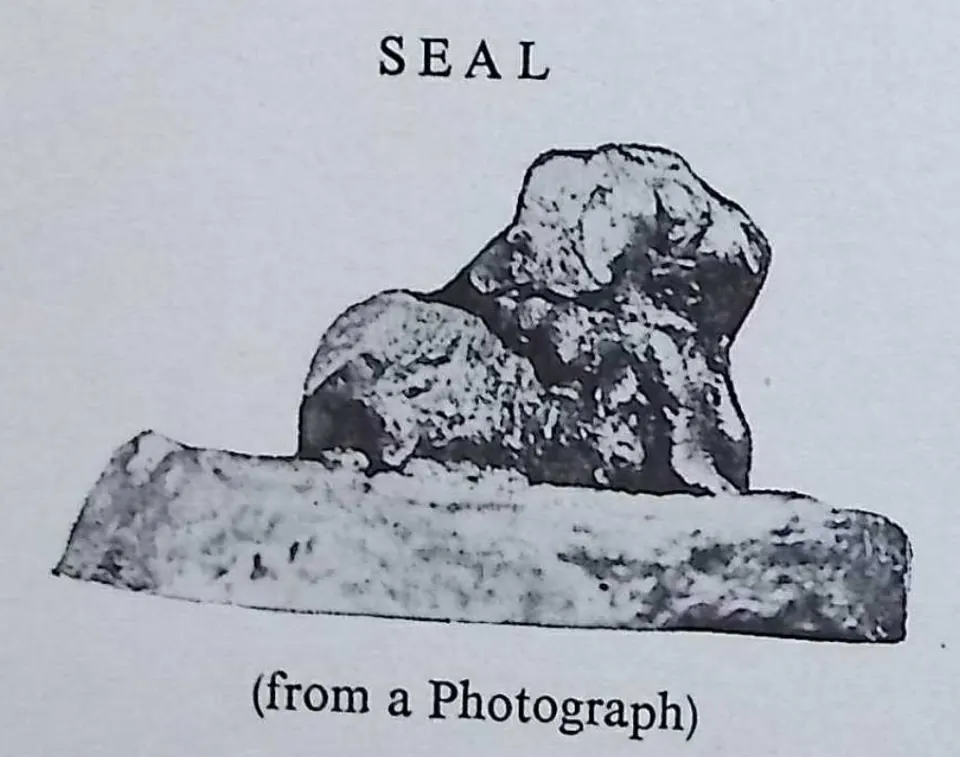
The Eastern Gangas were the kings of Kalinga, the coastal country north of the Godavari, from about the 6th century until 1434. Their early copper-plate grants are issued from Kalinganagara.12 G. V. Ramamurti identified this city in 1897 with Mukhalingam on the Vamsadhara, now in the Srikakulam district.12
The old Ganjam and Visakhapatnam (then Vizagapatam) districts, the northernmost part of the Telugu country, were the centre of their kingdom for most of its history.345 The temples of Mukhalingam, Srikurmam and Simhachalam hold hundreds of their inscriptions, many of them in Telugu.345
Anantavarman Chodaganga was a grandson of the Chola-Chalukya emperor Kulottunga I.67 His grants claim wars from the Ganges to the Godavari.67 The later kings, who “extended their dominions far to the north and south”, fought the Kakatiyas along the Godavari.67
The dynasty in brief
The Imperial Gazetteer (1908) summed up what was then known.8 It said that the copper-plate grants of the Eastern Gangas “are dated in an era whose starting-point has yet to be settled”.8 “The earliest of these kings is believed to belong to the seventh century.”8 Later records of the family “state that the Gangas of Kalinga were the cousins of the Western Gangas of Mysore”.8
The Vizagapatam district gazetteer of 1907 separated the early Ganga kings, known from grants in an era of unknown starting point, from “a later line of the same name”.36 This later line ruled from Kalinganagara from the end of the 9th century and was “apparently of the same family”.36 The gazetteer singled out Rajaraja I, who came to the throne in 1070–71.36 Under his son Anantavarman Chodaganga, “this family reached the zenith of its power”.36
The Imperial Gazetteer says that the Gangas “appear to have held Kalinga until a comparatively late period, though defeated by the Gajapatis in the fifteenth century”.8
Kalinga and Kalinganagara
According to the Vizagapatam gazetteer, the grants of the early Gangas call the kings “of the Ganga family, lords of Kalinga”.3 They call them worshippers of the Gokarnasvami (Siva) “on the Mahendragiri hill in Ganjam (where the ruins of cyclopean shrines still stand), and as ruling from Kalinganagara”.3
A typical grant, the Alamanda plates, opens “From the victorious residence Kalinganagara, which resembles the city of the gods”.9 It calls the city pleasant “(on account of the simultaneous existence) of the comforts of all seasons”.9 See Mahendragiri.
Where Kalinganagara lay was long disputed. Older writers put the capital at Kalingapatnam, at the mouth of the Vamsadhara, and E. Hultzsch still thought so in 1895.1011 Two years later Ramamurti argued that the seaport had no ancient remains fit for a capital.121 He argued that the site between Mukhalingam and Nagarakatakam, with its three old Siva temples and two miles of ruins, “represents the ancient capital of Kalinga”.121
The Imperial Gazetteer accepted Mukhalingam, “and not Calingapatam or Chicacole, as was once supposed”.2 Some grants were issued elsewhere.1314 The Jirjingi plates came from Dantapura.13 According to Robert Sewell, a grant of Vajrahasta of about 1045 came from the same city.14 See Kalingapatnam and the temples of Mukhalingam.
The early Gangas and their grants
Most of the early grants come from the Srikakulam country. When R. K. Ghoshal re-edited it in 1940, the oldest known was the grant of Indravarman, lord of Trikalinga, of the year 39.1513 It was found at Jirjingi near Tekkali.1513 The Achyutapuram plates of Indravarman alias Rajasimha, of the year 87, were found near Mukhalingam.16
A hoard of six sets of plates was dug up at Srikakulam (then Chicacole).1017181920 It included these grants:1017181920
- grants of the Ganga king Indravarman, of the years 128 and 1461017181920
- a grant of Devendravarman son of Anantavarman, of the year 511017181920
- a grant of Satyavarman1017181920
- the grant of Devendravarman son of Gunarnava, of the year 18320
The Alamanda plates of Anantavarman, son of Rajendravarman, come from the Vizianagaram country.21 They are dated “in the year three hundred and four of the prosperous and victorious reign of the G[a]ngeya race”.21 The language of the grants is Sanskrit, mostly in prose.1622 Their script is the box-headed alphabet that G. H. Ojha called the Kalinga script.1622 See the lesson Kalinga script and Odia.
J. F. Fleet edited several of the Chicacole grants in 1884.23 He noted that the early grants spell the family name Gānga, with a long vowel, and the later ones Ganga.23 He quoted a later grant’s story of its origin.23 In it the childless king Turvasu prayed to the river Ganga “and obtained a son, the unconquerable Gangeya”.23 The grant goes on: “and, commencing from that time, the succession of his descendants has been victorious in the world under the name of the lineage of the Ganga”.23
The Ganga era
The early grants count their years in the reign, or in some cases in the reign of the Gangeya line.2425 They do not say when the count began, and few of their dates contain details that can be checked.2425 Scholars have proposed very different starting points:
- Fleet, in 1884, dated the grants of Indravarman on historical and palaeographical (handwriting) grounds to about 657–661, and the grant of the year 254 to about 774–75.19
- Hultzsch, in 1895, refused to guess.11
- Sewell, in 1932, took the era to begin with the accession of a king Kamarnava in 877–78.262728 On this count the year 87 fell in about 964–65 and the year 183 in 1061.262728
- V. V. Mirashi, in 1942, rejected a proposal by R. C. Majumdar to place the start between 550 and 557.2529 From the dates that can be checked, he fixed it on 14 March 498.2529 In a further note he found that a newly published date of the year 358 also fitted this start and none of the others.252930
This page and the inscription pages give dates on Mirashi’s start year. On it the Jirjingi grant of the year 39 dates from about 537.31 Mirashi thought the era might mark the founding of a new kingdom in Kalinga as the power of the Vakatakas declined at the end of the 5th century.31 But he called this a conjecture (a guess).31
Vengi, the Cholas and the later Gangas
The Eastern Chalukyas of Vengi, south of the Godavari, “appear to have constantly interfered in the affairs of Kalinga”.3 The Vizagapatam gazetteer says that the Chola king Rajaraja I overthrew the Eastern Chalukya Vimaladitya in 999–1000.3 It says he set up a pillar of victory on Mahendragiri.3
The Imperial Gazetteer adds that “about the time of the Chola conquest the line of the later Ganga kings of Kalinga comes into view”.7 These kings “ruled, first no doubt as Chola feudatories, but later as independent sovereigns, for the next four centuries”.7 See the Eastern Chalukyas.
The first exactly dated event of this line is the coronation of Vajrahasta III, on 3 May 1038.32 It is recorded in his Nadagam plates of 1058.32 His son Rajaraja I married Rajasundari.33 Sewell took her to be a daughter of Kulottunga I.33
Rajaraja’s general Vanapati claimed victories over the Chola king, the Utkala and the kings of Vengi in the Dirghasi inscription of 1075–76.34 The grants of Rajaraja’s son say that Rajaraja sheltered the aged Eastern Chalukya Vijayaditya VII “for a long time in the western region”.3536
Anantavarman Chodaganga
Anantavarman Chodaganga was crowned in 1078, though his own inscriptions count his reign from about 1075.333738 He was still reigning in his seventy-second year.333738 His grants claim that he restored the kings of Vengi and Orissa and fought from the Ganges to the Godavari.6
In his reign the armies of his grandfather Kulottunga I twice invaded Kalinga, about 1090 and about 1111–12 in Sewell’s dating.3940 The general Karunakara led the second campaign.394041 It is the subject of the Tamil poem Kalingattupparani, which does not name the Kalinga king.41
His inscriptions are found at Mukhalingam, Srikurmam, Arasavalli, Bhogapuram and Visakhapatnam.537424344 South of the Godavari they are found at Draksharama, where three of his queens gave lamps to the temple in 1128.44
W. W. Hunter’s palm-leaf chronicle of Orissa remembers him as Chorganga, founder of the Gangetic line in Orissa.45 But it dates his reign to 1132–1152.45 See Anantavarman Chodaganga.
The Kakatiyas and the Godavari
After Chodaganga, inscriptions of his son Aniyanka-Bhima and of a grandson Rajaraja II appear at Draksharama.4647 In the 13th century the Gangas and the Kakatiyas fought over the coast between the Godavari and the Krishna. P. V. Parabrahma Sastry pieced the war together from Kakatiya and Ganga records.4849
In his account, Ganapatideva’s generals invaded Kalinga about 1212 and reached as far as the Aska country in Ganjam.4849 But the Ganga king Anangabhima III soon drove them back across the Godavari.4849 An inscription of his eighth regnal year, 1217–18, at Draksharama claims that he saved his country.4849 Records of his reign there of 1230 and 1233 credit his general Jasrajaka with conquering Vengi.4849
Parabrahma Sastry placed the Kakatiya conquest of the Kolanu region and of Vengi shortly before 1240.50 He cited an inscription of 1237 of a Kakatiya general at Draksharama.50 He read the Nandaluru inscription of 1257 as a defence against an invasion by the Ganga king Narasimha.5051 In that inscription the Telugu Choda Manumasiddhi II claims to have chased the Kalinga king back across the Godavari.5051
He also described a gap of about sixteen years in the Kakatiya records of the Godavari region.5051 It ended when Rudramadevi’s generals drove back the army of Bhanudeva I, son of Narasimha I, who had invaded Vengi in 1274.5051 After that the Godavari was the boundary of the two kingdoms.5051
The Godavari district gazetteer (1907) follows a Mackenzie manuscript about the viceroys (governors) of the Kakatiya king Prataparudra at Bendapudi, in the Tuni division.5253 It says they “fell foul of the ‘Raja of Cuttack’ (the Ganga king of Kalinga)”.5253 Pedda Malla Razu had kidnapped the bride of one of that king’s relatives as she was passing through the district.5253 “The Ganga king sent an expedition to revenge the affront; and, after a long siege, Bendapudi was taken and the two brothers were captured and beheaded.”5253
Simhachalam, Srikurmam and the north
The Vizagapatam gazetteer credits Narasimha I with building the central shrine, halls and enclosing verandah of the Simhachalam temple in black stone in 1267–68.54 At Srikurmam, chiefs who traced their descent from the Eastern Chalukyas served Narasimha I as ministers and Bhanudeva II as vassals.555657 The Madhva teacher Naraharitirtha appears to have governed the Kalinga country under Narasimha II.555657 See the Srikurmam temple, the inscriptions of the Chalukya chiefs and the inscription of Naraharitirtha.
The gazetteer also notes several inscriptions at Simhachalam of “a line of chiefs called the Matsyas of Oddavadi”.6 According to copper plates found at Dibbida, these chiefs descended from a fish and married into the royal house of Orissa.6 They “seem to have become independent there in the thirteenth century”.6 V. Rangacharya summarised a grant of the Matsya king Arjuna of 6 April 1269.58
The end
The gazetteer says that the power of the later Gangas was waning in the time of Narasimha I.54 “Narasimha I and two of his successors are mentioned as having had to resist attacks from the Muhammadans of Bengal and Delhi.”54 The gazetteer lists the troubles that followed:54
- “Firoz Shah of Delhi (1351-88) invaded Orissa”54
- “other Musalman raids into that country took place”54
- “the Reddi kings of Kondavidu in Guntur district penetrated to Simhachalam (where stands an inscription of one of them dated 1385-86)”54
On the death of the Ganga king Banudeva IV, his minister usurped (seized) the throne.54 In 1434-35 he founded the Gajapati (‘lords of elephants’) dynasty of Orissa “under the title of Pratapa Kapilasvara”.54 The Godavari gazetteer gives the year as 1434.59 It calls Kapilesvara “the minister of the last Ganga king of that country”.59
The Vizagapatam gazetteer adds that the new king’s capital was at Cuttack.54 His lands stretched “from the Ganges to the Kistna”.54 An Oriya inscription of Kapilesvara stands in the Mukhalingam temple.5 See the Reddis of Kondavidu.
Languages and scripts
The early grants are in Sanskrit, in the Kalinga script.1622 The Nadagam plates of 1058 are in an old Nagari alphabet.60 But their editor noted that “the Eastern Chalukya type of the eleventh century is however more extensively in evidence here, as everywhere else in the Telugu country”.60
The stone inscriptions of Chodaganga and his successors at Mukhalingam and Srikurmam are mostly in Telugu, or in Sanskrit and Telugu, written in Telugu characters.56155 The Dirghasi inscription of 1075–76 ends in seven lines of Telugu verse.62 Tamil records of Kulottunga I and of a merchant under a Ganga king Narasimha stand at Simhachalam and Visakhapatnam.6343
Oriya inscriptions appear later.644 South-Indian Inscriptions V (1925) printed four, from Mukhalingam and Srikurmam.64 Volume VI (1928) printed thirty-six.4
W. W. Hunter observed in 1872 that Oriya had long held its own “almost to the walls of Kalingapatnam itself”.65 The peasants of a wide strip south of the Orissa border still spoke it.65 But “the Telugu of the courts and State schools is gradually pushing it northwards”.65 See Language and literature.
Religion
The early kings were Saivas (worshippers of Shiva), worshippers of Gokarnasvamin on Mahendragiri.320 Their seals show the lying bull.320 According to a grant of Chodaganga, the Madhukesvara temple at Mukhalingam was founded by an early king Kamarnava.1
The later Gangas supported the Vaishnava temples of Srikurmam and Simhachalam.665457 A Madhva teacher, Naraharitirtha, served them as governor.665457
A record of Saka 1109 (Saka is an Indian way of counting years) at Bhogapuram falls in the eleventh year of a Ganga king Anantavarmadeva.42 It tells of a merchant who built a Jaina temple there, the Rajaraja Jinalaya.42 The Imperial Gazetteer notes that inscriptions show that Mukhalingam was formerly inhabited by Buddhists.2 See Religion.
Evidence and disagreements
- The start of the Ganga era. Fleet (1884) placed Indravarman’s grants in about 657–661 and the grant of the year 254 in about 774–75.19 Sewell (1932) took the start as 877–78.26 Majumdar put it between 550 and 557.2529 Mirashi (1942) fixed it in 498.2529
- Kalinganagara. Older writers and Hultzsch in 1895 placed it at Kalingapatnam.1011 Ramamurti in 1897 and the Imperial Gazetteer placed it at Mukhalingam.12
- Chodaganga’s accession. Fleet and Sewell give his coronation as 17 February 1078.67 From the regnal years of his inscriptions, Hultzsch and Rangacharya give about 1075.3868
- The Orissa chronicle. The temple chronicle printed by Hunter dates Chorganga to 1132–1152 and credits the Jagannatha temple to Anang Bhim Deo.45 The inscriptions put Chodaganga’s reign in 1078–1146, and the Vizagapatam gazetteer says his grants claim the temple for him.456
- Rajasundari. Sewell made her a daughter of Kulottunga I.33 Fleet thought this probable but not certain.35
- The Chola pillar on Mahendragiri. The Vizagapatam gazetteer gives it to Rajaraja I.3 The Imperial Gazetteer in one place gives it to Rajendra Chola.7
- The king of the Kalingattupparani. The poem does not name him.41 Sewell identified him with Chodaganga.40
- Chodaganga’s sons. Sewell’s genealogy makes Rajaraja II and Aniyanka-Bhima brothers, both sons of Chodaganga.69 A Draksharama record summarised by Rangacharya makes Rajaraja II the son of Aniyanka-Bhima.47
- Narasimha I. Sewell gives 1253–1256.69 A Srikurmam record has him king by 1250–51.70 The Vizagapatam gazetteer has him building at Simhachalam in 1267–68.54 Hunter’s chronicle has Languliya Narsinh, 1237–1282.71
- Numbering. The donor of the Nadagam plates is Vajrahasta III in one numbering and Vajrahasta V in another.7273 Rangacharya calls Narasimha I’s father Anangabhima II, and Parabrahma Sastry calls him Anangabhima III.727349
Footnotes
-
Ramamurti, “Nadagam Plates of Vajrahasta” (1897), p. 188 (archive.org (opens in a new tab)). ↩ ↩2 ↩3 ↩4 ↩5 ↩6
-
Imperial Gazetteer: Madras, Vol. I (1908), p. 228 (archive.org (opens in a new tab)). ↩ ↩2 ↩3 ↩4 ↩5
-
W. Francis, Madras District Gazetteers: Vizagapatam, Vol. I (1907), p. 26 (archive.org (opens in a new tab)). ↩ ↩2 ↩3 ↩4 ↩5 ↩6 ↩7 ↩8 ↩9 ↩10 ↩11 ↩12 ↩13 ↩14
-
K. V. Subrahmanya Aiyer (ed.), South-Indian Inscriptions (Texts), Vol. VI (1928), Preface (archive.org (opens in a new tab)). ↩ ↩2 ↩3 ↩4
-
Rangacharya, Topographical List, Vol. I (1919), p. 699 (archive.org (opens in a new tab)). ↩ ↩2 ↩3 ↩4 ↩5
-
Francis, Vizagapatam (1907), p. 27 (archive.org (opens in a new tab)). ↩ ↩2 ↩3 ↩4 ↩5 ↩6 ↩7 ↩8 ↩9 ↩10 ↩11 ↩12
-
Imperial Gazetteer: Madras, Vol. I (1908), p. 197 (archive.org (opens in a new tab)). ↩ ↩2 ↩3 ↩4 ↩5 ↩6
-
Imperial Gazetteer of India, Provincial Series: Madras, Vol. I (1908), pp. 191–192 (archive.org (opens in a new tab)). ↩ ↩2 ↩3 ↩4 ↩5
-
Hultzsch, “Alamanda Plates of Anantavarman” (1895), p. 20, translation (archive.org (opens in a new tab)). ↩ ↩2
-
Robert Sewell, Lists of the Antiquarian Remains in the Presidency of Madras, Vol. I (1882), p. 7 (archive.org (opens in a new tab)). ↩ ↩2 ↩3 ↩4 ↩5 ↩6 ↩7
-
E. Hultzsch, “Alamanda Plates of Anantavarman”, Epigraphia Indica III (1894–95), p. 18 and note 1 (archive.org (opens in a new tab)). ↩ ↩2 ↩3
-
Ramamurti, “Nadagam Plates of Vajrahasta” (1897), p. 187 (archive.org (opens in a new tab)). ↩ ↩2
-
Ghoshal, “Jirjingi Plates of Ganga Indravarman” (1940), p. 282 (archive.org (opens in a new tab)). Paraphrased. ↩ ↩2 ↩3 ↩4
-
Sewell, Historical Inscriptions (1932), p. 71 (archive.org (opens in a new tab)). Paraphrased. ↩ ↩2
-
R. K. Ghoshal, “Jirjingi Plates of Ganga Indravarman: the Year 39”, Epigraphia Indica XXV (1939–40), p. 281 (archive.org (opens in a new tab)). Paraphrased. ↩ ↩2
-
E. Hultzsch, “Achyutapuram Plates of Indravarman; the Year 87”, Epigraphia Indica III (1894–95), p. 127 (archive.org (opens in a new tab)). ↩ ↩2 ↩3 ↩4
-
J. F. Fleet, “Sanskrit and Old-Canarese Inscriptions” (Chicacole grant of Indravarman, the year 128), Indian Antiquary XIII (1884), pp. 119–120 (archive.org (opens in a new tab)). ↩ ↩2 ↩3 ↩4 ↩5
-
Fleet, “Sanskrit and Old-Canarese Inscriptions” (Chicacole plates of Devendravarman son of Anantavarman), Indian Antiquary XIII (1884), p. 273 (archive.org (opens in a new tab)). ↩ ↩2 ↩3 ↩4 ↩5
-
Fleet, “Sanskrit and Old-Canarese Inscriptions” (1884), p. 274 (archive.org (opens in a new tab)). ↩ ↩2 ↩3 ↩4 ↩5 ↩6 ↩7
-
E. Hultzsch, “Chicacole Plates of Gunarnava’s Son Devendravarman; the Year 183”, Epigraphia Indica III (1894–95), p. 130 (archive.org (opens in a new tab)). ↩ ↩2 ↩3 ↩4 ↩5 ↩6 ↩7 ↩8
-
Hultzsch, “Alamanda Plates of Anantavarman” (1895), p. 21, translation of line 28 (archive.org (opens in a new tab)). ↩ ↩2
-
Gaurishankar Hirachand Ojha, Bharatiya Prachin Lipimala (2nd ed., 1918), p. 92 (archive.org (opens in a new tab)). In Hindi; paraphrased. ↩ ↩2 ↩3
-
Fleet, “Sanskrit and Old-Canarese Inscriptions” (1884), p. 275 (archive.org (opens in a new tab)). ↩ ↩2 ↩3 ↩4 ↩5
-
Hultzsch, “Chicacole Plates of Devendravarman” (1895), p. 131 (archive.org (opens in a new tab)). ↩ ↩2
-
V. V. Mirashi, “Epoch of the Ganga Era”, Epigraphia Indica XXVI (1941–42), p. 333 (archive.org (opens in a new tab)). Paraphrased. ↩ ↩2 ↩3 ↩4 ↩5 ↩6 ↩7
-
Sewell, Historical Inscriptions (1932), p. 357, notes to the genealogy of the Eastern Gangas (archive.org (opens in a new tab)). Paraphrased. ↩ ↩2 ↩3
-
Robert Sewell, The Historical Inscriptions of Southern India (1932), p. 50 (archive.org (opens in a new tab)). Paraphrased. ↩ ↩2
-
Sewell, Historical Inscriptions (1932), p. 76 (archive.org (opens in a new tab)). Paraphrased. ↩ ↩2
-
Mirashi, “Epoch of the Ganga Era” (1942), p. 334 (archive.org (opens in a new tab)). Paraphrased. ↩ ↩2 ↩3 ↩4 ↩5
-
V. V. Mirashi, “A Further Note on the Epoch of the Ganga Era”, Epigraphia Indica XXVII (1947–48), p. 192 (archive.org (opens in a new tab)). Paraphrased. ↩
-
Mirashi, “Epoch of the Ganga Era” (1942), p. 336 (archive.org (opens in a new tab)). Paraphrased. ↩ ↩2 ↩3
-
Ramamurti, “Nadagam Plates of Vajrahasta” (1897), p. 185 (archive.org (opens in a new tab)). ↩ ↩2
-
Sewell, Historical Inscriptions (1932), p. 87 (archive.org (opens in a new tab)). Paraphrased. ↩ ↩2 ↩3 ↩4 ↩5
-
Ramamurti, “Dirghasi Inscription of Vanapati” (1897), p. 318, translation, verse 9 (archive.org (opens in a new tab)). ↩
-
J. F. Fleet, “The Chronology of the Eastern Chalukya Kings”, Indian Antiquary XX (1891), p. 276 (archive.org (opens in a new tab)). ↩ ↩2
-
Fleet, “Chronology of the Eastern Chalukya Kings” (1891), p. 277 (archive.org (opens in a new tab)). ↩
-
V. Rangacharya, A Topographical List of the Inscriptions of the Madras Presidency, Vol. I (1919), p. 682 (archive.org (opens in a new tab)). ↩ ↩2 ↩3
-
Ramamurti, “Dirghasi Inscription of Vanapati” (1897), p. 315 and note 10 by E. Hultzsch (archive.org (opens in a new tab)). ↩ ↩2 ↩3
-
Sewell, Historical Inscriptions (1932), p. 89 (archive.org (opens in a new tab)). Paraphrased. ↩ ↩2
-
Sewell, Historical Inscriptions (1932), p. 93 (archive.org (opens in a new tab)). Paraphrased. ↩ ↩2 ↩3
-
V. Kanakasabhai Pillai, “Tamil Historical Texts, No. 2: The Kalingattu Parani”, Indian Antiquary XIX (1890), p. 337 (archive.org (opens in a new tab)). ↩ ↩2 ↩3
-
Rangacharya, Topographical List, Vol. III (1919), p. 1665 (archive.org (opens in a new tab)). ↩ ↩2 ↩3
-
Rangacharya, Topographical List, Vol. III (1919), p. 1674 (archive.org (opens in a new tab)). ↩ ↩2
-
Rangacharya, Topographical List, Vol. II (1919), p. 734 (archive.org (opens in a new tab)). ↩ ↩2
-
Hunter, Orissa, Vol. II (1872), Appendix VII, p. 187 (archive.org (opens in a new tab)). ↩ ↩2 ↩3 ↩4
-
Rangacharya, Topographical List, Vol. II (1919), p. 741, Godavari No. 313 (archive.org (opens in a new tab)). ↩
-
Rangacharya, Topographical List, Vol. II (1919), p. 744, Godavari No. 350 (archive.org (opens in a new tab)). ↩ ↩2
-
P. V. Parabrahma Sastry, The Kakatiyas of Warangal (1978), pp. 109–110. ↩ ↩2 ↩3 ↩4 ↩5
-
Parabrahma Sastry, The Kakatiyas of Warangal (1978), p. 111. ↩ ↩2 ↩3 ↩4 ↩5 ↩6
-
Parabrahma Sastry, The Kakatiyas of Warangal (1978), p. 112. ↩ ↩2 ↩3 ↩4 ↩5 ↩6 ↩7
-
Parabrahma Sastry, The Kakatiyas of Warangal (1978), p. 120. ↩ ↩2 ↩3 ↩4 ↩5
-
F. R. Hemingway, Madras District Gazetteers: Godavari, Vol. I (1907), p. 24 (archive.org (opens in a new tab)). ↩ ↩2 ↩3 ↩4
-
Hemingway, Godavari (1907), p. 25 (archive.org (opens in a new tab)). ↩ ↩2 ↩3 ↩4
-
Francis, Vizagapatam (1907), p. 28 (archive.org (opens in a new tab)). ↩ ↩2 ↩3 ↩4 ↩5 ↩6 ↩7 ↩8 ↩9 ↩10 ↩11 ↩12 ↩13 ↩14
-
E. Hultzsch, “Four Pillar Inscriptions of Eastern Chalukya Chiefs at Srikurmam”, Epigraphia Indica V (1898–99), p. 32 (archive.org (opens in a new tab)). ↩ ↩2 ↩3
-
H. Krishna Sastri, “Srikurmam Inscription of Naraharitirtha; Saka-Samvat 1203”, Epigraphia Indica VI (1900–01), p. 260 (archive.org (opens in a new tab)). ↩ ↩2
-
Krishna Sastri, “Srikurmam Inscription of Naraharitirtha” (1901), p. 262 and note 5 (archive.org (opens in a new tab)). ↩ ↩2 ↩3 ↩4
-
Rangacharya, Topographical List, Vol. III (1919), p. 1673, Vizagapatam No. 51 (archive.org (opens in a new tab)). ↩
-
Hemingway, Godavari (1907), p. 26 (archive.org (opens in a new tab)). ↩ ↩2
-
G. V. Ramamurti, “Nadagam Plates of Vajrahasta; Saka-Samvat 979”, Epigraphia Indica IV (1896–97), p. 184 (archive.org (opens in a new tab)). ↩ ↩2
-
Rangacharya, Topographical List, Vol. I (1919), p. 700 (archive.org (opens in a new tab)). ↩
-
G. V. Ramamurti, “Dirghasi Inscription of Vanapati; Saka-Samvat 997”, Epigraphia Indica IV (1896–97), p. 314 (archive.org (opens in a new tab)). ↩
-
Rangacharya, Topographical List, Vol. III (1919), p. 1686 (archive.org (opens in a new tab)). ↩
-
H. Krishna Sastri (ed.), South-Indian Inscriptions (Texts), Vol. V (1925), Preface (archive.org (opens in a new tab)). ↩ ↩2
-
W. W. Hunter, Orissa, Vol. I (1872), p. 171 (archive.org (opens in a new tab)). ↩ ↩2 ↩3
-
Imperial Gazetteer: Madras, Vol. I (1908), p. 230 (archive.org (opens in a new tab)). ↩ ↩2
-
Sewell, Historical Inscriptions (1932), p. 94 (archive.org (opens in a new tab)). Paraphrased. ↩
-
Rangacharya, Topographical List, Vol. I (1919), p. 701 (archive.org (opens in a new tab)). ↩
-
Sewell, Historical Inscriptions (1932), p. 358 (archive.org (opens in a new tab)). Paraphrased. ↩ ↩2
-
Rangacharya, Topographical List, Vol. I (1919), p. 688 (archive.org (opens in a new tab)). ↩
-
Hunter, Orissa, Vol. II (1872), Appendix VII, p. 188 (archive.org (opens in a new tab)). ↩
-
Rangacharya, Topographical List, Vol. I (1919), p. 684 (archive.org (opens in a new tab)). ↩ ↩2
-
Rangacharya, Topographical List, Vol. III (1919), p. 1666 (archive.org (opens in a new tab)). ↩ ↩2
Photos
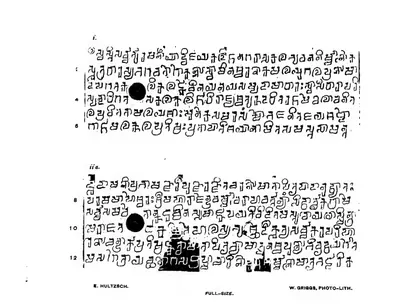 "Achyutapuram Plates of Indravarman. The Year 87": first plate and first side of the second plate, full size (Epigraphia Indica III)Inscription rubbing · 1895
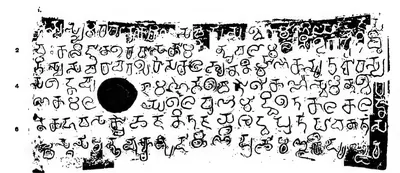 "Alamanda Plates of Anantavarman.—The Year 304", first plate (lines 1-7) (Epigraphia Indica III, plates between pp. 18 and 19, PDF p. 40)Inscription rubbing · 1895
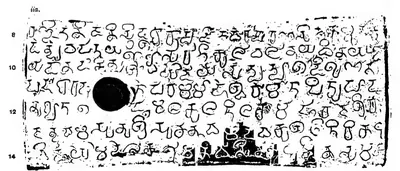 "Alamanda Plates of Anantavarman.—The Year 304", first side of the second plate (lines 8-14) (Epigraphia Indica III, plates between pp. 18 and 19, PDF p. 40)Inscription rubbing · 1895
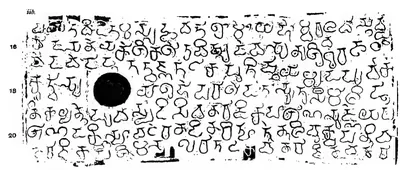 "Alamanda Plates of Anantavarman.—The Year 304", second side of the second plate (lines 15-21) (Epigraphia Indica III, plates between pp. 18 and 19, PDF p. 41)Inscription rubbing · 1895
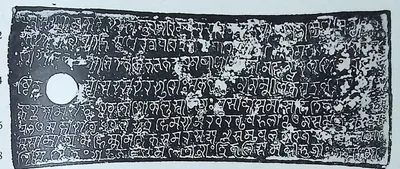 "Arasavalli Plates of Vajrahasta (III), Saka 982", first plate (lines 1-8) (Epigraphia Indica XXXII, Plate I between pp. 312 and 313, PDF p. 433)Inscription rubbing · 1959
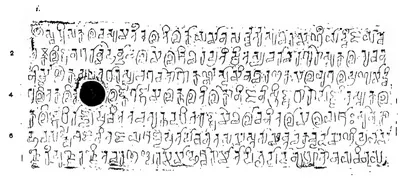 "Chicacole Plates of Devendravarman.—The Year 183", first plate (lines 1-7) (Epigraphia Indica III, plates between pp. 132 and 133, PDF p. 184)Inscription rubbing · 1895
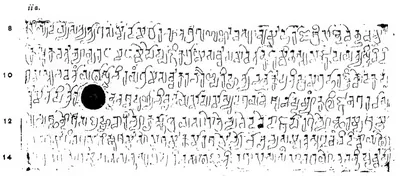 "Chicacole Plates of Devendravarman.—The Year 183", first side of the second plate (lines 8-14) (Epigraphia Indica III, plates between pp. 132 and 133, PDF p. 184)Inscription rubbing · 1895
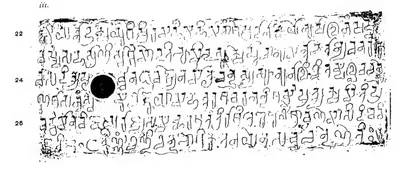 "Chicacole Plates of Devendravarman.—The Year 183", third plate (lines 22-27) (Epigraphia Indica III, plates between pp. 132 and 133, PDF p. 185)Inscription rubbing · 1895
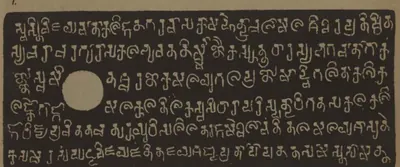 "Ganga Grant of Indravarma. The 128th Year", first plate (J. F. Fleet, Indian Antiquary XIII, plate between pp. 120 and 121, PDF p. 139)Inscription rubbing · 1884
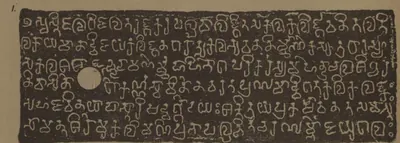 "Ganga Grant of Indravarma. The 146th Year", first plate (J. F. Fleet, Indian Antiquary XIII, plate between pp. 122 and 123, PDF p. 143)Inscription rubbing · 1884
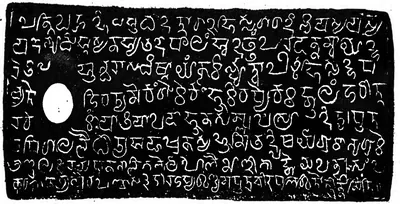 "Ganga Grant of Satyavarma", second side of the second plate (J. F. Fleet, Indian Antiquary XIV, plate between pp. 10 and 11, PDF p. 17)Inscription rubbing · 1885
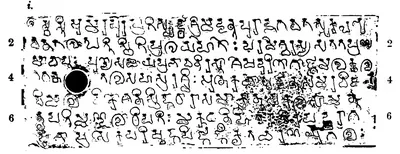 "Jirjingi Plates of Ganga Indravarman; the year 39", first plate (lines 1-7) (Epigraphia Indica XXV, plate following p. 286, PDF p. 342)Inscription rubbing · 1940
Show all (28)
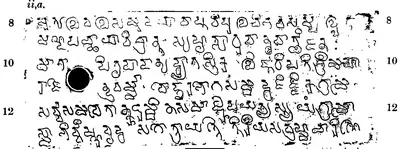 "Jirjingi Plates of Ganga Indravarman; the year 39", first side of the second plate (lines 8-13) (Epigraphia Indica XXV, plate following p. 286, PDF p. 342)Inscription rubbing · 1940
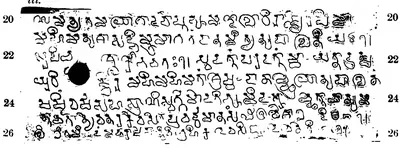 "Jirjingi Plates of Ganga Indravarman; the year 39", third plate (lines 20-26) (Epigraphia Indica XXV, plate following p. 286, PDF p. 342)Inscription rubbing · 1940
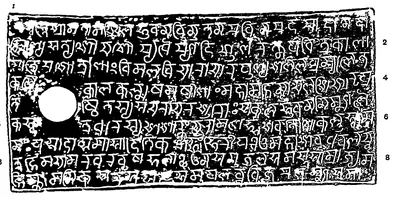 "Nadagam Plates of Vajrahasta.—Saka-Samvat 979", first plate (lines 1-9) (Epigraphia Indica IV, plates between pp. 190 and 191, PDF p. 233)Inscription rubbing · 1897
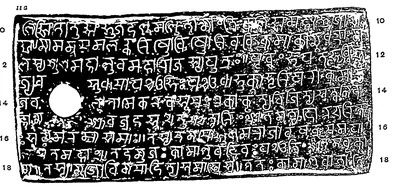 "Nadagam Plates of Vajrahasta.—Saka-Samvat 979", first side of the second plate (lines 10-18) (Epigraphia Indica IV, plates between pp. 190 and 191, PDF p. 233)Inscription rubbing · 1897
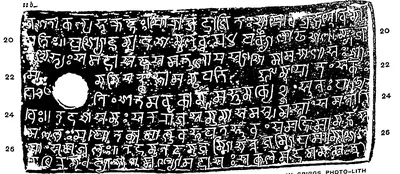 "Nadagam Plates of Vajrahasta.—Saka-Samvat 979", second side of the second plate (lines 19-27) (Epigraphia Indica IV, plates between pp. 190 and 191, PDF p. 233)Inscription rubbing · 1897
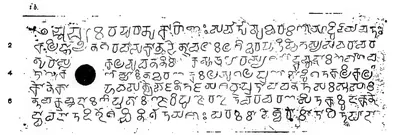 "Parla-Kimedi Plates of the Time of Vajrahasta", second side of the first plate (lines 1-7) (Epigraphia Indica III, plate between pp. 222 and 223, PDF p. 290)Inscription rubbing · 1895
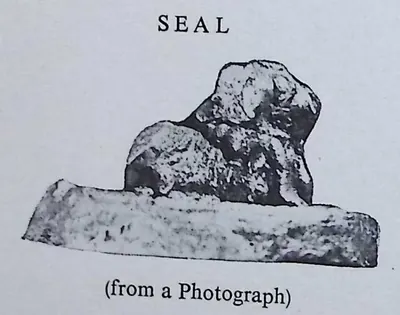 "Seal (from a Photograph)": the bull seal of the Arasavalli plates of Vajrahasta III, Saka 982 (Epigraphia Indica XXXII, PDF p. 434)Photograph · 1959
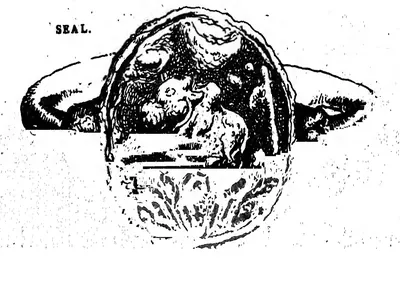 "Seal": the bull seal of the Ganga grant of Satyavarman from Chicacole (J. F. Fleet, Indian Antiquary XIV, plate between pp. 10 and 11, PDF p. 17)Drawing · 1885
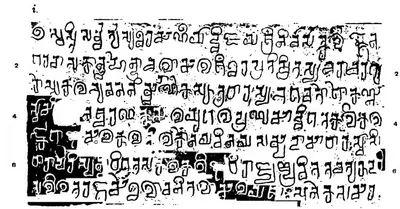 "Tekkali Plates of Danarnava's son Indravarman", first plate (lines 1-7) (Epigraphia Indica XVIII, plates between pp. 310 and 311, PDF p. 392)Inscription rubbing · 1926
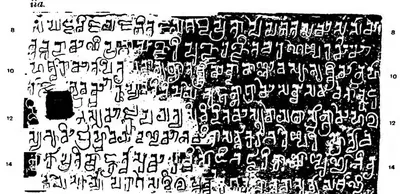 "Tekkali Plates of Danarnava's son Indravarman", first side of the second plate (lines 8-15) (Epigraphia Indica XVIII, plates between pp. 310 and 311, PDF p. 392)Inscription rubbing · 1926
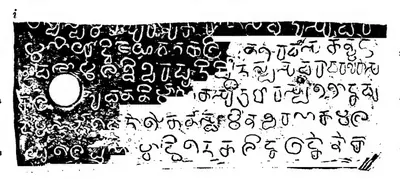 "Tekkali Plates of Rajendravarman's son Devendravarman", first plate (lines 1-6) (Epigraphia Indica XVIII, plates between pp. 312 and 313, PDF p. 396)Inscription rubbing · 1926
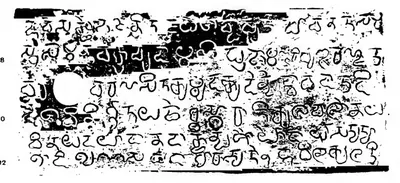 "Tekkali Plates of Rajendravarman's son Devendravarman", first side of the second plate (lines 7-12) (Epigraphia Indica XVIII, plates between pp. 312 and 313, PDF p. 396)Inscription rubbing · 1926
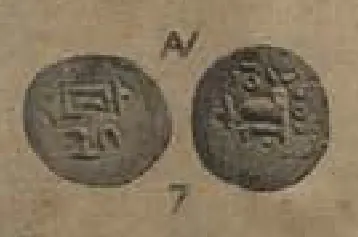 Gold fanam of Anantavarma Chodaganga, two faces (V. A. Smith, Catalogue of the Coins in the Indian Museum I, Plate XXX, No. 7)Coin · 1906
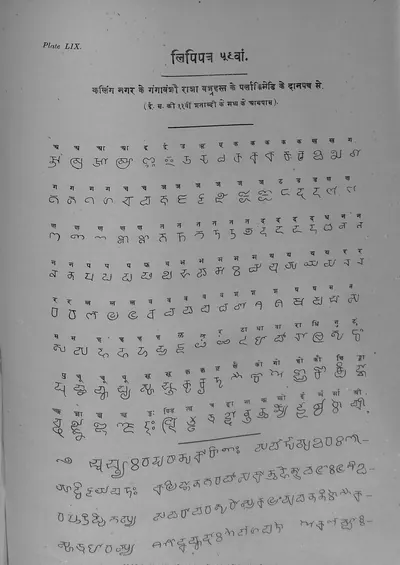 Kalinga script mixed with Nagari: Parlakimedi grant of the Ganga king Vajrahasta (Ojha 1918, Plate 59)Book plate · 1918
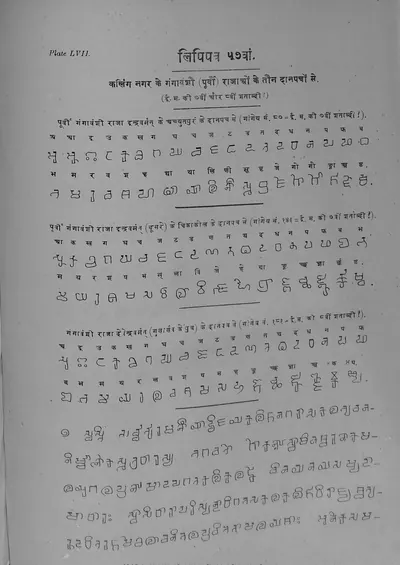 Kalinga script: grants of the Eastern Ganga kings Indravarman (Achyutapuram, Chicacole) and Devendravarman (Ojha 1918, Plate 57)Book plate · 1918
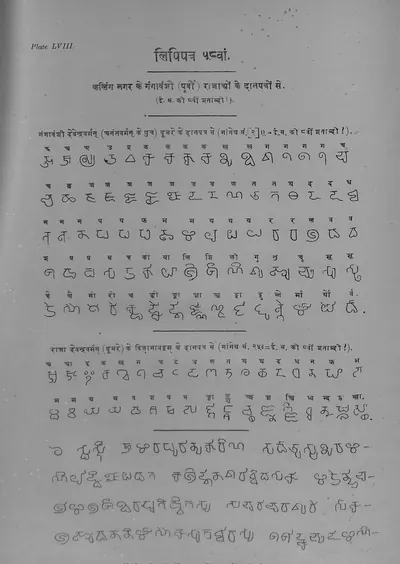 Kalinga script: two grants of the Eastern Ganga king Devendravarman II (Ojha 1918, Plate 58)Book plate · 1918
Related
People
Vajrahasta III (Eastern Ganga)
c. 1038–1070 CE
Eastern Ganga king of Kalinga, crowned on 3 May 1038. His Nadagam plates of 1058 give the earliest exactly dated event in the history of the later Gangas, and a family tree of his predecessors. He styled himself lord of the Three Kalingas and issued his grants from Kalinganagara. He was the grandfather of Anantavarman Chodaganga. Historians number him Vajrahasta III or Vajrahasta V.
Rajaraja I (Eastern Ganga)
c. 1070–1078 CE
Eastern Ganga king of Kalinga, also called Devendravarman. He reigned for eight years between his father Vajrahasta III and his son Anantavarman Chodaganga (1070–1078 in Sewell's chronology, 1068–1076 in Ramamurti's). His wife Rajasundari was probably a daughter of the Chola-Chalukya emperor Kulottunga I. His general Vanapati claimed victories over the Cholas and the kings of Vengi and Orissa. The grants of his son say that he sheltered the Eastern Chalukya Vijayaditya VII against the Cholas.
Anantavarman Chodaganga
c. 1078–1146 CE
Eastern Ganga king of Kalinga, crowned in 1078 and still reigning in his 72nd regnal year (1146–47). He was a son of the Ganga king Rajaraja and of Rajasundari, a daughter of Kulottunga I, so he was a grandson of the Chola-Chalukya emperor whose armies invaded Kalinga in his reign. Dozens of his Telugu and Sanskrit inscriptions survive at Mukhalingam, Srikurmam, Simhachalam, Draksharama and other places in the north of the Telugu country. His grants trace the Ganga family back to Brahma.
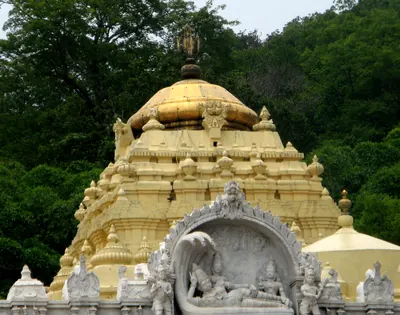
Narasimha I (Eastern Ganga)
c. 1250–1268 CE
Eastern Ganga king of Kalinga and Orissa in the mid-13th century, son of Anangabhima. The Vizagapatam gazetteer credits him with building the central shrine, the halls and the enclosing verandah of the Simhachalam temple in black stone in 1267–68. His feudatories and ministers left records at Srikurmam. The Orissa temple chronicle remembers him as Languliya Narsinh, builder of the Sun temple at Konarak. His dates differ widely between the sources.
Monuments
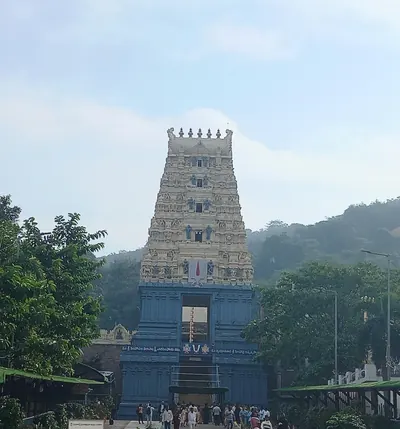
Simhachalam temple
Temple of Narasimha on the Simhachalam hill north of Visakhapatnam, described in 1907 as the most famous, richest and best carved shrine of the district. Its walls hold more than five hundred inscriptions, many of Eastern Ganga kings. The district gazetteer credits the Ganga king Narasimha I with building its central shrine, halls and enclosing verandah in black stone in 1267–68. Its records include a Tamil inscription of Kulottunga I, gifts of Reddi and Matsya chiefs, and the inscriptions of Krishnadeva Raya of Vijayanagara.
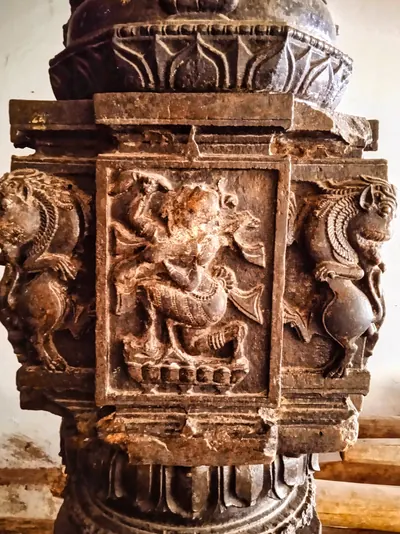
Srikurmam temple
Temple of Vishnu in his tortoise incarnation at Srikurmam, near Srikakulam. Its granite verandas and black stone pillars carry more than a hundred inscriptions. Most of them belong to the Eastern Ganga kings who came after Anantavarman Chodaganga, to their ministers and feudatories, and later to the Gajapatis. An inscription of 1283 credits a Brahmin contemporary of a king Anangabhima with building an enclosure of black stone for the temple.
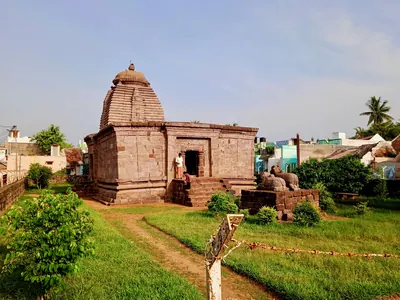
Temples of Mukhalingam
Three Siva temples at Mukhalingam on the Vamsadhara: the Madhukesvara (Mukhalingesvara), Bhimesvara (Aniyankabhimesvara) and Somesvara. They are in the Orissan style and stand among the ruins of Kalinganagara, the capital of the Eastern Ganga kings. A grant of Anantavarman Chodaganga credits the Madhukesvara temple to an early king Kamarnava, and the Bhimesvara is thought to be named after the king Vajrahasta Aniyankabhima. Their walls and pillars carry scores of Telugu and Sanskrit inscriptions of the Gangas.
Inscriptions
Jirjingi plates of Indravarman
c. 537 CE
A copper-plate grant of the Ganga king Indravarman, lord of Trikalinga, issued from Dantapura and dated in the year 39. It was found in an old temple site at Jirjingi near Tekkali in the Srikakulam country. When R. K. Ghoshal re-edited it in 1940, it was the oldest known record of the Eastern Gangas. It gives the village of Jijjika, the modern Jirjingi, to a Brahmin. On V. V. Mirashi's epoch (starting date) of the Ganga era, the year 39 falls in about 537.
Achyutapuram plates of Indravarman
c. 585 CE
Three small copper plates, found near Mukhalingam in the Srikakulam country. They record a gift of land made at Kalinganagara by the Ganga king Indravarman, alias Rajasimha, at the consecration of a tank in honour of his mother. The grant is dated in the 87th year of a reckoning that most later scholars took to be the Ganga era. The plates are among the best-preserved early Ganga grants and show the box-headed Kalinga script.
Chicacole plates of Devendravarman, son of Gunarnava
c. 681 CE
A copper-plate grant of the Ganga king Devendravarman, son of Gunarnava, issued from Kalinganagara and dated in the 183rd year of the Ganga reckoning. It is one of six sets of plates dug up together at Srikakulam (then Chicacole). It gives the village of Poppangika as an agrahara (Brahmin village) to six Brahmin brothers living at Kalinganagara. It shows an early use of a decimal zero beside the old number symbols.
Alamanda plates of Anantavarman
c. 802 CE
A copper-plate grant of the Ganga king Anantavarman, son of Rajendravarman, found near Alamanda in the Vizagapatam district (now Vizianagaram). It was issued from Kalinganagara on a solar eclipse at the consecration of a tank, and it gives the village of Medelaka to a Brahmin. It is dated in the 304th year of the reign of the Gangeya race, one of the clearest references to a Ganga era.
Nadagam plates of Vajrahasta
1058 CE
Five copper plates with a bull seal, found by a cultivator at Nadagam in the Narasannapeta taluk (Srikakulam district). They record a grant made from Kalinganagara in Saka 979 (1058) by the Ganga king Vajrahasta, lord of the Three Kalingas, to his son-in-law Samaya. They give the exact moment of Vajrahasta's coronation in 1038 and a list of the kings before him. Their editor, G. V. Ramamurti, used them to argue that Kalinganagara was Mukhalingam.
Dirghasi inscription of Vanapati
1075 CE
A stone inscription of Saka 997 (1075–76) at Dirghasi near Kalingapatnam, in sixteen lines of Sanskrit verse followed by seven of Telugu verse. It records that Vanapati, a Brahmin general of the Ganga king Rajaraja I, built a dancing hall before the temple of Durga and gave lamps. It credits him with victories over the Chola king, the Utkala, and the kings of Vengi, Kimidi, Kosala and Odda.
Srikurmam inscriptions of the Chalukya chiefs
1273 CE
Four inscriptions of 1273 to 1318 on pillars of the Kurmesvara temple at Srikurmam. They were left by chiefs who claimed descent from the Eastern Chalukya kings Vimaladitya and Rajaraja Narendra, and who served the Eastern Ganga kings. The earliest calls the chief's father a minister of Narasimha I. It also says that Rajaraja Narendra, with scholars, translated the history of the Bharata race into Telugu. E. Hultzsch took this as a confirmation, from an inscription, of the tradition of Nannaya's Telugu Mahabharata.
Srikurmam inscription of Naraharitirtha
1281 CE
A Sanskrit inscription in Telugu letters on a black granite pillar of the Kurmesvara temple at Srikurmam, dated Saka 1203 (1281). It names the Madhva teachers Purushottama, Anandatirtha and Naraharitirtha. It says that Naraharitirtha defended Srikurmam against the Savaras and built a shrine of Yogananda-Narasimha there. It suggests that he governed the Kalinga country under the Eastern Ganga kings. H. Krishna Sastri used it and Naraharitirtha's other records to date the philosopher Madhva.
References
Notes (0)
Sources (24)
Spotted an error on this page? Tell us
Last updated: