Vijayaditya Chola (Telugu Chola)
Telugu Chola king of Renandu known from a single damaged stone at Chamaluru, dated in his 22nd year. He bore the supreme title Prithvivallabha, and a Bana king ruled Pambuliggi under him. His editors placed him about 750. They read the record as the family's recovery of Renandu from Bana chiefs who had served the Chalukyas of Badami.
Vijayaditya Chola was a Telugu Chola king known from a single damaged stone at Chamaluru.1 He bore the supreme title Prithvivallabha.2 His editors placed him about 750, and saw his reign as the end of Bana rule in the family’s country.12
The Chamaluru stone
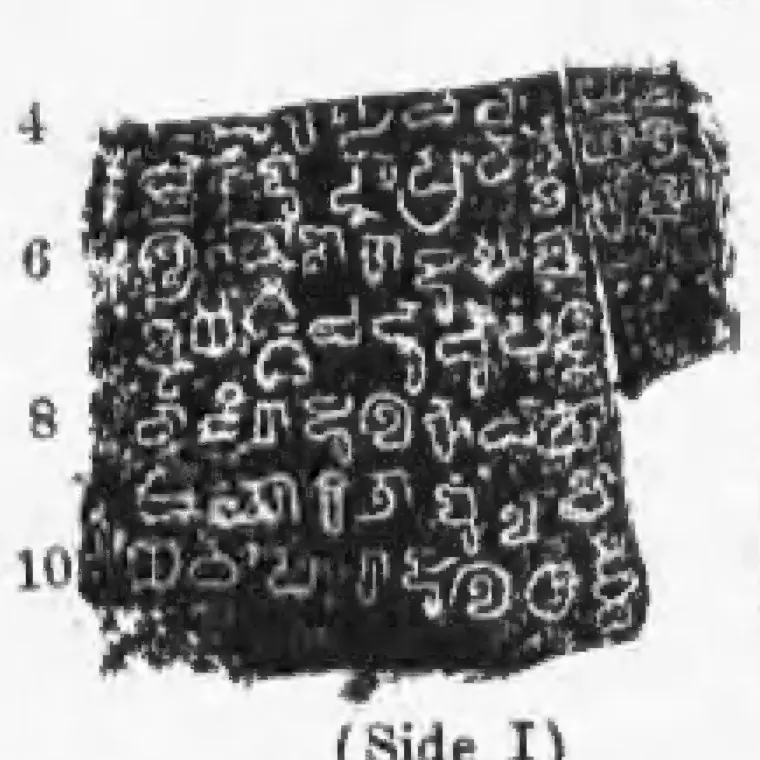
A broken stone lying in a field at Chamaluru in the Jammalamadugu taluk records a grant in Telugu.1 It was made in the 22nd year of king Prithivivallabha Vijayaditya Chola, while a Bana king was ruling at Pambuliggi.1
When Colin Mackenzie’s assistants saw it early in the 19th century, it was less damaged.13 K. A. Nilakanta Sastri and M. Venkataramayya restored the lost opening lines from their eye-copy (a copy drawn by hand).13
The grant seems to have been made by the king’s mother.1 Its archaic (very old) wording ties her by marriage to a Pallava king.1 She was either a younger sister of Kachapori, apparently the Pallava queen, or the mother of a Chola-Maharaja who was Kachapori’s younger brother.1 See the Chamaluru inscription.
The Banas and the title Prithvivallabha
The editors drew three conclusions. First, Vijayaditya Chola was probably named by his father after the Chalukya king Vijayaditya of Badami (696–733).1 This places him a generation later, about 750, after Uttamaditya and Satyaditya.1
Second, his supreme title Prithvivallabha shows that he had thrown off Chalukya overlordship.2 Third, the Bana king at Pambuliggi had passed from Chalukya to Telugu Chola rule.23 They identified Pambuliggi with Havalige in the Gooty taluk.23
They supported this from records of the Chalukya Vijayaditya’s reign in the same country. A record of his 23rd year (719) at Kondupalli in the Gooty taluk names the Bana Vikramaditya Bali Indra ruling Turumara-vishaya. Other records show a Bana chief Bhupaditya ruling Renandu itself, and a son of a Perbana king at Chilamakuru. The Telugu Cholas held Renandu down to Satyaditya.2 So the Bana occupation must have come during or after his rule, and Vijayaditya Chola’s reign marks its end.2
The editors identified the Pallava king of the Chamaluru record, probably, with Nandivarman Pallavamalla, whose reign began about 722.2 They saw in the marriage link a renewal of the friendship between the two families that had existed in Mahendravikrama’s time.2
Place in the family
It is not known to which branch Vijayaditya belonged. Because his record lies in Renandu, the editors thought he was probably of the line of Dhananjaya.4 In their view he returned to the ancestral country after driving out the Banas.4 If so, he is the last known member of that line.4 Their family table places him about 750, after a period of Bana rule.5
Footnotes
-
K. A. Nilakanta Sastri and M. Venkataramayya, “Telugu Chola Records from Anantapur and Cuddapah”, Epigraphia Indica XXVII (1956), p. 242, Chamaluru inscription (archive.org (opens in a new tab)). Paraphrased. ↩ ↩2 ↩3 ↩4 ↩5 ↩6 ↩7 ↩8 ↩9 ↩10 ↩11
-
Nilakanta Sastri and Venkataramayya, “Telugu Chola Records” (1956), p. 243 (archive.org (opens in a new tab)). Paraphrased. ↩ ↩2 ↩3 ↩4 ↩5 ↩6 ↩7 ↩8 ↩9
-
Nilakanta Sastri and Venkataramayya, “Telugu Chola Records” (1956), p. 244 and notes (archive.org (opens in a new tab)). Paraphrased. ↩ ↩2 ↩3 ↩4
-
Nilakanta Sastri and Venkataramayya, “Telugu Chola Records” (1956), p. 249 (archive.org (opens in a new tab)). Paraphrased. ↩ ↩2 ↩3
-
Nilakanta Sastri and Venkataramayya, “Telugu Chola Records” (1956), p. 248, genealogical table (archive.org (opens in a new tab)). Paraphrased. ↩
Photos
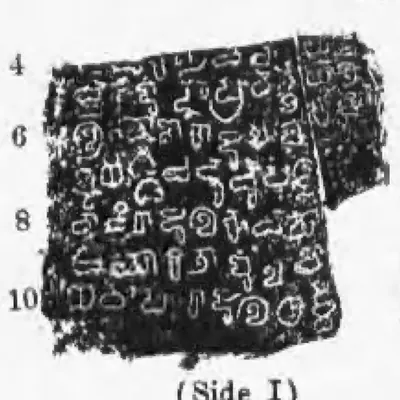 "Telugu Chola Records from Anantapur and Cuddapah (II)", K: the Chamaluru inscription of Prithivivallabha Vijayaditya-Chola, side I (Epigraphia Indica XXVII, Plate (II) between pp. 236 and 237, panel K, side I (PDF p. 326))Historic photograph · 1956
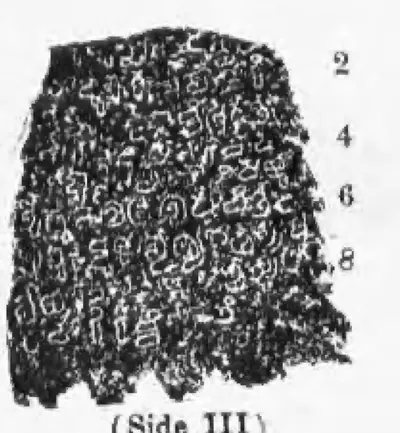 "Telugu Chola Records from Anantapur and Cuddapah (II)", K: the Chamaluru inscription of Prithivivallabha Vijayaditya-Chola, side III (Epigraphia Indica XXVII, Plate (II) between pp. 236 and 237, panel K, side III (PDF p. 326))Historic photograph · 1956
Related
Dynasties
References
Notes (0)
Sources (1)
Spotted an error on this page? Tell us
Last updated: