Vikramaditya II (Telugu Chola)
Telugu Chola king of Renandu, placed about 700 by his editors. He is known from stone records at Chilamakuru and Nallacheruvupalle, and from the Malepadu stone of his son Satyaditya. His queen Cholamahadevi ruled at Chilamakuru with their son Uttamaditya, who succeeded him. Whether 'Saktikumara' was his father or part of his own name is disputed.
Vikramaditya II was a king of the Telugu Chola family, whom his editors placed about 700.12 He is known from the Malepadu stone of his son Satyaditya, and from stone records at Chilamakuru and Nallacheruvupalle.345 Scholars read the Malepadu stone in two ways, and so disagree about his father.36
The Malepadu stone and its reading
Vikramaditya II is known first from the stone inscription of his son Satyaditya at Malepadu. Krishna Sastri, who first published the stone in 1912, translated it as a grant by “Satyāditya of the Kāśyapa-gōtra, son of Śaktikomara Vikramāditya (and grandson of) the great lord, the glorious Chōḷa-Mahārājādhirāja Vikramāditya”.3 This reading makes three generations.3
K. A. Nilakanta Sastri and M. Venkataramayya (1956) objected that the text has no word for “grandson”.6 On their reading the stone names four generations:6
- a Vikramaditya6
- his son Saktikumara6
- Saktikumara’s son Vikramaditya II, who bears the supreme titles6
- Vikramaditya II’s son Satyaditya6
They added that Satyaditya, whose name lacks the honorific ending of a ruling king, may appear only as a prince, with his father as the reigning king.6 See the Malepadu stone of Satyaditya.
Chilamakuru and Nallacheruvupalle
A pillar from the Agastyesvara temple at Chilamakuru in the Kamalapuram taluk was later moved to the Madras Museum. It records a gift in the reign of Vikramaditya Chola-Maharaja. His queen, called Cholamahadevi, was then ruling at Chirumburu (Chilamakuru) together with Uttamaditya, who bears the rank of samantaka (subordinate chief).46 The editors took Uttamaditya to be the king’s son.46
A damaged stone near Nallacheruvupalle in the Pulivendla taluk, about 15 miles away, names a queen Cholamaharajuladevi, called Mankhi-porri.57 She ruled at Ujjayini, perhaps Ujjini in the Kudligi taluk of Bellary.57 The editors thought her probably the same queen, and the king the same Vikramaditya II.57
Judging by their letters, both records were placed a little later than Punyakumara’s Ramesvaram pillar, about the beginning of the 8th century.67
His sons
The editors made Uttamaditya and Satyaditya his two sons.78 They reasoned that Uttamaditya, who ruled at Chilamakuru with his mother in his father’s lifetime, was probably the elder and the heir.78 A stone at Veludurti, issued in the reign of Uttamaditya Chola-Maharaja, shows him later ruling as king.78
Satyaditya’s only record, the Malepadu stone, describes him as ruling the Siddhi thousand and the Renandu seven thousand.9 But it gives him no royal title, and it is not known whether he reigned.9 An Erigallu-Mutturaju named on the Nallacheruvupalle stone may have been one of the two brothers, probably the younger.7
Place in the dynasty and date
The editors attached Vikramaditya I, Saktikumara and Vikramaditya II to the line of Punyakumara on grounds of probability only.12 Their reasons were that these kings rule the same country, that their names follow Pallava names with Chalukya ones, and that “Saktikumara” resembles “Punyakumara”.12 They placed Vikramaditya II about 700 and his sons about 725.12
E. Hultzsch put the Alupa inscriptions of Udiyavara about 800.10 Krishna Sastri compared the letters of the Satyaditya stone with these inscriptions.10 He noted that it is written from the bottom upwards, like the Amaravati pillar of Simhavarman.10 After Satyaditya, the editors held, Bana chiefs serving the Chalukyas occupied the family’s country until Vijayaditya Chola won it back.11
Footnotes
-
Nilakanta Sastri and Venkataramayya, “Telugu Chola Records” (1956), p. 248, genealogical table and note (archive.org (opens in a new tab)). Paraphrased. ↩ ↩2 ↩3 ↩4
-
Nilakanta Sastri and Venkataramayya, “Telugu Chola Records” (1956), p. 249 (archive.org (opens in a new tab)). Paraphrased. ↩ ↩2 ↩3 ↩4
-
Krishna Sastri, “Malepadu Plates” (1912), p. 346, translation of the Malepadu stone inscription of Satyaditya (archive.org (opens in a new tab)). ↩ ↩2 ↩3 ↩4
-
K. A. Nilakanta Sastri and M. Venkataramayya, “Telugu Chola Records from Anantapur and Cuddapah”, Epigraphia Indica XXVII (1956), p. 236, Chilamakuru inscription (archive.org (opens in a new tab)). Paraphrased. ↩ ↩2 ↩3
-
Nilakanta Sastri and Venkataramayya, “Telugu Chola Records” (1956), p. 238, Nallacheruvupalle inscription (archive.org (opens in a new tab)). Paraphrased. ↩ ↩2 ↩3 ↩4
-
Nilakanta Sastri and Venkataramayya, “Telugu Chola Records” (1956), p. 237 and note 1 (archive.org (opens in a new tab)). Paraphrased. ↩ ↩2 ↩3 ↩4 ↩5 ↩6 ↩7 ↩8 ↩9 ↩10 ↩11
-
Nilakanta Sastri and Venkataramayya, “Telugu Chola Records” (1956), p. 239 (archive.org (opens in a new tab)). Paraphrased. ↩ ↩2 ↩3 ↩4 ↩5 ↩6 ↩7 ↩8
-
Nilakanta Sastri and Venkataramayya, “Telugu Chola Records” (1956), p. 240, Veludurti inscription of Uttamaditya (archive.org (opens in a new tab)). Paraphrased. ↩ ↩2 ↩3
-
Nilakanta Sastri and Venkataramayya, “Telugu Chola Records” (1956), p. 241 (archive.org (opens in a new tab)). Paraphrased. ↩ ↩2
-
H. Krishna Sastri, “Malepadu Plates of Punyakumara; the Fifth Year”, Epigraphia Indica XI (1912), p. 345, note 4 (archive.org (opens in a new tab)). ↩ ↩2 ↩3
-
Nilakanta Sastri and Venkataramayya, “Telugu Chola Records” (1956), p. 243 (archive.org (opens in a new tab)). Paraphrased. ↩
Photos
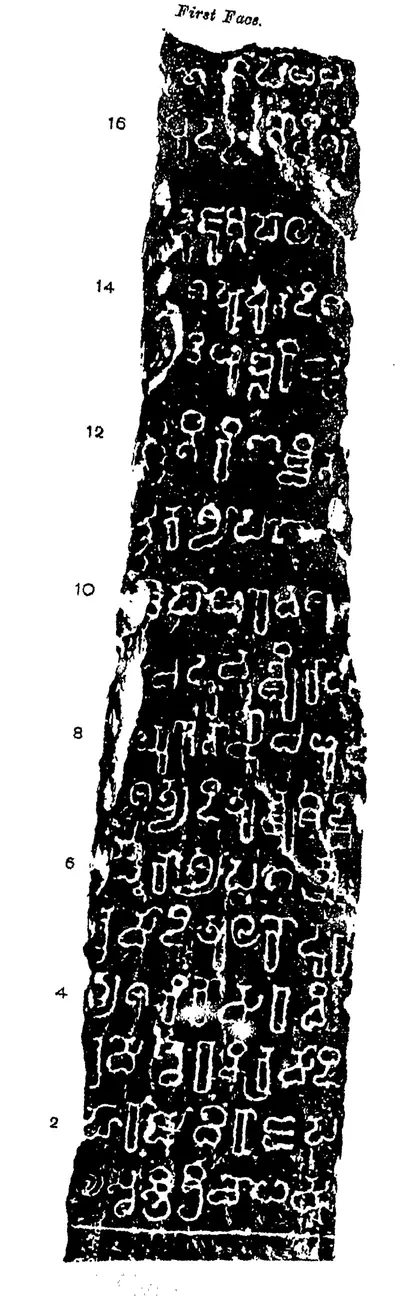 "Malepadu stone inscription of Satyaditya", First Face (Epigraphia Indica XI, plate to face p. 346, first face (PDF p. 412))Inscription rubbing · 1912
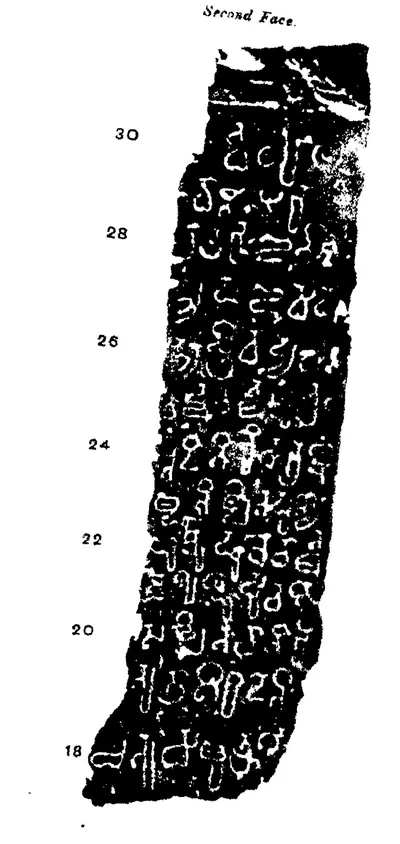 "Malepadu stone inscription of Satyaditya", Second Face (Epigraphia Indica XI, plate to face p. 346, second face (PDF p. 412))Inscription rubbing · 1912
Related
Dynasties
References
Notes (0)
Sources (2)
Spotted an error on this page? Tell us
Last updated: