Punyakumara
Telugu Chola king of Renandu and Hiranyarashtra, the best-documented ruler of the family. He is known from two sets of Sanskrit copper plates (Malepadu, fifth year; Dommara-Nandyala, tenth year) and from Telugu stone records at Tippaluru, Ramesvaram and Veludurti. His titles imitate those of the Pallava Mahendravarman I. Editors have dated him about 625, about 740 and near the end of the 8th century.
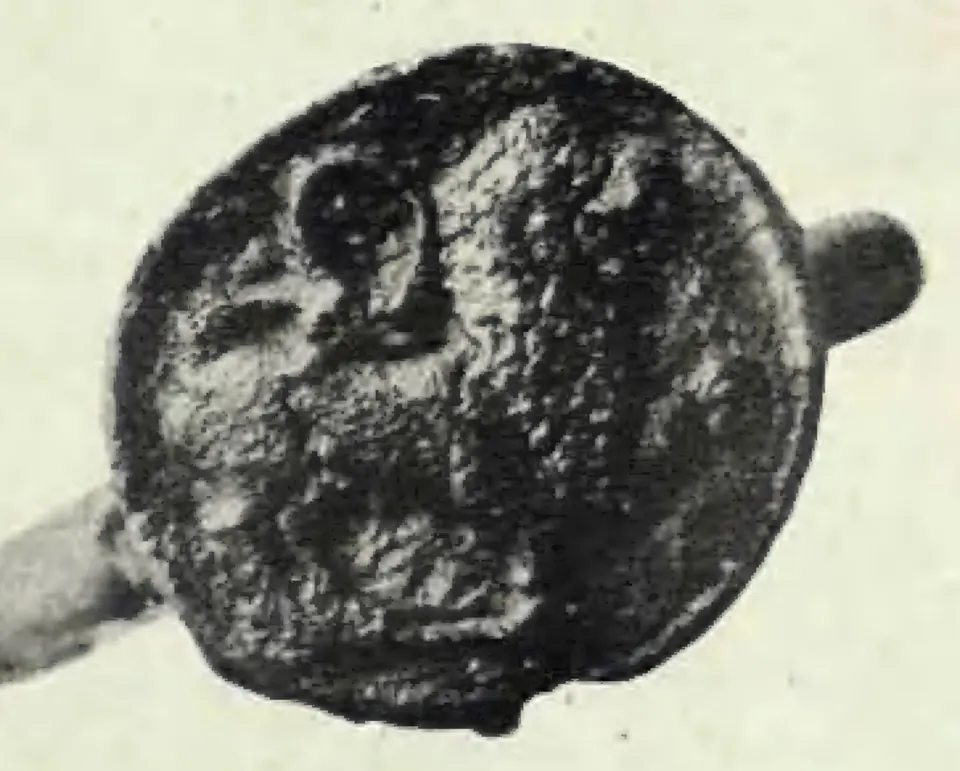
Punyakumara was a king of the Telugu Cholas, who ruled Renandu from his capital at Chirpali.12 He is known from two sets of Sanskrit copper plates and from Telugu stone records.341 Scholars have dated him as early as about 625 and as late as the end of the 8th century.567
Family
Punyakumara was the younger son of Mahendravikrama, the Chola-Maharaja, and a grandson of Dhananjaya.38 His elder brother was Gunamudita.38 K. A. Nilakanta Sastri and M. Venkataramayya (1956) thought Gunamudita was the heir-apparent, and the Erigal-Dugaraju of two records of their father’s reign.8 So, in their view, Punyakumara at first held only the lesser rank of Muturaju.8
Nothing is recorded of Gunamudita’s own reign.9 His queen, Vasantipori Chola-Mahadevi, made a gift to a temple in his fifth year.10 The editors suggested that she came from the Pari family, whose 7th-century records lie in the Madanapalle country near his capital.10 See Mahendravikrama and the Telugu Cholas of Renadu.
The Malepadu plates
The plates were found while foundations were being dug for a mutt (monastery) at Malepadu in the Kadapa (then Cuddapah) district.11 They were brought to the Madras epigraphy department in 1904.11 In H. Krishna Sastri’s translation, Punyakumara, “otherwise known as Pōrmukharāma, Purushaśārdūla, Mārdavachitta, Madanavilāsa, etc.”, addressed “the inhabitants of his own dominion as well as those of Hiraṇya-rāshṭra”.3
In the fifth year of his reign, on the full-moon day of Karttika, he granted fifty nivartanas (a land measure) of land in the village of Biraparu in Hiranyarashtra.3 The village lay “on the southern bank of the river Suprayōga”.3 The receiver was a Brahmana, Chiruvanahala-Kesavasarman, and the grant was made at the request of a chief Kottikuldaraja.3 See the Malepadu plates.
Where the land lay is disputed. Krishna Sastri found the Suprayoga named as a boundary in the Uruvupalli plates of the Pallava Vishnugopavarman, near Kandukur.12 He concluded that Punyakumara’s sway “appears to have extended beyond Cuddapah, even into Nellore”.12
Nilakanta Sastri and Venkataramayya identified the Suprayoga with the Penner, and placed Hiranyarashtra round Kamalapuram and Kadapa.13 They thought Biriparu, as they read the name, was perhaps Malepadu itself.13
The Dommara-Nandyala plates
A second set of plates was found in a sealed pot by a ploughman at Dommara-Nandyala in the Jammalamadugu taluk. H. K. Narasimhaswami edited it in 1956. It repeats the genealogy of the Malepadu plates almost word for word. In his tenth year, while camping at Pudorur, Punyakumara gave land in the villages of Nandigama and Pasindikuru to five Brahmanas.414
The writer of the charter, Kottikuntaraja, is the officer of the Malepadu plates.14 Narasimhaswami showed that his name should be read Kottikuntaraja, not Kottikuldaraja.14 The opening verse praises Siva as Lakutapani.14 The editor thought this the earliest reference in the inscriptions of south India to that form of Siva.14 See the Dommara-Nandyala plates.
Stone records
Three Telugu stone records of the Kamalapuram and Proddatur country name him.
- At Tippaluru, as Erikalla-Mutturaju Punyakumara, he is said to be ruling Renandu from his capital (palu) at Chirpali. He is praised with the titles Marunrapidugu, which the editors rendered as a thunderbolt to his enemies, Madamuditu and Uttamottama. A grant of fifty units of land is recorded. Its letters closely resemble the Vallam rock inscription of the Pallava Mahendravarman I.12 See the Tippaluru inscription.
- At Ramesvaram near Proddatur, a pillar of his fifth year calls him Prithivivallabha Pormukharama Punyakumara Chola-Maharaja.1210 It records his queen’s gift of land at Viriparu to the temple of Vasantisvara at Tarumunri, with Marpidugu Rattagullu as executor (the man who carried it out).1210
- At Veludurti a badly worn stone of Erikal-Muturaju Punyakumara records a gift by, or to, one Atisaya-Rattakutta.15
The editors read the change of title as a stage in his career. As Mutturaju at Tippaluru and Veludurti, he was not yet supreme ruler.2 In the Ramesvaram pillar and the Malepadu plates he bears the supreme titles.2
Krishna Sastri also assigned to him, on the evidence of its letters, a Kannada memorial stone at Chippili.12 It records that a man named Parasuraman fell in a rising while a Punyakomaran was ruling Chirpuli (Chippili).12 Krishna Sastri admitted some doubt about the identification.12 The 1956 editors listed that stone among records of other chiefs called Punyakumara, in letters of the 8th or 9th century, whose Chola connection was unclear.5
Titles borrowed from the Pallavas
Krishna Sastri noticed that two of his titles, Mardavachitta and Madanavilasa, echo Vichitrachitta and Mattavilasa, titles of the Pallava Mahendravarman I.9 He suggested “some undefined relationship, political or otherwise” between the Cholas of Kadapa and the Pallavas of Kanchi.9
The 1956 editors added Marunrapidugu, which they compared with Mahendravarman’s title Pagappidugu.25 They also compared Madamuditu with Mattavilasa.25
Date
Three dates have been proposed.
- End of the 8th century: Krishna Sastri (1912), from the letters of the Malepadu plates, which he compared with the Ederu plates of the Eastern Chalukya Vijayaditya II (799–843).67
- About 625: Nilakanta Sastri and Venkataramayya (1956), because the Tippaluru stone resembles Mahendravarman I’s Vallam inscription and his titles echo Mahendravarman’s.5 Counting 25 years a generation from Nandivarman, about 550, gives the same result.5
- About 740: Narasimhaswami (1956), who compared the letters of both sets of plates with the Kendur and Vakkaleri plates of the Chalukya Kirtivarman II, and dated his accession about 740.16
The 1956 editors pointed out a problem if the plates were as late as Krishna Sastri thought.5 The Punyakumara of the 7th-century stone records would then have to be an earlier king of the same name.5 They preferred to treat the two as one.5
Footnotes
-
Nilakanta Sastri and Venkataramayya, “Telugu Chola Records” (1956), pp. 231–232, Tippaluru inscription (archive.org (opens in a new tab)). Paraphrased. ↩ ↩2 ↩3
-
Nilakanta Sastri and Venkataramayya, “Telugu Chola Records” (1956), pp. 233–234 (archive.org (opens in a new tab)). Paraphrased. ↩ ↩2 ↩3 ↩4 ↩5 ↩6
-
Krishna Sastri, “Malepadu Plates” (1912), p. 339 (archive.org (opens in a new tab)). ↩ ↩2 ↩3 ↩4 ↩5 ↩6 ↩7
-
H. K. Narasimhaswami, “Dommara-Nandyala Plates of Punyakumara; 10th Year”, Epigraphia Indica XXVII (1956), p. 268 (archive.org (opens in a new tab)). Paraphrased. ↩ ↩2
-
Nilakanta Sastri and Venkataramayya, “Telugu Chola Records” (1956), p. 251 and note 4 (archive.org (opens in a new tab)). Paraphrased. ↩ ↩2 ↩3 ↩4 ↩5 ↩6 ↩7 ↩8 ↩9
-
Krishna Sastri, “Malepadu Plates” (1912), p. 338 (archive.org (opens in a new tab)). ↩ ↩2
-
Krishna Sastri, “Malepadu Plates” (1912), p. 344 (archive.org (opens in a new tab)). ↩ ↩2
-
K. A. Nilakanta Sastri and M. Venkataramayya, “Telugu Chola Records from Anantapur and Cuddapah”, Epigraphia Indica XXVII (1956), p. 224 (archive.org (opens in a new tab)). Paraphrased. ↩ ↩2 ↩3 ↩4
-
Krishna Sastri, “Malepadu Plates” (1912), p. 341 (archive.org (opens in a new tab)). ↩ ↩2 ↩3
-
Nilakanta Sastri and Venkataramayya, “Telugu Chola Records” (1956), p. 234, Ramesvaram inscription (archive.org (opens in a new tab)). Paraphrased. ↩ ↩2 ↩3 ↩4
-
H. Krishna Sastri, “Malepadu Plates of Punyakumara; the Fifth Year”, Epigraphia Indica XI (1912), p. 337 (archive.org (opens in a new tab)). ↩ ↩2
-
Krishna Sastri, “Malepadu Plates” (1912), p. 342 (archive.org (opens in a new tab)). ↩ ↩2 ↩3 ↩4 ↩5 ↩6 ↩7
-
Nilakanta Sastri and Venkataramayya, “Telugu Chola Records” (1956), p. 235 and notes (archive.org (opens in a new tab)). Paraphrased. ↩ ↩2
-
Narasimhaswami, “Dommara-Nandyala Plates” (1956), p. 269 and notes (archive.org (opens in a new tab)). Paraphrased. ↩ ↩2 ↩3 ↩4 ↩5
-
Nilakanta Sastri and Venkataramayya, “Telugu Chola Records” (1956), p. 230, Veludurti inscription (archive.org (opens in a new tab)). Paraphrased. ↩
-
Narasimhaswami, “Dommara-Nandyala Plates” (1956), p. 270 (archive.org (opens in a new tab)). Paraphrased. ↩
Photos
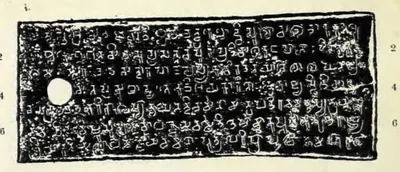 "Dommara-Nandyala Plates of Punyakumara, 10th Year", plate i (Epigraphia Indica XXVII, plate with No. 44 after p. 274, plate i (PDF p. 370))Inscription rubbing · 1956
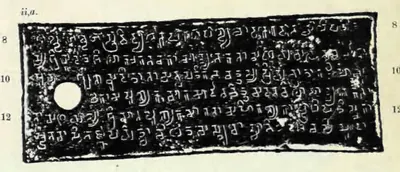 "Dommara-Nandyala Plates of Punyakumara, 10th Year", plate ii a (Epigraphia Indica XXVII, plate with No. 44 after p. 274, plate ii a (PDF p. 370))Inscription rubbing · 1956
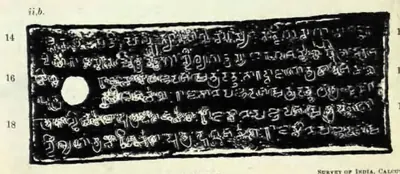 "Dommara-Nandyala Plates of Punyakumara, 10th Year", plate ii b (Epigraphia Indica XXVII, plate with No. 44 after p. 274, plate ii b (PDF p. 370))Inscription rubbing · 1956
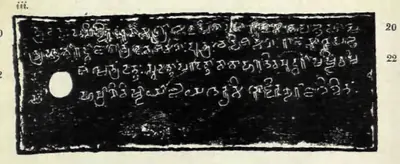 "Dommara-Nandyala Plates of Punyakumara, 10th Year", plate iii (Epigraphia Indica XXVII, plate with No. 44 after p. 274, plate iii (PDF p. 371))Inscription rubbing · 1956
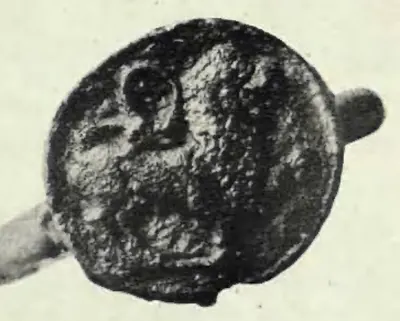 "Dommara-Nandyala Plates of Punyakumara, 10th Year": the seal ("From a photograph") (Epigraphia Indica XXVII, plate with No. 44 after p. 274, lower half (PDF p. 371))Historic photograph · 1956
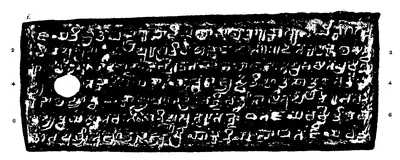 "Malepadu plates of Punyakumara; the fifth year", plate i (lines 1-7) (Epigraphia Indica XI, plate between pp. 344 and 345, plate i (PDF p. 408, printed sideways, turned here))Inscription rubbing · 1912
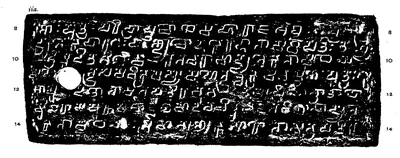 "Malepadu plates of Punyakumara; the fifth year", plate ii a (lines 8-14) (Epigraphia Indica XI, plate between pp. 344 and 345, plate ii a (PDF p. 408, printed sideways, turned here))Inscription rubbing · 1912
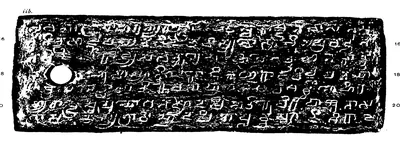 "Malepadu plates of Punyakumara; the fifth year", plate ii b (lines 15-21) (Epigraphia Indica XI, plate between pp. 344 and 345, plate ii b (PDF p. 409, printed sideways, turned here))Inscription rubbing · 1912
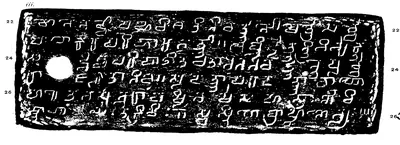 "Malepadu plates of Punyakumara; the fifth year", plate iii (lines 22-27) (Epigraphia Indica XI, plate between pp. 344 and 345, plate iii (PDF p. 409, printed sideways, turned here))Inscription rubbing · 1912
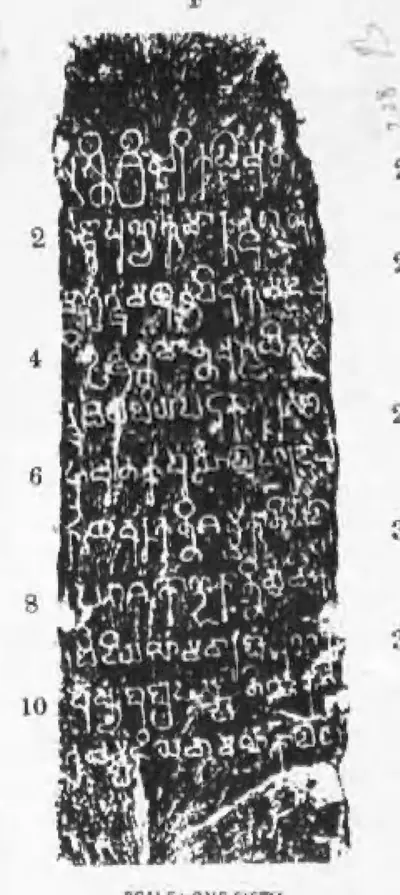 "Telugu Chola Records from Anantapur and Cuddapah", F: the Tippaluru inscription of Erikal-Muturaju Punyakumara (Epigraphia Indica XXVII, second plate page between pp. 228 and 229, panel F (PDF p. 317))Inscription rubbing · 1956
Related
Dynasties
References
Notes (0)
Sources (2)
Spotted an error on this page? Tell us
Last updated: