Pillalamarri
Village near Suryapet, seat of a branch of the Recherla generals of the Kakatiyas. It has temples and inscriptions of Nami-reddi (1195 and 1202) and of his family, including the Nameshvara temple record.

The Recherla village
Pillalamarri lay in the Suryapet taluk of the old Nalgonda district. P. Sreenivasachar’s Corpus of Inscriptions in the Telingana Districts (1940) includes six inscriptions from the village, Nos. 37 to 42, found in and around the Komareshvara and other temples. One of them mentions a fort at Pillalamarri.12 Most belong to the Recherla family. In 1195 Nami-reddi, son of Kama and Kacha, installed three lingas (stone emblems of Shiva) named after his parents and himself. In 1202, in the reign of Ganapatideva, he founded the Nameshvara temple and gave it two tanks. Between 1208 and 1216 Eraka-sani of the same family built further temples.12
A later record of 1357 tells of the restoration of the god Erakeshvara after damage done by the Sultan Alauddin.1 See the Pillalamarri inscription of Recherla Nami-reddi.
The temples
Sreenivasachar listed the temples of Pillalamarri among the Kakatiya temples that show the builders’ enthusiasm.3 P. V. Parabrahma Sastry also named Pillalamarri among the chief Kakatiya temple sites.4 He described its chiefs as a branch of the Recherla family. In his account Nami-reddi built some of the temples in 1195, and they were perhaps finished under Ganapatideva.5 Nami-reddi also dug a tank called Nama-samudra.5
A later Telugu record on the site is dated 1357, after the fall of the Kakatiyas.6 See the Pillalamarri inscription of 1357.
Footnotes
-
P. Sreenivasachar (ed.), A Corpus of Inscriptions in the Telingana Districts, Part II (1940), p. 193, list of inscriptions, Nos. 37–40 (archive.org (opens in a new tab)). Paraphrased. ↩ ↩2 ↩3
-
Sreenivasachar, Corpus, Part II (1940), p. 194, list of inscriptions, Nos. 41–42 (archive.org (opens in a new tab)). Paraphrased. ↩ ↩2
-
P. Sreenivasachar (ed.), A Corpus of Inscriptions in the Telingana Districts, Part I: Introduction (1942), p. 28 (archive.org (opens in a new tab)). Paraphrased. ↩
-
P. V. Parabrahma Sastry, The Kakatiyas of Warangal (1978), p. 12. ↩
-
Parabrahma Sastry, The Kakatiyas of Warangal (1978), p. 145. ↩ ↩2
-
Sreenivasachar, Corpus, Part II (1940), p. 114, No. 40, text and translation (archive.org (opens in a new tab)). Paraphrased. ↩
Photos
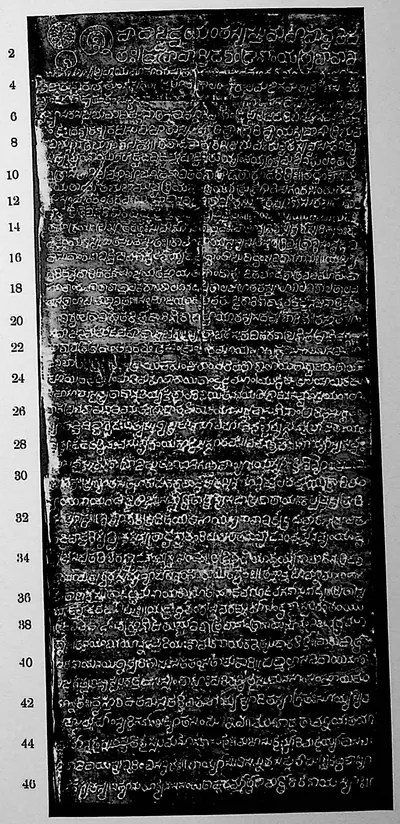 "Pillalamaṟṟi inscription of Eṟaka-sāni", face I (Sreenivasachar, Corpus of Inscriptions in the Telingana Districts II, Plate 41 (PDF p. 302))Inscription rubbing · 1940
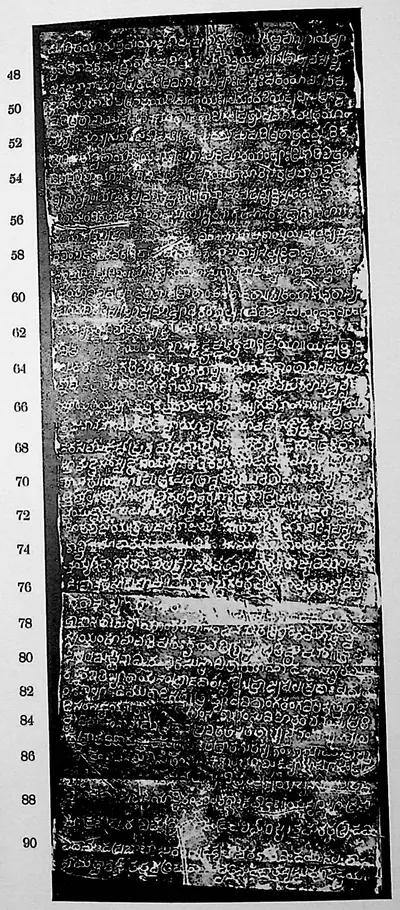 "Pillalamaṟṟi inscription of Eṟaka-sāni", face II (Sreenivasachar, Corpus of Inscriptions in the Telingana Districts II, Plate 42 (PDF p. 304))Inscription rubbing · 1940
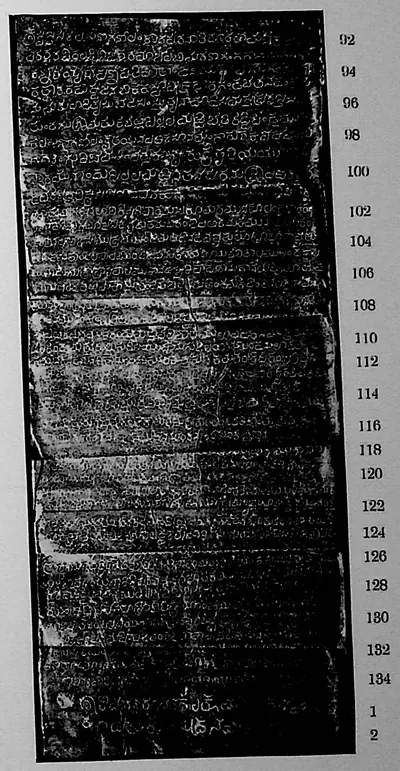 "Pillalamaṟṟi inscription of Eṟaka-sāni", face III (Sreenivasachar, Corpus of Inscriptions in the Telingana Districts II, Plate 42 (PDF p. 304))Inscription rubbing · 1940
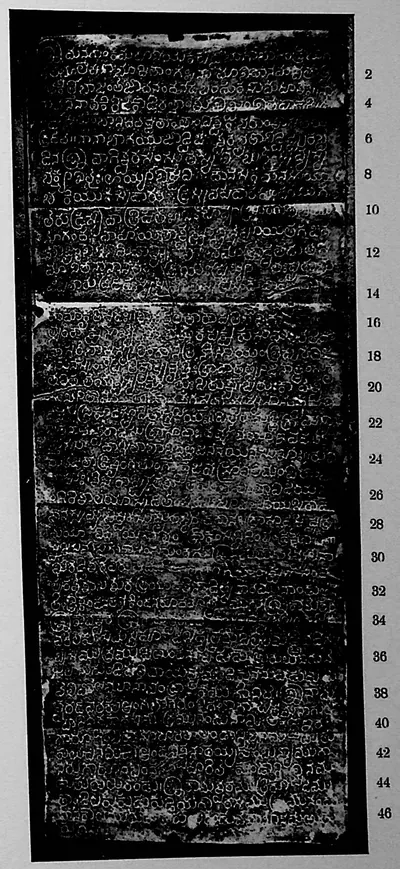 "Pillalamaṟṟi inscription of Nāmi-Reḍḍi (dated Saka 1117)" (Sreenivasachar, Corpus of Inscriptions in the Telingana Districts II, Plate 36 (PDF p. 292))Inscription rubbing · 1940
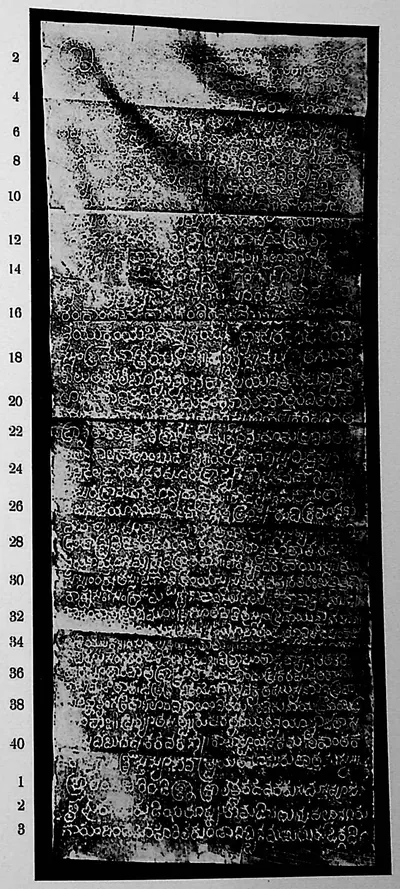 "Pillalamaṟṟi inscription of Nāmi-Reḍḍi (dated Saka 1124)", face I (Sreenivasachar, Corpus of Inscriptions in the Telingana Districts II, Plate 38 (PDF p. 296))Inscription rubbing · 1940
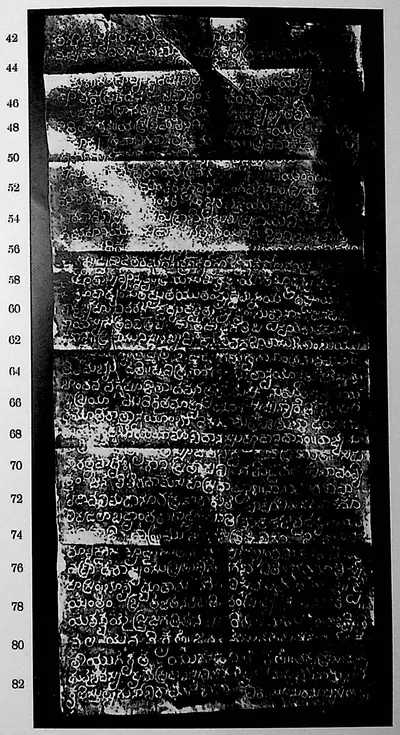 "Pillalamaṟṟi inscription of Nāmi-Reḍḍi (dated Saka 1124)", face II (Sreenivasachar, Corpus of Inscriptions in the Telingana Districts II, Plate 39 (PDF p. 298))Inscription rubbing · 1940
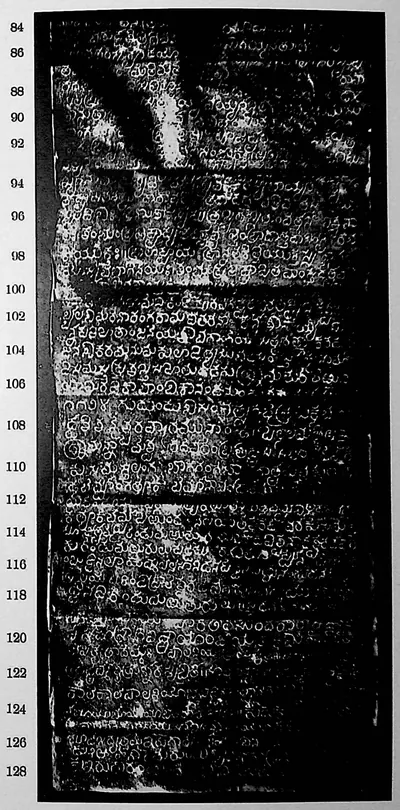 "Pillalamaṟṟi inscription of Nāmi-Reḍḍi (dated Saka 1124)", face III (Sreenivasachar, Corpus of Inscriptions in the Telingana Districts II, Plate 40 (PDF p. 300))Inscription rubbing · 1940
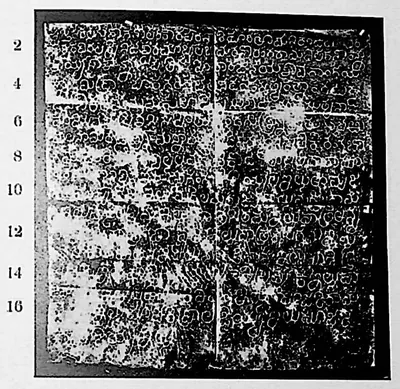 "Pillalamaṟṟi inscription of Rēceṟuvula Nāmi-Reḍḍi" (Sreenivasachar, Corpus of Inscriptions in the Telingana Districts II, Plate 36 (PDF p. 292))Inscription rubbing · 1940
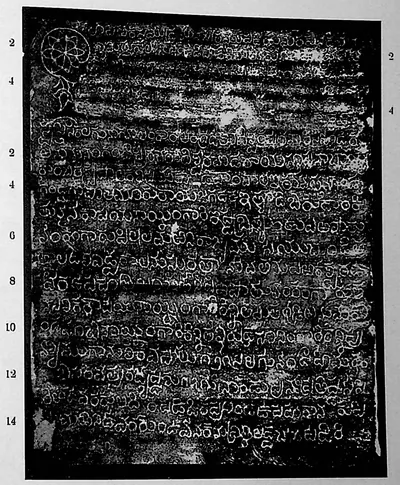 "Pillalamaṟṟi inscription; Pillalamaṟṟi inscription of the reign of Kāpaya-Nāyaka (dated Saka 1279)" (Sreenivasachar, Corpus of Inscriptions in the Telingana Districts II, Plate 37 (PDF p. 294))Inscription rubbing · 1940
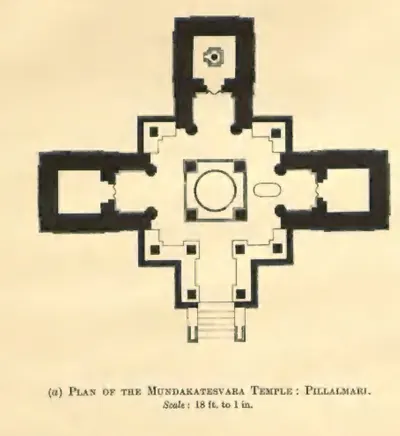 "Plan of the Mundakatesvara Temple: Pillalmari" (Hyderabad Arch. Report 1926-27, Pl. II (a) (PDF p. 57))Plan · 1929
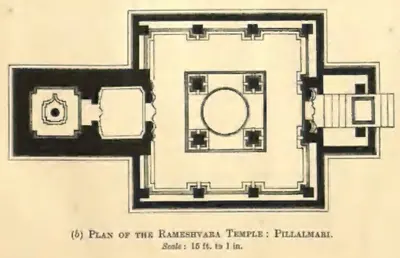 "Plan of the Rameshvara Temple: Pillalmari" (Hyderabad Arch. Report 1926-27, Pl. I (b) (PDF p. 55))Plan · 1929
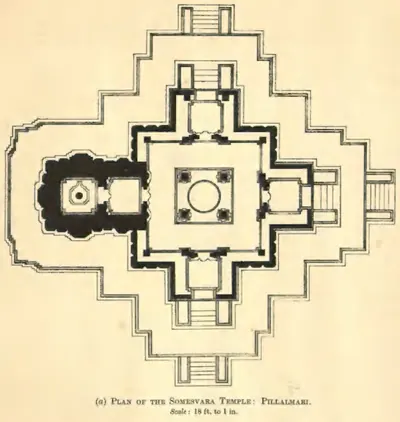 "Plan of the Somesvara Temple: Pillalmari" (Hyderabad Arch. Report 1926-27, Pl. I (a) (PDF p. 55))Plan · 1929
Show all (18)
 Fresco Painting, Narasimhadeva Temple, Pillalmari (Hyderabad Arch. Report 1926-27, Pl. VII (a))Historic photograph · 1929
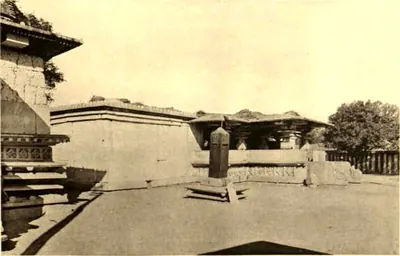 Mukandesvara Temple, Pillalmari: General View (Hyderabad Arch. Report 1926-27, Pl. VII (b))Historic photograph · 1929
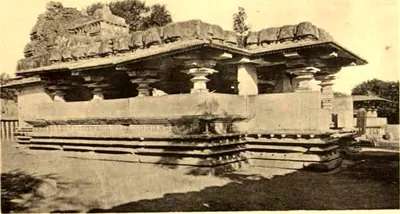 Narasimhadeva Temple, Pillalmari (Hyderabad Arch. Report 1926-27, Pl. VI (a))Historic photograph · 1929
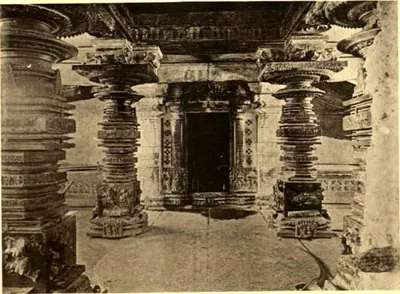 Narasimhadeva Temple, Pillalmari: Interior (Hyderabad Arch. Report 1926-27, Pl. VI (b))Historic photograph · 1929
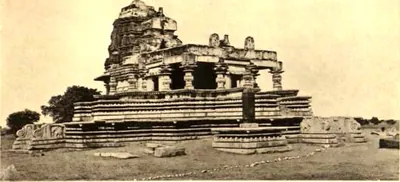 Somesvara Temple, Pillalmari: General View (Hyderabad Arch. Report 1926-27, Pl. V (a))Historic photograph · 1929
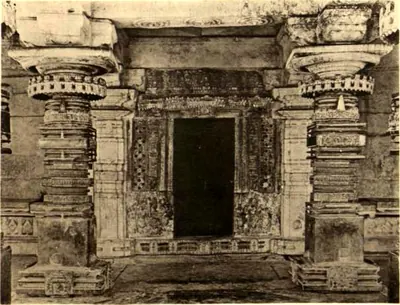 Somesvara Temple, Pillalmari: Interior (Hyderabad Arch. Report 1926-27, Pl. V (b))Historic photograph · 1929
Related
People
Monuments
Inscriptions
Pillalamarri inscription of Recherla Nami-reddi
1202 CE
A Sanskrit and Telugu pillar inscription of March 1202 at Pillalamarri near Suryapet, in the reign of Ganapatideva. It records the Nameshvara temple and the tanks and lands that the general Nami-reddi of the Recherla family gave to it. It also gives the family tree of the Pillalamarri branch of the Recherla generals.
Pillalamarri inscription of the reign of Kapaya Nayaka
1357 CE
A Telugu inscription of 1357 at Pillalamarri, near Suryapet. In it Era-Potu-lemka, servant of Kapaya Nayaka, 'lord of the Andhra country' and lord of the city of Anumanamgallu, records that he set up again the image of the god Erakesvara. 'Sultan Alavadin' had damaged the image in the disturbances of the time. Era-Potu-lemka also gives land for its offerings.
References
Notes (0)
Sources (3)
Spotted an error on this page? Tell us
Last updated: