Tripurantakam
Temple village in the Markapur country, in the old Kurnool district and the later Prakasam district of Andhra Pradesh, with the temple of Tripurantakesvara. Kannada inscriptions of the Western Chalukya king Vikramaditya VI stand there. One of them, of 1126, names his general Anantapala as ruler of the Vengi twelve-thousand. They mark the eastern reach of the kingdom of Kalyani.
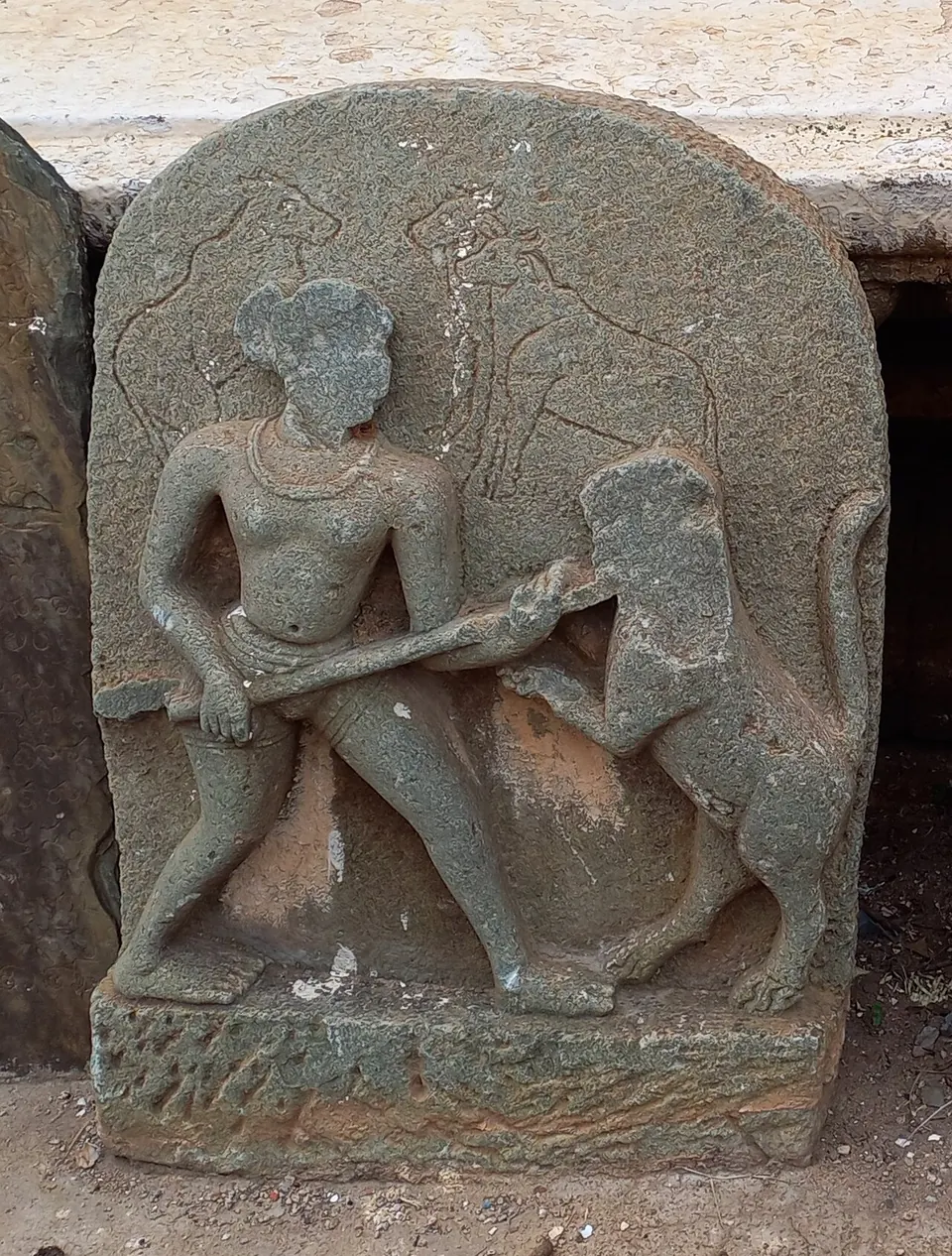
The temple of Tripurantakesvara stands at Tripurantakam, in the Markapur taluk of the Kurnool district.123 It holds several Kannada inscriptions of the reign of the Western Chalukya king Tribhuvanamalla, Vikramaditya VI.123 They were published in South-Indian Inscriptions IX, part I (1939).123
One is on a pillar to the east of the temple’s dark room, and it is dated Chalukya-Vikrama year 47 (1122).123 Two of June 1126 record gifts by his general Anantapala and by Anantapala’s nephew Govinda.123 See the Tripurantakam inscription of Anantapala.
The eastern edge of the Chalukya kingdom
The Manual of the Kurnool District (1886) wrote about the eastward extent of the Chalukya kingdom.4 It noted that “an inscription of Vikrama at Tripurantakam shows that this limit … extended as far at least as the eastern boundary of the present Kurnool District”.4 Robert Sewell took the Tripurantakam record of 1126 to disclose “the extent of his dominions on the east”.5
The temple remained important under the Kakatiyas.6 In 1908 H. Krishna Sastri noted that its mandapa (pillared hall) was built in 1254–55 under the orders of the Kakatiya king Ganapati.6
Footnotes
-
R. Shama Sastry (ed.), South-Indian Inscriptions IX, pt. I (1939), p. 203, No. 204 (archive.org (opens in a new tab)). Paraphrased. ↩ ↩2 ↩3 ↩4 ↩5
-
South-Indian Inscriptions IX, pt. I (1939), p. 213 (archive.org (opens in a new tab)). Paraphrased. ↩ ↩2 ↩3 ↩4 ↩5
-
South-Indian Inscriptions IX, pt. I (1939), p. 214, No. 213 (archive.org (opens in a new tab)). Paraphrased. ↩ ↩2 ↩3 ↩4 ↩5
-
Narahari Gopalakristnamah Chetty, A Manual of the Kurnool District (1886), p. 20 (archive.org (opens in a new tab)). ↩ ↩2
-
Robert Sewell, The Historical Inscriptions of Southern India (1932), p. 99 (archive.org (opens in a new tab)). Paraphrased except for the short phrase quoted. ↩
-
H. Krishna Sastri, “Anmakonda Inscription of Prola; the Chalukya-Vikrama Year Forty-Two”, Epigraphia Indica IX (1908), p. 257, note (archive.org (opens in a new tab)). ↩ ↩2
Photos
References
Notes (0)
Sources (4)
Spotted an error on this page? Tell us
Last updated: