Udayagiri (Nellore)
Town in the west of the Nellore district below the Udayagiri Droog, an isolated hill of 3,079 feet once fortified with thirteen strongholds. It was the seat of a Vijayanagara province in the fourteenth century. The Gajapatis of Orissa held it in the later fifteenth century, and Krishnadeva Raya took it from Prataparudra after a long siege in 1512–13. Later it was a seat of Golconda and of the jagirdars (land-grant holders) of the Nawabs of Arcot.
The hill fort
The Imperial Gazetteer of 1908 describes Udayagiri as the headquarters of the taluk of the same name in the Nellore district, “formerly a place of importance”.1 The walls of the town had almost disappeared, “but much of the fortifications on the neighbouring hill to the west still remains”.1 “The fort originally consisted of thirteen separate strongholds, eight on the hill and five below”.1 There are remains of tombs, temples and palaces, and cliffs “in places nearly 1,000 feet high”.1
The Nellore manual of 1873 gives the height of the hill as 3,079 feet, with an ascent of about five miles.2 The 1942 gazetteer describes it as an isolated rock fortress, once held by a Muslim jagirdar (land-grant holder) and famous for its strength.3 The gazetteer of 1908 called its ruins the most interesting remains in the district.4
Traditions
Local tradition, as recorded in the Nellore manual, said that the fort was first built by “Longula Gazapatti”, a tributary of Golconda, who had a tail an inch long.2 The Imperial Gazetteer says that “in the fourteenth century it was the capital of a kingdom founded by Langula Gajapati”.1
The manual adds that the town is said to have had 360 temples, which the Muslims demolished.5 They were founded about five hundred years earlier, “in the days of Langula Gazapatti”.5
Vijayanagara and the Gajapatis
Under the early Vijayanagara kings Udayagiri was the seat of a province, the Udayagiri-rajya.6 Its governor was styled lord of the eastern ocean.6 In the fifteenth century the Gajapati kings of Orissa held it. The sources describe this in different ways:789
- R. D. Banerji cited the Gopinathapura inscription for Kapilendra’s possession of “Udayagiri, the seat of a Vijaynagara Viceroyalty, in the Nellore district of Madras”.7
- The 1942 gazetteer says that Udayagiri and Kondavidu became viceroyalties under Kapilendra and Purushottama.8
- S. Krishnaswami Aiyangar wrote that the Vijayanagara usurper Saluva Narasimha failed to recover it from “the raja of Orissa”.9
The Velicherla grant of Prataparudra, of 1510 or 1511, describes the gift village as lying east of the fort of Udayachala, that is Udayagiri.10 See the Gajapatis and the Velicherla grant.
The siege of 1512–13
Krishnadeva Raya of Vijayanagara began his war with Orissa here. The Portuguese chronicler Nuniz says that he found among the testaments of earlier kings an order to take “Odigair”, which “belonged to the King of Orya”.1112 He besieged it with 34,000 foot and 800 elephants.1112 The place was held by 10,000 foot and 400 horse, and it “could not be taken except by being starved out”.1112
According to Nuniz, after a year and a half the king “made many paths across rocky hills, breaking up many great boulders”.1112 He took the fort and captured an aunt of the king of Orissa.1112
Robert Sewell dated the campaign to 1513.1314 He noted that Krishnadeva carried off a statue of the god Krishna from a temple on the hill.1314 The king set it up at Vijayanagara, in the temple of Krishnasvami.1314
The sources give different dates for the capture:11516
- The Imperial Gazetteer dates it to 1512.1
- Aiyangar says the war occupied 1512 and 1513.15
- Banerji, from the dedication of the image in 1514, put the fall in 1513.16
Inscriptions at Udayagiri record Krishnadeva’s grants to the local god.17 He made them while he was encamped there after capturing Tirumala Raghava Raya.17 V. Rangacharya’s summaries call Tirumala Raghava Raya the Gajapati’s nephew.17 See Prataparudra.
Later history
The Imperial Gazetteer says that after Krishnadeva Raya the fort was nominally under Golconda, but semi-independent chiefs held it.1 A mosque on the hill has two Persian inscriptions of 1660, of the reign of Abdullah Qutb Shah.118 The jagir (land grant) of Udayagiri was granted by the Nawabs of Arcot, and it was resumed (taken back) in 1839.1
Footnotes
-
Imperial Gazetteer of India, Provincial Series: Madras, Vol. I (1908), p. 368 (archive.org (opens in a new tab)). ↩ ↩2 ↩3 ↩4 ↩5 ↩6 ↩7 ↩8 ↩9 ↩10
-
John A. C. Boswell, A Manual of the Nellore District (1873), p. 424 (archive.org (opens in a new tab)). ↩ ↩2
-
Gazetteer of the Nellore District, brought up to 1938, Vol. A (1942), p. 4 (archive.org (opens in a new tab)). Paraphrased. ↩
-
Imperial Gazetteer of India, Provincial Series: Madras, Vol. I (1908), p. 344 (archive.org (opens in a new tab)). ↩
-
Boswell, Manual of the Nellore District (1873), p. 426 (archive.org (opens in a new tab)). ↩ ↩2
-
Gazetteer of the Nellore District (1942), p. 49 (archive.org (opens in a new tab)). Paraphrased. ↩ ↩2
-
R. D. Banerji, History of Orissa from the Earliest Times to the British Period, Vol. I (1930), p. 304 (archive.org (opens in a new tab)). ↩ ↩2
-
Gazetteer of the Nellore District (1942), p. 54 (archive.org (opens in a new tab)). Paraphrased. ↩ ↩2
-
S. Krishnaswami Ayyangar, “Hindu States in Southern India, A.D. 1000–1565”, in Wolseley Haig (ed.), The Cambridge History of India, Vol. III (1928), p. 494 (archive.org (opens in a new tab)). ↩ ↩2
-
G. Ramadas, “Velicherla Grant of Prataparudra Gajapati: Saka 1432”, Epigraphia Indica XXVIII (1949–50), p. 208 (archive.org (opens in a new tab)). Paraphrased. ↩
-
Fernao Nuniz, “Chronicle”, in Sewell, A Forgotten Empire (1900), p. 316 (archive.org (opens in a new tab)). ↩ ↩2 ↩3 ↩4 ↩5
-
Nuniz, in Sewell, A Forgotten Empire (1900), p. 317 (archive.org (opens in a new tab)). ↩ ↩2 ↩3 ↩4 ↩5
-
Robert Sewell, A Forgotten Empire (Vijayanagar) (1900), p. 130 (archive.org (opens in a new tab)). ↩ ↩2 ↩3
-
Sewell, A Forgotten Empire (1900), p. 131 (archive.org (opens in a new tab)). ↩ ↩2 ↩3
-
Ayyangar, in Cambridge History of India, Vol. III (1928), p. 496 (archive.org (opens in a new tab)). ↩ ↩2
-
Banerji, History of Orissa, Vol. I (1930), p. 324 (archive.org (opens in a new tab)). ↩ ↩2
-
V. Rangacharya, A Topographical List of the Inscriptions of the Madras Presidency, Vol. II (1919), p. 1154, Nellore Nos. 788–792 (archive.org (opens in a new tab)). ↩ ↩2 ↩3
-
Boswell, Manual of the Nellore District (1873), p. 425 (archive.org (opens in a new tab)). ↩
Photos
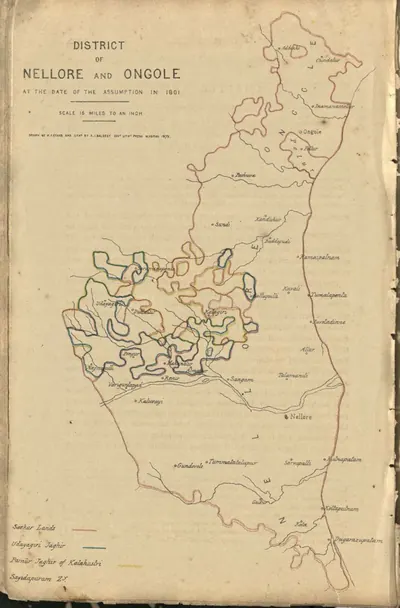 "District of Nellore and Ongole at the date of the assumption in 1801" (coloured lithograph) (Boswell 1873, PDF p. 496)Map · 1873
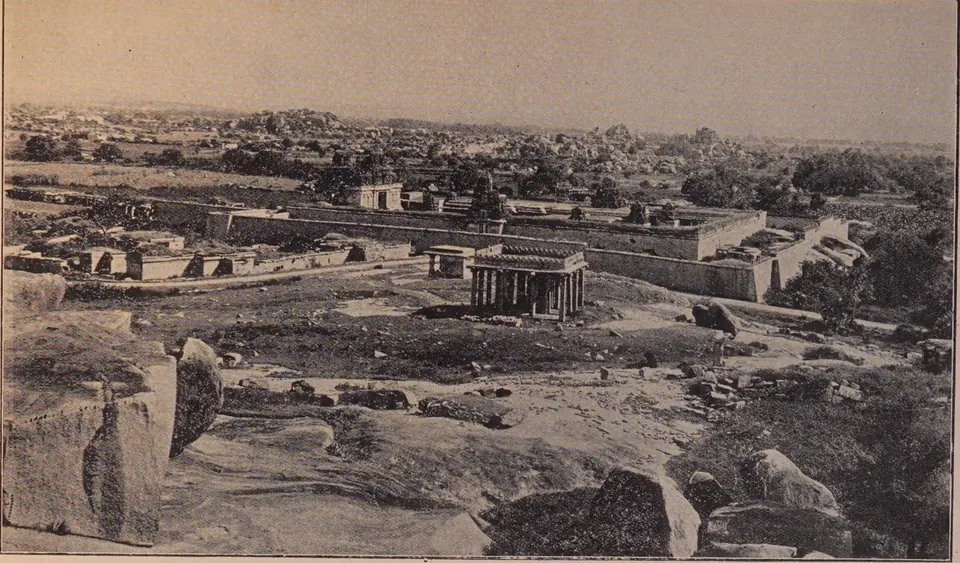
 "General view of Krishnapuram showing the Krishna Temple in a high walled enclosure", Hampi (Madras Archaeological Report 1916-17, plate X (PDF p. 249))Historic photograph · 1917
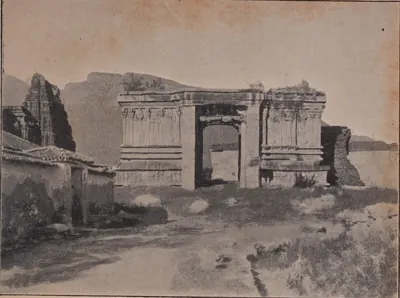 "Raghunayaka Temple, Eastern Gateway", Udayagiri (Madras Archaeological Report 1916-17, plate II-a (PDF p. 233))Historic photograph · 1917
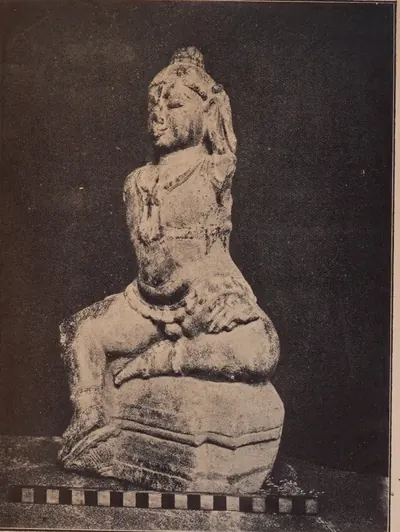 "Stone image of Balakrishna from the Krishna temple at Krishnapuram" (Madras Archaeological Report 1916-17, plate XII-a (PDF p. 253))Historic photograph · 1917
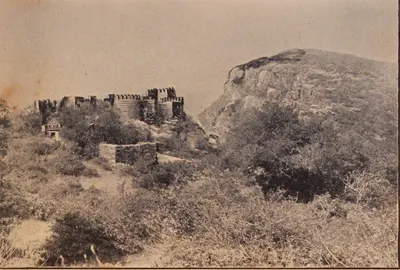 "The Citadel in Udayagiri Fort" (Madras Archaeological Report 1916-17, plate I-b (PDF p. 231))Historic photograph · 1917
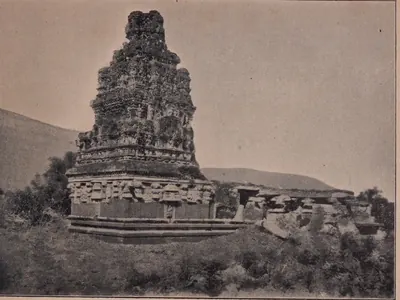 "The Krishna Temple at Udayagiri" (Madras Archaeological Report 1916-17, plate IV-a (PDF p. 237))Historic photograph · 1917
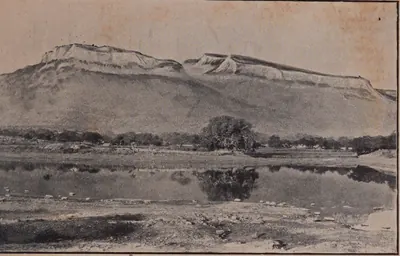 "Udayagiri in the Nellore District" (Madras Archaeological Report 1916-17, plate I-a (PDF p. 231 of 31761123499139))Historic photograph · 1917
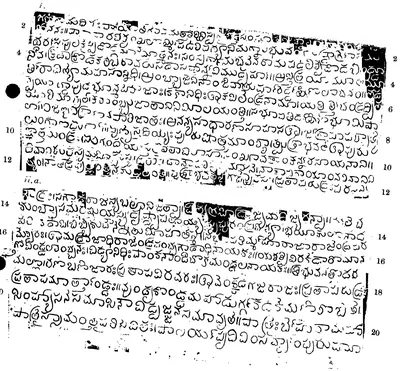 "Velicherla Grant of Prataparudra Gajapati: Saka 1432", first plate and first side of the second plate (lines 1-20) (Epigraphia Indica XXVIII, between pp. 210 and 211)Inscription rubbing · 1958
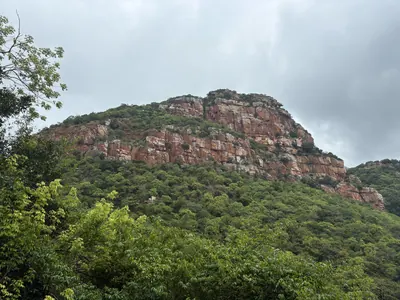 The Udayagiri hill (Udayagiri Droog), Nellore districtPhotograph · 2025
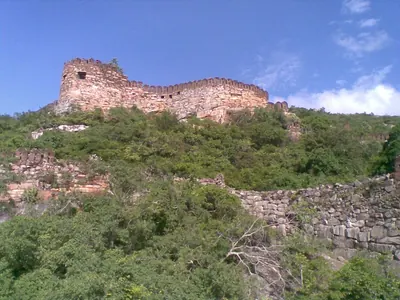 Walls and bastion of the Udayagiri fort on the hill above Udayagiri, Nellore districtPhotograph · 2012
Related
People
Harihara I (Vijayanagara)
c. 1336–1355 CE
First ruler of Vijayanagara and eldest of the five sons of Sangama. With his brother Bukka he founded the kingdom on the Tungabhadra about 1336. His first dated inscription, of 1340, calls him only a mahamandalesvara, 'great lord'. It is disputed whether he and his brothers came from the service of the Kakatiyas of Warangal, of the Rai of Kampili or of the Hoysalas. His brother Kampa held Udayagiri and Nellore, the first Vijayanagara base in the Telugu country.
Bukka I (Vijayanagara)
c. 1355–1377 CE
Second ruler of Vijayanagara, brother and successor of Harihara I, who turned the frontier kingdom into an empire. He fought the Bahmani sultans Muhammad Shah I and Mujahid for the Raichur doab. His son Kumara Kampana destroyed the sultanate of Madura, and his inscriptions boast of driving the Andhras into the hills towards Udayagiri. His minister built the tank of Bukkarayasamudram in the Anantapur country in 1364. Sewell dated his reign 1343–1379 in 1900 and 1355–1377 in 1932.
Saluva Narasimha
c. 1485–1492 CE
Chief of the Saluva family of Chandragiri. He drove the Gajapatis of Orissa back up the coast towards Rajahmundry and faced the Bahmani sultan there in the 1470s. In 1485–86 he took the throne of Vijayanagara from the last Sangama king and founded the second, Saluva, dynasty. He died in 1492–93 and left his young sons in the charge of his general Narasa Nayaka. Whether he recovered Udayagiri from Orissa is disputed.
Prataparudra (Gajapati)
c. 1497–1540 CE
Gajapati king of Orissa from 1496–97 to about 1540, son of Purushottama, and the last great king of the Suryavamsi line. At his accession his empire reached from Bengal to the Guntur and Nellore country. In 1512–19 the Vijayanagara king Krishnadeva Raya took Udayagiri, Kondavidu and Kondapalli, captured his son Virabhadra, marched to Simhachalam and married his daughter. The Qutb Shahi sultan of Golconda then took the Godavari–Krishna country. The legal digest Sarasvativilasa bears his name. He was a disciple of Chaitanya.
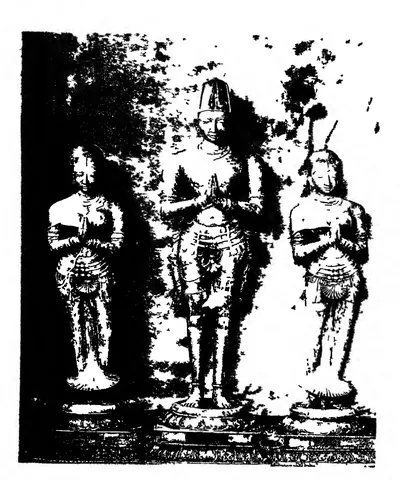
Krishnadeva Raya
1509–1529 CE
King of Vijayanagara from 1509 to 1529, of the Tuluva dynasty, and the most famous ruler of the empire. In 1512–16 he took Udayagiri, Kondavidu and Kondapalli from the Gajapati Prataparudra. He marched to Simhachalam and married the Gajapati's daughter. In 1520 he defeated the Adil Shah at Raichur. He wrote the Telugu poem Amuktamalyada, in which the god says Telugu is the best of the languages of the land. His court, with Allasani Peddana and Nandi Timmana, began the age of the Telugu prabandha (long narrative poem).
Tirumala (Aravidu)
c. 1569–1572 CE
Brother of Aliya Rama Raya and the first king of the fourth, Aravidu, dynasty of Vijayanagara. He commanded a wing of the army in the battle of 1565 and lost an eye there. He fled with King Sadasiva and the treasury to Penukonda, which became the capital. He took the throne about 1569–70 and divided the empire into three viceroyalties, the Telugu one under his son Sriranga at Udayagiri and Penukonda. The Telugu poem Vasucharitramu was dedicated to him. Heras dates his death to 1572, Sewell to 1578.
Abdullah Qutb Shah
1614–1672 CE
Seventh Qutb Shahi sultan of Golconda (1626–1672). He was crowned as a boy and left the government to his mother Hayat Bakhsh Begum and his ministers. In 1636 he accepted the Mughal emperor Shah Jahan as his overlord. His minister Mir Jumla conquered the Karnatak and its diamond mines. In 1656 Mir Jumla's quarrel with him brought Aurangzeb to besiege Golconda. An inscription in Persian and Telugu records the siege. He died without a son in 1672.
Nandi Timmana
Telugu poet of Krishnadeva Raya's court and one of the Ashtadiggajas (the eight great poets), popularly called Mukku Timmana. He was a Niyogi Brahman and a Saiva, and a nephew of the poet Malayamaruta. He wrote the Parijatapaharanamu, dedicated to the king, the story of Krishna bringing the parijata tree from heaven for Satyabhama. Its introduction is a source for the careers of Narasa Nayaka and Krishnadeva Raya. Tradition says it was written to reconcile the king with a queen.
Saadatullah Khan
before 1732 CE
Nawab of the Carnatic, with his capital at Arcot, from about 1710–13 until his death in 1732. A Navayat, born Muhammad Saeed, he was the diwan (finance officer) and faujdar (military governor) of the Mughal general Daud Khan Panni. He followed Daud Khan in the government of the Carnatic below the Ghats, which ran along the coast from Guntur to the Coleroon and took in Nellore. A chronology of Sidhout says that he took the place in 1694 and appointed its fort commander, years before he became Nawab. His faujdar governed Nellore. He granted the jagir of Udayagiri in 1720. With the Pathan Nawabs of Cuddapah, Kurnool and Savanur he took a large payment from Mysore. He left the Nawabship to his nephew Dost Ali.
Saluva Timma (Timmarasu)
Chief minister of Vira Narasimha and of Krishnadeva Raya of Vijayanagara, known in Telugu tradition as Timmarasu and Appaji, 'father'. Nuniz says he saved Krishnaraya from being blinded and made him king. He managed the campaign against Orissa, took Kondavidu in 1515 and governed it through his family, the Nadindla brothers. Nuniz says the king later blinded and imprisoned him, suspecting him of poisoning the young prince. Telugu tradition makes the king and his minister the heroes of many tales.
References
Notes (0)
Sources (8)
Spotted an error on this page? Tell us
Last updated: