Vikramaditya VI
Western Chalukya king of Kalyani, called Tribhuvanamalla. He deposed his brother Somesvara II in 1076 and reigned for fifty years, to 1126. He replaced the Saka era with his own Chalukya-Vikrama era, in which most Telangana records of the time are dated. As a prince he fought the Cholas and their Eastern Chalukya allies for Vengi. Late in his reign, after the Chola viceroy left in 1118, he was recognised as king in Vengi and the coastal Telugu country. His feudatories in Telangana included the Kakatiyas Beta II and Prola II and the Choda chiefs of Kandur.
Vikramaditya VI was a Chalukya king who reigned for at least fifty years, from 1076–77 to some date in 1126.1 He replaced the Saka era with his own Chalukya-Vikrama era, and many Telangana records of his reign are dated in it.234 Late in his reign he was also recognised as king in Vengi.5
The prince
Vikramaditya VI was the second son of Somesvara I and Bachaladevi.67 His brothers were Somesvara II, the eldest, Jayasimha III and Vishnuvardhana-Vijayaditya.89
J. F. Fleet followed the account of the poet Bilhana, whose Sanskrit poem Vikramankadevacharita was written for Vikramaditya. According to Bilhana, Somesvara I wished to make Vikramaditya heir in place of his elder brother, but Vikramaditya declined.10 He then led a series of campaigns.10 He is said to have defeated the Cholas again and again and to have plundered Kanchi.10 Finally he is said to have conquered Gangakunda, “Vengi, the capital of the Eastern Chalukyas”, and Chakrakota.10
He was on the Krishna, on his way home, when he heard that his father had drowned himself in the Tungabhadra.10 Robert Sewell found the same list of achievements in a copper-plate grant from Rajapura in the Bastar State.11 It included the conquest of the Ganga and Vengi kingdoms and Chakrakota.11 Sewell thought many of them “manifestly apocryphal” (plainly invented).11
The Chola records tell the other side. As Sewell summarised them, the Chola king Virarajendra defeated an army that Somesvara I had sent into the Vengi country.12 He drove the princes Vikramaditya and Jayasimha across the Tungabhadra to defeat at Kudalasangamam.12 The Godavari district gazetteer (1907) says that Vikramaditya twice invaded Vengi.13 But he was defeated by the Chola king, who restored Vijayaditya VII to the throne there.13
How he became king
After his father’s death, Bilhana says, the brothers lived in friendship at Kalyana. Then Somesvara II fell into bad ways, and Vikramaditya left with his followers and his younger brother Jayasimha. He married a daughter of the Chola king.14 After his father-in-law’s death he put his brother-in-law on the Chola throne.14
Then he heard that the brother-in-law had been killed in a fresh rebellion.14 He also heard that “Rajiga, the lord of Vengi”, had seized the throne of Kanchi, and he marched against him.14 Rajiga was the Eastern Chalukya prince later known as Kulottunga I.14 Rajiga allied himself with Somesvara II.14 In the battle Rajiga fled and Somesvara was taken prisoner, and Vikramaditya had himself proclaimed king.14
Fleet dated these events to the end of 1076.141 He noted that they did not fit the Eastern Chalukya records, which seemed to place Kulottunga’s seizure of the Chola kingdom earlier.141 Kulottunga’s inscriptions claim that he drove Vikramaditya from Nangili, by way of Manalur, to the Tungabhadra.12 Fleet read it as a pursuit from Nangili to Manalur on the Tungabhadra.15
The year 1076–77 was counted as the first of his reign.1 A record at Wadageri in the Nizam’s Dominions registers grants made for the festival of his coronation on 31 January 1077.1 He reigned for at least fifty years, to some date in 1126.1 The Eastern Chalukya records call him Vikkala and Vikkila.1
His biruda (title) was Tribhuvanamalla.14 The Kakatiya chief Beta II also bore it, and H. Krishna Sastri thought Beta borrowed it from his overlord.16
The Chalukya-Vikrama era
One of his first acts, Fleet wrote, was to replace the Saka era with a new era, the Chalukya-Vikrama-kala.2 Its first year was the first year of his own reign, 1076–77.2 In one inscription that Fleet translated, the king asks why “the glory of the kings Vikramaditya and Nanda” should “be a hindrance any longer”.2 Then, “with a loudly uttered command”, he abolished the Saka era and made the era with “the Chalukya counting”.2
Fleet found no other dynasty that adopted the era.2 But nearly all records of Vikramaditya’s reign are dated in it.2 His successor and some feudatories (subordinate rulers) tried to keep it in use after 1126.2 Many of the Telangana records of his reign are dated in it, from the year 2 (1078) at Alampur to the year 50 (1125) at Kolanupaka.34
Telangana under Vikramaditya VI
Kannada inscriptions of his reign are found all over Telangana. Kolanupaka, the old Kollipake, was the seat of the Kollipake seven-thousand province.41718 Its records show:41718
- the Choda chief Tondarasa of Kandur ruling it in 108841718
- the Paramara prince Jagaddeva ruling it in 1104, a prince whom the king “treated as his own son”41718
- the king’s general Anantapala making gifts to the temple of Jagaddeva-Narayana there in 110741718
- his son Prince Somesvara governing the province in 1124–2541718
See the Kolanupaka inscription of Jagaddeva and the pillar of Kumara Somesvara.
P. V. Parabrahma Sastry dated Jagaddeva’s governorship to 1104–1108.1920 He explained the province as a region under the king’s direct control.1920 Another son, Kumara Tailapa, held the Kandur thousand district in the south of Telangana from 1110.21
Parabrahma Sastry read the Ollala inscription as saying that the Choda chief Bhima II obtained the Kandurunadu country from “Vikrama-chakravarti”, that is Vikramaditya VI.22 He suggested that it was a reward for helping the king win the throne.22
At Alampur, records of his reign from 1078 to 1107 record gifts to the god Brahmesvara. One of 1107 records endowments by his chief queen, Abhinava-Sarasvati.233 P. B. Desai explained this name as the title of Chandaladevi.233
Robert Sewell wrote that Vikramaditya VI gave the territory of Anumakonda to the Kakatiya chief “Tribhuvanamalla” Beta.24 Krishna Sastri wrote in 1908 that he gave the Sabbi thousand district to Beta.25 The Padmakshi temple inscription of 1117 at Anumakonda shows Beta’s son Prola II ruling as the king’s feudatory.26
Vengi, 1118–1126
Late in his reign Vikramaditya was recognised as king in Vengi. Fleet, writing in 1896, noted “so many inscriptions, referring themselves to the reign of Vikramaditya VI, at Draksharam and other places in the Telugu country”.15 These places lay “outside the ordinary limits of the Western Chalukya kingdom”.15 He thought that Bilhana’s account of a second capture of Kanchi explained them.15
Sewell connected them instead with the departure of the Chola viceroy Vikrama Chola from Vengi in 1118.242728 He gave this evidence:242728
- An inscription of 18 December 1118 shows Vikramaditya VI ruling “the Vengi 14000 country”.242728
- Records at Draksharama show him reigning over the Vengi country in 1120–22 and 1123–24.242728
- The Velanadu chief Rajendra-Choda, who governed part of Vengi, went over to him.242728
A Kannada inscription of the same month, December 1118, at Kommuru in the Guntur district, says that the general Anantapalayya was ruling over “Vengi fourteen-thousand”.29 The Godavari gazetteer says that “from 1120 to 1124 Vikramaditya was undisputed king of Vengi”.5
The most detailed record is an inscription of June 1126 at Tripurantakam.30 It says that his general Anantapala was ruling the Vengi twelve-thousand and the Emmedale six-thousand.30 It also says that Anantapala’s nephew Govinda, who ruled the Kondapalli three-hundred, had conquered the Chola country.30 Sewell took this as confirmation that the Chola crown had lost Vengi and the neighbouring lands to the Western Chalukyas by this time.31
See the Tripurantakam inscription of Anantapala. Vikrama Chola’s inscriptions of 1127 in the Guntur country suggested to Sewell that the Cholas soon recovered the land south of the Krishna.32
Family and death
Fleet listed six wives of Vikramaditya VI.3334 Among them were Lakshmadevi, the chief queen, and Chandaladevi, a daughter of a Silahara prince of Karad.3334 Jayakarna, his son by Chandaladevi and very probably his eldest son, seems to have died before him.35 He was succeeded by his son Somesvara III.35 Sewell put his death shortly after March 1126.31
Footnotes
-
Fleet, “Dynasties of the Kanarese Districts” (1896), p. 446 (archive.org (opens in a new tab)). ↩ ↩2 ↩3 ↩4 ↩5 ↩6 ↩7
-
Fleet, “Dynasties of the Kanarese Districts” (1896), p. 447 (archive.org (opens in a new tab)). ↩ ↩2 ↩3 ↩4 ↩5 ↩6 ↩7 ↩8
-
Desai, Kannada Inscriptions of Andhra Pradesh (1961), p. 34, No. 88 (archive.org (opens in a new tab)). Paraphrased. ↩ ↩2 ↩3 ↩4
-
Desai, Kannada Inscriptions of Andhra Pradesh (1961), pp. 16–17, Nos. 44–46 (archive.org (opens in a new tab)). Paraphrased. ↩ ↩2 ↩3 ↩4 ↩5 ↩6 ↩7 ↩8
-
Hemingway, Godavari (1907), p. 22 (archive.org (opens in a new tab)). ↩ ↩2
-
J. F. Fleet, “Dynasties of the Kanarese Districts”, Gazetteer of the Bombay Presidency I, pt. II (1896), p. 438 (archive.org (opens in a new tab)). ↩
-
Fleet, “Dynasties of the Kanarese Districts” (1896), p. 441 (archive.org (opens in a new tab)). ↩
-
Fleet, “Dynasties of the Kanarese Districts” (1896), p. 440 (archive.org (opens in a new tab)). ↩
-
Fleet, “Dynasties of the Kanarese Districts” (1896), p. 454 (archive.org (opens in a new tab)). ↩
-
Fleet, “Dynasties of the Kanarese Districts” (1896), p. 442 (archive.org (opens in a new tab)). ↩ ↩2 ↩3 ↩4 ↩5
-
Sewell, Historical Inscriptions (1932), p. 86 (archive.org (opens in a new tab)). Paraphrased except for the short phrase quoted. ↩ ↩2 ↩3
-
Robert Sewell, The Historical Inscriptions of Southern India (1932), p. 79 (archive.org (opens in a new tab)). Paraphrased. ↩ ↩2 ↩3
-
F. R. Hemingway, Madras District Gazetteers: Godavari, Vol. I (1907), p. 21 (archive.org (opens in a new tab)). ↩ ↩2
-
Fleet, “Dynasties of the Kanarese Districts” (1896), p. 445 and note 3 (archive.org (opens in a new tab)). ↩ ↩2 ↩3 ↩4 ↩5 ↩6 ↩7 ↩8 ↩9 ↩10
-
Fleet, “Dynasties of the Kanarese Districts” (1896), p. 453 and note 1 (archive.org (opens in a new tab)). ↩ ↩2 ↩3 ↩4
-
Krishna Sastri, “Anmakonda Inscription of Prola” (1908), p. 260 (archive.org (opens in a new tab)). ↩
-
Desai, Kannada Inscriptions of Andhra Pradesh (1961), p. 18, Nos. 46–48 (archive.org (opens in a new tab)). Paraphrased except for the short phrase quoted. ↩ ↩2 ↩3 ↩4 ↩5 ↩6
-
Desai, Kannada Inscriptions of Andhra Pradesh (1961), p. 19, Nos. 49–50 (archive.org (opens in a new tab)). Paraphrased. ↩ ↩2 ↩3 ↩4 ↩5 ↩6
-
Parabrahma Sastry, The Kakatiyas of Warangal (1978), p. 69. ↩ ↩2
-
Parabrahma Sastry, The Kakatiyas of Warangal (1978), p. 70. ↩ ↩2
-
P. B. Desai, introduction to P. Sreenivasachar, Kannada Inscriptions of Andhra Pradesh (Andhra Pradesh Government Archaeological Series 3, 1961), pp. 6–7, Nos. 14–16 (archive.org (opens in a new tab)). Paraphrased. ↩
-
P. V. Parabrahma Sastry, The Kakatiyas of Warangal (1978), p. 65. ↩ ↩2
-
Desai, Kannada Inscriptions of Andhra Pradesh (1961), pp. 33–34, Nos. 86–87 (archive.org (opens in a new tab)). Paraphrased. ↩ ↩2
-
Sewell, Historical Inscriptions (1932), p. 96 (archive.org (opens in a new tab)). Paraphrased except for the short phrases quoted. ↩ ↩2 ↩3 ↩4 ↩5 ↩6
-
H. Krishna Sastri, “Anmakonda Inscription of Prola; the Chalukya-Vikrama Year Forty-Two”, Epigraphia Indica IX (1908), p. 258 (archive.org (opens in a new tab)). ↩
-
Desai, Kannada Inscriptions of Andhra Pradesh (1961), p. 24, No. 68 (archive.org (opens in a new tab)). Paraphrased. ↩
-
Sewell, Historical Inscriptions (1932), p. 97 (archive.org (opens in a new tab)). Paraphrased. ↩ ↩2 ↩3 ↩4 ↩5
-
Sewell, Historical Inscriptions (1932), p. 98 (archive.org (opens in a new tab)). Paraphrased. ↩ ↩2 ↩3 ↩4 ↩5
-
R. Shama Sastry (ed.), South-Indian Inscriptions IX, pt. I (1939), p. 191, Kommuru inscription (archive.org (opens in a new tab)). Paraphrased except for the short phrase quoted. ↩
-
South-Indian Inscriptions IX, pt. I (1939), p. 214, No. 213 (archive.org (opens in a new tab)). Paraphrased. ↩ ↩2 ↩3
-
Sewell, Historical Inscriptions (1932), p. 99 (archive.org (opens in a new tab)). Paraphrased. ↩ ↩2
-
Sewell, Historical Inscriptions (1932), p. 100 (archive.org (opens in a new tab)). Paraphrased. ↩
-
Fleet, “Dynasties of the Kanarese Districts” (1896), p. 448 (archive.org (opens in a new tab)). ↩ ↩2
-
Fleet, “Dynasties of the Kanarese Districts” (1896), p. 449 (archive.org (opens in a new tab)). ↩ ↩2
-
Fleet, “Dynasties of the Kanarese Districts” (1896), p. 455 (archive.org (opens in a new tab)). ↩ ↩2
Photos
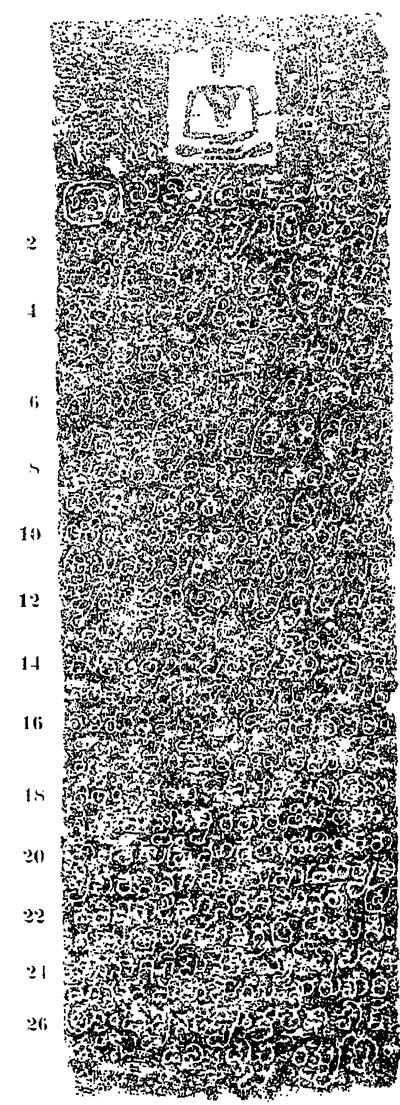 "Anmakonda Inscription of Prola; The Chalukya-Vikrama Year Forty-Two", east face (Epigraphia Indica IX, plate between pp. 262 and 263 (PDF p. 326))Inscription rubbing · 1908
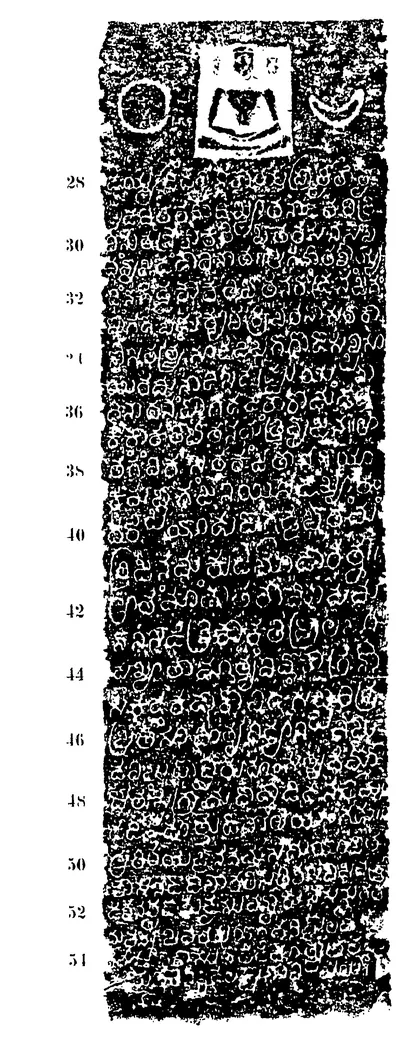 "Anmakonda Inscription of Prola; The Chalukya-Vikrama Year Forty-Two", north face (Epigraphia Indica IX, plate between pp. 262 and 263 (PDF p. 326))Inscription rubbing · 1908
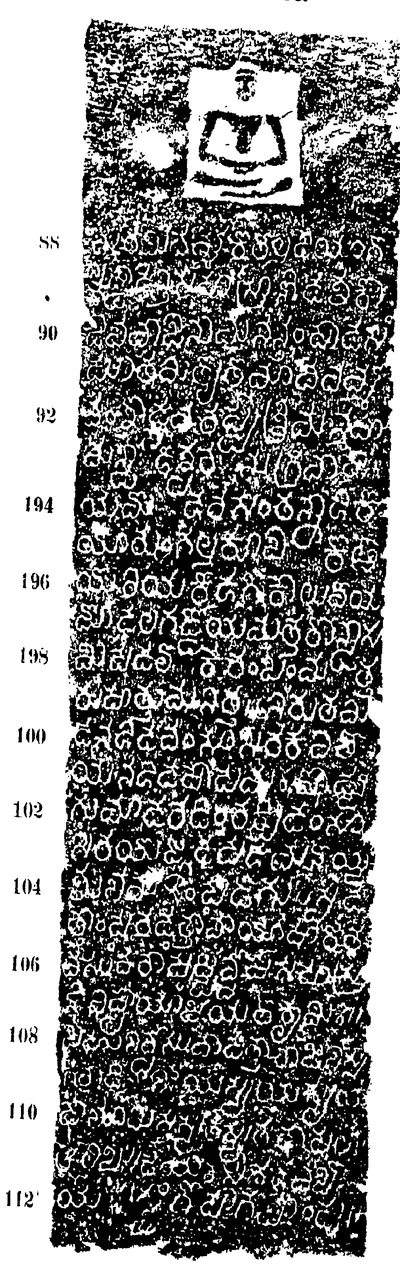 "Anmakonda Inscription of Prola; The Chalukya-Vikrama Year Forty-Two", south face (Epigraphia Indica IX, plate between pp. 262 and 263 (PDF p. 327))Inscription rubbing · 1908
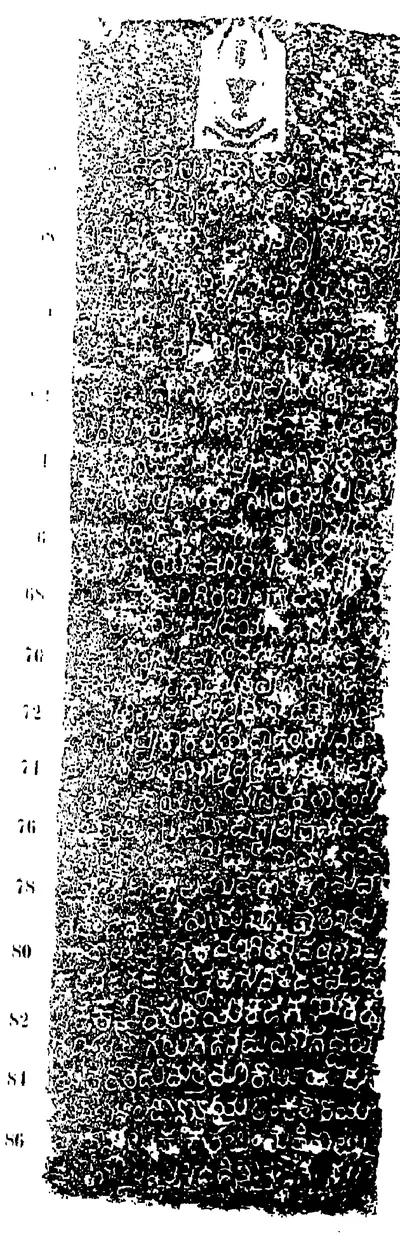 "Anmakonda Inscription of Prola; The Chalukya-Vikrama Year Forty-Two", west face (Epigraphia Indica IX, plate between pp. 262 and 263 (PDF p. 327))Inscription rubbing · 1908
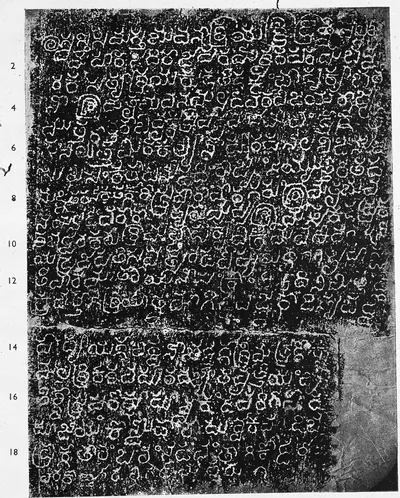 "Gangapuram inscription of Tribhuvanamalla" (A Corpus of Inscriptions in the Telingana Districts, Part III, Plate 33 (PDF p. 223))Inscription rubbing · 1956
References
Notes (0)
Sources (7)
Spotted an error on this page? Tell us
Last updated: