Upparapalli
Village in Warangal district where a Telugu pillar inscription of 1236, from Ganapatideva's reign, records the temple endowments of Kataya, son of Recherla Rudra's minister Raje-nayaka.
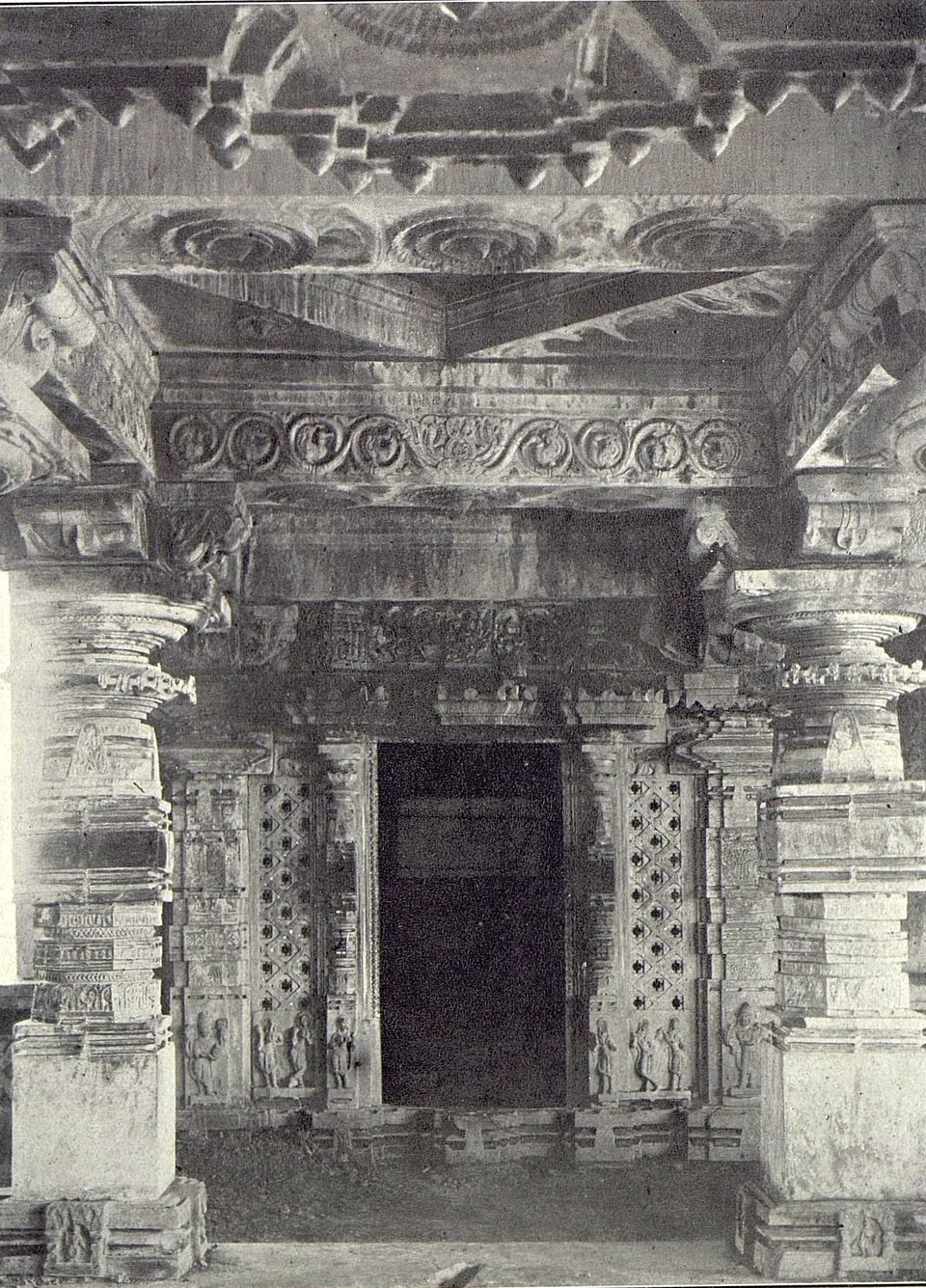
The temple and its pillar
A square pillar stands in front of the main temple at Upparapalli (Uparpalli). It carries a Telugu inscription dated 24 January 1236. In it Kataya, son of Raje-nayaka, the Brahman minister of the general Recherla Rudra, records lands he gave to the temple with the sanction of Ganapatideva.12 The 1956 Corpus places the village in Warangal district.2 See the Upparapalli pillar inscription.
Survey
G. Yazdani, of the Nizam’s Archaeological Department, reported in 1915–16 that he had copied the “important Kakatya inscriptions of Pakhal, Ramappa and Uparpalli”. He planned to survey the monuments of Pakhal, Palampet, Borlapalli and Uparpalli, which he called important political and religious centres of the Kakatiya period.34 He visited the temples at Palampet and Uparpalli in December 1916 and took ink impressions of all their inscriptions. L. D. Barnett published them in 1919.5
Footnotes
-
Barnett, Inscriptions at Palampet and Uparpalli (1919), p. 14 (archive.org (opens in a new tab)). ↩
-
P. Sreenivasachar (ed.), A Corpus of Inscriptions in the Telingana Districts of Andhra Pradesh, Part III (1956), p. 166, No. Wg. 19 (archive.org (opens in a new tab)). Paraphrased. ↩ ↩2
-
Annual Report of the Archaeological Department of His Highness the Nizam’s Dominions, 1915-16 (1917), p. 10 (archive.org (opens in a new tab)). ↩
-
Annual Report of the Archaeological Department … 1915-16 (1917), p. 12 (archive.org (opens in a new tab)). ↩
-
L. D. Barnett (ed.), Inscriptions at Palampet and Uparpalli (1919), p. v (archive.org (opens in a new tab)). ↩
Photos
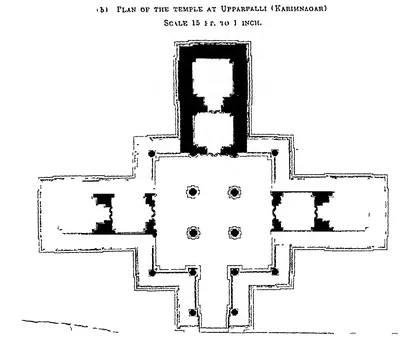 "Plan of the temple at Upparpalli (Karimnagar)" (Hyderabad Arch. Report 1916-17, Pl. III (b) (PDF p. 64))Plan · 1918
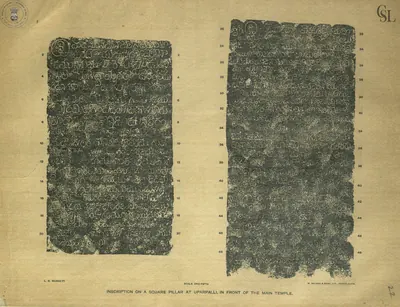 Inscription on a square pillar at Uparpalli, in front of the main temple (first two faces) (Barnett 1919)Inscription rubbing · 1919
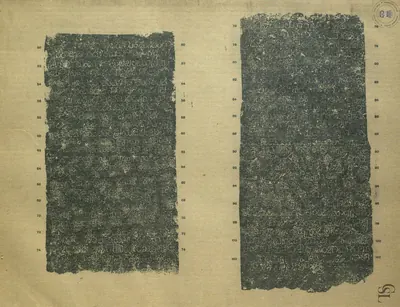 Inscription on a square pillar at Uparpalli, in front of the main temple (remaining faces) (Barnett 1919)Inscription rubbing · 1919
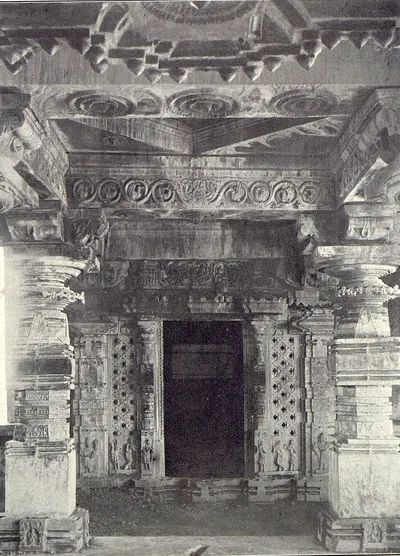 Interior of the Temple at Uparpalle, Warangal District (Yazdani 1922, Pl. XXIX (a))Historic photograph · 1922
Related
Monuments
Inscriptions
References
Notes (0)
Sources (3)
Spotted an error on this page? Tell us
Last updated: