Ganapatideva
Kakatiya king (r. 1199–c. 1262) whose sixty-year reign carried Kakatiya power from Telangana to the coast and the far south. He moved the capital to Orugallu (Warangal). His reign produced the Motupalli sea-trade edict and the Ramappa and Ganapesvaram temples.
A difficult road to the throne
Ganapatideva was the son of Mahadeva, the younger brother and successor of Rudradeva, and his queen Bayyambika.1 An inscription at Upparapalli calls him Rudradeva’s son, probably by adoption.2 Mahadeva was killed while attacking Devagiri, the capital of the Yadava (Seuna) kings.32 According to P. V. Parabrahma Sastry, the young Ganapati had gone with him on the campaign and fell into Yadava hands.32
A Yadava inscription states that the Yadava king Jaitrapala freed Ganapati and handed him the Andhra kingdom.43 At home, according to Parabrahma Sastry, nobles rebelled and some land was lost.56 The general Recherla Rudra held the kingdom together until the young king came back.56 Rudra’s own inscription at Palampet says that he restored the Kakatiya fortune when it had “set her foot among many sharp thorns”.7
Ganapatideva’s earliest known record, at Manthena, is dated 26 December 1199.6 It gives him the title sakala-desa-pratishthapanacharya.6 Parabrahma Sastry reads this as a claim to have set up the whole kingdom again.6 Robert Sewell also placed his accession in 1199, noting a record of his 54th year of reign that fits that date.48
Expansion to the coast and the south
Parabrahma Sastry works out Ganapatideva’s early campaigns from the inscriptions of his generals. Malyala Chaunda took the island fortress of Divi, at the mouth of the Krishna, by 1203.9 Ganapati kept its Ayya chiefs as subordinates and took the young Jaya into his service.9 He married Jaya’s two sisters, Narama and Perama, and made Jaya a general.10
The Velanati king Prithvishvara, the main power on the coast, was killed in battle some time after 1206.11 By 1213 Jaya was governing the Velanadu country for Ganapati.11 Ganapati put Tikka back on the throne of the Telugu Choda kingdom of Nellore.12 An inscription of 1228 at Mattevada already credits him with plundering the Chola capital, probably Kanchi.12
Later he sent an army under Samanta Bhoja that took Kanchi in about 1250.1213 The poet Tikkana is said to have come to his court as the Nellore king’s envoy.1213 His campaigns into Kalinga, in the north-east, reached the Aska area of the Ganjam district.14 But the Ganga king Anangabhima III soon drove the Kakatiya forces out, and the wars brought no lasting gain.14 Jaya’s inscription of 1231 claims that Ganapati had defeated the kings of the Chola, Kalinga, Seuna (Yadava), Karnata and Lata countries.10
The end of the reign
His long reign ended in defeats. About 1263, by Parabrahma Sastry’s dating, the Pandya king Jatavarman Sundara Pandya defeated the Kakatiyas and their Nellore allies at Muttukur.15 He annexed Nellore and Kanchi.15 The victorious Pandya king issued coins bearing the Kakatiya boar beside the Pandya fish.15 The defeat came at the same time as Ganapati’s withdrawal from active rule.15
Sewell found records of Ganapati’s 62nd year of reign in 1260, and treated that as his last year.16 An inscription at Tripurantakam is dated Saka 1182 (1260; Saka is an Indian way of counting years), in his 62nd year.17 E. Hultzsch likewise gave him a reign of sixty-two years.18 N. Venkataramanayya and M. Somasekhara Sarma end his reign in 1261.19 His daughter Rudramadevi succeeded him. Parabrahma Sastry holds that she ruled jointly with him from about 1259–60 and alone from 1262.20
Ganapati was still alive in 1269.20 An inscription of that year at Durgi in the Palnadu still treats him as the ruling king, and calls Rudramadevi only the heir chosen for the throne.20
Parabrahma Sastry notes that, apart from some early chiefs, Ganapati and Rudradeva were the only members of the family who did not die as warriors.21
Capital and administration
Rudradeva had begun the fort at Orugallu (Warangal).5 Ganapatideva completed it, with an inner wall of stone and an outer wall of earth, and moved the capital there from Anumakonda.5 The Imperial Gazetteer records that he began the stone wall, which his successor completed.22
Parabrahma Sastry argues that Ganapati did not force imperial rule on the coastal chiefs.23 He left them free to govern themselves so long as they gave military loyalty.23 Many of their inscriptions do not mention him at all.23
Late in the reign he took the Kayastha chief Gangaya Sahini into his service.24 He made him bahattara-niyogadhipati, head of the seventy-two branches of government, and commander of cavalry.24 He also gave him a great fief ruled from Valluru in the Kadapa (then Cuddapah) country.24 His title raya-gaja-kesari appeared on his coins and standard measures.21
Trade, tanks and temples
In 1244–45 Ganapatideva set up a pillar at the port of Motupalli. Its edict promised sea traders that the cargo of wrecked ships would no longer be seized.2526 It fixed the duty on imports and exports at one in thirty.2526 His reign saw some of the largest Kakatiya irrigation works. Jagadalu Mummadi, son of one of his ministers, built the Pakhal lake, and the Ramappa lake is credited to Recherla Rudra.27
His sisters Mailamba and Kundamamba built the Bayyaram tank and the Kundasamudram tank.273 Recherla Rudra founded the Rudreshvara (Ramappa) temple at Palampet in 1213, in Ganapati’s reign.28 Jaya built the Ganapeshvara temple on Divi in 1231 and named it after him.10 Inscriptions of his general Malyala Gunda at Bothpur include a tank named after the king.29
Religion and family
Ganapati’s religious teacher was Vishveshvara Shambhu of the Golaki monastery, a Pashupata Shaiva order.30 After his initiation the king called himself the teacher’s spiritual son.3132 Parabrahma Sastry’s genealogy names his queen as Somaladevi, and the play in Vidyanatha’s Prataparudriya calls her Soma.3334
His sister Mailamba set up the Bayyaram tank inscription.35 According to it, his father Mahadeva arranged the marriages of both Ganapati and Mailamba.35 So Parabrahma Sastry doubted the Pratapa Charitra’s story that Ganapati married a Yadava princess.35 Besides Rudramadevi he had a daughter Ganapamba, who married the Kota chief Beta.36
Footnotes
-
E. Hultzsch, “Ganapesvaram Inscription of the Time of Ganapati”, Epigraphia Indica III (1894–95), p. 83 (archive.org (opens in a new tab)). ↩
-
P. V. Parabrahma Sastry, The Kakatiyas of Warangal (1978), p. 100. ↩ ↩2 ↩3
-
P. V. Parabrahma Sastry, The Kakatiyas of Warangal (1978), pp. 103–104. ↩ ↩2 ↩3 ↩4
-
Robert Sewell, The Historical Inscriptions of Southern India (1932), p. 128 (archive.org (opens in a new tab)). ↩ ↩2
-
P. V. Parabrahma Sastry, The Kakatiyas of Warangal (1978), p. 116. ↩ ↩2 ↩3 ↩4
-
P. V. Parabrahma Sastry, The Kakatiyas of Warangal (1978), p. 106. ↩ ↩2 ↩3 ↩4 ↩5
-
L. D. Barnett (ed.), Inscriptions at Palampet and Uparpalli (1919), p. 9, verse 24 (archive.org (opens in a new tab)). ↩
-
Robert Sewell, The Historical Inscriptions of Southern India (1932), p. 149 (archive.org (opens in a new tab)). ↩
-
P. V. Parabrahma Sastry, The Kakatiyas of Warangal (1978), pp. 107–108. ↩ ↩2
-
E. Hultzsch, “Ganapesvaram Inscription of the Time of Ganapati”, Epigraphia Indica III (1894–95), p. 84 (archive.org (opens in a new tab)). ↩ ↩2 ↩3
-
P. V. Parabrahma Sastry, The Kakatiyas of Warangal (1978), p. 108. ↩ ↩2
-
P. V. Parabrahma Sastry, The Kakatiyas of Warangal (1978), p. 109. ↩ ↩2 ↩3 ↩4
-
P. V. Parabrahma Sastry, The Kakatiyas of Warangal (1978), p. 113. ↩ ↩2
-
P. V. Parabrahma Sastry, The Kakatiyas of Warangal (1978), pp. 110–112. ↩ ↩2
-
P. V. Parabrahma Sastry, The Kakatiyas of Warangal (1978), pp. 114–115. ↩ ↩2 ↩3 ↩4
-
Robert Sewell, The Historical Inscriptions of Southern India (1932), p. 154 (archive.org (opens in a new tab)). ↩
-
Gajjala Vasanta Lakshmi (ed.), Epigraphia Telanganica, vol. 2 (2023), pp. 309–310. ↩
-
E. Hultzsch, “Motupalli Pillar-Inscription of Ganapatideva”, Epigraphia Indica XII (1913–14), p. 190 (archive.org (opens in a new tab)). ↩
-
N. Venkataramanayya and M. Somasekhara Sarma, “The Kakatiyas of Warangal”, in G. Yazdani (ed.), The Early History of the Deccan, Parts VII–XI (1960), p. 599. ↩
-
P. V. Parabrahma Sastry, The Kakatiyas of Warangal (1978), p. 118. ↩ ↩2 ↩3
-
P. V. Parabrahma Sastry, The Kakatiyas of Warangal (1978), p. 142. ↩ ↩2
-
Imperial Gazetteer of India, Provincial Series: Hyderabad State (1909), p. 173 (archive.org (opens in a new tab)). ↩
-
P. V. Parabrahma Sastry, The Kakatiyas of Warangal (1978), pp. 175–177. ↩ ↩2 ↩3
-
P. V. Parabrahma Sastry, The Kakatiyas of Warangal (1978), p. 117. ↩ ↩2 ↩3
-
Hultzsch, “Motupalli Pillar-Inscription of Ganapatideva” (1913–14), translation, p. 196 (archive.org (opens in a new tab)). ↩ ↩2
-
Hultzsch, “Motupalli Pillar-Inscription of Ganapatideva” (1913–14), translation, p. 197 (archive.org (opens in a new tab)). ↩ ↩2
-
P. V. Parabrahma Sastry, The Kakatiyas of Warangal (1978), p. 205. ↩ ↩2
-
L. D. Barnett (ed.), Inscriptions at Palampet and Uparpalli (1919), pp. 7–8 (archive.org (opens in a new tab)). ↩
-
P. Sreenivasachar (ed.), A Corpus of Inscriptions in the Telingana Districts, Part II (1940), No. 51, translation, p. 149 (archive.org (opens in a new tab)). ↩
-
P. V. Parabrahma Sastry, The Kakatiyas of Warangal (1978), p. 275. ↩
-
P. Sreenivasachar, A Corpus of Inscriptions in the Telingana Districts, Part I (1942), p. 20 (archive.org (opens in a new tab)). ↩
-
P. V. Parabrahma Sastry, The Kakatiyas of Warangal (1978), p. 276. ↩
-
P. V. Parabrahma Sastry, The Kakatiyas of Warangal (1978), p. 36. ↩
-
K. P. Trivedi (ed.), The Prataparudrayasobhushana of Vidyanatha (1909), Introduction, p. xvi (archive.org (opens in a new tab)). ↩
-
P. V. Parabrahma Sastry, The Kakatiyas of Warangal (1978), p. 107. ↩ ↩2 ↩3
-
P. V. Parabrahma Sastry, The Kakatiyas of Warangal (1978), p. 28. ↩
Photos
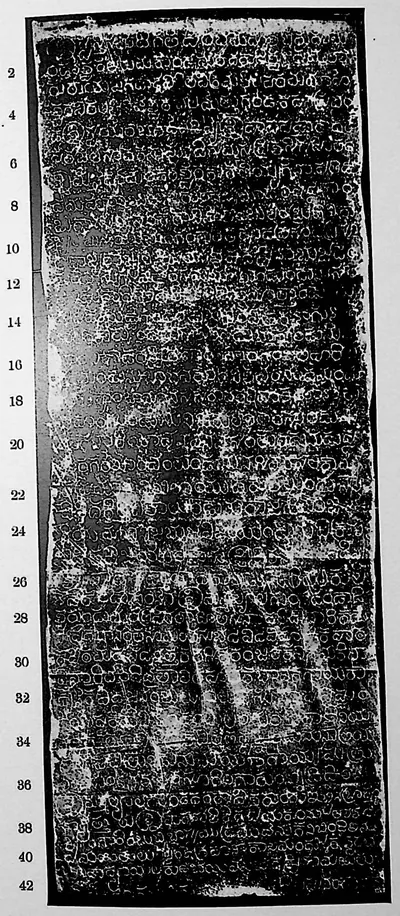 "Bothpur inscription of Malyāla Guṇḍa (dated Saka 1181)", face I (Sreenivasachar, Corpus of Inscriptions in the Telingana Districts II, Plate 48 (PDF p. 316))Inscription rubbing · 1940
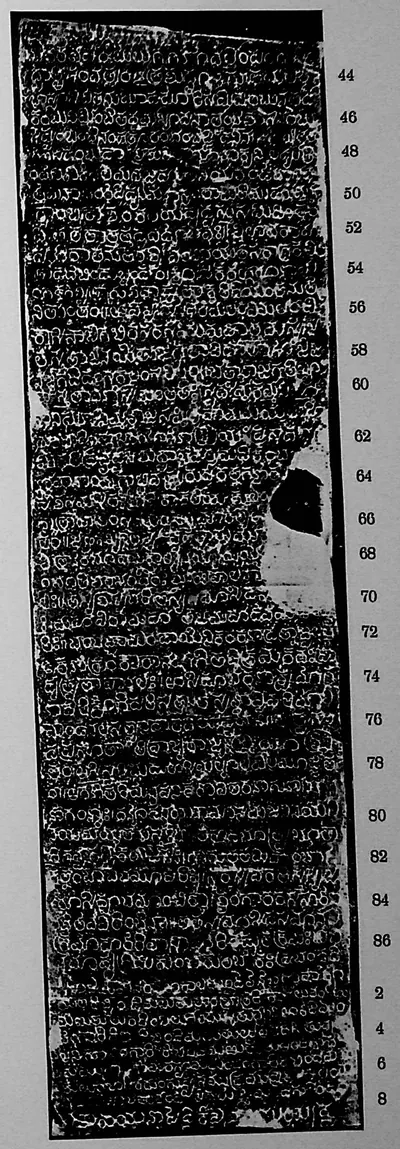 "Bothpur inscription of Malyāla Guṇḍa (dated Saka 1181)", face II (Sreenivasachar, Corpus of Inscriptions in the Telingana Districts II, Plate 48 (PDF p. 316))Inscription rubbing · 1940
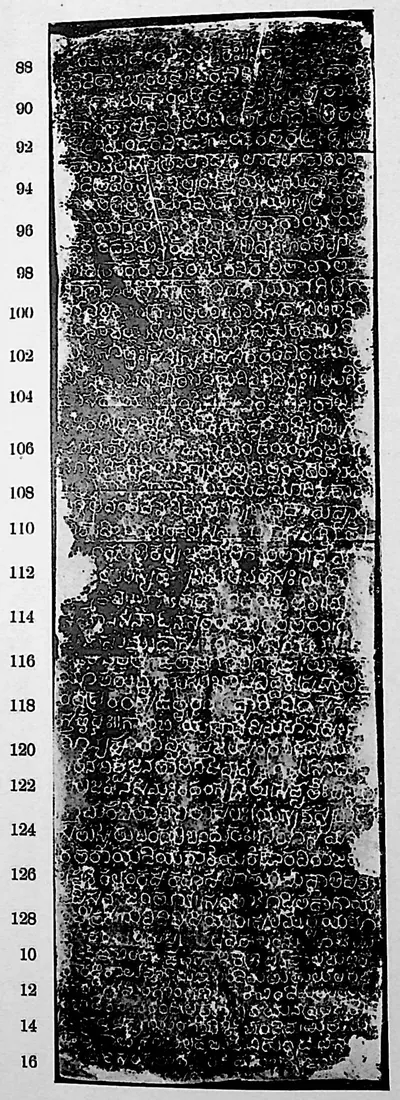 "Bothpur inscription of Malyāla Guṇḍa (dated Saka 1181)", face III (Sreenivasachar, Corpus of Inscriptions in the Telingana Districts II, Plate 49 (PDF p. 318))Inscription rubbing · 1940
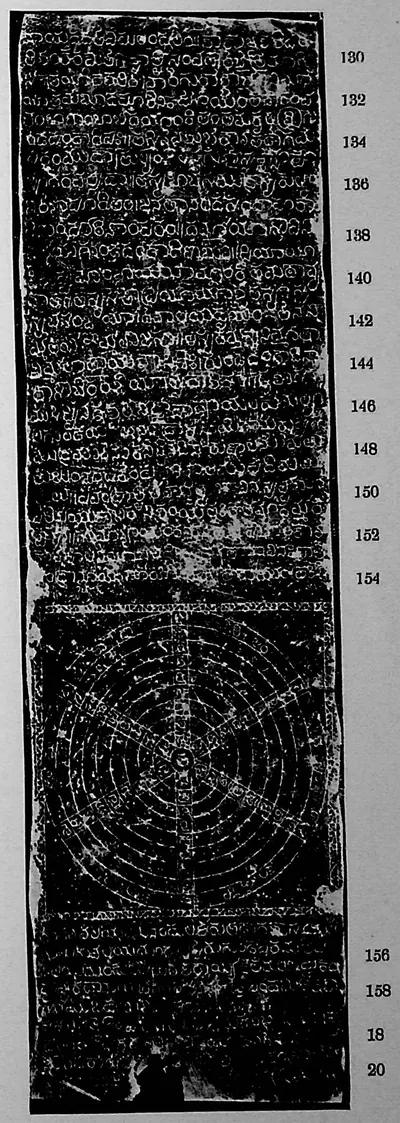 "Bothpur inscription of Malyāla Guṇḍa (dated Saka 1181)", face IV (Sreenivasachar, Corpus of Inscriptions in the Telingana Districts II, Plate 49 (PDF p. 318))Inscription rubbing · 1940
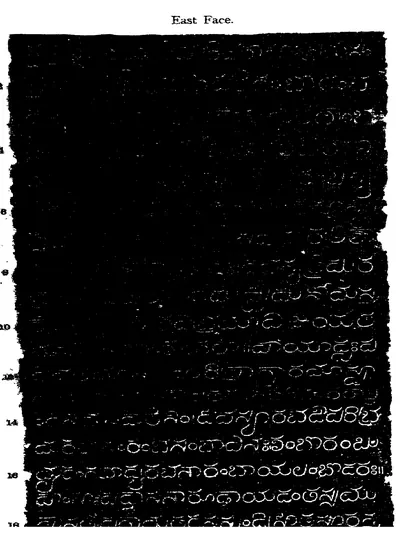 "Chebrolu Pillar Inscription of Jaya; after Saka-Samvat 1135", east face, opening lines (numbered 2 to 18) (Epigraphia Indica V, plate between pp. 146 and 147 (PDF p. 204))Inscription rubbing · 1899
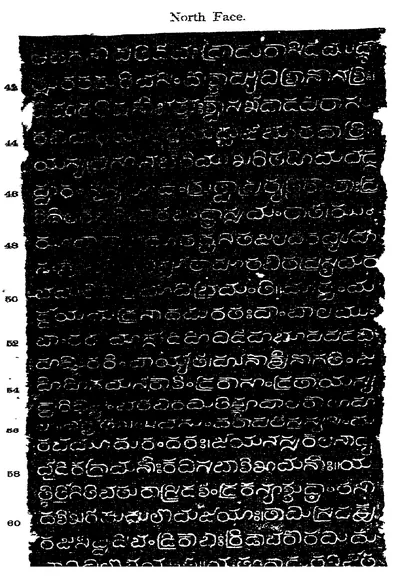 "Chebrolu Pillar Inscription of Jaya; after Saka-Samvat 1135", north face, part (lines numbered 43 to 60) (Epigraphia Indica V, plate between pp. 146 and 147 (PDF p. 204))Inscription rubbing · 1899
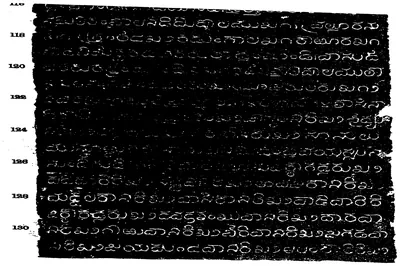 "Chebrolu Pillar Inscription of Jaya; after Saka-Samvat 1135", second page of the plate, lines 116-131 (Epigraphia Indica V, plate between pp. 146 and 147 (PDF p. 205))Inscription rubbing · 1899
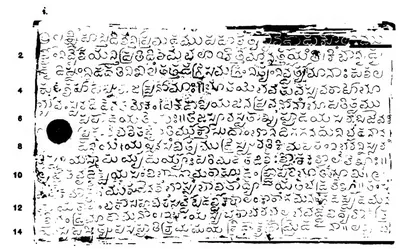 "Garavapadu Grant of Ganapatideva: Saka 1182", plate i (Epigraphia Indica XVIII, plate between pp. 350 and 351 (PDF p. 452))Inscription rubbing · 1926
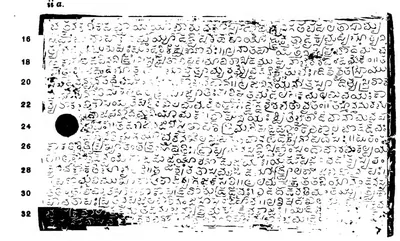 "Garavapadu Grant of Ganapatideva: Saka 1182", plate ii a (Epigraphia Indica XVIII, plate between pp. 350 and 351 (PDF p. 452))Inscription rubbing · 1926
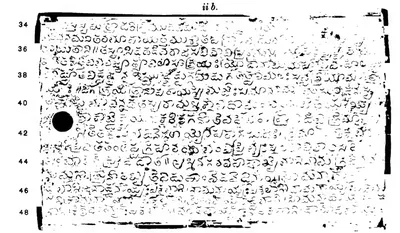 "Garavapadu Grant of Ganapatideva: Saka 1182", plate ii b (Epigraphia Indica XVIII, plate between pp. 350 and 351 (PDF p. 453))Inscription rubbing · 1926
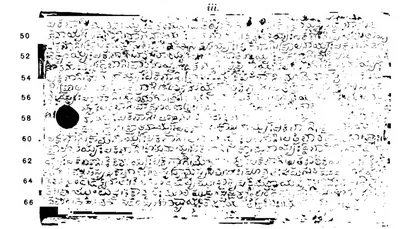 "Garavapadu Grant of Ganapatideva: Saka 1182", plate iii (Epigraphia Indica XVIII, plate between pp. 350 and 351 (PDF p. 453))Inscription rubbing · 1926
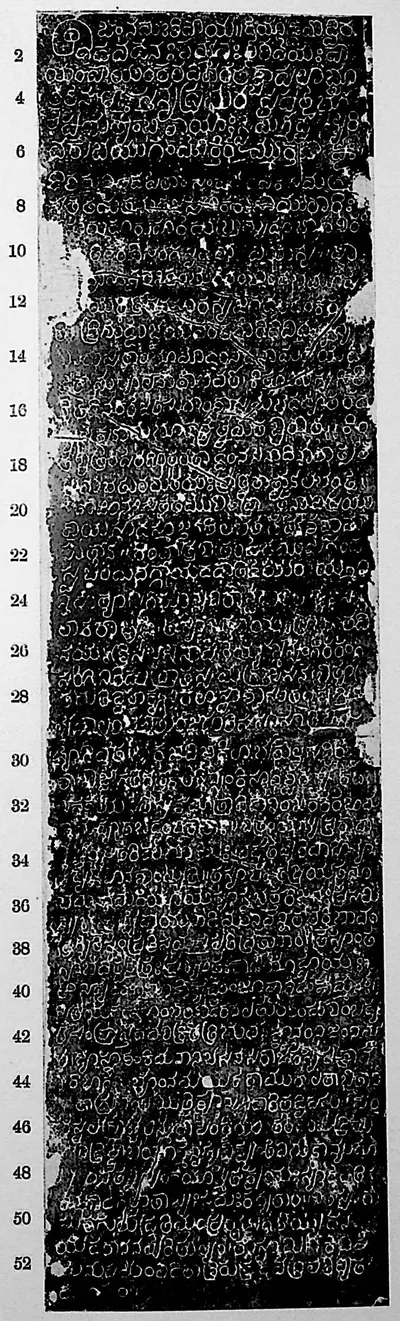 "Koṇḍiparti inscription of Cauṇḍa", face I (Sreenivasachar, Corpus of Inscriptions in the Telingana Districts II, Plate 11 (PDF p. 242))Inscription rubbing · 1940
Show all (25)
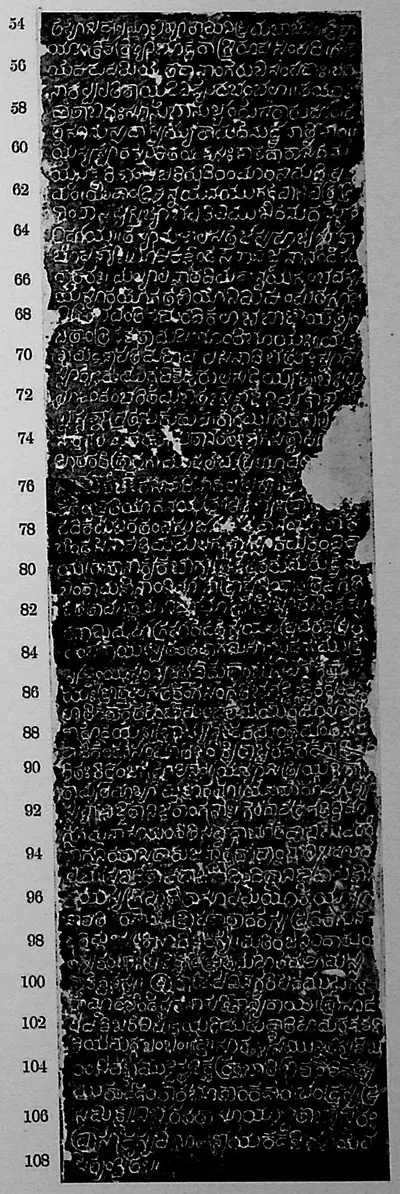 "Koṇḍiparti inscription of Cauṇḍa", face II (Sreenivasachar, Corpus of Inscriptions in the Telingana Districts II, Plate 11 (PDF p. 242))Inscription rubbing · 1940
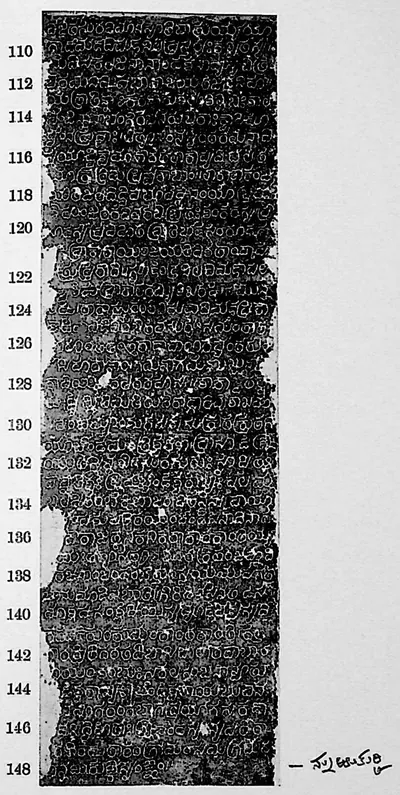 "Koṇḍiparti inscription of Cauṇḍa", face III (Sreenivasachar, Corpus of Inscriptions in the Telingana Districts II, Plate 12 (PDF p. 244))Inscription rubbing · 1940
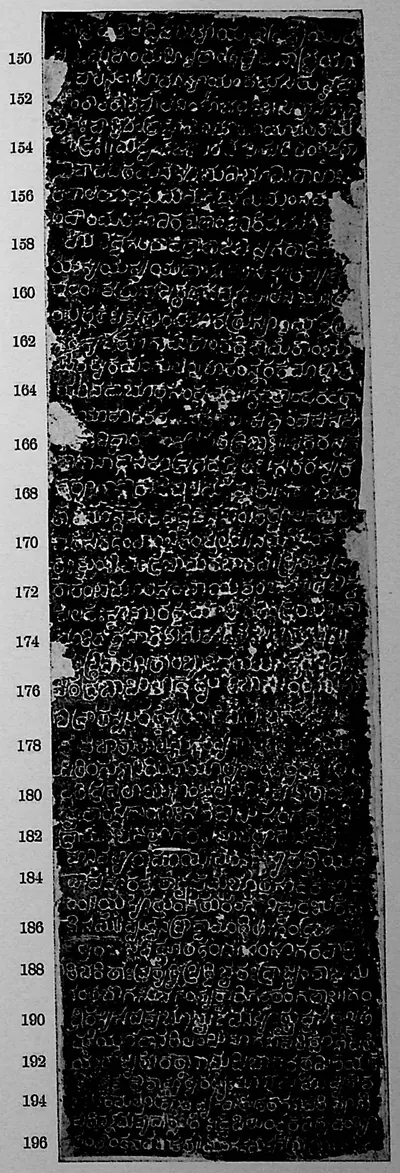 "Koṇḍiparti inscription of Cauṇḍa", face IV (Sreenivasachar, Corpus of Inscriptions in the Telingana Districts II, Plate 12 (PDF p. 244))Inscription rubbing · 1940
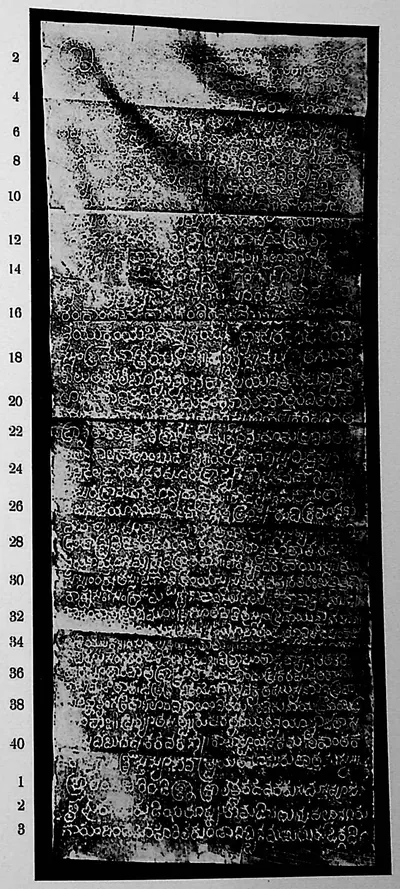 "Pillalamaṟṟi inscription of Nāmi-Reḍḍi (dated Saka 1124)", face I (Sreenivasachar, Corpus of Inscriptions in the Telingana Districts II, Plate 38 (PDF p. 296))Inscription rubbing · 1940
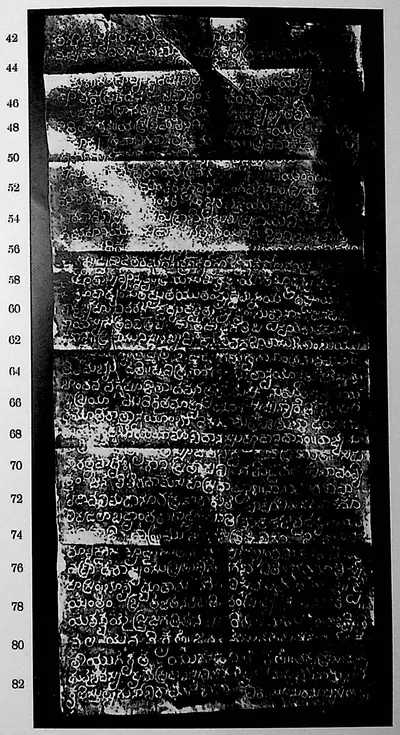 "Pillalamaṟṟi inscription of Nāmi-Reḍḍi (dated Saka 1124)", face II (Sreenivasachar, Corpus of Inscriptions in the Telingana Districts II, Plate 39 (PDF p. 298))Inscription rubbing · 1940
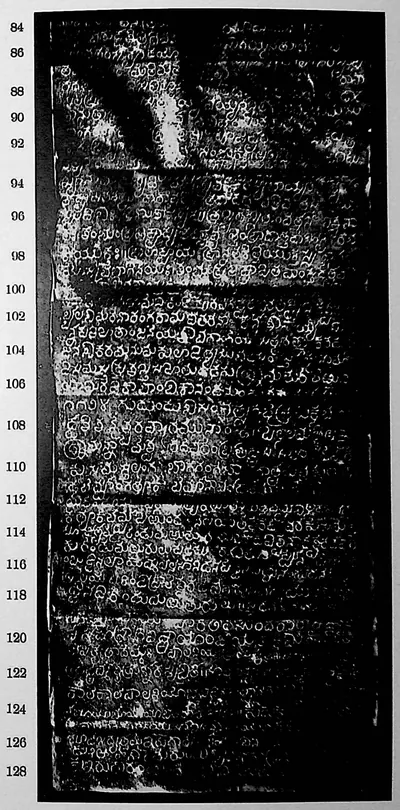 "Pillalamaṟṟi inscription of Nāmi-Reḍḍi (dated Saka 1124)", face III (Sreenivasachar, Corpus of Inscriptions in the Telingana Districts II, Plate 40 (PDF p. 300))Inscription rubbing · 1940
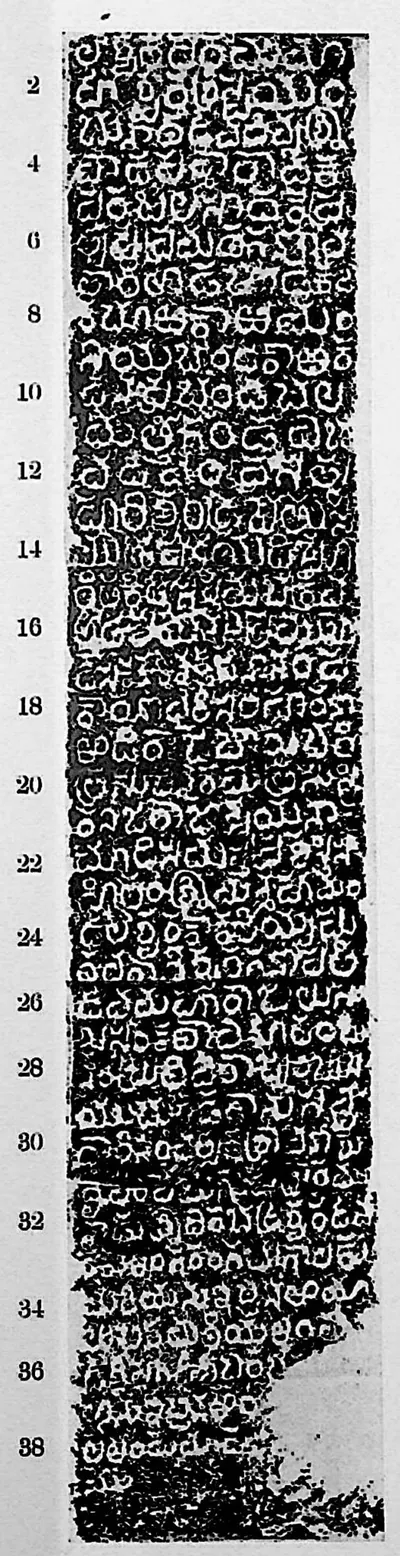 "Warangal inscription at Khan Saheb Gardens", face I (Sreenivasachar, Corpus of Inscriptions in the Telingana Districts II, Plate 19 (PDF p. 258))Inscription rubbing · 1940
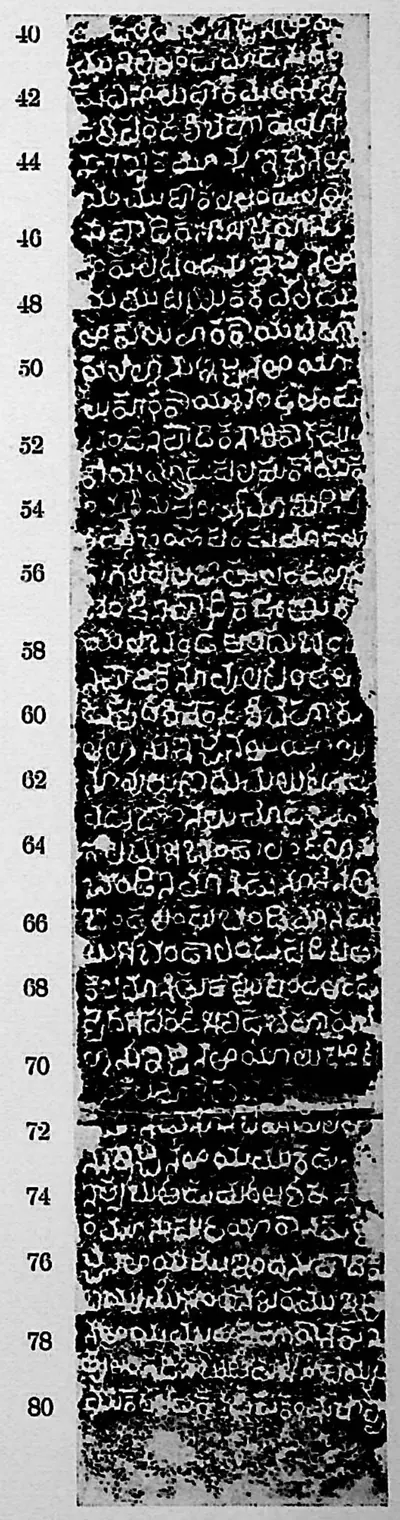 "Warangal inscription at Khan Saheb Gardens", face II (Sreenivasachar, Corpus of Inscriptions in the Telingana Districts II, Plate 19 (PDF p. 258))Inscription rubbing · 1940
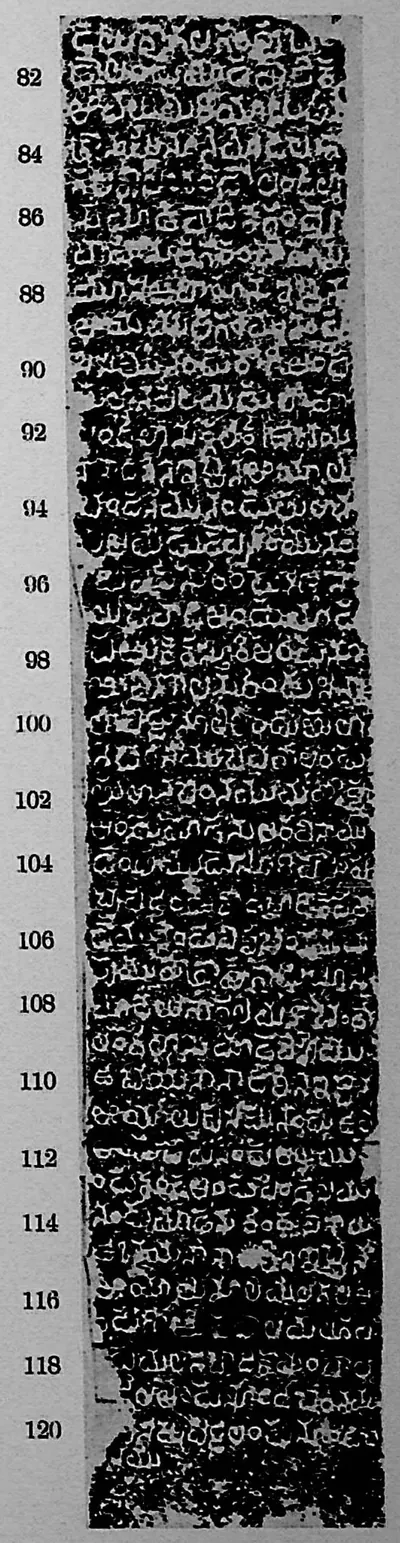 "Warangal inscription at Khan Saheb Gardens", face III (Sreenivasachar, Corpus of Inscriptions in the Telingana Districts II, Plate 19 (PDF p. 258))Inscription rubbing · 1940
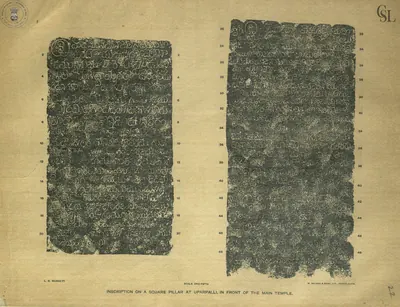 Inscription on a square pillar at Uparpalli, in front of the main temple (first two faces) (Barnett 1919)Inscription rubbing · 1919
 Inscription on a square pillar at Uparpalli, in front of the main temple (remaining faces) (Barnett 1919)Inscription rubbing · 1919
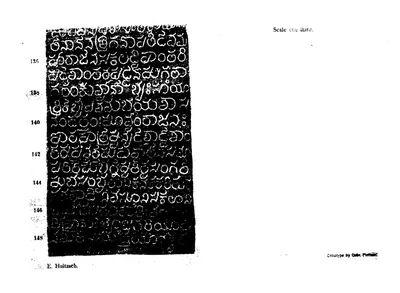 Motupalli pillar inscription of Ganapatideva, A.D. 1244-45 (part of the plate) (Epigraphia Indica XII, plate (PDF p. 258))Inscription rubbing · 1914
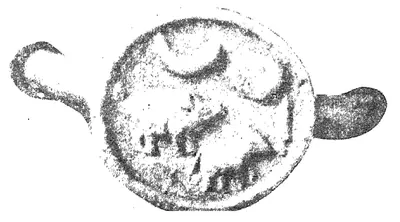 Seal of the Garavapadu grant of Ganapatideva, Saka 1182 (Epigraphia Indica XVIII, plate "Garavapadu Grant of Ganapatideva: Saka 1182")Book plate · 1926
Related
Dynasties
Kotas of Dharanikota
c. 1100–1276 CE
A family of chiefs of Amaravati–Dharanikota on the south bank of the Krishna, lords of the 'Six-thousand' country (Konnatavadi). Robert Sewell traced their line from about 1100, and their inscriptions run to the 1270s. Keta II, who probably came to power in 1182, still gave lamps and villages to the Buddha at Amaravati. Related by marriage to the Velanati Chodas and the Kakatiyas, they were brought under Kakatiya rule about 1185. Kota Beta married Ganapamba, daughter of the Kakatiya king Ganapatideva, and she ruled the family's lands as a widow in the 1250s.

Kakatiyas
c. 1163–1323 CE
Dynasty of Anumakonda (Hanamkonda) and Orugallu (Warangal). The Kakatiyas were Rashtrakuta and then Western Chalukya feudatories from the tenth century. They declared their sovereignty under Rudradeva in 1163, and under Ganapatideva they ruled the Telugu country from Telangana to the coast. Rudramadevi reigned as king under the name Rudradeva, and her grandson Prataparudra fell to the Delhi Sultanate in the 1320s. Their rule rested on allied chiefs, nayaka commanders holding land for military service, and village assemblies. It is remembered for its tanks, its temples, the Motupalli sea-trade edict and its court literature.
References
Notes (0)
Sources (11)
Spotted an error on this page? Tell us
Last updated: