Upparapalli Temple
A ruined triple-shrined Shiva temple at Uparpalli (Upparapalli) in the old Karimnagar district. A square pillar in front of it carries a Telugu inscription of 24 January 1236, in the reign of the Kakatiya king Ganapatideva. It records lands given to the god by Kataya, son of a minister of the general Recherla Rudra. Henry Cousens thought the temple was of the same age as those at Hanamkonda and Palampet.
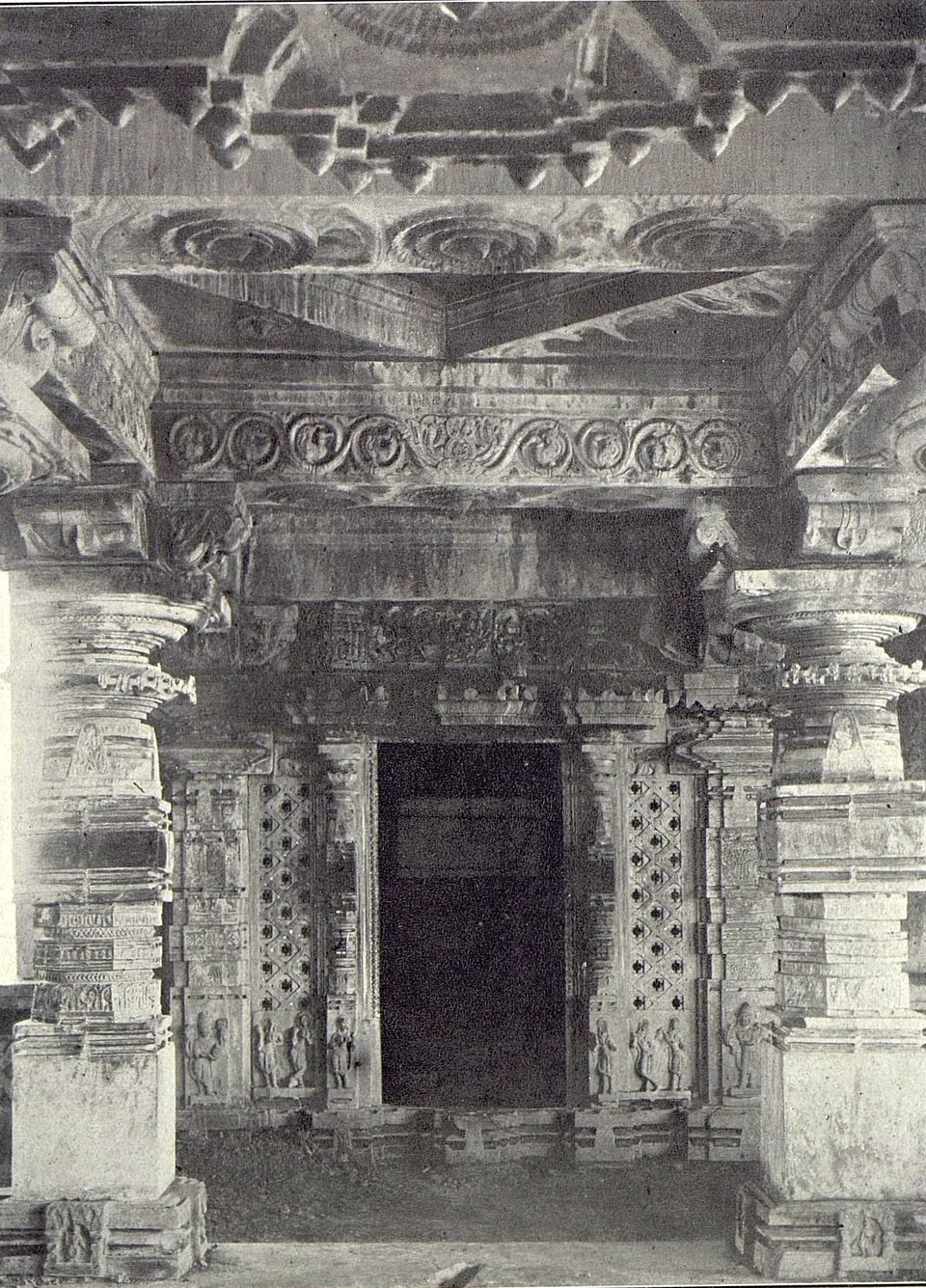
Upparapalli (Uparpalli) lies on the road from Karimnagar to Kazipet, eight miles south of Mallangur and four and a half miles west by south of Yedlapuram. Henry Cousens recorded “some interesting ruined temples” there in 1900.1 He judged them “of about the same age as those at Hanumkonda and Ramappa Lake”.1
Cousens noted that they were built mainly of granite.1 The decorated parts, the central columns, door frames and ceilings, were of the fine-grained black stone used in Chalukyan temples.1 This stone “admits of the very finest chiselling” and “takes a high polish”.1
The temple
G. Yazdani examined the Shiva temple at Uparpalli for the Hyderabad Archaeological Department in 1916–17, and published its plan.2 It has a square hall, 27 feet each way.2 A shrine and ante-chamber open off each of its northern, western and southern sides.2
Yazdani found its architecture “rather plain” and its carvings simple.2 The exception was a frieze over the northern shrine showing Ganesha dancing over a demon lying on the ground.2 An open pillared hall with a shrine adjoins the temple on the south.2 He thought this hall was built later and never finished.2
A photograph of the interior of “the Great temple, Uparpalle” had appeared in the department’s report for the year before.2 In 1927–28 the department’s assistant director compared the carved pillars and pierced door screens of the temple at Nagunur with “those in the Uparpalli temple”.3
The inscription
In front of the main temple stands a square pillar inscribed on all four sides in Telugu verse and prose.4 Cousens summarised it in 1900.1 L. D. Barnett edited it in 1919 from ink impressions that Yazdani had made in December 1916.5
According to Barnett’s edition, the Kakatiya king Ganapatideva, son of Rudra, reigned at Anumakonda.4 His minister was Recherla Rudra, son of Kad-reddi Bejjama and Bejjamamba.4 Rudra’s own minister was the Brahman Raje-nayaka.4 Raje-nayaka’s son Kataya rose high in Ganapatideva’s service and “carried out various public works”.4
The date is Saka 1157 (Saka is an Indian way of counting years), the year Manmatha, which Barnett calculated as Thursday, 24 January 1236.6 On that day Kataya, who had “constructed ponds and temples of Siva”, granted lands, tanks and groves for the god’s worship, offerings and theatrical entertainment.7 The record ends with the sanction (approval) of Ganapatideva.7 The record has its own page, the Upparapalli pillar inscription.
Recherla Rudra and the builder
Recherla Rudra is the general who founded the Ramappa temple at Palampet in 1213.8 Cousens noted that the inscribed pillar at Palampet bears the same symbols as those at Hanamkonda and Uparpalle.8 The inscription does not say who built the temple itself.1 Cousens’s date for it rests on its style.1
Footnotes
-
Henry Cousens, Lists of Antiquarian Remains in His Highness the Nizam’s Territories (1900), p. 74 (archive.org (opens in a new tab)). ↩ ↩2 ↩3 ↩4 ↩5 ↩6 ↩7 ↩8
-
G. Yazdani (Superintendent), Annual Report of the Archaeological Department of H.E.H. the Nizam’s Dominions, 1326 F. (1916–17) (1917), p. 8 and Plate III (b) (archive.org (opens in a new tab)). ↩ ↩2 ↩3 ↩4 ↩5 ↩6 ↩7 ↩8
-
Annual Report of the Archaeological Department of H.E.H. the Nizam’s Dominions, 1927–28 (1929), p. 7 (archive.org (opens in a new tab)). ↩
-
Barnett, Inscriptions at Palampet and Uparpalli (1919), p. 14 (archive.org (opens in a new tab)). ↩ ↩2 ↩3 ↩4 ↩5
-
L. D. Barnett (ed.), Inscriptions at Palampet and Uparpalli (1919), government resolution, p. v (archive.org (opens in a new tab)). ↩
-
Barnett, Inscriptions at Palampet and Uparpalli (1919), p. 15 (archive.org (opens in a new tab)). ↩
-
Barnett, Inscriptions at Palampet and Uparpalli (1919), translation, p. 19 (archive.org (opens in a new tab)). ↩ ↩2
-
Cousens, Lists of Antiquarian Remains (1900), p. 49 (archive.org (opens in a new tab)). ↩ ↩2
Photos
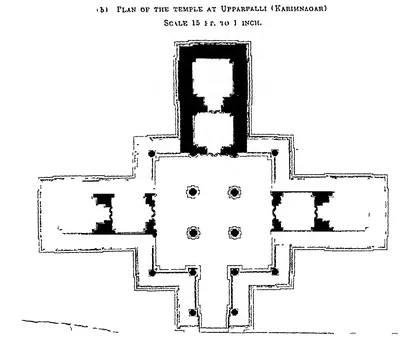 "Plan of the temple at Upparpalli (Karimnagar)" (Hyderabad Arch. Report 1916-17, Pl. III (b) (PDF p. 64))Plan · 1918
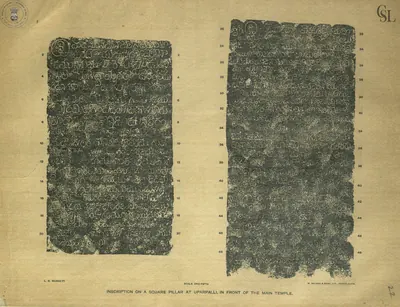 Inscription on a square pillar at Uparpalli, in front of the main temple (first two faces) (Barnett 1919)Inscription rubbing · 1919
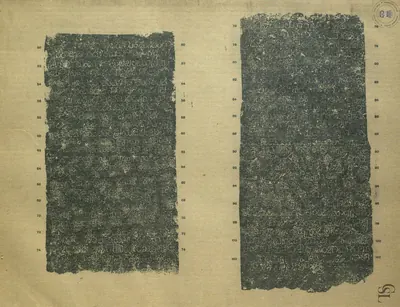 Inscription on a square pillar at Uparpalli, in front of the main temple (remaining faces) (Barnett 1919)Inscription rubbing · 1919
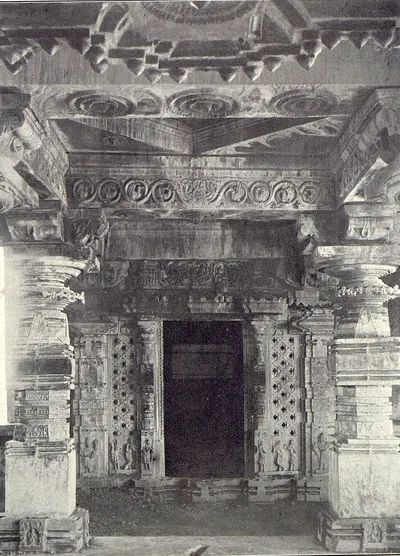 Interior of the Temple at Uparpalle, Warangal District (Yazdani 1922, Pl. XXIX (a))Historic photograph · 1922
References
Notes (0)
Sources (4)
Spotted an error on this page? Tell us
Last updated: