Vandram
Village in the western Godavari delta near Bhimavaram, where copper plates of the Eastern Chalukya king Amma II (945–970) were found in a backyard and edited in 1908. The grant gives a village to Kuppanayya, a minister who had founded a Shiva shrine at Draksharama.
Vandram was described in 1908 as a village in the Bhimavaram taluk of the Krishna (then Kistna) district. Copper plates of the Eastern Chalukya king Amma II were found there in the backyard of Buddharaju Venkataraju. The Head Assistant Collector of Narsapur forwarded them through the Collector of Kistna to the epigraphist V. Venkayya, and E. Hultzsch edited them in Epigraphia Indica.1 V. Rangacharya entered them in 1919 under Vandram in the Bhimavaram taluk.2
The grant
The plates record a grant to Kuppanayya, a minister who had founded a shrine of Shiva at Draksharama. The king addresses the ryots (cultivators) of the twelve villages of which Prandoru was the chief, in the Pavunavara district.3 Hultzsch could not identify Prandoru or the villages granted, Tanderu and Betipundi.4 Rangacharya suggested, with a query, that Prandoru was Vandram itself.2 See the Vandram plates of Amma II.
Footnotes
-
E. Hultzsch, “Vandram Plates of Ammaraja II”, Epigraphia Indica IX (1907–08), p. 131 (archive.org (opens in a new tab)). ↩
-
V. Rangacharya, A Topographical List of the Inscriptions of the Madras Presidency, Vol. II (1919), p. 888, Kistna district, Bhimavaram taluk, No. 127 (archive.org (opens in a new tab)). ↩ ↩2
-
Hultzsch, “Vandram Plates of Ammaraja II” (1908), p. 132 (archive.org (opens in a new tab)). ↩
-
Hultzsch, “Vandram Plates of Ammaraja II” (1908), p. 133 (archive.org (opens in a new tab)). ↩
Photos
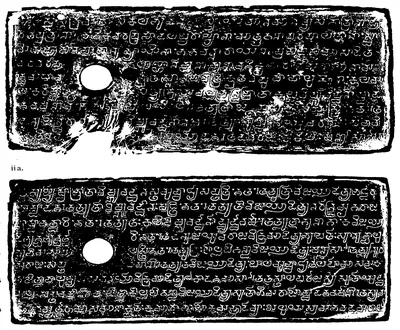
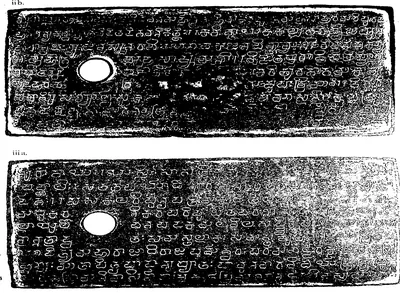
References
Notes (0)
Sources (2)
Spotted an error on this page? Tell us
Last updated: