Recherla Rudra
General of the Kakatiya kings Rudradeva, Mahadeva and Ganapatideva, of the Recherla family. He held the kingdom together after Mahadeva's death at Devagiri, and he drove out the Mudigonda chief Nagati. In 1213 he founded the Rudreshvara (Ramappa) temple and its lake at Palampet.
Recherla Rudra was a Kakatiya general who first served Rudradeva.1 According to Parabrahma Sastry, he put down revolts and governed until the young king Ganapati came back from the Yadavas.23 He built the Rudreshvara temple at Palampet, now known as the Ramappa temple.45678
Family
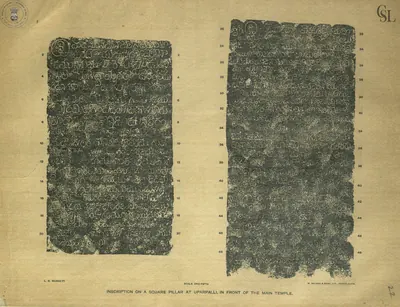
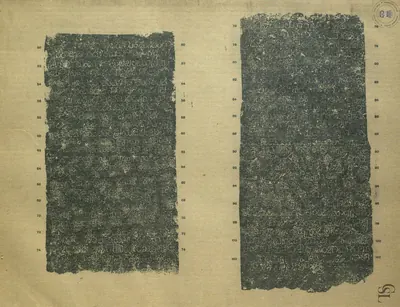
Rudra belonged to the Recherla family of generals.9 P. V. Parabrahma Sastry describes them as Reddis, distinct from the later Recherla chiefs of the Velama community.9 His own pillar inscription at Palampet, edited by L. D. Barnett in 1919, traces his line from a general named Brahma, through Kataya I and Kama, to his father Kataya II. His mother was Kamamba.1011
In Barnett’s translation, Brahma “swiftly flung open the doors of the city of Kanchi like a curtain”.11 He brought about “the marriage of the Kakati monarch with the Fortune of heroes”.11 Kama, “the commander of the blest king Prola’s army”, slew king Manthanya-Gunda.11
Barnett thought Brahma’s master was probably Prola I.12 Parabrahma Sastry and the historians of The Early History of the Deccan identified him as Beta I, on Someshvara I’s expedition against Kanchi in 1052.913 Another branch of the family held Pillalamarri and Nagulapadu in the Nalgonda district.14
Saving the kingdom
Rudra first appears in the service of Rudradeva, who sent him against the Bottu chiefs of Koravi.1 The Palampet inscription says that when “the blest king Rudra” had gone to heaven, the hostile princes he had conquered “sprang up together hastily in panic”.15 Barnett took the king to be the Kakatiya Rudradeva, and the conqueror to be the general.15 The crisis deepened when Rudradeva’s brother Mahadeva was killed attacking Devagiri and the young Ganapati was held by the Yadavas. According to Parabrahma Sastry, nobles rose in revolt and foreign invaders entered the kingdom.23 In his account, Rudra put them down and governed until the young king returned.23
The inscription puts it in a metaphor. In Barnett’s translation, the inscription speaks of a time “when the Fortune of the Kakati Monarch through error had set her foot among many sharp thorns”.16 Then Rudra “by the might of his arm forcibly crushed and removed those (thorns)”.16 He “very firmly established that (Fortune) in security”.16 The inscription also says that king Nagati fled before his army.16
Parabrahma Sastry identified Nagati with Nagatiraja of the Mudigonda Chalukyas.171814 He concluded that Rudra drove them out of the Bhadrachalam region and annexed it.171814 An inscription of 1218 shows Nagati a refugee in the Kolanu region.171814 He thought that without Rudra and his ally Malyala Chaunda, Ganapatideva might never have reached the throne. The king rewarded Rudra with the rank of mandalika (feudal lord), a throne and a pair of fly-whisks.14 Inscriptions of his minister Rajanayaka call him the bearer of the burden of the Kakatiya kingdom.14
The Palampet temple and lake
The inscription records that Rudra consecrated a temple of Rudreshvara in Orugallu (Warangal) and gave it the village of Nekkonda. He then built a new town with a pond “like an ocean”, and a temple of Rudreshvara with a golden cupola (dome). To this temple he granted the villages of Upparlapalli and Borlapalli on 31 March 1213, as Barnett calculated the date. He also endowed the temples of Rudreshvara, Katesvara and Kamesvara at Atukuru, named after himself, his father and his grandfather.456
The temple at Palampet is the Ramappa temple, and its pond is the Ramappa lake.78 The lake’s bund is about 2,000 feet long, and it still irrigates more than 4,000 acres.78
Parabrahma Sastry credited Rudra also with temples at Machapuram, now lost, and with the ruined temple at Ghanpur.19 He observed that most of the surviving Kakatiya monuments, apart from the Thousand Pillar Temple, were built by Recherla generals rather than by the kings.19
Officers and sons
Rudra’s general and minister Rajanayaka led a Kakatiya army into Kalinga early in Ganapatideva’s reign.202 His son Katenayaka set up the Upparapalli inscription of 1236 that describes the campaign.202
Inscriptions of Ganapatideva’s reign at Dicchakunta and Elkurti name a mandalika Rudrireddi with a son Kata.14 They also name a general Rudra with sons Loka and Ganapati.14 If they are the same man, Parabrahma Sastry noted, Rudra had three sons.14
Footnotes
-
P. V. Parabrahma Sastry, The Kakatiyas of Warangal (1978), p. 56. ↩ ↩2
-
P. V. Parabrahma Sastry, The Kakatiyas of Warangal (1978), p. 116. ↩ ↩2 ↩3 ↩4 ↩5
-
P. V. Parabrahma Sastry, The Kakatiyas of Warangal (1978), pp. 143–144. ↩ ↩2 ↩3
-
L. D. Barnett (ed.), Inscriptions at Palampet and Uparpalli (1919), p. 2 (archive.org (opens in a new tab)). ↩ ↩2
-
L. D. Barnett (ed.), Inscriptions at Palampet and Uparpalli (1919), translation, p. 10 (archive.org (opens in a new tab)). ↩ ↩2
-
L. D. Barnett (ed.), Inscriptions at Palampet and Uparpalli (1919), translation, p. 11, verses 40–54 (archive.org (opens in a new tab)). ↩ ↩2
-
P. V. Parabrahma Sastry, The Kakatiyas of Warangal (1978), p. 205. ↩ ↩2 ↩3
-
P. V. Parabrahma Sastry, The Kakatiyas of Warangal (1978), p. 301. ↩ ↩2 ↩3
-
P. V. Parabrahma Sastry, The Kakatiyas of Warangal (1978), p. 143. ↩ ↩2 ↩3
-
L. D. Barnett (ed.), Inscriptions at Palampet and Uparpalli (1919), pp. 1–2 (archive.org (opens in a new tab)). ↩
-
L. D. Barnett (ed.), Inscriptions at Palampet and Uparpalli (1919), translation, p. 8, verses 10–18 (archive.org (opens in a new tab)). ↩ ↩2 ↩3 ↩4
-
L. D. Barnett (ed.), Inscriptions at Palampet and Uparpalli (1919), p. 1 (archive.org (opens in a new tab)). ↩
-
N. Venkataramanayya and M. Somasekhara Sarma, “The Kakatiyas of Warangal”, in G. Yazdani (ed.), The Early History of the Deccan, Parts VII–XI (1960), p. 577. ↩
-
P. V. Parabrahma Sastry, The Kakatiyas of Warangal (1978), p. 144. ↩ ↩2 ↩3 ↩4 ↩5 ↩6 ↩7 ↩8 ↩9
-
L. D. Barnett (ed.), Inscriptions at Palampet and Uparpalli (1919), translation, p. 9, verse 21 and note 2 (archive.org (opens in a new tab)). ↩ ↩2
-
L. D. Barnett (ed.), Inscriptions at Palampet and Uparpalli (1919), p. 9, verse 24 (archive.org (opens in a new tab)). ↩ ↩2 ↩3 ↩4
-
P. V. Parabrahma Sastry, The Kakatiyas of Warangal (1978), p. 99. ↩ ↩2 ↩3
-
P. V. Parabrahma Sastry, The Kakatiyas of Warangal (1978), p. 106. ↩ ↩2 ↩3
-
P. V. Parabrahma Sastry, The Kakatiyas of Warangal (1978), p. 157. ↩ ↩2
-
P. V. Parabrahma Sastry, The Kakatiyas of Warangal (1978), p. 110. ↩ ↩2
Photos
References
Notes (0)
Sources (3)
Spotted an error on this page? Tell us
Last updated: