Undavalli
Village on the south bank of the Krishna opposite Vijayawada (Bezwada), in Guntur district. It is known for its large rock-cut temple of several storeys with a colossal reclining Vishnu. G. Jouveau-Dubreuil attributed the caves to the Vishnukundins. A. H. Longhurst thought them Pallava work of the early 7th century.
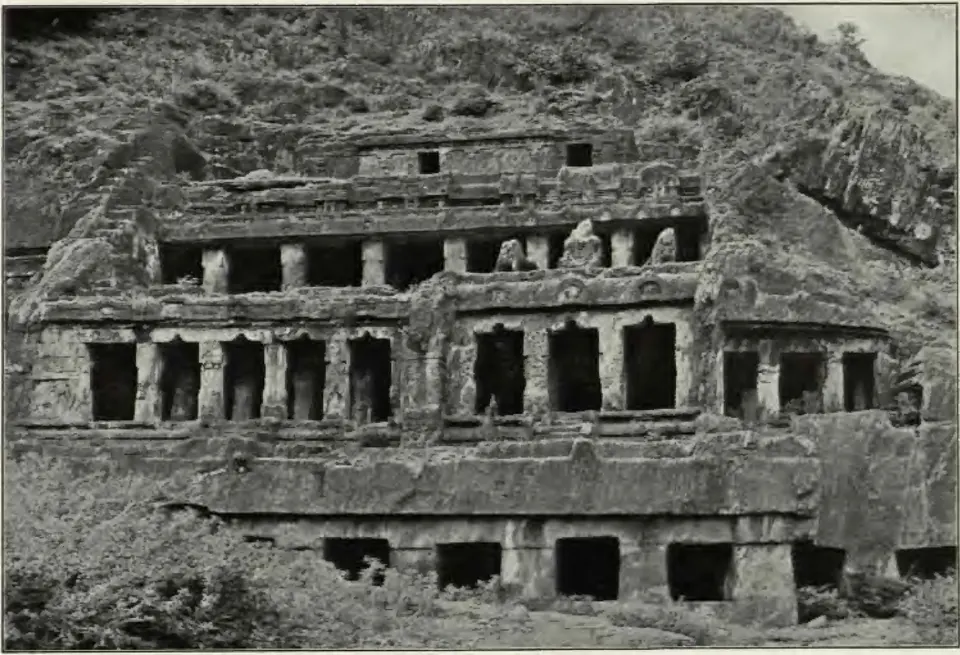
Undavalli lies in Guntur district on the south bank of the Krishna, opposite Vijayawada (then Bezwada).1 In A. H. Longhurst’s time it could be reached by boat from Vijayawada or from Tadepalle, the next station on the Guntur line.1 The rock-cut temples are in a rocky hill about two miles north-west of Tadepalle station.1 They face north-east, towards the river.1
The caves
The village is known for the Undavalli cave temple, cut out of the natural rock.12 It has a ground floor and three upper storeys, with a colossal image of Vishnu lying on the serpent.12 Four smaller unfinished rock-cut shrines and some rough carvings lie nearby.12
Longhurst grouped the Undavalli caves with the rock-cut temples at Vijayawada and the neighbouring hamlet of Mogalrajapuram, across the river.3
Who cut them?
G. Jouveau-Dubreuil argued in 1917 that the caves of Undavalli were the work of the Vishnukundins.45 He pointed to lions carved on the pillars, like the lion on the seals of their grants.45
Longhurst, writing in 1924, thought there was no proof of this.62 On grounds of architecture he took the caves to be Pallava work of the early 7th century.62 See the monument page for the evidence.
Footnotes
-
Longhurst, Pallava Architecture, Part I (1924), p. 27 (archive.org (opens in a new tab)). ↩ ↩2 ↩3 ↩4 ↩5 ↩6 ↩7
-
Longhurst, Pallava Architecture, Part I (1924), p. 30 (archive.org (opens in a new tab)). ↩ ↩2 ↩3 ↩4 ↩5
-
Longhurst, Pallava Architecture, Part I (1924), p. 22 (archive.org (opens in a new tab)). ↩
-
G. Jouveau-Dubreuil, The Pallavas (1917), p. 33 (archive.org (opens in a new tab)). ↩ ↩2
-
Jouveau-Dubreuil, The Pallavas (1917), p. 34 (archive.org (opens in a new tab)). ↩ ↩2
-
A. H. Longhurst, Pallava Architecture, Part I (Memoirs of the Archaeological Survey of India No. 17, 1924), p. 5 (archive.org (opens in a new tab)). ↩ ↩2
Photos
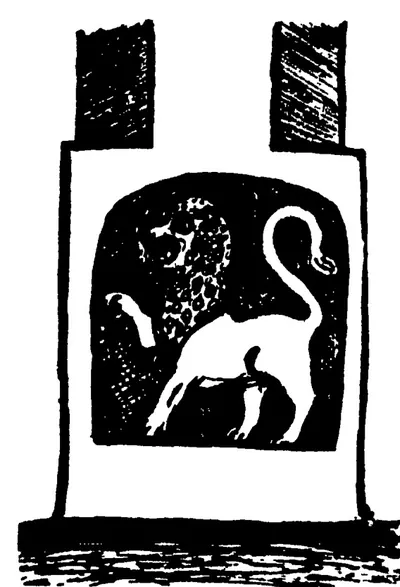 "A lion (simha) at Undavalli" (Jouveau-Dubreuil, The Pallavas, 1917, Fig. 1, p. 33)Drawing · 1917
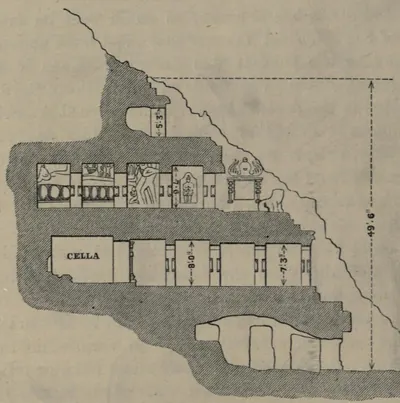 "Section of the Undavilla Cave, from a Drawing by Mr. Peters. Scale 20 feet to 1 inch" (Fergusson and Burgess, The Cave Temples of India, 1880, woodcut No. 24, p. 100)Drawing · 1880
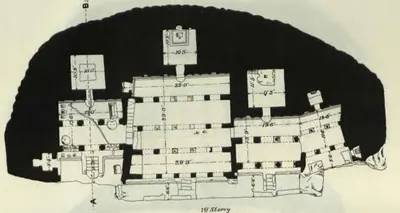 "Undavalli temple, Guntur District.—Plans": 1st Storey (Longhurst, Pallava Architecture I, 1924, Plate IX (PDF p. 70))Plan · 1924
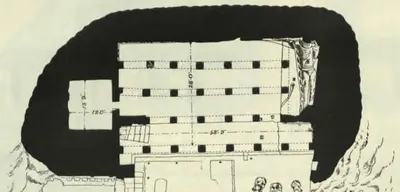 "Undavalli temple, Guntur District.—Plans": 2nd Storey (Longhurst, Pallava Architecture I, 1924, Plate X (PDF p. 72))Plan · 1924
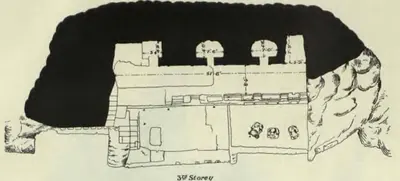 "Undavalli temple, Guntur District.—Plans": 3rd Storey (Longhurst, Pallava Architecture I, 1924, Plate X (PDF p. 72))Plan · 1924
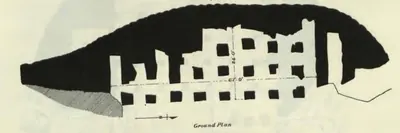 "Undavalli temple, Guntur District.—Plans": Ground Plan (Longhurst, Pallava Architecture I, 1924, Plate IX (PDF p. 70))Plan · 1924
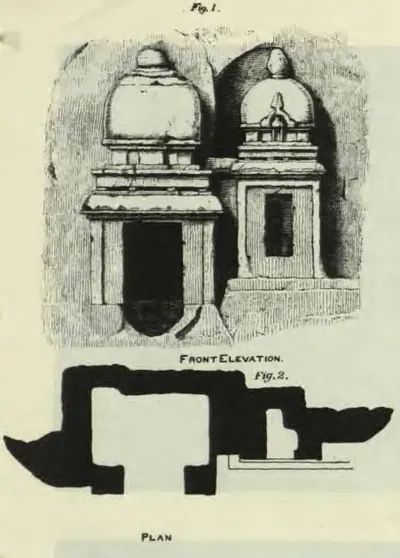 "Undavalli temple, Guntur District.—Rock-cut memorial shrines on the hill", Figs. 1-2 (Longhurst, Pallava Architecture I, 1924, Plate XIII (PDF p. 78))Drawing · 1924
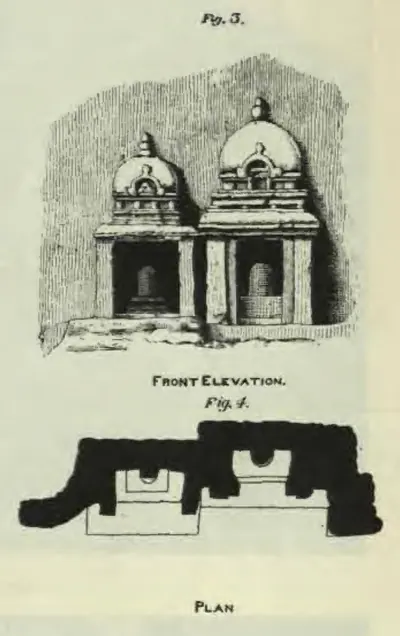 "Undavalli temple, Guntur District.—Rock-cut memorial shrines on the hill", Figs. 3-4 (Longhurst, Pallava Architecture I, 1924, Plate XIII (PDF p. 78))Drawing · 1924
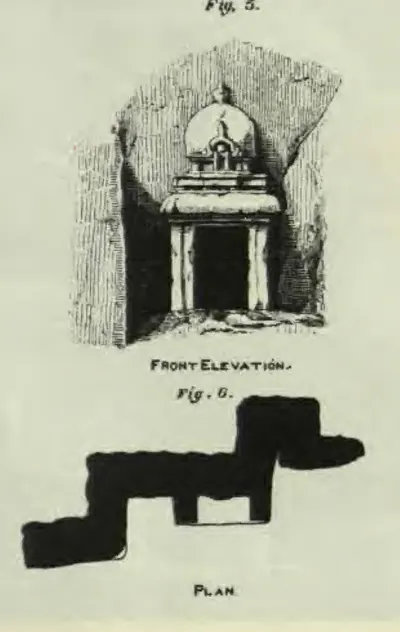 "Undavalli temple, Guntur District.—Rock-cut memorial shrines on the hill", Figs. 5-6 (Longhurst, Pallava Architecture I, 1924, Plate XIII (PDF p. 78))Drawing · 1924
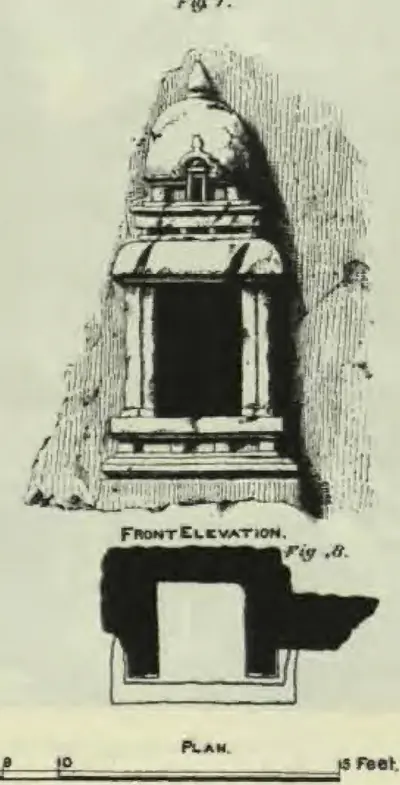 "Undavalli temple, Guntur District.—Rock-cut memorial shrines on the hill", Figs. 7-8 (Longhurst, Pallava Architecture I, 1924, Plate XIII (PDF p. 78))Drawing · 1924
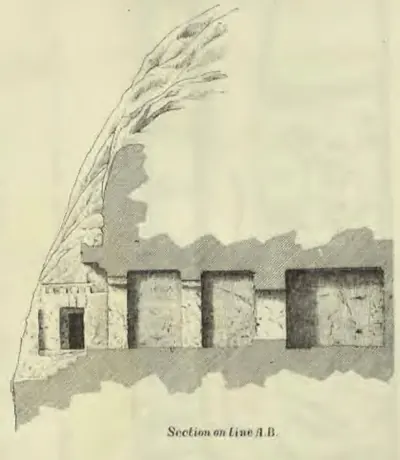 "Undavalli temple, Guntur District.—Sections": "Section on Line A.B." (Longhurst, Pallava Architecture I, 1924, Plate XI (PDF p. 74))Plan · 1924
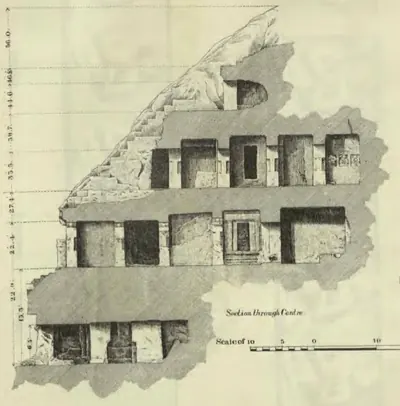 "Undavalli temple, Guntur District.—Sections": "Section through Centre" (Longhurst, Pallava Architecture I, 1924, Plate XI (PDF p. 74))Plan · 1924
Show all (16)
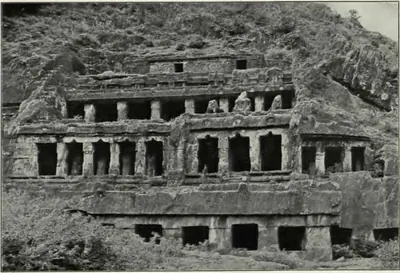 "Undavalli: Rock-cut temple" (Longhurst, Pallava Architecture I, 1924, Plate XIV (a) (PDF p. 80))Historic photograph · 1924
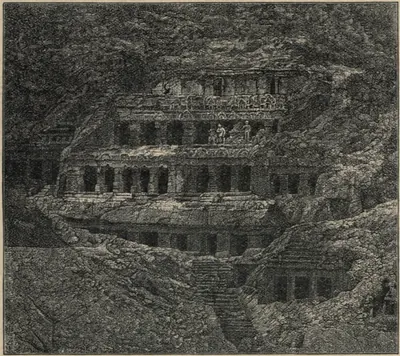 "View of the Undavilli Cave, from a Photograph" (Fergusson and Burgess, The Cave Temples of India, 1880, woodcut No. 23, p. 97)Drawing · 1880
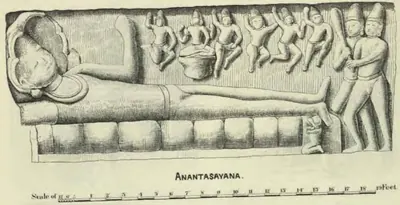 Undavalli temple: "Anantasayana" (Longhurst, Pallava Architecture I, 1924, Plate XII (PDF p. 76))Drawing · 1924
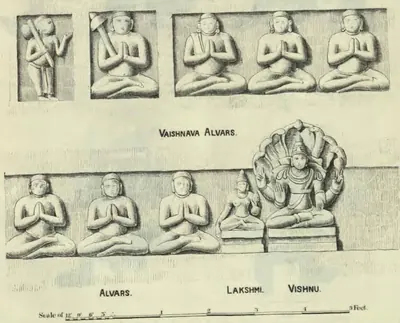 Undavalli temple: "Vaishnava Alvars" and "Alvars, Lakshmi, Vishnu" (Longhurst, Pallava Architecture I, 1924, Plate XII (PDF p. 76))Drawing · 1924
Related
Monuments
References
Notes (0)
Sources (2)
Spotted an error on this page? Tell us
Last updated: