Mass movements: when whole communities joined the churches
The group conversions of the Telugu country from 1851 to the 1930s: the Malas of Kadapa and Kurnool, the CMS villages that followed Pogulu Venkayya from 1859, the Madiga movement at Ongole from Yerraguntla Periah (1866) to the 9,606 baptisms of 1878, the Lutheran and Canadian Baptist fields, the Dornakal and Medak movements in Hyderabad State, and the caste Hindu (Sudra) converts of the 1920s and 1930s, with the numbers the sources give and who gives them.
Download
In much of the Telugu country people became Christians not one by one but in groups. A whole caste group in a village, or a chain of related families across many villages, joined a church together.12 Missionaries called these “mass movements”. The foreword to J. W. Pickett’s report of 1933 estimated that at least four in five of India’s Protestants came from them.3
This page follows the main Telugu movements in time order, from the Kadapa Malas of 1851 to the caste Hindu converts of the 1930s.45 Why people joined is told separately, in Why people converted. For the older history of the Malas and Madigas, see Dalit history.
About the numbers. Missions counted in different ways. Baptists counted only baptised members, because they did not baptise children.6 Other missions also counted children, and some gave separate figures for people still under instruction.7 The Hyderabad census writer of 1921 found that the missions’ own estimates were higher than his census figures.8 Each number below says who counted and what.
The Malas of Kadapa and Kurnool, 1851–1877
The first group movement began among the Malas of the Kadapa district. In 1851 twenty families from Paidala asked the London Missionary Society for teaching, and forty people were baptised eighteen months later.4 Other villages followed.4
The Anglican SPG mission began the same way. In July 1852 thirty Malas were baptised at Kudravaram, and in September 1853 eighty more at Gubagundam Jammuladinne.9 In October 1853 all the Malas of Mutyalapad asked to be taught.9
Sherring’s history of 1884 gives the growth in numbers. In 1850, he wrote, the Kadapa, Kurnool and Nellore districts together had only 120 Protestant Christians; by 1861 they had 3,335, and by 1871 13,798.10 The LMS adherents around Kadapa numbered 1,250 in 1861 and 6,331 in 1881, in 90 village congregations.11 At Dasarapatte, the SPG missionary J. Clay reported, eleven families were brought to ask for teaching by an old woman of the village, who had walked six miles every Sunday to be taught.12
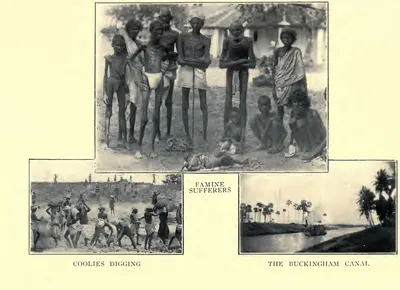
The famine of 1876–78 struck these congregations hard. Of 5,168 people on the LMS rolls, 1,168 were dead or missing.13 After the famine, Hibbert-Ware wrote, the LMS could not find teachers for all the villages that asked.13 By 1912 nearly the whole Mala community had joined a church in parts of the Kadapa district.13
Pagolu Venkayya and the CMS villages, 1859
North of the Krishna, the CMS mission had only about 200 converts after eighteen years.14 Then, in 1859, a Mala leader named Pagolu Venkayya came to the missionary T. Y. Darling at Vijayawada.1516 Venkayya, his wife, their five children and sixteen other men were baptised at Raghavapuram in March 1859.16
The movement spread through Venkayya’s relatives to Polsanapalle and other villages near Eluru.1716 By his death in 1891 the CMS Telugu mission had nearly 10,000 Christians.16 Darling’s own account, printed in 1893, gives the same rise from fewer than 200 to over 10,000.18
Darling also wrote that the movement spread from the Malas to the Madigas, first through Venkayya’s preaching.19 A Madiga helper named Matthew became a teacher among them.19 In the Raghavapuram district, the missionary J. Stone reported that baptised Christians rose from 680 to 1,115 in his seven years there, and the villages under the mission from 51 to 74.20
The CMS field kept growing. By 1912 it had over 24,000 Christians and over 7,000 people under instruction.7 In nine months of 1910 the Khammam district alone took 241 Sudras, 310 Malas and 284 Madigas under instruction.21
The Madigas of Ongole, 1866–1880
The largest movement began among the Madigas, the leather-working caste, around Ongole. Its first convert was Yerraguntla Periah of Tullakondapadu, forty miles west of the town.22 He had heard the gospel at Eluru and Palakollu, and was baptised by Lyman Jewett in 1866 with his wife.2324
Periah brought his relatives and neighbours. On 20 January 1867 John Clough baptised twenty-eight people at Tullakondapadu.25 Hibbert-Ware (1912) names an early leader Bangarapu Thatiah, a teacher of the Rajayogi sect, which rejected caste.26 He says Thatiah asked the Nellore mission to send a man to Ongole, and then preached for it.27 Clough’s memoir tells a very similar story of Periah himself (see Yerraguntla Periah).28
The numbers grew quickly. Hibbert-Ware gives 573 converts at Ongole in 1869 and 1,745 communicants in 1872.27 During the famine of 1876–78 the mission ran relief work and refused all baptisms for fifteen months.29
Baptisms began again on 16 June 1878. By the end of December the mission had baptised 9,606 people, and the Ongole church had 12,004 members.29 On a single day, 3 July 1878, six Indian preachers baptised 2,222 people in the Gundlakamma river at Velumpilly.2930
Clough baptised 1,068 more on a tour in early 1880.31 He also expelled some people: five for child marriages, two for adultery, and eleven who admitted they had deceived the missionaries when they were baptised.3132 By 1912 the American Baptist mission had over 60,000 church members.33
What the census showed, 1871–1881
The Madras census of 1881 measured the change. Christians in the Nellore district rose from 3,912 in 1871 to 20,794 in 1881, more than five times as many.34 In Kistna they rose from 7,670 to 36,194, and in Kurnool from 3,855 to 11,464.34
The census writer wrote that in the famine districts the population fell by about 13 per cent while Christians rose by 35½ per cent.35 He judged that “the Famine appears to have been the Missionaries’ opportunity”.35 For other views of this, see Why people converted.
The Lutheran field, Guntur and Rajahmundry
The Lutherans of Guntur saw slower, steady growth. In 1849 forty people were baptised in Palnadu.36 By 1883 the mission had over 5,000 adherents in 135 villages, nearly all Malas and Madigas.36
Sherring gives the Lutherans’ numbers for the Kistna district. Their stations had 164 Christians in 1850 and 338 in 1861.37 By the end of 1871 there were 2,150, and by 1881 7,988.3738
In 1884 the Lutheran missionaries wrote that their first Madiga convert came in 1850.39 They said that, although they too ran famine relief, their Madiga converts did not increase after the famine.40 The Rajahmundry Lutheran mission had about 12,000 baptised members by 1907, most from the northern Kistna villages.41
Earlier figures for the Rajahmundry mission come from Wischan’s book of 1891. In 1888 the mission baptised 476 people and had 832 communicants (full members who took communion).42 Its Velpur district alone had 1,388 Christians in fifty villages, served by the Indian pastor N. Paulus.43
Jones’s survey of 1900 described how the Guntur mission grew. It said baptisms came at first one person at a time, then a family at a time, then in groups, and later often “portions of a village” at once.44 In its first eight years the mission baptised about 10 people a year, and in the last twenty-two years about 1,045 a year.44 By 1900 its Christian community numbered 28,315, of whom 6,762 were full church members.45
The movement kept growing in the 20th century. Between 1911 and 1921 Christians in the Kistna district rose by 82.7 per cent, and in Guntur by 24.1 per cent.46
The Canadian Baptist field, Kolleru and Kakinada
The Canadian Baptist church grew from the villages around the Kolleru lake. Thomas Gabriel’s first converts there were his own cousin Karre Samuel and his wife.47 In 1873 Gabriel reported thirty-one baptisms at Gunnanapudi and eight at Chinnamilli.47
In 1874 the Canadian mission baptised 133 people and ended the year with 219 members.48 Its jubilee book says these converts “may well be credited chiefly to the work of Mr. Gabriel”.48
According to Jones’s survey of 1900, the Canadian mission’s converts were at first mostly Malas, but from 1884 large numbers of Madigas joined.49 By 1900 the Ontario and Quebec mission counted 6,524 members.49
Dornakal and Medak, 1900–1935
In the Nizam’s state the largest movements came after 1900. The Anglican work in the Telugu country, including Dornakal, had about 25,000 Christians in 1899.50 By 1924, wrote Bishop Henry Whitehead, it had 120,000, and 40,000 had joined in the last three years.50 More than 30,000 people were waiting for baptism.50
The census confirmed the rise. Christians in Hyderabad State rose from 62,856 in 1921 to 151,382 in 1931, and 83 in every hundred lived in Telangana.51 Warangal had the most, followed by Nalgonda, Medak, Hyderabad city, Nizamabad and Karimnagar.51
The 1931 census writer credited two missions: the Anglican Dornakal mission in Warangal and Nalgonda, and the English Wesleyan Methodists of Medak.52 The Wesleyans reported 41,896 new members in the decade. Of these, 21,763 were Malas and 13,856 Madigas; the rest came from Kapus, fishermen, shepherds, washermen, potters and others.52
Famine played a part here too. The 1921 Hyderabad census writer noticed that whole families had joined during the famine years of that decade.53 He thought the rise owed more to “the levelling influences of the famines” than to religious conviction, though some joined for religious reasons.53
The CMS delegation’s report, 1921–22
In November 1921 a delegation from the Church Missionary Society in London toured the CMS Telugu field.54 Bishop V. S. Azariah of Dornakal was one of its three Indian members.55 Its report defined a mass movement as groups of families deciding to change religion together, with the wish spreading from village to village.56 Because the name was misunderstood, it suggested “community movement” or “village movement” instead.57
The delegation wrote that the Malas and Madigas had been “moving towards the Church in small groups” for sixty years.57 In the last twenty years the movement had grown much faster, and the CMS Christian community had grown fourfold.57 It now counted 63,000 adherents (people attached to the church, baptised or not), and 19,000 had joined in the last two years alone.57
The delegation also saw “the beginnings of a movement” among caste Sudras and among people it called “Gypsies”.57 It expected the numbers to double within ten years.57 Its warning was that such a movement might not last, so the church should act “now or never”.58
Caste Hindu converts, 1920s–1930s
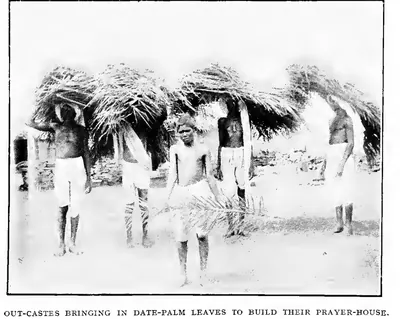
From the 1920s, groups from Sudra castes (the large middle castes of farmers, herders and artisans) also joined. Earlier signs had appeared: the LMS formed its first Sudra congregation in 1890, and the American Baptists baptised 143 Sudras in one district about 1911.592
Pickett gathered reports on this “Sudra movement” for his 1933 book. He was told of more than 15,000 Sudra baptisms in five years, in at least six missions and over forty castes.5 The largest groups were Erukulas, then Waddaras, Yanadis and Gollas.60 Some Reddis also joined in the Dornakal diocese.60
The new converts usually followed the Malas and Madigas. In 21 Dornakal pastorates, Sudras had joined in 187 villages; in 170 of them Malas or Madigas had become Christians first.61 Pickett’s informants said the teachers and pastors of these new converts were almost all of Mala or Madiga origin.60
Pickett’s survey of 1928–31
J. Waskom Pickett directed a survey of Christian mass movements for the National Christian Council of India, after its meeting at Madras in December 1928.6263 Bishop V. S. Azariah of Dornakal, the Council’s president, chaired the survey.64 One of its five main study areas was the CMS field in the Kistna district, and its team gathered data in ten areas in all.6566
None of these areas was chiefly about Telugu Sudras, so Pickett added a special inquiry about them.67
Pickett concluded that mass movements were the main way Christianity had spread in India’s villages.3 His findings on motives are described in Why people converted.
Where the sources disagree
How many were baptised with Venkayya? Hibbert-Ware (1912) says Venkayya, his wife, five children and sixteen other men were baptised.16 Darling, who baptised them, lists Venkayya, his wife, five children and “the remaining men, sixteen in all”, which may mean sixteen people altogether.68
Did the famine cause the Ongole movement? The 1881 census writer called the famine “the Missionaries’ opportunity”.35 Downie (1893) replied that the Nellore mission gave as much relief but saw almost no movement.69 The Lutherans (1884) said their own relief work brought no rise in Madiga converts.40
Footnotes
-
Hibbert-Ware, Christian Missions in the Telugu Country (1912), p. 196 (archive.org (opens in a new tab)). ↩
-
Hibbert-Ware, Christian Missions in the Telugu Country (1912), p. 204 (archive.org (opens in a new tab)). ↩ ↩2
-
J. Waskom Pickett, Christian Mass Movements in India (1933), p. 5, foreword by John R. Mott (archive.org (opens in a new tab)). All rights reserved; paraphrased. ↩ ↩2
-
Hibbert-Ware, Christian Missions in the Telugu Country (1912), p. 197 (archive.org (opens in a new tab)). ↩ ↩2 ↩3
-
Pickett, Christian Mass Movements (1933), p. 295 (archive.org (opens in a new tab)). Paraphrased. ↩ ↩2
-
Mackenzie, Kistna District (1883), p. 290 (archive.org (opens in a new tab)). ↩
-
Hibbert-Ware, Christian Missions in the Telugu Country (1912), p. 195 (archive.org (opens in a new tab)). ↩ ↩2
-
Census of India, 1921, Vol. XXI: Hyderabad State, Part I (1923), p. 92 (archive.org (opens in a new tab)). ↩
-
G. Hibbert-Ware, Christian Missions in the Telugu Country (1912), p. 54 (archive.org (opens in a new tab)). ↩ ↩2
-
M. A. Sherring, The History of Protestant Missions in India, 1706–1881 (1884), p. 402 (archive.org (opens in a new tab)). ↩
-
Sherring, Protestant Missions in India (1884), p. 404 (archive.org (opens in a new tab)). ↩
-
Sherring, Protestant Missions in India (1884), p. 405 (archive.org (opens in a new tab)). ↩
-
Hibbert-Ware, Christian Missions in the Telugu Country (1912), p. 198 (archive.org (opens in a new tab)). ↩ ↩2 ↩3
-
Hibbert-Ware, Christian Missions in the Telugu Country (1912), p. 187 (archive.org (opens in a new tab)). ↩
-
Hibbert-Ware, Christian Missions in the Telugu Country (1912), p. 189 (archive.org (opens in a new tab)). ↩
-
Hibbert-Ware, Christian Missions in the Telugu Country (1912), p. 190 (archive.org (opens in a new tab)). ↩ ↩2 ↩3 ↩4 ↩5
-
J. Barton, preface to T. Y. Darling, A Telugu Convert: The Story of P. Venkayya (1893), pp. 3–4 (HathiTrust (opens in a new tab)). ↩
-
Barton, preface to Darling, A Telugu Convert (1893), p. 4 (HathiTrust (opens in a new tab)). ↩
-
Darling, A Telugu Convert (1893), p. 22 (HathiTrust (opens in a new tab)). ↩ ↩2
-
Darling, A Telugu Convert (1893), p. 31 (HathiTrust (opens in a new tab)). ↩
-
Hibbert-Ware, Christian Missions in the Telugu Country (1912), p. 193 (archive.org (opens in a new tab)). ↩
-
Downie, The Lone Star (1893), p. 79 (archive.org (opens in a new tab)). ↩
-
David Downie, The Lone Star: The History of the Telugu Mission of the American Baptist Missionary Union (1893), p. 62 (archive.org (opens in a new tab)). ↩
-
Downie, The Lone Star (1893), p. 63 (archive.org (opens in a new tab)). ↩
-
Downie, The Lone Star (1893), p. 80 (archive.org (opens in a new tab)). ↩
-
Hibbert-Ware, Christian Missions in the Telugu Country (1912), p. 202 (archive.org (opens in a new tab)). ↩
-
Hibbert-Ware, Christian Missions in the Telugu Country (1912), p. 203 (archive.org (opens in a new tab)). ↩ ↩2
-
John E. Clough, Social Christianity in the Orient (1914), p. 94 (archive.org (opens in a new tab)). ↩
-
Downie, The Lone Star (1893), p. 111 (archive.org (opens in a new tab)). ↩ ↩2 ↩3
-
Downie, The Lone Star (1893), p. 112 (archive.org (opens in a new tab)). ↩
-
Downie, The Lone Star (1893), p. 118, quoting Clough’s letter of 1 April 1880 (archive.org (opens in a new tab)). ↩ ↩2
-
Downie, The Lone Star (1893), p. 119 (archive.org (opens in a new tab)). ↩
-
Hibbert-Ware, Christian Missions in the Telugu Country (1912), pp. 204–205 (archive.org (opens in a new tab)). ↩
-
Imperial Census of 1881: Madras, Vol. I (1883), p. 45, Table No. 26 (archive.org (opens in a new tab)). ↩ ↩2
-
Imperial Census of 1881: Operations and Results in the Presidency of Madras, Vol. I (1883), p. 43 (archive.org (opens in a new tab)). ↩ ↩2 ↩3
-
Gordon Mackenzie, A Manual of the Kistna District (1883), p. 289 (archive.org (opens in a new tab)). ↩ ↩2
-
Sherring, Protestant Missions in India (1884), p. 414 (archive.org (opens in a new tab)). ↩ ↩2
-
Sherring, Protestant Missions in India (1884), p. 415 (archive.org (opens in a new tab)). ↩
-
A Protest and an Appeal by the American Evangelical Lutheran Mission of the South Krishna District (1884), p. 3 (archive.org (opens in a new tab)). ↩
-
A Protest and an Appeal (1884), p. 4 (archive.org (opens in a new tab)). ↩ ↩2
-
F. R. Hemingway, Madras District Gazetteers: Godavari, Vol. I (1907), p. 40 (archive.org (opens in a new tab)). ↩
-
Wischan, Wilhelm Grönning (1891), p. 299 (HathiTrust (opens in a new tab)). In German; translated. ↩
-
F. Wischan (ed.), Wilhelm Grönning, Missionar im Telugu-Lande, in Indien (1891), p. 102 (HathiTrust (opens in a new tab)). In German; translated. ↩
-
Jones, South India Protestant Missions (1900), p. 25 (HathiTrust (opens in a new tab)). ↩ ↩2
-
J. P. Jones, Volume in Commemoration of the Opening of the 20th Century by South India Protestant Missions (1900), p. 24 (HathiTrust (opens in a new tab)). ↩
-
Census of India, 1921, Vol. XIII: Madras, Part I, Report (1922), p. 60 (archive.org (opens in a new tab)). ↩
-
John Craig and others (eds.), Telugu Trophies (1924), p. 10, “Pastor Thomas Gabriel” (archive.org (opens in a new tab)). ↩ ↩2
-
Telugu Trophies (1924), p. 11 (archive.org (opens in a new tab)). ↩ ↩2
-
Jones, South India Protestant Missions (1900), p. 30 (HathiTrust (opens in a new tab)). ↩ ↩2
-
Henry Whitehead, Indian Problems in Religion, Education, Politics (1924), p. 81 (archive.org (opens in a new tab)). ↩ ↩2 ↩3
-
Census of India 1931, Vol. XXIII: H.E.H. the Nizam’s Dominions, Part I, Report (1933), p. 241 (archive.org (opens in a new tab)). ↩ ↩2
-
Census of India 1931, Vol. XXIII, Part I (1933), p. 242 (archive.org (opens in a new tab)). ↩ ↩2
-
Census of India, 1921, Vol. XXI: Hyderabad State, Part I, Report (1923), p. 91 (archive.org (opens in a new tab)). ↩ ↩2
-
CMS, Delegation to India (1922), p. 139 (HathiTrust (opens in a new tab)). ↩
-
CMS, Delegation to India (1922), p. 130 (HathiTrust (opens in a new tab)). ↩
-
Church Missionary Society, Report of the Church Missionary Society’s Delegation to India, 1921–1922 (1922), p. 66 (HathiTrust (opens in a new tab)). ↩
-
CMS, Delegation to India (1922), p. 67 (HathiTrust (opens in a new tab)). ↩ ↩2 ↩3 ↩4 ↩5 ↩6
-
CMS, Delegation to India (1922), p. 69 (HathiTrust (opens in a new tab)). ↩
-
Hibbert-Ware, Christian Missions in the Telugu Country (1912), p. 199 (archive.org (opens in a new tab)). ↩
-
Pickett, Christian Mass Movements (1933), p. 297 (archive.org (opens in a new tab)). Paraphrased. ↩ ↩2 ↩3
-
Pickett, Christian Mass Movements (1933), p. 300 (archive.org (opens in a new tab)). Paraphrased. ↩
-
Pickett, Christian Mass Movements (1933), p. 11 (archive.org (opens in a new tab)). Paraphrased. ↩
-
Pickett, Christian Mass Movements (1933), p. 6, foreword (archive.org (opens in a new tab)). Paraphrased. ↩
-
Pickett, Christian Mass Movements (1933), p. 16 (archive.org (opens in a new tab)). Paraphrased. ↩
-
Pickett, Christian Mass Movements (1933), p. 13 (archive.org (opens in a new tab)). Paraphrased. ↩
-
Pickett, Christian Mass Movements (1933), p. 58 (archive.org (opens in a new tab)). Paraphrased. ↩
-
Pickett, Christian Mass Movements (1933), p. 294 (archive.org (opens in a new tab)). Paraphrased. ↩
-
Darling, A Telugu Convert (1893), p. 19 (HathiTrust (opens in a new tab)). ↩
-
Downie, The Lone Star (1893), p. 115 (archive.org (opens in a new tab)). ↩
Photos
Related
People
Pagolu Venkayya
c. 1809–1891 CE
Pagolu Venkayya (about 1809–1891), a Mala leader of Raghavapuram in the Krishna district, was baptised by the CMS missionary T. Y. Darling in 1859. His search for 'the great God', his baptism with his family and friends, and his preaching began the Christian movement among the Malas of the Krishna and Godavari villages.
Edward Porter
1810–1882 CE
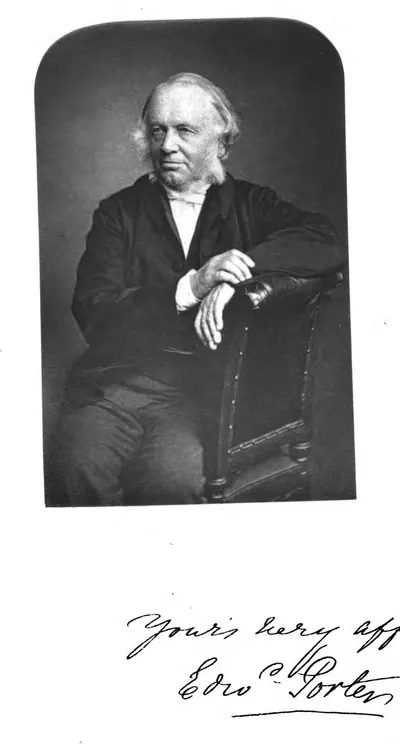
Edward Porter (1810–1882), an English missionary of the London Missionary Society, worked at Visakhapatnam from 1835 to 1844 and at Kadapa from 1844 to 1868. In his years at Kadapa the first Mala group movements began in the villages around, and the mission's out-stations grew from one to twelve.
Alfred Wood
before 1862 CE
Alfred Wood (died 1862), a Tamil-born Anglican catechist at Kadapa, kept a small Christian congregation going with his brother Basil, helped the Malas of Kudravaram in a court case and taught them, and so opened the way for the first SPG baptisms in the Telugu country in 1852.
Henry Whitehead
Henry Whitehead was the Anglican Bishop of Madras from 1899, when his diocese included all the Church of England's Telugu missions. He studied the village goddesses of South India, urged that the education of mass-movement converts come before all other mission work, and supported Bishop Azariah's handing of the Dornakal districts to Indian councils.
John E. Clough
John E. Clough was the American Baptist missionary at Ongole from 1866. With Madiga preachers such as Yerraguntla Periah he led the largest Christian movement of the Telugu country. In the famine of 1877 he took a contract to dig part of the Buckingham Canal with his preachers as overseers, and in 1878 his mission baptised 9,606 people in six months.
T. Y. Darling
T. Y. Darling was a Church Missionary Society missionary in the Krishna district who, after about eleven years without a convert, baptised the Mala leader Pagolu Venkayya at Raghavapuram in 1859. He founded the Raghavapuram mission station and later wrote Venkayya's life (1893).
V. S. Azariah
V. S. Azariah was the first Indian bishop of the Church of England, consecrated in 1912 for the new diocese of Dornakal in the Nizam's state. He handed the running of its districts to Indian councils, chaired J. W. Pickett's survey of Christian mass movements, and in 1936 wrote an open letter to the depressed classes after Ambedkar's call to leave Hinduism.
Yerraguntla Periah
Yerraguntla Periah of Tullakondapadu, near Ongole, was the first Madiga to be baptised by the American Baptist mission, in 1866. A leather trader and a disciple of a woman yoga teacher, he heard the gospel at Eluru, brought his wife and relatives to the faith, and became a leading preacher of the Ongole movement.
Themes
References
Notes (0)
Sources (18)
Spotted an error on this page? Tell us
Last updated: