Christian missions in the Telugu country, 1800–1950
An overview of the Christian missions and Telugu converts from about 1800 to 1950: how Catholic and Protestant missions came, how they worked, why whole communities of Malas and Madigas and later caste Hindus joined the churches, what conversion cost, and how Hindus and governments answered. It includes a table of the main missions, census figures for the Telugu districts and Hyderabad State from 1871 to 1931, and links to the detailed pages and to the lives of converts and missionaries.
Download
Between about 1800 and 1950 Christianity grew from a few scattered congregations into one of the main religions of the Telugu country’s poorest communities.123 Missions came from Europe and America, but most of the preaching and teaching was done by Telugu Christians.45 This page gives a short overview and links to the detailed pages.
About the sources. Most of what we know was written by missionaries, in books meant to raise money and support at home. The Baptist historian David Downie, for example, hoped his book would encourage “the grace of giving”.6 Converts’ own voices are rare. This section balances the mission books with census reports, district manuals and other official records, and says whose view each statement is.
The story in brief
French Jesuits brought Catholic Christianity to the Telugu country in the 18th century.7 Catholic villages of Reddi and Kamma farmers grew up in the Guntur district under French rule after 1752.8 See How the missions came.
The first Protestant mission came to Visakhapatnam in 1805.9 Others followed: at Kadapa in 1822, and from 1836 at Narsapur, Nellore, Machilipatnam, Guntur and Rajahmundry, and later at Kakinada and in Hyderabad State.1011121314 For decades they made few converts. The American Baptists of Nellore thought three times of giving up.15
Then whole communities began to come. From 1851 the Malas of the Kadapa district, from 1859 the Malas of the Krishna villages, and from 1866 the Madigas around Ongole joined the churches in groups.10165 After the famine of 1876–78, the Ongole mission baptised 9,606 people in six months.17 See Mass movements.
The missions worked through village schools, Indian teachers, preaching tours, hospitals and famine relief.1819 See How the missions worked. After 1900 the largest movements were in the Nizam’s state, around Dornakal and Medak, and from the 1920s caste Hindu (Sudra) groups also joined.2021
Why people converted, and what it cost them, is told in Why people converted.
How caste survived inside the churches is told in Caste and the church.
How Hindus and governments answered is told in Responses to the missions.
The main missions
| Mission | From | First Telugu station | Main area | Main communities reached |
|---|---|---|---|---|
| French Jesuits, later Mill Hill and other Catholic priests | France, later Britain | Bukkapuram (by 1733) | Guntur, Palnadu, Nellore border | Reddi and Kamma farmers, later Malas7822 |
| London Missionary Society (LMS) | Britain | Visakhapatnam (1805), Kadapa (1822) | Visakhapatnam, Kadapa, Kurnool | Malas, later Sudras91023 |
| Godavari Delta Mission | Britain (independent) | Narsapur (1837) | Godavari delta | shoe-making castes1124 |
| American Baptists | USA | Nellore (1840), Ongole (1866) | Nellore, Ongole, Kurnool, Hyderabad State | mostly Madigas122526 |
| Church Missionary Society (CMS) | Britain | Machilipatnam (1841) | Krishna and Godavari, Dummagudem, Khammam | Brahmins (in its school), Malas, later Madigas and Sudras132728 |
| Lutherans | Germany and USA | Guntur (1842), Rajahmundry (1844) | Guntur, Krishna, Godavari | Malas and Madigas1429 |
| SPG (Anglican) | Britain | Kudravaram (1852) | Kadapa, Kurnool | Malas3031 |
| Arcot Mission | USA | Palamaner (1859), Madanapalle (1863) | Telugu border of North Arcot and Kadapa | not given in the sources used32 |
| Canadian Baptists | Canada | Kakinada (1874) | Godavari, Visakhapatnam, Krishna | Malas at first, many Madigas from 1884; some Sudras by the 1930s333435 |
| Hermannsburg Lutherans | Germany | Nellore district (1866) | Nellore, Kadapa, North Arcot | not given in the sources used34 |
| Wesleyan Methodists | Britain | Hyderabad State (1880) | Medak, Karimnagar, Nizamabad | Malas and Madigas, later Kapus and others3620 |
| American Methodists | USA | Secunderabad (1874) | Gulbarga, Raichur, Bidar | not given in the sources used3738 |
| Dornakal mission (Indian Missionary Society) | Tirunelveli, India | Dornakal (1904) | Warangal, Nalgonda | Malas and Madigas, later Kammas, Reddis and others3920 |
Numbers from the census
Census figures count everyone who called himself or herself a Christian, children included, so they differ from the missions’ own counts.38 The two Madras tables below use different district boundaries. The 1881 census has no Guntur district, while the 1921 report gives Guntur its own figures back to 1891.140
Christians in the Telugu districts of Madras, 1871 and 1881 (old boundaries)1
| District | 1871 | 1881 |
|---|---|---|
| Vizagapatam | 2,185 | 3,410 |
| Godavari | 1,483 | 3,623 |
| Kistna (then including Guntur) | 7,670 | 36,194 |
| Nellore | 3,912 | 20,794 |
| Cuddapah | 4,973 | 6,067 |
| Kurnool | 3,855 | 11,464 |
| Bellary | 5,545 | 4,997 |
| Total of these districts | 29,623 | 86,549 |
Christians in the Telugu districts of Madras, 1891–1921 (1921 boundaries)40
| District | 1891 | 1901 | 1911 | 1921 |
|---|---|---|---|---|
| Vizagapatam | 3,014 | 4,191 | 4,983 | 5,656 |
| Godavari | 2,871 | 4,768 | 8,240 | 14,237 |
| Kistna | 36,107 | 29,186 | 49,863 | 91,087 |
| Guntur | 70,470 | 101,225 | 123,707 | 153,510 |
| Nellore | 34,875 | 36,249 | 44,298 | 52,496 |
| Cuddapah | 9,103 | 18,196 | 22,408 | 25,739 |
| Kurnool | 22,735 | 34,052 | 42,068 | 53,656 |
| Bellary | 5,282 | 5,066 | 4,481 | 3,532 |
| Anantapur | 1,853 | 2,832 | 3,636 | 4,923 |
| Chittoor | 2,535 | 3,864 | 4,558 | 6,916 |
| Total of these districts | 188,845 | 239,629 | 308,242 | 411,752 |
Christians in Hyderabad State, 1881–19312
| Year | All Christians | Indian Christians |
|---|---|---|
| 1881 | 13,614 | 7,642 |
| 1891 | 20,429 | 12,661 |
| 1901 | 22,996 | 15,357 |
| 1911 | 54,296 | 45,909 |
| 1921 | 62,856 | 56,729 |
| 1931 | 151,382 | 145,385 |
The totals in the Madras tables are sums of the district figures; the census reports themselves give district figures only. The 1931 report for Madras in the library has no district table of Christians, so the series stops in 1921. In 1931, 83 in every hundred Christians of Hyderabad State lived in its Telangana districts.2
The missions kept their own counts as well. The Protestant missions’ Statistical Tables for 1890 found that Indian Protestant Christians in the whole Madras Presidency had grown by only 21 or 22 per cent since 1881 (the editors give both figures).41 The editors noted that this included “the wonderful work among the Telugus”, and that the American Baptist Missionary Union alone had grown by 83 per cent.41 Communicants (full members who took communion) in the Presidency had grown by 55 per cent.42
M. A. Sherring’s history of 1884 gives the missions’ own totals for two groups of Telugu districts, for 1871 and 1881.4344 They count Protestant Indian Christians only, and the second group also includes the Ganjam district.4344
Protestant missions in two groups of districts, 1871 and 1881 (mission figures, from Sherring)434445
| Kadapa, Kurnool, Nellore 1871 | 1881 | Krishna, Godavari, Visakhapatnam, Ganjam 1871 | 1881 | |
|---|---|---|---|---|
| Protestant Indian Christians | 13,798 | 64,933 | 6,109 | 17,221 |
| Communicants | 2,828 | 21,611 | 1,449 | 4,760 |
| Ordained Indian ministers | 3 | 49 | 6 | 9 |
| Pupils in mission schools | 2,062 | 4,854 | 2,891 | 6,573 |
Converts and leaders
Some of the people of this story have their own pages:
See also Dalit history and Religion.
Where the sources disagree
How many Christians were there? In 1921 the missions in Hyderabad State gave their numbers as 65,828, but the census counted 56,729 Indian Christians. The census writer thought the missions had generally over-estimated.38
Why did people convert? Hibbert-Ware, a missionary, wrote that they were drawn by what Christianity had done for their relatives.46 The 1901 Madras census writer said they had “little to lose” and much to gain in education and respect.4748 Critics, among them Gandhi, spoke as if the motives were worldly, as Pickett reported in 1933.49 The fuller argument is on Why people converted.
Footnotes
-
Imperial Census of 1881: Operations and Results in the Presidency of Madras, Vol. I (1883), p. 45, Table No. 26 (archive.org (opens in a new tab)). ↩ ↩2 ↩3
-
Census of India 1931, Vol. XXIII: H.E.H. the Nizam’s Dominions, Part I, Report (1933), p. 241 (archive.org (opens in a new tab)). ↩ ↩2 ↩3
-
V. S. Azariah, An Open Letter to our Countrymen who are Classified as Belonging to the Depressed Classes (1936), p. 3 (archive.org (opens in a new tab)). Public domain in India. ↩
-
Hibbert-Ware, Christian Missions in the Telugu Country (1912), p. 211 (archive.org (opens in a new tab)). ↩
-
Downie, The Lone Star (1893), p. 62 (archive.org (opens in a new tab)). ↩ ↩2
-
David Downie, The Lone Star: The History of the Telugu Mission of the American Baptist Missionary Union (1893), p. 5, preface (archive.org (opens in a new tab)). ↩
-
Gordon Mackenzie, A Manual of the Kistna District (1883), p. 276 (archive.org (opens in a new tab)). ↩ ↩2
-
Mackenzie, Kistna District (1883), p. 278 (archive.org (opens in a new tab)). ↩ ↩2
-
Joseph Mullens, Missions in South India, Visited and Described (1854), p. 10 (archive.org (opens in a new tab)). ↩ ↩2
-
Hibbert-Ware, Christian Missions in the Telugu Country (1912), p. 197 (archive.org (opens in a new tab)). ↩ ↩2 ↩3
-
E. M. Badley (ed.), Indian Missionary Directory and Memorial Volume (1886), p. 211 (archive.org (opens in a new tab)). ↩ ↩2
-
Downie, The Lone Star (1893), p. 33 (archive.org (opens in a new tab)). ↩ ↩2
-
Mackenzie, Kistna District (1883), p. 285 (archive.org (opens in a new tab)). ↩ ↩2
-
Mackenzie, Kistna District (1883), p. 289 (archive.org (opens in a new tab)). ↩ ↩2
-
Downie, The Lone Star (1893), pp. 38, 45, 60 (archive.org (opens in a new tab)). ↩
-
Hibbert-Ware, Christian Missions in the Telugu Country (1912), p. 190 (archive.org (opens in a new tab)). ↩
-
Downie, The Lone Star (1893), p. 111 (archive.org (opens in a new tab)). ↩
-
Hibbert-Ware, Christian Missions in the Telugu Country (1912), p. 97 (archive.org (opens in a new tab)). ↩
-
Hibbert-Ware, Christian Missions in the Telugu Country (1912), p. 203 (archive.org (opens in a new tab)). ↩
-
Census of India 1931, Vol. XXIII, Part I (1933), p. 242 (archive.org (opens in a new tab)). ↩ ↩2 ↩3
-
J. Waskom Pickett, Christian Mass Movements in India (1933), p. 297 (archive.org (opens in a new tab)). All rights reserved; paraphrased. ↩
-
Mackenzie, Kistna District (1883), p. 284 (archive.org (opens in a new tab)). ↩
-
Hibbert-Ware, Christian Missions in the Telugu Country (1912), p. 199 (archive.org (opens in a new tab)). ↩
-
Mullens, Missions in South India (1854), p. 12 (archive.org (opens in a new tab)). ↩
-
Hibbert-Ware, Christian Missions in the Telugu Country (1912), p. 201 (archive.org (opens in a new tab)). ↩
-
Hibbert-Ware, Christian Missions in the Telugu Country (1912), p. 204 (archive.org (opens in a new tab)). ↩
-
Hibbert-Ware, Christian Missions in the Telugu Country (1912), p. 185 (archive.org (opens in a new tab)). ↩
-
Hibbert-Ware, Christian Missions in the Telugu Country (1912), p. 193 (archive.org (opens in a new tab)). ↩
-
F. R. Hemingway, Madras District Gazetteers: Godavari, Vol. I (1907), p. 39 (archive.org (opens in a new tab)). ↩
-
G. Hibbert-Ware, Christian Missions in the Telugu Country (1912), p. 54 (archive.org (opens in a new tab)). ↩
-
Hibbert-Ware, Christian Missions in the Telugu Country (1912), p. 83 (archive.org (opens in a new tab)). ↩
-
Jacob Chamberlain, Sketch of the Arcot Mission (1902), p. 23 (archive.org (opens in a new tab)). ↩
-
John Craig, “Pastor Thomas Gabriel”, in Telugu Trophies (1924), p. 10 (archive.org (opens in a new tab)). ↩
-
J. P. Jones, Volume in Commemoration of the Opening of the 20th Century by South India Protestant Missions (1900), p. 30 (HathiTrust (opens in a new tab)). ↩ ↩2
-
Pickett, Christian Mass Movements (1933), p. 299, on Sudra converts in the Canadian Baptist and British Methodist fields (archive.org (opens in a new tab)). Paraphrased. ↩
-
Imperial Gazetteer of India: Hyderabad State (1909), p. 25 (archive.org (opens in a new tab)). ↩
-
J. E. Scott, The India Mission of the Methodist Episcopal Church (1906), p. 40 (archive.org (opens in a new tab)). ↩
-
Census of India, 1921, Vol. XXI: Hyderabad State, Part I, Report (1923), p. 92 (archive.org (opens in a new tab)). ↩ ↩2 ↩3
-
Hibbert-Ware, Christian Missions in the Telugu Country (1912), p. 205 (archive.org (opens in a new tab)). ↩
-
Census of India, 1921, Vol. XIII: Madras, Part I, Report (1922), p. 66, subsidiary table “Christians: number and variations” (archive.org (opens in a new tab)). ↩ ↩2
-
Statistical Tables of Protestant Missions in India, Burma and Ceylon (1892), returns for 1890, p. xiii (HathiTrust (opens in a new tab)). ↩ ↩2
-
Statistical Tables of Protestant Missions (1892), p. xiv (HathiTrust (opens in a new tab)). ↩
-
M. A. Sherring, The History of Protestant Missions in India, 1706–1881 (1884), p. 412 (archive.org (opens in a new tab)). ↩ ↩2 ↩3
-
Sherring, Protestant Missions in India (1884), p. 422 (archive.org (opens in a new tab)). ↩ ↩2 ↩3
-
Sherring, Protestant Missions in India (1884), p. 423 (archive.org (opens in a new tab)). ↩
-
Hibbert-Ware, Christian Missions in the Telugu Country (1912), p. 213 (archive.org (opens in a new tab)). ↩
-
W. Francis, Census of India, 1901, Vol. XV: Madras, Part I, Report (1902), p. 41 (archive.org (opens in a new tab)). ↩
-
Francis, Census of India, 1901, Vol. XV, Part I (1902), p. 42 (archive.org (opens in a new tab)). ↩
-
J. Waskom Pickett, Christian Mass Movements in India (1933), pp. 155–156 (archive.org (opens in a new tab)). All rights reserved; paraphrased. ↩
Related
People
Purushottam Chaudhari
1803–1890 CE
Purushottam Chaudhari (1803–1890), born near Parlakimedi, was a devout Vaishnava scholar who became a Christian in 1833 after reading a tract. He threw away his sacred thread, wrote a Telugu tract against caste and many Telugu Christian hymns, and preached for fifty-four years for the English Baptist and London missions in the northern Telugu districts.
Pagolu Venkayya
c. 1809–1891 CE
Pagolu Venkayya (about 1809–1891), a Mala leader of Raghavapuram in the Krishna district, was baptised by the CMS missionary T. Y. Darling in 1859. His search for 'the great God', his baptism with his family and friends, and his preaching began the Christian movement among the Malas of the Krishna and Godavari villages.
Edward Porter
1810–1882 CE
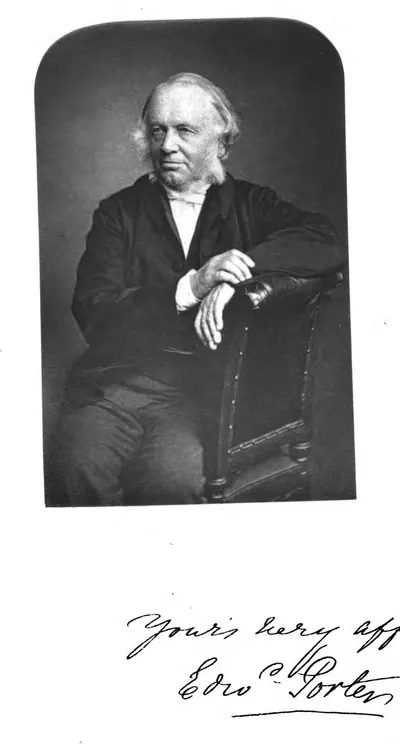
Edward Porter (1810–1882), an English missionary of the London Missionary Society, worked at Visakhapatnam from 1835 to 1844 and at Kadapa from 1844 to 1868. In his years at Kadapa the first Mala group movements began in the villages around, and the mission's out-stations grew from one to twelve.
Thomas Gabriel
1837–1875 CE
Thomas Gabriel (1837–1875), born Taleru Marayya at Machilipatnam, was a government telegraph clerk who gave up his post in 1869 to preach in the villages around the Kolleru lake. His appeal brought the Canadian Baptists to Kakinada in 1874, and most of their first converts came from his work.
Anna S. Kugler
1856 CE
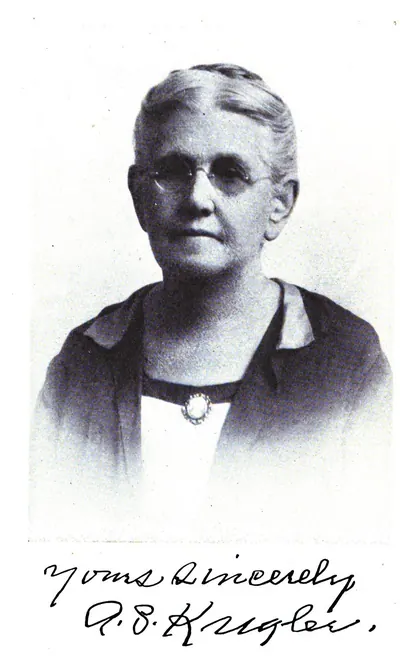
Anna Sarah Kugler (born 1856), an American woman doctor, reached Guntur in 1883 for the Lutheran mission and began its medical work for women and children, opening a dispensary in 1886 and planning the women's hospital whose first building opened in 1893.
Sarahamma
1860 CE
Sarahamma, born in 1860 to Hindu parents in the Telugu country, read the Gospels in secret as a young wife, was baptised in Rangoon with her husband, and after his death worked for about sixteen years as a Bible woman among the Telugus of Rangoon. Her short first-person account was printed in 1910.
A. V. Timpany
before 1885 CE
A. V. Timpany (died 1885) was a Canadian Baptist missionary who opened the American Baptist station at Ramapatnam in 1870 and its theological seminary in 1872, then led the Canadian Baptist mission at Kakinada from 1879. He treated the sick, argued over the Telugu Bible's word for baptism, and died of cholera at Kakinada in 1885.
Alfred Wood
before 1862 CE
Alfred Wood (died 1862), a Tamil-born Anglican catechist at Kadapa, kept a small Christian congregation going with his brother Basil, helped the Malas of Kudravaram in a court case and taught them, and so opened the way for the first SPG baptisms in the Telugu country in 1852.
Henry Watson Fox
before 1848 CE
Henry Watson Fox (died 1848) came to Machilipatnam with Robert Noble in 1841 to found the Church Missionary Society's Telugu mission. He preached in the town and began its tours to the village festivals. He went home in 1845 when his wife died, came back late in 1846, and left India for good early in 1848. He died in England on 14 October 1848. An address he gave at Rugby School led to a fund that supported a master at Noble's school.
Henry Whitehead
Henry Whitehead was the Anglican Bishop of Madras from 1899, when his diocese included all the Church of England's Telugu missions. He studied the village goddesses of South India, urged that the education of mass-movement converts come before all other mission work, and supported Bishop Azariah's handing of the Dornakal districts to Indian councils.
J. C. F. Heyer
before 1873 CE
J. C. F. Heyer ('Father Heyer', died 1873) was the American Lutheran missionary who founded the Guntur mission in 1842. The Collector gave him a house and the town's English school; he opened Telugu schools, gave alms to the poor and preached. The Lutheran church he began grew to thousands of members in the Guntur and Palnadu villages.
Jacob Chamberlain
Jacob Chamberlain was a missionary of the Arcot Mission of the Reformed Church in America who led its Telugu work, first at Palamaner from 1861 and then at Madanapalle from 1863. In 1886 he gave an address describing how poor Telugu Christians gave to their churches.
John E. Clough
John E. Clough was the American Baptist missionary at Ongole from 1866. With Madiga preachers such as Yerraguntla Periah he led the largest Christian movement of the Telugu country. In the famine of 1877 he took a contract to dig part of the Buckingham Canal with his preachers as overseers, and in 1878 his mission baptised 9,606 people in six months.
John McLaurin
John McLaurin was a Canadian Baptist missionary who arrived in 1870 to work with the American Baptists at Ramapatnam and Ongole, and in 1874 became the first missionary of the Canadian Baptist mission at Kakinada, after Thomas Gabriel's appeal. Downie praised his gift for Telugu.
John Rangiah
John Rangiah, son of the Nellore Baptist preacher T. Rangiah, was a school headmaster at Nellore who in 1903 went to Natal in South Africa as a missionary to the Telugu emigrants there. He was supported by the Telugu Baptist Missionary Society and was called the first Telugu foreign missionary.
Lyman Jewett
Lyman Jewett was the American Baptist missionary who kept the Telugu mission alive when its society thought of closing it. He prayed with Indian Christians on the hill above Ongole on New Year's Day 1854, refused in 1862 to give up the mission, and in 1866 baptised Yerraguntla Periah, the first Madiga convert. He later worked on Telugu Bible revision at Madras.
Manchala Ratnam
Manchala Ratnam was Robert Noble's first Brahmin convert at Machilipatnam. He was baptised in 1852, after a magistrate ruled that he was old enough to choose. Trained by Noble, he became a CMS pastor, a teacher at Vijayawada, a reviser of the Telugu Prayer Book and Bible, the first secretary of the Telugu church council, and acting principal of the mission's training institution.
Robert Noble
before 1865 CE
Robert Noble (died 1865) was the Church Missionary Society missionary who opened a school for high-caste boys at Machilipatnam in 1843. About twenty-five of his pupils, mostly Brahmins, became Christians, and several became pastors. The first two, in 1852, set off a riot in the town and emptied his school. He refused for years to admit 'pariah' boys to his school, and the Brahmin officials of the town answered his conversions with a Hindu school of their own.
Samuel S. Day
Samuel S. Day was the first missionary of the American Baptists to the Telugus. Appointed in 1835, he worked at Visakhapatnam, Srikakulam and Madras before settling at Nellore in 1840, where he baptised the first Telugu convert of the mission in 1841. Ill health forced him home in 1846 and finally in 1853.
T. Y. Darling
T. Y. Darling was a Church Missionary Society missionary in the Krishna district who, after about eleven years without a convert, baptised the Mala leader Pagolu Venkayya at Raghavapuram in 1859. He founded the Raghavapuram mission station and later wrote Venkayya's life (1893).
V. S. Azariah
V. S. Azariah was the first Indian bishop of the Church of England, consecrated in 1912 for the new diocese of Dornakal in the Nizam's state. He handed the running of its districts to Indian councils, chaired J. W. Pickett's survey of Christian mass movements, and in 1936 wrote an open letter to the depressed classes after Ambedkar's call to leave Hinduism.
William Bowden
before 1876 CE
William Bowden (died 1876), an English tradesman from Barnstaple, founded the independent Godavari Delta Mission at Narsapur with George Beer, arriving in 1836. He spoke Telugu fluently, worked among leather-working people, and preached to workers on the Godavari anicut. Yerraguntla Periah heard him at Palakollu before becoming the first Madiga convert at Ongole.
Yerraguntla Periah
Yerraguntla Periah of Tullakondapadu, near Ongole, was the first Madiga to be baptised by the American Baptist mission, in 1866. A leather trader and a disciple of a woman yoga teacher, he heard the gospel at Eluru, brought his wife and relatives to the faith, and became a leading preacher of the Ongole movement.
Institutions
Ramapatnam Theological Seminary
1872 CE
The American Baptist mission's theological seminary at Ramapatnam, on the coast between Nellore and Ongole, opened in April 1872 to train Telugu preachers. Funded by an endowment that John Clough raised in America, it paid its students a small allowance, taught the Bible and preaching, and sent its students to preach in the villages around.
Guntur Mission Hospital
1886 CE
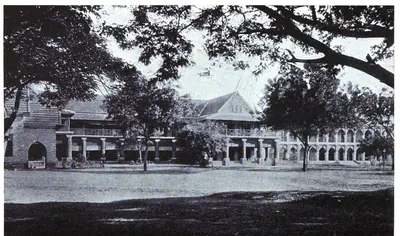
The American Lutheran mission's medical work for women and children at Guntur, begun by Dr Anna S. Kugler with a dispensary in 1886. Dispensaries followed in other parts of Guntur and at Mangalagiri, and a women's hospital was planned from 1885 with money raised by Lutheran women in America; its first building opened in 1893.
Themes
How the missions came, 1700–1912
The Christian missions of the Telugu country, society by society and in time order: the French Jesuits of the 18th century, the London Missionary Society at Visakhapatnam (1805) and Kadapa (1822), the Godavari Delta Mission (1836), the American Baptists at Nellore (1840) and Ongole (1866), the Church Missionary Society at Machilipatnam (1841), the Lutherans at Guntur (1842) and Rajahmundry (1844), the SPG in Kadapa and Kurnool (1852), the Arcot Mission's Telugu stations (1859), the Canadian Baptists at Kakinada, the Wesleyans and American Baptists in Hyderabad State, and the Indian-run Dornakal mission (1904). It shows how often Indian Christians opened the way.
How the missions worked: preaching, schools, hospitals and relief
The methods of the Christian missions in the Telugu country in the 19th and early 20th centuries: preaching at festivals and in streets, touring the villages by cart and tent, tracts and the Telugu Bible, schools from Noble's high-caste school to Mala and Madiga village schools, boarding and training schools, hospitals, zenana visiting and Bible women, famine relief on the Buckingham Canal, help in courts and with officials, and the Indian teachers, catechists and pastors who did most of the daily work.
Mass movements: when whole communities joined the churches
The group conversions of the Telugu country from 1851 to the 1930s: the Malas of Kadapa and Kurnool, the CMS villages that followed Pogulu Venkayya from 1859, the Madiga movement at Ongole from Yerraguntla Periah (1866) to the 9,606 baptisms of 1878, the Lutheran and Canadian Baptist fields, the Dornakal and Medak movements in Hyderabad State, and the caste Hindu (Sudra) converts of the 1920s and 1930s, with the numbers the sources give and who gives them.
Why people converted, and what it cost them
The reasons given for conversion to Christianity in the Telugu country, 1830s–1936, kept apart by who gives them: the converts themselves (Venkayya, the Ongole Madigas of 1878, Purushottam Chaudhari, Sarahamma, Pickett's informants, Azariah's open letter of 1936), the missionaries, the census writers and other officials, and the critics. It then describes what conversion cost: loss of caste and family, refusal of water and work, attacks, court cases and people who went back.
Caste and the church
How caste followed converts into the Telugu churches, 1700s–1930s: Catholic villages that kept caste, the Protestant debates of 1833, 1858 and 1867–68, the Brahmin converts of Robert Noble's school at Machilipatnam and their effect on the school, the quarrel over admitting Malas and Madigas to Noble's school, the distance between Mala and Madiga Christians, and the caste Hindu converts of the 1920s and 1930s who took communion from pastors of Mala and Madiga birth.
Responses to the missions
How Hindus, Muslims, reformers and governments answered the Christian missions in the Telugu country, 1840s–1930s: rumours, protests, riots and court cases; parents who withdrew their sons and the Hindu school founded at Machilipatnam; Hindus who gave relief, money and friendship; the Arya Samaj and the readmission of converts in Hyderabad; and the British government's policy of religious neutrality and grants to mission schools, with the views of the census writers.
References
Notes (0)
Sources (21)
Spotted an error on this page? Tell us
Last updated: