Falaknuma Palace
Palace on a hill south of the old city of Hyderabad. The minister Sir Vikar-ul-Umara built it, at a cost said to have been 35 lakhs of rupees, and the Nizam Mahbub Ali Khan bought it in 1897. Campbell (1898) describes its Grecian front of Corinthian columns, its marble vestibule and staircase, and its Louis XIV reception room. The Imperial Gazetteer (1909) thought no building in Hyderabad equalled it. Viceroys stayed there on their visits, and Mir Osman Ali Khan gave his birthday banquets there.
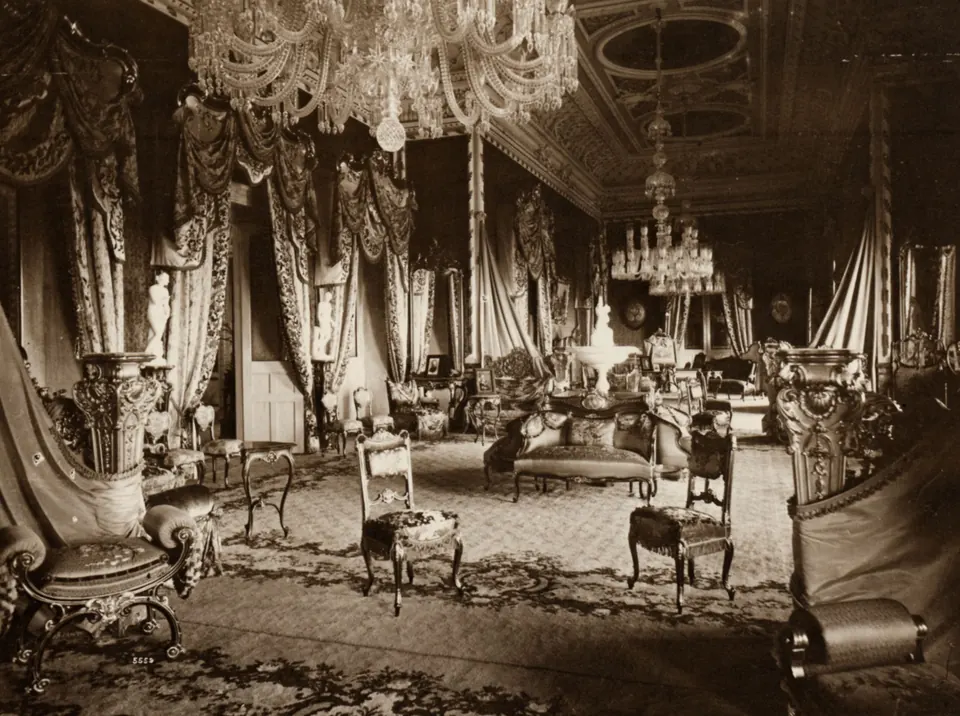
The Falaknuma palace stands on a hill in the southern suburbs of Hyderabad, looking over the old city. The Imperial Gazetteer of 1909 calls it “a very fine palace”.1 It was built “by the late Sir Vikar-ul-Umara on the summit of a hill in the southern suburb of the city, at a cost, it is said, of 35 lakhs”.1 The gazetteer says that “the view of the city and suburbs from this palace is most striking”.1 It adds that “no building in Hyderabad equals it in point of architecture or design”.1 See the Asaf Jahis.
Builder
Sir Vikar-ul-Umara was one of the three paigah nobles (holders of estates granted for keeping troops) of the Shams-ul-Umara family.23 This family was related to the Nizams by marriage.23 He was minister of the state from 1893 to 1901.23
Campbell wrote in 1898, while Vikar-ul-Umara was still minister.4 He calls Falaknuma “the fine new palace built by His Excellency the present Prime Minister” and “one of the finest in India”.4 The approach zigzagged up the hill for about a mile, with a guarded gateway half way.4
Campbell describes a Grecian façade (front).4 In it a double row of Corinthian columns carried a pediment bearing the minister’s coat of arms.4 Inside were these rooms:4
- a cool marble vestibule with a fountain of cherubs and dolphins4
- a marble staircase hung with portraits of the Nizam, Salar Jang and past ministers4
- a state reception room “decorated after the exquisite style of Louis XIV”4
He also quotes an account of a ball the minister gave there on 23 September 1896.4 That was the day Queen Victoria’s reign became the longest of any British monarch.4 His book includes photographs of the gateway, the palace, the vestibule and the reception room.56
Palace of the Nizams
The Imperial Gazetteer says Falaknuma “was purchased by the Nizam in 1897”, that is, by Mahbub Ali Khan.1 K. Krishnaswamy Mudiraj’s Pictorial Hyderabad (1929) repeats the cost of thirty-five lakhs and the purchase in 1897.7 He calls it “perhaps, the most magnificent palace in India”.7 He says that King George V and the Prince of Wales had been entertained there.7 The Viceroy stayed there on his visits to Hyderabad.7
Mir Osman Ali Khan gave his birthday dinners at “the Falaknuma Castle” in July 1914, 1915 and 1917.8910 The Resident made his speeches at these dinners.8910 Mudiraj reproduces a photograph of “the Drawing Room of the Falaknuma Palace, decorated by Nawab Sir Vicar-ul-Umra Bahadur”.11
Footnotes
-
Imperial Gazetteer of India: Hyderabad State (1909), p. 117 (archive.org (opens in a new tab)). ↩ ↩2 ↩3 ↩4 ↩5
-
Imperial Gazetteer: Hyderabad (1909), p. 294 (archive.org (opens in a new tab)). ↩ ↩2 ↩3
-
C. U. Aitchison, A Collection of Treaties, Engagements and Sanads, Vol. IX (1909), p. 15 (archive.org (opens in a new tab)). ↩ ↩2 ↩3
-
Campbell, Glimpses of the Nizam’s Dominions (1898), p. 225 (archive.org (opens in a new tab)). ↩ ↩2 ↩3 ↩4 ↩5 ↩6 ↩7 ↩8 ↩9 ↩10 ↩11
-
A. Claude Campbell, Glimpses of the Nizam’s Dominions (1898), p. 224 (archive.org (opens in a new tab)). ↩
-
Campbell, Glimpses of the Nizam’s Dominions (1898), p. 226 (archive.org (opens in a new tab)). ↩
-
K. Krishnaswamy Mudiraj, Pictorial Hyderabad, Vol. I (1929), p. 14 (archive.org (opens in a new tab)). ↩ ↩2 ↩3 ↩4
-
Mudiraj, Pictorial Hyderabad (1929), p. 86 (archive.org (opens in a new tab)). ↩ ↩2
-
Mudiraj, Pictorial Hyderabad (1929), p. 87 (archive.org (opens in a new tab)). ↩ ↩2
-
Mudiraj, Pictorial Hyderabad (1929), p. 90 (archive.org (opens in a new tab)). ↩ ↩2
-
Mudiraj, Pictorial Hyderabad (1929), p. 173 (archive.org (opens in a new tab)). ↩
Photos
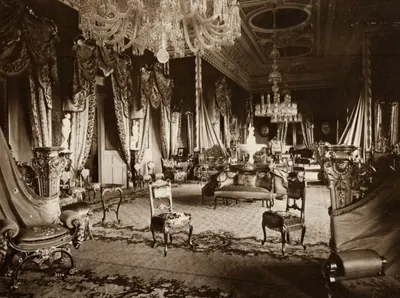 Dayal, Raja Lala Deen - Inneres des Falaknuma Schlosses (Zeno Fotografie)Historic photograph · 1890
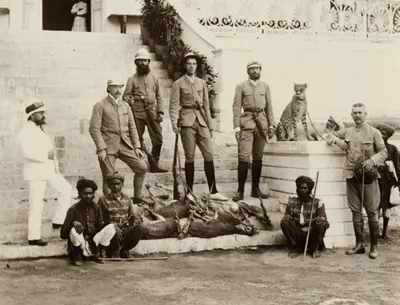 Dayal, Raja Lala Deen - Jagdgesellschaft. H.I.H. der Großfürst Alexander von Russland auf den Treppen des Falaknuma Schlosses (Zeno Fotografie)Historic photograph · 1891
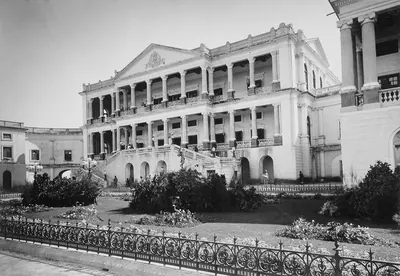 Falaknuma 1900Historic photograph · 1900
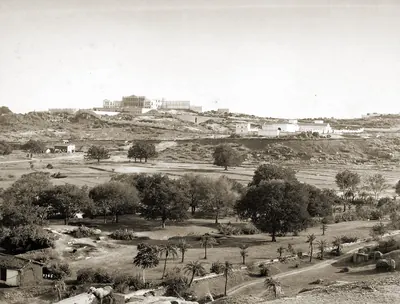 Faluk-numa Palace, Hyderabad, IndiaHistoric photograph · 1880
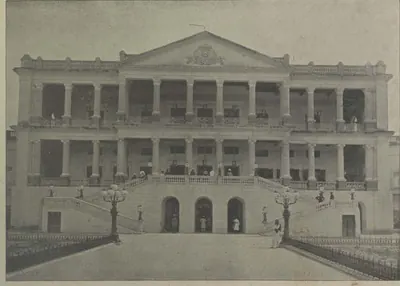 Hyderabad: "Faluknama Palace" (Campbell 1898, p. 224)Historic photograph · 1898
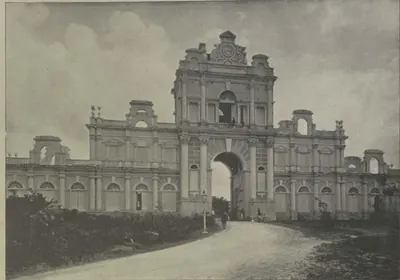 Hyderabad: "Gateway, Faluknama Palace" (Campbell 1898, p. 224)Historic photograph · 1898
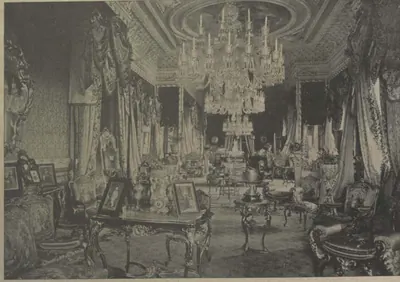 Hyderabad: "Reception Room, Faluknama Palace" (Campbell 1898, p. 226)Historic photograph · 1898
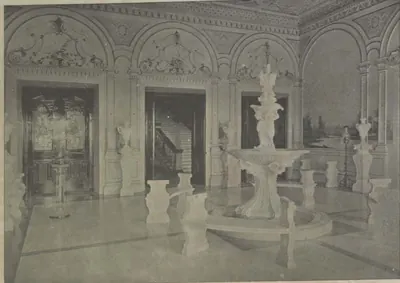 Hyderabad: "Vestibule, Faluknama Palace" (Campbell 1898, p. 226)Historic photograph · 1898
References
Notes (0)
Sources (4)
Spotted an error on this page? Tell us
Last updated: