Mir Osman Ali Khan (Asaf Jah VII)
Seventh and last ruling Nizam of Hyderabad (1911–1948), son of Mahbub Ali Khan. He ruled directly from 1914 to 1919 and then through an Executive Council. His reign brought Osmania University (founded by his farman of 1917, with Urdu as the medium of teaching), the Osman Sagar and Himayat Sagar reservoirs built after the Musi flood of 1908, the City Improvement Board, the new High Court and the Osmania General Hospital. His government ended in September 1948, when the Indian Army entered the state and a military governor took charge.
Mir Osman Ali Khan was the seventh and last ruling Nizam of the Asaf Jahi dynasty. He was the son of Mahbub Ali Khan, and was proclaimed Nizam on the afternoon of his father’s death, 31 August 1911.1 The 1931 census of the state opens with his portrait.2
Early life and coming to the throne
Mudiraj’s Pictorial Hyderabad (1929) dates his birth to 6 April 1886. The treaty collection of 1909 gives 21 May 1886.34 Both say that his English tutor from 1899 was Brian Egerton. Mudiraj adds that he was taught Urdu and Persian by other tutors.43 As a prince he toured Aurangabad, Warangal and Gulbarga, and attended the Delhi Darbar of 1903 with his father.43
He was made a Knight Grand Commander of the Star of India (a high British honour) on 12 December 1911.5 In late 1914 the minister, Salar Jang III, resigned for reasons of health. Mudiraj says the Nizam then “took the reins of government in his own hands”.67 He governed directly until a Council of State was formed in November 1919.67
During the First World War his state sent the 1st Hyderabad Imperial Service Cavalry to Egypt in 1914.6 It also gave large sums in cash and war loans.6
Works of the reign
The Imperial Gazetteer describes the great flood of the Musi at the end of September 1908.8 It carried away arches of three bridges and flooded much of the city on both banks.8 The administration report for 1912–13 records that the foundation stone of the Musi reservoir was laid by the Nizam on 18 Ardibehisht 1322 Fasli (revenue year).9
The reservoir belonged to a project drawn up after the flood by M. Visvesvaraya, later Dewan of Mysore.9 The project had “the double object of protecting the city from floods and supplying water to Hyderabad and Secunderabad”.9 Mudiraj says the dam at Gandipet, ten miles up the river, cost Rs 58,40,000, and its lake was named Osman Sagar. A second dam, on the Isi, cost Rs 91,75,000.10 It was named Himayat Sagar after the heir apparent.10 See Osman Sagar.
Mudiraj also records that a City Improvement Board was set up in 1914 to improve the city and build healthy housing.10 During the years of direct rule, he says, the streets were widened.11 He writes that “a new High Court, a noble edifice and one of the best buildings in India in its architectural beauty” was built.11 It cost “twenty lakhs of rupees”.11 See the High Court.
The administration report for 1924–25 records the completion that year of the Himayat Sagar project and of the Osmania General Hospital.1213
Osmania University
By a farman (royal order) of 4 Rajab AH 1335 (26 April 1917; AH is the Islamic way of counting years), the Nizam ordered the founding of a university. It was “to be called the Osmania University of Hyderabad, in commemoration of my accession to the throne”. Urdu was to be the medium of higher education, “but that a knowledge of English as a language should at the same time be deemed compulsory for all students”.1415
The 1931 census dates the university’s charter to 1918.16 It calls Urdu “the cultural and official language of the State”, although Urdu speakers were a minority.16 Telugu, the census found, was the language of nearly half the population.17
Mudiraj explains the choice of Urdu as the one vernacular (local language) understood more or less throughout the dominions.15 He notes the translation bureau set up to provide books in it.15 In 1932–33 the government was spending on roads, water supply and power for the university’s new site.18
The end of his rule
Mir Osman Ali Khan’s government ended in September 1948, when the Indian Army entered the state and a military governor took charge.19 The state’s administration report for 1948–50 describes the new order. Its account, summarised here, is that from the middle of September 1948 the state was ruled by a Military Governor and a cabinet of five.20 The cabinet was nominated by the Government of India’s Ministry of States.20 A Chief Minister replaced the Military Governor on 1 December 1949.20
The report also records the integration of the Nizam’s own estates, the sarf-i-khas, from February 1949.2122 It records the Hyderabad Jagir Abolition Regulation of 15 August 1949 too.2122 The entry of the Indian Army, the Nizam’s surrender and the Telangana armed struggle of the same years are described on the Movements page.
Footnotes
-
K. Krishnaswamy Mudiraj, Pictorial Hyderabad, Vol. I (1929), p. 82 (archive.org (opens in a new tab)). ↩
-
Census of India 1931, Vol. XXIII: H.E.H. the Nizam’s Dominions, Part I: Report (1933), frontispiece (archive.org (opens in a new tab)). ↩
-
Mudiraj, Pictorial Hyderabad (1929), p. 84 (archive.org (opens in a new tab)). ↩ ↩2 ↩3
-
C. U. Aitchison, A Collection of Treaties, Engagements and Sanads, Vol. IX (1909), p. 18 (archive.org (opens in a new tab)). ↩ ↩2 ↩3
-
Mudiraj, Pictorial Hyderabad (1929), p. 86 (archive.org (opens in a new tab)). ↩
-
Mudiraj, Pictorial Hyderabad (1929), p. 88 (archive.org (opens in a new tab)). ↩ ↩2 ↩3 ↩4
-
Mudiraj, Pictorial Hyderabad (1929), p. 229 (archive.org (opens in a new tab)). ↩ ↩2
-
Imperial Gazetteer of India: Hyderabad State (1909), p. 119 (archive.org (opens in a new tab)). ↩ ↩2
-
Report on the Administration of H.H. the Nizam’s Dominions for 1322 Fasli (1912–13) (1915), p. 49 (archive.org (opens in a new tab)). ↩ ↩2 ↩3
-
Mudiraj, Pictorial Hyderabad (1929), p. 101 (archive.org (opens in a new tab)). ↩ ↩2 ↩3
-
Mudiraj, Pictorial Hyderabad (1929), p. 230 (archive.org (opens in a new tab)). ↩ ↩2 ↩3
-
Report on the Administration of H.E.H. the Nizam’s Dominions, 1924–25 (1926), General Summary, p. i (archive.org (opens in a new tab)). ↩
-
Report on the Administration of H.E.H. the Nizam’s Dominions, 1924–25 (1926), p. vii (archive.org (opens in a new tab)). ↩
-
Mudiraj, Pictorial Hyderabad (1929), p. 97 (archive.org (opens in a new tab)). ↩
-
Mudiraj, Pictorial Hyderabad (1929), p. 99 (archive.org (opens in a new tab)). ↩ ↩2 ↩3
-
Census of India 1931, Vol. XXIII, Part I (1933), pp. 216–217 (archive.org (opens in a new tab)). ↩ ↩2
-
Census of India 1931, Vol. XXIII, Part I (1933), p. 222 (archive.org (opens in a new tab)). ↩
-
Report on the Administration of H.E.H. the Nizam’s Dominions for 1342 Fasli (1932–33) (1935), p. x (archive.org (opens in a new tab)). ↩
-
Sarojini Regani, Highlights of the Freedom Movement in Andhra Pradesh (1956), pp. 232–234 (archive.org (opens in a new tab)). ↩
-
Report on the Administration of the Hyderabad State (1950), Introductory (archive.org (opens in a new tab)). ↩ ↩2 ↩3
-
Report on the Administration of the Hyderabad State (1950), p. 3 (archive.org (opens in a new tab)). ↩ ↩2
-
Report on the Administration of the Hyderabad State (1950), p. 4 (archive.org (opens in a new tab)). ↩ ↩2
Photos
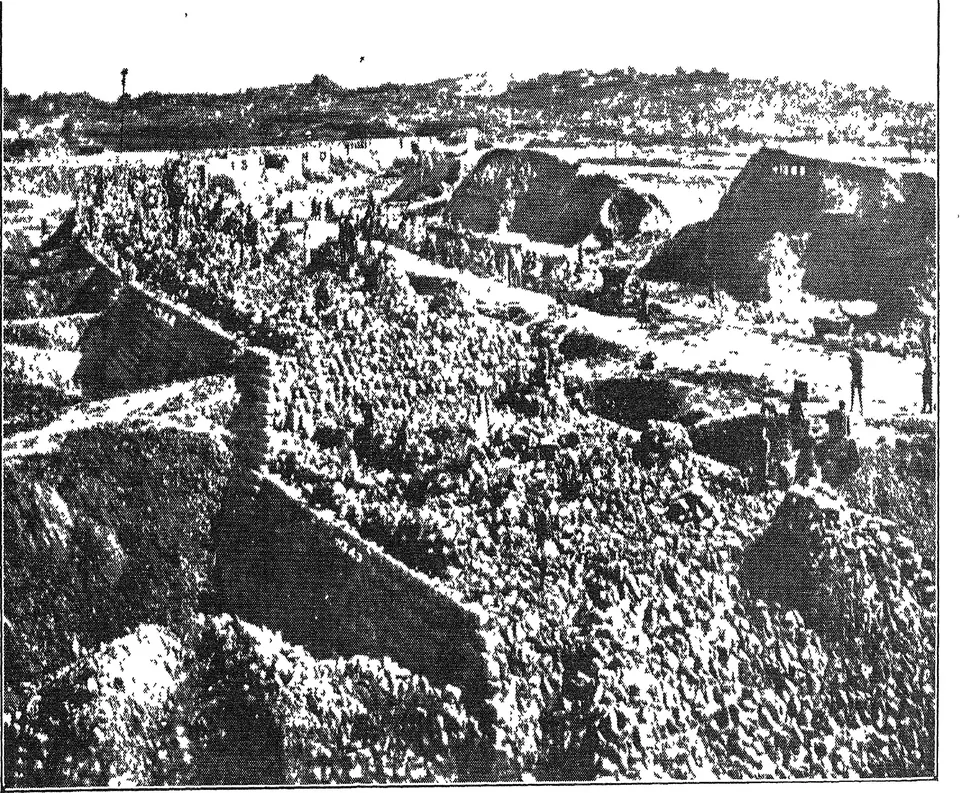
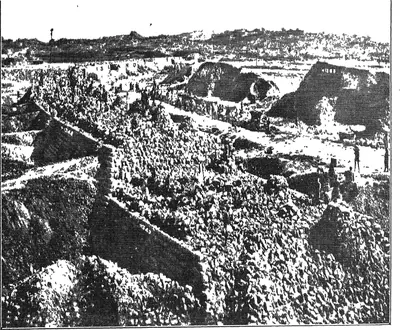 "Another view of Nizam Sagar main dam" (Mudiraj, Pictorial Hyderabad, 1929, p. 98)Historic photograph · 1929
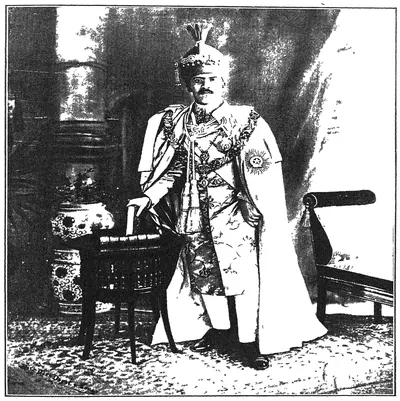 "England's Faithful Ally": His Exalted Highness Lieutenant-General Nawab Mir Sir Osman Ali Khan Bahadur, G.C.S.I., G.C.B.E. (Mudiraj, Pictorial Hyderabad, 1929)Historic photograph · 1929
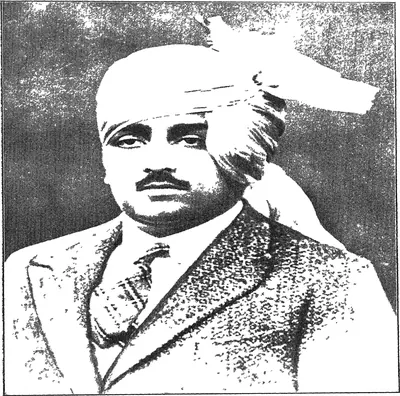 "Nawab Mir Himayat Ali Khan Bahadur Azam Jah Vali Ahad": the heir-apparent, after whom the Himayat Sagar was named (Mudiraj, Pictorial Hyderabad, 1929, portrait plate)Historic photograph · 1929
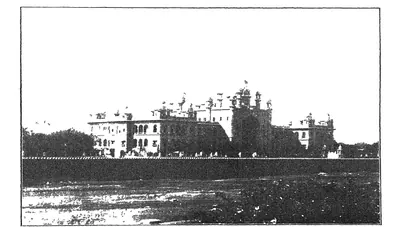 "New Hyderabad High Court" (Mudiraj, Pictorial Hyderabad, 1929, p. 15)Historic photograph · 1929
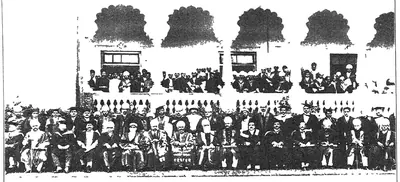 "Osmania University Convocation" (Mudiraj, Pictorial Hyderabad, 1929)Historic photograph · 1929
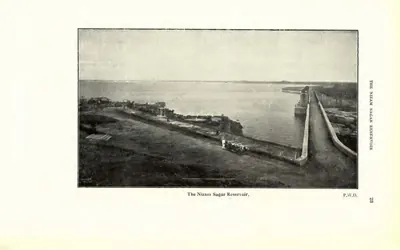 "The Nizam Sagar Reservoir" (P.W.D.) (Census of India 1931, Hyderabad, printed p. 23 (PDF p. 42))Historic photograph · 1933
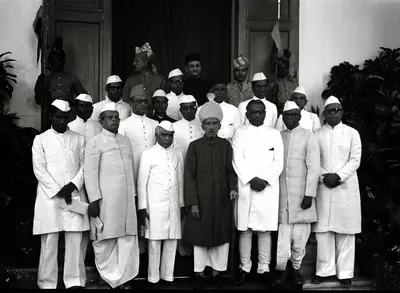 The first elected ministry of Hyderabad State with the Nizam, as identified on Commons (1952)Historic photograph · 1952
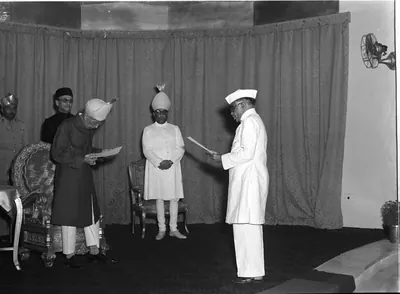 The Nizam administering the oath of office to Burgula Ramakrishna Rao, as identified on Commons (1952)Historic photograph · 1952
Related
Dynasties
References
Notes (0)
Sources (9)
Spotted an error on this page? Tell us
Last updated: