Himayat Sagar
Reservoir on the Isi (Esi), a tributary of the Musi, south-west of Hyderabad, built as the second part of the flood-protection scheme drawn up after the Musi flood of 1908. It was named after the heir-apparent, Himayat Ali Khan (Azam Jah), and completed in 1334 Fasli (1924–25) at a cost of Rs 92,43,255. Pictorial Hyderabad (1929) calls it both a flood moderator and an irrigation tank; a government farm at Himayat Sagar bred rice strains, cattle and poultry in the 1930s.
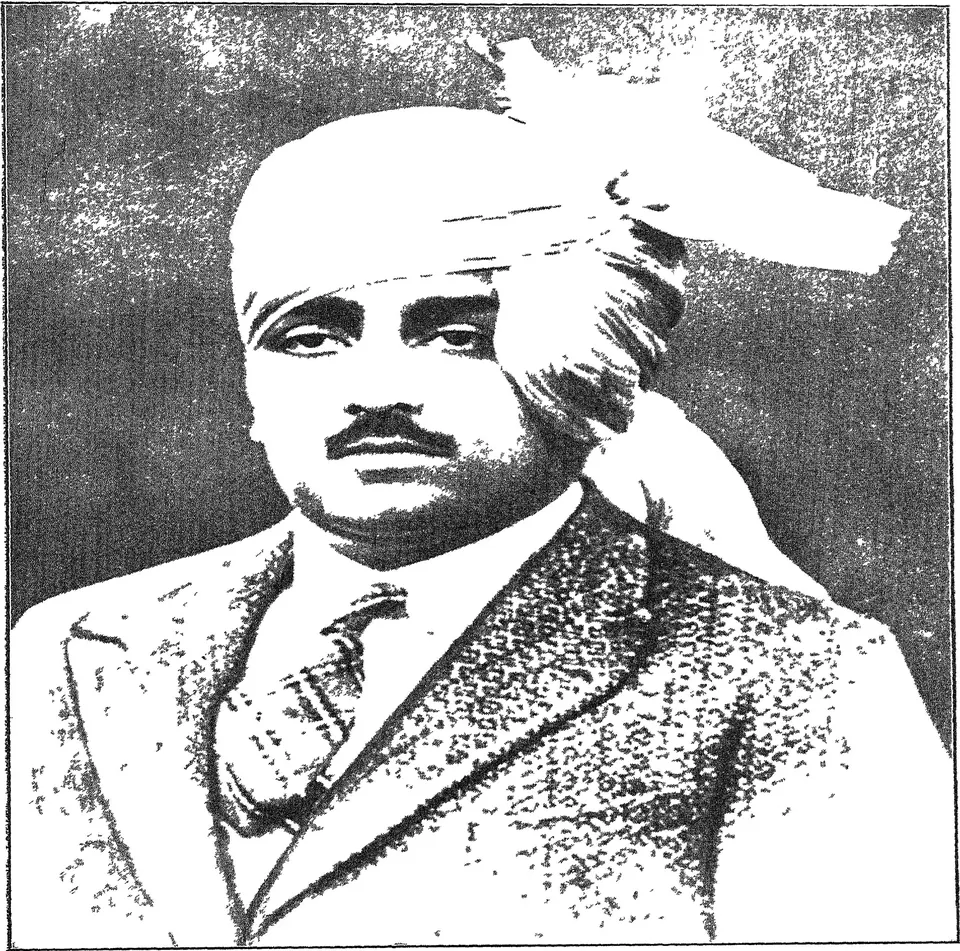
Himayat Sagar is a reservoir south-west of Hyderabad, on the Isi river, a tributary of the Musi. It was built after the great Musi flood of 1908, as the twin of the Osman Sagar at Gandipet.1 The two lakes were meant to hold back floods from the city.2
Why it was built
K. Krishnaswamy Mudiraj’s Pictorial Hyderabad (1929) describes the flood of 1908.3 The Musi overflowed and thousands of people lost their lives.3 A tamarind tree, later standing in the Osmania Park, saved about 150 people.3 After the relief work, the Nizam Mahbub Ali Khan ordered plans to prevent such a disaster in future.3
The scheme that followed, Mudiraj says, was approved and enlarged by the next Nizam.2 It had two dams.1 The first, across the Musi at Gandipet, formed the Osman Sagar.1 The second, across the Isi river, was named Himayat Sagar after the heir-apparent.1 Mudiraj also prints a photograph of the heir-apparent, whom he names as Nawab Himayat Ali Khan, Azam Jah, the Crown Prince.4
Completion
The Nizam’s administration report for 1334 Fasli (1924–25) records that the Himayat Sagar Project was finished that year.5 The total spent on it was Rs 92,43,255, against an estimate of Rs 92,70,000.6 In its last year alone, Rs 13,86,338 was spent.6 Mudiraj gives a rounder figure, Rs 91,75,000, “very nearly a crore of rupees”.21
Mudiraj says the Himayat Sagar worked “not merely as a flood moderator but also as an irrigation tank”.2 The Osman Sagar, by contrast, supplied the city with drinking water.2
The Himayat Sagar farm
By the 1930s the state ran an experimental farm at Himayat Sagar.7 The administration report for 1342 Fasli (1932–33) describes its work:87
- Plant breeders tested rice and castor there.8
- Two rice strains, “Himayatsagar Nos. 263 and 504”, were shown to farmers in the villages.8
- A cattle farm bred Krishna Valley and Malvi cattle for plough work and milk.8
- The dairy was so well run that it could not meet the demand for its milk.8
- A poultry farm tested breeds of fowl and found the White Leghorn the hardiest.7
A new horticultural section was set up at the farm in 1932–33.9 A class there trained gardeners (malis).10 The same year, the Nizam’s Horse Artillery held its first firing practice at Himayat Sagar.11
Footnotes
-
Mudiraj, Pictorial Hyderabad (1929), p. 101 (archive.org (opens in a new tab)). ↩ ↩2 ↩3 ↩4 ↩5
-
Mudiraj, Pictorial Hyderabad (1929), p. 8 (archive.org (opens in a new tab)). ↩ ↩2 ↩3 ↩4 ↩5
-
K. Krishnaswamy Mudiraj, Pictorial Hyderabad, Vol. I (1929), p. 7 (archive.org (opens in a new tab)). ↩ ↩2 ↩3 ↩4
-
Mudiraj, Pictorial Hyderabad (1929), plate after p. 84 (archive.org (opens in a new tab)). ↩
-
Report on the Administration of H.E.H. the Nizam’s Dominions, 1924–25 (1926), General Summary, p. i (archive.org (opens in a new tab)). ↩
-
Report on the Administration of H.E.H. the Nizam’s Dominions, 1924–25 (1926), p. 39 (archive.org (opens in a new tab)). ↩ ↩2
-
Administration Report, 1342 Fasli (1932–33) (1935), p. 53 (archive.org (opens in a new tab)). ↩ ↩2 ↩3
-
Administration Report, 1342 Fasli (1932–33) (1935), pp. 51–52 (archive.org (opens in a new tab)). ↩ ↩2 ↩3 ↩4 ↩5
-
Report on the Administration of H.E.H. the Nizam’s Dominions for 1342 Fasli (1932–33) (1935), General Summary, p. i (archive.org (opens in a new tab)). ↩
-
Administration Report, 1342 Fasli (1932–33) (1935), p. 56 (archive.org (opens in a new tab)). ↩
-
Administration Report, 1342 Fasli (1932–33) (1935), p. 45 (archive.org (opens in a new tab)). ↩
Photos
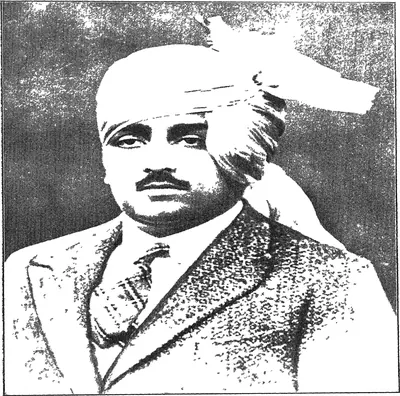 "Nawab Mir Himayat Ali Khan Bahadur Azam Jah Vali Ahad": the heir-apparent, after whom the Himayat Sagar was named (Mudiraj, Pictorial Hyderabad, 1929, portrait plate)Historic photograph · 1929
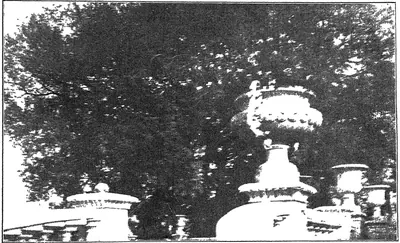 "Tamarind tree in the Osmania Park. This tree saved the lives of about 150 persons in the great Musi River Flood of 1908." (Mudiraj, Pictorial Hyderabad, 1929, p. 7)Historic photograph · 1929
References
Notes (0)
Sources (3)
Spotted an error on this page? Tell us
Last updated: