Osman Sagar (Gandipet)
Reservoir formed by a dam across the Musi at Gandipet, about ten miles above Hyderabad. It was built after the terrible flood of September 1908, to protect the city from floods and to supply it with water. M. Visvesvaraya drew up the project. Mir Osman Ali Khan laid the foundation stone in 1322 Fasli (1912–13), and the lake was named after him. Mudiraj (1929) gives the cost as Rs 58,40,000. A sister dam on the Isi formed the Himayat Sagar, completed in 1924–25.
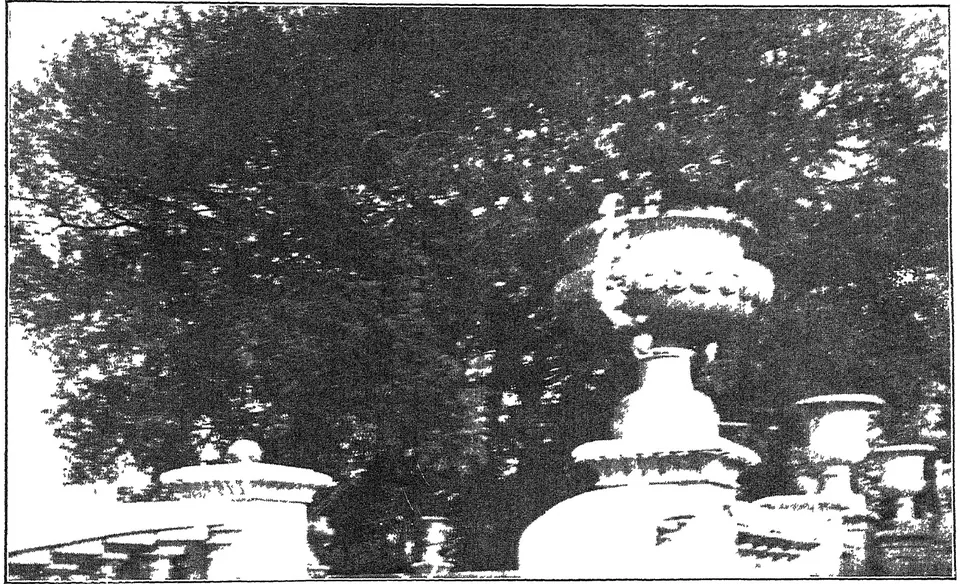
The Osman Sagar is the reservoir formed by a dam across the Musi river at Gandipet, upstream of Hyderabad.1 It was built in the reign of Mir Osman Ali Khan, the seventh Nizam of the Asaf Jahi line, and named after him.1
The flood of 1908
The Imperial Gazetteer of 1909 records the disaster that led to it.2 At the end of September 1908, after some days of continuous rain, “the Musi river suddenly rose in flood”.2 It carried away several arches of three bridges, the Purana Pul, Afzal and Chadarghat.2 It flooded many quarters of the city on both sides of the river and caused “widespread destruction of life and property”.2 See the Purana Pul.
The project
The Nizam’s administration report for 1322 Fasli (1912–13) calls the “Moosi Reservoir” “the most important work begun during the year”.3 The Nizam laid its foundation stone on 18 Ardibehisht 1322 Fasli.3 The report says it formed part of a project prepared by Mr M. Visvesvaraya, “now Dewan of Mysore”.3 He prepared it after the Musi flood of 1317 Fasli (1908).3 It had “the double object of protecting the city from floods and supplying water to Hyderabad and Secunderabad”.3
The total cost of the project was then estimated at 49 lakhs, or 52.41 lakhs with payment for land.3 Public-works spending rose that year, and of the increase nine and a half lakhs went on “the Flood Preventive Works at Gundipet”.4
The dams in 1929
K. Krishnaswamy Mudiraj’s Pictorial Hyderabad (1929) places the dam “ten miles higher up” the river at Gandipet.1 He says it cost Rs 58,40,000.1 The lake was expected to hold back flood water.1 Drinking water was drawn off by a conduit several miles long to filter beds in the city.1 “The lake has been named Osman Sagar after His Exalted Highness the Nizam.”1
A similar dam across the Isi, costing Rs 91,75,000, was named Himayat Sagar after the heir apparent.1 The administration report for 1924–25 records the completion of the Himayat Sagar project that year at a cost of 92.43 lakhs.5
Water for the city
Mudiraj also credits “a tremendous reservoir constructed at a place called Gundipett, twelve miles to the west” of the city with its plentiful water supply.6 The old Mir Alam tank had supplied the city since 1806.78 Bilgrami notes in 1927 that, “owing to the construction of Osman Sagar”, its importance had been greatly reduced.78
Footnotes
-
Mudiraj, Pictorial Hyderabad (1929), p. 101 (archive.org (opens in a new tab)). ↩ ↩2 ↩3 ↩4 ↩5 ↩6 ↩7 ↩8
-
Imperial Gazetteer of India: Hyderabad State (1909), p. 119, note (archive.org (opens in a new tab)). ↩ ↩2 ↩3 ↩4
-
Report on the Administration of H.H. the Nizam’s Dominions for 1322 Fasli (1912–13) (1915), p. 49 (archive.org (opens in a new tab)). ↩ ↩2 ↩3 ↩4 ↩5 ↩6
-
Report on the Administration of H.H. the Nizam’s Dominions for 1322 Fasli (1912–13) (1915), p. 72 (archive.org (opens in a new tab)). ↩
-
Report on the Administration of H.E.H. the Nizam’s Dominions, 1924–25 (1926), General Summary, p. i (archive.org (opens in a new tab)). ↩
-
K. Krishnaswamy Mudiraj, Pictorial Hyderabad, Vol. I (1929), p. 6 (archive.org (opens in a new tab)). ↩
-
Syed Ali Asgar Bilgrami, Landmarks of the Deccan (1927), p. 106 (archive.org (opens in a new tab)). ↩ ↩2
-
Bilgrami, Landmarks of the Deccan (1927), p. 107 (archive.org (opens in a new tab)). ↩ ↩2
Photos
References
Notes (0)
Sources (5)
Spotted an error on this page? Tell us
Last updated: