Jayasimha II (Eastern Chalukya)
Sixth king of the Eastern Chalukyas of Vengi (about 696–709), eldest son of Mangi-yuvaraja. The later grants give him a reign of thirteen years. His only known grant comes from Penukaparu in the Karma-rashtra district and calls him Sakalalokasraya Jayasimha-Vallabha. Its seal shows that he shared the surname Sarvasiddhi with Jayasimha I. After him the throne passed briefly to his half-brother Kokkili and then to his brother Vishnuvardhana III.
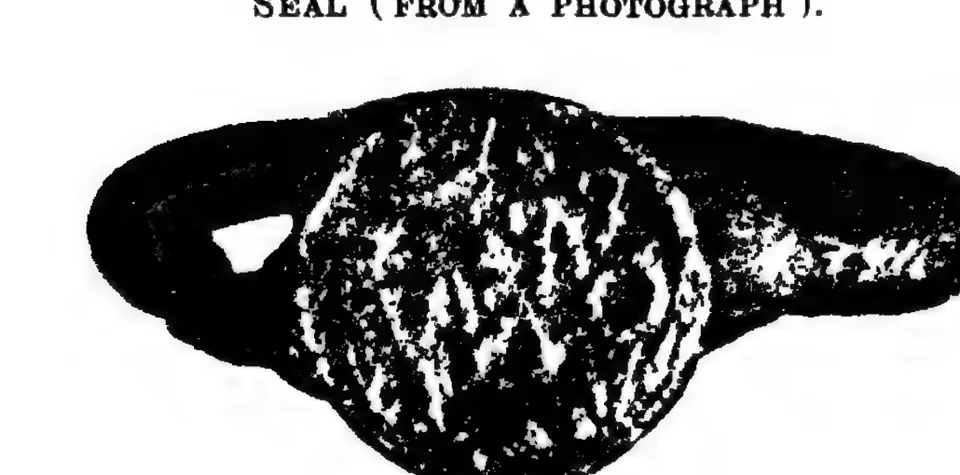
Jayasimha II was the sixth king of the Eastern Chalukyas of Vengi. The later grants, from the first that mention him, agree that he reigned for thirteen years.12 J. F. Fleet dated the reign 696–709.1
Robert Sewell placed his accession in 696, the same year in which Vijayaditya, son of Vinayaditya, came to the throne of the Badami Chalukyas.3 Kings are numbered here as by Fleet and E. Hultzsch, who both counted him as the sixth of the line.45
Family
Jayasimha II was the eldest son of Mangi-yuvaraja.16 His grandfather was Vishnuvardhana II.6 See Mangi-yuvaraja.
Kokkili was the younger half-brother of Jayasimha II.1 Fleet noted that the grants differ on this point:1
- most simply call Kokkili a younger brother
- one calls him a half-brother without saying which was older
- four state plainly that he was “the younger half-brother”
- one carelessly makes him Jayasimha’s son1
Vishnuvardhana III was another son of Mangi-yuvaraja.7 The grants call him the elder brother of Kokkili, but they do not say whether he was older or younger than Jayasimha II.1 Fleet followed Hultzsch in placing him between the two.1 See Vishnuvardhana III.
Name and titles
In all the later grants his name is given simply as Jayasimha, without the vallabha attached to the name of Jayasimha I, his great-grandfather’s brother.1 One grant repeats a figure by mistake and gives him that king’s thirty-three years instead of thirteen.1
His own grant calls him the Maharaja Sakalalokasraya Jayasimha-Vallabha.6 It names him the son of the Maharaja Sarvalokasraya and grandson of the Maharaja Vishnuvardhana.6 Its seal bears the legend Sri-Sarvvasiddhi.8 Hultzsch concluded that Sarvasiddhi “must have been a surname of the donor, Jayasimha II, just as it is known to have been one of Jayasimha I”.8
His grant
The Madras epigraphical department examined the Penukaparu grant in 1923–24.9 It was the first record of the king to be found, and the department reported it as “the first record of the king hitherto known to epigraphy”.9
The grant gives a field near the village of Penukapayu in the Karma-rashtra district to a Brahmin of Vangiparu.6 The gift was made on the full moon of Jyaishtha, at the time of a samkranti (the sun’s entry into a new sign).6 Its executor, Niravadya-Sakalalokasraya-sri-Prithivigamundi, was named after the king’s own surname.6 Hultzsch found its alphabet like that of the Chendalur plates of Jayasimha’s father.6
Succession
After Jayasimha II, his half-brother Kokkili reigned for six months.21 Then Vishnuvardhana III, his elder brother, expelled Kokkili and reigned for thirty-seven years.21 Fleet dated Kokkili’s six months to 709.1
The reign in other reckonings
Hultzsch’s pedigree of 1890 gave Jayasimha II thirteen years from about Saka 611–12 (Saka is an Indian way of counting years) to 624–25, that is about 689–703.5 Fleet’s later reckoning, which this site follows, puts the reign at 696–709, as does Sewell’s table.110
Footnotes
-
Fleet, “The Chronology of the Eastern Chalukya Kings” (1891), p. 99 (archive.org (opens in a new tab)). ↩ ↩2 ↩3 ↩4 ↩5 ↩6 ↩7 ↩8 ↩9 ↩10 ↩11 ↩12 ↩13 ↩14
-
E. Hultzsch, “Pithapuram Pillar Inscription of Mallapadeva”, Epigraphia Indica IV (1896–97), p. 239 (archive.org (opens in a new tab)). ↩ ↩2 ↩3
-
Robert Sewell and S. Krishnaswami Aiyangar, The Historical Inscriptions of Southern India (1932), p. 26 (archive.org (opens in a new tab)). ↩
-
J. F. Fleet, “The Chronology of the Eastern Chalukya Kings”, Indian Antiquary XX (1891), p. 12, “List of the Eastern Chalukya Kings” (archive.org (opens in a new tab)). ↩
-
E. Hultzsch, South-Indian Inscriptions, Vol. I (1890), p. 32, pedigree of the Eastern Chalukya dynasty (archive.org (opens in a new tab)). ↩ ↩2
-
Hultzsch, “Penukaparu Grant of Jayasimha II” (1926), p. 314 (archive.org (opens in a new tab)). ↩ ↩2 ↩3 ↩4 ↩5 ↩6 ↩7 ↩8
-
E. Hultzsch, “Ipur Plates of Vishnuvardhana III”, Epigraphia Indica XVIII (1925–26), p. 58 (archive.org (opens in a new tab)). ↩
-
E. Hultzsch, “Penukaparu Grant of Jayasimha II”, Epigraphia Indica XVIII (1925–26), p. 313, note 14 (archive.org (opens in a new tab)). ↩ ↩2
-
Annual Report on Epigraphy, Madras, for 1923–24, Part II, para. 3, p. 98 (archive.org (opens in a new tab)). ↩ ↩2
-
Sewell and Aiyangar, Historical Inscriptions of Southern India (1932), p. 336, pedigree of the Eastern Chalukya dynasty (archive.org (opens in a new tab)). ↩
Photos
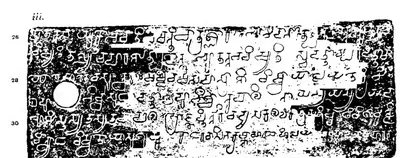 "Penukaparu grant of Jayasimha II.", plate iii (Epigraphia Indica XVIII, plate between pp. 316 and 317 (PDF p. 403))Inscription rubbing · 1926
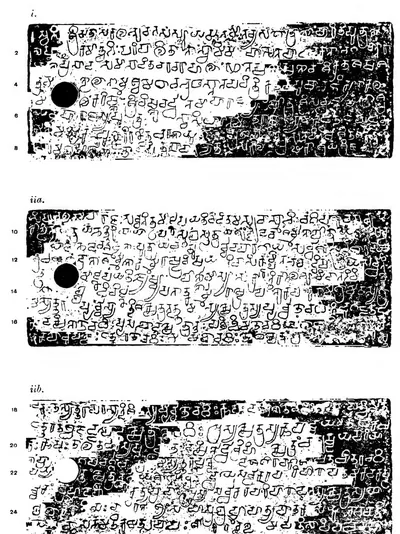 "Penukaparu grant of Jayasimha II.", plates i, ii a and ii b (Epigraphia Indica XVIII, plate between pp. 316 and 317 (PDF p. 402))Inscription rubbing · 1926
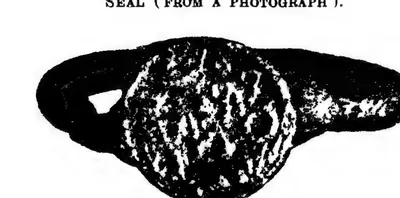 "Seal (from a photograph). Actual size.", seal of the Penukaparu grant of Jayasimha II (Epigraphia Indica XVIII, plate between pp. 316 and 317 (PDF p. 403))Historic photograph · 1926
Related
Dynasties

References
Notes (0)
Sources (6)
Spotted an error on this page? Tell us
Last updated: