Eastern Chalukyas of Vengi
A branch of the Chalukyas of Badami that ruled Vengi, the coastal country between the lower Godavari and Krishna, from the early 7th century. Its founder, Kubja Vishnuvardhana, was a younger brother of Pulakesin II. The kings fought the Rashtrakutas for two centuries. After about 1000 they were bound to the Cholas by marriage, and in 1070 their heir became the Chola emperor Kulottunga I. Their copper-plate grants record the length of every reign. The first Telugu literary work, Nannaya's Mahabharata, was written at their court in Rajahmundry.
Swipe sideways to see the whole chart; tap a bar for details.
Each bar is a ruling power in its region; time runs left to right. Dashed = approximate dates. Select a bar for details.
Show as a list
Ikshvakus, Vishnukundins & early kingdoms 225–624 CE
- Telangana
- Vakatakas (c. 300–500 CE) · Vishnukundins (c. 375–612 CE)
- Coastal Andhra
- Pallavas (c. 250–630 CE) · Salankayanas of Vengi (c. 300–470 CE) · Vishnukundins (c. 500–630 CE) · Eastern Gangas of Kalinga (c. 537–1434 CE) · Eastern Chalukyas of Vengi (c. 615–973 CE) · Chalukyas of Badami (c. 615–642 CE)
- Rayalaseema
- Pallavas (c. 300–900 CE) · Telugu Cholas of Renadu (c. 550–800 CE)
Eastern Chalukyas & the Deccan powers 624–1163 CE
- Telangana
- Chalukyas of Badami (c. 655–753 CE) · Chalukyas of Mudigonda (c. 890–1218 CE) · Chalukyas of Vemulavada (c. 750–973 CE) · Kakatiyas (c. 1052–1162 CE) · Rashtrakutas of Malkhed (c. 753–973 CE) · Telugu Chodas of Kanduru (c. 1060–1160 CE) · Eastern Chalukyas of Vengi (c. 935–973 CE) · Western Chalukyas of Kalyani (c. 973–1163 CE)
- Coastal Andhra
- Pallavas (c. 250–630 CE) · Chalukyas of Badami (c. 655–680 CE) · Cholas of Tanjore (c. 999–1135 CE) · Vishnukundins (c. 500–630 CE) · Eastern Chalukyas of Vengi (c. 999–1077 CE) · Kotas of Dharanikota (c. 1100–1276 CE) · Eastern Gangas of Kalinga (c. 537–1434 CE) · Haihayas of Kona and Palnadu (c. 1073–1364 CE) · Telugu Chodas of Pottapi and Nellore (c. 1106–1316 CE) · Velanati Chodas (c. 1118–1209 CE) · Western Chalukyas of Kalyani (c. 1118–1126 CE)
- Rayalaseema
- Pallavas (c. 300–900 CE) · Cholas of Tanjore (c. 985–1268 CE) · Telugu Cholas of Renadu (c. 550–800 CE) · Western Chalukyas of Kalyani (c. 1000–1190 CE) · Chalukyas of Badami (c. 654–753 CE) · Telugu Chodas of Pottapi and Nellore (c. 1120–1268 CE) · Banas (c. 700–915 CE) · Vaidumbas (c. 750–1000 CE) · Nolamba-Pallavas (c. 750–974 CE) · Rashtrakutas of Malkhed (c. 750–973 CE)
Kakatiyas 1163–1323 CE
- Telangana
- Chalukyas of Mudigonda (c. 890–1218 CE) · Kakatiyas (c. 1163–1323 CE)
- Coastal Andhra
- Kakatiyas (c. 1185–1323 CE) · Kotas of Dharanikota (c. 1100–1276 CE) · Eastern Gangas of Kalinga (c. 537–1434 CE) · Haihayas of Kona and Palnadu (c. 1073–1364 CE) · Telugu Chodas of Pottapi and Nellore (c. 1106–1316 CE) · Velanati Chodas (c. 1118–1209 CE) · Pandyas (c. 1260–1264 CE) · Cholas of Tanjore (c. 1135–1264 CE)
- Rayalaseema
- Cholas of Tanjore (c. 985–1268 CE) · Western Chalukyas of Kalyani (c. 1000–1190 CE) · Kakatiyas (c. 1250–1323 CE) · Telugu Chodas of Pottapi and Nellore (c. 1120–1268 CE) · Hoysalas (c. 1178–1342 CE)
Kingdoms and empires
Vakatakas
Open page- Telangana: c. 300–500 CE (c. 200 years)
Partial: the Adilabad, Nizamabad and Karimnagar country north of the Godavari, as part of the Vakataka lands of central India and the northern Deccan. Goel et al. (2022) place the Vakataka lands from the findspots of their 37 inscriptions and name only these three Telangana districts. Jouveau-Dubreuil (1920) claimed much more: almost the whole of the Hyderabad State, and up to Kurnool. A Vakataka princess married the Vishnukundin Madhavavarman (Chikkulla plates). No Vakataka inscription from Telangana is listed in Epigraphia Telanganica I; this span rests on modern histories. Dates follow the Sewell table (Vindhyasakti c. 275-300 to Harishena c. 465-500).
Rulers (8)
- Vindhyasakti (c. 275–300 CE)
- Pravarasena I (c. 300–330 CE)
- Rudrasena I (c. 330–340 CE)
- Prithvisena I (c. 340–390 CE)
- Rudrasena II (c. 390–395 CE)
- Pravarasena II (c. 395–420 CE)
… and 2 more
- Devasena (c. 445–465 CE)
- Harishena (c. 465–500 CE)
Sources (5)
Kingdoms and empires
Chalukyas of Badami
Open page- Coastal Andhra: c. 615–642 CE (c. 27 years)
Pulakesin II took Pishtapura (Pithapuram) and the Kolleru lake country (Aihole inscription) about 615 and left his brother Vishnuvardhana to govern Vengi, which was an independent kingdom by 632 (Fleet); his Kopparam plates grant land in Karmarashtra (Guntur) in 631, and Hultzsch read them as showing Vishnuvardhana still his subordinate then. The Vizagapatam gazetteer adds that the Badami Chalukyas had already conquered Kalinga in the 6th century.
- Rayalaseema: c. 654–753 CE (c. 99 years)
Copper-plate grants of Vikramaditya I in Kurnool (654-55, 657-58, 663); his grant names the Nalavadi district (near Madakasira, Anantapur); grants of 680 in Anantapur and Bellary; grants of Vinayaditya in the Kurnool district (Nandyal, 689-90); the Telugu Cholas of Renadu were their vassals. Fleet guessed that Kirtivarman I's enemies the Nalas lived towards Bellary and Kurnool.
- Telangana: c. 655–753 CE (c. 98 years)
Partial: the Alampur-Gadwal country. Amudalapadu plates of Vikramaditya I (Alampur taluk, 660), Gadval plates (674), Pallepadu plates of Vinayaditya (682, issued at Pangal), and inscriptions in the Alampur temples of a queen of Vikramaditya I, of Vinayaditya's reign and of Vijayaditya (704, 713). IG Hyderabad: displaced by the Rashtrakutas (Dantidurga, 753).
- Coastal Andhra: c. 655–680 CE (c. 25 years)
Partial: Nellore. Talamanchi plates of Vikramaditya I (found near Nellore, 13 July 660), a grant to his preceptor Meghacharya.
Rulers (9)
- Pulakesin I (c. 550–566 CE)
- Kirtivarman I (c. 566–597 CE)
- Mangalesa (c. 597–609 CE)
- Pulakesin II (c. 609–642 CE)
- Vikramaditya I (Chalukya of Badami) (c. 655–680 CE)
- Vinayaditya (c. 680–696 CE)
… and 3 more
- Vijayaditya (c. 696–733 CE)
- Vikramaditya II (c. 733–746 CE)
- Kirtivarman II (c. 746–757 CE)
Capitals
Monuments
Inscriptions
Sources (12)
Kingdoms and empires
Chalukyas of Mudigonda
Open page- Telangana: c. 890–1218 CE (c. 328 years)
Partial: Mudigonda (Khammam), the Manchikonda district and the Koravi (Kuravi) country, later the Visuru-nadu on the Godavari; feudatories of the Eastern Chalukyas, later of the Chalukyas of Kalyani. No record of the family is dated: start from Kusumayudha I's part in Chalukya-Bhima I's coronation (892), end from Parabrahma Sastry's identification of Kusumaditya and Nagati in a record of 1218. Driven out by the Kakatiyas (Recherla Rudra; Ganapatideva).
Rulers (13)
- Kokiraja (c. 865–890 CE)
- Kusumayudha I (c. 890–915 CE)
- Bijayita (c. 915–940 CE)
- Kusumayudha II (c. 940–965 CE)
- Vijayaditya (c. 965–990 CE)
- Kusumayudha III (c. 990–1015 CE)
… and 7 more
- Nijjiyaraja (c. 1015–1040 CE)
- Kusumayudha IV (Chalukya of Mudigonda) (c. 1040–1065 CE)
- Beta (c. 1065–1090 CE)
- Kusumayudha V (c. 1090–1110 CE)
- Bottu-Beta (c. 1110–1140 CE)
- Kusumaditya (Chalukya of Mudigonda) (c. 1140–1165 CE)
- Nagati (c. 1165–1196 CE)
Capitals
Inscriptions
Sources (4)
Kingdoms and empires
Vishnukundins
Open page- Telangana: c. 375–612 CE (c. 237 years)
Partial: the early kingdom north of Srisailam (Nalgonda and Mahabubnagar), with its capital at Keesaragutta near Hyderabad or at Indrapura (Indrapala Gutta near Tummalagudem, Nalgonda); the capital later moved to Trivaranagara (Tiruvuru). The Tummalagudem plates of Govindavarman (37th year) and Vikramendravarman II (Saka 488, 566-67) were found in Nalgonda. The early dates (Indravarman c. 375-400) and the end in 612 follow Goel et al.
- Coastal Andhra: c. 500–630 CE (c. 130 years)
Krishna-Godavari country; later capital Lendulura (Denduluru near Vengi); grants from the Godavari delta, Tenali taluk and the Vizianagaram region, and a pillar at Velpuru south of the Krishna. Dates disputed: K. V. Lakshman Rao (in Sewell 1932) about 357-610; Panchamukhi (1936) about 500 to the Chalukya conquest of 621-631; Mirashi puts Madhavavarman I about 510-568; Sircar (1939) about 500-670 and an end later still
Rulers (7)
- Vikramahendra (c. 500–520 CE)
- Govindavarman (c. 520–535 CE)
- Madhavavarman (Vishnukundin) (c. 535–585 CE)
- Madhavavarman II (Vishnukundin) (c. 585–615 CE)
- Vikramendravarman I (c. 615–625 CE)
- Indravarman (Vishnukundin) (c. 625–655 CE)
Capitals
Inscriptions (7)
- Chikkulla plates of Vikramendravarman II
- Ipur plates (set I) of Govindavarman's son Madhavavarman
- Ipur plates (set II) of Madhavavarman II
- Khanapur plates of Madhavavarman
- Polamuru plates of Madhavavarman Janashraya
- Ramatirtham plates of Indravarman
… and 1 more
Sources (8)
Kingdoms and empires
Chalukyas of Vemulavada
Open page- Telangana: c. 750–973 CE (c. 223 years)
Partial: the Sabbi Thousand (Karimnagar), capital Vemulavada (Lembulavataka), as Rashtrakuta feudatories; Podana (Bodhan) under the founder Yuddhamalla I (Venkataramanayya). Dated records: Chennur 940, Parbhani plates 966, Repaka 968. Ended when the Chalukyas of Kalyani took Telangana between 966 and 973.
Rulers (10)
- Vinayaditya-Yuddhamalla I (Chalukya of Vemulavada) (c. 750–775 CE)
- Arikesari I (c. 775–800 CE)
- Narasimha I (c. 800–825 CE)
- Yuddhamalla II (c. 825–850 CE)
- Baddega I Soladaganda (Chalukya of Vemulavada) (c. 850–895 CE)
- Yuddhamalla III (c. 895–915 CE)
Capitals
Monuments
Inscriptions
Sources (3)
Kingdoms and empires
Kakatiyas
Open page- Telangana: c. 1052–1162 CE (c. 110 years)
Partial: feudatory chiefs of Anumakonda (Hanamkonda) under the Chalukyas of Kalyani. Prola I received the Anumakonda district as a permanent fief from Someshvara I (record of 1053); Prola II's last record as a subordinate is of 1149; Rudradeva subdued the other Telangana chiefs c. 1157–62 (Parabrahma Sastry). Earlier members served the Rashtrakutas (Mangallu grant, c. 956) according to Parabrahma Sastry, a link rejected by Venkataramanayya and Somasekhara Sarma (1960).
- Telangana: c. 1163–1323 CE (c. 160 years)
Sovereign from Rudradeva's Anumakonda inscription of January 1163; capital moved to Orugallu (Warangal) under Ganapatideva. Warangal taken by Ulugh Khan in 1323 (Parabrahma Sastry, after Isami); Barani and the Imperial Gazetteer give 1321.
- Coastal Andhra: c. 1185–1323 CE (c. 138 years)
Rudradeva subdued the Kotas of Dharanikota and the Kondapadumatis (Tripurantakam grant 1185); Ganapatideva annexed Divi (1203) and Velanadu (records from 1209; Jaya governor 1213) and held the coast from the Godavari to the Penna; Kakatiya records at Draksharama from 1212, but the Eastern Gangas held the region north of the Godavari c. 1230–33 and again c. 1262–78; the Telugu Chodas of Nellore were allies; Nellore was lost to the Pandyas c. 1263 and recovered under Prataparudra.
- Rayalaseema: c. 1250–1323 CE (c. 73 years)
Through the Kayastha chiefs (Gangaya Sahini, bahattara-niyogadhipati c. 1250, capital Valluru in Cuddapah); Ambadeva independent c. 1272–1291, until Prataparudra's armies retook Tripurantakam (between 13 June and 11 August 1291) and the Kayastha lands within about eight years.
Rulers (11)
Capitals
Monuments (16)
Inscriptions (36)
- Kazipet Dargah pillar inscription
- Matedu inscription of Vemabola Malle-nayaka
- Gudur pillar inscriptions of the Viriyala family
- Thousand Pillar Temple inscription of Rudradeva
- Karimnagar inscription of Gangadhara
- Warangal fort inscription of Rudradeva
… and 30 more
- Pillalamarri inscription of Recherla Nami-reddi
- Kondaparti inscription of Malyala Chaunda
- Inugurti pillar inscription of Natavadi Rudra
- Bayyaram tank inscription of Mailama
- Chebrolu inscription of Jaya
- Palampet pillar inscription of Recherla Rudra
- Ganapavaram inscription of Devapala
- Warangal toll inscription of Ganapatideva
- Ganapesvaram inscription of Jaya
- Upparapalli pillar inscription of Kataya
- Motupalli pillar inscription of Ganapatideva
- Pakhal lake inscription of Jagadala Mummadi
- Rayaparti fragment of Saka 1169
- Ekamranatha temple inscription of Ganapati
- Nayanapalle inscription of Ganapatideva
- Durgi inscription of Gangaya-sahini
- Sarngapuram plates of Sarngadhara
- Bothpur tank inscription of Malyala Gunda
- Garavapadu plates of Ganapatideva
- Malkapuram pillar inscription of Rudramadevi
- Kotagiri plates of Viryala Sura
- Kolanupaka inscription of Rudramadevi's reign
- Chandupatla inscription
- Panugallu inscription of Immadi Mallikarjuna-nayaka
- Tripurantakam inscription of Ambadeva
- Raichur fort inscription of Gona Vithala
- Mellacheruvu inscription of Prataparudra's reign
- Srirangam inscription of Prataparudra
- Dharmasagar inscription of the minister Malla
- Hanamkonda inscription of Gangadhara
Sources (7)
Kingdoms and empires
Rashtrakutas of Malkhed
Open page- Rayalaseema: c. 750–973 CE (c. 223 years)
Through the Nolambas in Anantapur from about 750. The Cuddapah gazetteer finds no lasting foothold in Cuddapah until Indra III (c. 915), and says Krishna III (940-956) held all of Cuddapah except the east. The dynasty fell in 973.
- Telangana: c. 753–973 CE (c. 220 years)
Displaced the Chalukyas mid-8th century (Dantidurga 753). Inscriptions of their reigns or their feudatories at Alampur (Dhruva, about 780), Kuruvagattu (Govinda III), Mallikarjunapalli (846, 946), Khajipet, Velmajala (907), Padaturu (913) and Chennur (940); the Vemulavada Chalukyas and probably the early Kakatiyas were their subordinates. The dynasty fell in 973 and Western Chalukya rule in Telangana is attested by 995.
Rulers (13)
- Dantidurga (c. 753–756 CE)
- Krishna I (c. 756–774 CE)
- Govinda II (c. 774–780 CE)
- Dhruva (c. 780–793 CE)
- Govinda III (Rashtrakuta) (c. 793–814 CE)
- Amoghavarsha I (c. 814–878 CE)
… and 7 more
- Krishna II (Rashtrakuta) (c. 878–914 CE)
- Indra III (c. 915–917 CE)
- Govinda IV (c. 918–935 CE)
- Amoghavarsha III (Vaddiga) (c. 935–939 CE)
- Krishna III (Rashtrakuta) (c. 939–966 CE)
- Khottiga (c. 966–972 CE)
- Kakka II (c. 972–973 CE)
Capitals
Inscriptions
Sources (14)
Kingdoms and empires
Telugu Chodas of Kanduru
Open page- Telangana: c. 1060–1160 CE (c. 100 years)
Partial (Kandurunadu: the Jadcharla and Achampet areas of Mahbubnagar and the Nalgonda and Miryalaguda areas of Nalgonda), ruled from Kodur and Panugallu as feudatories of the Chalukyas of Kalyani; Tondarasa of Kandur governed the Kollipake province in 1088. Prola II restored Udaya Choda at Panugallu about 1131; Rudradeva drove out Bhima and annexed the country in the 1150s (last record of Bhima 1157). The family then held fiefs under the Kakatiyas, with a last record in 1282.
Rulers
- Tondaya II (Tondarasa) of Kandur (1088–1091 CE)
- Bhima Choda III of Kandur (c. 1105–1157 CE)
- Gokarna Choda I (c. 1124–1128 CE)
- Udaya Choda II of Kandur (1136–1176 CE)
- Bhima IV and Gokarna II (1178 CE)
Capitals
Inscriptions
Sources (5)
Kingdoms and empires
Eastern Chalukyas of Vengi
Open page- Coastal Andhra: c. 615–973 CE (c. 358 years)
Vengi, between the Godavari and the Krishna, with the Vizagapatam country to the north (Chipurupalle grant of 632) and Karmarashtra, the Ongole-Guntur country, to the south (grants of 664 and 673). Kubja Vishnuvardhana was installed as yuvaraja in 615 (Fleet) and was independent by 632; others date the start about 605 (Hultzsch 1890, Mackenzie), after 631 (Kopparam plates, Hultzsch 1926) or in 624-25 (Rama Rao 1964). The line of kings from the grants ends with Danarnava (970-973).
- Telangana: c. 935–973 CE (c. 38 years)
Partial: the Chalukya chiefs of Mudigonda and Koravi (Khammam and Warangal) owed allegiance to Vengi rather than to the Rashtrakutas, in Parabrahma Sastry's account; ended after the death of Danarnava in 973.
- Coastal Andhra: c. 999–1077 CE (c. 78 years)
After an interval that the grants call twenty-seven years without a ruler, Saktivarman I was restored about 999 with the help of the Chola Rajaraja I, "as king (or perhaps feudatory)" in the Godavari gazetteer's words. His successors married Chola princesses; Rajendra II, heir to Vengi in 1063, became the Chola emperor Kulottunga I in 1070. His uncle Vijayaditya VII governed Vengi until he died in 1077 (1076 in Sewell's table), after which Vengi was ruled for the Cholas by viceroys.
Rulers (29)
- Kubja Vishnuvardhana (c. 615–633 CE)
- Jayasimha I (c. 633–663 CE)
- Indra-Bhattaraka (c. 663 CE)
- Vishnuvardhana II (Eastern Chalukya) (c. 663–672 CE)
- Mangi-yuvaraja (c. 672–696 CE)
- Jayasimha II (Eastern Chalukya) (c. 696–709 CE)
… and 23 more
- Kokkili (c. 709 CE)
- Vishnuvardhana III (Eastern Chalukya) (c. 709–746 CE)
- Vijayaditya I (c. 746–764 CE)
- Vishnuvardhana IV (Eastern Chalukya) (c. 764–799 CE)
- Vijayaditya II Narendra-mrigaraja (c. 799–843 CE)
- Kali-Vishnuvardhana V (c. 843–844 CE)
- Gunaga Vijayaditya III (c. 844–888 CE)
- Chalukya-Bhima I (c. 888–918 CE)
- Vijayaditya IV (Kollabhiganda) (c. 918 CE)
- Amma I (c. 918–925 CE)
- Beta-Vijayaditya V (c. 925 CE)
- Tadapa (c. 925 CE)
- Vikramaditya II (c. 926 CE)
- Bhima III (c. 926–927 CE)
- Yuddhamalla II (c. 927–934 CE)
- Chalukya-Bhima II (c. 934–945 CE)
- Amma II (945–970 CE)
- Danarnava (970–973 CE)
- Saktivarman I (c. 999–1011 CE)
- Vimaladitya (1011–1022 CE)
- Rajaraja Narendra (1022–1063 CE)
- Kulottunga I (c. 1063–1070 CE)
- Vijayaditya VII (c. 1063–1076 CE)
Capitals
Monuments
Inscriptions (36)
- Satara grant of Vishnuvardhana I
- Timmapuram plates of Vishnuvardhana I
- Chipurupalle plates of Vishnuvardhana I
- Pedda-Vegi plates of Jayasimha I
- Niduparu grant of Jayasimha I
- Pulibumra plates of Jayasimha I
… and 30 more
- Gudivada plates of Jayasimha I (three grants)
- Chendalur plates of Sarvalokasraya (Mangi-yuvaraja)
- Penukaparu grant of Jayasimha II
- Ipur plates of Vishnuvardhana III
- Ederu plates of Vijayaditya II
- Addanki inscription of Pandaranga
- Masulipatam (?) plates of Vijayaditya III
- Bezwada plates of Chalukya-Bhima I
- Bezwada pillar inscription of Yuddhamalla
- Chevuru plates of Amma I
- Ederu plates of Amma I
- Diggubarru grant of Chalukya-Bhima II
- Gundugolanu plates of Amma II
- Kaluchumbarru grant of Amma II
- Maliyapundi grant of Amma II
- Masulipatam plates of Amma II
- Padamkaluru grant of Amma II
- Vandram plates of Amma II
- Vemalurpadu plates of Amma II
- Yelavarru plates of Amma II
- Arumbaka plates of Badapa
- Mangallu grant of Amma II
- Sripundi plates of Tala II
- Tandikonda grant of Amma II
- Ranastipundi grant of Vimaladitya
- Kalidindi grant of Rajaraja I
- Korumelli plates of Rajaraja I
- Nandamapundi grant of Rajaraja Narendra
- Teki plates of Rajaraja-Chodaganga
- Chellur plates of Vira-Choda
Sources (10)
Kingdoms and empires
Western Chalukyas of Kalyani
Open page- Telangana: c. 973–1163 CE (c. 190 years)
Restored 973 (Korapolu, Medak district, inscription of Ahavamalla Taila II, April 973; earliest near Anumakonda Jammikunta 995). Held through feudatories (Kakatiyas, Polavasa chiefs, Kandur Chodas, Mudigonda chiefs) and the Kollipake (Kolanupaka) province under royal governors and princes; Taila III's death is recorded at Anumakonda in January 1163, when the Kakatiyas became sovereign
- Rayalaseema: c. 1000–1190 CE (c. 190 years)
11th-12th centuries in Anantapur (Vikramaditya VI's inscriptions at Gooty; records of 1113 and 1121), Kurnool (1122) and Tripurantakam (1122, 1126); a Chola chief governed Renadu (Cuddapah) under Vikramaditya VI in 1124; overthrown c. 1189 by the Hoysalas and Yadavas
- Coastal Andhra: c. 1118–1126 CE (c. 8 years)
Vengi: after the Chola viceroy Vikrama Chola left in 1118, Vikramaditya VI ruled "the Vengi 14000 country" (Sewell) through his general Anantapala; records at Draksharama 1120-1124; the Godavari gazetteer has him "undisputed king of Vengi" 1120-1124. Vikrama Chola was again supreme south of the Krishna by 1127. Earlier, only single records (Satyasraya at Chebrolu, 1006)
Rulers (11)
- Taila II (973–997 CE)
- Satyasraya (c. 997–1008 CE)
- Vikramaditya V (c. 1008–1015 CE)
- Jayasimha II (Western Chalukya) (c. 1015–1042 CE)
- Somesvara I (c. 1042–1068 CE)
- Somesvara II (1068–1076 CE)
… and 5 more
- Vikramaditya VI (1076–1126 CE)
- Somesvara III (1126–1138 CE)
- Jagadekamalla II (1138–1150 CE)
- Taila III (c. 1150–1162 CE)
- Somesvara IV (c. 1183–1189 CE)
Capitals
Inscriptions (9)
Sources (9)
Kingdoms and empires
Pallavas
Open page- Coastal Andhra: c. 250–630 CE (c. 380 years)
Krishna-Guntur, Ongole and Nellore. Prakrit grant of the crown prince Sivaskandavarman to his officer at Dhanyakataka (Amaravati), dated from about 234 (Sewell) or 250-275 (Jouveau-Dubreuil) to the first half of the 4th century (Sircar); Sanskrit grants of a Nellore-Guntur line (Omgodu, Uruvupalli, Pikira, Mangalur, Vilavatti, Chura) in the 5th and 6th centuries. Karmarashtra (Ongole-Bapatla) was Chalukya by about 630 (Kopparam plates of Pulakesin II). The Godavari gazetteer calls 200-615 a Pallava age, and IG Madras calls Vengi originally a Pallava province; Sircar found no evidence that the Pallavas held Vengi itself.
- Rayalaseema: c. 300–900 CE (c. 600 years)
Partial. Pallava frontier guards at Sriparvata (Kurnool) in the 4th century (Talagunda inscription; Sircar); Ganga kings of the Penukonda plates installed by Pallava kings (5th century); inscription of Paramesvaravarman II at Ulchala near Kurnool (728-29); Bana vassals in the Chittoor country under Nripatunga (9th century). The Cuddapah gazetteer has the Pallavas hold the eastern Cuddapah taluks for four centuries until the Chola Aditya I crippled them at the end of the 9th century. The Cuddapah gazetteer says the Pallavas of Kanchi pushed up the Penner from Nellore into north Cuddapah for a time and then ruled the eastern Cuddapah taluks for four centuries, until the Chola Aditya I crippled them at the end of the 9th century; Sewell gives a Pallava regnal-year record in Chittoor (864-65), with the Banas as Pallava vassals.
- Coastal Andhra: c. 670–750 CE (c. 80 years)
Southern Nellore only: grants of Paramesvaravarman I (Podili-Kandukur country, 687) and Narasimhavarman II (Revuru, Atmakur taluk, about 700-711), and a Tamil record of the 15th year of Nandipottarasar at Mallam (Gudur taluk), read as Pallava supremacy (Nellore gazetteer, 1942) or as Pallava rule under the Western Chalukyas (Butterworth and Venugopaul Chetty, 1905).
Rulers (18)
- Bappa (c. 225–250 CE)
- Sivaskandavarman (Pallava) (c. 250–275 CE)
- Vishnugopa of Kanchi (c. 325–350 CE)
- Kumaravishnu II (Pallava) (c. 425–450 CE)
- Skandavarman II (Pallava) (c. 450–475 CE)
- Simhavarman II (Pallava) (c. 500–525 CE)
… and 12 more
- Vishnugopavarman (c. 525–550 CE)
- Simhavishnu (c. 575–600 CE)
- Mahendravarman I (c. 600–630 CE)
- Narasimhavarman I (c. 630–668 CE)
- Mahendravarman II (c. 668–670 CE)
- Paramesvaravarman I (c. 670–690 CE)
- Narasimhavarman II (c. 690–715 CE)
- Nandivarman II Pallavamalla (c. 717–779 CE)
- Dantivarman (c. 779–830 CE)
- Nandivarman III (c. 830–854 CE)
- Nripatunga (c. 854–880 CE)
- Aparajita (c. 880–900 CE)
Capitals
Inscriptions (14)
Sources (19)
Kingdoms and empires
Cholas of Tanjore
Open page- Rayalaseema: c. 985–1268 CE (c. 283 years)
Rajaraja I (from 982/985) claims Nulambapadi and had the Vaidumbas of Cuddapah as feudatories. Chola inscriptions in Kurnool are dated 1108 and 1123. The east of Cuddapah (Pottapi-nadu) stayed under Chola suzerainty through the Telugu Chodas until Rajendra III's death in 1268. IG Madras has Cuddapah Chola from the 11th to the 13th century.
- Coastal Andhra: c. 999–1135 CE (c. 136 years)
Overlords of the Eastern Chalukya kings from 999; Kulottunga I's sons ruled Vengi as viceroys 1077-1118; Vengi was lost to the Western Chalukyas after Vikrama-Chola left in 1118, and his records reappear at Chebrolu (1127) and Nidubrolu (1135). Nellore stayed under Chola suzerainty into the 13th century (IG Madras)
- Coastal Andhra: c. 1135–1264 CE (c. 129 years)
Partial (Nellore). After Vengi was lost, Nellore stayed under the Cholas until their 13th-century decline: Rajaraja III is recognised there in 1237 and Rajendra III in 1253, with the Telugu Choda chiefs ruling locally as their vassals. A Tamil record at Punjulurupadu, in the Gudur country, is still dated in the 20th year of Rajendra III, Saka 1185 (1263-64).
Rulers (14)
- Rajaraja I (Chola) (985–1016 CE)
- Rajendra I (Chola) (1012–1043 CE)
- Rajadhiraja I (Chola) (1018–1052 CE)
- Rajendradeva (1052–1063 CE)
- Virarajendra (Chola) (1063–1070 CE)
- Adhirajendra (1070 CE)
… and 8 more
- Kulottunga I (1070–1118 CE)
- Vikrama-Chola (1118–1133 CE)
- Kulottunga II (Chola) (1133–1146 CE)
- Rajaraja II (Chola) (1146–1163 CE)
- Rajadhiraja II (1163–1178 CE)
- Kulottunga III (Chola) (1178–1216 CE)
- Rajaraja III (1216–1246 CE)
- Rajendra III (Chola) (1246–1267 CE)
Capitals
Inscriptions (10)
Sources (9)
Kingdoms and empires
Salankayanas of Vengi
Open page- Coastal Andhra: c. 300–470 CE (c. 170 years)
Vengi (Pedavegi near Eluru), between the Krishna and the Godavari. Dates debated: D. C. Sircar (1939) about 320-470, from Devavarman to Skandavarman; B. V. Krishna Rao puts Nandivarman I at the close of the 3rd century, Sircar (1960) the Ellore and Kanukollu grants in the mid-4th; Subramanian about 275-450; Subba Rao has the Vishnukundins take Vengi about 450. Older works call these rulers Pallavas
Rulers
Capitals
Inscriptions
Sources (5)
Kingdoms and empires
Kotas of Dharanikota
Open page- Coastal Andhra: c. 1100–1276 CE (c. 176 years)
Partial (the Six-thousand country, Konnatavadi, south of the Krishna about Amaravati–Dharanikota and the Sattenapalle taluk). Line from Bhima I (c. 1100, Sewell); Keta II from about 1182; subdued by the Kakatiya Rudradeva about 1185 and thereafter Kakatiya subordinates and relatives by marriage (Ganapamba, widow of Kota Beta, ruled in the 1250s); last record of a Kota Rudra 1275–76.
Rulers
- Kota Keta II (c. 1182–1209 CE)
- Manma-Keta (Keta III) (c. 1234–1240 CE)
- Kota Beta (c. 1250–1251 CE)
- Ganapamba (c. 1251–1257 CE)
- Bhima IV (1265 CE)
Capitals
Inscriptions
Sources (5)
Kingdoms and empires
Eastern Gangas of Kalinga
Open page- Coastal Andhra: c. 537–1434 CE (c. 897 years)
Partial: only the far north coast (the old Ganjam and Vizagapatam districts, now Srikakulam-Vizianagaram- Visakhapatnam), capital Kalinganagara (Mukhalingam). Earliest dated grant: Jirjingi, near Tekkali, Ganga year 39 (c. 537 on Mirashi's epoch of 498; Fleet put the early grants in the 7th century and Sewell used an epoch of 877-78; the Imperial Gazetteer, the 7th century). Later line in power from the end of the 9th century (Vizagapatam gazetteer): Vajrahasta III crowned 1038; Anantavarman Chodaganga 1078-1146, with records at Mukhalingam, Srikurmam, Simhachalam and Visakhapatnam. South of the Godavari only records and raids (Draksharama 1128-1274; Bendapudi). Ended 1434, when the minister Kapilesvara founded the Gajapati line
Rulers (15)
- Vajrahasta III (Eastern Ganga) (1038–1070 CE)
- Rajaraja I (Eastern Ganga) (1070–1078 CE)
- Anantavarman Chodaganga (c. 1078–1146 CE)
- Madhu-Kamarnava (c. 1146–1152 CE)
- Raghava (c. 1152–1166 CE)
- Rajaraja II (c. 1166–1192 CE)
… and 9 more
- Aniyanka-Bhima (c. 1192–1202 CE)
- Anangabhima III (c. 1219–1253 CE)
- Narasimha I (Eastern Ganga) (c. 1253–1256 CE)
- Bhanudeva I (c. 1256–1275 CE)
- Narasimha II (c. 1275–1306 CE)
- Bhanudeva II (c. 1306–1323 CE)
- Narasimha III (c. 1323–1346 CE)
- Bhanudeva III (c. 1346–1378 CE)
- Narasimha IV (c. 1378–1397 CE)
Capitals
Monuments
Inscriptions (8)
Sources (10)
Kingdoms and empires
Haihayas of Kona and Palnadu
Open page- Coastal Andhra: c. 1073–1364 CE (c. 291 years)
Partial. Kona chiefs of Konamandala (the Godavari delta, Amalapuram taluk), with records at Draksharama and Palakol from Saka 995 (1073) to 1364–65, dependent on the Chola–Chalukya kings and the Velanati Chodas, later on the Kakatiyas; Haihaya chiefs of the Chagi family in the Palnadu (Macherla 1111, Gurazala 1129) as feudatories of the Chalukyas of Kalyani; the Palnadu war of the ballads is undated (proposals 1080–1386).
Rulers
- Rajendra Choda I of Kona (1128 CE)
- Mummadi-Bhima II and Satya I (1135 CE)
- Bhima III (c. 1153–1168 CE)
- Mallideva of Kona (c. 1155–1207 CE)
- Ganapatideva of Kona (c. 1262–1300 CE)
- Bhima-Vallabha (1318 CE)
Inscriptions
Sources (5)
Kingdoms and empires
Telugu Chodas of Pottapi and Nellore
Open page- Coastal Andhra: c. 1106–1316 CE (c. 210 years)
Konidena branch in the Guntur country from 1106 to about 1150; the main line at Nellore (Vikramasimhapura) from Tammusiddhi's anointment in 1205-06, under the Cholas and then the Kakatiyas, who restored Manumasiddhi II; held Kanchi under Tikka I (1209/1223-1248/1250) and Manmasiddhi III. Last date 1316 (Sewell); the Nellore gazetteer finds no Telugu Choda record in Nellore after 1305.
- Rayalaseema: c. 1120–1268 CE (c. 148 years)
Pottapinadu (Pullampet country of Cuddapah), seat of the Madhurantaka Pottapi-Cholas under the Chola emperors: Betta 1120-21, Vimaladitya c. 1125; Pottapi remained their seat until Tikka I moved to Nellore; Manumasiddhi II recorded at Pottapi 1258-59; the country passed to the Kayastha Ambadeva after 1268.
Rulers
- Tammusiddhi (c. 1205–1209 CE)
- Tikka I (Telugu Choda of Nellore) (c. 1209–1248 CE)
- Manumasiddhi II (c. 1248–1290 CE)
- Manmasiddhi III (c. 1290–1316 CE)
Capitals
Inscriptions
Sources (5)
Kingdoms and empires
Velanati Chodas
Open page- Coastal Andhra: c. 1118–1209 CE (c. 91 years)
Chiefs of Velanadu (the Chandavolu country, western Krishna delta), officers of Kulottunga I from 1076 (Gonka I at Chebrolu); Choda (Rajendra Choda I), adopted by Kulottunga, governed Vengi from between 1100 and 1112 and went over to Vikramaditya VI when the Chola viceroy left in 1118. Gonka II claimed rule from Kalahasti to the Mahendra mountain; Rajendra Choda II (1163–1181) held the coast from Darsi to Simhachalam after 1172 (Parabrahma Sastry). Last ruler Prithvisvara (1186; last record 1206); Velanadu Kakatiya by 1209.
Rulers
Capitals
Inscriptions
Sources (7)
Kingdoms and empires
Pandyas
Open page- Coastal Andhra: c. 1260–1264 CE (c. 4 years)
Partial (Nellore). Jatavarman Sundara Pandya I beat the Telugus at Mudugur, drove them to the Krishna and was crowned at Nellore (Aiyangar, from his records); Sewell dates the march to 1260, Parabrahma Sastry the battle to 1263. Aiyangar says the conquest was not permanent and the Nellore gazetteer says Ganapati recovered Nellore almost at once, so the span is short. A later Jatavarman Sundara Pandya, crowned at Nellore after 1276 (Nellore gazetteer), endowed a hall in the Ranganayaka temple there; no source gives the length of this second hold, so it has no span.
- Rayalaseema: 1285–1293 CE (8 years)
Partial (Nandalur, east Cuddapah). Jatavarman Sundara Pandya II has dated records at Nandalur in 1285, 1286 and 1293, six in all from 1286-1293, as Pandya power spread north after the Chola collapse.
Rulers
- Jatavarman Sundara Pandya I (c. 1251–1268 CE)
- Maravarman Kulasekhara I (1268–1311 CE)
- Jatavarman Sundara Pandya (crowned at Nellore) (c. 1276–1293 CE)
Inscriptions
Sources (5)
Kingdoms and empires
Telugu Cholas of Renadu
Open page- Rayalaseema: c. 550–800 CE (c. 250 years)
Renandu, the country between the Chitravati and the Cheyyeru (most of Cuddapah, parts of Kolar and Chittoor; Sewell: Cuddapah and Kurnool), with capitals at Chippili and Malepadu. Undated records placed by EI XXVII between the later 6th and the end of the 8th century (Nandivarman c. 550, Punyakumara c. 625); Krishna Sastri (1912) and Narasimhaswami (1956) put Punyakumara near 800 and about 740. A collateral line at Budili lasted to Srikantha, c. 850.
Rulers (9)
- Nandivarman (c. 550–575 CE)
- Dhananjaya (Telugu Chola) (c. 575–600 CE)
- Mahendravikrama (Telugu Chola) (c. 600–625 CE)
- Punyakumara (c. 625–650 CE)
- Vikramaditya I (c. 650–675 CE)
- Saktikumara (c. 675–700 CE)
… and 3 more
- Vikramaditya II (Telugu Chola) (c. 700–725 CE)
- Uttamaditya (c. 725–750 CE)
- Vijayaditya Chola (Telugu Chola) (c. 750–775 CE)
Capitals
Inscriptions (7)
- Kalamalla inscription of Erikal Muturaju Dhananjaya
- Erragudipadu inscription of Erikal-Mutturaju
- Malepadu plates of Punyakumara
- Tippaluru inscription of Punyakumara
- Malepadu stone inscription of Satyaditya
- Dommara-Nandyala plates of Punyakumara
… and 1 more
Sources (4)
Kingdoms and empires
Banas
Open page- Rayalaseema: c. 700–915 CE (c. 215 years)
Partial (the Chittoor hills between Kolar and Kalahasti, with Punganur and Kalahasti among their chief towns; north Cuddapah in the late 9th century). Brackenbury says the Bana kingdom was set up early in the 8th century and was acknowledged in north Cuddapah by 884, before the Banas became feudatories of the Chola Parantaka I (907-940). Five Bana records at Gudimallam (Venkayya 1912) show them as subordinates of the Pallava kings of Kanchi. Sewell and Sircar trace the Banas of North Arcot and Chittoor back to the 4th century. The Nolamba Mahendra attacked their country of Pulinadu, round Punganur, in the later 9th century.
Rulers
- Vijayaditya (under Dantivarman) (c. 820–830 CE)
- Vikramaditya I (Banavidyadhara, Jayameru) (c. 850–880 CE)
- Vijayaditya II Prabhumeru (Bana) (c. 880–910 CE)
- Vikramaditya II (c. 910–921 CE)
Inscriptions
Sources (6)
Kingdoms and empires
Hoysalas
Open page- Rayalaseema: c. 1178–1342 CE (c. 164 years)
Partial (south and west Anantapur: Hemavati, Madakasira, Penukonda, Gooty claim; Rayachoti taluk in the later 13th century). A record at Parigi (Hindupur taluk) of Saka 1100 (1178) shows Ballala II ruling at Dorasamudra; he took Nolambavadi, and his inscription of 1205-06 is at Hemavati. A record at Kodigepalle of 1328 shows Ballala III's minister ruling at Penugonda. Ballala III's inscriptions in Anantapur district run from 1317 through 1320 and 1323 to 1340. He was killed fighting the Sultan of Madurai on 8 September 1342.
Rulers
- Ballala II (Hoysala) (1173–1220 CE)
- Narasimha II (1220–1235 CE)
- Somesvara (1233–1254 CE)
- Narasimha III (1254–1291 CE)
- Ballala III (Hoysala) (1291–1342 CE)
- Ballala IV (Virupaksha) (1342–1343 CE)
Capitals
Sources (6)
Kingdoms and empires
Vaidumbas
Open page- Rayalaseema: c. 750–1000 CE (c. 250 years)
Partial (south Anantapur, Rayachoti, Madanapalle; Kamalapuram by 975). Brackenbury says the Vaidumbas ruled from very early times and reached Rayachoti taluk by the 8th century; Panchamukhi (EI XXIV) thought they grew strong only in the 9th century, after the Banas, and then took the Renandu Seven Thousand country. They fought beside the Banas at Soremati (dated about 877-78 by Sewell, about 885 by Panchamukhi, 900 by Brackenbury). After Krishna III died they were the apparent sovereign as far north as Kamalapuram taluk (975-976), and they became Chola feudatories under Rajaraja I. They stayed Chola feudatories at Rayachoti until at least 1102.
Rulers
- Manuja-Trinetra (c. 860–880 CE)
- Ganda-Trinetra (Vaidumba) (c. 880–900 CE)
- Sandaiyan Tiruvaiyan (c. 940–965 CE)
Sources (3)
Kingdoms and empires
Nolamba-Pallavas
Open page- Rayalaseema: c. 750–974 CE (c. 224 years)
Partial (Anantapur: Hemavati, Gooty, Madakasira, Kambaduru, Hindupur; Kaniyakal in Rayadrug). Nolambavadi, a province covering most of Anantapur, was ruled by the Nolambas, a Pallava branch and feudatories of the Rashtrakutas. Henjeru (Hemavati) was their capital (Krishna Sastri 1910). Dated records: Hindupur 853, Kambaduru 883 and 965 (Rangacharya). The Anantapur gazetteer says 8th to 10th centuries; the Bellary gazetteer says from the mid-7th century for three centuries. The Ganga Marasimha crushed them about 970-974.
Sources (6)
Reigns
Each bar is one ruler’s reign; time runs left to right. c. = approximate date.
- Kubja Vishnuvardhanac. 615–633 CE · c. 18 yrs
- Jayasimha Ic. 633–663 CE · c. 30 yrs
- Indra-Bhattarakac. 663 CE
- Vishnuvardhana II (Eastern Chalukya)c. 663–672 CE · c. 9 yrs
- Mangi-yuvarajac. 672–696 CE · c. 24 yrs
- Jayasimha II (Eastern Chalukya)c. 696–709 CE · c. 13 yrs
- Kokkilic. 709 CE
- Vishnuvardhana III (Eastern Chalukya)c. 709–746 CE · c. 37 yrs
- Vijayaditya Ic. 746–764 CE · c. 18 yrs
- Vishnuvardhana IV (Eastern Chalukya)c. 764–799 CE · c. 35 yrs
- Vijayaditya II Narendra-mrigarajac. 799–843 CE · c. 44 yrs
- Kali-Vishnuvardhana Vc. 843–844 CE · c. 1 yr
- Gunaga Vijayaditya IIIc. 844–888 CE · c. 44 yrs
- Chalukya-Bhima Ic. 888–918 CE · c. 30 yrs
- Vijayaditya IV (Kollabhiganda)c. 918 CE
- Amma Ic. 918–925 CE · c. 7 yrs
- Beta-Vijayaditya Vc. 925 CE
- Tadapac. 925 CE
- Vikramaditya IIc. 926 CE
- Bhima IIIc. 926–927 CE · c. 1 yr
- Yuddhamalla IIc. 927–934 CE · c. 7 yrs
- Chalukya-Bhima IIc. 934–945 CE · c. 11 yrs
- Amma II945–970 CE · 25 yrs
- Danarnava970–973 CE · 3 yrs
- Saktivarman Ic. 999–1011 CE · c. 12 yrs
- Vimaladitya1011–1022 CE · 11 yrs
- Rajaraja Narendra1022–1063 CE · 41 yrs
- Kulottunga Ic. 1063–1070 CE · c. 7 yrs
- Vijayaditya VIIc. 1063–1076 CE · c. 13 yrs
Reign years from the pedigree table in Sewell and Aiyangar (1932), pp. 336–337. They follow J. F. Fleet's reckoning of 1891 back from the coronations of Amma II (945) and Rajaraja I (1022), except that Saktivarman I and Vimaladitya are dated from Vimaladitya's coronation in 1011 (Fleet had 1003–1015 and 1015–1022). Years before 945 are approximate; 973–999 is the interval that the grants call twenty-seven years without a ruler. Vijayaditya VII governed Vengi for his nephew Kulottunga I. Kings are numbered as by Fleet and Hultzsch; Sewell calls the two Chalukya-Bhimas II and III, and Bhima III (926–927) Bhima II. Later writers date the founding to 624 and move many reigns later: M. Rama Rao (1964) gives Gunaga-Vijayaditya III 848–891 and Chalukya-Bhima I 892–922.
Family tree
The rulers and the relatives who explain the succession. Every line rests on a cited statement on a person page; the sources are listed below the tree. Select a card to open that page.
- parent and child
- marriage
- adoption
- the sources disagree (see below)
- order of succession
Generation 1
- Kirtivarman IChalukya king of Badami
Generation 2
- Pulakesin IIChalukya king of BadamiSon of Kirtivarman I
- Ayyana-mahadeviQueen of Kubja VishnuvardhanaWife of Kubja-Vishnuvardhana I
- 1Kubja-Vishnuvardhana Ic. 615–633 CESon of Kirtivarman IHusband of Ayyana-mahadevi
Generation 3
- 2Jayasimha Ic. 633–663 CESon of Kubja-Vishnuvardhana I
- 3Indra-Bhattarakac. 663 CESon of Kubja-Vishnuvardhana I
Generation 4
- 4Vishnuvardhana IIc. 663–672 CESon of Indra-Bhattaraka
Generation 5
- 5Mangi-Yuvarajac. 672–696 CESon of Vishnuvardhana II
Generation 6
- 6Jayasimha IIc. 696–709 CESon of Mangi-Yuvaraja
- Vijaya-MahadeviChief queen of Vishnuvardhana IIIWife of Vishnuvardhana III
- 8Vishnuvardhana IIIc. 709–746 CESon of Mangi-YuvarajaHusband of Vijaya-Mahadevi
- PrithivipothiNamed in the Ipur plates; perhaps a queen
- 7Kokkilic. 709 CESon of Mangi-Yuvaraja
Generation 7
- 9Vijayaditya Ic. 746–764 CESon of Vishnuvardhana III
Generation 8
- 10Vishnuvardhana IVc. 764–799 CESon of Vijayaditya I
Generation 9
- 11Vijayaditya II (Narendra-mrigaraja)c. 799–843 CESon of Vishnuvardhana IV
- Nripa-RudraBrother of Vijayaditya II; executor of the Korraparru grantSon of Vishnuvardhana IV
- Bhima-SalukkiYounger brother of Vijayaditya IISon of Vishnuvardhana IV
Generation 10
- SilamahadeviQueen of Kali-Vishnuvardhana VWife of Kali-Vishnuvardhana V
- 12Kali-Vishnuvardhana Vc. 843–844 CESon of Vijayaditya II (Narendra-mrigaraja)Husband of Silamahadevi
Generation 11
- 13Gunaga-Vijayaditya IIIc. 844–888 CESon of Kali-Vishnuvardhana V and Silamahadevi
- Vikramaditya ICrown prince (yuvaraja); never reignedSon of Kali-Vishnuvardhana V
- Yuddhamalla IFounder of the junior lineSon of Kali-Vishnuvardhana V
Generation 12
- 14Chalukya-Bhima Ic. 888–918 CESon of Vikramaditya I
- 18Tadapac. 925 CESon of Yuddhamalla I
Generation 13
- MelambaQueen of Vijayaditya IVWife of Vijayaditya IV (Kollabhiganda)
- 15Vijayaditya IV (Kollabhiganda)c. 918 CESon of Chalukya-Bhima IHusband of Melamba
- 19Vikramaditya IIc. 926 CESon of Chalukya-Bhima I
- A son of Chalukya-Bhima IKilled in battle at sixteenSon of Chalukya-Bhima I
- 21Yuddhamalla IIc. 927–934 CESon of Tadapa
Generation 14
- 16Amma Ic. 918–925 CESon of Vijayaditya IV (Kollabhiganda)
- AnkideviQueen of Chalukya-Bhima II; mother of DanarnavaWife of Chalukya-Bhima II (Rajabhima)
- 22Chalukya-Bhima II (Rajabhima)c. 934–945 CESon of Vijayaditya IV (Kollabhiganda) and MelambaHusband of AnkideviHusband of Lokamahadevi
- LokamahadeviQueen of Chalukya-Bhima IIWife of Chalukya-Bhima II (Rajabhima)
- BadapaSon of Yuddhamalla II
- Tala IISon of Yuddhamalla II
Generation 15
- 17Beta-Vijayaditya Vc. 925 CESon of Amma I
- 20Bhima IIIc. 926–927 CESon of Amma I
- AryadeviQueen of DanarnavaWife of Danarnava
- 24Danarnava970–973 CESon of Chalukya-Bhima II (Rajabhima) and AnkideviHusband of Aryadevi
- 23Amma II945–970 CESon of Chalukya-Bhima II (Rajabhima) and Lokamahadevi
- KamaThird son of Chalukya-Bhima IISon of Chalukya-Bhima II (Rajabhima)
Generation 16
- SatyasrayaSon of Beta-Vijayaditya V; ancestor of the Pithapuram princesSon of Beta-Vijayaditya V
- 25Saktivarman Ic. 999–1011 CESon of Danarnava and Aryadevi
- KundavadeviWife of Vimaladitya
- 26Vimaladitya1011–1022 CESon of Danarnava and AryadeviHusband of KundavadeviHusband of Medavamahadevi
- MedavamahadeviQueen of Vimaladitya; mother of Vijayaditya VIIWife of Vimaladitya
Generation 17
- AmmangadeviDaughter of the Chola king Rajendra I; queen of Rajaraja NarendraWife of Rajaraja Narendra
- 27Rajaraja Narendra1022–1063 CESon of Vimaladitya and KundavadeviHusband of Ammangadevi
- MadavamahadeviQueen of Vijayaditya VIIWife of Vijayaditya VII (viceroy)
- 29Vijayaditya VII (viceroy)c. 1063–1076 CESon of Vimaladitya and MedavamahadeviHusband of Madavamahadevi
- Daughter of VimaladityaMarried to a Yadava kingDaughter of Vimaladitya
Generation 18
- MadhurantakiDaughter of the Chola king Rajendradeva; queen of Kulottunga IWife of Rajendra II (Kulottunga I)
- 28Rajendra II (Kulottunga I)c. 1063–1070 CESon of Rajaraja Narendra and AmmangadeviHusband of Madhurantaki
- KundavvaiDaughter of Rajaraja NarendraDaughter of Rajaraja Narendra
- Saktivarman IICrowned in 1061; killed in battleSon of Vijayaditya VII (viceroy) and Madavamahadevi
Generation 19
- Rajaraja-ChodagangaSon of Kulottunga I; viceroy of VengiSon of Rajendra II (Kulottunga I) and Madhurantaki
- Mummadi-Choda (Rajaraja II)Son of Kulottunga I; viceroy of Vengi 1077–78Son of Rajendra II (Kulottunga I) and Madhurantaki
- Vira-ChodaSon of Rajendra II (Kulottunga I) and Madhurantaki
- Vikrama-ChodaSon of Kulottunga I; viceroy of Vengi, then Chola kingSon of Rajendra II (Kulottunga I) and Madhurantaki
- RajasundariWife of the Ganga king Rajaraja of Kalinganagara
Where the sources disagree
Did Jayasimha I adopt his nephew Vishnuvardhana II?
Was Prithivipothi a queen of Vishnuvardhana III?
Was Rajasundari a daughter of Kulottunga I?
Sources for every line of the tree
- Kirtivarman I → Pulakesin II and Kubja-Vishnuvardhana I (parent and child)
- Kubja Vishnuvardhana was a son of Kirtivarman I. →
- Fleet, "Chronology of the Eastern Chalukya Kings" (1891), p. 95 (archive.org (opens in a new tab)).
- Kubja Vishnuvardhana was the younger brother of the Chalukya king Pulakesin II of Badami. →
- Fleet, "Chronology of the Eastern Chalukya Kings" (1891), p. 95 (archive.org (opens in a new tab)).
- Kubja Vishnuvardhana was a son of Kirtivarman I. →
- Kubja-Vishnuvardhana I · Ayyana-mahadevi (marriage)
- Ayyana-mahadevi was a queen of Kubja Vishnuvardhana. →
- Annual Report on Epigraphy, Southern Circle, for 1916–17 (G.O. No. 1035, Home (Education), 10 August 1917), p. 116, paragraph 21 (archive.org (opens in a new tab)).
- Ayyana-mahadevi was a queen of Kubja Vishnuvardhana. →
- Kubja-Vishnuvardhana I → Jayasimha I and Indra-Bhattaraka (parent and child)
- Jayasimha I was the eldest son of Kubja Vishnuvardhana, the founder of the dynasty. →
- Fleet, "Chronology of the Eastern Chalukya Kings" (1891), p. 97 (archive.org (opens in a new tab)).
- Indra-Bhattaraka was a younger son of Kubja Vishnuvardhana. →
- E. Hultzsch, "Kondanaguru Grant of Indravarman", Epigraphia Indica XVIII (1925–26), pp. 1–2 (archive.org (opens in a new tab)).
- Indra-Bhattaraka was the younger brother of Jayasimha I. →
- Fleet, "Chronology of the Eastern Chalukya Kings" (1891), p. 97 (archive.org (opens in a new tab)).
- Jayasimha I was the eldest son of Kubja Vishnuvardhana, the founder of the dynasty. →
- Indra-Bhattaraka → Vishnuvardhana II (parent and child)
- Vishnuvardhana II was the son of Indra-Bhattaraka. →
- Fleet, "Chronology of the Eastern Chalukya Kings" (1891), p. 98 (archive.org (opens in a new tab)).
- Vishnuvardhana II was the son of Indra-Bhattaraka. →
- Jayasimha I → Vishnuvardhana II (adoption) · sources disagree
- The epigraphist who examined them in 1917 concluded that Jayasimha I had treated Vishnuvardhana II as an adopted son. →
- Annual Report on Epigraphy, Southern Circle, for 1916–17 (G.O. No. 1035, Home (Education), 10 August 1917), p. 115, paragraph 20 (archive.org (opens in a new tab)).
- The epigraphist of 1917 concluded that Jayasimha had treated his nephew as an adopted son. →
- Annual Report on Epigraphy, for 1916–17 (G.O. No. 1035, Home (Education), 10 August 1917), p. 115, paragraphs 19–20 (archive.org (opens in a new tab)).
- The epigraphist who examined them in 1917 concluded that Jayasimha I had treated Vishnuvardhana II as an adopted son. →
- Vishnuvardhana II → Mangi-Yuvaraja (parent and child)
- Mangi-yuvaraja was the son of Vishnuvardhana II. →
- Fleet, "Chronology of the Eastern Chalukya Kings" (1891), p. 98 (archive.org (opens in a new tab)).
- Mangi-yuvaraja was the son of Vishnuvardhana II. →
- Mangi-Yuvaraja → Jayasimha II, Vishnuvardhana III and Kokkili (parent and child)
- Jayasimha II was the eldest son of Mangi-yuvaraja. →
- Fleet, "Chronology of the Eastern Chalukya Kings" (1891), p. 99 and note 17 (archive.org (opens in a new tab)).
- E. Hultzsch, "Penukaparu Grant of Jayasimha II", Epigraphia Indica XVIII (1925–26), p. 314 (archive.org (opens in a new tab)).
- Vishnuvardhana III was a son of Mangi-yuvaraja. →
- Annual Report on Epigraphy, for 1913–14 (1914), p. 85, paragraph 8 (archive.org (opens in a new tab)).
- E. Hultzsch, "Ipur Plates of Vishnuvardhana III", Epigraphia Indica XVIII (1925–26), p. 58 (archive.org (opens in a new tab)).
- Kokkili was the younger half-brother of Jayasimha II. →
- Fleet, "Chronology of the Eastern Chalukya Kings" (1891), p. 99 and note 17 (archive.org (opens in a new tab)).
- Vishnuvardhana III was the elder brother of Kokkili. →
- Fleet, "Chronology of the Eastern Chalukya Kings" (1891), p. 99 and note 17 (archive.org (opens in a new tab)).
- Jayasimha II was the eldest son of Mangi-yuvaraja and succeeded him. →
- Fleet, "The Chronology of the Eastern Chalukya Kings" (1891), p. 99 (archive.org (opens in a new tab)).
- E. Hultzsch, "Penukaparu Grant of Jayasimha II", Epigraphia Indica XVIII (1925–26), p. 314 (archive.org (opens in a new tab)).
- Kokkili was the youngest son of Mangi-yuvaraja, a half-brother of Jayasimha II by a different mother. →
- J. F. Fleet, "The Chronology of the Eastern Chalukya Kings", Indian Antiquary XX (1891), p. 12, "List of the Eastern Chalukya Kings" (archive.org (opens in a new tab)).
- Fleet, "The Chronology of the Eastern Chalukya Kings" (1891), p. 99 (archive.org (opens in a new tab)).
- Vishnuvardhana III was also a son of Mangi-yuvaraja, since Hultzsch identified the Vijayasiddhi named as his father in the Ipur plates with Mangi-yuvaraja. →
- E. Hultzsch, "Ipur Plates of Vishnuvardhana III", Epigraphia Indica XVIII (1925–26), p. 58 (archive.org (opens in a new tab)).
- Vishnuvardhana III was another son of Mangi-yuvaraja. →
- E. Hultzsch, "Ipur Plates of Vishnuvardhana III", Epigraphia Indica XVIII (1925–26), p. 58 (archive.org (opens in a new tab)).
- Jayasimha II was the eldest son of Mangi-yuvaraja. →
- Vishnuvardhana III · Vijaya-Mahadevi (marriage)
- Vijaya-Mahadevi was the chief queen of Vishnuvardhana III. →
- Annual Report on Epigraphy, for 1913–14 (1914), p. 85, paragraph 8 (archive.org (opens in a new tab)).
- Vijaya-Mahadevi was the chief queen of Vishnuvardhana III. →
- Vishnuvardhana III · Prithivipothi (marriage) · sources disagree
- Hultzsch thought that she seems to have been one of the queens of Vishnuvardhana III. →
- E. Hultzsch, "Ipur Plates of Vishnuvardhana III", Epigraphia Indica XVIII (1925–26), p. 58 (archive.org (opens in a new tab)).
- Hultzsch, "Ipur Plates of Vishnuvardhana III" (1926), p. 59 (archive.org (opens in a new tab)).
- Hultzsch thought that she seems to have been one of the queens of Vishnuvardhana III. →
- Vishnuvardhana III → Vijayaditya I (parent and child)
- Vijayaditya I was the son of Vishnuvardhana III. →
- Fleet, "Chronology of the Eastern Chalukya Kings" (1891), p. 99 and note 17 (archive.org (opens in a new tab)).
- Vijayaditya I was the son of Vishnuvardhana III. →
- Vijayaditya I → Vishnuvardhana IV (parent and child)
- Vishnuvardhana IV was the son of Vijayaditya I. →
- J. F. Fleet, "The Chronology of the Eastern Chalukya Kings", Indian Antiquary XX (1891), p. 100 (archive.org (opens in a new tab)).
- Vishnuvardhana IV was the son of Vijayaditya I. →
- Vishnuvardhana IV → Vijayaditya II (Narendra-mrigaraja), Nripa-Rudra and Bhima-Salukki (parent and child)
- Vijayaditya II was the son of Vishnuvardhana IV. →
- Fleet, "Chronology of the Eastern Chalukya Kings" (1891), p. 100 (archive.org (opens in a new tab)).
- Kielhorn, "Ederu Plates of Vijayaditya II" (1899), p. 119 (archive.org (opens in a new tab)).
- Nripa-Rudra was a brother of Vijayaditya II, according to the Korraparru grant, of which he was the executor. →
- Fleet, "Chronology of the Eastern Chalukya Kings" (1891), p. 101 (archive.org (opens in a new tab)).
- Hultzsch, South-Indian Inscriptions, Vol. I (1890), p. 33 (archive.org (opens in a new tab)).
- Bhima-Salukki was a younger brother of Vijayaditya II. →
- Annual Report on Epigraphy, Southern Circle, for 1911–12 (G.O. No. 919, Public, 29 July 1912), p. 84, paragraph 62 (archive.org (opens in a new tab)).
- Vijayaditya II was the son of Vishnuvardhana IV. →
- Vijayaditya II (Narendra-mrigaraja) → Kali-Vishnuvardhana V (parent and child)
- Kali-Vishnuvardhana V was the son of Vijayaditya II. →
- Fleet, "Chronology of the Eastern Chalukya Kings" (1891), p. 102 (archive.org (opens in a new tab)).
- Kali-Vishnuvardhana V was the son of Vijayaditya II, and reigned for only a year and a half. →
- Fleet, "Chronology of the Eastern Chalukya Kings" (1891), p. 102 (archive.org (opens in a new tab)).
- Kali-Vishnuvardhana V was the son of Vijayaditya II. →
- Kali-Vishnuvardhana V · Silamahadevi (marriage)
- Silamahadevi was the queen of Kali-Vishnuvardhana V and the mother of Gunaga-Vijayaditya III. →
- Annual Report on Epigraphy, Southern Circle, for 1911–12 (G.O. No. 919, Public, 29 July 1912), p. 84, paragraph 62 (archive.org (opens in a new tab)).
- Silamahadevi was the queen of Kali-Vishnuvardhana V and the mother of Gunaga-Vijayaditya III. →
- Kali-Vishnuvardhana V and Silamahadevi → Gunaga-Vijayaditya III (parent and child)
- Vijayaditya III was the eldest son of the Eastern Chalukya king Kali-Vishnuvardhana V, and a grandson of Vijayaditya II, called Narendra-mrigaraja. →
- Fleet, "Chronology of the Eastern Chalukya Kings" (1891), p. 102 (archive.org (opens in a new tab)).
- Sewell and Aiyangar, Historical Inscriptions of Southern India (1932), pp. 336–337 (archive.org (opens in a new tab)).
- Silamahadevi was the queen of Kali-Vishnuvardhana V and the mother of Gunaga-Vijayaditya III. →
- Annual Report on Epigraphy, Southern Circle, for 1911–12 (G.O. No. 919, Public, 29 July 1912), p. 84, paragraph 62 (archive.org (opens in a new tab)).
- Vijayaditya III was the eldest son of the Eastern Chalukya king Kali-Vishnuvardhana V, and a grandson of Vijayaditya II, called Narendra-mrigaraja. →
- Kali-Vishnuvardhana V → Vikramaditya I and Yuddhamalla I (parent and child)
- Vikramaditya I, who held the rank of crown prince (yuvaraja) but never reigned, was a younger brother of Vijayaditya III. →
- Fleet, "Chronology of the Eastern Chalukya Kings" (1891), p. 103 (archive.org (opens in a new tab)).
- Yuddhamalla I was another, younger brother of Vikramaditya I, and he too did not reign. →
- Fleet, "Chronology of the Eastern Chalukya Kings" (1891), p. 103 (archive.org (opens in a new tab)).
- Bhima's paternal uncle Yuddhamalla I was the founder of the junior line that later fought for the throne. →
- Fleet, "Chronology of the Eastern Chalukya Kings" (1891), p. 103 (archive.org (opens in a new tab)).
- Vikramaditya I, who held the rank of crown prince (yuvaraja) but never reigned, was a younger brother of Vijayaditya III. →
- Vikramaditya I → Chalukya-Bhima I (parent and child)
- Chalukya-Bhima I was the son of the crown prince (yuvaraja) Vikramaditya I, a younger brother of Gunaga Vijayaditya III. →
- Fleet, "Chronology of the Eastern Chalukya Kings" (1891), p. 103 (archive.org (opens in a new tab)).
- E. Hultzsch, South-Indian Inscriptions, Vol. I (1890), p. 38 (archive.org (opens in a new tab)).
- Vijayaditya III was succeeded by his nephew Chalukya-Bhima I, the son of the crown prince Vikramaditya. →
- Fleet, "Chronology of the Eastern Chalukya Kings" (1891), p. 103 (archive.org (opens in a new tab)).
- Hultzsch, "Pithapuram Pillar Inscription" (1897), p. 240 (archive.org (opens in a new tab)).
- Chalukya-Bhima I was the son of the crown prince (yuvaraja) Vikramaditya I, a younger brother of Gunaga Vijayaditya III. →
- Chalukya-Bhima I → Vijayaditya IV (Kollabhiganda), Vikramaditya II and A son of Chalukya-Bhima I (parent and child)
- Vijayaditya IV, called Kollabhiganda, was the eldest son of Chalukya-Bhima I and succeeded him. →
- Fleet, "Chronology of the Eastern Chalukya Kings" (1891), p. 103 (archive.org (opens in a new tab)).
- Vikramaditya II, who seized the throne briefly in 925–926, was another son of Chalukya-Bhima I. →
- Fleet, "Chronology of the Eastern Chalukya Kings" (1891), p. 269 (archive.org (opens in a new tab)).
- A third son, a prince of sixteen, fell in battle in his father's lifetime (see below). →
- Annual Report on Epigraphy, Madras, for 1913–14 (1914), Part II, paras. 5–6, p. 84 (archive.org (opens in a new tab)).
- Vijayaditya IV, called Kollabhiganda, was the eldest son of Chalukya-Bhima I and succeeded him. →
- Yuddhamalla I → Tadapa (parent and child)
- Tadapa was a son of Yuddhamalla I. →
- Fleet, "Chronology of the Eastern Chalukya Kings" (1891), p. 268 (archive.org (opens in a new tab)).
- Tadapa was a son of Yuddhamalla I. →
- Tadapa → Yuddhamalla II (parent and child)
- Yuddhamalla II was the son of Tadapa. →
- Fleet, "Chronology of the Eastern Chalukya Kings" (1891), p. 269 (archive.org (opens in a new tab)).
- Yuddhamalla II was the son of Tadapa. →
- Yuddhamalla II → Badapa and Tala II (parent and child)
- Badapa was a son of Yuddhamalla II. →
- Annual Report on Epigraphy, Madras, for 1920–21 (1921), Part II, paras. 13–14, p. 90 (archive.org (opens in a new tab)).
- Tala II, also called Vishnuvardhana, was another son of Yuddhamalla II and the younger brother of Badapa. →
- Annual Report on Epigraphy, Madras, for 1920–21 (1921), Part II, para. 14, p. 91 (archive.org (opens in a new tab)).
- V. Rangacharya, "Mangallu Grant of Amma II", Epigraphia Indica XXXI (1955–56, publ. 1960), p. 39 (archive.org (opens in a new tab)).
- Tala II was Badapa's younger brother. →
- Lakshmana Rao, "Two Copper-plate Inscriptions" (1928), p. 154, translation (archive.org (opens in a new tab)).
- H. Krishna Sastri, Annual Report on Epigraphy, Southern Circle, for 1908–09 (1909), Part II, para. 61, p. 108 (archive.org (opens in a new tab)).
- Tala II, also called Vishnuvardhana, was a son of Yuddhamalla II and the younger brother of Badapa. →
- Lakshmana Rao, "Two Copper-plate Inscriptions" (1928), p. 154, translation (archive.org (opens in a new tab)).
- H. Krishna Sastri, Annual Report on Epigraphy, Southern Circle, for 1908–09 (1909), Part II, para. 61, p. 108 (archive.org (opens in a new tab)).
- Badapa was a son of Yuddhamalla II. →
- Vijayaditya IV (Kollabhiganda) → Amma I (parent and child)
- Amma I was the eldest son of Vijayaditya IV, called Kollabhiganda, and a grandson of Chalukya-Bhima I. →
- Fleet, "Chronology of the Eastern Chalukya Kings" (1891), pp. 266–267 (archive.org (opens in a new tab)).
- Fleet, "Chronology of the Eastern Chalukya Kings" (1891), p. 103 (archive.org (opens in a new tab)).
- Chalukya-Bhima II was a younger brother of Amma I; two later grants call him a half-brother (dvaimatura). →
- Fleet, "Chronology of the Eastern Chalukya Kings" (1891), p. 269 (archive.org (opens in a new tab)).
- Amma I was the eldest son of Vijayaditya IV, called Kollabhiganda, and a grandson of Chalukya-Bhima I. →
- Vijayaditya IV (Kollabhiganda) · Melamba (marriage)
- Melamba was a queen of Vijayaditya IV, and is named in two later grants. →
- Fleet, "Chronology of the Eastern Chalukya Kings" (1891), p. 104 (archive.org (opens in a new tab)).
- Melamba was a queen of Vijayaditya IV, and is named in two later grants. →
- Vijayaditya IV (Kollabhiganda) and Melamba → Chalukya-Bhima II (Rajabhima) (parent and child)
- Chalukya-Bhima II was the son of Vijayaditya IV and his queen Melamba. →
- F. Kielhorn, "Six Eastern Chalukya Copper-plate Inscriptions", grant of Chalukya-Bhima II, Epigraphia Indica V (1898–99), p. 135 (archive.org (opens in a new tab)).
- E. Hultzsch, South-Indian Inscriptions, Vol. I (1890), p. 32, pedigree of the Eastern Chalukya dynasty (archive.org (opens in a new tab)).
- Chalukya-Bhima II was the son of Vijayaditya IV and his queen Melamba. →
- Amma I → Beta-Vijayaditya V and Bhima III (parent and child)
- Beta-Vijayaditya V was the eldest son of Amma I. →
- Fleet, "Chronology of the Eastern Chalukya Kings" (1891), p. 267 (archive.org (opens in a new tab)).
- Bhima, who reigned for eight months in 926–927 (Bhima III in Fleet's numbering, Bhima II in Sewell's), was another son of Amma I and a younger brother of Beta. →
- Fleet, "Chronology of the Eastern Chalukya Kings" (1891), p. 269 (archive.org (opens in a new tab)).
- Sewell and Aiyangar, Historical Inscriptions of Southern India (1932), p. 337 (archive.org (opens in a new tab)).
- Beta-Vijayaditya V was the eldest son of Amma I. →
- Beta-Vijayaditya V → Satyasraya (parent and child)
- Beta's son was Satyasraya, and his descendants, the Chalukya princes of Pithapuram, are the subject of the Pithapuram pillar inscription of Mallapadeva of 1202. →
- Fleet, "Chronology of the Eastern Chalukya Kings" (1891), p. 268 (archive.org (opens in a new tab)).
- Hultzsch, "Pithapuram Pillar Inscription" (1897), p. 228 (archive.org (opens in a new tab)).
- Beta's son was Satyasraya, and his descendants, the Chalukya princes of Pithapuram, are the subject of the Pithapuram pillar inscription of Mallapadeva of 1202. →
- Chalukya-Bhima II (Rajabhima) · Ankidevi (marriage)
- Danarnava was an elder son of Chalukya-Bhima II by another queen. →
- Fleet, "Chronology of the Eastern Chalukya Kings" (1891), p. 272 (archive.org (opens in a new tab)).
- V. Rangacharya, "Mangallu Grant of Amma II", Epigraphia Indica XXXI (1955–56, publ. 1960), p. 39 (archive.org (opens in a new tab)).
- Danarnava's mother, according to the editor of the Mangallu grant, was named Ankidevi, and Amma II's mother was Lokambika (Lokamahadevi). →
- Rangacharya, "Mangallu Grant of Amma II" (1960), p. 39 (archive.org (opens in a new tab)).
- Danarnava was an elder son of Chalukya-Bhima II by another queen. →
- Chalukya-Bhima II (Rajabhima) · Lokamahadevi (marriage)
- Lokamahadevi was the queen of Chalukya-Bhima II. →
- Fleet, "Chronology of the Eastern Chalukya Kings" (1891), p. 269 (archive.org (opens in a new tab)).
- Lokamahadevi was the queen of Chalukya-Bhima II. →
- Chalukya-Bhima II (Rajabhima) and Ankidevi → Danarnava (parent and child)
- Danarnava was an elder son of Chalukya-Bhima II by another queen. →
- Fleet, "Chronology of the Eastern Chalukya Kings" (1891), p. 272 (archive.org (opens in a new tab)).
- V. Rangacharya, "Mangallu Grant of Amma II", Epigraphia Indica XXXI (1955–56, publ. 1960), p. 39 (archive.org (opens in a new tab)).
- Danarnava's mother, according to the editor of the Mangallu grant, was named Ankidevi, and Amma II's mother was Lokambika (Lokamahadevi). →
- Rangacharya, "Mangallu Grant of Amma II" (1960), p. 39 (archive.org (opens in a new tab)).
- Danarnava was the elder half-brother of Amma II. →
- Fleet, "Chronology of the Eastern Chalukya Kings" (1891), p. 272 (archive.org (opens in a new tab)).
- Danarnava was an elder son of Chalukya-Bhima II by another queen. →
- Chalukya-Bhima II (Rajabhima) and Lokamahadevi → Amma II (parent and child)
- Amma II was the son of Chalukya-Bhima II and Lokamahadevi. →
- Hultzsch, South-Indian Inscriptions, Vol. I (1890), No. 38, translation, p. 49 (archive.org (opens in a new tab)).
- Amma II was the son of Chalukya-Bhima II and his queen Lokamahadevi. →
- Fleet, "Chronology of the Eastern Chalukya Kings" (1891), pp. 270–271 (archive.org (opens in a new tab)).
- Hultzsch, South-Indian Inscriptions, Vol. I (1890), No. 38, translation, p. 49 (archive.org (opens in a new tab)).
- Amma II was the son of Chalukya-Bhima II and Lokamahadevi. →
- Chalukya-Bhima II (Rajabhima) → Kama (parent and child)
- The Pithapuram inscription of 1202 adds a third son of Bhima II, named Kama. →
- E. Hultzsch, "Pithapuram Pillar Inscription of Mallapadeva", Epigraphia Indica IV (1897), p. 227 (archive.org (opens in a new tab)).
- The Pithapuram inscription of 1202 adds a third son of Bhima II, named Kama. →
- Danarnava · Aryadevi (marriage)
- The Pithapuram inscription of 1202 appears to give the name of Danarnava's queen as Aryadevi. →
- Fleet, "Chronology of the Eastern Chalukya Kings" (1891), p. 272 (archive.org (opens in a new tab)).
- The Pithapuram inscription of 1202 appears to give the name of Danarnava's queen as Aryadevi. →
- Danarnava and Aryadevi → Saktivarman I and Vimaladitya (parent and child)
- Saktivarman I was the eldest son of Danarnava. →
- J. F. Fleet, "The Chronology of the Eastern Chalukya Kings", Indian Antiquary XX (1891), p. 12, list of kings (archive.org (opens in a new tab)).
- J. F. Fleet, "Korumelli Plates of Rajaraja II [I]", Indian Antiquary XIV (1885), p. 50 (archive.org (opens in a new tab)).
- The Pithapuram pillar inscription of 1202 names his mother as Ariyadevi. →
- E. Hultzsch, "Pithapuram Pillar Inscription of Mallapadeva", Epigraphia Indica IV (1897), p. 227 (archive.org (opens in a new tab)).
- Vimaladitya was the son of Danarnava and his queen Aryamahadevi, and the younger brother of Saktivarman I. →
- V. Venkayya, "Ranastipundi Grant of Vimaladitya", Epigraphia Indica VI (1900–01), p. 349 (archive.org (opens in a new tab)).
- Saktivarman I was the eldest son of Danarnava. →
- Vimaladitya · Kundavadevi (marriage)
- Vimaladitya married Kundavadevi, the daughter of the Chola king Rajaraja I and the younger sister of Rajendra-Chola. →
- J. F. Fleet, "Korumelli Plates of Rajaraja II [I]", Indian Antiquary XIV (1885), p. 50 (archive.org (opens in a new tab)).
- J. F. Fleet, "The Chronology of the Eastern Chalukya Kings", Indian Antiquary XX (1891), p. 273 (archive.org (opens in a new tab)).
- Kundavadevi married the Eastern Chalukya king Vimaladitya. →
- J. F. Fleet, "Korumelli Plates of Rajaraja II [I]", Indian Antiquary XIV (1885), p. 50 (archive.org (opens in a new tab)).
- Vimaladitya married Kundavadevi, the daughter of the Chola king Rajaraja I and the younger sister of Rajendra-Chola. →
- Vimaladitya and Kundavadevi → Rajaraja Narendra (parent and child)
- Rajaraja Narendra was the son of the Eastern Chalukya king Vimaladitya and his queen Kundavadevi (Kundavvai), a daughter of the Chola emperor Rajaraja I. →
- Kielhorn, "Nandamapundi Grant" (1897), p. 302 (archive.org (opens in a new tab)).
- Fleet, "Chronology of the Eastern Chalukya Kings" (1891), p. 273 and notes (archive.org (opens in a new tab)).
- Their son was Rajaraja Narendra, whom the Nandamapundi grant calls the son of Vimaladitya and Kundavadevi, "the goddess of fortune of the family of the Sun". →
- F. Kielhorn, "Nandamapundi Grant of Rajaraja I", Epigraphia Indica IV (1897), p. 302 (archive.org (opens in a new tab)).
- Rajaraja Narendra was the son of the Eastern Chalukya king Vimaladitya and his queen Kundavadevi (Kundavvai), a daughter of the Chola emperor Rajaraja I. →
- Vimaladitya · Medavamahadevi (marriage)
- Vimaladitya also had a son by another queen. →
- B. V. Krishna Rao, "Telugu Academy Plates of Saktivarman II", Journal of the Andhra Historical Research Society V, pt. 1 (1930), p. 36 (archive.org (opens in a new tab)).
- Krishna Rao, "Telugu Academy Plates of Saktivarman II" (1930), p. 37 (archive.org (opens in a new tab)).
- He gave Vijayaditya's mother as Medavamahadevi, also a Chola princess, whom the Government Epigraphist had read as Malavamahadevi. →
- B. V. Krishna Rao, "Telugu Academy Plates of Saktivarman II", Journal of the Andhra Historical Research Society V, pt. 1 (1930), p. 36 (archive.org (opens in a new tab)).
- Krishna Rao, "Telugu Academy Plates of Saktivarman II" (1930), p. 37 (archive.org (opens in a new tab)).
- Vimaladitya also had a son by another queen. →
- Vimaladitya and Medavamahadevi → Vijayaditya VII (viceroy) (parent and child)
- Vijayaditya VII was a son of Vimaladitya. →
- J. F. Fleet, "The Chronology of the Eastern Chalukya Kings", Indian Antiquary XX (1891), p. 276 (archive.org (opens in a new tab)).
- He gave Vijayaditya's mother as Medavamahadevi, also a Chola princess, whom the Government Epigraphist had read as Malavamahadevi. →
- B. V. Krishna Rao, "Telugu Academy Plates of Saktivarman II", Journal of the Andhra Historical Research Society V, pt. 1 (1930), p. 36 (archive.org (opens in a new tab)).
- Krishna Rao, "Telugu Academy Plates of Saktivarman II" (1930), p. 37 (archive.org (opens in a new tab)).
- Rajaraja Narendra had a half-brother, Vijayaditya VII, the son of Vimaladitya by another queen, who later became his rival. →
- Krishna Rao, "Telugu Academy Plates of Saktivarman II" (1930), p. 36 (archive.org (opens in a new tab)).
- Krishna Rao, "Telugu Academy Plates of Saktivarman II" (1930), p. 39 (archive.org (opens in a new tab)).
- Vijayaditya VII was a son of Vimaladitya. →
- Vimaladitya → Daughter of Vimaladitya (parent and child)
- Vimaladitya also had a daughter who married a Yadava king, according to Robert Sewell's genealogical table of 1932. →
- Sewell and Aiyangar, Historical Inscriptions of Southern India (1932), p. 337 (archive.org (opens in a new tab)).
- Vimaladitya also had a daughter who married a Yadava king, according to Robert Sewell's genealogical table of 1932. →
- Rajaraja Narendra · Ammangadevi (marriage)
- Rajaraja Narendra married Ammangadevi, daughter of the Chola king Rajendra I, his mother's brother. →
- Fleet, "Chronology of the Eastern Chalukya Kings" (1891), p. 273 and notes (archive.org (opens in a new tab)).
- Sewell and Aiyangar, Historical Inscriptions of Southern India (1932), p. 337 (archive.org (opens in a new tab)).
- Rajaraja Narendra married Ammangadevi, daughter of the Chola king Rajendra I, his mother's brother. →
- Rajaraja Narendra and Ammangadevi → Rajendra II (Kulottunga I) (parent and child)
- Kulottunga I was the son of Rajaraja Narendra and his queen Ammangadevi, the daughter of the Chola king Rajendra-Choda. →
- Hultzsch, South-Indian Inscriptions, Vol. I (1890), p. 59, translation of the Chellur plates, verses 7–13 (archive.org (opens in a new tab)).
- Fleet, "Chronology of the Eastern Chalukya Kings" (1891), p. 279 (archive.org (opens in a new tab)).
- His son by Ammangadevi was Rajendra-Choda, who became the Chola emperor Kulottunga I. →
- E. Hultzsch, South-Indian Inscriptions, Vol. I (1890), p. 59, translation of the Chellur plates (archive.org (opens in a new tab)).
- Kulottunga I was the son of Rajaraja Narendra and his queen Ammangadevi, the daughter of the Chola king Rajendra-Choda. →
- Rajaraja Narendra → Kundavvai (parent and child)
- Kundavvai was a daughter of Rajaraja Narendra. →
- Sewell and Aiyangar, Historical Inscriptions of Southern India (1932), p. 337 (archive.org (opens in a new tab)).
- Krishna Rao, "Telugu Academy Plates of Saktivarman II" (1930), p. 39 (archive.org (opens in a new tab)).
- Kundavvai was a daughter of Rajaraja Narendra. →
- Vijayaditya VII (viceroy) · Madavamahadevi (marriage)
- Saktivarman II was the son of Vijayaditya VII and his queen Madavamahadevi. →
- B. V. Krishna Rao, "Telugu Academy Plates of Saktivarman II", Journal of the Andhra Historical Research Society V, pt. 1 (1930), p. 34 (archive.org (opens in a new tab)).
- Krishna Rao, "Telugu Academy Plates of Saktivarman II" (1930), p. 39 (archive.org (opens in a new tab)).
- Saktivarman II was the son of Vijayaditya VII and his queen Madavamahadevi. →
- Vijayaditya VII (viceroy) and Madavamahadevi → Saktivarman II (parent and child)
- Saktivarman II was the son of Vijayaditya VII and his queen Madavamahadevi. →
- B. V. Krishna Rao, "Telugu Academy Plates of Saktivarman II", Journal of the Andhra Historical Research Society V, pt. 1 (1930), p. 34 (archive.org (opens in a new tab)).
- Krishna Rao, "Telugu Academy Plates of Saktivarman II" (1930), p. 39 (archive.org (opens in a new tab)).
- Saktivarman II was the son of Vijayaditya VII and his queen Madavamahadevi. →
- Rajendra II (Kulottunga I) · Madhurantaki (marriage)
- Kulottunga I married Madhurantaki, the daughter of Rajendradeva, a Chola king "of the race of the Sun". →
- Hultzsch, South-Indian Inscriptions, Vol. I (1890), p. 59, translation of the Chellur plates, verses 7–13 (archive.org (opens in a new tab)).
- Fleet, "Chronology of the Eastern Chalukya Kings" (1891), p. 276 (archive.org (opens in a new tab)).
- Kulottunga I married Madhurantaki, the daughter of Rajendradeva, a Chola king "of the race of the Sun". →
- Rajendra II (Kulottunga I) and Madhurantaki → Rajaraja-Chodaganga, Mummadi-Choda (Rajaraja II), Vira-Choda and Vikrama-Choda (parent and child)
- His eldest son was Chodaganga, also called Rajaraja. →
- Hultzsch, "Teki Plates of Rajaraja-Chodaganga" (1901), p. 335 (archive.org (opens in a new tab)).
- Mummadi-Choda, the Rajaraja of the Chellur plates, was an elder brother of Vira-Choda and governed Vengi for a year before him. →
- E. Hultzsch, "Teki Plates of Rajaraja-Chodaganga", Epigraphia Indica VI (1900–01), p. 334 (archive.org (opens in a new tab)).
- Hultzsch, "Teki Plates of Rajaraja-Chodaganga" (1901), p. 335 (archive.org (opens in a new tab)).
- Hultzsch, South-Indian Inscriptions, Vol. I (1890), p. 60, translation of the Chellur plates, verses 14–20 (archive.org (opens in a new tab)).
- Vira-Choda was the third son of Kulottunga I and Madhurantaki. →
- J. F. Fleet, "The Chronology of the Eastern Chalukya Kings", Indian Antiquary XX (1891), p. 284 (archive.org (opens in a new tab)).
- Hultzsch, "Teki Plates of Rajaraja-Chodaganga" (1901), p. 335 (archive.org (opens in a new tab)).
- Vikrama-Choda, who succeeded him on the Chola throne, was a son of Kulottunga I. →
- Fleet, "Chronology of the Eastern Chalukya Kings" (1891), p. 282 (archive.org (opens in a new tab)).
- Hultzsch, "Teki Plates of Rajaraja-Chodaganga" (1901), p. 335 (archive.org (opens in a new tab)).
- Sewell and Aiyangar, Historical Inscriptions of Southern India (1932), p. 96 (archive.org (opens in a new tab)).
- Vikrama-Choda was a younger brother of Vira-Choda, according to Hultzsch's reading of the Teki plates. →
- Hultzsch, "Teki Plates of Rajaraja-Chodaganga" (1901), p. 335 (archive.org (opens in a new tab)).
- His eldest son was Chodaganga, also called Rajaraja. →
- Rajendra II (Kulottunga I) → Rajasundari (parent and child) · sources disagree
- Rajasundari was a daughter of Kulottunga I in Sewell's account, the mother of the Kalinga king Anantavarman-Chodaganga, who was crowned in 1078. →
- Sewell and Aiyangar, Historical Inscriptions of Southern India (1932), p. 87 (archive.org (opens in a new tab)).
- Rajasundari was a daughter of Kulottunga I in Sewell's account, the mother of the Kalinga king Anantavarman-Chodaganga, who was crowned in 1078. →
A line from one parent only means that the cited sources name no other parent.
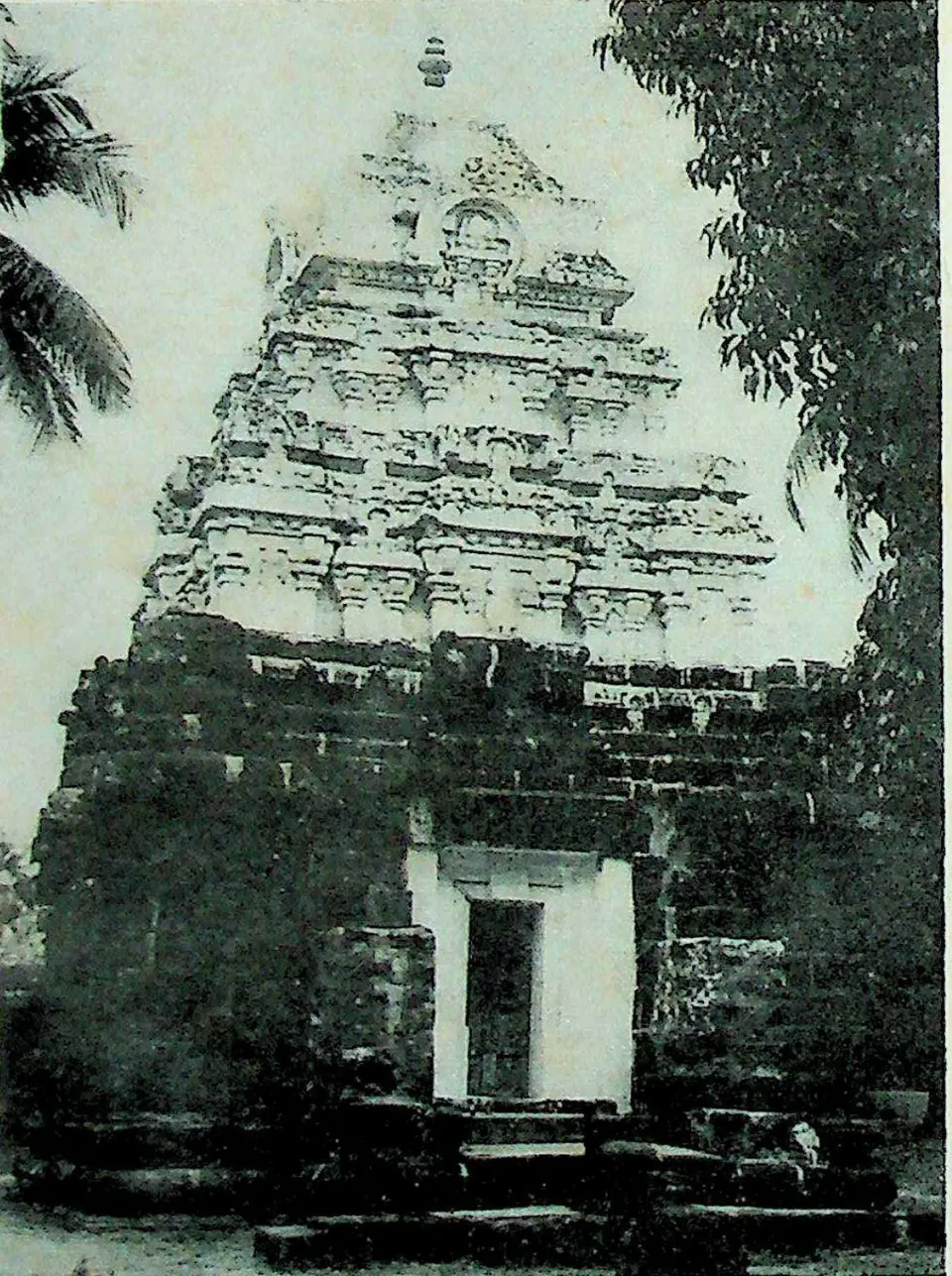
The Eastern Chalukyas ruled Vengi, the coastal country between the lower Godavari and the lower Krishna, for more than four centuries from the early 7th century.12 They were a branch of the Chalukyas of Badami.12 Their founder, Kubja Vishnuvardhana, was a younger brother of the Badami king Pulakesin II.12
Their capital was at first Vengi, the modern Pedavegi near Eluru, and later Rajahmundry.314 J. F. Fleet noted that the kings of this branch were known as “the lords of Vengi”.3 The name came from the territory that formed “the principal and favourite portion of their dominions”.3
Almost all that is known of them comes from their own copper-plate grants.56 From the 10th century these grants list every earlier king with the length of his reign.56 After about 1000 the family was bound to the Cholas of Tanjore by marriages.78 Its heir, Rajendra II, took the Chola throne as Kulottunga I, in 1063 by Fleet’s reckoning7 or in 1070 by Sewell’s.8
Origins
The Badami king Pulakesin II came to the throne in 609 or 610.9 His Aihole inscription records that he took the strong fortress of Pishtapura (Pithapuram) on the east coast.110 It also says that he drove the Pallava king back behind the walls of Kanchi.110
Fleet thought that, because the king was campaigning so far from home, his younger brother Vishnuvardhana was made crown prince (yuvaraja) in 615 to represent him at Badami.12 In Fleet’s view, Vishnuvardhana was then sent to govern the newly conquered east coast in the same role.12 The Godavari district gazetteer of 1907 tells the same story.11 It places the conquest of Pithapuram and Eluru (then Ellore) about 615.11
Vishnuvardhana’s grant from Satara is dated in the eighth year of “the glorious Maharaja” Pulakesin.912 It still calls him only yuvaraja.912 His grant from Chipurupalle, in the Visakhapatnam (then Vizagapatam) district, was made in his own eighteenth year.12 Fleet calculated the day as 7 July 632.12 This grant calls him Maharaja (great king).12
Fleet concluded that “in no great length of time, — at any rate before A.D. 632”, Vishnuvardhana “became established on the eastern coast as an independent sovereign”.2 Fleet left open whether this came about by agreement or by the younger brother’s rebellion.2 His regnal years were counted from his installation as yuvaraja, not from his independence.132 The date of the founding is still argued over. See Evidence and disagreements.
Later grants of the dynasty gave the family a much grander origin. From the reign of Rajaraja I (1022–1063) they open with a descent from the god Brahma through the Moon.1415 The line then runs through fifty-nine emperors at Ayodhya to an ancestor Vijayaditya, who was killed fighting Trilochana-Pallava in the Deccan.1415 His pregnant queen took refuge at an agrahara (a village granted to Brahmins) called Mudivemu.1415 There she bore a son, Vishnuvardhana, who won back the family’s insignia.1415
Fleet thought the full genealogy “probably devised in rivalry of the Solar genealogy of the Cholas”.1516 Behind the legend he found only the facts that the Chalukyas “did come originally from the north, and found the Pallavas in possession of some of the territories afterwards acquired by themselves”.1516 The Cuddapah gazetteer of 1915 identified Mudivemu with Peddamudiyam in the Jammalamadugu taluk.17
The kingdom of Vengi
Fleet described the original Vengi country as the land between the Eastern Ghats on the west and the sea on the east.3 The Godavari bounded it on the north and the Krishna on the south.3 He put its area at “roughly about eight thousand miles”.3 He thought its proper name was the Andhra country.3 He also noted signs that it later took in much of the land north of the Godavari.3
Vengi’s neighbours were the Gangas of Kalinganagara to the north and the Pallavas of Kanchi to the south.3 To the west lay first the Chalukyas of Badami, then the Rashtrakutas of Malkhed, and then the Western Chalukyas of Kalyani.3
The grants name the country Vengi-mandala, Vengi-desa or simply the land of Vengi.31819 They divide it into districts (vishaya) such as Gudrahara or Gudravara and Kanderuvadi.31819 The early grants reach well beyond the delta.1220 Vishnuvardhana I gave a village in the Dimila district near Chipurupalle, north-east of Vengi.1220 His grandson Vishnuvardhana II gave one in the Karmarashtra district, in the Nellore country to the south.1220
The capital, Vengipura, is generally placed at Pedda-Vegi, about seven miles north of Eluru.321 Ruins and mounds there reach towards Denduluru.321 Fleet thought the neighbouring Chinna-Vegi just as likely.3 Copper plates of Jayasimha I were dug up near Pedda-Vegi.22
Rajahmundry, on the Godavari, became the later capital.14 Fleet suggested that it was first occupied under Amma I (918–925), who bore the title Raja-Mahendra.16 He thought the city was named after this king.16 The Godavari gazetteer says that Rajaraja I (1022–1062 in its dating) “fixed his capital at Rajahmundry”.4 See Vengi and Rajahmundry.
The Chinese pilgrim Hiuen Tsang visited the kingdom in the 7th century.23 The Godavari gazetteer sums up his account.23 It describes a country nearly 1,000 miles round and thinly peopled, perhaps because of the recent conquest.23 Its many Buddhist monasteries lay in ruins.23
The line of kings
The dynasty is unusually well documented, because its grants recite the reigns of the earlier kings.5 Fleet wrote that this was “a feature of special interest”.5 But he noted that the reigns are mostly given “in even years, without fractions”.5 The first king whose accession is dated in an era is Amma II, crowned in Saka 867 (945 CE; Saka is an Indian way of counting years).5 Before him, the reigns added up to between 329 and 340 years in different records.5
The Machilipatnam (then Masulipatam) and Idara grants of Amma I are the first to give the whole line with the length of every reign.6 The fullest list used here comes from a pillar inscription of 1202 at Pithapuram, edited by E. Hultzsch.1424 It gives each king’s reign. In order, with the reigns it assigns:1424
| Kings (as named in the 1202 list) | Reign |
|---|---|
| Kubja-Vishnuvardhana | 18 years |
| Jayasimha | 33 years |
| Indraraja, his brother | 7 days |
| Vishnuvardhana; Mangi-yuvaraja; Jayasimha | 9, 25, 13 years |
| Kokkuli; Vishnuvardhana, who expelled him | 6 months; 37 years |
| Vijayaditya-Bhattaraka; Vishnuvardhana | 18, 36 years |
| Narendra (Vijayaditya II) | 48 years |
| Kali-Vishnuvardhana | 1½ years |
| Gunaga-Vijayaditya (III), surnamed Tribhuvanankusa | 44 years |
| Chalukya-Bhima, his nephew | 30 years |
| Vijayaditya (Kollabhiganda) | 6 months |
| Amma | 7 years |
| Tadapa; Vikramaditya; Yuddhamalla | 1 month; 11 months; 7 years |
| Rajabhima | 12 years |
| Amma (II); Danarnava | 25, 3 years |
| no ruler (“by the will of fate”) | 27 years |
| Saktivarman; Vimaladitya | 12, 7 years |
| Rajaraja | 40 years |
| Rajendra-Choda (Kulottunga I) | 50 years |
The figures do not always agree with other records. The same inscription gives Rajaraja I 40 years and Kulottunga 50, where other inscriptions give 41 and 49.2526 Some grants give Jayasimha I thirty years instead of thirty-three.271828 Some give Vijayaditya II forty or forty-four instead of forty-eight.271828
Hultzsch, in his table of 1890, numbered only “those princes who really reigned”.29 The reign chart on this page follows Robert Sewell’s dates of 1932, which rest on Fleet’s reckoning.3031 Other schemes are compared under Evidence and disagreements.3031
Wars with the Rashtrakutas
For two centuries the kings of Vengi fought the Rashtrakutas of Malkhed.332 The Rashtrakutas had replaced the Badami Chalukyas in the western Deccan in the 8th century.332
The Alas plates of 770–71 were issued while the Rashtrakuta prince Govinda II was camped where the Krishna meets the Musi.33 By their own account he had just humbled the king of Vengi.33 Sewell took this as a real defeat of Vishnuvardhana IV, though not an annexation (a taking over of the land).33
The Paithan plates (794 in Sewell’s dating, 796 in Fleet’s) are read in two ways.333435 Sewell understood them to name the ruler of Vengi among Govinda II’s enemies.3334 Fleet read them differently.35 In his reading Govinda II, trying to keep his throne against his brother Dhruva, “called to his assistance even the hostile kings of Malava, Kanchi, and Vengi, and of the Ganga country”.35
Vijayaditya II (799–843) claimed that “during twelve years, by day and by night”, he fought 108 battles with the armies of the Gangas and the Rattas (the Rashtrakutas).3637 He also claimed to have built as many temples of Shiva.3637
Govinda III, the Rashtrakuta king of his time, claimed to have summoned “the lord of Vengi” into his presence.3638 He said that he made this king help to build or fortify a city.3638 Fleet identified the city with Malkhed.3638 Hultzsch concluded in 1890 that “each party claimed the victory over the other”.19
The war continued under Gunaga Vijayaditya III (844–888), whose campaigns are described below. After his death, according to a grant of Amma I, the Vengi country was “overrun by the army of the Ratta claimants”.3940 His nephew Chalukya-Bhima I (888–918) had to win it back.3940 Hultzsch later corrected the translation to “overrun by the army of (Krishna II) the heir (or son) of the Ratta (viz. Amoghavarsha I)”.25
A Masulipatam grant of Chalukya-Bhima I records battles against Krishna II and his allies.41 In them a sixteen-year-old son of the king was killed fighting from his elephant.41
Amma I (918–925) had to put down “feudatory relatives, who had joined the party of his natural adversaries”.391942 Hultzsch and Fleet took these adversaries to be the Rashtrakutas.391942 Chalukya-Bhima II (934–945) claimed to have destroyed a great army sent against him by the Rashtrakuta king Govinda.4342 Fleet counted this king as Govinda V in 1891 and as Govinda IV in 1896.4342
Under Amma II (945–970) the Rashtrakutas stepped in again. See below. Their own power ended in 973.44 That year Taila II overthrew the last Rashtrakuta king and restored the Western Chalukya monarchy, the Chalukyas of Kalyani.44
Gunaga Vijayaditya III
The reign of Gunaga Vijayaditya III is the best remembered of the early period. The Pithapuram inscription praises him as the hero:1424
- “who played the game of ball on the battle-field with the head of Mangiraja”
- “who burnt Chakrakuta”
- “who frightened Sankila, residing in Kiranapura (and) joined by Krishna”
- “who restored his dignity to Vallabhendra”
- “who received elephants as tribute from the Kalinga (king)”1424
An earlier grant says that, “prompted by the lord of the Rattas”, he conquered the Gangas and cut off the head of Mangi.45 His general Pandaranga is praised in a stone inscription at Addanki for taking twelve districts of the Boyas.46 Its opening verse is one of the earliest Telugu poems in an inscription.46 See the Addanki inscription.
Historians have read these claims in opposite ways. Fleet, in 1891, identified “Krishna” with the Rashtrakuta king Krishna II and the burnt city with his capital, Malkhed.47 Hultzsch, in 1897, rejected this.25 He argued that the “lord of the Rattas” and “Vallabhendra” of the Eastern Chalukya records must be a Rashtrakuta king.25
In Hultzsch’s view, Vijayaditya III had been a vassal (subject king) of Amoghavarsha I.25 Amoghavarsha claimed to have been “worshipped by the lords of Malava and Vengi”.25 The Krishna he frightened would then be a Paramara king of Malava.25 In 1908, after the Maliyapundi grant was found, Hultzsch withdrew this identification as one that “must be wrong”.48 He agreed with Fleet that the Krishna was Krishna II.48
Sewell, in 1932, followed a later identification of Sankila with the Kalachuri Sankaragana, Krishna II’s brother-in-law.4950 He concluded that Vijayaditya sacked and burnt Malkhed some time between 877 and 888 and then withdrew.4950 He found this confirmed by a Rashtrakuta grant of 930, which says that in Krishna II’s reign his enemies abandoned Manyakheta.51 See Gunaga Vijayaditya III.
The succession wars, 925–945
After Amma I died in 925 the throne changed hands five times in about two years. Amma I’s young son, Beta-Vijayaditya V, was expelled after a fortnight by his cousin Tadapa, son of Yuddhamalla I.5253545551 After a month Tadapa was killed or expelled by Vikramaditya II, a son of Chalukya-Bhima I.5253545551 Vikramaditya in turn was overthrown by Bhima, Amma I’s younger son.5253545551 Eight months later Yuddhamalla II, son of Tadapa, killed Bhima and held the throne for seven years.5253545551
Hultzsch called Tadapa and Yuddhamalla “usurpers” (men who seized the throne).29 About 934 Amma I’s half-brother, Chalukya-Bhima II, also called Rajabhima, drove Yuddhamalla out.5443 His grants say that he also overcame a series of other claimants and opponents.5443 Among them was an army sent by the Rashtrakuta king.5443 Fleet thought that under Amma II, Chalukya-Bhima II’s son, the family quarrels that had begun with Beta-Vijayaditya “were now at an end”.4356
Beta-Vijayaditya survived. Two later records make him the ancestor of a separate line of princes.525326 One of them, a pillar inscription at Pithapuram, records the coronation of a later member of that line in 1202.525326 The line is described on the Pithapuram branch below.
A grant of Amma II’s time, found in 1917, adds to the story.57 It says that after Vikramaditya II’s reign “the feudatory Sabara chiefs, the commanders of the Vallabha (i.e., the Rashtrakuta) forces and others apportioned among themselves the (Chalukyan) territory for seven years”.57 This lasted until Chalukya-Bhima II drove out these usurpers.57
The junior line did not give up.5859 Yuddhamalla II’s sons Badapa and Tala II issued grants of their own.5859 An epigraphist (a scholar of inscriptions) examined Badapa’s grant in 1921.5859 He concluded that Badapa had driven Amma II out for a time with the help of the Rashtrakuta Krishna III.5859
Amma II, Danarnava and the interval
Amma II was crowned on 5 December 945, in the twelfth year from his birth.56 He issued six grants over a reign of twenty-five years.5660 They include a gift by a Jain laywoman to a Jain temple, and a grant made at the request of his parents-in-law.5660 His elder half-brother Danarnava followed him and reigned for three years, from about 970 to 973.60 Sewell noted that it is uncertain which of the two brothers was the elder.31
The Mangallu grant was issued in Amma II’s name and noticed in 1917.5761 It says that after ruling for eleven years he went to the Kalinga country Krishna-kopat.5761 Then Danarnava, “the son of Bhima … and Ankidevi”, ruled the kingdom “with the consent of his step-brother”.5761 The 1917 report took the words to mean “in wrath against Krishna”, that is the Rashtrakuta Krishna III.57
V. Rangacharya edited the grant in 1960.6263 He understood the words to mean that Amma went because Krishna was angry with him.6263 He thought Amma more the victim than the avenger of that anger, with Danarnava acting as his regent (ruling on his behalf).6263 P. V. Parabrahma Sastry argued in 1978 that Krishna III had made Danarnava king after Amma fled.64
The same grant was made at the request of a chief called Kakatya Gundyana.61 Parabrahma Sastry took it to be the earliest reference to the family that later ruled as the Kakatiyas.65 He dated it to about 956.65 The later grants still give Amma II a full reign of twenty-five years.6063 See Amma II and Danarnava.
What followed Danarnava is not clear. The grants of Rajaraja I and his successors say that “for twenty-seven years … the land of Vengi was without a leader”.6024 They also say that the Andhra country was without a ruler “by the will of fate”.6024
Hultzsch pointed out in 1890 that the reigns on either side leave room for about thirty years, not twenty-seven.6066 Those reigns are fixed by the coronation dates of Amma II and Rajaraja I.6066 P. V. Parabrahma Sastry wrote in 1978 that Jata-Choda Bhima killed Danarnava and seized the Vengi kingdom.67 Vengi, he wrote, was then thrown into anarchy (disorder with no ruler).67
A. C. Burnell took the gap for a time of anarchy, perhaps caused by Chola invasions. Fleet suspected that the Cholas had actually conquered and held Vengi for a time.60 It was later established that the Chola king Rajaraja I came to the throne in 985.25 Hultzsch then dated his conquest of Vengi, made in his thirteenth or fourteenth year, to 997–98, inside the gap.25
Sewell summarised an inscription of the same Chola king.68 As he read it, the inscription does not say that the king conquered Vengi.68 In his summary, it says that the king restored order there after it had been twenty-seven years without a ruler.68 Sewell took this to mean that he helped the Eastern Chalukya prince Saktivarman to win back his throne, about 999.68
B. V. Krishna Rao suggested in 1930 that the “interregnum” (the gap between reigns) was really the rule of Badapa and the junior line.69 In his view the senior branch, restored with Saktivarman, did not recognise that rule.69
The Chola alliance
The kings who ruled after the interval were the sons of Danarnava. Saktivarman I, the elder, reigned for twelve years. The Godavari gazetteer says that the Chola Rajaraja I set him up “as king (or perhaps feudatory) in Vengi”, about 999.2324 Gold coins with his title Chalukya-Chandra have been found on the islands of Ramree and Cheduba, off the coast of Arakan.7071
His younger brother Vimaladitya was crowned in 1011.7273 He married Kundavadevi, a daughter of Rajaraja Chola.7273 Sewell called the marriage the first union of the two royal houses.74 Hultzsch had thought in 1890 that it was “probably a forced one and the result of his conquest of Vimaladitya”.75
The Godavari gazetteer adds that Vimaladitya apparently tried to break away from the Cholas.2374 As a result, it says, Rajendra Chola invaded Vengi again and set up a pillar of victory on the Mahendragiri hill in Ganjam.2374
Vimaladitya’s son Rajaraja Narendra was crowned on 16 August 1022.73 Fleet numbered him Rajaraja I, and his grants also call him Vishnuvardhana.73 He married Ammangadevi, daughter of Rajendra Chola, his mother’s brother.73 Fleet wrote that “as the result of these intermarriages, the members of this family were, from this time, plainly Cholas at heart, far more than Chalukyas”.7
His Korumelli grant is the first to set out the full mythical genealogy of the family.15 Fleet thought this genealogy was devised in rivalry with the Cholas’ descent from the Sun.15 The Godavari gazetteer says that he fixed his capital at Rajahmundry.4 It says too that the Mahabharata was translated into Telugu in his reign.4
The Western Chalukyas of Kalyani had replaced the Rashtrakutas in 973.4476 They now pressed on Vengi from the west.4476 Vengi became a prize fought over between them and the Cholas.4476
Rajaraja’s long reign was not peaceful. N. Venkataramanayya argued in 1952 that he had begun to rule in 1019 or 1020, some years before his coronation.7778 He based this on inscriptions that give both his regnal year and the Saka year.7778
Rajaraja’s half-brother Vijayaditya VII issued a grant from Pamulavaka.79 B. V. Krishna Rao summarised it in 1930.79 In his summary, it says that after Rajaraja had ruled for twelve years Vijayaditya expelled him by force and crowned himself king of Vengi.79 Krishna Rao dated the coronation to 1030,79 and Venkataramanayya to 1031.78
Krishna Rao thought that Vijayaditya was soon driven out and became a vassal of the Western Chalukya king Somesvara I.808182 Krishna Rao also edited a grant of Vijayaditya’s son.808182 It says that Vijayaditya conquered Vengi while his half-brother was away, and placed this son, Saktivarman II, on the throne.808182
Krishna Rao placed these events after Rajaraja had reigned for forty-one years.808182 He calculated the coronation as 18 October 1061.808182 Another grant mourns the young king’s death in battle.808182 The later grants of the dynasty say nothing of these events.7325 They give Rajaraja an unbroken reign of forty or forty-one years.7325
Kulottunga I and the union of the crowns
Rajaraja Narendra’s son, Rajendra II, was mostly Chola by blood.83 Sewell pointed out that both his father and his grandfather had married Chola princesses.83
How he came to rule both Vengi and the Chola kingdom is disputed.784854 Fleet, in 1891, drew his view from Rajendra’s own records.7 He concluded that Rajendra was first anointed king of Vengi in 1063.7 In Fleet’s account, in the same year, “wishing for … the Chola sovereignty”, Rajendra handed Vengi to his uncle Vijayaditya VII.7 Fleet says that he then won the Chola crown “by hostile invasion and conquest”.7
Hultzsch, in 1890, thought he had inherited the Chola kingdom from his father-in-law.84 The Godavari gazetteer says that Vijayaditya VII had first pushed him out of the succession at Vengi.4 It says that Kulottunga claimed the Chola throne “as both grandson and adopted son of a former Chola ruler”.4
Sewell set out both readings of the years after 1063:86
- In Fleet’s reading, Rajendra held Vengi and later forgave his uncle and made him viceroy (governor for the king).86
- In Hultzsch’s later reading, Vijayaditya VII ruled Vengi from 1063 to 1070 with the backing of the Chola king Virarajendra.86
Sewell dated Rajendra’s seizure of the Chola throne, as Kulottunga I, to 9 June 1070.858
The Tamil poem Kalingattupparani, written for Kulottunga, treats him purely as a Chola king.87 Fleet noted that it never mentions Vengi, the Chalukya family or its boar crest.87 It gives him the Chola tiger banner.87
Bilhana wrote a Sanskrit poem, the Vikramankadevacharita, on the life of Kulottunga’s rival Vikramaditya VI of Kalyani.8889 It calls Kulottunga Rajiga, “the lord of Vengi”, who seized the throne of Kanchi.8889 See Kulottunga I.
The end of the line
After 1070 Vengi was governed for the Chola emperor by viceroys.7909192 Vijayaditya VII held it for fifteen years, until his death in 1077.7909192 Kulottunga then appointed his second son, Rajaraja II, who gave it up after a year.7909192 Next he appointed his third son, Vira-Choda, crowned in 1078.7909192
The Godavari gazetteer adds that another son, Rajaraja Choda Ganga, replaced Vira-Choda in 1084.92 Vira-Choda was put back in 1088–89.92 He was followed by Vikrama Chola, who ruled Vengi until about 1118.92
Vikrama Chola then left for the south to become co-regent and then Chola king.92 The Western Chalukya Vikramaditya VI occupied Vengi, and from 1120 to 1124 he was “undisputed king” there.92 Inscriptions of Vikrama Chola dated 1127 and 1135 were later found in the Krishna (then Kistna) district.92
The gazetteer says that Kulottunga had appointed as viceroy a chief named Choda, son of Gonka.92 Choda’s descendants long played a leading part in the district.92 These were the Velanandu (Velanati) family, of the Chandavolu country in the western Krishna delta.93
The end date of 1077 used on this page marks the death of Vijayaditya VII, the last of the old line to rule Vengi in his own right.9294 The descendants of Beta-Vijayaditya V lived on as princes at Pithapuram.26 Their pillar inscription of 1202 records the coronation of Mallapa III, also called Vishnuvardhana.26 It took place in the temple of Kunti-Madhava there on 16 June 1202.26 M. Rama Rao wrote in 1964 that the Kakatiyas of Warangal conquered the coastal country in the first decade of the 13th century.76
Government
The kings’ titles grew with their power. The early kings called themselves Maharaja. Fleet found that Vijayaditya II was the first of the line to use the full imperial titles Maharajadhiraja, Paramesvara and Bhattaraka.2854 The later kings kept them.2854
From his time the royal seals carry the legend Sri-Tribhuvanankusa, “the glorious elephant-goad of the three worlds”.28 Fleet took it to be a family motto rather than a personal title.28 The seals also show the family’s boar crest.1695 The later genealogies list these royal insignia (signs of royalty):1695
- a white parasol
- a conch
- a double drum
- the boar crest
- a peacock-feather fan
- a spear
- a throne
- an ornamental arch
- a golden sceptre
- the emblems of the rivers Ganga and Yamuna1695
An heir to the throne could be marked by a necklace (kanthika).4025 Beta-Vijayaditya V was called Kanthika-Beta for this reason.4025
A grant was a royal order to the people of a district (vishaya). Kielhorn translated the address of the Nandamapundi grant of 1053 as “the cultivators, headed by the Rashtrakutas”.96 Hultzsch rendered the same formula in an older grant as “all householders, (viz.) heads of provinces, &c.”.97
The Nandamapundi order was issued “in the presence of the Mantrin, Purohita, Senapati, Yuvaraja, Dauvarika and Pradhana”.96 These were the councillor, family priest, commander of the army, heir apparent, doorkeeper and chief minister.96 Kielhorn noted that the Chellur plates of Vira-Choda name “the five Pradhanas” as the officers who carried out the king’s order.96
Each grant names an executor, called ajnapti or dutaka.12 Fleet explained the dutaka as the officer “who conveyed the king’s commands to the local officials by whom the charter was then drawn up and delivered”.12
A Kataka-raja is executor of many grants from Amma I to Rajaraja I.52569899100 Fleet could not tell whether this was a name or a title.5256 Kielhorn thought it the title of an official.98 Hultzsch rendered it “superintendent of the royal camp”.9899100 He found it held by three generations of descendants of Gunaga Vijayaditya III’s general Pandaranga.9899100 Grants also name their composers and writers, such as Madhava-bhatta, Potana-bhatta and Nanniya-bhatta.5698
Some families served the kings for generations. The Pattavardhini family claimed that its founder, Kalakampa, had killed a king named Daddara in battle with Kubja Vishnuvardhana’s permission.2101102 One of his descendants, Bhandanaditya, served Vijayaditya IV.2101102 He received the village of Gonturu with twelve hamlets from Amma I.2101102 A grant of Amma II calls the Pattavardhika lineage one whose members “were servants of the Chalukya kings”.5660
Taxes and revenue
The grants do not describe the revenue system. They show what a village owed only through the dues they let off. Korraparru was given to twenty-four Brahmins “exempt from all taxes”.97 Gonturu, with its hamlets, was given to Bhandanaditya on the same terms.102 Nandamapundi was given to the poet Narayana “free from all taxes”, having been “constituted … an agrahara”.98
Burnell explained that when a village was made an agrahara the donees “had then a right to the dues formerly paid to the king”.103 The grants end with the usual curses on anyone who blocks the gift.10298
Army
The kings’ records are full of war. Vijayaditya II claimed 108 battles in twelve years, and Chalukya-Bhima I claimed 360.3725 Hultzsch took the second figure to mean a whole year of continuous war.3725 A grant praises Kali-Vishnuvardhana V as “skilled in fighting with elephants and horses”.37
Elephants recur. Gunaga Vijayaditya III received elephants as tribute from Kalinga.24 A son of Chalukya-Bhima I died fighting from his elephant.41 The Pattavardhini warrior Bhandanaditya is praised for his elephant Anjana.102 The first king’s surname, Vishamasiddhi, is explained in his Chipurupalle grant as “success against fortresses, difficult of access, on the plains, in the water, in the woods, and on hills”.104
The commanders were rewarded with land. Amma I’s Masulipatam grant gave the village of Drujjuru to Mahakala.4052 Mahakala had been a general of Chalukya-Bhima I and was the son of that king’s foster-sister.4052 Gunaga Vijayaditya III made his general Pandaranga commander of the army in the first year of his reign.46 The grant of Gonturu to Bhandanaditya, “one of his military officers” in Hultzsch’s words, is another such reward.19
Economy
The economy that the grants show is agricultural. They give villages, fields and hamlets to Brahmins, temples and officers.98102 They describe boundaries by tanks, rivers, palmyra and tamarind trees, and the field-margins of neighbouring villages.98102
A grant of Amma II praises his reign in the usual terms.105 It says the country “produced an abundance of well-ripened grain of various kinds”.105 It “possessed cows that were continually yielding milk, and was free from fears, calamities, diseases, and thieves”.105 The library’s sources say little about trade under the Eastern Chalukyas. The one sign of contact across the Bay of Bengal is a group of gold coins of Saktivarman I and Rajaraja I.7071 They were found on islands off the coast of Arakan and brought from Siam.7071
Coins
The only coins attributed to the dynasty in the sources used here are thin gold pieces weighing between 65 and 67 grains.10671 They are stamped on one side only, with separate punches.10671 In the centre is the Chalukya boar, with a parasol and two fly-whisks above it and a lamp-stand in front and behind.10671
Round the boar runs a legend in what Fleet called the Old-Kanarese alphabet.10671 It reads sri-Chalukya-Chandrasya, “of the glorious Chalukya-Chandra”, that is Saktivarman I.10671 Or it reads sri-Rajarajasya, “of the glorious Rajaraja”.10671
Walter Elliot published two of them in 1886.1067071 He had taken them for early punch-marked coins of the 5th or 6th century and linked them with the Badami king Mangalesa.1067071 Fleet showed in 1890, from their letters and legends, that they belonged to the two Eastern Chalukya kings.1067071 He warned that “it is useless to build up history on numismatic bases, until the latter have been very carefully tested by and arranged in accordance with epigraphical evidence”.1067071
They were found in the sand of the islands of Ramree and Cheduba off the Arakan coast.70107 Others were brought from Siam.70107 A local tradition reported to the British Museum held that they had been sent from India as offerings for an image of the Buddha.70107
Society
The donees of the grants were mostly Brahmins, named with their gotras (clans) and Vedic schools. Korraparru, for instance, went to twenty-four Brahmins of ten gotras, followers of the Hiranyakesi and Apastamba schools.29 Royal servants appear too.40 Mahakala was the son of a foster-sister of Chalukya-Bhima I.40 She was the daughter of the king’s wet-nurse.40
Women gave in their own right.60108 The Jain laywoman Chamekamba, of the Pattavardhika lineage, had a village given to her teacher Arhanandin for a temple dining-hall.60108 The Nandamapundi grant describes its donee Narayana, son of a minister, as a poet in Sanskrit, Kannada, Prakrit, Paisachi and Telugu.96
Religion
The grants open with a formula that presents the Chalukyas as of the Manavya gotra and sons of Hariti.5297 It says they won their kingdom through the favour of Kausiki (Durga) and were protected by the Mothers.5297 It says they meditated on Mahasena (Skanda) and received their boar crest from Narayana (Vishnu).5297
Many kings call themselves paramamaheshvara, “devout worshippers of Maheshvara” (Shiva), among them Vishnuvardhana II,20 Vijayaditya II,28 Kali-Vishnuvardhana V,47 Chalukya-Bhima II,54 Rajaraja I96 and Vira-Choda.90
Vijayaditya II is said to have built 108 temples of Shiva.19 They were called Narendreshvara after his title Narendra.19 Chalukya-Bhima I founded the Shiva temple of Chalukya-Bhimeshvara.25 The town of Bhimavaram near Kakinada (then Cocanada) took its name from this temple.25 An inscription of 958 says that Vijayaditya II built the Umamaheshvara temple at Vijayawada (then Bezwada).109
Robert Sewell wrote in his list of 1882 that the Chalukyas “seem to have been principally worshippers of Vishnu”.110 The Godavari gazetteer of 1907 called them “Vaishnavites by creed”.23 P. Chenchiah wrote in 1928 that “the early Chalukyas were Jains, but the later Chalukyas were champions of Hinduism”.111 The inscriptions support neither view as a general rule.
They show Shaiva kings who also supported Jains. A grant of Vishnuvardhana III gave the village of Musinikunda to the Jain temple called Nadumbi-vasati at Vijayawada.112 Its executor is named as Ayyana-mahadevi, queen of Kubja Vishnuvardhana.112 The epigraphist who examined it in 1917 called it “so far, the earliest mention of Jainas and Jaina temples in Eastern Chalukya records”.112
The Kaluchumbarru grant of Amma II provided for repairs to the charitable dining-hall of a Jain temple.108 Hiuen Tsang had found the Buddhist monasteries of the country already deserted in the 7th century.23
Art and architecture
The temples of the dynasty are described on their own pages. This section is an outline. M. Rama Rao surveyed the temples in 1956–58.113114115 He attributed the Shiva temples at Draksharama, Chalukya-Bhimavaram and Chebrolu to Chalukya-Bhima I.113114115 He gave the same king the temples of the other Pancharamas (Palakollu, Somarama and Amaravati).113114115
Rama Rao dated six temples at Bikkavolu to the time of Gunaga Vijayaditya III, the king before Chalukya-Bhima I.113114115 He did so from an inscription naming the shrine of “Bijayeshvara”.113114115 His editor added that the Jain basadi (temple) of Ayyana-mahadevi near Vijayawada and the 108 temples of Vijayaditya II had not been found.116
Earlier, Robert Sewell’s list of 1882 had credited the Eastern Chalukyas with cutting rock temples such as those at Undavalli, an attribution that later writers disputed.110 See Temples and architecture.
Language and literature
The grants are in Sanskrit, but Telugu enters them. The grant of Kali-Vishnuvardhana V found at “Ahadanakaram” has its operative part, the order itself, “in a difficult style of Telugu”, in Fleet’s words.47 The boundaries in the Nandamapundi grant of 1053 are in Telugu.95 The Kaluchumbarru grant of Amma II ends with a Telugu passage.117
The stone inscription of Pandaranga, Gunaga Vijayaditya III’s general, at Addanki opens with a Telugu poem.46 Its editor, K. V. Lakshmana Rao, called it “positive evidence of the existence of Telugu poetry in the middle of the 9th century”.46 Chenchiah, writing in the same year, still held that “there is no available literature before the eleventh century”.118 He also held that all earlier inscriptions were in Prakrit or Sanskrit.118
Burnell found the dynasty’s own script “remarkably square and upright”, quite unlike the sloping letters of the Western Chalukyas.119
Telugu literature proper begins under the Eastern Chalukyas. The Godavari gazetteer says that the Mahabharata was translated into Telugu in the reign of Rajaraja I.4 Local tradition remembers this king as Rajaraja Narendra.4 The translator was Nannaya. Chenchiah dated the beginning of the translation to the reign of Rajaraja Narendra.111
The Nandamapundi grant names the author of its Sanskrit verses as Nanniyabhatta.98 Hultzsch thought him “perhaps identical with Nannayabhatta, the first Telugu translator of the Mahabharata”.98 Burnell dated the Telugu Mahabharata in two different ways.120121 In one note he put it in the 12th century.120121 In another he put Nannaya in the middle of the 11th, believing his patron to be a Vishnuvardhana converted by Ramanuja.120121 See Language and literature.
Evidence and disagreements
The sources
Most of what is known comes from copper-plate grants, which are royal orders with a long preamble on the king’s ancestors. Stone inscriptions of the dynasty are rare.112 The epigraphist reporting in 1917 wrote that “very few stone records of the Eastern Chalukyas are known”.112
The grants from Amma I’s time onwards give the whole line with the length of every reign.6 The Pithapuram pillar inscription of 1202 repeats it.14 Records of their neighbours often tell a different story of the same events.198789 These neighbours were the Rashtrakutas, the Western Chalukyas, the Cholas and the Gangas of Kalinga.19
The court poems written for Kulottunga I and for Vikramaditya VI are partisan (they take one side).8789 Fleet doubted at least one early grant, Jayasimha I’s from Pedda-Maddali, because of its many errors.18
When did the kingdom begin?
No grant dates the founding in an era. All dates are reckoned back from Amma II’s coronation in 945, using the reign lengths in the later grants, or from the eclipses mentioned in the early ones.59
| Source | Beginning of Kubja Vishnuvardhana’s rule in the east |
|---|---|
| Burnell (1878)122123103 | About 620 from the total of the reigns; about 606–7 from Fleet’s first reading of the Chipurupalle date |
| Mackenzie, Kistna manual (1883)124 | Vengi given to him about 605 |
| Hultzsch (1890)665 | About Saka 526–27 (604–05); Fleet thought this eleven or twelve years too early |
| Fleet (1891)132 | Made yuvaraja in 615, from which his years are counted; independent before 632 |
| Godavari gazetteer (1907)11 | Conquest about 615; independent by 632 |
| Hultzsch, Kopparam plates (1926)125126 | Still a dependent of Pulakesin II in the latter’s 21st year, which Sewell calculated as 631 |
| Sewell and Aiyangar (1932)10 | 615 |
| Rama Rao (1964)76116 | Independent, with his brother’s consent, in 624–25 |
Fleet’s date rests on the lunar eclipse in Vishnuvardhana’s Chipurupalle grant, of his eighteenth year.12713128 He chose the eclipse of 7 July 632.12713128 He rejected the eclipses of 622 and 623 preferred by Burnell and James Burgess.12713128 Those dates would make Vishnuvardhana’s reign begin before that of his elder brother Pulakesin II.12713128
He confirmed his date with two dated grants of Vishnuvardhana II, of 664 and 668.128 But he could do so only by accepting the thirty years that a minority of grants give to Jayasimha I instead of thirty-three.128 The Kopparam plates are a grant made in the east by Pulakesin II himself.125 Hultzsch took them as evidence that his brother was not yet independent in 631.125 See Kubja Vishnuvardhana.
The reign lengths in the grants
The lengths of reign that the grants give are rounded and do not always agree:
- Jayasimha I has 33 years in most grants and 30 in some. Fleet accepted 30.18128
- Vijayaditya II has 48 years in most, 44 in Amma I’s grant and 40 in two.2728129 Fleet thought 44 correct and the others mistakes in adding or subtracting four years as heir apparent.2728129
- Vikramaditya II has nine months, eleven months or a year.5457
- Danarnava has three years in most grants, and thirty in one grant that leaves out the interval.60
- Rajaraja I and Kulottunga I have 41 and 49 years in some records, and 40 and 50 in others.7325 Fleet thought the variation “looks somewhat as if there was a break”.73
Because the reigns are mostly given in whole years, Fleet also worked out a second list.130131 It assumes that each regnal year began on the first day of the lunar month Chaitra.130131 In that list some years are counted twice, as the last year of one king and the first of the next.130131
Comparing the chronologies
Later writers moved most of the reigns. The table compares some of them:
| King | Hultzsch (1890)66 | Fleet (1891)132 | Sewell (1932)3031 | Rama Rao (1964)76 |
|---|---|---|---|---|
| Kubja Vishnuvardhana | about 605–623 | 615–633 | 615–633 | from 624–25 |
| Vijayaditya II | about 794–842 (48 years) | 799–843 | 799–843 | 806–846 |
| Gunaga Vijayaditya III | about 843–887 | 844–888 | 844–888 | 848–891 |
| Chalukya-Bhima I | about 887–917 | 888–918 | 888–918 | 892–922 |
| Vimaladitya | Saka 937 (?) to 944 (about 1015–1022)75 | 1015–1022 | 1011–1022 | not given |
| Rajaraja I | Saka 944–985 (1022–1063) | 1022–1063 | 1022–1063 | 1021–1063 |
Hultzsch gave his dates in the Saka era. The years in the first column add 78 to his figures. Only the coronation dates of Amma II (945) and Rajaraja I (1022), and the coronation of Vimaladitya recorded in 1011, are fixed.13272
Sewell kept Fleet’s 888 for Chalukya-Bhima I, although a newly found grant gave a coronation date that seemed to point to 892.133 P. Chenchiah’s literary history of 1928 gives yet other dates, such as 1005–1022 for Vimaladitya.134
The interval after Danarnava
The grants give the gap after Danarnava as twenty-seven years.6024 But the coronation dates of Amma II and Rajaraja I leave about thirty.6024 Scholars have explained the gap in different ways:60256869
- Burnell called it a time of anarchy.60
- Fleet suspected Chola rule.60
- Hultzsch placed the Chola conquest of Vengi in 997–98, inside it.25
- Sewell read a Chola record as saying that Rajaraja I restored order and helped Saktivarman to the throne.68
- Krishna Rao suggested that the junior line of Badapa had ruled in the gap.69
See Saktivarman I.
Other open questions
- Who was “Krishna”? Gunaga Vijayaditya III’s opponent has been identified with the Rashtrakuta Krishna II (Fleet 1891, Sewell 1932, Hultzsch 1908).474849 He has also been identified with a Paramara king of Malava (Hultzsch 1897).25
- How did Kulottunga I win the Chola crown? Fleet says by conquest in 1063.7 Hultzsch (1890) says by inheritance from his father-in-law.84 Sewell and the Godavari gazetteer say that he seized it in 1070 after a disputed succession.854
- Did Vijayaditya VII rule Vengi or govern it for his nephew? Fleet read the Chellur plates as making him viceroy from 1063.94 Hultzsch later thought he ruled in his own right from 1063 to 1070 with Chola support.86
- When did Rajahmundry become the capital? Fleet suggested the reign of Amma I, whose title was Raja-Mahendra.1 The Godavari gazetteer says Rajaraja I fixed his capital there.4
- Was Kundavadevi’s marriage forced? Hultzsch thought the marriage followed a Chola conquest of Vimaladitya.75 Sewell thought Vimaladitya and his father-in-law were on friendly terms.74 But Sewell also reported V. Venkayya’s view that Vimaladitya spent four years as a prisoner of the Chola king.74
Footnotes
-
Fleet, “Chronology of the Eastern Chalukya Kings” (1891), p. 94 (archive.org (opens in a new tab)). ↩ ↩2 ↩3 ↩4 ↩5 ↩6 ↩7 ↩8 ↩9 ↩10 ↩11 ↩12
-
Fleet, “Chronology of the Eastern Chalukya Kings” (1891), p. 95 (archive.org (opens in a new tab)). ↩ ↩2 ↩3 ↩4 ↩5 ↩6 ↩7 ↩8 ↩9 ↩10 ↩11 ↩12
-
Fleet, “Chronology of the Eastern Chalukya Kings” (1891), p. 93 (archive.org (opens in a new tab)). ↩ ↩2 ↩3 ↩4 ↩5 ↩6 ↩7 ↩8 ↩9 ↩10 ↩11 ↩12 ↩13 ↩14 ↩15 ↩16 ↩17
-
Hemingway, Godavari (1907), p. 21 (archive.org (opens in a new tab)). ↩ ↩2 ↩3 ↩4 ↩5 ↩6 ↩7 ↩8 ↩9 ↩10 ↩11 ↩12
-
J. F. Fleet, “The Chronology of the Eastern Chalukya Kings”, Indian Antiquary XX (1891), p. 1 (archive.org (opens in a new tab)). ↩ ↩2 ↩3 ↩4 ↩5 ↩6 ↩7 ↩8 ↩9
-
Fleet, “Chronology of the Eastern Chalukya Kings” (1891), p. 266 (archive.org (opens in a new tab)). ↩ ↩2 ↩3 ↩4 ↩5 ↩6
-
Fleet, “Chronology of the Eastern Chalukya Kings” (1891), p. 277 (archive.org (opens in a new tab)). ↩ ↩2 ↩3 ↩4 ↩5 ↩6 ↩7 ↩8 ↩9 ↩10 ↩11 ↩12 ↩13
-
Sewell and Aiyangar, Historical Inscriptions (1932), p. 83 (archive.org (opens in a new tab)). ↩ ↩2 ↩3
-
Fleet, “Chronology of the Eastern Chalukya Kings” (1891), p. 3 (archive.org (opens in a new tab)). ↩ ↩2 ↩3 ↩4
-
Robert Sewell and S. Krishnaswami Aiyangar, The Historical Inscriptions of Southern India (1932), p. 22 (archive.org (opens in a new tab)). ↩ ↩2 ↩3
-
F. R. Hemingway, Madras District Gazetteers: Godavari, Vol. I (1907), p. 19 (archive.org (opens in a new tab)). ↩ ↩2 ↩3
-
Fleet, “Chronology of the Eastern Chalukya Kings” (1891), p. 96 (archive.org (opens in a new tab)). ↩ ↩2 ↩3 ↩4 ↩5 ↩6 ↩7 ↩8 ↩9 ↩10
-
Fleet, “Chronology of the Eastern Chalukya Kings” (1891), p. 5 (archive.org (opens in a new tab)). ↩ ↩2 ↩3 ↩4 ↩5 ↩6
-
Hultzsch, “Pithapuram Pillar Inscription” (1897), p. 239, translation (archive.org (opens in a new tab)). ↩ ↩2 ↩3 ↩4 ↩5 ↩6 ↩7 ↩8 ↩9
-
Fleet, “Chronology of the Eastern Chalukya Kings” (1891), p. 274 (archive.org (opens in a new tab)). ↩ ↩2 ↩3 ↩4 ↩5 ↩6 ↩7 ↩8
-
Fleet, “Chronology of the Eastern Chalukya Kings” (1891), p. 275 (archive.org (opens in a new tab)). ↩ ↩2 ↩3 ↩4 ↩5
-
C. F. Brackenbury, Madras District Gazetteers: Cuddapah (1915), pp. 26–27 (archive.org (opens in a new tab)). ↩
-
Fleet, “Chronology of the Eastern Chalukya Kings” (1891), p. 97 (archive.org (opens in a new tab)). ↩ ↩2 ↩3 ↩4 ↩5 ↩6
-
Hultzsch, South-Indian Inscriptions, Vol. I (1890), p. 38 (archive.org (opens in a new tab)). ↩ ↩2 ↩3 ↩4 ↩5 ↩6 ↩7 ↩8 ↩9 ↩10
-
Fleet, “Chronology of the Eastern Chalukya Kings” (1891), p. 98 (archive.org (opens in a new tab)). ↩ ↩2 ↩3 ↩4
-
Imperial Gazetteer of India: Madras, Vol. I (1908), p. 193 (archive.org (opens in a new tab)). ↩ ↩2
-
V. Rangacharya, “The Pedda-Vegi Plates of the Eastern Chalukya King Jayasimha I”, Epigraphia Indica XIX (1928), p. 258 (archive.org (opens in a new tab)). ↩
-
Hemingway, Godavari (1907), p. 20 (archive.org (opens in a new tab)). ↩ ↩2 ↩3 ↩4 ↩5 ↩6 ↩7 ↩8 ↩9
-
Hultzsch, “Pithapuram Pillar Inscription” (1897), p. 240, translation (archive.org (opens in a new tab)). ↩ ↩2 ↩3 ↩4 ↩5 ↩6 ↩7 ↩8 ↩9 ↩10
-
Hultzsch, “Pithapuram Pillar Inscription” (1897), p. 227 and notes (archive.org (opens in a new tab)). ↩ ↩2 ↩3 ↩4 ↩5 ↩6 ↩7 ↩8 ↩9 ↩10 ↩11 ↩12 ↩13 ↩14 ↩15 ↩16 ↩17 ↩18 ↩19 ↩20 ↩21
-
Hultzsch, “Pithapuram Pillar Inscription” (1897), pp. 228–229 (archive.org (opens in a new tab)). ↩ ↩2 ↩3 ↩4 ↩5 ↩6
-
Fleet, “Chronology of the Eastern Chalukya Kings” (1891), p. 11 (archive.org (opens in a new tab)). ↩ ↩2 ↩3 ↩4
-
Fleet, “Chronology of the Eastern Chalukya Kings” (1891), p. 100 (archive.org (opens in a new tab)). ↩ ↩2 ↩3 ↩4 ↩5 ↩6 ↩7 ↩8 ↩9
-
E. Hultzsch, South-Indian Inscriptions, Vol. I (1890), p. 31 (archive.org (opens in a new tab)). ↩ ↩2 ↩3
-
Sewell and Aiyangar, Historical Inscriptions (1932), p. 336, pedigree of the Eastern Chalukya dynasty (archive.org (opens in a new tab)). ↩ ↩2 ↩3
-
Sewell and Aiyangar, Historical Inscriptions (1932), p. 337, pedigree and notes (archive.org (opens in a new tab)). ↩ ↩2 ↩3 ↩4
-
Sewell and Aiyangar, Historical Inscriptions of Southern India (1932), p. 29 (archive.org (opens in a new tab)). ↩ ↩2
-
Sewell and Aiyangar, Historical Inscriptions (1932), p. 30 (archive.org (opens in a new tab)). ↩ ↩2 ↩3 ↩4 ↩5
-
Sewell and Aiyangar, Historical Inscriptions (1932), p. 32 (archive.org (opens in a new tab)). ↩ ↩2
-
J. F. Fleet, “The Rashtrakutas of Malkhed”, in Gazetteer of the Bombay Presidency, Vol. I, Part II (1896), p. 393 (archive.org (opens in a new tab)). ↩ ↩2 ↩3
-
Fleet, “Chronology of the Eastern Chalukya Kings” (1891), p. 101 (archive.org (opens in a new tab)). ↩ ↩2 ↩3 ↩4 ↩5
-
Hultzsch, South-Indian Inscriptions, Vol. I (1890), No. 36, translation, p. 41 (archive.org (opens in a new tab)). ↩ ↩2 ↩3 ↩4 ↩5
-
Fleet, “The Rashtrakutas of Malkhed”, Bombay Gazetteer I, pt. II (1896), p. 396 (archive.org (opens in a new tab)). ↩ ↩2 ↩3
-
Hultzsch, South-Indian Inscriptions, Vol. I (1890), No. 36, translation, p. 42 (archive.org (opens in a new tab)). ↩ ↩2 ↩3 ↩4
-
Fleet, “Chronology of the Eastern Chalukya Kings” (1891), p. 103 (archive.org (opens in a new tab)). ↩ ↩2 ↩3 ↩4 ↩5 ↩6 ↩7 ↩8 ↩9
-
Sewell and Aiyangar, Historical Inscriptions (1932), p. 39 (archive.org (opens in a new tab)). ↩ ↩2 ↩3
-
Fleet, “The Rashtrakutas of Malkhed”, Bombay Gazetteer I, pt. II (1896), p. 417 (archive.org (opens in a new tab)). ↩ ↩2 ↩3 ↩4
-
Fleet, “Chronology of the Eastern Chalukya Kings” (1891), p. 270 (archive.org (opens in a new tab)). ↩ ↩2 ↩3 ↩4 ↩5 ↩6
-
Sewell and Aiyangar, Historical Inscriptions (1932), p. 52 (archive.org (opens in a new tab)). ↩ ↩2 ↩3 ↩4 ↩5
-
E. Hultzsch, “Pithapuram Pillar Inscription of Mallapadeva”, Epigraphia Indica IV (1897), p. 226 (archive.org (opens in a new tab)). ↩
-
K. V. Lakshmana Rao, “The Addanki Stone Inscription of Pandaranga”, Epigraphia Indica XIX (1928), p. 273 (archive.org (opens in a new tab)). ↩ ↩2 ↩3 ↩4 ↩5
-
Fleet, “Chronology of the Eastern Chalukya Kings” (1891), p. 102 (archive.org (opens in a new tab)). ↩ ↩2 ↩3 ↩4
-
E. Hultzsch, “Maliyapundi Grant of Ammaraja II”, Epigraphia Indica IX (1907–08), p. 48 (archive.org (opens in a new tab)). ↩ ↩2 ↩3
-
Sewell and Aiyangar, Historical Inscriptions (1932), p. 35 (archive.org (opens in a new tab)). ↩ ↩2 ↩3
-
Sewell and Aiyangar, Historical Inscriptions (1932), p. 38 (archive.org (opens in a new tab)). ↩ ↩2
-
Sewell and Aiyangar, Historical Inscriptions (1932), p. 44 (archive.org (opens in a new tab)). ↩ ↩2 ↩3 ↩4 ↩5
-
Fleet, “Chronology of the Eastern Chalukya Kings” (1891), p. 267 (archive.org (opens in a new tab)). ↩ ↩2 ↩3 ↩4 ↩5 ↩6 ↩7 ↩8 ↩9 ↩10 ↩11 ↩12 ↩13
-
Fleet, “Chronology of the Eastern Chalukya Kings” (1891), p. 268 (archive.org (opens in a new tab)). ↩ ↩2 ↩3 ↩4 ↩5 ↩6
-
Fleet, “Chronology of the Eastern Chalukya Kings” (1891), p. 269 (archive.org (opens in a new tab)). ↩ ↩2 ↩3 ↩4 ↩5 ↩6 ↩7 ↩8 ↩9 ↩10 ↩11
-
Sewell and Aiyangar, Historical Inscriptions (1932), p. 43 (archive.org (opens in a new tab)). ↩ ↩2 ↩3 ↩4
-
Fleet, “Chronology of the Eastern Chalukya Kings” (1891), p. 271 (archive.org (opens in a new tab)). ↩ ↩2 ↩3 ↩4 ↩5 ↩6 ↩7 ↩8
-
Annual Report on Epigraphy, Madras, for 1916–17 (1917), Part II, para. 24, p. 117 (archive.org (opens in a new tab)). ↩ ↩2 ↩3 ↩4 ↩5 ↩6 ↩7 ↩8
-
Annual Report on Epigraphy, Madras, for 1920–21 (1921), Part II, paras. 13–14, p. 90 (archive.org (opens in a new tab)). ↩ ↩2 ↩3 ↩4
-
Annual Report on Epigraphy, Madras, for 1920–21 (1921), Part II, para. 14, p. 91 (archive.org (opens in a new tab)). ↩ ↩2 ↩3 ↩4
-
Fleet, “Chronology of the Eastern Chalukya Kings” (1891), p. 272 (archive.org (opens in a new tab)). ↩ ↩2 ↩3 ↩4 ↩5 ↩6 ↩7 ↩8 ↩9 ↩10 ↩11 ↩12 ↩13 ↩14 ↩15 ↩16 ↩17 ↩18
-
Annual Report on Epigraphy, Madras, for 1916–17 (1917), Part II, para. 24, p. 118 (archive.org (opens in a new tab)). ↩ ↩2 ↩3 ↩4
-
V. Rangacharya, “Mangallu Grant of Amma II”, Epigraphia Indica XXXI (1955–56, publ. 1960), p. 39 (archive.org (opens in a new tab)). ↩ ↩2 ↩3
-
Rangacharya, “Mangallu Grant of Amma II” (1960), p. 40 (archive.org (opens in a new tab)). ↩ ↩2 ↩3 ↩4
-
Parabrahma Sastry, The Kakatiyas of Warangal (1978), p. 15. ↩
-
P. V. Parabrahma Sastry, The Kakatiyas of Warangal (1978), p. 14. ↩ ↩2
-
Hultzsch, South-Indian Inscriptions, Vol. I (1890), p. 32, pedigree of the Eastern Chalukya dynasty (archive.org (opens in a new tab)). ↩ ↩2 ↩3 ↩4
-
Parabrahma Sastry, The Kakatiyas of Warangal (1978), p. 41. ↩ ↩2
-
Sewell and Aiyangar, Historical Inscriptions (1932), p. 56 (archive.org (opens in a new tab)). ↩ ↩2 ↩3 ↩4 ↩5 ↩6
-
B. V. Krishna Rao, “Telugu Academy Plates of Saktivarman II”, Journal of the Andhra Historical Research Society V, pt. 1 (1930), p. 36 (archive.org (opens in a new tab)). ↩ ↩2 ↩3 ↩4
-
Fleet, “Some Gold Coins of the Eastern Chalukya Kings” (1890), p. 80 (archive.org (opens in a new tab)). ↩ ↩2 ↩3 ↩4 ↩5 ↩6 ↩7 ↩8 ↩9 ↩10
-
Fleet, “Some Gold Coins of the Eastern Chalukya Kings” (1890), p. 81 (archive.org (opens in a new tab)). ↩ ↩2 ↩3 ↩4 ↩5 ↩6 ↩7 ↩8 ↩9 ↩10 ↩11 ↩12 ↩13
-
Sewell and Aiyangar, Historical Inscriptions (1932), p. 63 (archive.org (opens in a new tab)). ↩ ↩2 ↩3
-
Fleet, “Chronology of the Eastern Chalukya Kings” (1891), p. 273 (archive.org (opens in a new tab)). ↩ ↩2 ↩3 ↩4 ↩5 ↩6 ↩7 ↩8 ↩9
-
Sewell and Aiyangar, Historical Inscriptions (1932), p. 61 (archive.org (opens in a new tab)). ↩ ↩2 ↩3 ↩4 ↩5
-
Hultzsch, South-Indian Inscriptions, Vol. I (1890), p. 63 (archive.org (opens in a new tab)). ↩ ↩2 ↩3
-
Rama Rao, Eastern Chalukyan Temples (1964), p. 1 (archive.org (opens in a new tab)). ↩ ↩2 ↩3 ↩4 ↩5 ↩6
-
N. Venkataramanayya, “Kalidindi Grant of Eastern Chalukya Rajaraja I”, Epigraphia Indica XXIX (1951–52), p. 60 (archive.org (opens in a new tab)). ↩ ↩2
-
Venkataramanayya, “Kalidindi Grant” (1952), p. 61 (archive.org (opens in a new tab)). ↩ ↩2 ↩3
-
Krishna Rao, “Telugu Academy Plates of Saktivarman II” (1930), p. 38 (archive.org (opens in a new tab)). ↩ ↩2 ↩3 ↩4
-
Krishna Rao, “Telugu Academy Plates of Saktivarman II” (1930), p. 37 (archive.org (opens in a new tab)). ↩ ↩2 ↩3 ↩4 ↩5 ↩6
-
Krishna Rao, “Telugu Academy Plates of Saktivarman II” (1930), p. 39 (archive.org (opens in a new tab)). ↩ ↩2 ↩3 ↩4 ↩5 ↩6
-
Krishna Rao, “Telugu Academy Plates of Saktivarman II” (1930), p. 40 (archive.org (opens in a new tab)). ↩ ↩2 ↩3 ↩4 ↩5 ↩6
-
Sewell and Aiyangar, Historical Inscriptions (1932), p. 77 (archive.org (opens in a new tab)). ↩ ↩2
-
Hultzsch, South-Indian Inscriptions, Vol. I (1890), p. 52 (archive.org (opens in a new tab)). ↩ ↩2 ↩3
-
Sewell and Aiyangar, Historical Inscriptions (1932), p. 82 (archive.org (opens in a new tab)). ↩ ↩2 ↩3
-
Sewell and Aiyangar, Historical Inscriptions (1932), p. 78 (archive.org (opens in a new tab)). ↩ ↩2 ↩3 ↩4
-
Fleet, “Chronology of the Eastern Chalukya Kings” (1891), p. 279 (archive.org (opens in a new tab)). ↩ ↩2 ↩3 ↩4 ↩5
-
Fleet, “Chronology of the Eastern Chalukya Kings” (1891), p. 281 (archive.org (opens in a new tab)). ↩ ↩2
-
Fleet, “Chronology of the Eastern Chalukya Kings” (1891), p. 282 (archive.org (opens in a new tab)). ↩ ↩2 ↩3 ↩4
-
Fleet, “Chronology of the Eastern Chalukya Kings” (1891), p. 284 (archive.org (opens in a new tab)). ↩ ↩2 ↩3 ↩4 ↩5
-
Hultzsch, South-Indian Inscriptions, Vol. I (1890), p. 51 (archive.org (opens in a new tab)). ↩ ↩2 ↩3 ↩4
-
Hemingway, Godavari (1907), p. 22 (archive.org (opens in a new tab)). ↩ ↩2 ↩3 ↩4 ↩5 ↩6 ↩7 ↩8 ↩9 ↩10 ↩11 ↩12 ↩13
-
Hemingway, Godavari (1907), p. 23 (archive.org (opens in a new tab)). ↩
-
Fleet, “Chronology of the Eastern Chalukya Kings” (1891), p. 276 (archive.org (opens in a new tab)). ↩ ↩2
-
F. Kielhorn, “Nandamapundi Grant of Rajaraja I”, Epigraphia Indica IV (1897), p. 301 (archive.org (opens in a new tab)). ↩ ↩2 ↩3 ↩4
-
Kielhorn, “Nandamapundi Grant” (1897), p. 302 and note 5 (archive.org (opens in a new tab)). ↩ ↩2 ↩3 ↩4 ↩5 ↩6
-
Hultzsch, South-Indian Inscriptions, Vol. I (1890), No. 35, translation, p. 35 (archive.org (opens in a new tab)). ↩ ↩2 ↩3 ↩4 ↩5
-
Kielhorn, “Nandamapundi Grant” (1897), p. 303, with E. Hultzsch’s note 3 (archive.org (opens in a new tab)). ↩ ↩2 ↩3 ↩4 ↩5 ↩6 ↩7 ↩8 ↩9 ↩10 ↩11
-
Hultzsch, “Maliyapundi Grant of Ammaraja II” (1908), p. 49 (archive.org (opens in a new tab)). ↩ ↩2 ↩3
-
Hultzsch, “Maliyapundi Grant of Ammaraja II” (1908), p. 50 (archive.org (opens in a new tab)). ↩ ↩2 ↩3
-
Fleet, “Chronology of the Eastern Chalukya Kings” (1891), p. 104 (archive.org (opens in a new tab)). ↩ ↩2 ↩3
-
Hultzsch, South-Indian Inscriptions, Vol. I (1890), No. 36, translation, p. 43 (archive.org (opens in a new tab)). ↩ ↩2 ↩3 ↩4 ↩5 ↩6 ↩7 ↩8
-
Burnell, Elements of South-Indian Palaeography (1878), p. 138, notes 2 and 3 (archive.org (opens in a new tab)). ↩ ↩2
-
J. F. Fleet, “Chipurupalle Copper-plate Grant of Vishnuvardhana I”, Indian Antiquary XX (1891), p. 17, translation (archive.org (opens in a new tab)). ↩
-
Hultzsch, South-Indian Inscriptions, Vol. I (1890), No. 38, translation, p. 49 (archive.org (opens in a new tab)). ↩ ↩2 ↩3
-
J. F. Fleet, “Some Gold Coins of the Eastern Chalukya Kings Saktivarman and Rajaraja II”, Indian Antiquary XIX (1890), p. 79 (archive.org (opens in a new tab)). ↩ ↩2 ↩3 ↩4 ↩5 ↩6 ↩7 ↩8 ↩9 ↩10
-
Fleet, “Some Gold Coins of the Eastern Chalukya Kings” (1890), p. 82 (archive.org (opens in a new tab)). ↩ ↩2 ↩3
-
Fleet, “Kaluchumbarru Grant” (1903), p. 179 (archive.org (opens in a new tab)). ↩ ↩2 ↩3
-
Sewell and Aiyangar, Historical Inscriptions (1932), p. 49 (archive.org (opens in a new tab)). ↩
-
Robert Sewell, Lists of the Antiquarian Remains in the Presidency of Madras, Vol. I (1882), p. 42 (archive.org (opens in a new tab)). ↩ ↩2
-
Chenchiah and Bhujanga Rao, A History of Telugu Literature (1928), p. 22 (archive.org (opens in a new tab)). ↩ ↩2
-
Annual Report on Epigraphy, Madras, for 1916–17 (G.O. No. 1035, Home (Education), 10 August 1917), Part II, paras. 20–22, p. 116 (archive.org (opens in a new tab)). ↩ ↩2 ↩3 ↩4 ↩5
-
M. Rama Rao, Eastern Chalukyan Temples of Andhra Desa (1964), preface (archive.org (opens in a new tab)). ↩ ↩2 ↩3 ↩4 ↩5
-
Rama Rao, Eastern Chalukyan Temples (1964), p. 2 (archive.org (opens in a new tab)). ↩ ↩2 ↩3 ↩4 ↩5
-
Rama Rao, Eastern Chalukyan Temples (1964), p. 3 (archive.org (opens in a new tab)). ↩ ↩2 ↩3 ↩4 ↩5
-
Mohd. Abdul Waheed Khan, foreword to M. Rama Rao, Eastern Chalukyan Temples of Andhra Desa (1964), p. i (archive.org (opens in a new tab)). ↩ ↩2
-
J. F. Fleet, “Kaluchumbarru Grant of Vijayaditya-Amma II”, Epigraphia Indica VII (1902–03), p. 178 (archive.org (opens in a new tab)). ↩
-
P. Chenchiah and Raja M. Bhujanga Rao, A History of Telugu Literature (1928), p. 16 (archive.org (opens in a new tab)). ↩ ↩2
-
Burnell, Elements of South-Indian Palaeography (1878), p. 20 (archive.org (opens in a new tab)). ↩
-
A. C. Burnell, Elements of South-Indian Palaeography (2nd ed., 1878), p. 16, note (archive.org (opens in a new tab)). ↩ ↩2 ↩3
-
Burnell, Elements of South-Indian Palaeography (1878), p. 129, note 1 (archive.org (opens in a new tab)). ↩ ↩2 ↩3
-
Burnell, Elements of South-Indian Palaeography (1878), p. 21 (archive.org (opens in a new tab)). ↩
-
Burnell, Elements of South-Indian Palaeography (1878), p. 23 (archive.org (opens in a new tab)). ↩
-
Gordon Mackenzie, A Manual of the Kistna District (1883), p. 6 (archive.org (opens in a new tab)). ↩
-
E. Hultzsch, “Kopparam Plates of Pulakesin II”, Epigraphia Indica XVIII (1925–26), p. 258 (archive.org (opens in a new tab)). ↩ ↩2 ↩3
-
Robert Sewell, postscript to Hultzsch, “Kopparam Plates of Pulakesin II”, Epigraphia Indica XVIII (1925–26), p. 261 (archive.org (opens in a new tab)). ↩
-
Fleet, “Chronology of the Eastern Chalukya Kings” (1891), p. 4 (archive.org (opens in a new tab)). ↩ ↩2 ↩3 ↩4
-
Fleet, “Chronology of the Eastern Chalukya Kings” (1891), p. 10 (archive.org (opens in a new tab)). ↩ ↩2 ↩3 ↩4 ↩5 ↩6 ↩7
-
Hultzsch, South-Indian Inscriptions, Vol. I (1890), p. 37 (archive.org (opens in a new tab)). ↩ ↩2
-
Fleet, “Chronology of the Eastern Chalukya Kings” (1891), p. 13, alternative list (archive.org (opens in a new tab)). ↩ ↩2 ↩3
-
Fleet, “Chronology of the Eastern Chalukya Kings” (1891), p. 14 (archive.org (opens in a new tab)). ↩ ↩2 ↩3
-
Fleet, “Chronology of the Eastern Chalukya Kings” (1891), p. 12, “List of the Eastern Chalukya Kings” (archive.org (opens in a new tab)). ↩ ↩2
-
Sewell and Aiyangar, Historical Inscriptions (1932), p. 40 (archive.org (opens in a new tab)). ↩
-
Chenchiah and Bhujanga Rao, A History of Telugu Literature (1928), p. 21 (archive.org (opens in a new tab)). ↩
Photos
 "1. Candraśēkhara Temple - Bikkavōlu" (M. Rama Rao, Eastern Calukyan Temples of Andhra Desa, 1964, Fig. 1 (PDF p. 59))Historic photograph · 1964
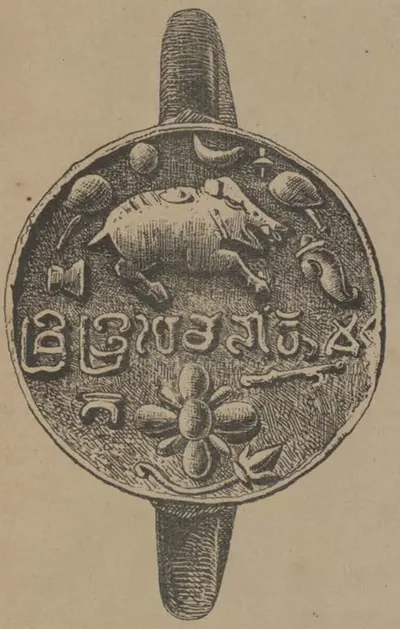 "1. Seal of the copper-plate grant of Rajaraja. Dated Saka 944" (Indian Antiquary VII, plate at pp. 252-253 (PDF p. 323))Drawing · 1878
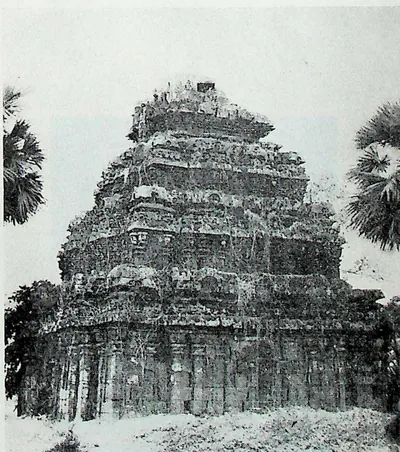 "10. Temple to the West of the High School - Bikkavōlu" (M. Rama Rao, Eastern Calukyan Temples of Andhra Desa, 1964, Fig. 10 (PDF p. 67))Historic photograph · 1964
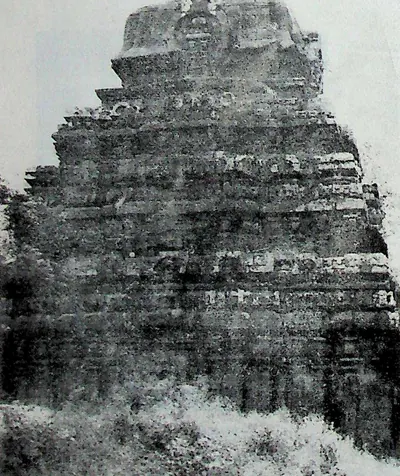 "11. Temple to the West of the High School - Bikkavōlu" (M. Rama Rao, Eastern Calukyan Temples of Andhra Desa, 1964, Fig. 11 (PDF p. 69))Historic photograph · 1964
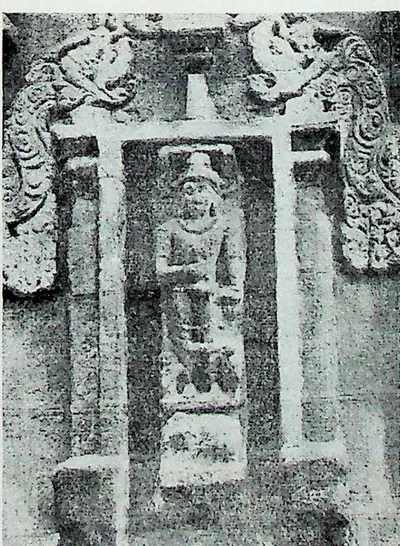 "12. Indra - Bikkavōlu" (M. Rama Rao, Eastern Calukyan Temples of Andhra Desa, 1964, Fig. 12 (PDF p. 69))Historic photograph · 1964
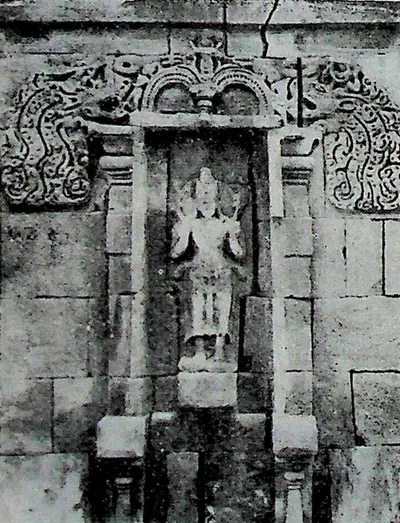 "13. Sūrya - Bikkavōlu" (M. Rama Rao, Eastern Calukyan Temples of Andhra Desa, 1964, Fig. 13 (PDF p. 71))Historic photograph · 1964
 "14. Sūrya - Bikkavōlu" (M. Rama Rao, Eastern Calukyan Temples of Andhra Desa, 1964, Fig. 14 (PDF p. 71))Historic photograph · 1964
 "15. Viṣṇu - Bikkavōlu" (M. Rama Rao, Eastern Calukyan Temples of Andhra Desa, 1964, Fig. 15 (PDF p. 73))Historic photograph · 1964
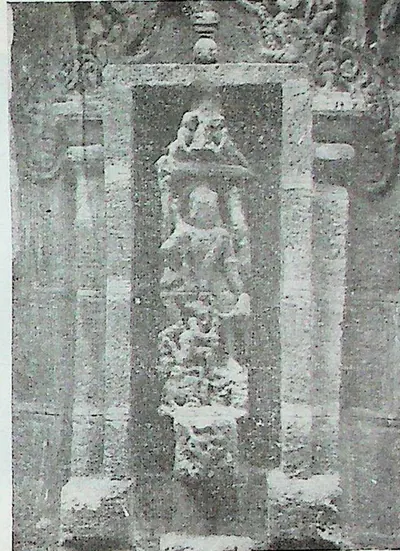 "16. Bikkavōlu - Mahiṣamardani" (M. Rama Rao, Eastern Calukyan Temples of Andhra Desa, 1964, Fig. 16 (PDF p. 73))Historic photograph · 1964
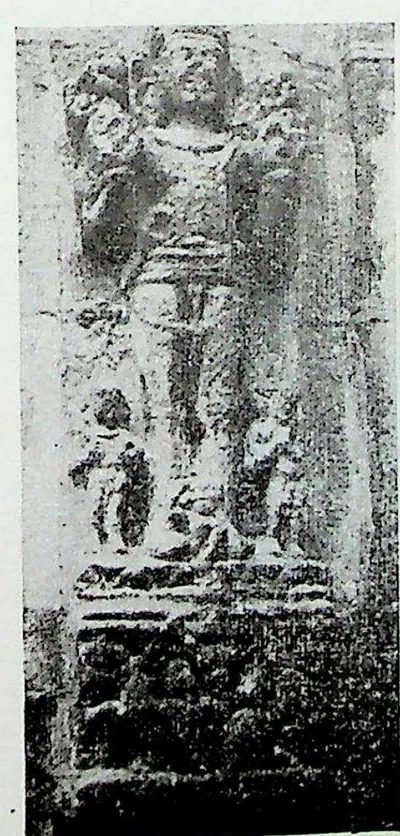 "17. Sūrya - Bikkavōlu" (M. Rama Rao, Eastern Calukyan Temples of Andhra Desa, 1964, Fig. 17 (PDF p. 73))Historic photograph · 1964
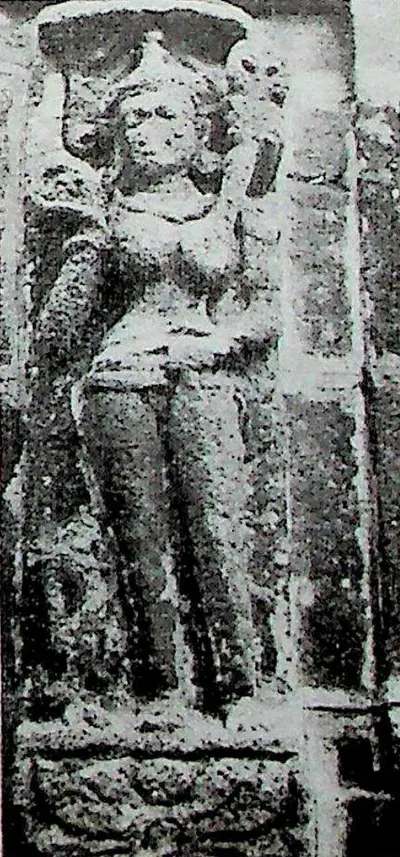 "18. Female Deity - Bikkavōlu" (M. Rama Rao, Eastern Calukyan Temples of Andhra Desa, 1964, Fig. 18 (PDF p. 73))Historic photograph · 1964
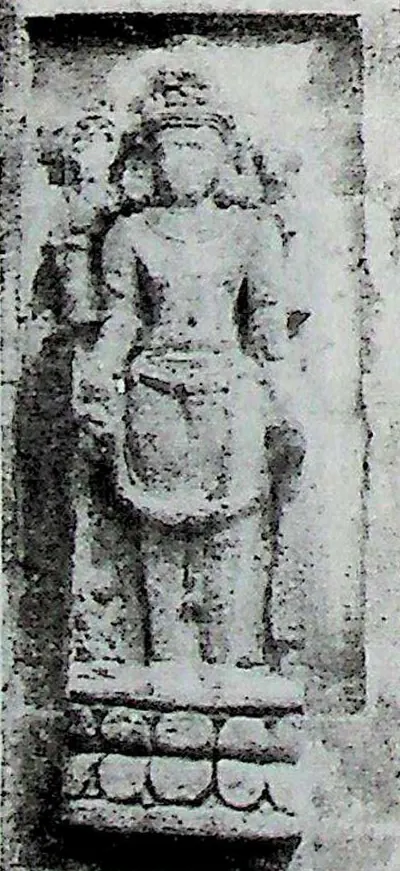 "19. Viṣṇu - Bikkavōlu" (M. Rama Rao, Eastern Calukyan Temples of Andhra Desa, 1964, Fig. 19 (PDF p. 75))Historic photograph · 1964
Show all (148)
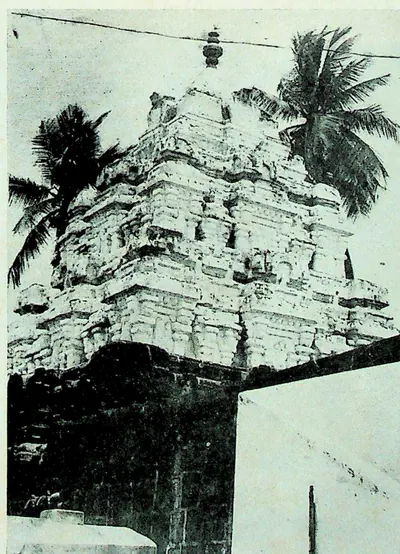 "2. Gōlingēśvara Temple - Bikkavōlu" (M. Rama Rao, Eastern Calukyan Temples of Andhra Desa, 1964, Fig. 2 (PDF p. 59))Historic photograph · 1964
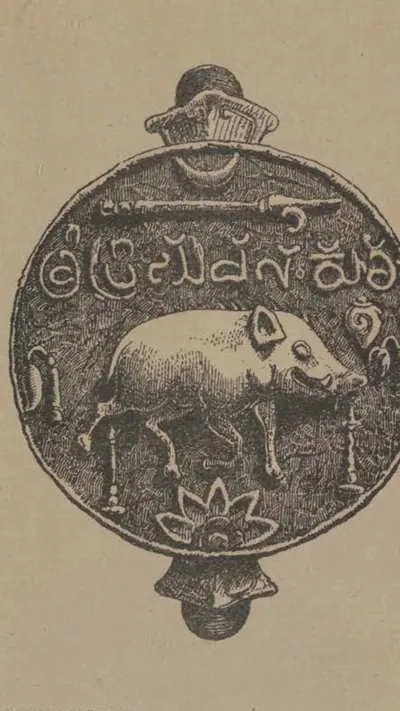 "2. Seal of the copper-plate grant of Kulottunga-Chodadeva II. Dated Saka 1056" (Indian Antiquary VII, plate at pp. 252-253 (PDF p. 323))Drawing · 1878
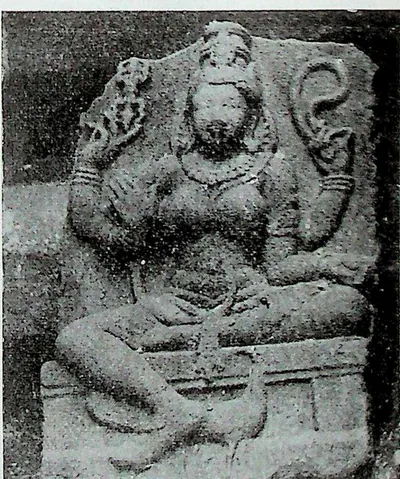 "20. Kaumārī - Bikkavōlu" (M. Rama Rao, Eastern Calukyan Temples of Andhra Desa, 1964, Fig. 20 (PDF p. 75))Historic photograph · 1964
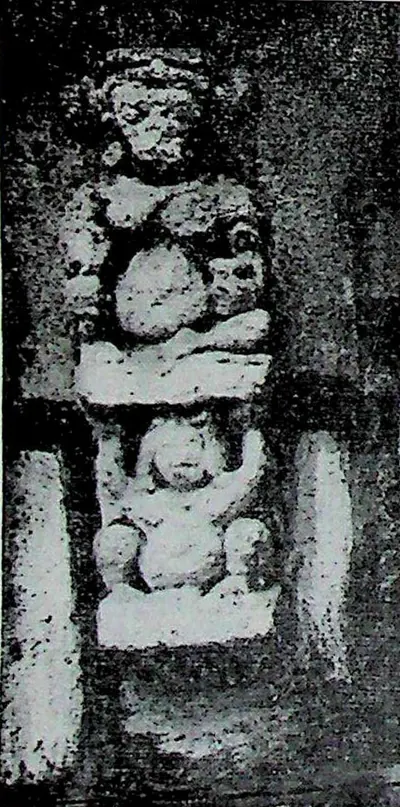 "21. Bovine Deity - Bikkavōlu" (M. Rama Rao, Eastern Calukyan Temples of Andhra Desa, 1964, Fig. 21 (PDF p. 77))Historic photograph · 1964
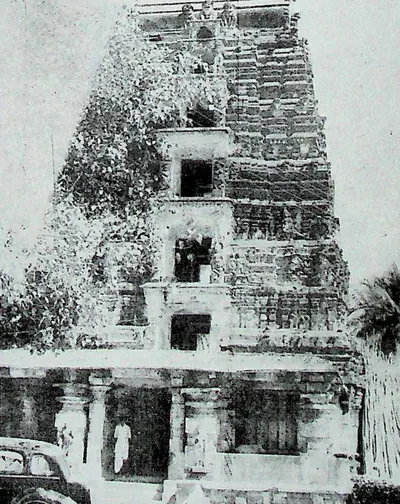 "22. West Gōpuram - Bhīmēśvara Temple - Drākshārāma" (M. Rama Rao, Eastern Calukyan Temples of Andhra Desa, 1964, Fig. 22 (PDF p. 77))Historic photograph · 1964
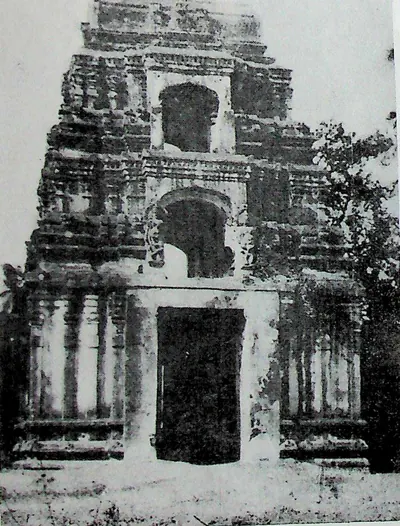 "23. North Gōpura - Bhīmēśvara Temple - Drākshārāma" (M. Rama Rao, Eastern Calukyan Temples of Andhra Desa, 1964, Fig. 23 (PDF p. 79))Historic photograph · 1964
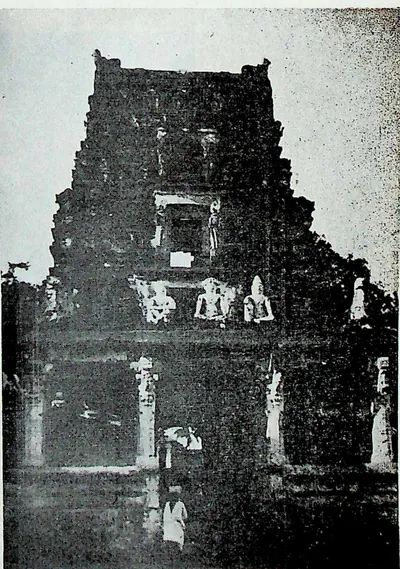 "24. South Gōpura - Bhīmēśvara Temple - Drākshārāma" (M. Rama Rao, Eastern Calukyan Temples of Andhra Desa, 1964, Fig. 24 (PDF p. 79))Historic photograph · 1964
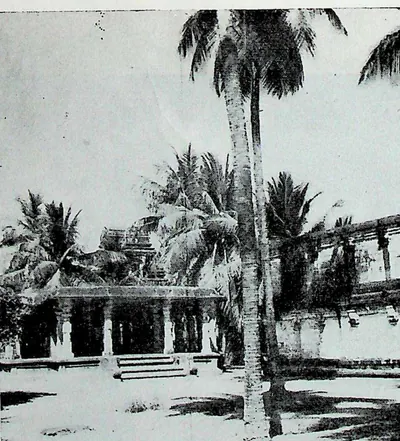 "25. Maṇṭapa in the North-east Corner of outer enclosure - Bhīmēśvara Temple, Drākshārāma" (M. Rama Rao, Eastern Calukyan Temples of Andhra Desa, 1964, Fig. 25 (PDF p. 81))Historic photograph · 1964
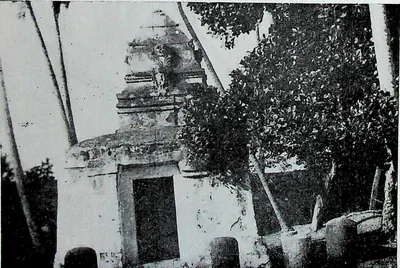 "26. Kālabhairava Shrine - Bhīmēśvara Temple, Drākshārāma" (M. Rama Rao, Eastern Calukyan Temples of Andhra Desa, 1964, Fig. 26 (PDF p. 83))Historic photograph · 1964
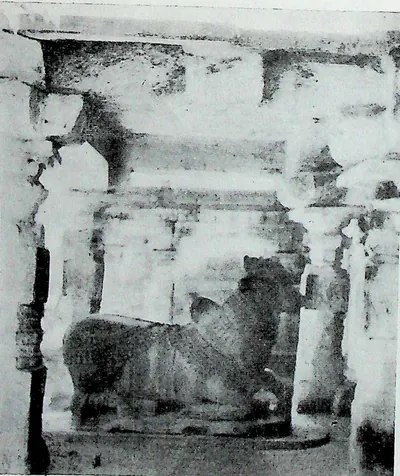 "27. Nandi Maṇṭapa - Bhīmēśvara Temple, Drākshārāma" (M. Rama Rao, Eastern Calukyan Temples of Andhra Desa, 1964, Fig. 27 (PDF p. 85))Historic photograph · 1964
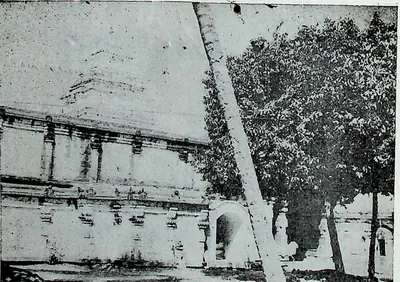 "28. Southern entrance to inner enclosure - Bhīmēśvara Temple - Drākshārāma" (M. Rama Rao, Eastern Calukyan Temples of Andhra Desa, 1964, Fig. 28 (PDF p. 87))Historic photograph · 1964
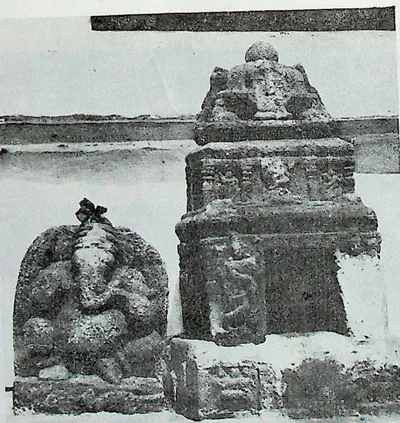 "29. Miniature Shrine - Bhīmēśvara Temple - Drākshārāma" (M. Rama Rao, Eastern Calukyan Temples of Andhra Desa, 1964, Fig. 29 (PDF p. 89))Historic photograph · 1964
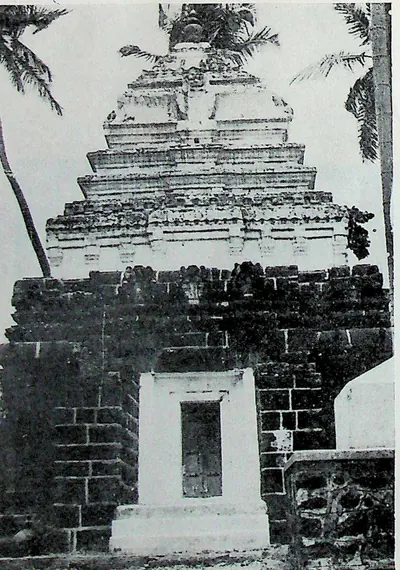 "3. Rājarājēśvara Temple - Bikkavōlu" (M. Rama Rao, Eastern Calukyan Temples of Andhra Desa, 1964, Fig. 3 (PDF p. 61))Historic photograph · 1964
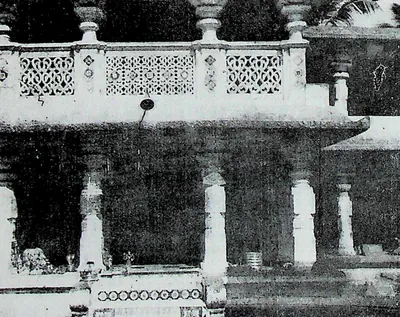 "30. Māṇikyāmba Shrine - Bhīmēśvara Temple, Drākshārāma" (M. Rama Rao, Eastern Calukyan Temples of Andhra Desa, 1964, Fig. 30 (PDF p. 91))Historic photograph · 1964
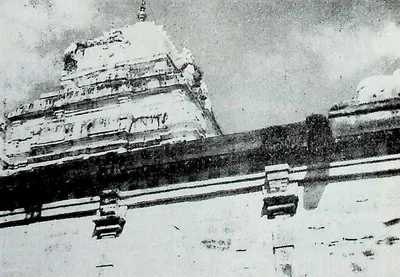 "31. Vimāna - Bhīmēśvara Temple - Drākshārāma" (M. Rama Rao, Eastern Calukyan Temples of Andhra Desa, 1964, Fig. 31 (PDF p. 93))Historic photograph · 1964
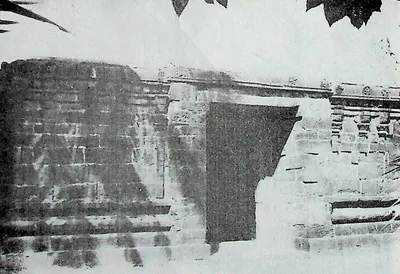 "32. Northern Entrance to Outer Enclosure - Ch. Bhīmavaram, E. G. Dt." (M. Rama Rao, Eastern Calukyan Temples of Andhra Desa, 1964, Fig. 32 (PDF p. 95))Historic photograph · 1964
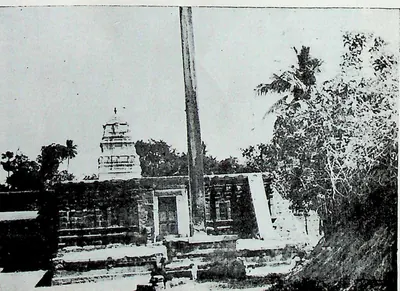 "33. Western Entrance to Outer Enclosure—Ch. Bhīmavaram, E. G. Dt." (M. Rama Rao, Eastern Calukyan Temples of Andhra Desa, 1964, Fig. 33 (PDF p. 97))Historic photograph · 1964
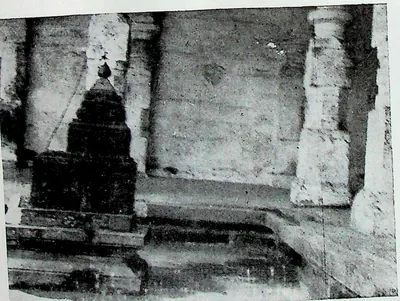 "34. Miniature Temple - Ch. Bhīmēśvaram, E. G. Dt." (M. Rama Rao, Eastern Calukyan Temples of Andhra Desa, 1964, Fig. 34 (PDF p. 99))Historic photograph · 1964
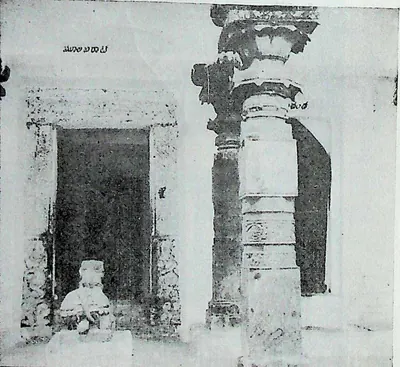 "35. Nandi Maṇṭapa - Ch Bhīmavaram, E. G. Dt." (M. Rama Rao, Eastern Calukyan Temples of Andhra Desa, 1964, Fig. 35 (PDF p. 101))Historic photograph · 1964
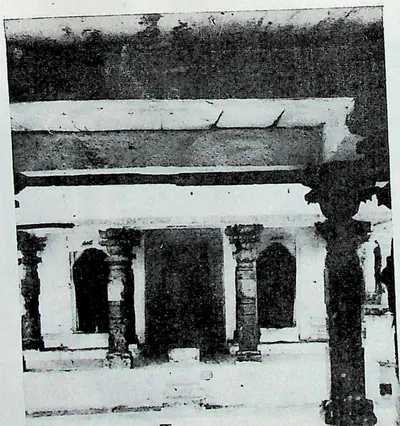 "36. Entrance to Groundfloor—Ch. Bhīmēśvara Temple—Ch. Bhīmavaram, E. G. Dt." (M. Rama Rao, Eastern Calukyan Temples of Andhra Desa, 1964, Fig. 36 (PDF p. 103))Historic photograph · 1964
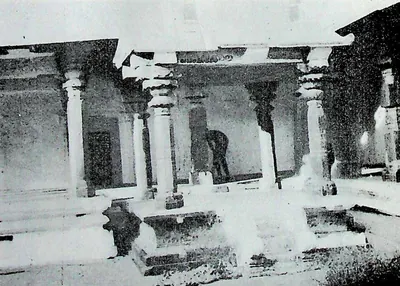 "37. Maṇṭapa in the North-east Corner—Ch. Bhīmavaram, E. G. Dt." (M. Rama Rao, Eastern Calukyan Temples of Andhra Desa, 1964, Fig. 37 (PDF p. 105))Historic photograph · 1964
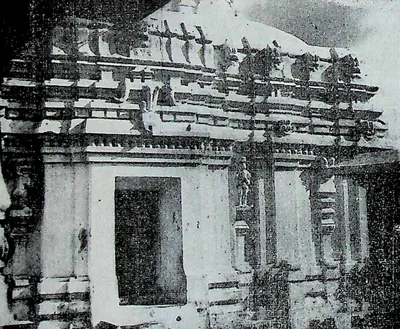 "38. South Wall - Sōmēśvara Temple - Sōmārāma" (M. Rama Rao, Eastern Calukyan Temples of Andhra Desa, 1964, Fig. 38 (PDF p. 107))Historic photograph · 1964
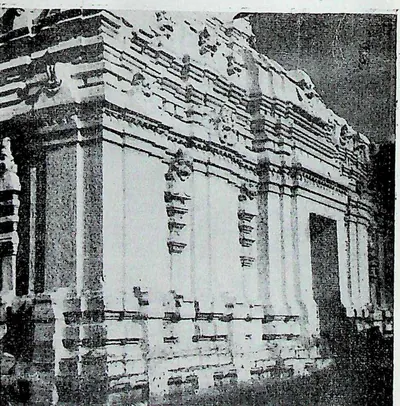 "39. East & North Wall - Sōmēśvara Temple - Sōmārāma" (M. Rama Rao, Eastern Calukyan Temples of Andhra Desa, 1964, Fig. 39 (PDF p. 109))Historic photograph · 1964
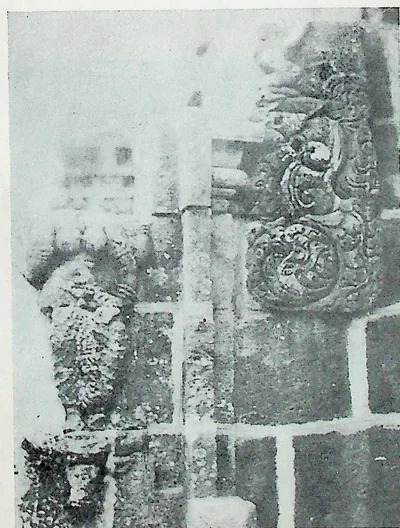 "4. Wall Projection - Candraśēkhara Temple - Bikkavōlu" (M. Rama Rao, Eastern Calukyan Temples of Andhra Desa, 1964, Fig. 4 (PDF p. 61))Historic photograph · 1964
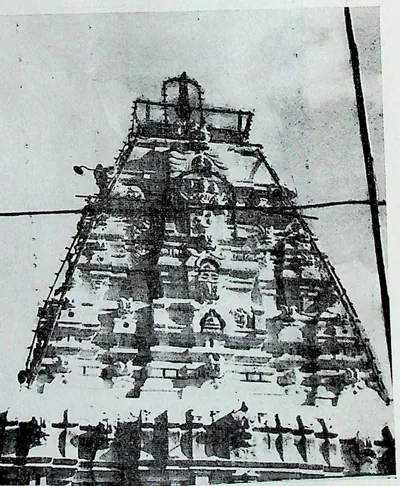 "40. Vimāna - Sōmēśwara Temple - Sōmārāma, Bhimavaram, W. G. Dt." (M. Rama Rao, Eastern Calukyan Temples of Andhra Desa, 1964, Fig. 40 (PDF p. 111))Historic photograph · 1964
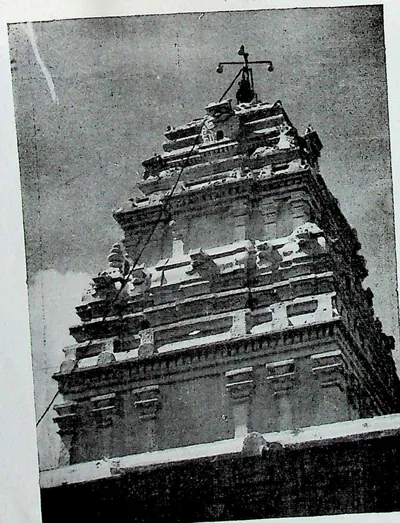 "41. Vimāna - Rāmalingēśwara Temple - Pālakol" (M. Rama Rao, Eastern Calukyan Temples of Andhra Desa, 1964, Fig. 41 (PDF p. 113))Historic photograph · 1964
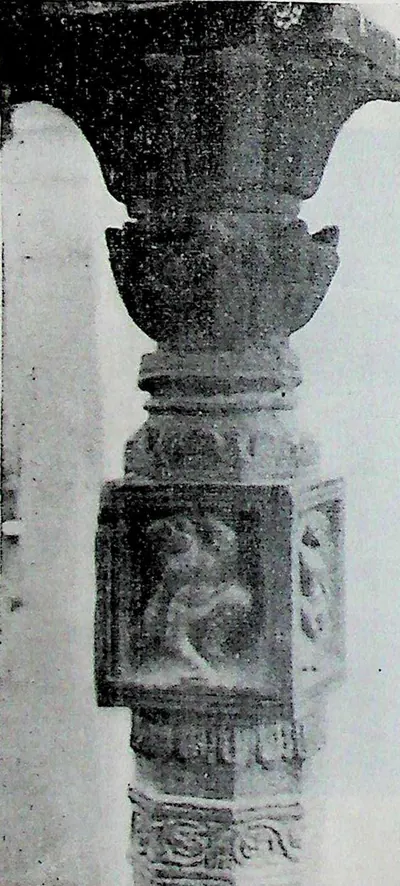 "42. Pillar with Sculpture - Pālakollu" (M. Rama Rao, Eastern Calukyan Temples of Andhra Desa, 1964, Fig. 42 (PDF p. 115))Historic photograph · 1964
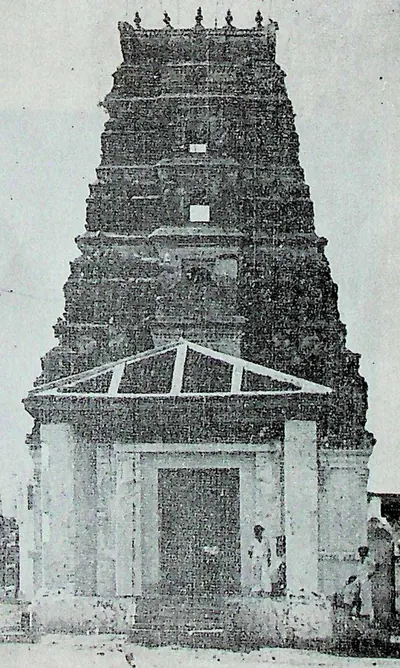 "43. Amarēśvara Temple - Amarāvati - South Gōpura" (M. Rama Rao, Eastern Calukyan Temples of Andhra Desa, 1964, Fig. 43 (PDF p. 115))Historic photograph · 1964
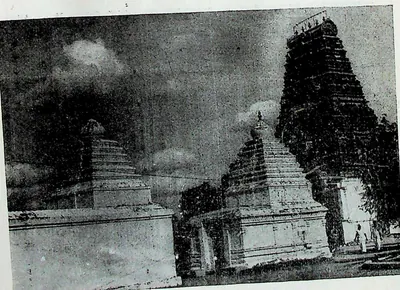 "44. Outer Enclosure - Amarāvati" (M. Rama Rao, Eastern Calukyan Temples of Andhra Desa, 1964, Fig. 44 (PDF p. 117))Historic photograph · 1964
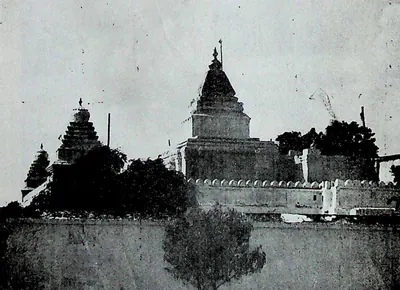 "45. Amarēśvara Temple—Amarāvati—Inner Enclosure" (M. Rama Rao, Eastern Calukyan Temples of Andhra Desa, 1964, Fig. 45 (PDF p. 119))Historic photograph · 1964
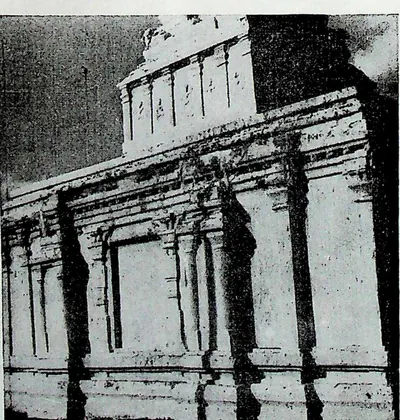 "46. Walls of the Temple - Amarāvati" (M. Rama Rao, Eastern Calukyan Temples of Andhra Desa, 1964, Fig. 46 (PDF p. 121))Historic photograph · 1964
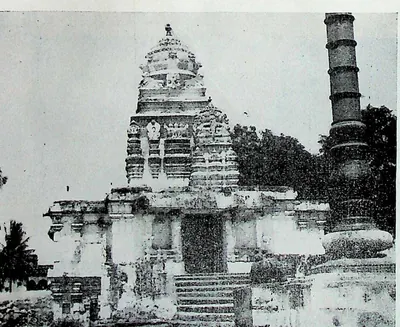 "47. Bhīmēśvara Temple - Chēbrōlu - Front view" (M. Rama Rao, Eastern Calukyan Temples of Andhra Desa, 1964, Fig. 47 (PDF p. 123))Historic photograph · 1964
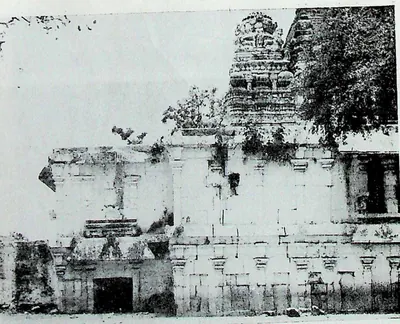 "48. Bhīmēśvara Temple - Chēbrōlu - North Side view" (M. Rama Rao, Eastern Calukyan Temples of Andhra Desa, 1964, Fig. 48 (PDF p. 125))Historic photograph · 1964
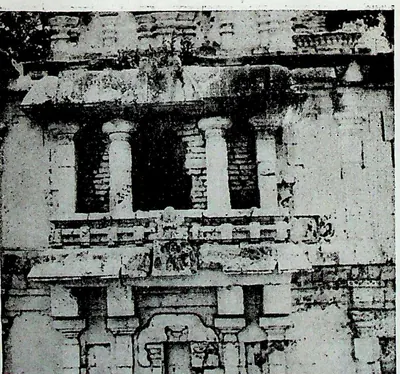 "49. Bhīmēśvara Temple - Chēbrōlu–Central Part of North Wall" (M. Rama Rao, Eastern Calukyan Temples of Andhra Desa, 1964, Fig. 49 (PDF p. 127))Historic photograph · 1964
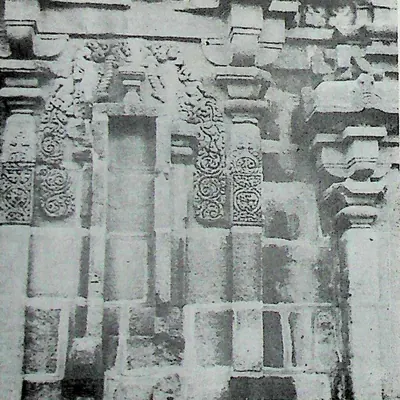 "5. Back Wall - Candraśēkhara Temple - Bikkavōlu" (M. Rama Rao, Eastern Calukyan Temples of Andhra Desa, 1964, Fig. 5 (PDF p. 63))Historic photograph · 1964
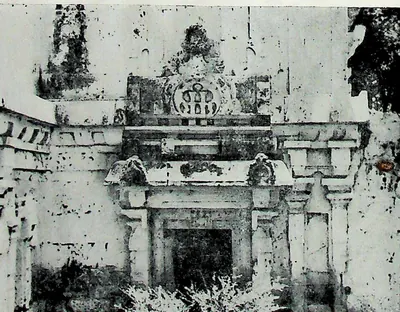 "50. Bhīmēśvara Temple - Chēbrōlu - Projection of South Wall" (M. Rama Rao, Eastern Calukyan Temples of Andhra Desa, 1964, Fig. 50 (PDF p. 129))Historic photograph · 1964
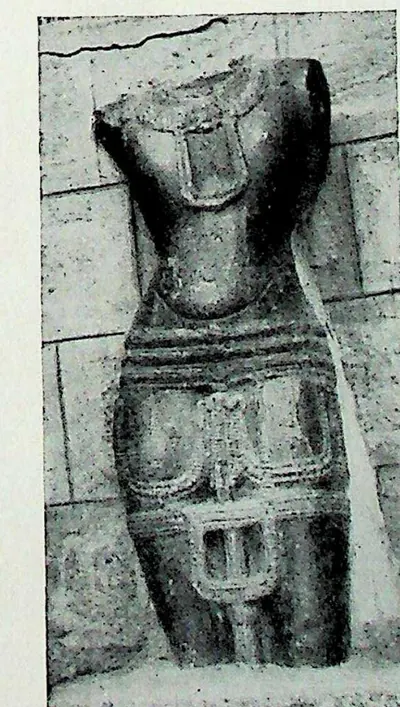 "51. Kumāra - Chēbrōlu" (M. Rama Rao, Eastern Calukyan Temples of Andhra Desa, 1964, Fig. 51 (PDF p. 129))Historic photograph · 1964
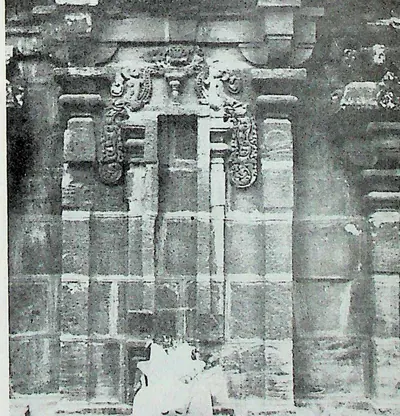 "6. Left Wall - Candraśēkhara Temple - Bikkavōlu" (M. Rama Rao, Eastern Calukyan Temples of Andhra Desa, 1964, Fig. 6 (PDF p. 63))Historic photograph · 1964
 "7. Left Wall - Gōlingēśvara Temple - Bikkavōlu" (M. Rama Rao, Eastern Calukyan Temples of Andhra Desa, 1964, Fig. 7 (PDF p. 65))Historic photograph · 1964
 "8. Right Wall - Gōlingēśvara Temple - Bikkavōlu" (M. Rama Rao, Eastern Calukyan Temples of Andhra Desa, 1964, Fig. 8 (PDF p. 65))Historic photograph · 1964
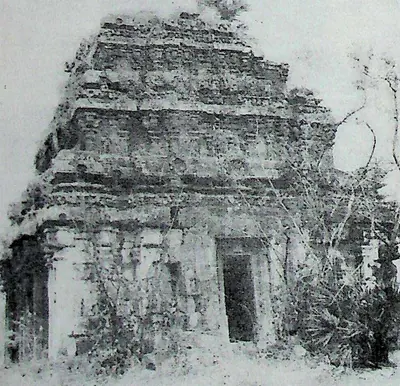 "9. Temple on the Vūlapalli Road - Bikkavōlu" (M. Rama Rao, Eastern Calukyan Temples of Andhra Desa, 1964, Fig. 9 (PDF p. 67))Historic photograph · 1964
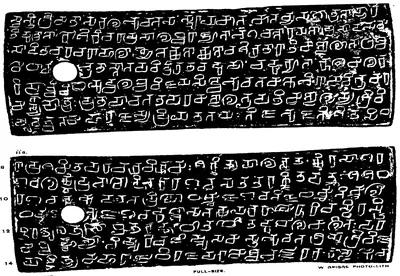 "A.—Ederu Plates of Vijayaditya II.", plates i and ii a (Epigraphia Indica V, plate between pp. 120 and 121 (PDF p. 166))Inscription rubbing · 1899
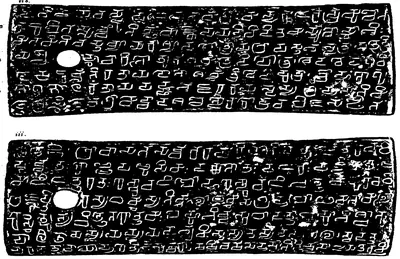 "A.—Ederu Plates of Vijayaditya II.", plates ii b and iii (Epigraphia Indica V, plate between pp. 120 and 121 (PDF p. 167))Inscription rubbing · 1899
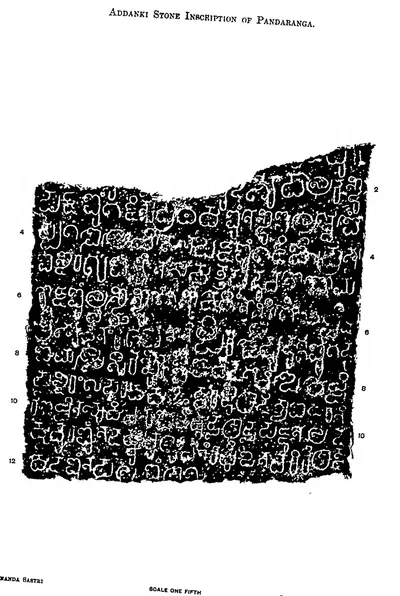 "Addanki Stone Inscription of Pandaranga" (Epigraphia Indica XIX, plate (PDF p. 368))Inscription rubbing · 1928
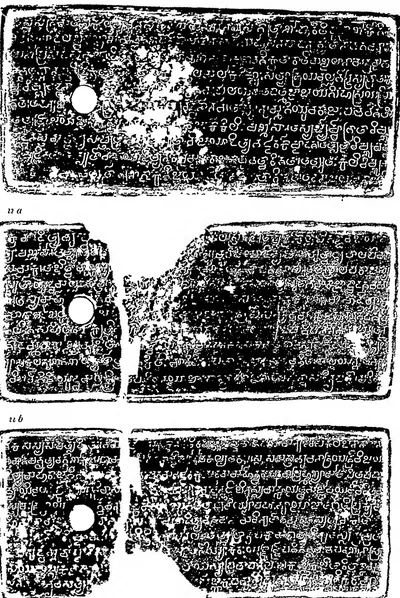 "Arumbaka Plates of Badapa", plates i, ii a and ii b (Epigraphia Indica XIX, plate between pp. 142 and 143 (PDF p. 200))Inscription rubbing · 1928
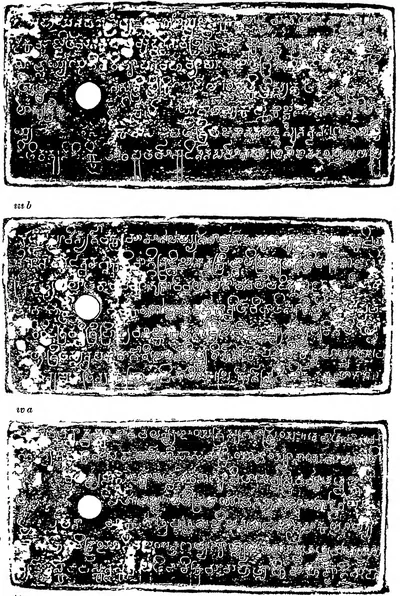 "Arumbaka Plates of Badapa", plates iii a, iii b and iv a (Epigraphia Indica XIX, plate between pp. 142 and 143 (PDF p. 201))Inscription rubbing · 1928
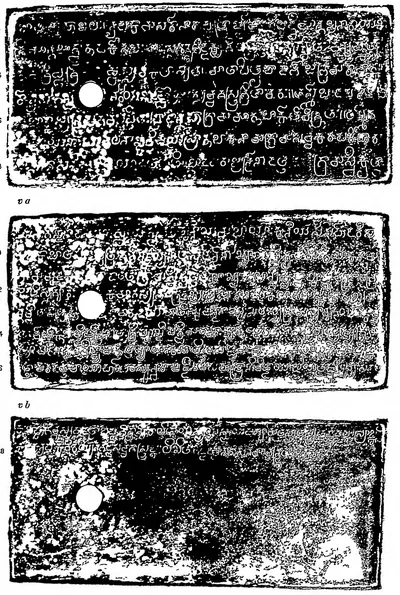 "Arumbaka Plates of Badapa", plates iv b, v a and v b (Epigraphia Indica XIX, plate between pp. 144 and 145 (PDF p. 204))Inscription rubbing · 1928
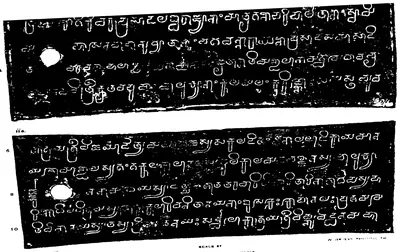 "B.—Masulipatam (?) Plates of Vijayaditya III", plates i and ii a (Epigraphia Indica V, plate between pp. 124 and 125 (PDF p. 172))Inscription rubbing · 1899
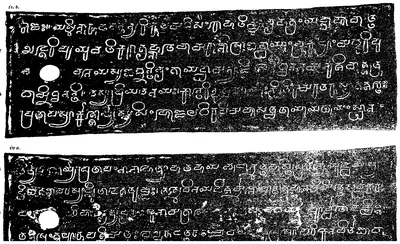 "B.—Masulipatam (?) Plates of Vijayaditya III", plates ii b and iv a (Epigraphia Indica V, plate between pp. 124 and 125 (PDF p. 173))Inscription rubbing · 1899
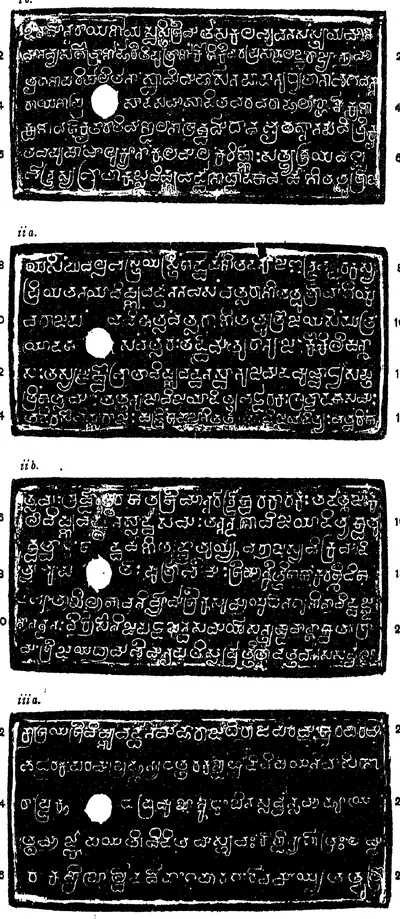 "Bezvada Plates of Bhima I.", plates i b, ii a, ii b and iii a (Epigraphia Indica V, plate between pp. 128 and 129 (PDF p. 178))Inscription rubbing · 1899
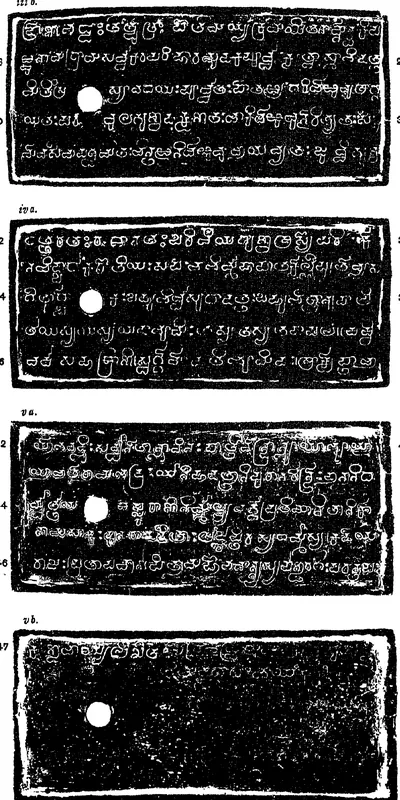 "Bezvada Plates of Bhima I.", plates iii b, iv a, v a and v b (Epigraphia Indica V, plate between pp. 128 and 129 (PDF p. 179))Inscription rubbing · 1899
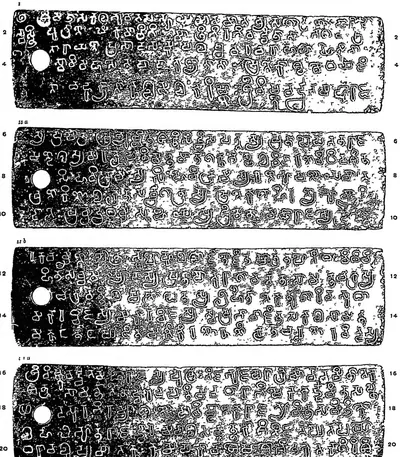 "Chendalur plates of Sarvalokasraya.—A.D. 673", plates i, ii a, ii b and iii a (Epigraphia Indica VIII, plate between pp. 238 and 239 (PDF p. 301))Inscription rubbing · 1906
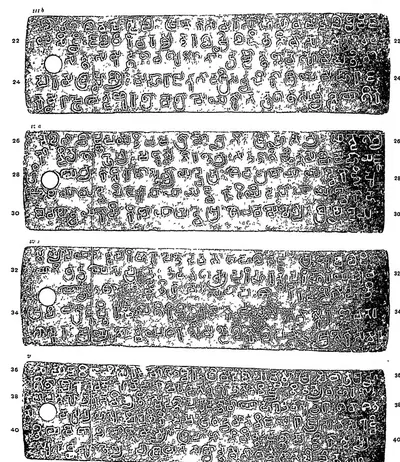 "Chendalur plates of Sarvalokasraya.—A.D. 673", plates iii b, iv a, iv b and v (Epigraphia Indica VIII, plate between pp. 238 and 239 (PDF p. 302))Inscription rubbing · 1906
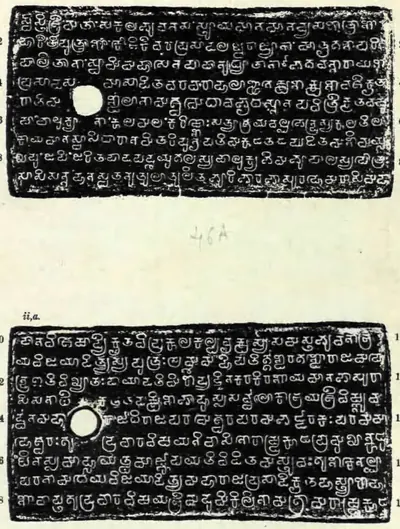 "Chevuru Plates of Eastern Chalukya Amma I", plates i and ii a (Epigraphia Indica XXVII, plate between pp. 46 and 47 (PDF p. 86))Inscription rubbing · 1956
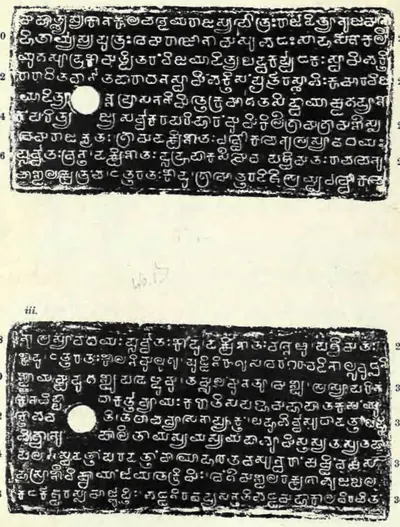 "Chevuru Plates of Eastern Chalukya Amma I", plates ii b and iii (Epigraphia Indica XXVII, plate between pp. 46 and 47 (PDF p. 87))Inscription rubbing · 1956
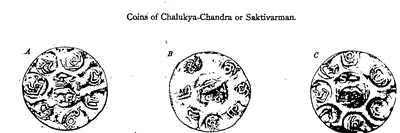 "Coins of Chalukya-Chandra or Saktivarman." A, B and C, full size (Indian Antiquary XIX, plate facing p. 78 (PDF p. 85))Coin · 1890
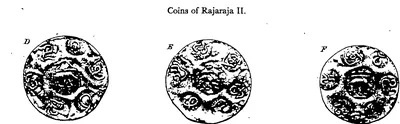 "Coins of Rajaraja II." D, E and F, full size (Indian Antiquary XIX, plate facing p. 78 (PDF p. 85))Coin · 1890
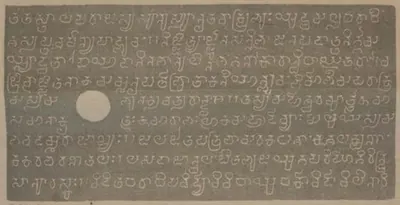 "Copper-plate grant of the Eastern Chalukya dynasty. Dated about Saka 867", plate ii b (Indian Antiquary VII, folding plate to face p. 16 (PDF p. 28))Inscription rubbing · 1878
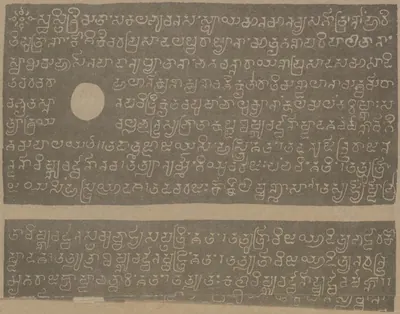 "Copper-plate grant of the Eastern Chalukya dynasty. Dated about Saka 867", plates i and ii a (Indian Antiquary VII, plate to face p. 16 (PDF p. 27))Inscription rubbing · 1878
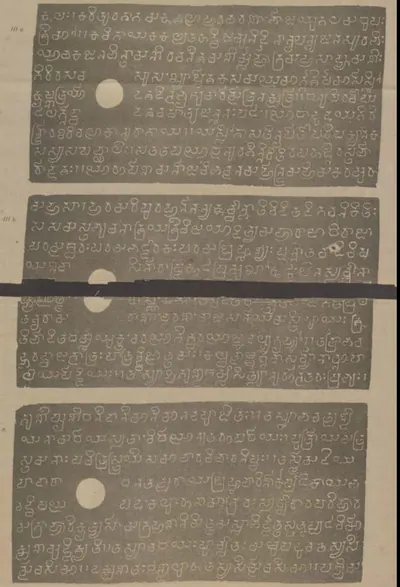 "Copper-plate grant of the Eastern Chalukya dynasty. Dated about Saka 867", plates iii a, iii b and iv a (Indian Antiquary VII, folding plate (PDF p. 29))Inscription rubbing · 1878
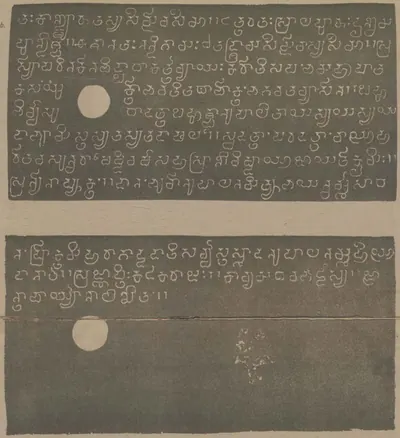 "Copper-plate grant of the Eastern Chalukya dynasty. Dated about Saka 867", plates iv b and v (Indian Antiquary VII, plate (PDF p. 30))Inscription rubbing · 1878
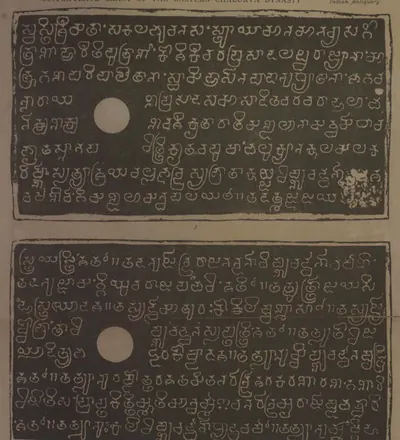 "Copper-plate grant of the Eastern Chalukya dynasty" (Diggubarru grant of Bhima II), plates i and ii a (Indian Antiquary XIII, plates at pp. 214-215 (PDF p. 247))Inscription rubbing · 1884
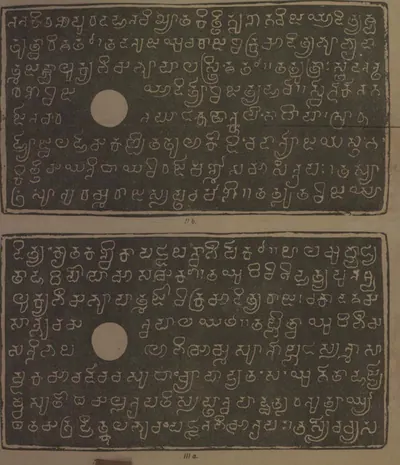 "Copper-plate grant of the Eastern Chalukya dynasty" (Diggubarru grant of Bhima II), plates ii b and iii a (Indian Antiquary XIII, plates at pp. 214-215 (PDF p. 248))Inscription rubbing · 1884
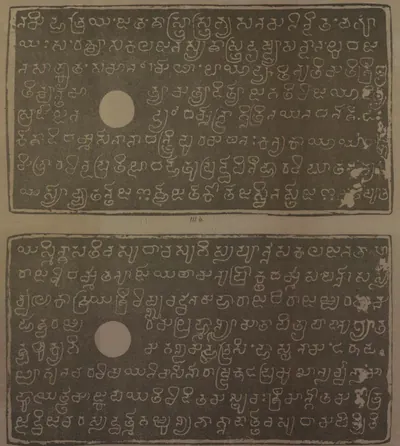 "Copper-plate grant of the Eastern Chalukya dynasty" (Diggubarru grant of Bhima II), plates iii b and iv a (Indian Antiquary XIII, plates at pp. 214-215 (PDF p. 249))Inscription rubbing · 1884
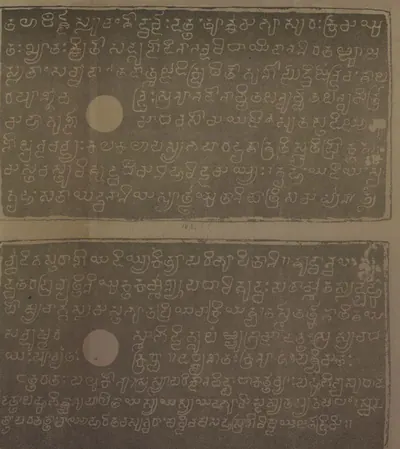 "Copper-plate grant of the Eastern Chalukya dynasty" (Diggubarru grant of Bhima II), plates iv b and v (Indian Antiquary XIII, plates at pp. 214-215 (PDF p. 250))Inscription rubbing · 1884
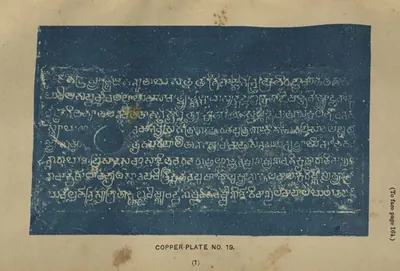 "Copper-plate No. 19" (Malliyapundi grant of Amma Raja II, East Chalukyan king) (Butterworth & Chetty 1905, to face p. 164 (PDF p. 219))Inscription rubbing · 1905
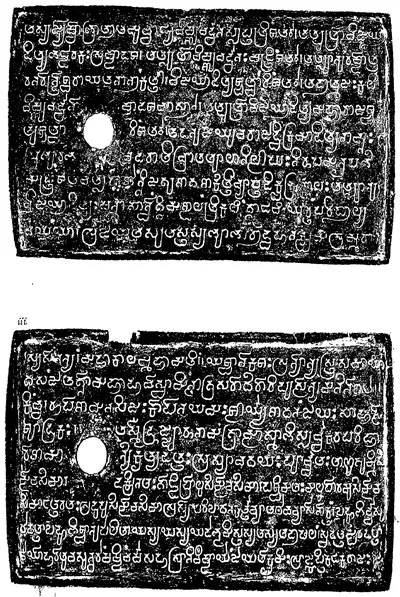 "D.—Masulipatam Plates of Amma I.", plates ii a and iii (Epigraphia Indica V, plate between pp. 132 and 133 (PDF p. 184))Inscription rubbing · 1899
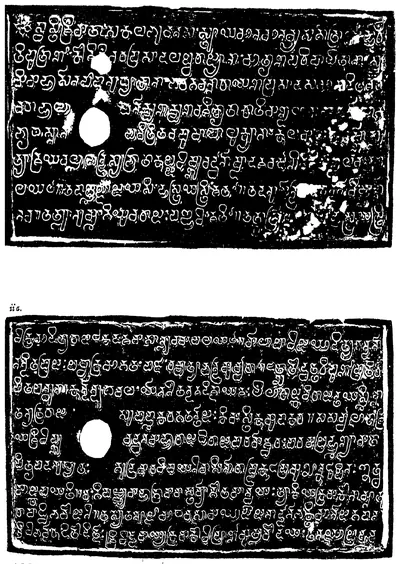 "E.—Masulipatam (?) Plates of Chalukya-Bhima II.", plates i and ii a (Epigraphia Indica V, plate between pp. 136 and 137 (PDF p. 190))Inscription rubbing · 1899
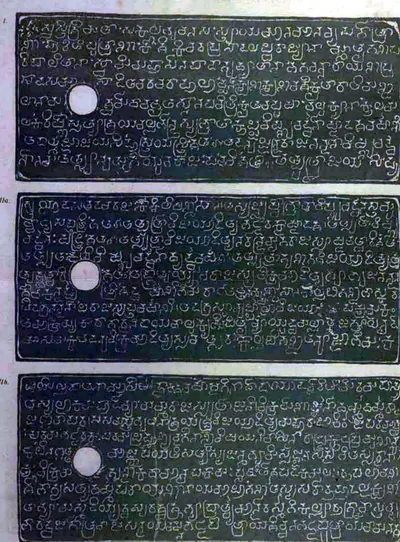 "Eastern Chalukya grant of Amma II.", plates i, ii a and ii b (Indian Antiquary XIII, plate at pp. 248-249 (PDF p. 285))Inscription rubbing · 1884
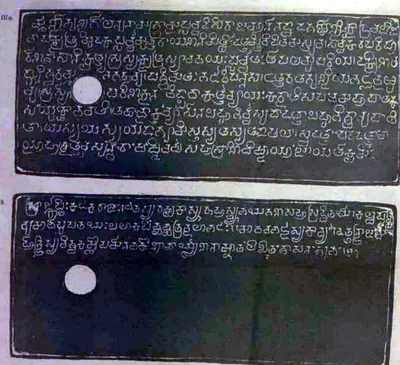 "Eastern Chalukya grant of Amma II.", plates iii a and iii b (Indian Antiquary XIII, plate at pp. 248-249 (PDF p. 286))Inscription rubbing · 1884
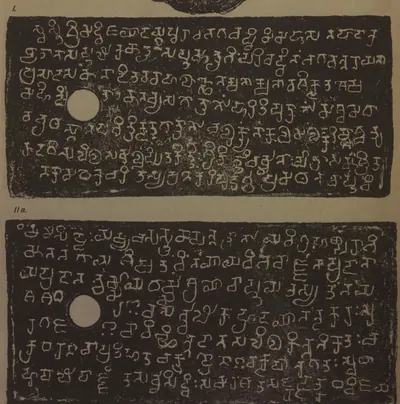 "Eastern Chalukya grant of the 18th year of Jayasimha I.", plates i and ii a (Indian Antiquary XIII, plate at p. 138 (PDF p. 159))Inscription rubbing · 1884
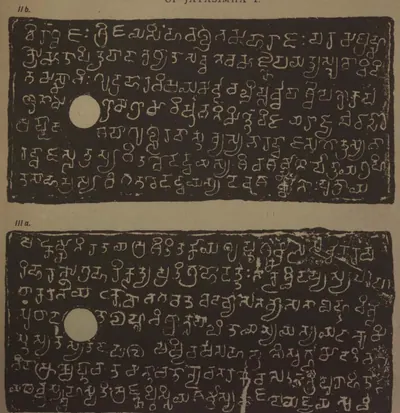 "Eastern Chalukya grant of the 18th year of Jayasimha I.", plates ii b and iii a (Indian Antiquary XIII, plate at p. 139 (PDF p. 160))Inscription rubbing · 1884
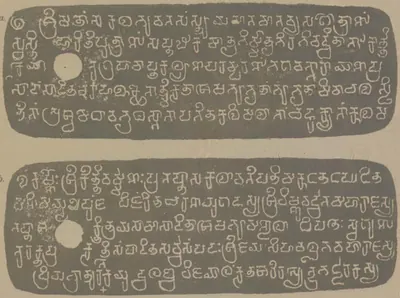 "Eastern Chalukya grant of the fifth year of Vishnuvardhana II.", plates i a and i b (Indian Antiquary VII, plate at p. 191 (PDF p. 248))Inscription rubbing · 1878
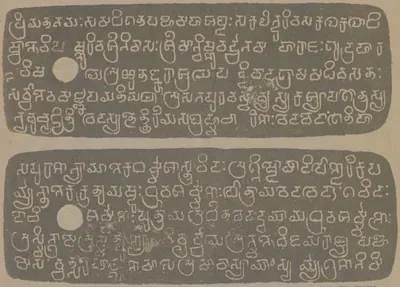 "Eastern Chalukya grant of the fifth year of Vishnuvardhana II.", plates ii a and ii b (Indian Antiquary VII, plate at p. 190 (PDF p. 247))Inscription rubbing · 1878
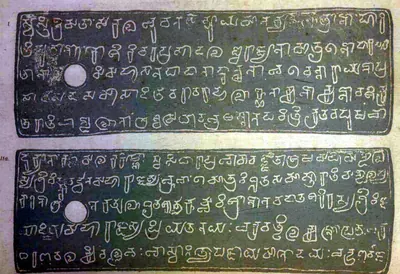 "Eastern Chalukya grant of Vishnuvardhana IV or V.", plates i and ii a (Indian Antiquary XIII, plate at pp. 186-187 (PDF p. 213))Inscription rubbing · 1884
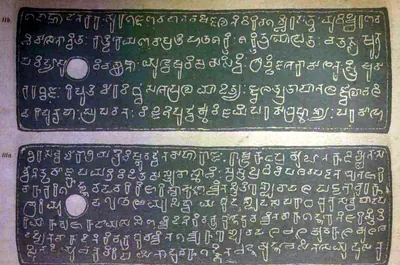 "Eastern Chalukya grant of Vishnuvardhana IV or V.", plates ii b and iii a (Indian Antiquary XIII, plate at pp. 186-187 (PDF p. 214))Inscription rubbing · 1884
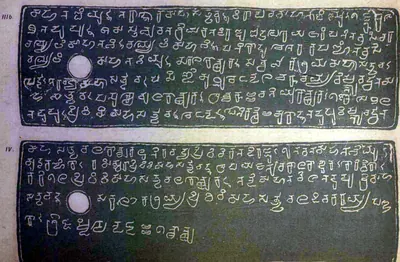 "Eastern Chalukya grant of Vishnuvardhana IV or V.", plates iii b and iv (Indian Antiquary XIII, plate at pp. 186-187 (PDF p. 215))Inscription rubbing · 1884
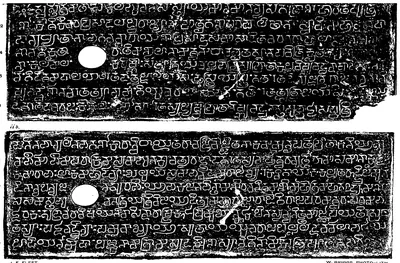 "F.—Masulipatam Plates of Amma II.", plates i and ii b (Epigraphia Indica V, plate between pp. 140 and 141 (PDF p. 196))Inscription rubbing · 1899
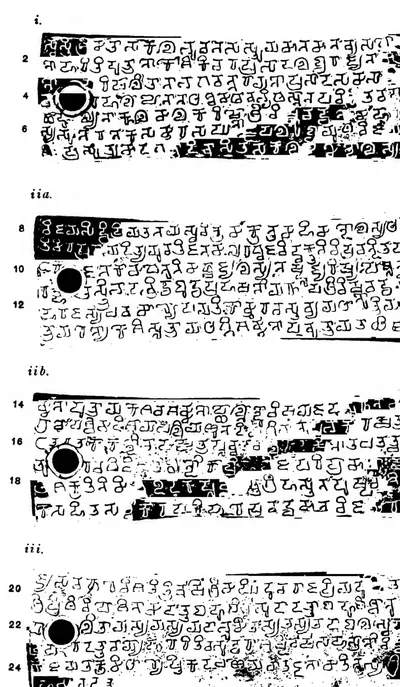 "Ipur plates of Vishnuvardhana III.", plates i, ii a, ii b and iii (Epigraphia Indica XVIII, plate between pp. 60 and 61 (PDF p. 94))Inscription rubbing · 1926
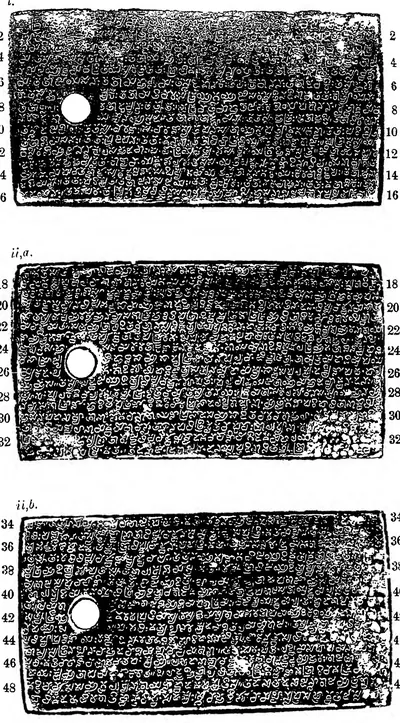 "Kalidindi Grant of Eastern Chalukya Rajaraja I", plates i, ii a and ii b (Epigraphia Indica XXIX, Plate I, between pp. 66 and 67 (PDF p. 140))Inscription rubbing · 1952
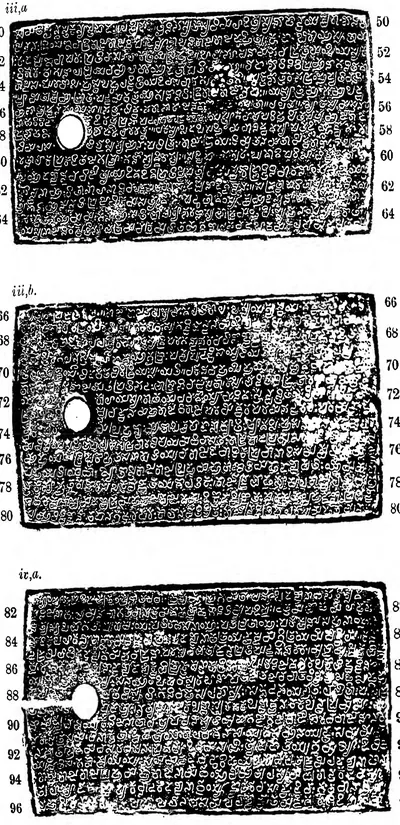 "Kalidindi Grant of Eastern Chalukya Rajaraja I", plates iii a, iii b and iv a (Epigraphia Indica XXIX, Plate I, between pp. 66 and 67 (PDF p. 141))Inscription rubbing · 1952
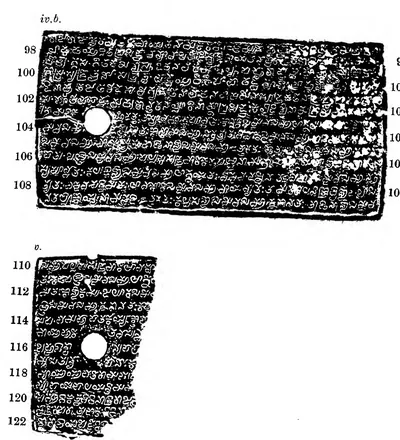 "Kalidindi Grant of Eastern Chalukya Rajaraja I", plates iv b and v (Epigraphia Indica XXIX, Plate II, between pp. 70 and 71 (PDF p. 146))Inscription rubbing · 1952
 "Kaluchumbarru Grant of Vijayaditya-Amma II.", plates i and iii b (Epigraphia Indica VII, plate between pp. 186 and 187 (PDF p. 228))Inscription rubbing · 1903
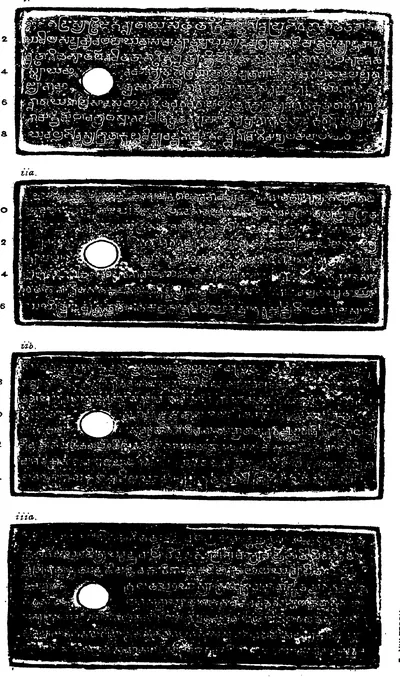 "Maliyapundi grant of Ammaraja II.", plates i, ii a, ii b and iii a (Epigraphia Indica IX, plate between pp. 52 and 53 (PDF p. 75))Inscription rubbing · 1908
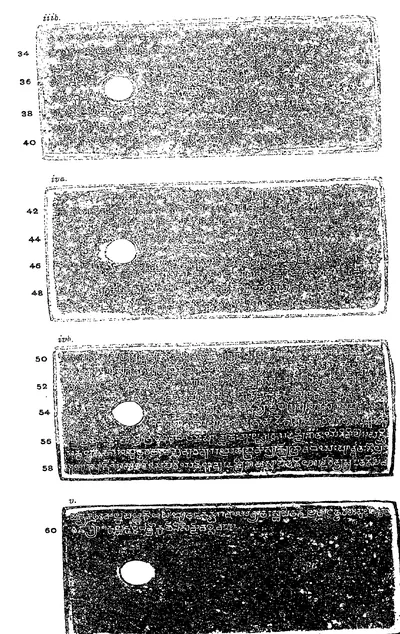 "Maliyapundi grant of Ammaraja II.", plates iii b, iv a, iv b and v (Epigraphia Indica IX, plate between pp. 52 and 53 (PDF p. 76))Inscription rubbing · 1908
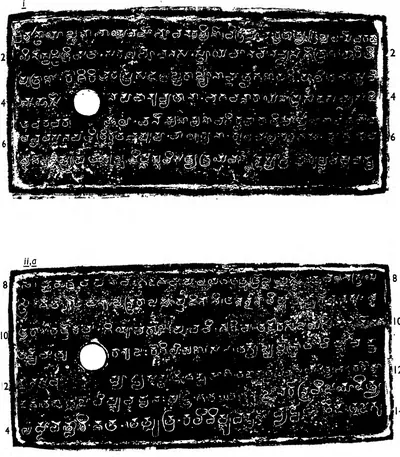 "Mangallu Grant of Amma II", plates i and ii a (Epigraphia Indica XXXI, Plate I (PDF p. 76))Inscription rubbing · 1960
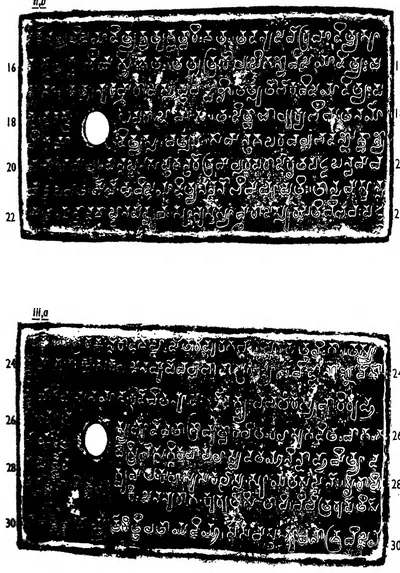 "Mangallu Grant of Amma II", plates ii b and iii a (Epigraphia Indica XXXI, Plate I (PDF p. 77))Inscription rubbing · 1960
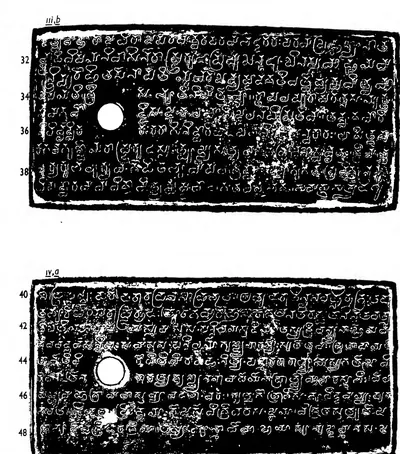 "Mangallu Grant of Amma II", plates iii b and iv a (Epigraphia Indica XXXI, Plate II (PDF p. 80))Inscription rubbing · 1960
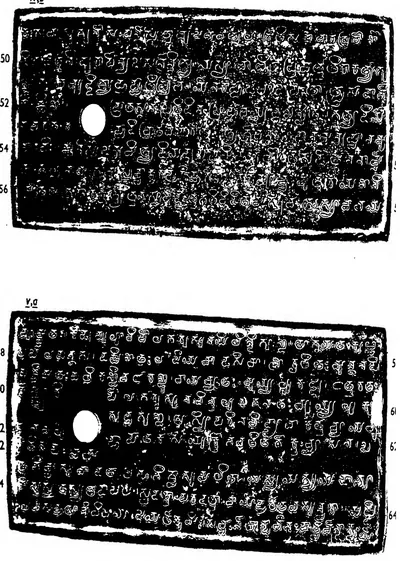 "Mangallu Grant of Amma II", plates iv b and v a (Epigraphia Indica XXXI, Plate II (PDF p. 81))Inscription rubbing · 1960
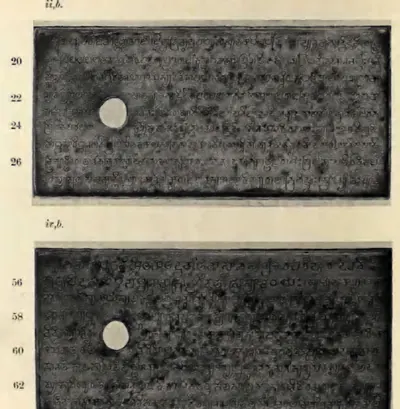 "Masulipatam Plates of Ammaraja II.—(I). (From Photographs)", plates ii b and iv b (Epigraphia Indica XXIV, plate between pp. 274 and 275 (PDF p. 345))Historic photograph · 1938
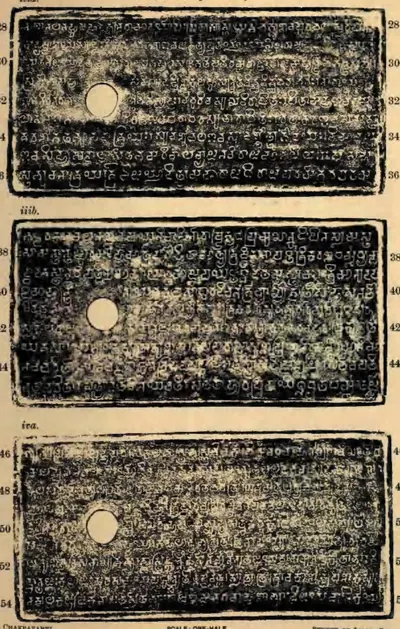 "Masulipatam Plates of Ammaraja II.—(II). (From impressions)", plates iii a, iii b and iv a (Epigraphia Indica XXIV, plate between pp. 276 and 277 (PDF p. 348))Inscription rubbing · 1938
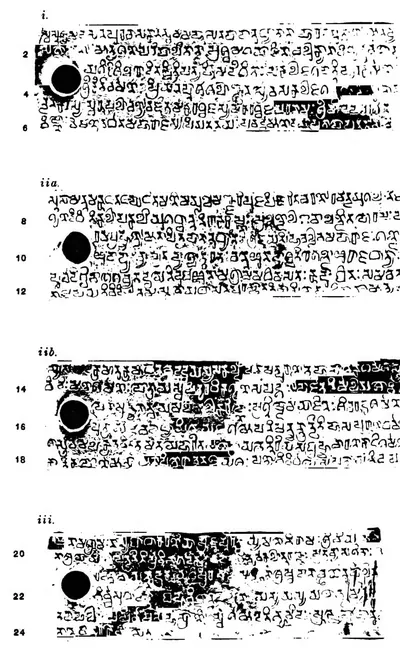 "Niduparu grant of Jayasimha I.", plates i, ii a, ii b and iii (Epigraphia Indica XVIII, plate between pp. 56 and 57 (PDF p. 88))Inscription rubbing · 1926
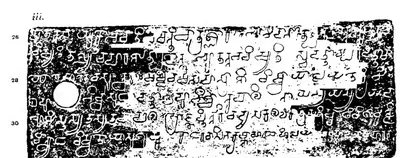 "Penukaparu grant of Jayasimha II.", plate iii (Epigraphia Indica XVIII, plate between pp. 316 and 317 (PDF p. 403))Inscription rubbing · 1926
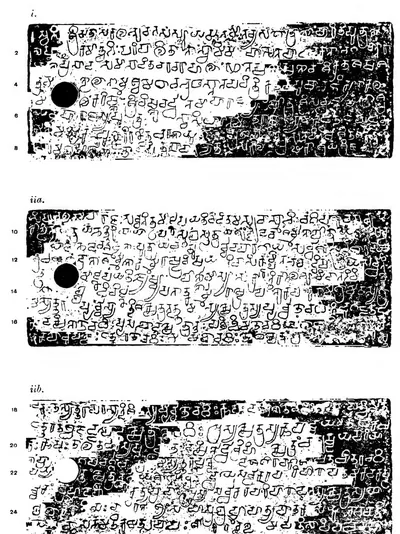 "Penukaparu grant of Jayasimha II.", plates i, ii a and ii b (Epigraphia Indica XVIII, plate between pp. 316 and 317 (PDF p. 402))Inscription rubbing · 1926
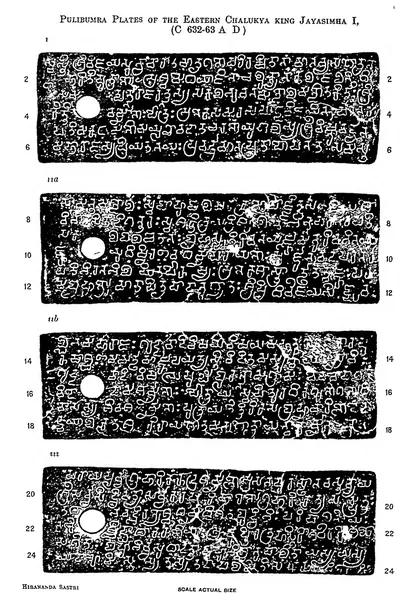 "Pulibumra Plates of the Eastern Chalukya king Jayasimha I (c. 632-63 A.D.)" (Epigraphia Indica XIX, plate (PDF p. 342))Inscription rubbing · 1928
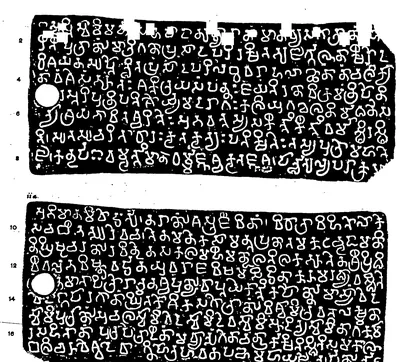 "Satara Plates of Vishnuvardhana I.", plates i and ii a, full size (Indian Antiquary XIX, plate at p. 310 (PDF p. 329))Inscription rubbing · 1890
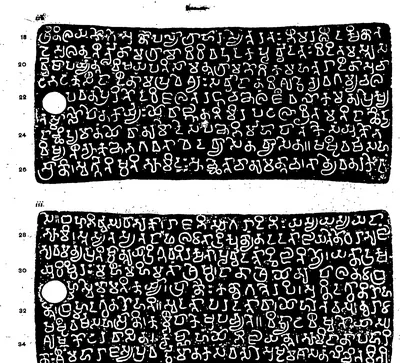 "Satara Plates of Vishnuvardhana I.", plates ii b and iii, full size (Indian Antiquary XIX, plate at p. 310 (PDF p. 330))Inscription rubbing · 1890
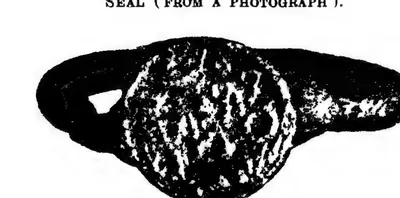 "Seal (from a photograph). Actual size.", seal of the Penukaparu grant of Jayasimha II (Epigraphia Indica XVIII, plate between pp. 316 and 317 (PDF p. 403))Historic photograph · 1926
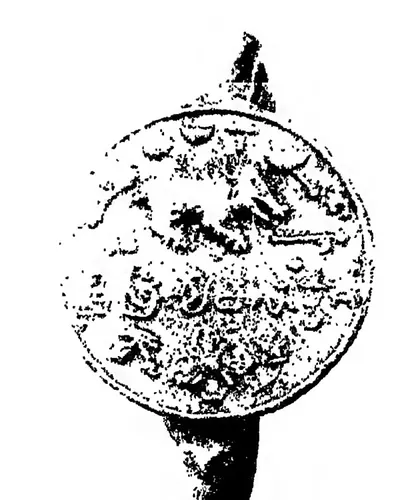 "Seal (From a photograph)", seal of the Kalidindi grant of Rajaraja I (Epigraphia Indica XXIX, Plate II, between pp. 70 and 71 (PDF p. 146))Historic photograph · 1952
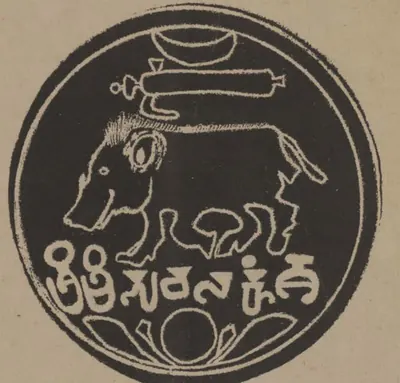 "Seal of the Eastern Chalukya grant of Ammaraja II. without date" (Indian Antiquary VII, plate facing p. 120 (PDF p. 169))Drawing · 1878
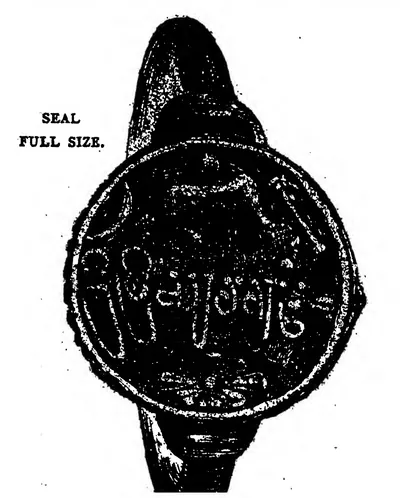 "Seal. Full size." of the Yelavarru Eastern Chalukya grant of Amma II (Indian Antiquary XII, plate at p. 93 (PDF p. 107))Drawing · 1883
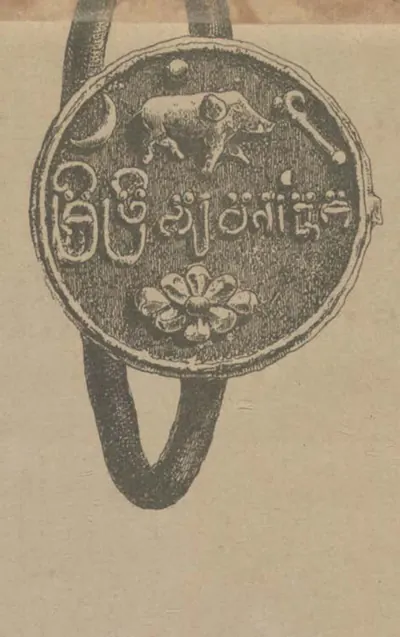 "Seal" of the copper-plate grant of the Eastern Chalukya dynasty dated about Saka 867 (Indian Antiquary VII, plate (PDF p. 31))Drawing · 1878
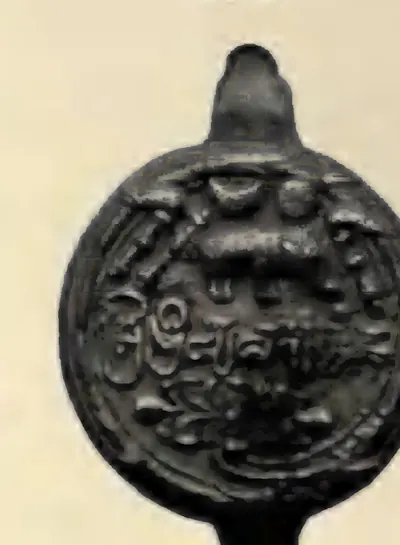 "Seal", seal of the Masulipatam plates of Ammaraja II (Epigraphia Indica XXIV, plate between pp. 274 and 275 (PDF p. 345))Historic photograph · 1938
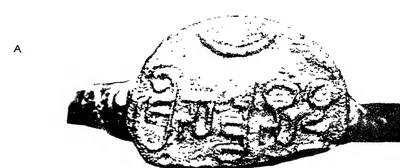 "Seals (A)", seal A, of grant No. 1 (Epigraphia Indica XXXI, Plate II, after p. 137 (PDF p. 221))Historic photograph · 1960
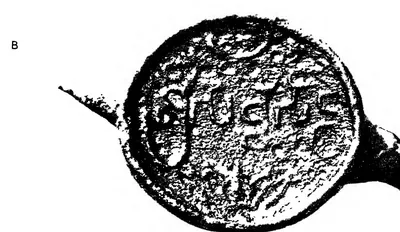 "Seals (B)", seal B, of grant No. 2 (Epigraphia Indica XXXI, Plate II, after p. 137 (PDF p. 221))Historic photograph · 1960
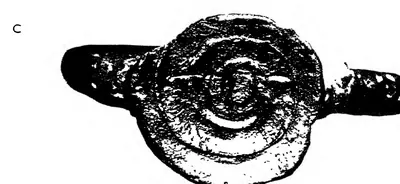 "Seals (C)", seal C, of grant No. 3 (Epigraphia Indica XXXI, Plate II, after p. 137 (PDF p. 221))Historic photograph · 1960
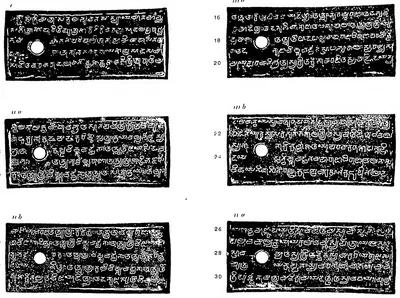 "Sripundi Plates of Tala II", plates i, ii a, ii b, iii a, iii b and iv a (Epigraphia Indica XIX, plate between pp. 152 and 153 (PDF p. 214))Inscription rubbing · 1928
 "Sripundi Plates of Tala II", plates iv b and v (Epigraphia Indica XIX, plate between pp. 152 and 153 (PDF p. 215))Inscription rubbing · 1928
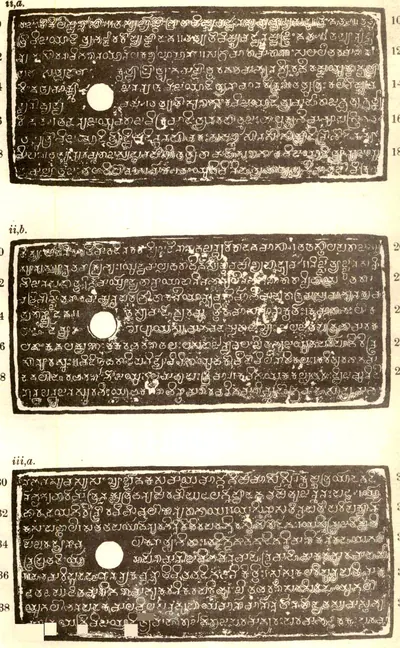 "Tandikonda Grant of Ammaraja II.", plates ii a, ii b and iii a (Epigraphia Indica XXIII, plate between pp. 168 and 169 (PDF p. 218))Inscription rubbing · 1936
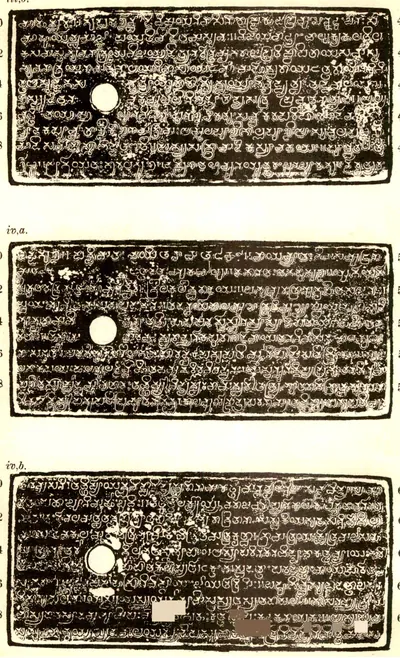 "Tandikonda Grant of Ammaraja II.", plates iii b, iv a and iv b (Epigraphia Indica XXIII, plate between pp. 168 and 169 (PDF p. 219))Inscription rubbing · 1936
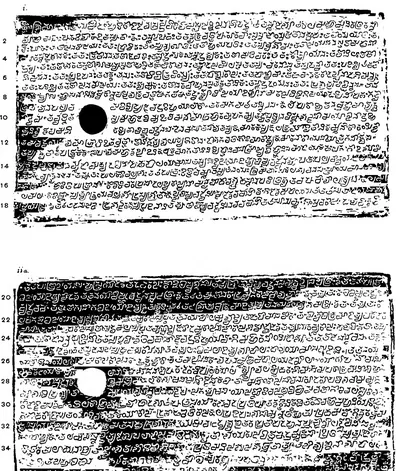 "Teki plates of Rajaraja-Chodaganga; dated in the seventeenth year (of Kulottunga I.)", plates i and ii a (Epigraphia Indica VI, Plate i, between pp. 338 and 339 (PDF p. 206))Inscription rubbing · 1901
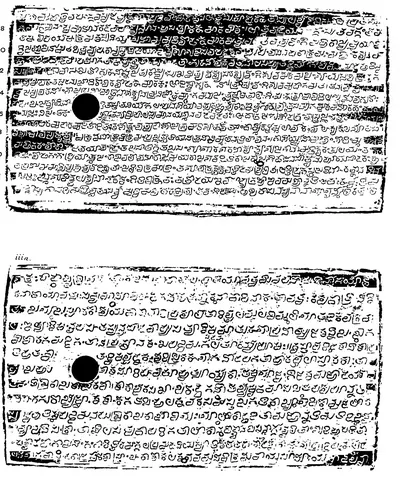 "Teki plates of Rajaraja-Chodaganga; dated in the seventeenth year (of Kulottunga I.)", plates ii b and iii a (Epigraphia Indica VI, Plate i, between pp. 338 and 339 (PDF p. 207))Inscription rubbing · 1901
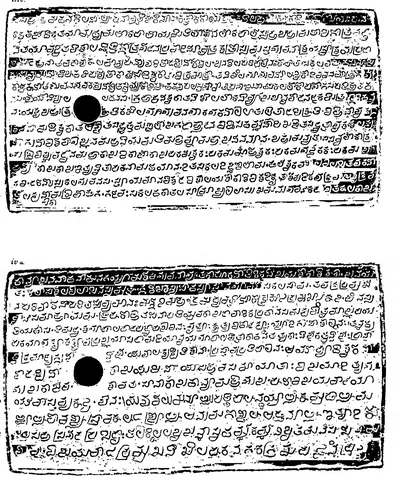 "Teki plates of Rajaraja-Chodaganga; dated in the seventeenth year (of Kulottunga I.)", plates iii b and iv a (Epigraphia Indica VI, Plate ii, between pp. 342 and 343 (PDF p. 212))Inscription rubbing · 1901
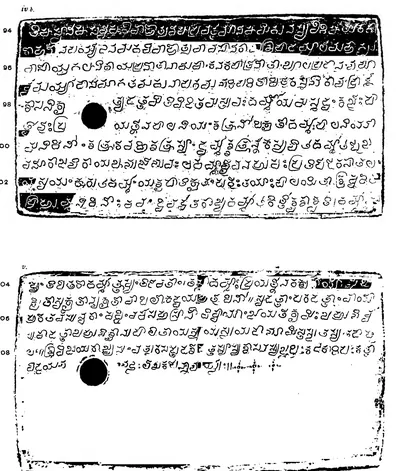 "Teki plates of Rajaraja-Chodaganga; dated in the seventeenth year (of Kulottunga I.)", plates iv b and v (Epigraphia Indica VI, Plate ii, between pp. 342 and 343 (PDF p. 213))Inscription rubbing · 1901
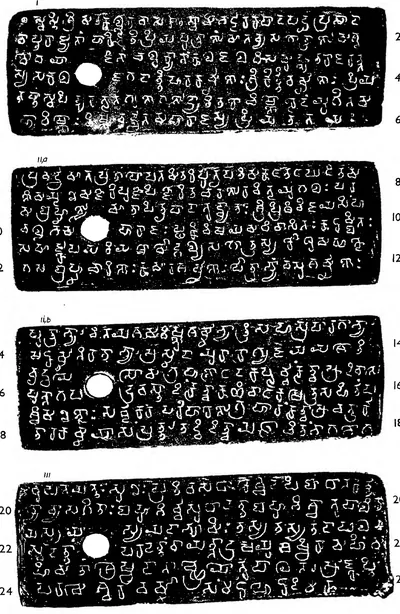 "Three Grants of Chalukya Jayasimha — A.—Grant No. 1, Year 18", plates i, ii a, ii b and iii (Epigraphia Indica XXXI, Plate I, after p. 131 (PDF p. 211))Inscription rubbing · 1960
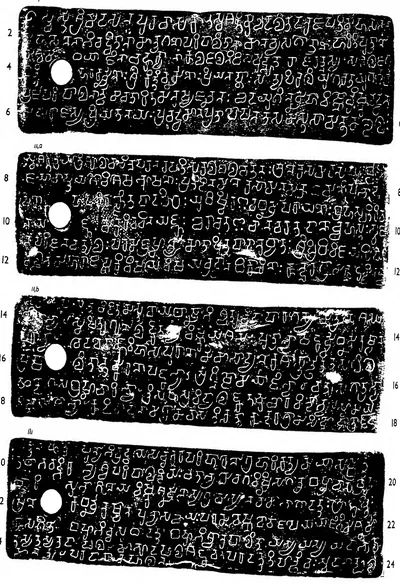 "Three Grants of Chalukya Jayasimha — B.—Grant No. 2", plates i, ii a, ii b and iii (Epigraphia Indica XXXI, Plate I, between pp. 132 and 133 (PDF p. 213))Inscription rubbing · 1960
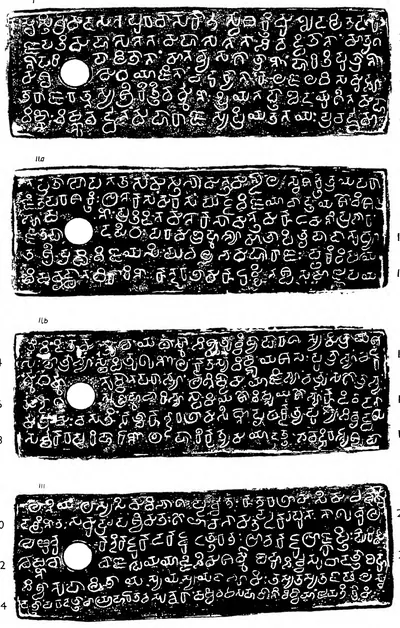 "Three Grants of Chalukya Jayasimha — C.—Grant No. 3", plates i, ii a, ii b and iii (Epigraphia Indica XXXI, Plate II, after p. 137 (PDF p. 220))Inscription rubbing · 1960
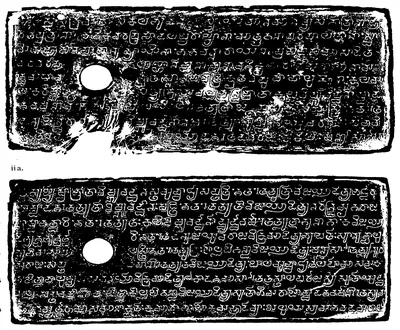 "Vandram plates of Ammaraja II.", plates i and ii a (Epigraphia Indica IX, plate between pp. 134 and 135 (PDF p. 168))Inscription rubbing · 1908
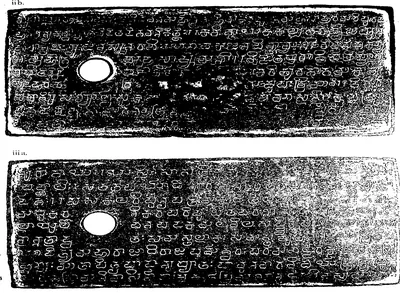 "Vandram plates of Ammaraja II.", plates ii b and iii a (Epigraphia Indica IX, plate between pp. 134 and 135 (PDF p. 169))Inscription rubbing · 1908
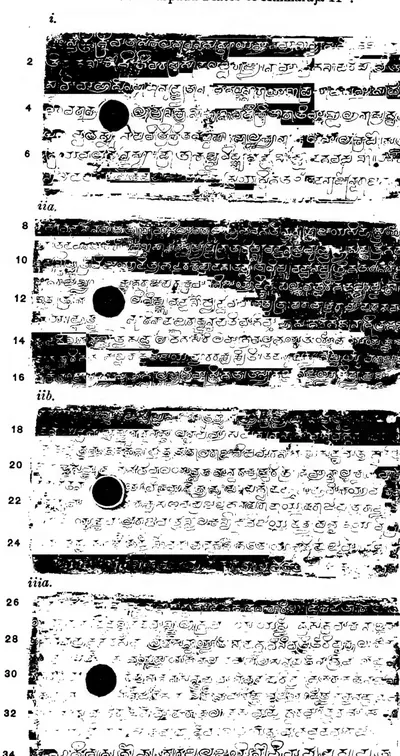 "Vemalurpadu Plates of Ammaraja II", plates i, ii a, ii b and iii a (Epigraphia Indica XVIII, plate between pp. 230 and 231 (PDF p. 292))Inscription rubbing · 1926
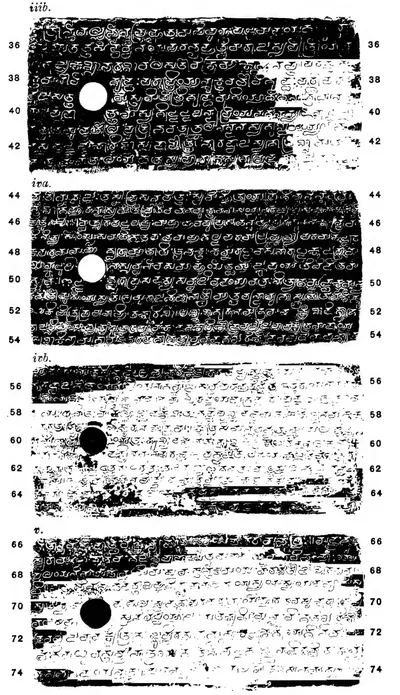 "Vemalurpadu Plates of Ammaraja II", plates iii b, iv a, iv b and v (Epigraphia Indica XVIII, plate between pp. 230 and 231 (PDF p. 293))Inscription rubbing · 1926
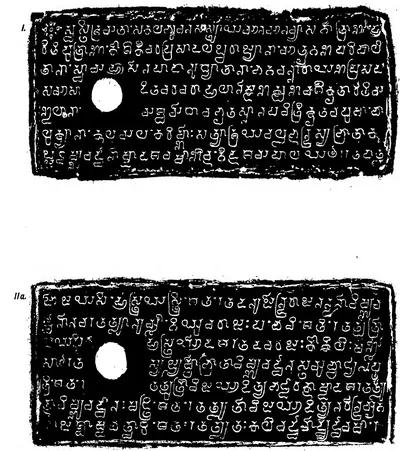 "Yelavarru Eastern Chalukya grant of Amma II.", plates i and ii a (Indian Antiquary XII, plate between pp. 92 and 93 (PDF p. 104))Inscription rubbing · 1883
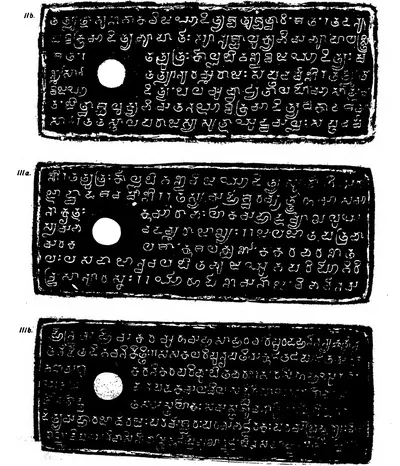 "Yelavarru Eastern Chalukya grant of Amma II.", plates ii b, iii a and iii b (Indian Antiquary XII, plate between pp. 92 and 93 (PDF p. 105))Inscription rubbing · 1883
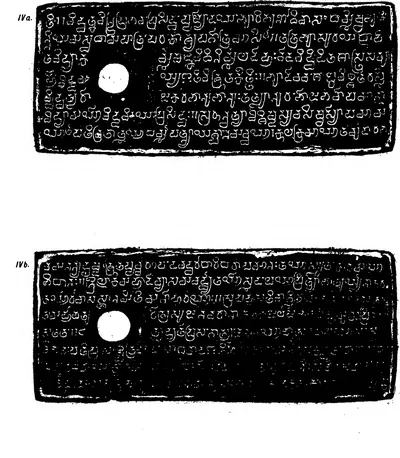 "Yelavarru Eastern Chalukya grant of Amma II.", plates iv a and iv b (Indian Antiquary XII, plate at p. 93 (PDF p. 106))Inscription rubbing · 1883
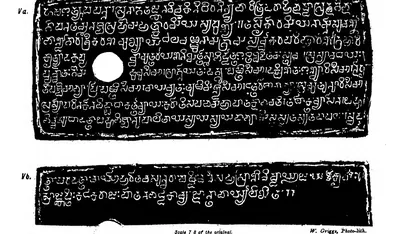 "Yelavarru Eastern Chalukya grant of Amma II.", plates v a and v b (Indian Antiquary XII, plate at p. 93 (PDF p. 107))Inscription rubbing · 1883
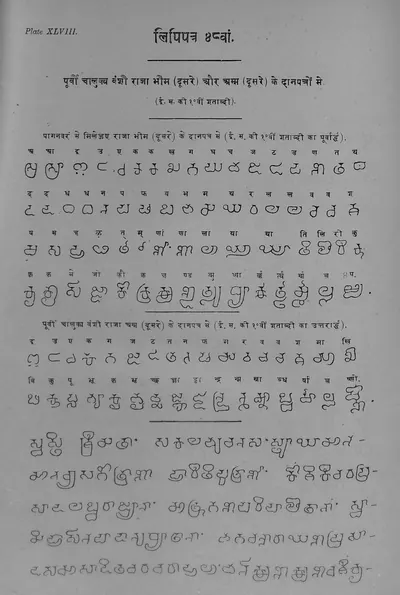 Alphabet table from the grants of the Eastern Chalukya kings Bhima II and Amma II, 10th century CE (Pagunavaram grant of Bhima II) (Ojha, Bharatiya Prachin Lipimala, 1918, Plate 48)Book plate · 1918
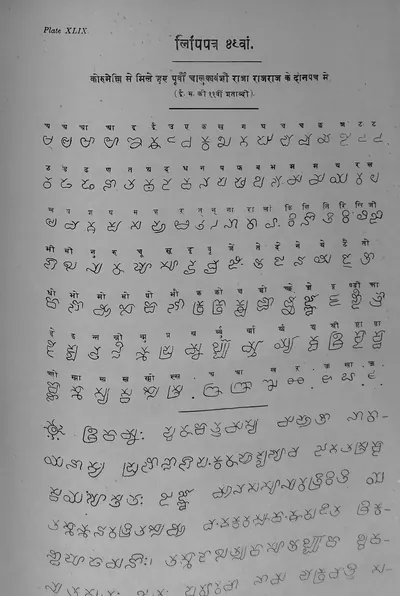 Alphabet table from the Korumelli grant of the Eastern Chalukya king Rajaraja, 11th century CE (Ojha, Bharatiya Prachin Lipimala, 1918, Plate 49)Book plate · 1918
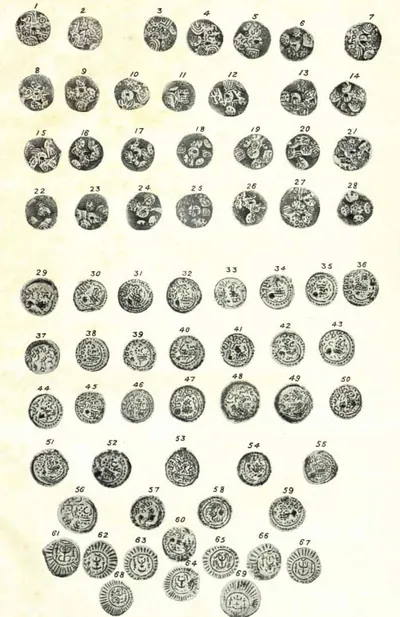 Coins of Western and Eastern Chalukyas (Hyderabad Arch. Report 1925-26, Pl. XVIII); P. V. Parabrahma Sastry (1978, pp. 259–262) assigns the boar-marked coins to Ganapatideva, Rudramadevi and PrataparudraCoin · 1928
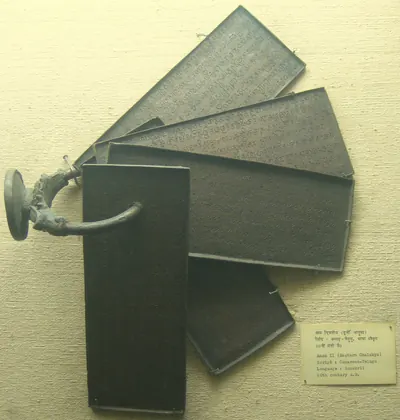 Copper plates of the Eastern Chalukya king Amma II on their ring with the seal, in the National Museum, New Delhi (photograph, 2010)Photograph · 2010
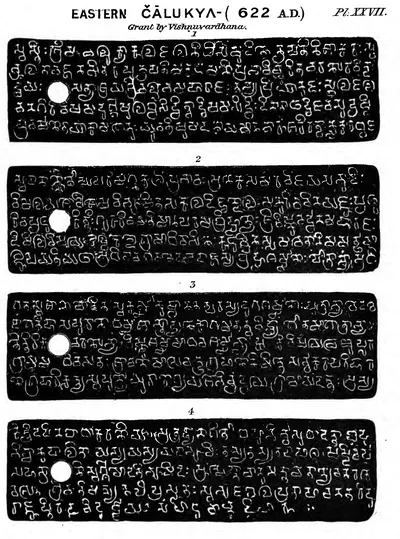 Eastern Chalukya copper-plate grant of Vishnuvardhana, "Eastern Calukya (622 A.D.)" (Burnell 1878, Pl. XXVII)Book plate · 1878
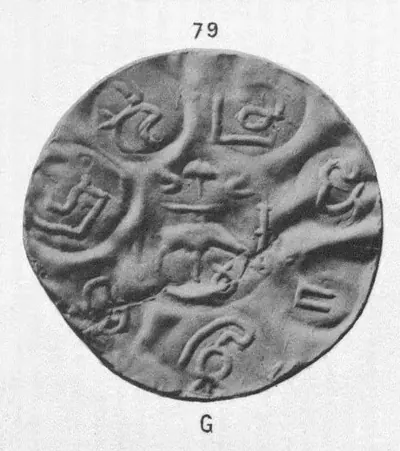 Gold coin No. 79, "South Indian Coins. Pl. III." (Elliot, Coins of Southern India, 1886, Plate III, No. 79 (PDF p. 191 of scan 00074712bsb))Coin · 1886
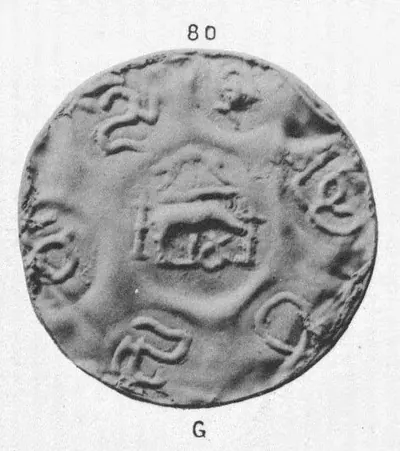 Gold coin No. 80, "South Indian Coins. Pl. III." (Elliot, Coins of Southern India, 1886, Plate III, No. 80 (PDF p. 191 of scan 00074712bsb))Coin · 1886
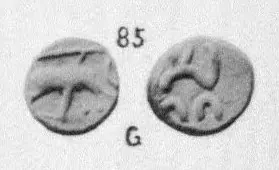 Gold fanam No. 85 from Rajamahendri, "South Indian Coins. Pl. III." (Elliot, Coins of Southern India, 1886, Plate III, No. 85 (PDF p. 191 of scan 00074712bsb))Coin · 1886
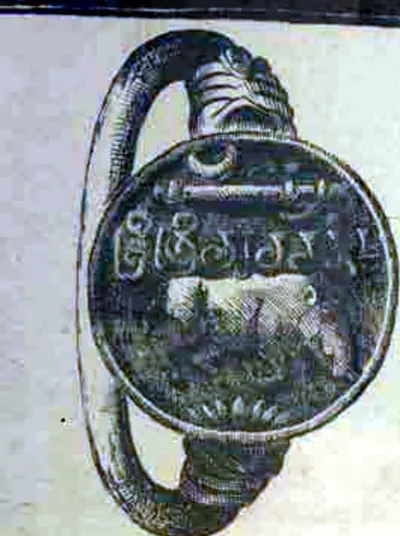 Seal of the "Eastern Chalukya grant of Amma II." (Gundugolanu grant) (Indian Antiquary XIII, plate at pp. 248-249 (PDF p. 286))Drawing · 1884
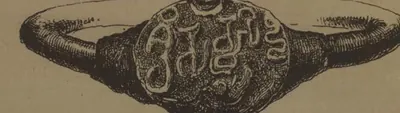 Seal of the "Eastern Chalukya grant of the 18th year of Jayasimha I." (Indian Antiquary XIII, plate at p. 138 (PDF p. 159))Drawing · 1884
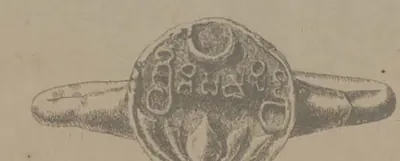 Seal of the "Eastern Chalukya grant of the fifth year of Vishnuvardhana II." (Indian Antiquary VII, plate at p. 190 (PDF p. 247))Drawing · 1878
Related
People
Kubja Vishnuvardhana
c. 615–633 CE
Younger brother of the Chalukya king Pulakesin II of Badami and founder of the Eastern Chalukya dynasty of Vengi. He served his brother as heir-apparent and governed the newly conquered east coast. He became an independent king there by 632 at the latest. His reign is usually dated 615–633, but scholars have put the start of his rule in Vengi anywhere from about 605 to after 631.
Jayasimha I
c. 633–663 CE
Second Eastern Chalukya king of Vengi (about 633–663), the eldest son of Kubja Vishnuvardhana. Four copper-plate grants of his are known, issued from Udayapura and Asanapura and granting villages in the Krishna–Godavari country to Brahmins. Most later records give him a reign of 33 years, one gives 30, and the scholars who fixed the chronology disagreed over which to follow.
Vishnuvardhana II (Eastern Chalukya)
663–672 CE
Eastern Chalukya king of Vengi (663–672), son of Indra-Bhattaraka and nephew of Jayasimha I, who may have adopted him. Two of his grants are the earliest Eastern Chalukya records whose dates can be worked out to the day. J. F. Fleet built the chronology of the whole dynasty on them. His son Mangi-yuvaraja followed him, and Mangi-yuvaraja's grant of 673 was found at Chendalur in the Ongole country.
Mangi-yuvaraja
c. 672–696 CE
Fifth king of the Eastern Chalukyas of Vengi (about 672–696), son of Vishnuvardhana II. His own grants call him Sarvalokasraya, 'asylum of all mankind', and his seal Vijayasiddhi. Only the later grants give the name Mangi-yuvaraja, and no source explains why the title yuvaraja stuck to it. Two of his grants survive; one of them, from Chendalur in the Ongole country, is dated 6 May 673. Three of his sons reigned after him: Jayasimha II, Kokkili and Vishnuvardhana III.
Jayasimha II (Eastern Chalukya)
c. 696–709 CE
Sixth king of the Eastern Chalukyas of Vengi (about 696–709), eldest son of Mangi-yuvaraja. The later grants give him a reign of thirteen years. His only known grant comes from Penukaparu in the Karma-rashtra district and calls him Sakalalokasraya Jayasimha-Vallabha. Its seal shows that he shared the surname Sarvasiddhi with Jayasimha I. After him the throne passed briefly to his half-brother Kokkili and then to his brother Vishnuvardhana III.
Vishnuvardhana III (Eastern Chalukya)
709–746 CE
Eastern Chalukya king of Vengi (709–746), son of Mangi-yuvaraja. He took the throne by expelling his younger half-brother Kokkili and reigned for 37 years. His grants name two queens, and one of them, a renewal of an older gift to a Jain temple at Bezwada, is the earliest mention of Jains in the dynasty's records. A Pallava record claims that a general of Nandivarman II drove an enemy out of his kingdom.
Vishnuvardhana IV (Eastern Chalukya)
764–799 CE
Eastern Chalukya king of Vengi (764–799), son of Vijayaditya I and father of Vijayaditya II. His reign saw the first recorded clashes with the Rashtrakutas of the western Deccan: a Rashtrakuta grant of 770–71 claims that Govinda II humbled the lord of Vengi, while a later record has Govinda II calling the king of Vengi to his aid. Historians read these records in different ways.
Vijayaditya II Narendra-mrigaraja
c. 799–843 CE
Eastern Chalukya king of Vengi (799–843 in Fleet's chronology), the first of the dynasty to use the full imperial titles. His family's records say he fought 108 battles against the Gangas and the Rashtrakutas over twelve years and founded 108 temples of Shiva. Rashtrakuta records say that Govinda III made the king of Vengi build the walls of his city. The later grants give his reign as 40, 41, 44 or 48 years.
Gunaga Vijayaditya III
c. 844–888 CE
Eastern Chalukya king of Vengi (c. 844–888). His records claim victories over the Gangas, the Nolamba king Mangi, a chief Sankila of Dahala and the Rashtrakuta Krishna, and the burning of Kiranapura and Chakrakuta. Historians have seen him both as the man who sacked the Rashtrakuta capital and as a Rashtrakuta vassal. His general Pandaranga is praised in one of the earliest Telugu verse inscriptions.
Pandaranga
c. 844–888 CE
Army commander of the Eastern Chalukya king Gunaga Vijayaditya III in the second half of the 9th century, praised in the Telugu verse inscription at Addanki. Later grants credit him with burning Kiranapura, the home of the Rashtrakuta Krishna II and his ally Sankila. He was the executor of his king's grants, and his descendants held the office of Katakaraja under the later kings.
Chalukya-Bhima I
c. 888–918 CE
Eastern Chalukya king of Vengi (888–918 in Fleet's and Sewell's reckoning), nephew and successor of Gunaga Vijayaditya III. His records say he won back the Vengi country after the Rashtrakuta king Krishna II had overrun it. A young son of his fell in battle against the Rashtrakuta army. He built the Siva temple of Chalukya-Bhimesvara, which gave its name to Bhimavaram near Kakinada (then Cocanada).
Amma I
c. 918–925 CE
Eastern Chalukya king of Vengi (918–925), grandson of Chalukya-Bhima I. He came to the throne against a conspiracy of his own relatives allied with the Rashtrakutas. His surname Raja-Mahendra led J. F. Fleet to suggest that Rajahmundry (Rajamahendrapuram) was named after him. His death in 925 opened nine years of civil war among the branches of the dynasty. His son Beta-Vijayaditya V, deposed as a child, founded the line of the Chalukya princes of Pithapuram.
Yuddhamalla II
c. 927–934 CE
Eastern Chalukya king of Vengi (about 927–934) of the junior line descended from Yuddhamalla I. He seized the throne during the civil war that followed the death of Amma I in 925, and held it for seven years until Chalukya-Bhima II drove him out. A Telugu verse inscription on a pillar at Vijayawada (then Bezwada), recording a temple of Kumarasvamin and a monastery for Saiva ascetics, is attributed to him or to his grandfather. His sons Badapa and Tala II later tried to win back the throne with Rashtrakuta help.
Chalukya-Bhima II
c. 934–945 CE
Eastern Chalukya king of Vengi (about 934–945), called Rajabhima, a son of Vijayaditya IV. He ended the civil war that followed the death of his half-brother Amma I by driving out Yuddhamalla II. His grants list a long series of enemies he overcame, among them an army of the Rashtrakuta Govinda IV and Nolamba and Ganga princes of the Mysore country. He was the father of the kings Amma II and Danarnava.
Amma II
945–970 CE
Eastern Chalukya king of Vengi (945–970), son of Chalukya-Bhima II and Lokamahadevi. He was crowned as a boy on 5 December 945, the first firmly dated event in the dynasty's history. About 956 the Rashtrakuta Krishna III, backing the claims of Yuddhamalla II's son Badapa, invaded Vengi and Amma went to Kalinga. Whether he fled or fought, and whether his half-brother Danarnava then ruled in his name or in his own, is disputed. His many grants include gifts to Jain temples and to a Kalamukha Saiva community at Bezwada.
Badapa
c. 956 CE
Eastern Chalukya prince of the junior line, son of Yuddhamalla II and elder brother of Tala II. In his Arumbaka plates he claimed to have driven Amma II out of Vengi with the help of the Rashtrakuta king Krishna III, and he took the imperial titles. Scholars disagree whether he ruled for a short time about 956 in the Velanandu district, or for the 27 years that the later grants call an interregnum (a gap in rule).
Tala II
c. 956 CE
Eastern Chalukya prince of the junior line, also called Vishnuvardhana, son of Yuddhamalla II and younger brother of Badapa. His only known grant, the Sripundi plates, made 'during the period of his rule', gives a small village in the Velanandu district to a minister whose father had died in his service. Its seal reads Tribhuvanasimha instead of the family's Tribhuvanankusa. This led both its editors to doubt that he ruled from the throne of Vengi.
Danarnava
970–973 CE
Eastern Chalukya king of Vengi (970–973), elder half-brother of Amma II and son of Chalukya-Bhima II. While Amma II was away in Kalinga about 956, he held the kingdom with the support of the Rashtrakuta Krishna III. His Mangallu grant, made at the request of the Kakatiya chief Gundyana, is the earliest record to name the Kakatiya family. The later records say that after his three-year reign Vengi was without a ruler for twenty-seven years, until his sons Saktivarman and Vimaladitya were restored with Chola help.
Saktivarman I
c. 999–1011 CE
Eastern Chalukya king of Vengi (about 999–1011), the eldest son of Danarnava. He took the throne after the 27 years in which, as the later grants put it, Vengi had no ruler. The Chola king Rajaraja I is said to have restored order in Vengi at this time, and historians have read Saktivarman's accession as a Chola restoration. Gold coins with his title Chalukya-Chandra have been found in Arakan.
Vimaladitya
1011–1022 CE
Eastern Chalukya king of Vengi (1011–1022), the younger brother of Saktivarman I. He was crowned on 10 May 1011. The Chola prince Rajendra defeated him, and he appears to have spent some years at the Chola court. There he married Kundavadevi, daughter of the Chola king Rajaraja I. Their son Rajaraja Narendra succeeded him.
Rajaraja Narendra
1022–1063 CE
Eastern Chalukya king of Vengi (crowned 1022, died about 1061–63), the son of a Chola princess and husband of another, who ruled from Rajahmundry. His reign was disturbed by Chola and Western Chalukya intervention and by a rising of his half-brother Vijayaditya VII. Telugu tradition remembers him as the patron of Nannaya, whose Mahabharata is the oldest surviving Telugu literary work.
Kulottunga I
c. 1063–1118 CE
Eastern Chalukya prince of Vengi, son of Rajaraja Narendra and the Chola princess Ammangadevi. As Rajendra (Rajendra-Choda, Rajendra II) he was heir to Vengi in 1063. In 1070 he seized the Chola throne, and he reigned as Kulottunga Chola I until about 1118. He united the Eastern Chalukya and Chola crowns, and governed Vengi first through his uncle Vijayaditya VII and then through his own sons as viceroys.
Vijayaditya VII
c. 1063–1076 CE
Eastern Chalukya prince, a son of Vimaladitya and half-brother of Rajaraja Narendra. He governed Vengi from about 1063 until his death about 1076–77, at first in rivalry with his nephew Rajendra (Kulottunga I) and later as his viceroy. Grants found in the 20th century show that he had also seized Vengi from Rajaraja about 1030–35, and set up his own son Saktivarman II there in 1061.
Vira-Choda
c. 1078–1093 CE
Son of Kulottunga I and viceroy of Vengi, installed on 23 August 1078. He was recalled in 1084 in favour of his eldest brother Chodaganga, and sent back about 1088–89. His Chellur and Pithapuram copper plates carry the full Eastern Chalukya family line, and the account of how Kulottunga handed Vengi to his uncle and his sons.
Kundavadevi
Chola princess, daughter of the Chola king Rajaraja I and younger sister of Rajendra Chola I. Early in the 11th century she married the Eastern Chalukya king Vimaladitya. She was the mother of Rajaraja Narendra. Her marriage began the alliance through which her grandson Kulottunga I came to rule the Chola empire.
Nannaya
Telugu poet of the 11th century, the author of the earliest surviving Telugu literary work. He wrote the first parvas (books) of the Telugu Mahabharata at the request of the Eastern Chalukya king Rajaraja Narendra of Rajahmundry. A Telugu grammar in Sanskrit, the Andhra-sabda-chintamani, is traditionally said to be his, though later historians doubted it. A. C. Burnell placed him in the 12th century in 1878; the editors of the inscriptions and later historians place him under Rajaraja in the 11th.
Monuments
Bhimesvara temple, Chalukya-Bhimavaram
Two-storeyed Shiva temple at Bhimavaram in Samalkot, one of the five Pancharama shrines. Its inscriptions call it Chalukya-Bhimesvara and the place Kumararama. A Pithapuram inscription of 1202 says the Eastern Chalukya king Chalukya-Bhima founded a temple of that name, and E. Hultzsch (1897) identified it with this one. Its own dated inscriptions begin in the late 11th or 12th century.
Bhimesvara temple, Chebrolu
Small two-storeyed Shiva temple on the old mound at Chebrolu, near Guntur, with the linga of Bhimesvara in a closed upper sanctum. M. Rama Rao (1964) gave it to the Eastern Chalukya king Chalukya-Bhima I, after whom he took the god to be named. The older surveys of Chebrolu do not mention it. They found the town's inscriptions at the Nagesvara temple, the former temple of Kumarasvamin, and E. Hultzsch could not identify the 'Chodabhimesvara' named in an inscription of 1213.
Bhimesvara temple, Draksharama
Two-storeyed Shiva temple at Draksharama in the Godavari delta, one of the five Pancharama shrines and the most famous temple of the coastal Telugu country. Its walls carry some 270 inscriptions dated from 1055. Popular tradition in 1907 gave it to an unknown Chola king. M. Rama Rao (1964) gave it to the Eastern Chalukya king Chalukya-Bhima I, after whom he took the god to be named.
Golingesvara and the temples of Biccavolu
Six small stone temples of Shiva at Biccavolu in the Godavari delta. The Golingesvara, Rajarajesvara and Chandrasekhara temples stand in a compound in the village, and three more stand in the fields outside. M. Rama Rao (1964) placed them in the reign of Gunaga Vijayaditya III. His reasons were that an inscription calls the Golingesvara god Bijayesvara, and that one doorway shows the river goddesses Ganga and Yamuna.
Kshiraramalingesvara temple, Palakollu
Shiva temple in the middle of Palakollu, in the western Godavari delta, one of the five Pancharama shrines under the name Kshirarama. M. Rama Rao (1964) gave its shrine to the Eastern Chalukya king Chalukya-Bhima I, and the foreword to his monograph counts it among the original Chalukya buildings. Its own inscriptions, more than forty, run from 1136 to 1640. They record gifts of the Velanadu chiefs, the Haihaya chiefs of Konamandala, the Chalukya chiefs of Nidadavolu and the Reddi kings.
Somesvara temple, Somarama (Bhimavaram)
Two-storeyed Shiva temple at Gunupudi, now Somaram in the town of Bhimavaram in the western Godavari delta. M. Rama Rao (1964) counted it among the five Pancharama shrines and gave it to the Eastern Chalukya king Chalukya-Bhima I. Robert Sewell recorded it in 1882 as a very old temple of Somesvara, said to be one of the five aramas. The Godavari gazetteer of 1907 left it out of its list of the five.
Inscriptions
Satara grant of Vishnuvardhana I
c. 616 CE
A Sanskrit copper-plate grant of Vishnuvardhana, the founder of the Eastern Chalukya line, issued while he was still only yuvaraja (heir-apparent) under his elder brother Pulakesin II of Badami. It gives a village on the Bhima to three Brahmin brothers and two other men. It is dated in the eighth year of 'the glorious Maharaja', which J. F. Fleet converted to 616 or 617. Found at Satara before 1844 and now in the British Museum, it is the earliest record of the founder.
Timmapuram plates of Vishnuvardhana I
c. 616 CE
A short undated Sanskrit copper-plate grant of the Eastern Chalukya founder Vishnuvardhana I Vishamasiddhi. It was dug up in a house site at Timmapuram in Vizagapatam district in 1907. Issued from Pishtapura (Pithapuram), it gives 4,000 nivartanas (a land measure) of land to forty Brahmins. E. Hultzsch read its wording as showing that Vishnuvardhana was still a dependant of his brother Pulakesin II. It is the only record to name Pishtapura as his residence.
Chipurupalle plates of Vishnuvardhana I
c. 632 CE
Sanskrit copper-plate grant of the Eastern Chalukya founder Vishnuvardhana I, now styled Maharaja, found at Chipurupalle in Vizagapatam district in 1867. It gives a village in the Dimila district to two Brahmin brothers on a lunar eclipse in the 18th year of his reign. J. F. Fleet fixed the eclipse at 7 July 632, the fixed point of the whole Eastern Chalukya chronology. A. C. Burnell had preferred 622 and James Burgess 628. The plates have since been lost.
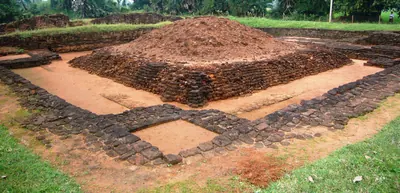
Pedda-Vegi plates of Jayasimha I
c. 632–663 CE
An undated Sanskrit copper-plate grant of the second Eastern Chalukya king, Jayasimha I Sarvasiddhi. It was found two or three feet underground near Pedda-Vegi, the old capital of Vengi. It gives the village of Kombaru, identified with Komali in Repalle taluk, to a Brahmin from Kukkanur. It is the only grant of the dynasty that opens with a prayer to the sun, and it calls the founder Vishnuvarman. It was registered in 1917–18 and edited by V. Rangacharya in 1928.
Niduparu grant of Jayasimha I
c. 633–663 CE
A Sanskrit copper-plate grant of the second Eastern Chalukya king, Jayasimha I Sarvasiddhi, issued from Asanapura. It gives the village of Niduparu, near the royal residence of Ganderu, to the Brahmin Katisarman, whose grandfather belonged to the college (ghatika) of Asanapura. It was examined in 1916–17, and E. Hultzsch edited it in 1926. Ganderu has been identified with Kanteru and Niduparu with Nidamarru, both in Guntur taluk.
Pulibumra plates of Jayasimha I
c. 637 CE
A Sanskrit copper-plate grant of the second Eastern Chalukya king, Jayasimha I. It gives the village of Pulibumra (Polamuru) in the Guddavadi district to Rudrasarman, whose father had received the same village from the Vishnukundin king Madhavavarman. It was noticed in 1914 and edited by V. Rangacharya in 1928. It is dated by number signs that have been read as the 4th, 5th and 15th regnal year, and it fed a long argument over the length of Jayasimha's reign.
Gudivada plates of Jayasimha I (three grants)
c. 659 CE
Three Sanskrit copper-plate grants of the second Eastern Chalukya king, Prithivi-Jayasimha-Vallabha I. They were kept by a landholding family at Gudivada in the old Sarvasiddhi taluk of Visakhapatnam district, and M. Somasekhara Sarma edited them in 1960. All concern land at or near Gudivada (Kulivataka or Kudivada) in the Plakki district. The first, of the king's 18th year, is dated by seasons and fortnights, and the editor worked it out as 12 February 659. The journal's editor doubted his conclusions and took the third grant for a later copy, perhaps a forgery.
Chendalur plates of Sarvalokasraya (Mangi-yuvaraja)
673 CE
Five Sanskrit copper plates of the Eastern Chalukya king Sarvalokasraya Vijayasiddhi, the Mangi-yuvaraja of later grants. They were dug up at Chendalur in the old Ongole taluk with a Pallava grant of the same village. They are dated on a lunar eclipse in the second year of his reign, which F. Kielhorn fixed as 6 May 673, and give the village of Chendarura in Kamma-rashtra to six Brahmins. E. Hultzsch edited them in 1906.
Penukaparu grant of Jayasimha II
c. 696–709 CE
A Sanskrit copper-plate grant of the Eastern Chalukya king Jayasimha II (reigned about 696–709), who calls himself Sakalalokasraya Jayasimha-Vallabha. It gives a field at the village of Penukaparu in the Karma-rashtra district to a Brahmin of Vangiparu. It is the only known grant of this king. It was examined in 1923–24, bought by the Madras Museum and edited by E. Hultzsch in 1926. Its seal shows that he, like Jayasimha I, bore the surname Sarvasiddhi.
Ipur plates of Vishnuvardhana III
c. 709–746 CE
Sanskrit copper-plate grant of the Eastern Chalukya king Vishnuvardhana III (reigned about 709–746), dated in his 23rd year. It records a gift of a field in Jalayuru, in the Plolnandu district near Pithapuram, and a house site with a flower garden. Prithivipothi, daughter of Maghinduvaraja, made the gift. The plates were kept at Ipur in Tenali taluk with two Vishnukundin grants. E. Hultzsch edited them in 1926, and he took the lady for a queen and her father for the Pallava king Mahendravarman III.
Ederu plates of Vijayaditya II
c. 799–843 CE
Three undated Sanskrit copper plates of the Eastern Chalukya king Vijayaditya II Narendramrigaraja (reigned about 799–843). They were found about 1873 at Ederu in the Nuzvid zamindari, Kistna district. They record the gift, on a solar eclipse, of a field and a house site in the village of Vandrupiteyu to a Brahmin. F. Kielhorn re-edited them in 1899. J. F. Fleet later doubted that they were genuine.
Addanki inscription of Pandaranga
c. 844 CE
A damaged stone inscription of the mid-9th century from Addanki. Its opening Telugu verse, in the taruvoja metre, praises Pandaranga, army commander of the Eastern Chalukya king Gunaga-Vijayaditya III.
Masulipatam (?) plates of Vijayaditya III
c. 844–888 CE
An undated Sanskrit copper-plate grant of the Eastern Chalukya king Gunaga-Vijayaditya III (reigned about 844–888). It is known only from Sir Walter Elliot's impressions, and was perhaps received from the Collector of Masulipatam in 1846. The king gives a village in the Gudravara district to a Brahmin, apparently for his advice in the battle in which an enemy named Mangi was killed. The grant was conveyed by Pandaranga, the general praised in the Addanki inscription.
Bezwada plates of Chalukya-Bhima I
c. 888 CE
Five Sanskrit copper plates of the Eastern Chalukya king Chalukya-Bhima I (reigned about 888–918). They were found on 25 June 1897 in a rock-cut chamber in the quarry compound at Bezwada (Vijayawada). Issued at his coronation, they give the village of Kukiparru to a Vedic scholar. They were the first record found of this king, and the earliest then known to give the full line of Eastern Chalukya kings with the length of each reign.
Bezwada pillar inscription of Yuddhamalla
c. 890–950 CE
A Telugu verse inscription on a stone pillar in the Mallesvara temple at Bezwada (Vijayawada). It records that a Chalukya king Yuddhamalla built a temple and a monastery for Kumarasvamin (Karttikeya). It also records that a Yuddhamalla later added a front tower to a temple built by his grandfather Mallapa-raju. Its editor J. Ramayya Pantulu (1920) dated it to about 890–930 and called it the earliest Telugu poetry then known. Its date, its division into one or two records and the meaning of its fourth verse were disputed.
Chevuru plates of Amma I
c. 918–925 CE
Three undated copper plates of the Eastern Chalukya king Amma I (reigned about 918–925). They were dug up about 1928 in a ruined mud house at Chevuru in the Kaikalur taluk of Kistna district, and B. Ch. Chhabra edited them. They were issued at the first-feeding ceremony of the infant prince Vijayaditya (Beta-Vijayaditya V). They make the warrior Vemaraja headman of the village of Umikili for a fixed tribute of eight gold gadyanakas. Their boundaries are in Telugu.
Ederu plates of Amma I
c. 918–925 CE
Five finely engraved Sanskrit copper plates of the Eastern Chalukya king Amma I Vishnuvardhana, surnamed Rajamahendra (reigned about 918–925). They were found buried in a field at Ederu near Agiripalle, Kistna district, at the end of 1871. Amma I gives the village of Gonturu with twelve hamlets to his military officer Bhandanaditya, alias Kuntaditya. The verses on his predecessors tell of Vijayaditya II's 108 battles and 108 Siva temples, Vijayaditya III's wars, and Chalukya-Bhima I's reconquest of Vengi from the Rashtrakutas.
Diggubarru grant of Chalukya-Bhima II
c. 934–945 CE
Five undated Sanskrit copper plates of the Eastern Chalukya king Chalukya-Bhima II (reigned about 934–945). Sir Walter Elliot obtained them from 'Paganavaram', and they are now in the British Museum. J. F. Fleet edited them in 1884. They give the village of Diggubarru in the Pagunavara district to the Vedic scholar Viddamayya. Their verse account of the civil war after 925 is the only record Fleet knew that names the eight-month king Bhima III.
Gundugolanu plates of Amma II
c. 945–970 CE
Three Sanskrit copper plates of the Eastern Chalukya king Amma II (crowned 945). They were formerly Sir Walter Elliot's and are now in the British Museum, and where they were found is not known. At the request of the king's parents-in-law, Kama and Nayamamba, they grant a field at the village of Gundugolanu in the Vengi district to a Brahmin. J. F. Fleet edited them in 1884. The grant is notable for leaving Yuddhamalla II out of the list of kings and for saying that Tala imprisoned the boy king Vijayaditya V.
Kaluchumbarru grant of Amma II
c. 945–970 CE
Five Sanskrit copper plates, with a closing passage in Telugu, of the Eastern Chalukya king Amma II, also called Vijayaditya VI (crowned 945, reigned 25 years). At the request of Chamekamba, a lady of the Pattavardhika family and a lay disciple of the Jain teacher Arhanandin, the king gives the village of Kaluchumbarru in the Attilinandu district to Arhanandin. The gift was for repairs to the dining-hall of the Jain temple called Sarvalokasraya-Jinabhavana. The plates were Sir Walter Elliot's and are in the British Museum, and where they were found is not known.
Maliyapundi grant of Amma II
c. 945–970 CE
Five Sanskrit copper plates of the Eastern Chalukya king Amma II (crowned 945), found in the Ramalingesvara temple at Madanur near Ongole. On the winter solstice the king gives the small village of Maliyapundi, near Dharmavaram in the Addanki country, to a Jain temple called Katakabharana. Durgaraja founded the temple; he was a great-grandson of Pandaranga, the general of Gunaga Vijayaditya III. The grant was first published in the Nellore District Inscriptions (1905), and E. Hultzsch re-edited it in 1908. It explains the Kataka-raja title and makes Pandaranga the burner of Kiranapura.
Masulipatam plates of Amma II
c. 945–970 CE
An undated Sanskrit copper-plate charter of the Eastern Chalukya king Amma II (crowned 945), found in the record room of the Kistna District Court at Masulipatam. It gives the village of Pedda-Galidiparru in Velanadu to two Jaina temples that two feudatory brothers had built at Vijayavatika (Vijayawada). B. V. Krishna Rao edited it in 1938. It names a Jaina family of chiefs and their teacher, and its editor used it to argue against parts of J. F. Fleet's chronology of the dynasty.
Padamkaluru grant of Amma II
c. 945–970 CE
Five Sanskrit copper plates of the Eastern Chalukya king Amma II Vijayaditya, formerly in Sir Walter Elliot's collection. They give the village of Padamkaluru in the Pennatavadi district to a Brahmin pilgrim on a lunar eclipse. J. F. Fleet edited them in 1878. They are the grant that dates Amma II's coronation, in Saka 867 (December 945). Where they were found is not recorded.
Vandram plates of Amma II
c. 945–970 CE
Five worn Sanskrit copper plates of the Eastern Chalukya king Amma II (crowned 945), found in a backyard at Vandram in the Bhimavaram taluk. E. Hultzsch edited them in 1908. They grant a village, Tanderu or Betipundi, as an agrahara (Brahmin village) to Kuppanayya, a minister who had founded a shrine of Shiva at Draksharama. Their opening repeats the Yelavarru grant almost word for word, and one plate is engraved over another grant of the same king.
Vemalurpadu plates of Amma II
945–970 CE
Five undated Sanskrit copper plates of the Eastern Chalukya king Amma II (945–970). The Madras Museum got them in 1910 from a resident of Vemalurpadu, near Phirangipuram in Guntur district. At the request of Durgaraja, great-grandson of Gunaga Vijayaditya III's general Pandaranga, the king gives two fields in the Karma-rashtra district as an agrahara (Brahmin village) to Durgaraja's minister Musiya. E. Hultzsch, who edited them in 1926, found the writer's Sanskrit full of mistakes. The grant adds that Amma II was made heir-apparent at eight and crowned at twelve.
Yelavarru plates of Amma II
c. 945–970 CE
Five Sanskrit copper plates of the Eastern Chalukya king Amma II (crowned 945), dug up in 1864 at Yelavarru (Elavarru) near Repalle, the very village they grant. On the winter solstice the king gives Elavarru in the Velanandu district to Koramiya, a Brahmin who headed the writing office of the gold treasury. The king's mother had brought Koramiya up. J. F. Fleet edited the plates in 1883, and parts of them are palimpsests, cut down from two older charters.
Arumbaka plates of Badapa
c. 956–999 CE
Five undated Sanskrit copper plates of Badapa, son of Yuddhamalla II, found buried in a pot at Polamuru in the Tanuku taluk in 1921. Badapa claims that, with the help of the Rashtrakuta king called Karnaraja-Vallabha, he drove Amma II out of Vengi. He gives the village of Arumbaka, in the Velanandu district (now in Repalle taluk), to the archer Gandanarayana, a brother-in-law of Amma II, who passes it to his cousin. Editors disagree over whether Badapa really ruled, and for how long.
Mangallu grant of Amma II
c. 956 CE
Five Sanskrit copper plates issued in the name of the Eastern Chalukya king Amma II, dug up in the Nandigama taluk and noticed in 1917. The grant says that after eleven years of rule Amma II went to Kalinga because of the Rashtrakuta Krishna III, and that his half-brother Danarnava then ruled. At the request of Kakatya Gundyana, it gives the village of Mangallu (probably Magallu, near Nandigama) to a Brahmin. Later historians took Gundyana for an early Kakatiya. V. Rangacharya edited the grant in 1960 and disputed the 1917 reading of the key passage.
Sripundi plates of Tala II
c. 956–999 CE
Five undated Sanskrit copper plates of Tala II, also called Vishnuvardhana, a younger brother of Badapa and son of Yuddhamalla II. They were found buried at Sripundi (Sripudi, Repalle taluk) in the late 18th century and copied for the Mackenzie collection about 1800, and they reached the Madras epigraphist in 1908. Made 'during the period of his rule', they give a small village near Sripundi to Kuppanayya of the Pallavamalla family, whose father had died in Tala's service. Their family tree leaves out the reign lengths and rearranges the kings of 925–934.
Tandikonda grant of Amma II
c. 958 CE
Four surviving Sanskrit copper plates of the Eastern Chalukya king Amma II, dug up near Oruvakallu in Sattenapalle taluk about 1914–15. The finder melted down the fifth plate and the seal. The king gives Tandikonda (Tadikonda, near Guntur) and three other villages to the temple of Uma-Mahesvara at Bezwada, built by Vijayaditya II. The king's preceptor Vidyesvara composed the grant, and it sets out his spiritual line in the Kalamukha school of Pasupata Saivas. Its editor dated it to Saka 880 (958), but the journal's editor doubted his reasoning.
Ranastipundi grant of Vimaladitya
c. 1011–1022 CE
A Sanskrit copper-plate grant of the eighth year of the Eastern Chalukya king Vimaladitya, found in the Amalapuram taluk of the Godavari delta. V. Venkayya edited it in 1901. It is the only known record of this king, and the earliest to give the dynasty's mythical descent from the Moon and the legend of Vijayaditya and Trilochana-Pallava. It fixed Vimaladitya's coronation at 10 May 1011, and with it the length of the interregnum (the years without a king) in Vengi.
Kalidindi grant of Rajaraja I
c. 1022 CE
A Sanskrit copper-plate grant of the Eastern Chalukya king Rajaraja I (Rajaraja Narendra). A farmer dug it up at Kalidindi near the Kolleru lake in 1938, and N. Venkataramanayya edited it in 1952. It records a battle in which three Chola generals sent into the Andhra country fell fighting the commanders of the Karnata (Western Chalukya) king. It also records the three Shiva temples Rajaraja built at Kalidindi in their memory. It says that the Chola emperor Rajendra gave Rajaraja his daughter Ammanga as chief queen.
Korumelli plates of Rajaraja I
c. 1022 CE
Five copper plates of the Eastern Chalukya king Rajaraja I (Rajaraja Narendra). They grant the village of Korumelli in Guddavadi-vishaya to a Brahmin on the occasion of a lunar eclipse. Once in Sir Walter Elliot's collection and now in the British Museum, they were edited by J. F. Fleet in 1885. They give the date of the king's coronation in Saka 944 (August 1022), and tell of his father's marriage to the Chola princess Kundava.
Nandamapundi grant of Rajaraja Narendra
1053 CE
Five copper plates of 1053 CE recording the gift of Nandamapundi village to the poet Narayana. The gift was made in the 32nd regnal year of the Eastern Chalukya king Rajaraja I. The grant names its verse-writer as Nanniyabhatta, perhaps Nannaya of the Telugu Mahabharata.
Teki plates of Rajaraja-Chodaganga
c. 1086 CE
A Sanskrit copper-plate edict of Chodaganga, surnamed Rajaraja, dated in the 17th year of the reign. Chodaganga was a son of the Chola-Chalukya emperor Kulottunga I and viceroy of Vengi. A cultivator found the plates at Teki in the Godavari delta in 1901. The edict confers honours at weddings on the Teliki families, hereditary servants of the Eastern Chalukyas said to have come from Vijayavata (Vijayawada). E. Hultzsch used it to revise the order of the viceroys of Vengi under Kulottunga I.
Chellur plates of Vira-Choda
c. 1090 CE
A Sanskrit copper-plate grant of the 21st year of Vira-Choda, a son of Kulottunga I and viceroy of Vengi. It gives a village to a Vishnu temple that his general Medamarya had built at the agrahara of Chellur near Ramachandrapuram. It was formerly in Sir Walter Elliot's collection, and E. Hultzsch (1890) and J. F. Fleet (1890) edited it. It records Vira-Choda's installation in Saka 1001 (23 August 1078) and the succession of governors of Vengi under the Chola-Chalukya emperor.
References
Notes (0)
Sources (24)
Spotted an error on this page? Tell us
Last updated: