Nasir-ud-daula (Asaf Jah IV)
Nizam of Hyderabad from 1829 to 1857, eldest son of Sikandar Jah. At his request the British officers who had supervised the districts were withdrawn. Misrule, debt and the arrears of the Hyderabad Contingent followed, and Chandu Lal resigned in 1843. By the treaty of 21 May 1853 Berar, Osmanabad and the Raichur Doab were assigned to the British to pay for the Contingent. A week later he appointed Salar Jang minister. He died on 16 May 1857.
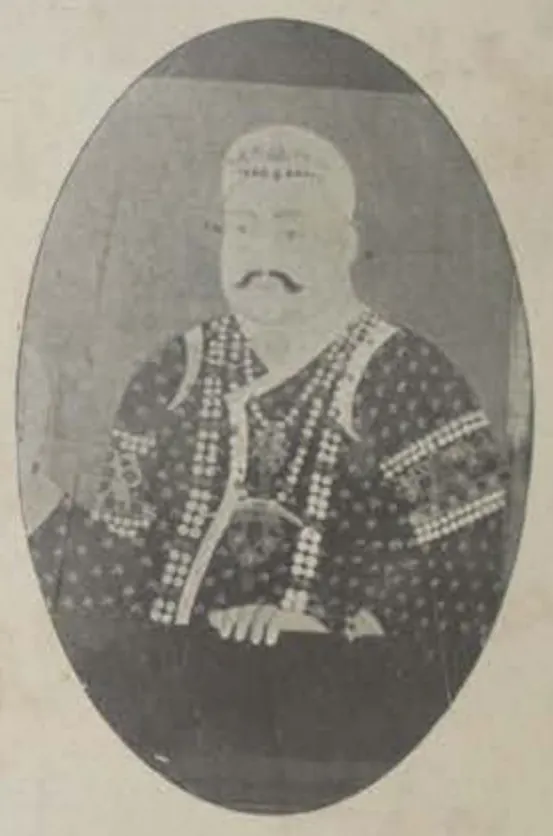
Nasir-ud-daula, the fourth Nizam in the usual reckoning of the Asaf Jahis, was the eldest son of Sikandar Jah and succeeded him in 1829.12 Mudiraj’s Pictorial Hyderabad (1929) gives his personal name as Mir Farkhunda Ali Khan.3 It says he was born in 1792 to Chandni Begum, his father’s “favourite nikah wife”.3 Bilgrami lists Chandni Begum’s grave in the family burial ground at the Mecca Masjid.4
The end of British supervision
He came to the throne in May 1829.56 Mudiraj says that one of his first acts was to ask for the removal of the European revenue superintendents employed in the districts since 1820.56 The Government of India agreed.56
The treaty collection of 1909 says he was given a promise.78 Once the existing revenue settlements had run their course, the British would withdraw from all interference.78 He would be “absolute both in the selection and removal of his minister, and in all other matters of internal administration”.78 A treaty of 1831 confirmed the existing agreements.78
The same work says the withdrawal “was immediately followed by the return of disorder and misrule”.8 Bankers refused to lend to the state.8 Chandu Lal could not cope, and he resigned as minister on 6 September 1843.8 Mudiraj calls the famine of 1833 “the severest of all the famines of the nineteenth century”.6
In 1839 a court of enquiry found that Mubariz-ud-daula, a brother of the late Nizam Sikandar Jah, and others had been organising the Wahhabis against the British and the Nizam’s government.26 Mubariz-ud-daula was imprisoned in Golconda fort, where, Mudiraj says, he died in 1854.26 In 1847 a riot between Shias and Sunnis cost about fifty lives.2
The Contingent and the treaty of 1853
The Hyderabad Contingent was a force under British officers raised in Chandu Lal’s time.8 Its pay fell into arrears, and advances had to be made from the British treasury.8 In 1843 the Nizam was warned that further advances would need land as security.8
The ministers who followed Chandu Lal were Siraj-ul-Mulk, Amjad-ul-Mulk and Shams-ul-Umara, and Siraj-ul-Mulk again from 1851.89 None of them paid off the debt.89 Mudiraj says the treasury was empty and some of the Nizam’s jewels were mortgaged.10
By the treaty of 21 May 1853 the British agreed to keep up the Contingent.112 It was to have not less than 5,000 infantry, 2,000 cavalry and four field batteries.112 To pay for it the Nizam assigned in trust districts in Berar, Dharaseo (Osmanabad) and the Raichur Doab.112 These were expected to yield fifty lakhs a year.112 The Contingent “ceased to be part of the Nizam’s army, and became an auxiliary force kept up by the British Government for the Nizam’s use”.11
Siraj-ul-Mulk died within a week of the treaty, and the Nizam appointed his nephew Salar Jang minister.2 Mudiraj dates Siraj-ul-Mulk’s death to 27 May 1853, and Campbell to 26 May.109
Death
According to Campbell, Nasir-ud-daula died on 16 May 1857, aged sixty-six.112 Campbell calls him “very popular and remarkably tolerant in religious matters”.112 His eldest son, Afzal-ud-daula, succeeded him.112
Campbell also describes Salar Jang’s life.13 There he says that on his deathbed the Nizam asked for his son.13 He advised him that “as the British Government had always been so friendly to himself, his son should continue faithful to the English”.13 Bilgrami lists his grave among those of the Nizams at the Mecca Masjid.14
Footnotes
-
Campbell, Glimpses of the Nizam’s Dominions (1898), p. 125 (archive.org (opens in a new tab)). ↩ ↩2 ↩3 ↩4
-
Imperial Gazetteer of India: Hyderabad State (1909), p. 17 (archive.org (opens in a new tab)). ↩ ↩2 ↩3 ↩4 ↩5 ↩6 ↩7 ↩8 ↩9
-
Mudiraj, Pictorial Hyderabad (1929), p. 64 (archive.org (opens in a new tab)). ↩ ↩2
-
Syed Ali Asgar Bilgrami, Landmarks of the Deccan (1927), p. 36 (archive.org (opens in a new tab)). ↩
-
K. Krishnaswamy Mudiraj, Pictorial Hyderabad, Vol. I (1929), p. 65 (archive.org (opens in a new tab)). ↩ ↩2 ↩3
-
Mudiraj, Pictorial Hyderabad (1929), p. 66 (archive.org (opens in a new tab)). ↩ ↩2 ↩3 ↩4 ↩5 ↩6
-
C. U. Aitchison, A Collection of Treaties, Engagements and Sanads, Vol. IX (1909), p. 7 (archive.org (opens in a new tab)). ↩ ↩2 ↩3 ↩4
-
Aitchison, Treaties, Vol. IX (1909), p. 8 (archive.org (opens in a new tab)). ↩ ↩2 ↩3 ↩4 ↩5 ↩6 ↩7 ↩8 ↩9 ↩10 ↩11 ↩12
-
Campbell, Glimpses of the Nizam’s Dominions (1898), p. 128 (archive.org (opens in a new tab)). ↩ ↩2 ↩3
-
Mudiraj, Pictorial Hyderabad (1929), p. 67 (archive.org (opens in a new tab)). ↩ ↩2
-
Aitchison, Treaties, Vol. IX (1909), p. 9 (archive.org (opens in a new tab)). ↩ ↩2 ↩3 ↩4 ↩5
-
Mudiraj, Pictorial Hyderabad (1929), p. 69 (archive.org (opens in a new tab)). ↩ ↩2 ↩3
-
A. Claude Campbell, Glimpses of the Nizam’s Dominions (1898), p. 37 (archive.org (opens in a new tab)). ↩ ↩2 ↩3
-
Bilgrami, Landmarks of the Deccan (1927), p. 37 (archive.org (opens in a new tab)). ↩
Photos
Related
Dynasties
References
Notes (0)
Sources (5)
Spotted an error on this page? Tell us
Last updated: