Sikandar Jah (Asaf Jah III)
Eldest son of Nizam Ali Khan, Nizam of Hyderabad from 1803 to 1829. His reign began with the Maratha war of 1803 and ended in debt. He left the government to his ministers Mir Alam and Munir-ul-Mulk and their deputy Chandu Lal. Under them European officers supervised the districts from about 1820, and the Nizam's tribute from the Northern Circars was bought out (1823). The cantonment of Secunderabad is named after him.
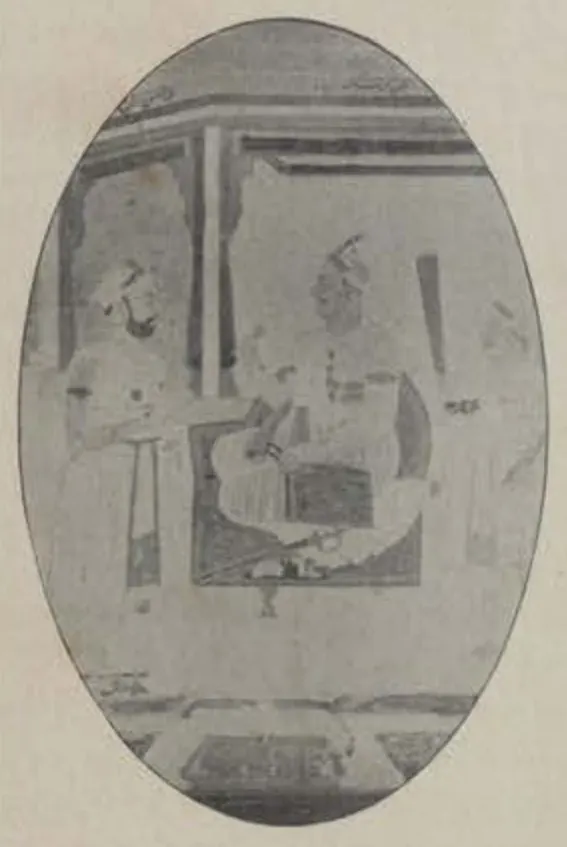
Sikandar Jah was the third Nizam of Hyderabad in the reckoning of the Asaf Jahis. This count starts from Asaf Jah I and passes over the three disputed successors of 1748–61. He was the eldest son of Nizam Ali Khan and reigned from 1803 to 1829.12 Bilgrami names his mother as Tahniat-un-Nissa Begum and lists her grave in the family burial ground at the Mecca Masjid.3
Coming to the throne, and the Maratha war
Campbell says the Marathas tried in 1803 to stop Sikandar Jah from coming to the throne, while Nizam Ali lay ill. British and Hyderabad troops together won the battles of Assaye and Argaon.1 The Imperial Gazetteer says these victories “secured the Nizam’s territories”.2
The treaty collection of 1909 records that on his accession “all existing treaties with the British Government were confirmed”.4 He went through the form of getting confirmation from the Mughal emperor at Delhi.4 By the partition treaty of Hyderabad of 28 April 1804 he received land in the Deccan conquered from Sindhia and Nagpur.4
Campbell adds that Holkar offered to march into Hyderabad territory to help him overthrow the British.1 The Nizam refused in a letter written in his own hand.1 The cantonment (army town) of Secunderabad, north of Hyderabad, where the British subsidiary force was stationed, is named after him.51
Ministers
Mir Alam, Nizam Ali’s minister, served Sikandar Jah until his death in 1808.4 Bilgrami dates the Mir Alam tank, which Mir Alam built south-west of the city, to 1806, in Sikandar Jah’s reign.46
The treaty collection says Lord Minto advised the Nizam to choose Shams-ul-Umara as Mir Alam’s successor.4 But the Nizam preferred Mir Alam’s son-in-law Munir-ul-Mulk.4 As a condition of the appointment, the Nizam required that state business be carried on through Chandu Lal.4 It adds that “the Nizam himself, whose sanity was doubted, lived a secluded life, and took no interest in the administration”.4
Campbell calls Munir-ul-Mulk “practically powerless”, with all authority centred in Chandu Lal, his deputy.7 Under Chandu Lal a disciplined force under British officers was raised in place of the Nizam’s old troops.48 This was the beginning of the Hyderabad Contingent.48
Debt and reform
The treaty collection describes the last years of the reign.9 The revenues were farmed out to contractors who were “practically supreme in their several districts”.9 The disciplined force was called out again and again against local risings.9 The roads were unsafe without armed escorts.9 So British officers were employed in the districts to settle the revenue.9
Mudiraj’s Pictorial Hyderabad (1929) says the Resident, Sir Charles Metcalfe, persuaded Sikandar Jah in 1822 to let European officers supervise the districts and make a revenue settlement.10 It says the country improved under this system.10 By the treaty of 12 December 1822 the Nizam was freed from paying tribute to the Peshwa, a claim the British had inherited.29
The state was deeply in debt. Mudiraj says that in 1823 it owed seventy-eight lakhs to the banking house of William Palmer and Company, and twenty-eight lakhs to the Company.10 To escape, the Nizam allowed the Company to exchange its yearly payment of seven lakhs for the Northern Circars for a lump sum.10 Mudiraj gives the sum as Rs 1,16,66,666.10 The treaty collection gives Rs 1,66,66,666.9 The Imperial Gazetteer for Madras gives 116½ lakhs.11
Death
Sikandar Jah died at Hyderabad in 1829. Mudiraj dates his death to May 1829. His eldest son, Nasir-ud-daula, succeeded him.2110 Bilgrami lists his grave among those of the Nizams at the Mecca Masjid.12
Mudiraj prints a portrait of “Male Mia, son of Nawab Arastoo Jah, the prime minister and father-in-law of Nawab Sikander Jah Bahadur, the III Nizam”.13
Sikandar Jah’s brother Mubariz-ud-daula was imprisoned in Golconda fort in 1839 for his part in the Wahhabi plot against the British and the Nizam, and died there.1214
Footnotes
-
A. Claude Campbell, Glimpses of the Nizam’s Dominions (1898), p. 125 (archive.org (opens in a new tab)). ↩ ↩2 ↩3 ↩4 ↩5 ↩6 ↩7
-
Imperial Gazetteer of India: Hyderabad State (1909), p. 17 (archive.org (opens in a new tab)). ↩ ↩2 ↩3 ↩4 ↩5
-
Syed Ali Asgar Bilgrami, Landmarks of the Deccan (1927), p. 36 (archive.org (opens in a new tab)). ↩
-
C. U. Aitchison, A Collection of Treaties, Engagements and Sanads, Vol. IX (1909), p. 6 (archive.org (opens in a new tab)). ↩ ↩2 ↩3 ↩4 ↩5 ↩6 ↩7 ↩8 ↩9 ↩10 ↩11
-
Imperial Gazetteer: Hyderabad (1909), p. 119 (archive.org (opens in a new tab)). ↩
-
Bilgrami, Landmarks of the Deccan (1927), p. 106 (archive.org (opens in a new tab)). ↩
-
Campbell, Glimpses of the Nizam’s Dominions (1898), p. 127 (archive.org (opens in a new tab)). ↩
-
Aitchison, Treaties, Vol. IX (1909), p. 8 (archive.org (opens in a new tab)). ↩ ↩2
-
Aitchison, Treaties, Vol. IX (1909), p. 7 (archive.org (opens in a new tab)). ↩ ↩2 ↩3 ↩4 ↩5 ↩6 ↩7
-
K. Krishnaswamy Mudiraj, Pictorial Hyderabad, Vol. I (1929), p. 64 (archive.org (opens in a new tab)). ↩ ↩2 ↩3 ↩4 ↩5 ↩6
-
Imperial Gazetteer of India: Madras, Vol. I (1908), p. 186 (archive.org (opens in a new tab)). ↩
-
Bilgrami, Landmarks of the Deccan (1927), p. 37 (archive.org (opens in a new tab)). ↩
-
Mudiraj, Pictorial Hyderabad (1929), plate following p. 64 (archive.org (opens in a new tab)). ↩
-
Mudiraj, Pictorial Hyderabad (1929), p. 66 (archive.org (opens in a new tab)). ↩
Photos
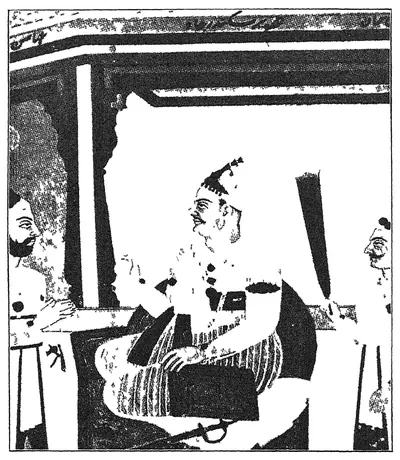 "H. H. Nawab Mir Akber Ali Khan Sikander Jah, Nizam III" (portrait in Mudiraj, Pictorial Hyderabad, 1929, p. 62)Book plate · 1929
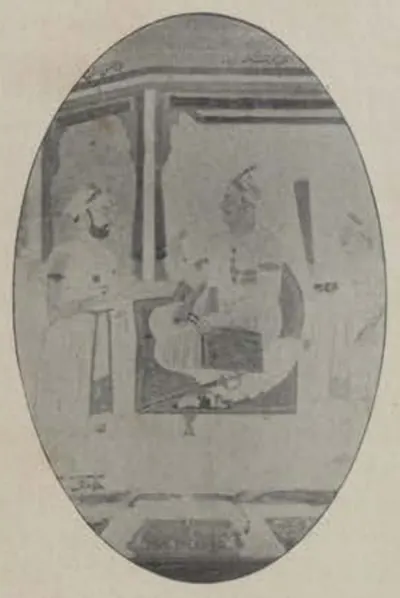 "Late Nizams" (Campbell 1898, p. 123)Historic photograph · 1898
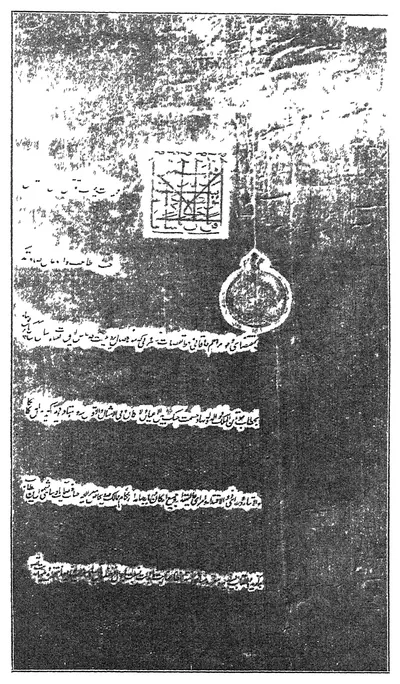 "Reproduction of firman issued by H. H. the Nizam Sekunder Jah Bahadur conferring the title of Nawab Hasmat Jung Bahadur on Capt. John Kirkpatrick, British Resident, 1798 to 1805" (Mudiraj, Pictorial Hyderabad, 1929)Book plate · 1929
Related
Dynasties
References
Notes (0)
Sources (6)
Spotted an error on this page? Tell us
Last updated: