Bhairavakonda
Hill site in the old Udayagiri taluk of the Nellore district, near the Cuddapah border. It has a group of early rock-cut cave temples reported by A. H. Longhurst in 1921. R. Gopalan described them as of the Pallava age and very like the caves of Mahendravarman I.
Bhairavakonda lies in what was the Udayagiri taluk of the Nellore district.1 The Madras epigraphy report for 1922–23 described it as lying near the borders of the Kadapa (then Cuddapah) district.2 Its rock-cut cave temples were “discovered and reported upon by Mr. Longhurst in his Archaeological Report for 1921”.3
The cave temples and their inscriptions
In March 1922 the epigraphy office toured the Nellore district to copy the inscriptions in the caves. Its report agreed with most of Longhurst’s remarks about “these early temples”, and it copied seventeen inscriptions there.34 One inscription, in archaic letters on a small rock-cut shrine for a linga (stone emblem of Shiva), calls it Sri Damodaresvaram. The report suggested that the shrine was named after the king Damodaravarman of the Ananda gotra (family line).4 This king’s copper-plate grant had been found in the north of the Nellore district.4 See the Bhairavakonda cave temples.
R. Gopalan, writing in 1928, described the site as “a large group of temples attributable to the Pallava age”.5 He wrote that they were “all of them cut out of rock and closely resembling the Mahendra caves”.5 The report for 1922–23 noted an inscription from Bhairavakona naming two chiefs.2 It connected them with the family of the queen of a Telugu Chola king.2
Footnotes
-
Annual Report on Epigraphy, Madras, for 1921–22, Part I, p. 8 (archive.org (opens in a new tab)). ↩
-
Annual Reports on Epigraphy for 1920–21 to 1924–25 (1925), report for 1922–23, p. 101 (archive.org (opens in a new tab)). ↩ ↩2 ↩3
-
Annual Report on Epigraphy, Southern Circle, Madras, for 1921–22, Part I, p. 3, in Annual Reports on Epigraphy for 1920–21 to 1924–25 (1925) (archive.org (opens in a new tab)). ↩ ↩2
-
Annual Report on Epigraphy, Madras, for 1921–22, Part I, p. 4 (archive.org (opens in a new tab)). ↩ ↩2 ↩3
-
R. Gopalan, History of the Pallavas of Kanchi (1928), p. 8 (archive.org (opens in a new tab)). ↩ ↩2
Photos
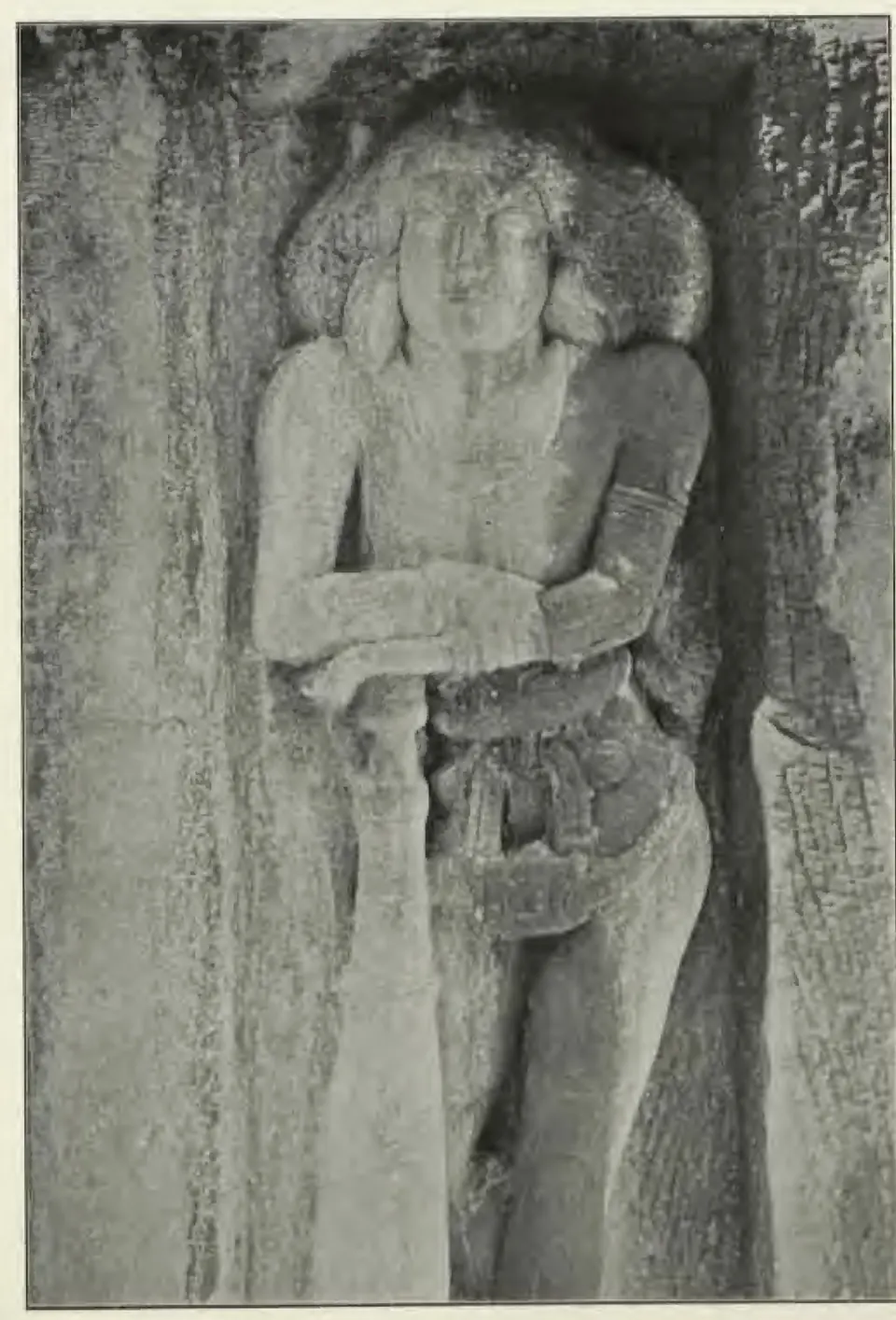
 "Bhairavakonda temple No. III: detail of doorkeeper" (Longhurst, Pallava Architecture I, 1924, Plate XVII (b) (PDF p. 86))Historic photograph · 1924
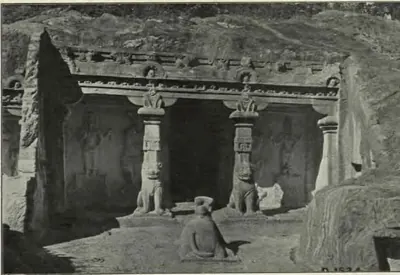 "Bhairavakonda temple No. VII: general view" (Longhurst, Pallava Architecture I, 1924, Plate XX (b) (PDF p. 92))Historic photograph · 1924
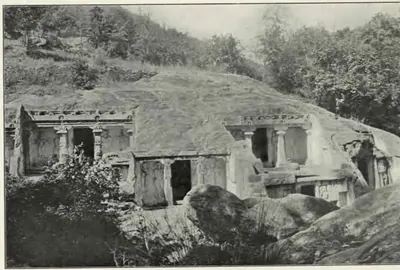 "Bhairavakonda: general view of ten rock-cut temples" (Longhurst, Pallava Architecture I, 1924, Plate XV (a) (PDF p. 82))Historic photograph · 1924
Related
Monuments
References
Notes (0)
Sources (2)
Spotted an error on this page? Tell us
Last updated: