Amma II
Eastern Chalukya king of Vengi (945–970), son of Chalukya-Bhima II and Lokamahadevi. He was crowned as a boy on 5 December 945, the first firmly dated event in the dynasty's history. About 956 the Rashtrakuta Krishna III, backing the claims of Yuddhamalla II's son Badapa, invaded Vengi and Amma went to Kalinga. Whether he fled or fought, and whether his half-brother Danarnava then ruled in his name or in his own, is disputed. His many grants include gifts to Jain temples and to a Kalamukha Saiva community at Bezwada.
Amma II ruled the Eastern Chalukya kingdom of Vengi for twenty-five years, from 945 to 970.12 His is the earliest coronation in the dynasty’s history for which a grant gives a date in the Saka era.12 J. F. Fleet built his whole chronology of the earlier kings by counting back from it.12 Amma came to the throne as a boy, faced rival claimants from two branches of his own family, and lost his kingdom for a time to a Rashtrakuta invasion.34
Family
Amma II was the son of Chalukya-Bhima II and his queen Lokamahadevi.56 A grant of his own compares his birth to that of the war-god: “Just as Kumara to Mahesvara from Uma, Amma-raja was born to him from Lokamahadevi.”6 Danarnava, his successor, was his elder half-brother.74 The Pithapuram inscription of 1202 adds a third son of Bhima II, named Kama.8
One of Amma II’s grants was found at Gundugolanu.2 It was made at the request of a prince Kama and his wife Nayamamba, who were Amma II’s father-in-law and mother-in-law.2
He bore the second name Vijayaditya (VI in Fleet’s numbering, V in E. Hultzsch’s pedigree of 1890). Like his uncle Amma I, he also bore the surname Raja-Mahendra.59 In his grants he uses the full imperial titles Maharajadhiraja, Paramesvara and Paramabhattaraka.59
Coronation
One of his grants, the Padamkaluru plates, gives the date of his coronation in full astronomical detail. Fleet calculated it as Friday, 5 December 945.2 He noted that the king was then in the twelfth year from his birth.2
V. Rangacharya wrote about the choice of the boy king in 1960.4 He thought it was explained by the lower rank of Danarnava’s mother, Ankidevi.4 He noted that the grants describe Amma as born with a mark round his neck like the necklet (kanthika) of an heir.4 They also say he was crowned at the request of all the people.4
Rivals in his own family
Fleet thought that the family quarrels which had begun in 925 ended with Amma II’s accession.5 The only exception he saw was a hint, in one corrupt passage, of a struggle with Yuddhamalla II.5 Later finds showed otherwise. B. V. Krishna Rao edited Amma’s Masulipatam plates in 1938.3 He read a verse as saying that after his coronation Amma II defeated a rival Vijayaditya and a group of treacherous kinsmen.3 This rival’s neck was adorned with the kanthika of the heir-apparent.3
Krishna Rao identified the rival with Kanthika-Beta, the son of Amma I, who had been deposed as a child in 925.3 He concluded that Beta came back on the death of Bhima II to oppose the boy king.3 He suggested that the sons of Yuddhamalla II were among the other claimants.3
The Rashtrakuta invasion and the journey to Kalinga
The Mangallu grant was first noticed in 1917 and edited by Rangacharya in 1960.1011 It says that Amma II ruled for eleven years and then went to the Kalinga country Krishna-kopat.1011 His half-brother Danarnava then obtained the land from the Vallabha, the Rashtrakuta king, and ruled it.1011 The Krishna was the Rashtrakuta Krishna III. The words have been read in several ways:
- The 1917 epigraphy report took Krishna-kopat to mean “in wrath against Krishna”, that is, that Amma marched against him.4
- B. V. Krishna Rao (1936) held that Amma went towards Kalinga to fight an alliance led by Krishna III.1213 The alliance meant to replace him with Krishna’s own favourite, Badapa.1213 In his view the war may have lasted a year or two, and ended in a great victory for Amma.1213 He dated the Tandikonda grant to 958, after Amma’s return.1213
- The 1921 epigraphy report, on a newly found grant of Badapa, read it as saying that Badapa sought the help of Krishna III and drove Amma out of the country.1415 It concluded that Danarnava ruled while Amma was away and issued his grant in Amma’s name.1415 Meanwhile Badapa held the Velanandu district in the east.1415
- V. Rangacharya (1960) understood the words to mean that Amma went because Krishna was angry with him.416 He thought Amma was more the victim than the avenger of that anger, perhaps even a prisoner in Krishna’s camp.416 In his view Danarnava acted as Amma’s regent and issued the Mangallu grant in his name.416
- P. V. Parabrahma Sastry (1978) argued that Danarnava issued the Mangallu grant in his own right.1718 In his view Krishna III made Danarnava king after Amma fled to Kalinga.1718 Amma later gathered forces there and won back his throne.1718
All the later records of the dynasty give Amma II a reign of twenty-five years, which places his death in 970.167 The sources used here do not say how he died.
Grants and religion
Fleet listed six grants of the reign, and more were found later.27 Several show the king supporting both Jain and Saiva foundations:
- The Kaluchumbarru grant was edited by Fleet in 1903.1920 It gives the village of Kaluchumbarru, in the Attilinandu district near Attili in the Tanuku taluk, to the Jain teacher Arhanandin.1920 The gift was for repairs to the charitable dining-hall of a Jain temple called Sarvalokasraya-Jinabhavana.1920 It was made at the request of Chamekamba, a lady of the Pattavardhika family and a pupil of Arhanandin.1920 Fleet took her to be a courtesan and a favourite of the king.1920 The grant also made a man named Kusumayudha hereditary village headman (gramakuta).21
- The Maliyapundi grant was edited by Hultzsch in 1908.2223 It gives the small village of Maliyapundi, near Ongole, to a Jain temple south of Dharmapuri, the Katakabharana-Jinalaya.2223 The temple was in the charge of a priest of the Yapaniya order.2223 The gift was made at the request of Durgaraja, who had founded the temple.2223 He was a great-grandson of Gunaga Vijayaditya III’s general Pandaranga.2223
- The Masulipatam plates were edited by Krishna Rao in 1938.324 They record a gift to the Jain faith by a family of Jain feudatories.324 Two of them, Bhima and Naravahana, had received the insignia of feudal chiefs from Chalukya-Bhima II.324 According to Krishna Rao, the plates record that they built two Jain temples at Vijayavatika (Vijayawada, then Bezwada).324
- The Tandikonda grant was edited by Krishna Rao in 1936.1325 It gives Tandikonda and three other villages to the temple of Uma-Mahesvara at Vijayawada, built by Vijayaditya II Narendra-mrigaraja.1325 It was composed by the king’s guru Vidyesvara, of the Kalamukha school of Pasupata Saivas.1325 The grant sets out Vidyesvara’s line of teachers.1325 Robert Sewell entered the same gift under 958.26
Amma II, like his father, called himself a devotee of Siva.519 The seals of his grants bear the family motto Sri-Tribhuvanankusa.519
Footnotes
-
J. F. Fleet, “The Chronology of the Eastern Chalukya Kings”, Indian Antiquary XX (1891), p. 1 (archive.org (opens in a new tab)). ↩ ↩2 ↩3
-
Fleet, “Chronology of the Eastern Chalukya Kings” (1891), p. 271 (archive.org (opens in a new tab)). ↩ ↩2 ↩3 ↩4 ↩5 ↩6 ↩7 ↩8
-
B. V. Krishna Rao, “Masulipatam Plates of Ammaraja II”, Epigraphia Indica XXIV (1937–38), p. 211 (archive.org (opens in a new tab)). ↩ ↩2 ↩3 ↩4 ↩5 ↩6 ↩7 ↩8 ↩9 ↩10 ↩11
-
Rangacharya, “Mangallu Grant of Amma II” (1960), p. 39 and note 6 (archive.org (opens in a new tab)). ↩ ↩2 ↩3 ↩4 ↩5 ↩6 ↩7 ↩8 ↩9 ↩10
-
Fleet, “Chronology of the Eastern Chalukya Kings” (1891), pp. 270–271 (archive.org (opens in a new tab)). ↩ ↩2 ↩3 ↩4 ↩5 ↩6 ↩7
-
Hultzsch, South-Indian Inscriptions, Vol. I (1890), No. 38, translation, p. 49 (archive.org (opens in a new tab)). ↩ ↩2
-
Fleet, “Chronology of the Eastern Chalukya Kings” (1891), p. 272 (archive.org (opens in a new tab)). ↩ ↩2 ↩3
-
E. Hultzsch, “Pithapuram Pillar Inscription of Mallapadeva”, Epigraphia Indica IV (1897), p. 227 (archive.org (opens in a new tab)). ↩
-
E. Hultzsch, South-Indian Inscriptions, Vol. I (1890), p. 32, pedigree of the Eastern Chalukya dynasty (archive.org (opens in a new tab)). ↩ ↩2
-
V. Rangacharya, “Mangallu Grant of Amma II”, Epigraphia Indica XXXI (1955–56, publ. 1960), p. 37 (archive.org (opens in a new tab)). ↩ ↩2 ↩3
-
Rangacharya, “Mangallu Grant of Amma II” (1960), p. 38 (archive.org (opens in a new tab)). ↩ ↩2 ↩3
-
B. V. Krishna Rao, “Tandikonda Grant of Ammaraja II”, Epigraphia Indica XXIII (1935–36), p. 162 (archive.org (opens in a new tab)). ↩ ↩2 ↩3 ↩4
-
Krishna Rao, “Tandikonda Grant of Ammaraja II” (1936), p. 163 (archive.org (opens in a new tab)). ↩ ↩2 ↩3 ↩4 ↩5 ↩6 ↩7 ↩8
-
Annual Report on Epigraphy, Madras, for 1920–21 (1921), Part II, paras. 13–14, p. 90 (archive.org (opens in a new tab)). ↩ ↩2 ↩3
-
Annual Report on Epigraphy, Madras, for 1920–21 (1921), Part II, para. 14, p. 91 (archive.org (opens in a new tab)). ↩ ↩2 ↩3
-
Rangacharya, “Mangallu Grant of Amma II” (1960), p. 40 (archive.org (opens in a new tab)). ↩ ↩2 ↩3 ↩4
-
P. V. Parabrahma Sastry, The Kakatiyas of Warangal (1978), p. 15. ↩ ↩2 ↩3
-
Parabrahma Sastry, The Kakatiyas of Warangal (1978), p. 16. ↩ ↩2 ↩3
-
J. F. Fleet, “Kaluchumbarru Grant of Vijayaditya-Amma II”, Epigraphia Indica VII (1902–03), p. 179 (archive.org (opens in a new tab)). ↩ ↩2 ↩3 ↩4 ↩5 ↩6 ↩7
-
Fleet, “Kaluchumbarru Grant” (1903), p. 182 (archive.org (opens in a new tab)). ↩ ↩2 ↩3 ↩4 ↩5
-
Fleet, “Kaluchumbarru Grant” (1903), p. 183 (archive.org (opens in a new tab)). ↩
-
E. Hultzsch, “Maliyapundi Grant of Ammaraja II”, Epigraphia Indica IX (1907–08), p. 49 (archive.org (opens in a new tab)). ↩ ↩2 ↩3 ↩4 ↩5
-
Hultzsch, “Maliyapundi Grant of Ammaraja II” (1908), p. 50 (archive.org (opens in a new tab)). ↩ ↩2 ↩3 ↩4 ↩5
-
Krishna Rao, “Masulipatam Plates of Ammaraja II” (1938), p. 212 (archive.org (opens in a new tab)). ↩ ↩2 ↩3 ↩4
-
Krishna Rao, “Tandikonda Grant of Ammaraja II” (1936), p. 164 (archive.org (opens in a new tab)). ↩ ↩2 ↩3 ↩4
-
Robert Sewell and S. Krishnaswami Aiyangar, The Historical Inscriptions of Southern India (1932), p. 49 (archive.org (opens in a new tab)). ↩
Photos
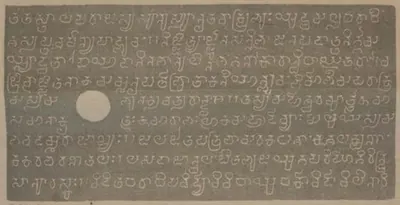 "Copper-plate grant of the Eastern Chalukya dynasty. Dated about Saka 867", plate ii b (Indian Antiquary VII, folding plate to face p. 16 (PDF p. 28))Inscription rubbing · 1878
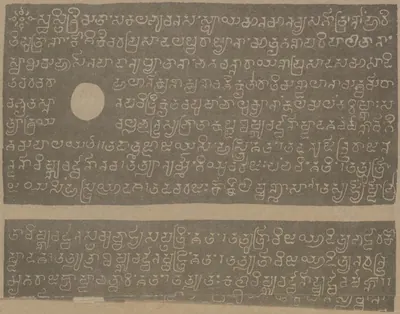 "Copper-plate grant of the Eastern Chalukya dynasty. Dated about Saka 867", plates i and ii a (Indian Antiquary VII, plate to face p. 16 (PDF p. 27))Inscription rubbing · 1878
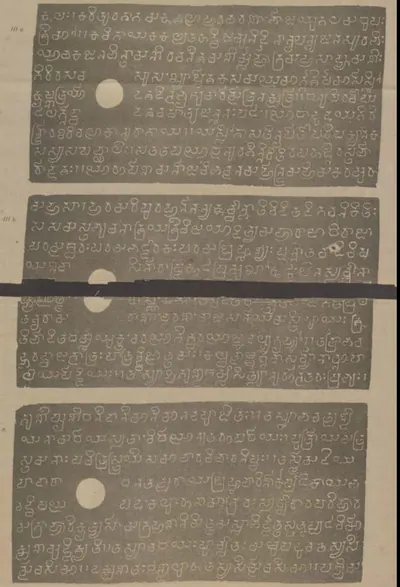 "Copper-plate grant of the Eastern Chalukya dynasty. Dated about Saka 867", plates iii a, iii b and iv a (Indian Antiquary VII, folding plate (PDF p. 29))Inscription rubbing · 1878
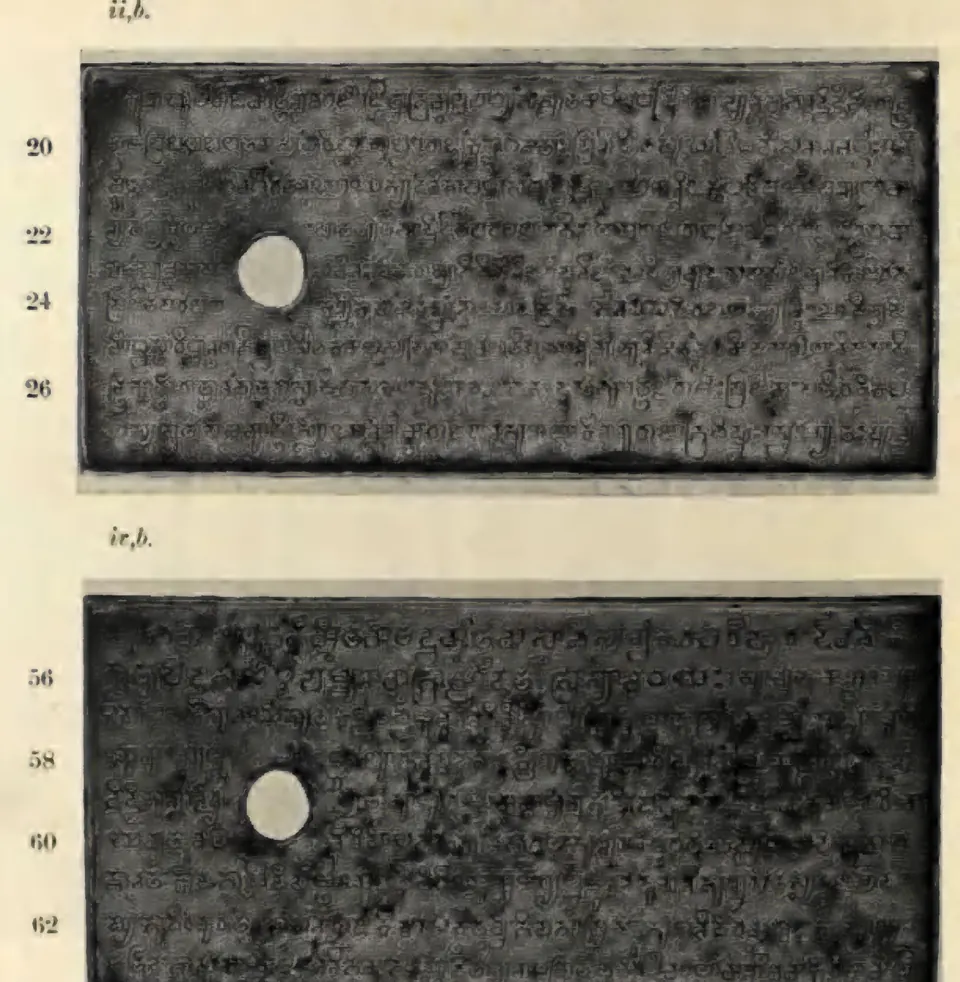
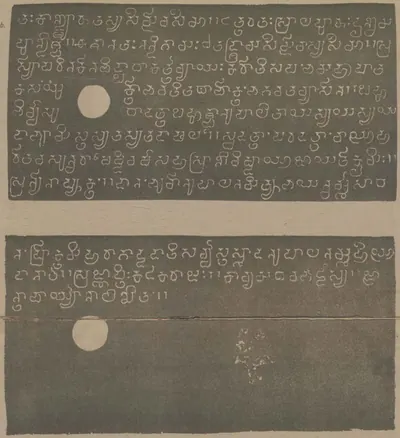 "Copper-plate grant of the Eastern Chalukya dynasty. Dated about Saka 867", plates iv b and v (Indian Antiquary VII, plate (PDF p. 30))Inscription rubbing · 1878
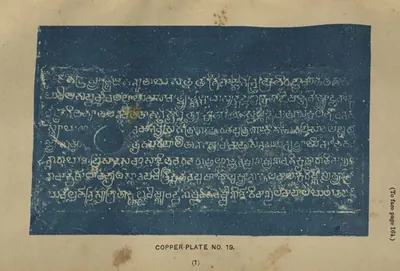 "Copper-plate No. 19" (Malliyapundi grant of Amma Raja II, East Chalukyan king) (Butterworth & Chetty 1905, to face p. 164 (PDF p. 219))Inscription rubbing · 1905
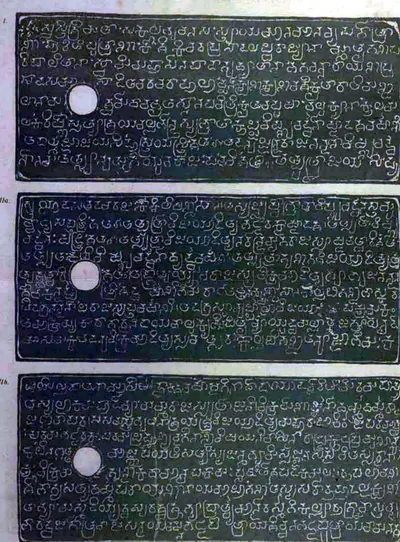 "Eastern Chalukya grant of Amma II.", plates i, ii a and ii b (Indian Antiquary XIII, plate at pp. 248-249 (PDF p. 285))Inscription rubbing · 1884
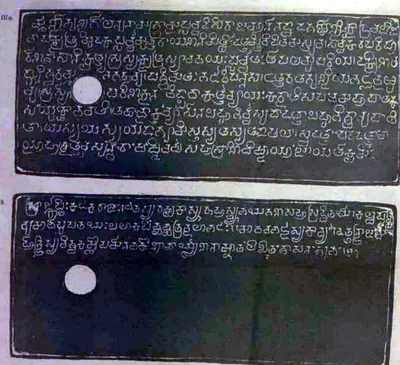 "Eastern Chalukya grant of Amma II.", plates iii a and iii b (Indian Antiquary XIII, plate at pp. 248-249 (PDF p. 286))Inscription rubbing · 1884
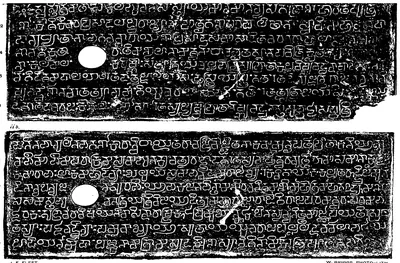 "F.—Masulipatam Plates of Amma II.", plates i and ii b (Epigraphia Indica V, plate between pp. 140 and 141 (PDF p. 196))Inscription rubbing · 1899
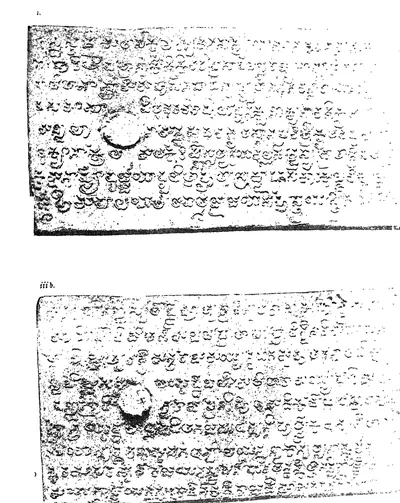 "Kaluchumbarru Grant of Vijayaditya-Amma II.", plates i and iii b (Epigraphia Indica VII, plate between pp. 186 and 187 (PDF p. 228))Inscription rubbing · 1903
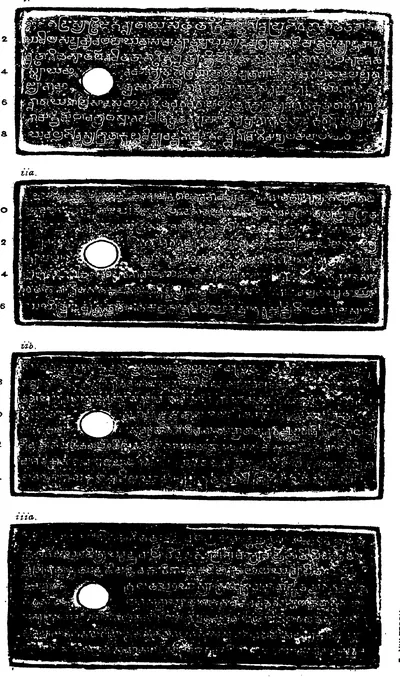 "Maliyapundi grant of Ammaraja II.", plates i, ii a, ii b and iii a (Epigraphia Indica IX, plate between pp. 52 and 53 (PDF p. 75))Inscription rubbing · 1908
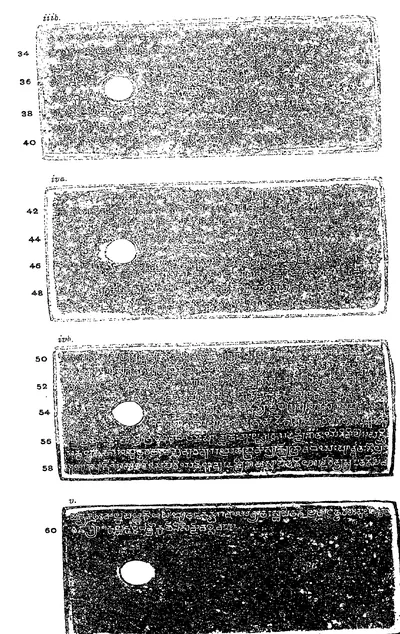 "Maliyapundi grant of Ammaraja II.", plates iii b, iv a, iv b and v (Epigraphia Indica IX, plate between pp. 52 and 53 (PDF p. 76))Inscription rubbing · 1908
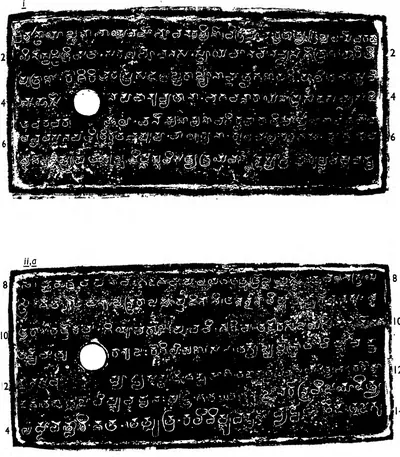 "Mangallu Grant of Amma II", plates i and ii a (Epigraphia Indica XXXI, Plate I (PDF p. 76))Inscription rubbing · 1960
Show all (33)
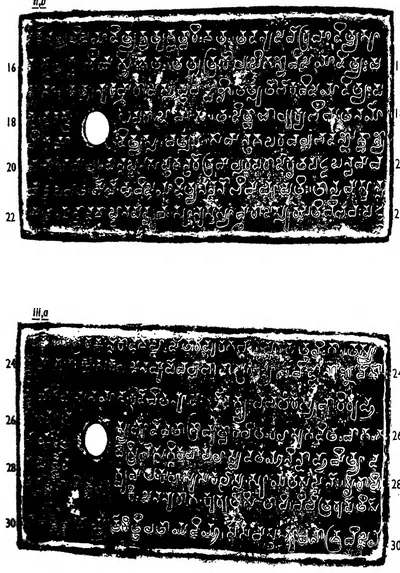 "Mangallu Grant of Amma II", plates ii b and iii a (Epigraphia Indica XXXI, Plate I (PDF p. 77))Inscription rubbing · 1960
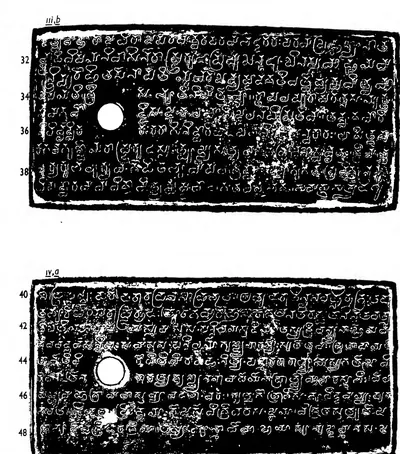 "Mangallu Grant of Amma II", plates iii b and iv a (Epigraphia Indica XXXI, Plate II (PDF p. 80))Inscription rubbing · 1960
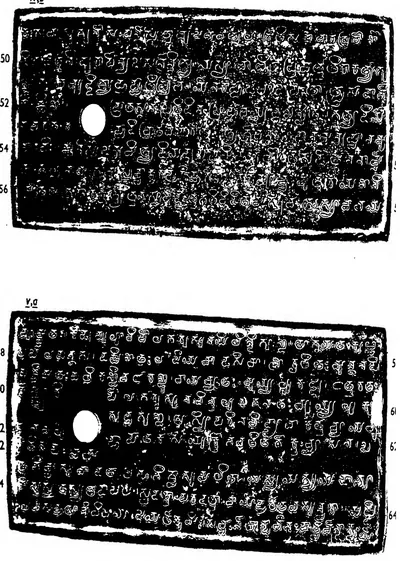 "Mangallu Grant of Amma II", plates iv b and v a (Epigraphia Indica XXXI, Plate II (PDF p. 81))Inscription rubbing · 1960
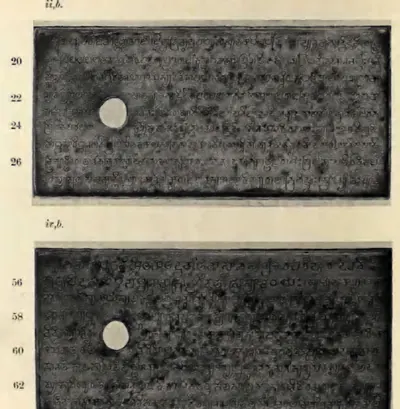 "Masulipatam Plates of Ammaraja II.—(I). (From Photographs)", plates ii b and iv b (Epigraphia Indica XXIV, plate between pp. 274 and 275 (PDF p. 345))Historic photograph · 1938
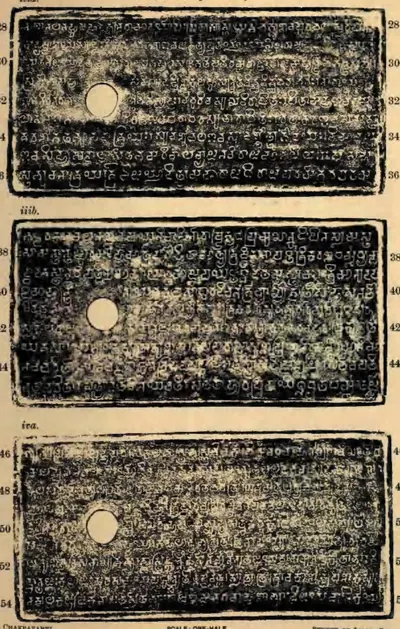 "Masulipatam Plates of Ammaraja II.—(II). (From impressions)", plates iii a, iii b and iv a (Epigraphia Indica XXIV, plate between pp. 276 and 277 (PDF p. 348))Inscription rubbing · 1938
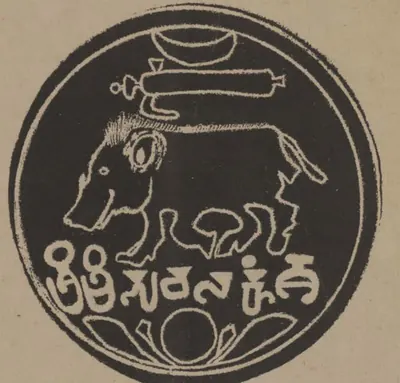 "Seal of the Eastern Chalukya grant of Ammaraja II. without date" (Indian Antiquary VII, plate facing p. 120 (PDF p. 169))Drawing · 1878
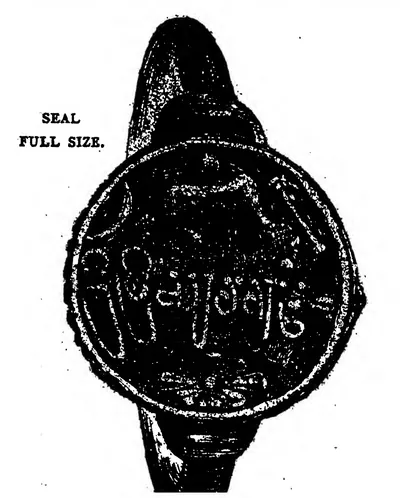 "Seal. Full size." of the Yelavarru Eastern Chalukya grant of Amma II (Indian Antiquary XII, plate at p. 93 (PDF p. 107))Drawing · 1883
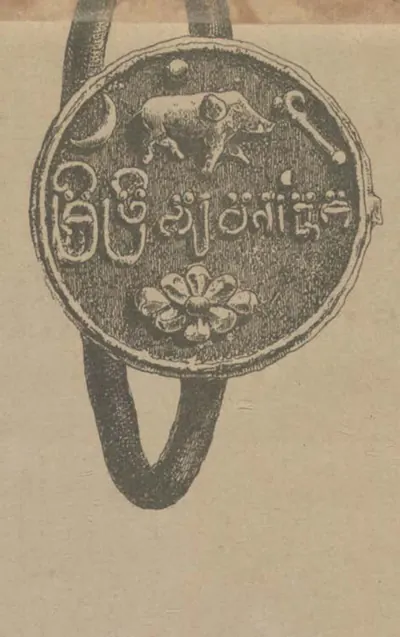 "Seal" of the copper-plate grant of the Eastern Chalukya dynasty dated about Saka 867 (Indian Antiquary VII, plate (PDF p. 31))Drawing · 1878
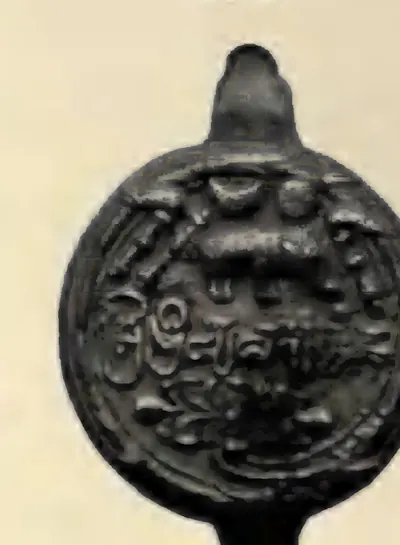 "Seal", seal of the Masulipatam plates of Ammaraja II (Epigraphia Indica XXIV, plate between pp. 274 and 275 (PDF p. 345))Historic photograph · 1938
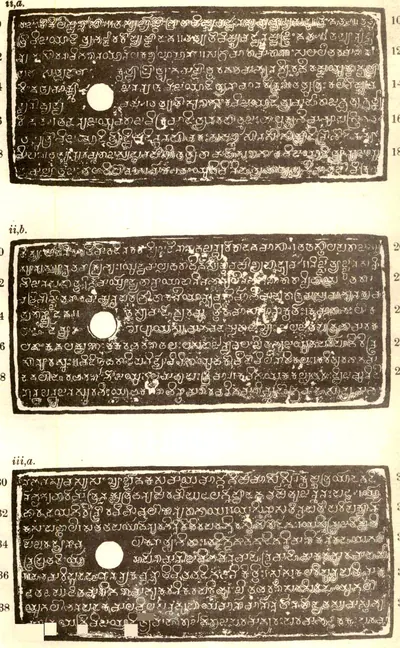 "Tandikonda Grant of Ammaraja II.", plates ii a, ii b and iii a (Epigraphia Indica XXIII, plate between pp. 168 and 169 (PDF p. 218))Inscription rubbing · 1936
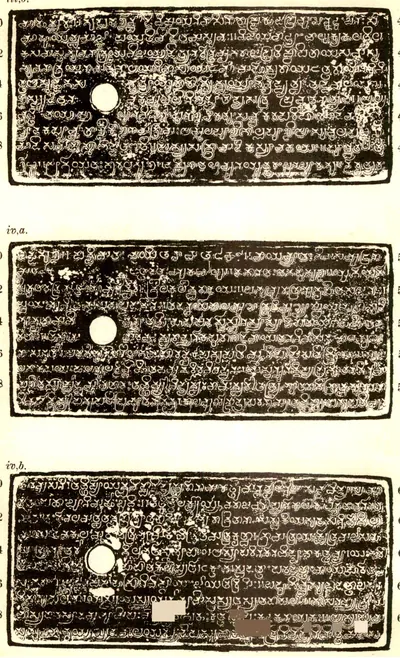 "Tandikonda Grant of Ammaraja II.", plates iii b, iv a and iv b (Epigraphia Indica XXIII, plate between pp. 168 and 169 (PDF p. 219))Inscription rubbing · 1936
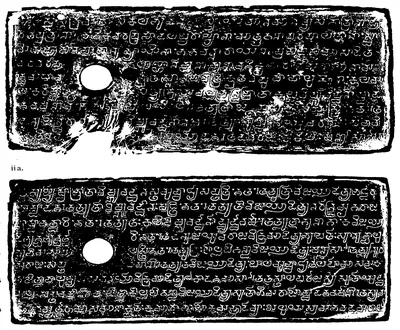 "Vandram plates of Ammaraja II.", plates i and ii a (Epigraphia Indica IX, plate between pp. 134 and 135 (PDF p. 168))Inscription rubbing · 1908
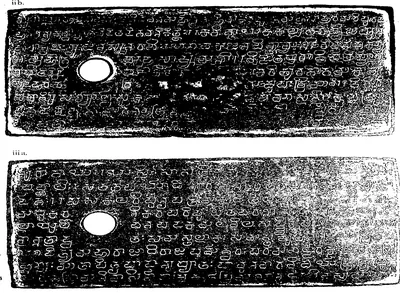 "Vandram plates of Ammaraja II.", plates ii b and iii a (Epigraphia Indica IX, plate between pp. 134 and 135 (PDF p. 169))Inscription rubbing · 1908
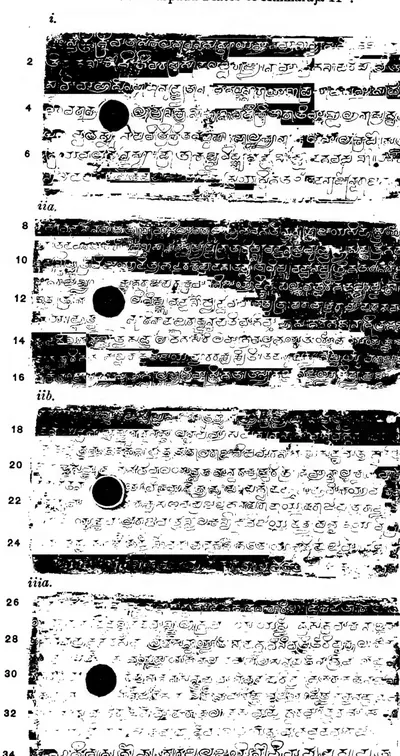 "Vemalurpadu Plates of Ammaraja II", plates i, ii a, ii b and iii a (Epigraphia Indica XVIII, plate between pp. 230 and 231 (PDF p. 292))Inscription rubbing · 1926
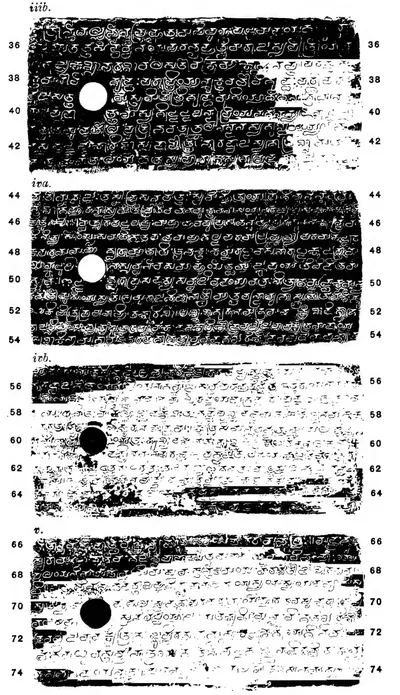 "Vemalurpadu Plates of Ammaraja II", plates iii b, iv a, iv b and v (Epigraphia Indica XVIII, plate between pp. 230 and 231 (PDF p. 293))Inscription rubbing · 1926
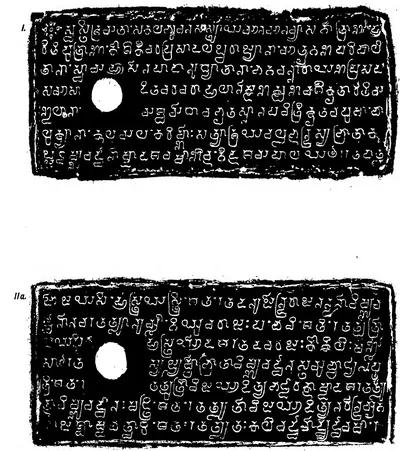 "Yelavarru Eastern Chalukya grant of Amma II.", plates i and ii a (Indian Antiquary XII, plate between pp. 92 and 93 (PDF p. 104))Inscription rubbing · 1883
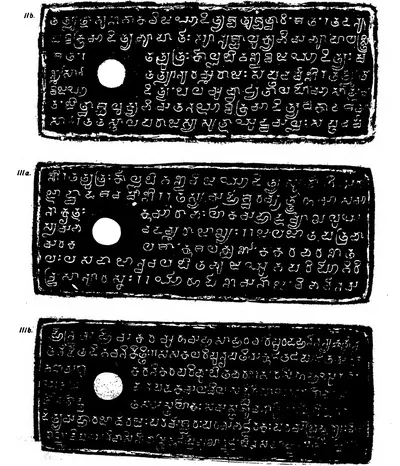 "Yelavarru Eastern Chalukya grant of Amma II.", plates ii b, iii a and iii b (Indian Antiquary XII, plate between pp. 92 and 93 (PDF p. 105))Inscription rubbing · 1883
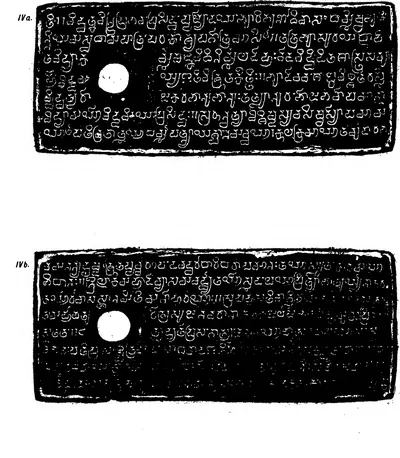 "Yelavarru Eastern Chalukya grant of Amma II.", plates iv a and iv b (Indian Antiquary XII, plate at p. 93 (PDF p. 106))Inscription rubbing · 1883
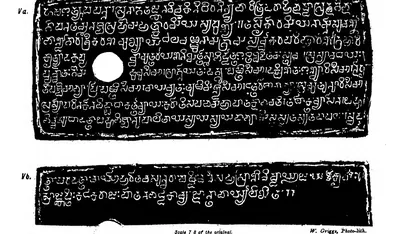 "Yelavarru Eastern Chalukya grant of Amma II.", plates v a and v b (Indian Antiquary XII, plate at p. 93 (PDF p. 107))Inscription rubbing · 1883
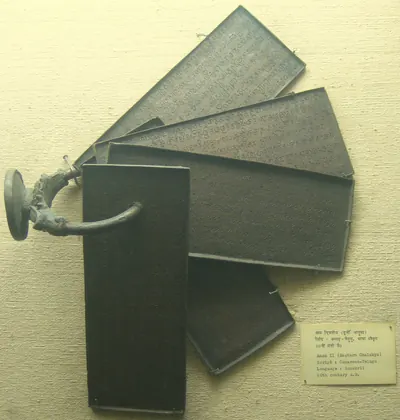 Copper plates of the Eastern Chalukya king Amma II on their ring with the seal, in the National Museum, New Delhi (photograph, 2010)Photograph · 2010
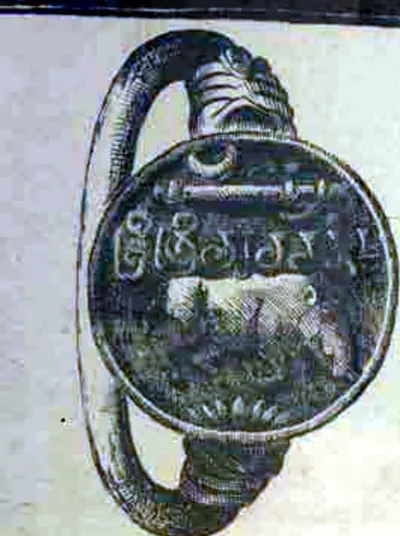 Seal of the "Eastern Chalukya grant of Amma II." (Gundugolanu grant) (Indian Antiquary XIII, plate at pp. 248-249 (PDF p. 286))Drawing · 1884
Related
Dynasties

References
Notes (0)
Sources (11)
Spotted an error on this page? Tell us
Last updated: