Vizianagaram
Town north-west of Visakhapatnam, built round a fort that Vijayarama Raju I of the Pusapati family founded in 1713–14. He named it Vijaya-nagaram, 'place of victory'. The Rajas of Vizianagaram were the most powerful zamindars (landholders) of the Northern Circars. They were Bussy's chief allies in 1754–57 and drew him against Bobbili. Under the East India Company they dominated the Vizagapatam country until the estate was sequestrated (taken over) in 1793, and the Raja was killed at Padmanabham in 1794. The zamindari paid the largest peshkash (tribute) in the Madras Presidency.
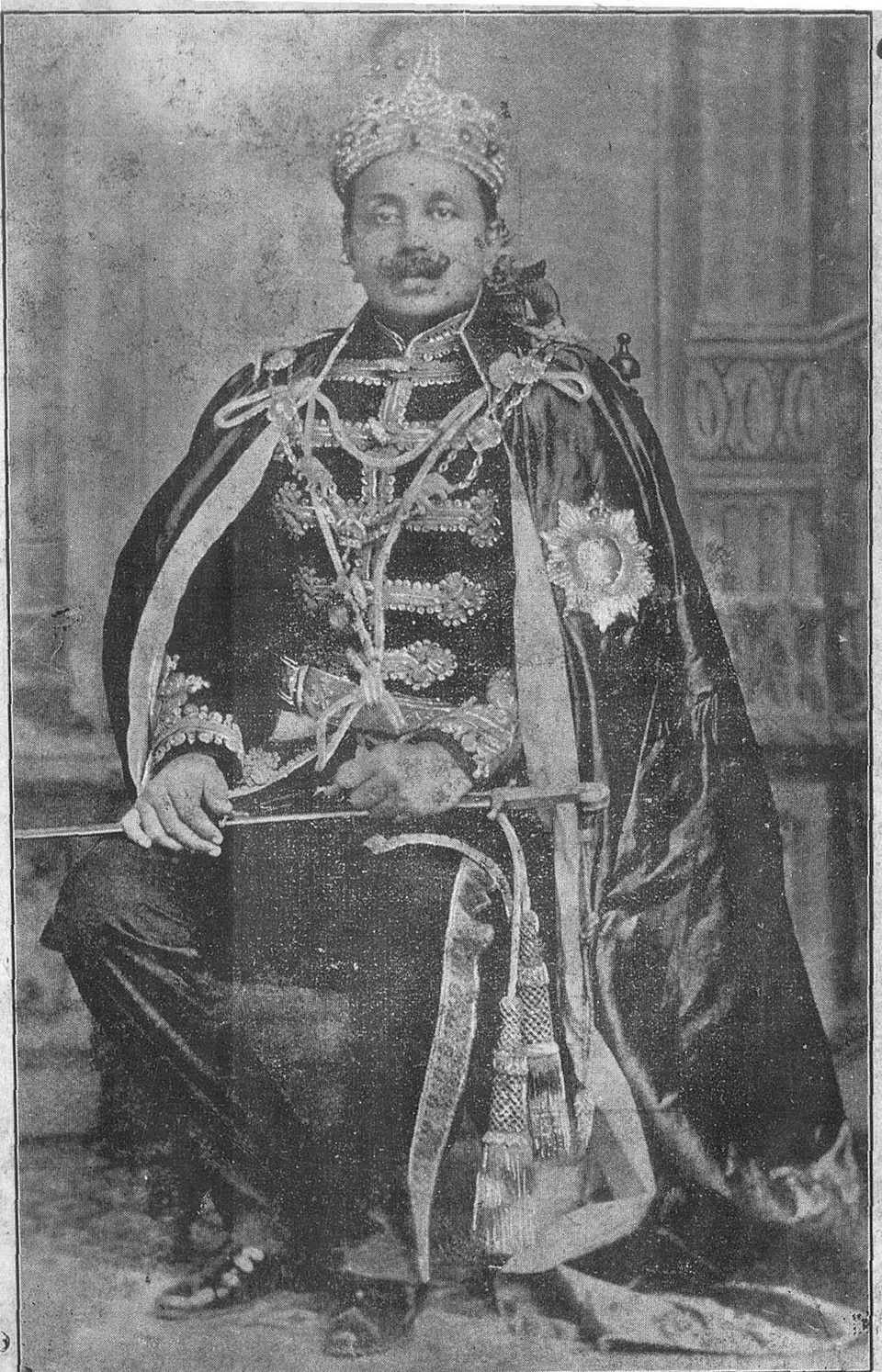
Vizianagaram was the second town of the old Visakhapatnam (then Vizagapatam) district and the seat of the Rajas of Vizianagaram.1 It had 37,270 people in 1901.1 Francis’s gazetteer (1907) describes the native town round the Raja’s fort on the east, and the former cantonment (army station) on the west.1 The Raja’s fort lies on the shore of the Pedda Cheruvu tank.2
According to a tradition that Francis reports, five “Vijayas”, signs of victory, attended the founding of Vizianagaram:3
- it was named Vijaya-nagaram, “place of victory”3
- its founder was Vijayarama Raju3
- its foundations were laid on a Tuesday, Jaya-varam3
- the day was Vijaya Dasami, the tenth day of the Dasara festival3
- the cyclic year was Vijaya (1713–14)3
Francis adds that “the present building is a reconstruction of the original edifice carried out by one of Bussy’s officers in or about 1757”.3 See Vijayarama Raju II.
The Pusapati Rajas
Francis follows Carmichael’s district manual on the family.34 Its founder, Pusapati Madhava Varma, took his name from the village of Pusapadu near Kondapalli.34 In 1652 he obtained a lease of land in the Visakhapatnam country from Sher Muhammad Khan, Faujdar (military governor) of Srikakulam (then Chicacole).34
His successors grew in power.5 “Viziarama Razu I … in 1713–14 built the fort at Vizianagram and transferred his residence thither”.5 He and his heirs took the title Gajapati.5
James Grant wrote for the English Company in 1784.6 Grant says that Bussy made the Raja chief over the other zamindars (landholders) of the Circars.6 At that time the Raja “only held the four pergunnahs or lesser districts about Vizianagrum”.6
At the end of 1756 the Raja met Bussy with 10,000 men and drew him against Bobbili.789 Three nights after the fall of Bobbili, the Raja was himself killed in his tent.789 His successor Ananda Raju took Visakhapatnam from the French and joined the English under Forde in 1758.1011 See French East India Company and Bobbili.
Under the Company
Francis says that after Bussy left, the Raja Vijayarama Raju II and his half-brother Sitarama Raju “controlled almost all the district except the havili land” (land held directly by the government).1213 The Company fixed a peshkash (yearly tribute) of three lakhs on their estate.1213 At Sitarama’s request it helped him dispossess the other zamindars.1213
On 2 August 1793 Colonel Prendergast took possession of the Vizianagaram fort for the arrears of the estate.14 On 10 July 1794 the Raja was killed fighting the Company’s troops at Padmanabham.15 His son was given the estate.16
The zamindari was scheduled as impartible (not to be divided) in 1904.3 It paid peshkash and road-cess of some Rs. 5,82,000, “much more than any other in the Presidency”.3 See East India Company and Padmanabham.
Where the sources disagree
- The founder of the fort. Carmichael’s account, which Francis follows, says that Vijayarama Raju I built the fort in 1713–14 and was the Raja killed after Bobbili in 1757.35 H. W. F. Gillman compiled a statement from the official records for a lawsuit, and Francis quotes it in a note.35 It says that Vizianagaram was founded in 1713 by Ananda Raju, who died about 1731, and that the Raja killed in 1757 was his son Vijayarama Raju.35
Footnotes
-
W. Francis, Madras District Gazetteers: Vizagapatam, Vol. I (1907), p. 336 (archive.org (opens in a new tab)). ↩ ↩2 ↩3
-
Francis, Vizagapatam (1907), p. 337 (archive.org (opens in a new tab)). ↩
-
Francis, Vizagapatam (1907), p. 338 (archive.org (opens in a new tab)). ↩ ↩2 ↩3 ↩4 ↩5 ↩6 ↩7 ↩8 ↩9 ↩10 ↩11 ↩12 ↩13 ↩14 ↩15
-
Francis, Vizagapatam (1907), p. 30 (archive.org (opens in a new tab)). ↩ ↩2 ↩3
-
Francis, Vizagapatam (1907), p. 339 (archive.org (opens in a new tab)). ↩ ↩2 ↩3 ↩4 ↩5 ↩6
-
James Grant, “Political Survey of the Northern Circars” (1784), in W. K. Firminger (ed.), The Fifth Report from the Select Committee … on the Affairs of the East India Company, Vol. III (1918), p. 13 (archive.org (opens in a new tab)). ↩ ↩2 ↩3
-
Robert Orme, A History of the Military Transactions of the British Nation in Indostan, Vol. II (Madras reprint, 1861), p. 253 (archive.org (opens in a new tab)). ↩ ↩2
-
Orme, Military Transactions, Vol. II (1861), p. 259 (archive.org (opens in a new tab)). ↩ ↩2
-
Francis, Vizagapatam (1907), p. 32 (archive.org (opens in a new tab)). ↩ ↩2
-
Orme, Military Transactions, Vol. II (1861), p. 355 (archive.org (opens in a new tab)). ↩
-
Francis, Vizagapatam (1907), p. 33 (archive.org (opens in a new tab)). ↩
-
Francis, Vizagapatam (1907), p. 46 (archive.org (opens in a new tab)). ↩ ↩2 ↩3
-
Francis, Vizagapatam (1907), p. 47 (archive.org (opens in a new tab)). ↩ ↩2 ↩3
-
Francis, Vizagapatam (1907), p. 50 (archive.org (opens in a new tab)). ↩
-
Francis, Vizagapatam (1907), p. 53 (archive.org (opens in a new tab)). ↩
-
Francis, Vizagapatam (1907), p. 54 (archive.org (opens in a new tab)). ↩
Photos
Related
People
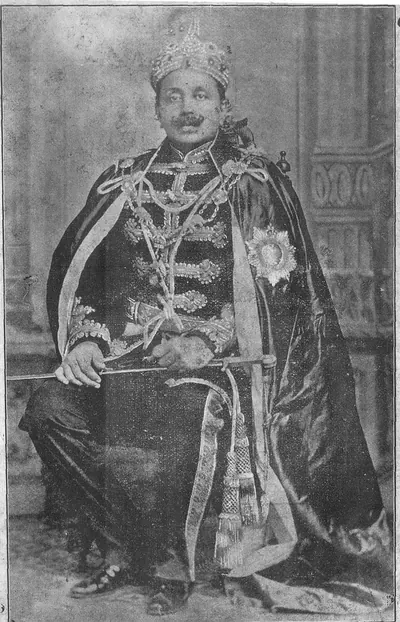
Ananda Gajapati Raju
before 1897 CE
Maharaja of Vizianagaram, the greatest zamindari of the Madras Presidency, from 1879 (1878 in Maclean's chronology) until his death without children on 23 May 1897. A son of Vijayarama Gajapati Raju III, he held the personal title of Maharaja, sat for many years in the Madras Legislative Council and was made G.C.I.E. in 1892. He maintained the first-grade college at Vizianagaram, and in 1883 he laid the foundation stone of the Town Hall at Madras. His will of 1896 led to a long suit over the succession.
Gurajada Apparao
Telugu writer of Vizianagaram, author of Kanyasulkam (the bride-price), the first important social play in Telugu, which mocks the selling of young girls in marriage to old men. He was one of the leaders of the movement to write in spoken Telugu, invented the song metre Mutyala Saramulu, and is credited with beginning the Telugu short story.
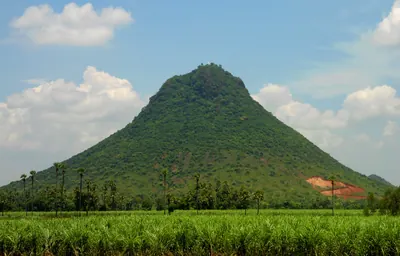
Vijayarama Raju II of Vizianagaram
before 1794 CE
Raja of Vizianagaram from 1759 to 1794. He was adopted as a boy after Vijayarama Raju I died at Bobbili (1757) and Ananda Raju died (1759). With his half-brother Sitarama Raju he made the Vizianagaram family the strongest power in the Vizagapatam country under the East India Company, and they took the lands of the smaller zamindars. In 1793 his estate was seized for unpaid revenue and he was ordered to leave the district. He camped at Padmanabham, and he was killed there with his Rajput followers when the Company's troops attacked on 10 July 1794.
References
Notes (0)
Sources (3)
Spotted an error on this page? Tell us
Last updated: