French East India Company
The French Compagnie des Indes in the Telugu country. It traded at Masulipatam (Machilipatnam) from 1669 and at Yanam from before 1750. Dupleix and Bussy helped the Nizams Muzaffar Jang and Salabat Jang to the throne. In return the Company received Masulipatam and its country (1750), the Kondavid country (1751–52) and the four Northern Circars of Mustafanagar (Kondapalli), Ellore, Rajahmundry and Chicacole (1753), to pay for Bussy's army in the Deccan. Bussy governed the Circars through the Raja of Vizianagaram and the zamindars. In 1757 he destroyed Bobbili and took the English factories. Colonel Forde's victory at Condore (Chandurti) in December 1758 and his storm of Masulipatam in April 1759 ended French rule on the coast. By the treaty of May 1759 Salabat Jang shut the French out of the Deccan. Yanam, taken and given back several times, stayed French until 1954.
Swipe sideways to see the whole chart; tap a bar for details.
Each bar is a ruling power in its region; time runs left to right. Dashed = approximate dates. Select a bar for details.
Show as a list
Vijayanagara & the Qutb Shahis 1336–1687 CE
- Telangana
- Adil Shahis of Bijapur (c. 1489–1686 CE) · Qutb Shahis of Golconda (c. 1518–1687 CE)
- Coastal Andhra
- Qutb Shahis of Golconda (c. 1524–1687 CE)
- Rayalaseema
- Adil Shahis of Bijapur (c. 1568–1686 CE) · Qutb Shahis of Golconda (c. 1579–1687 CE) · Marathas (c. 1677–1687 CE) · Mughal Empire (c. 1686–1724 CE)
Mughals, Asaf Jahis & the British 1687–1948 CE
- Telangana
- Mughal Empire (1687–1724 CE) · Asaf Jahi Nizams of Hyderabad (1724–1948 CE)
- Coastal Andhra
- Nawabs of the Carnatic (Arcot) (c. 1710–1801 CE) · French East India Company (1817–1954 CE) · Mughal Empire (1687–1724 CE) · Asaf Jahi Nizams of Hyderabad (1724–1753 CE) · East India Company (1759–1858 CE)
- Rayalaseema
- Nawabs of Kurnool (c. 1690–1839 CE) · Nawabs of the Carnatic (Arcot) (c. 1710–1801 CE) · Nawabs of Cuddapah (c. 1714–1779 CE) · East India Company (1792–1858 CE) · Mughal Empire (c. 1686–1724 CE) · Morari Rao Ghorpade of Gooty (c. 1741–1776 CE) · Banganapalle State (c. 1724–1948 CE) · Asaf Jahi Nizams of Hyderabad (c. 1724–1800 CE) · Marathas (c. 1743–1774 CE) · Mysore under Haidar Ali and Tipu Sultan (c. 1762–1799 CE)
Sultanates
Adil Shahis of Bijapur
Open page- Telangana: c. 1489–1686 CE (c. 197 years)
After the Bahmani break-up part of Mahbubnagar district went to Bijapur (the rest to Golconda) and stayed with it until Aurangzeb annexed Bijapur in 1686; the Raichur district article likewise passes Raichur (which then included the Alampur taluk and Gadwal) from the Bahmanis to the Adil Shahis.
- Rayalaseema: c. 1568–1686 CE (c. 118 years)
Partial, the western uplands only. Adoni taken by Ali Adil Shah's general Ankus Khan in 1568 after a failed siege in 1535-37; Penukonda besieged in the 1570s (dates disputed) and taken in 1652 (Mackenzie MS); Kurnool taken from Gopala Raja early in the 17th century and governed by Abdul Wahab (d. 1618) and later deputies, Siddi Jauhar holding it as his jagir about 1660; the Bellary and Anantapur uplands held through governors and tributary poligars; Bijapur's rights there passed to Shivaji in 1677-80 (Francis); Bijapur fell to Aurangzeb on 12 September 1686, but Siddi Masud held Adoni until 1688 (Sarkar) or 1687 (Bellary gazetteer)
Rulers (9)
Capitals
Monuments
Sources (11)
Kingdoms and empires
Mughal Empire
Open page- Rayalaseema: c. 1686–1724 CE (c. 38 years)
Kurnool passed to the emperor with the Bijapur provinces in 1686 and was later the jagir of Daud Khan Panni and his brother; Adoni (renamed Imtiyazgarh, a Mughal mint) surrendered by Masaud Khan; the uplands of the Haidarabadi Karnatak (Cuddapah, Gandikota, Gooty, Sidhout) came with Golconda in 1687; Anantapur added to the subah of Bijapur; poligars largely independent (Cuddapah gazetteer); Francis dates the Nizam's independence to 1723
- Telangana: 1687–1724 CE (37 years)
Golconda taken on 21 September 1687 and the kingdom annexed as the subah of Haidarabad, governed from Hyderabad by subahdars (Mahabat Khan, Ruhullah Khan, Jan Sipar Khan, Rustam Dil Khan, Yusuf Khan, Mubariz Khan); Kam Bakhsh held Hyderabad as a rival emperor in 1708 until his defeat on 13 January 1709; Mubariz Khan was killed by Nizam-ul-Mulk at Shakar Kheda in October 1724
- Coastal Andhra: 1687–1724 CE (37 years)
Kondapalli gained by bribery in July 1687; Guntur (Murtazanagar), Kondapalli (Mustafanagar), Ellore, Rajahmundry and Chicacole formed the Northern Circars, with Masulipatam as their chief town and a Mughal mint; the Qutb Shahi assessment of 1635 was kept on Aurangzeb's records (Grant)
Rulers
- Shah Jahan (1628–1658 CE)
- Aurangzeb (Alamgir) (1658–1707 CE)
- Bahadur Shah (Shah Alam I) (1707–1712 CE)
- Jahandar Shah (1712–1713 CE)
- Farrukhsiyar (1713–1719 CE)
- Muhammad Shah (1719–1748 CE)
Inscriptions
Sources (14)
Sultanates
Qutb Shahis of Golconda
Open page- Telangana: c. 1518–1687 CE (c. 169 years)
Sultan Quli governed Telingana for the Bahmanis from 1493-95 and declared independence in 1512 (Ferishta, Haig, IG Hyderabad) or 1518 (Bilgrami, from the Golconda mosque inscription of AH 924); he took the forts of the Telugu chiefs, among them Rachakonda, Devarakonda and, from Shitab Khan, Warangal and Khammam (1519-1525 per Bilgrami). Tributary to the Mughals from 1635-36 (khutba and coins in Shah Jahan's name; two lakhs of huns a year). Hyderabad taken by the Mughals in 1656 and 1685; Golconda surrendered on 21 September 1687 (Old Style) and was annexed
- Coastal Andhra: c. 1524–1687 CE (c. 163 years)
Sultan Quli took Kondapalli and fixed the Godavari as his frontier with Orissa (Ellore ceded) some time before his 1530 campaign, and a 1524 record shows him granting villages near Kondapalli and Bezwada; the Godavari gazetteer and IG Madras date the Krishna-Godavari doab to c. 1540 or 'before 1543', and the IG Madras Kistna article to after 1565.
- Rayalaseema: c. 1579–1687 CE (c. 108 years)
Partial; the sources disagree on when Golconda's hold began. IG Madras says Kurnool and Cuddapah were overrun soon after 1565. The Kurnool Manual dates the campaigns that took Gurramkonda (1579) and Gandikota, Nandyal and Musalimadugu (c. 1590). The Cuddapah gazetteer says Golconda only turned to Cuddapah in the early 17th century and never really conquered it. Chandragiri fell to Golconda in 1646.
Rulers (8)
Capitals
Monuments (13)
Inscriptions (7)
- Epitaph of Sultan Quli, Golconda (1543)
- Makka Darwaza inscription, Golconda (1559)
- Jami Masjid inscription, Hyderabad
- Epitaph of Muhammad Quli Qutb Shah, Golconda (1612)
- Ma Saheba tank inscriptions (1625)
- Musa Burj inscription, Golconda fort (1666–67)
… and 1 more
Sources (23)
Kingdoms and empires
Asaf Jahi Nizams of Hyderabad
Open page- Telangana: 1724–1948 CE (224 years)
Asaf Jah, viceroy of the Deccan from 1713, independent after defeating Mubariz Khan at Shakar Kheda (11 October 1724 in Irvine; 1723 in Gribble); Telangana remained the Telugu heart of the Nizam's Dominions, with the samasthans of Gadwal, Wanaparthy, Jatprole, Amarchinta and Palvancha as tributary estates. Regular districts were formed in 1865-66 and the Telugu divisions surveyed and settled by 1905; the districts were redrawn in 1905 and an Executive Council governed from November 1919. The Standstill Agreement with India was signed on 29 November 1947. Indian troops entered the state on 13 September 1948 (the Police Action); the Nizam ordered a ceasefire on 17 September, and a military governor took charge on 18 September
- Coastal Andhra: 1724–1753 CE (29 years)
The Nizam's governor at Rajahmundry collected the tribute of the coastal zamindars; Masulipatam granted to the French by Muzaffar Jang in 1750 and the lands of Nizampatnam and Kondavid by Salabat Jang in 1751; the four Circars of Mustafanagar, Ellore, Rajahmundry and Chicacole assigned to the French on 4 December 1753 to pay Bussy's army
- Rayalaseema: c. 1724–1800 CE (c. 76 years)
Nominal over much of the region (Kurnool and Cuddapah Nawabs, Maratha tribute, Morari Rao at Gooty, Haidar Ali from 1761); the Nizam gained Tipu Sultan's districts by the treaties of 1792 and 1799 and ceded them to the Company by the treaty of 12 October 1800 to pay the subsidiary force (the Ceded Districts)
- Coastal Andhra: 1759–1788 CE (29 years)
Guntur (Murtazanagar) stayed with the Nizam's brother Basalat Jang after the French were driven out; it was excluded from the cessions of 1766 and 1768, rented by the Company in 1779 and restored, and handed over to the Company only in 1788; the Nizam's claims to the Circars' payments were bought out in 1823
Rulers (10)
Capitals
Monuments (11)
Inscriptions
Sources (16)
Kingdoms and empires
Nawabs of the Carnatic (Arcot)
Open page- Coastal Andhra: c. 1710–1801 CE (c. 91 years)
Partial (Nellore and Ongole, the Palnad, the jagir of Udayagiri and the tributary zamindaris of Venkatagiri and Kalahasti). Saadatullah Khan became Nawab of the Carnatic, the coast from Guntur to the Coleroon, in 1710 (Orme) or 1713 (Wilks), and his fauzdar governed Nellore; he granted the Udayagiri jagir in 1720. Under Muhammad Ali Walajah (1749-95) his brother Najib-ullah held Nellore, rebelled in 1757 and was dislodged by an English force in 1762. The revenues were assigned to the Company in 1781-85 and managed by it in 1790-92; by the treaty of 31 July 1801 Azim-ud-daula handed over the government of the Carnatic, and Nellore, Ongole and the Palnad became British
- Rayalaseema: c. 1710–1801 CE (c. 91 years)
Partial (Chittoor taluks). The Nawabs at Arcot, first as deputies under the Nizam, took tribute from the Chittoor and Chendragiri poligars and the Kalahasti and Karvetnagar zamindars; Muhammad Ali gave Chittoor and Chendragiri to his brother Abdul Wahab as a jagir, and the Carnatic was handed to the Company on 31 July 1801.
Rulers
- Saadatullah Khan (c. 1710–1732 CE)
- Dost Ali Khan (1732–1740 CE)
- Safdar Ali Khan (c. 1740–1742 CE)
- Anwar-ud-din Khan (1744–1749 CE)
- Muhammad Ali Khan Walajah (1749–1795 CE)
- Umdat-ul-Umara (1795–1801 CE)
Capitals
Sources (11)
Colonial powers
French East India Company
Open page- Coastal Andhra: 1750–1759 CE (9 years)
Partial at first (Masulipatam and the island of Divi, seized in July 1750 under Muzaffar Jang's grant; Nizampatnam, Narsapur and Kondavid added by Salabat Jang in 1751-52); from December 1753 the four Northern Circars of Mustafanagar (Kondapalli), Ellore, Rajahmundry and Chicacole, granted for the pay of Bussy's army and settled by Bussy in person from July 1754. Forde routed the French at Condore (Chandurti) on 9 December 1758 and stormed Masulipatam on 7-8 April 1759; by the treaty of May 1759 Salabat Jang ceded the Masulipatam country to the English and excluded the French from the Deccan
- Coastal Andhra: c. 1765–1793 CE (c. 28 years)
Partial (Yanam only): the French factory town on the Godavari, ceded to them in 1752, reoccupied after the peace of 1763 (the restored possessions 'were not occupied before 1765'); the French possessions were also in English hands in 1778-83
- Coastal Andhra: 1817–1954 CE (137 years)
Partial (Yanam only): occupied by the English from 1793 (except 1802-03) and handed back in 1817 under the treaties of 1814-15; about 2,258 acres. The Government of India took over the French Establishments, Yanam among them, from 1 November 1954 after the agreement with France of 21 October 1954
Rulers
- Joseph François Dupleix (1750–1754 CE)
- Charles de Bussy (1754–1758 CE)
- Marquis de Conflans (1758–1759 CE)
Capitals
Sources (10)
Colonial powers
East India Company
Open page- Coastal Andhra: 1759–1858 CE (99 years)
Partial at first: the Masulipatam and Nizampatam Circars ceded by Salabat Jang on 14 May 1759 after Forde's defeat of the French. The emperor Shah Alam granted the five Northern Circars on 12 August 1765; by the treaties of 12 November 1766 and 23 February 1768 the Nizam ceded Kondapalli, Ellore, Rajahmundry and Chicacole for a yearly payment (capitalised in 1823), Guntur following in September 1788. Governed through renters until 1769, Chiefs and Councils at Masulipatam and Vizagapatam until 1794, then Collectors; the zamindaris were permanently settled in 1802-03. Nellore, Ongole and the Palnad came with the Carnatic from the Nawab of Arcot on 31 July 1801. Transferred to the Crown in 1858
- Rayalaseema: 1792–1858 CE (66 years)
Partial at first: Kangundi came to the Company with the Baramahal in 1792, when it also began collecting the Kalahasti and Karvetnagar tribute for the Nawab; Punganur and Venkatagirikota (Palmaner) followed from Tipu's lands in 1799. On 12 October 1800 the Nizam ceded the territories he had gained from Mysore in 1792 and 1799, the Ceded Districts of Bellary (with Anantapur) and Cuddapah, with the tribute of the Nawab of Kurnool; Thomas Munro, Principal Collector 1800-1807, reduced the poligars and made the ryotwari settlement. The Nawab of Arcot's Chittoor and Chendragiri country came with the Carnatic in 1801, and the Kurnool Nawab's jagir was annexed in 1839. Transferred to the Crown in 1858
Rulers (23)
- George Pigot (1755–1763 CE)
- Robert Palk (1763–1767 CE)
- Charles Bourchier (1767–1770 CE)
- Josias Du Pré (1770–1773 CE)
- Alexander Wynch (1773–1775 CE)
- Lord Pigot (1775–1776 CE)
… and 17 more
- Sir Thomas Rumbold (1778–1780 CE)
- Lord Macartney (1781–1785 CE)
- Sir Archibald Campbell (1786–1789 CE)
- William Medows (1790–1792 CE)
- Sir Charles Oakeley (1792–1794 CE)
- Lord Hobart (1794–1798 CE)
- Lord Clive (Edward Clive) (1798–1803 CE)
- Lord William Bentinck (1803–1807 CE)
- Sir George Barlow (1807–1813 CE)
- Hugh Elliot (1814–1820 CE)
- Sir Thomas Munro (1820–1827 CE)
- Stephen Rumbold Lushington (1827–1832 CE)
- Sir Frederick Adam (1832–1837 CE)
- Lord Elphinstone (1837–1842 CE)
- Marquis of Tweeddale (1842–1848 CE)
- Sir Henry Pottinger (1848–1854 CE)
- Lord Harris (1854–1859 CE)
Capitals
Monuments
Sources (10)
Kingdoms and empires
Nawabs of Kurnool
Open page- Rayalaseema: c. 1690–1839 CE (c. 149 years)
Partial (Kurnool proper, the taluks of Ramallakota, Nandikotkur, Nandyal and Sirvel). The Mughals took Kurnool in 1686-88 and gave it as a jagir to the Pathan general Daud Khan Panni in the latter part of the seventeenth century (about 1698 in Burhanuddin); his kinsman Ibrahim Khan seized the fort in 1715, and his son Alif Khan acknowledged Asaf Jah in 1724. The French and Salabat Jang stormed Kurnool in March 1751 and held it for the Nizam until Ranmast (Munawwar) Khan recovered it in 1752. The Nawabs paid tribute to the Nizam and, from 1769, to Haidar Ali and Tipu Sultan; in 1800 the Nizam ceded the tribute to the Company, which fixed it in 1804 at a lakh and a quarter of Gadwal rupees, then a lakh. The last Nawab, Ghulam Rasul Khan, was deposed in 1839 and the jagir annexed
Rulers (8)
- Daud Khan Panni (c. 1690–1715 CE)
- Ibrahim Khan (1715–1724 CE)
- Alif Khan (1724–1733 CE)
- Himmat Bahadur Khan (Nawab of Kurnool) (1733–1751 CE)
- Ranmast Khan (Munawwar Khan, Nawab of Kurnool) (1752–1792 CE)
- Alif Khan II (Nawab of Kurnool) (1792–1815 CE)
… and 2 more
- Munawwar Khan II (1815–1823 CE)
- Ghulam Rasul Khan (Nawab of Kurnool) (1823–1839 CE)
Capitals
Sources (6)
Kingdoms and empires
Marathas
Open page- Rayalaseema: c. 1677–1687 CE (c. 10 years)
Partial (the Bellary and Anantapur uplands). Shivaji crossed the Krishna near Kurnool in March 1677, went to Srisailam and sent his army south through the Cuddapah country; Gribble says he took and garrisoned poligars' forts in the Cuddapah and Bellary districts. On his return he took Bellary fort after a 27-day siege (1677-78). In 1680 Bijapur formally ceded its rights over the country round Kopal and Bellary and the poligars paid him tribute (chauth), until Aurangzeb overthrew Maratha power in the district in 1687
- Rayalaseema: c. 1743–1774 CE (c. 31 years)
Partial. The Cuddapah gazetteer says the Nizam ceded Penukonda to the Marathas in 1743 (Grant Duff and the Anantapur gazetteer give Gooty and Penukonda to Morari Rao instead). After Balwant Rao killed the Nawab of Cuddapah near Cuddapah on 24 September 1757 the Marathas held Gurramkonda and Punganur (1755 in Gribble). Gurramkonda went to Haidar Ali through Mir Sahib in 1766-67, was retaken by Trimbak Rao after a two-month siege in 1771 and confirmed to the Marathas by the treaty of 1772, and was lost with Punganur, Sira and Madhugiri to Tipu and Haidar in 1773-74
Rulers
- Shivaji (1674–1680 CE)
- Sambhaji (1680–1689 CE)
- Rajaram (1689–1700 CE)
- Shahu (1708–1749 CE)
Sources (11)
Kingdoms and empires
Nawabs of Cuddapah
Open page- Rayalaseema: c. 1714–1779 CE (c. 65 years)
Partial (the Cuddapah uplands, the circars of Sidhout, Gandikota, Gurramkonda and Cumbum, with the poligar of Punganur as tributary). Pathan (Miana) Nawabs under the Mughals and the Nizams; Abdul Nabi Khan, governor from 1714, was the first to assert real control and raided the Baramahal. After the Maratha general Balwant Rao killed the Nawab Abdul Majid Khan in 1757, Gurramkonda went to the Marathas. The last Nawab, Abdul Halim Khan (from 1761), surrendered to Haidar Ali at Sidhout on 27 May 1779 (Wilks; 1778 in Gribble's local chronology and Brown, 1780 in the Cuddapah gazetteer, 1777 in Kirmani)
Rulers
- Abdul Nabi Khan (Nawab of Cuddapah) (c. 1714–1732 CE)
- Abdul Majid Khan (c. 1732–1757 CE)
- Mohsin Khan (c. 1757–1761 CE)
- Abdul Halim Khan (Nawab of Cuddapah) (1761–1779 CE)
Capitals
Sources (7)
Kingdoms and empires
Morari Rao Ghorpade of Gooty
Open page- Rayalaseema: c. 1741–1776 CE (c. 35 years)
Partial (Gooty, Penukonda, Madakasira, Kodikonda and Tadpatri, with tribute from the Anantapur poligars). The Maratha Morari Rao Ghorpade made the Madakasira poligar pay tribute in 1741, was recognised as chief of Gooty by the first Nizam in 1743-44 and settled there about 1746 (permanent seat 1754). Haidar Ali took Penukonda, Madakasira and Kodikonda in 1762; Morari Rao recovered some forts after the Maratha peace of 1765. Gooty fell to Haidar early in April 1776 (Wilks; 1775 in the Anantapur gazetteer), and Morari Rao died a prisoner at Kabbaldurga
Rulers
Capitals
Sources (5)
Kingdoms and empires
Banganapalle State
Open page- Rayalaseema: c. 1724–1948 CE (c. 224 years)
Partial (a nawabi enclave of about 255 square miles round Banganapalle in the Kurnool district). Muhammad Beg Khan, Mughal killedar of Banganapalle from the late seventeenth century, became a petty Nawab when Asaf Jah made himself independent, and Asaf Jah confirmed the jagir. Tipu Sultan occupied it from 1783 until the family, with the Nizam's troops, won it back at Tammadapalle in 1790. In 1800 the Nizam transferred his control to the East India Company, which took no tribute; the Madras government managed the indebted jagir from 1825 (1832 in the Imperial Gazetteer) to 1848 and restored it by the sanad of 1849. The ruler became a hereditary Nawab in 1876; the Madras government took over the administration on 23 February 1948
Rulers (10)
- Muhammad Beg Khan (c. 1724–1758 CE)
- Muhammad Beg Khan Laug (regent) (c. 1758–1766 CE)
- Fazl Ali Khan (Gulli Nawab) (c. 1766–1782 CE)
- Husain Ali Khan (c. 1782–1783 CE)
- Ghulam Ali Khan (Mansur-ud-daula) of Banganapalle (c. 1790–1821 CE)
- Husain Ali Khan II (c. 1821–1848 CE)
… and 4 more
- Ghulam Muhammad Ali Khan of Banganapalle (1848–1868 CE)
- Fateh Ali Khan, Nawab of Banganapalle (1868–1905 CE)
- Ghulam Ali Khan III (1905–1922 CE)
- Fazl-i-Ali Khan (1922–1948 CE)
Capitals
Sources (5)
Kingdoms and empires
Mysore under Haidar Ali and Tipu Sultan
Open page- Rayalaseema: c. 1762–1799 CE (c. 37 years)
Partial (the Anantapur, Bellary and Cuddapah uplands). Haidar Ali, master of Mysore from 1761, took Penukonda, Madakasira and Kodikonda from Morari Rao of Gooty in 1762 (some went back to Morari Rao in 1764-66). Gurramkonda came to him through Mir Sahib in 1768, was lost to the Marathas in 1771 and recovered by Tipu in 1773-74. He took Bellary in 1775 and Gooty in April 1776 (1775 in the Anantapur gazetteer), and the Nawab of Cuddapah surrendered at Sidhout on 27 May 1779 (1780 in the Cuddapah gazetteer); the Nawab of Kurnool and the poligars of the Bellary and Anantapur country paid him tribute. By the treaty of 18 March 1792 Tipu ceded the Cuddapah taluks, Gurramkonda, Bellary and the Gooty taluks of Tadpatri and Tadimarri to the Nizam; Gooty, Penukonda, Madakasira, Anantapur and the rest of Gurramkonda went to the Nizam after Tipu's death in May 1799, and the Nizam ceded both gains to the Company in 1800
Rulers
Sources (7)
Reigns
Each bar is one ruler’s reign; time runs left to right. c. = approximate date.
- Joseph François Dupleix1750–1754 CE · 4 yrs
- Charles de Bussy1754–1758 CE · 4 yrs
- Marquis de Conflans1758–1759 CE · 1 yr
The men who actually held the French territories in the Telugu country, following Orme, Malleson and the Kistna and Godavari manuals. The grants of 1750–53 were made to the Company through Dupleix, Governor at Pondicherry from 1742 until Godeheu superseded him in August 1754. Bussy, commanding the French corps at the Nizam's court, obtained the Circars in 1753 and settled them in person from July 1754; Moracin, the French chief at Masulipatam, took possession under his orders. Conflans succeeded Bussy in the Circars in 1758, was beaten at Condore and surrendered Masulipatam on the night of 7–8 April 1759.
The French East India Company, the Compagnie des Indes, was the last of the three European companies to trade on the Telugu coast. It was also the first to rule part of it. For nine years, from 1750 to 1759, it held Machilipatnam (then Masulipatam) and then the whole coastal country from the Krishna to Srikakulam (then Chicacole).12
The Nizams of Hyderabad granted this land to pay for the French troops that kept them on the throne.12 This page follows the French in the Telugu districts. Their wars in the Carnatic belong to the Nawabs of the Carnatic and the Asaf Jahis. The English story is on the East India Company page, and the Dutch on the Dutch East India Company page.
The sources
The fullest narrative is Robert Orme’s History of the Military Transactions of the British Nation in Indostan (first published 1763–78), used here in the Madras reprint of 1861.3 Orme had the Company’s records and the reports of officers who served.3 G. B. Malleson’s History of the French in India (1868) tells the story from the French side.2
The district manuals of Kistna (Mackenzie, 1883) and Godavari (Morris, 1878, and Hemingway, 1907) and the Vizagapatam gazetteer (Francis, 1907) follow these and add local records.456 For Bussy’s revenue system they quote James Grant’s Political Survey of the Northern Circars.456 Grant wrote it for the Company in 1784, and it was printed in the appendices to the Fifth Report.6 The treaties are in C. U. Aitchison’s Collection of Treaties (Vol. VIII, 1892).7
Factories at Masulipatam and Yanam
Henry Morris’s Godavari manual tells how the French began at Machilipatnam.8 In 1669 Marcara, “a Persian in the service of the French”, obtained a farman (royal order) from the King of Golconda.8 It let the French Company trade “without payment of duty either on imports or exports”.8 It also gave a licence to set up a factory (trading post) at Machilipatnam.8 In 1693 “a small square was built, which received the name of Francepéta”.8
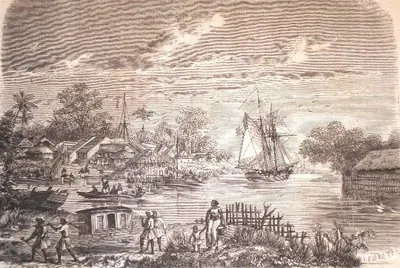
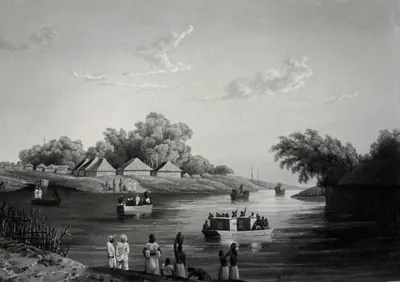
The French also had a factory at Yanam, on the Godavari near the English settlement of Injaram.891011 Morris thought it “apparently subordinate to their chief at the larger and more important town”.89 Yanam did not exist in 1706, when a flood swept the coast.89 Morris says the factory “was established there some time before 1750”.9 Hemingway’s gazetteer says “about 1750”.1011 See Yanam and Machilipatnam.
The grants of 1750–1753
The war for the Nizam’s throne after 1748 set the French behind Muzaffar Jang and the English behind his uncle Nasir Jang. In 1750 Nasir Jang ordered the French factories at Machilipatnam and Yanam to be seized.1213 The Kistna manual says that his officers did so “with all possible tenderness”.13 They sealed up the goods without plundering them.1213
Joseph Dupleix, Governor at Pondicherry, answered by sending 200 Europeans, 20 East Indians and 200 sepoys by sea.1415 They sailed on the night of 9–10 July 1750 and landed at Machilipatnam on the 12th.1415 They took the fort without opposition, under a grant of the place that Dupleix already held from Muzaffar Jang.1415
Nasir Jang was killed in December 1750.1617 Muzaffar Jang then “confirmed his former grant of Masulipatam and the island of Divi”.16 He ordered that coin struck at Pondicherry should pass current through his lands.16 The official narrative in Aitchison’s Treaties says that he assigned the French “the town and district of Masulipatam”.17
Bussy raised Salabat Jang to the throne in 1751, after Muzaffar Jang’s death.1819 Salabat Jang confirmed these grants.1819 Malleson says that he added “the lands attached to the villages of Nizampatnam, of Condavir, of Alemanava, and of Narsapore”.1819 He also ordered “the rebuilding of all the factories at Yanoon which his brother, Nazir Jung, had destroyed”.1819 And he gave Dupleix a territory in the district of Srikakulam.1819
The Kistna manual dates the grant of “the province of Kondavidu, which adjoined the territory of Masulipatam”, to November 1752.20 Then the Nizam’s ministers held back the pay of the French corps.12 Bussy marched on Aurangabad and obtained the four Circars (districts).12 Malleson dates the agreement to 4 December 1753.2 The provinces of “Mustafanaggur, Ellore, Rajamundry, and Chicacole” were made over “for the support of their army so long as a certain strength should be maintained in the Dekkan”.12
Malleson reckoned that the French then held “470 miles of sea-coast, from the Chilka Lake to Motupali”.2 Their places included Ganjam, Srikakulam, Vizianagaram, Visakhapatnam (then Vizagapatam), Korangi (then Coringa), Yanam, Machilipatnam, Eluru (then Ellore) and Nizampatnam.2 These lands yielded about £400,000 a year.2 The Kistna manual calls the four provinces and Machilipatnam “six hundred miles of sea coast and a territory larger than any as yet possessed in India by a European power”.1 See Kondaveedu, Kondapalli, Eluru, Rajahmundry and Srikakulam.
Taking possession, 1754
Possession was harder than the grant. Moracin, the French officer at Machilipatnam, was ordered to take over.521 But Jafar Ali, governor of Srikakulam, refused to give up his charge.521 He drew in the Raja of Vizianagaram, “the most powerful of the renter-chiefs”.521
Moracin won the Raja over with a lease of the Rajahmundry and Srikakulam circars “at a rate much below their value”.521 Jafar Ali then called in the Marathas of Nagpur.521 They crossed the Eastern Ghats and “devastated both circars from end to end”.521 They burnt the Dutch factory at Bheemunipatnam (then Bimlipatam) and went home by way of Eluru “with an immense booty”.521
In July 1754 Bussy came in person to Machilipatnam and Rajahmundry.2221 The Kistna manual says he stayed until December “settling the details of their administration”.22 The Vizagapatam gazetteer says that he appointed one Ibrahim Khan faujdar (military governor) of Srikakulam.21 See Vizianagaram.
Bussy’s government
James Grant, writing for the Company thirty years later, praised Bussy’s settlement.64 The zamindars (landholders), he said, “were as usual dismissed from their employments, but generally permitted to enjoy, under French sunnuds, their russooms and saverums, or conditional hereditary privileges”.64
Grant also wrote of “the union or annexation of these several possessions under one head”.64 For that task Vijayarama Raju of Vizianagaram “rendered himself the most useful and acceptable man to act in the capacity of chief”.64 At that time he held only four parganas (sub-districts) round Vizianagaram.64
A survey and hustabood, “or detailed account of the gross collections of the whole country”, was made.23 It put Bussy “in the knowledge of resources entirely beyond the reach of his Mussulman predecessors”.23 But moderation was necessary, and “the jummabundy or annual settlement, therefore, was only doubled in Cicacole and Rajemundry”.23
The zamindars were bound to keep the peace and bear the cost of collection.235 They also had to “keep on foot a sebundy corps or militia of twelve thousand infantry”.235 Grant believed that, had Bussy completed his scheme, the zamindars would have been left “nothing beyond a splendid family subsistence”.23 The Kistna manual read the same passage as saying that Bussy did not take an undue share of the revenue for himself.24
The Gazetteer of Southern India (1855) gives the French revenues at the truce of 1754:25
- 14,41,000 rupees from Machilipatnam with Divi, Nizampatnam, Devikota and Kondavid25
- 31,00,000 rupees from Eluru, Mustafanagar, Rajahmundry and Srikakulam25
Rajahmundry was Bussy’s base in the Circars.3262728 Orme brings his army there in December 1756.3262728 He has Bussy leave a European garrison there in 1757 and return there after taking Visakhapatnam.3262728 Orme calls it “the capital of the province”.3262728
Bobbili, 1757
In 1756 the Nizam’s minister had Bussy dismissed.2921 Bussy held out for some weeks in the Charmahal gardens at Hyderabad until fresh troops came from Machilipatnam.2921 At the end of the year he marched into the Circars to restore his authority.2921 Orme says his army reached Rajahmundry on 10 December.3 The Kistna manual says 19 December 1756.30
The Raja of Vizianagaram met him with 10,000 men and turned him against his rival, “Rangarao of Bobilee”.33132 Orme calls Ranga Rao “the first in rank” of the old poligars (hill chiefs).33132 Bussy offered Ranga Rao other lands in exchange for Bobbili, and the offer was taken as an insult.33132 Then a detachment passing through the Bobbili woods was attacked, with the loss of 30 sepoys.33132 After this Bussy “determined to reduce the whole country”.33132
Bussy had 750 Europeans, four field-pieces and 11,000 of the Raja’s troops.3334 With them he cut his way through five miles of fortified forest to the mud fort.3334 He attacked at daybreak on 24 January 1757.3334
By two in the afternoon “not a man had gained the rampart”.3435 Ranga Rao then had his own men kill the women and children of the fort.3435 The men “returned, like men agitated by the furies, to die themselves on the walls”.3435 Ranga Rao was shot, and none of the defenders accepted quarter (an offer to spare their lives).3435
A tutor brought out Ranga Rao’s young son.36 Bussy made the boy lord of the lands offered to his father.36 Three nights later two of Ranga Rao’s soldiers crept into the Raja of Vizianagaram’s tent and stabbed him to death.36 See Bobbili and Gopalakrishna Ranga Rao.
The English factories taken, 1757
After collecting tribute in the northern hills, Bussy turned on the English. News came that Clive had taken Chandernagore.3726 Bussy then sent troops from Rajahmundry and Machilipatnam against the English factories of “Madapollam, Bandermalanka, and Ingeram”.3726 Orme says these factories “annually furnished 700 bales for the Company’s market in England”.3726 Only Injaram had soldiers, twenty of them.3726 All three surrendered “on the first requisition”, that is, at the first demand.3726
Bussy himself took Visakhapatnam.263839 His leading troops appeared there on 24 June 1757.263839 The surrender was signed at eleven that night, and the English became prisoners of war.263839 The Godavari gazetteer adds that the factory at Nilapalli was taken at the same time.40 See Visakhapatnam.
Condore and Masulipatam, 1758–1759
In January 1758 Bussy went back to Hyderabad.29 In July the new Governor of Pondicherry, Lally, called him south with every man he could spare for the siege of Madras.29
The new Raja of Vizianagaram, Ananda Raju, was “dissatisfied with the arrangements” that Bussy made “on the death of his predecessor”.4139 He took Visakhapatnam from the French and wrote to the English for help.4139 His letters reached Calcutta on 4 July 1758.4139
Clive, against his Council, sent Colonel Francis Forde by sea.4229 Forde had “500 Europeans, including the artillery-men, 2000 Sepoys, and 100 Lascars”.4229 He reached Visakhapatnam on 20 October 1758 and joined the Raja.43
The French were led by the Marquis de Conflans, Bussy’s successor.4445 They had 500 Europeans, 500 horse, 6,000 sepoys and “a great number of the troops of the country”.4445 They camped at Gollaprolu near Pithapuram.4445 On 9 December, Orme says, Forde marched before dawn to the village of “Condore”.4445 The French crossed the plain to cut him off and met his line a mile beyond it.4445
The French were routed.4628 They lost 30 guns, seven mortars, their tents and ammunition.4628 Forde’s European battalion lost 16 killed.4628 Orme writes: “No victory could be more complete.”4628 Conflans galloped forty miles to Rajahmundry that night.4628 Forde’s sepoys took the town and fort on the 10th.4628
The Godavari gazetteer identifies Orme’s Condore as Chandurti, “seven miles north by east of Pithapuram”.4748 There, tradition still marked the field.4748 See Chandurti.
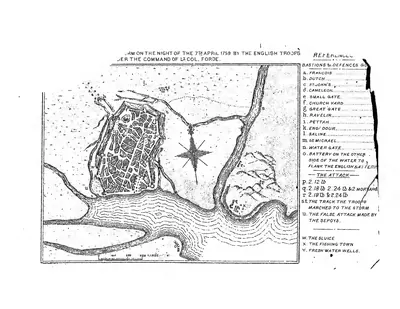
Conflans fell back on Machilipatnam and asked Salabat Jang to march to his relief.4950 Forde appeared before the town on 6 March 1759.5051 After a month’s siege his ammunition was nearly spent.5051 The Nizam’s army was coming from Vijayawada (then Bezwada), so Forde decided to storm the town.5051
The Fifth Report’s tables of the Company’s acquisitions date the capture to 7 April 1759, following Orme.52 The folding plan in the Kistna manual shows the storm “on the night of the 7th April 1759”.53 Orme counts the prisoners at 500 Europeans and 2,537 “Coffrees, Topasses, or Sepoys”, more than the attackers.54 The English also took 120 guns, and the attackers lost 22 Europeans killed.54
The Kistna manual called “that midnight struggle in April 1759” the turning point of the French and English contest for India.554
The treaty of 1759
Salabat Jang, fearing his brother Nizam Ali at Hyderabad, came to terms. The treaty is given in Aitchison’s collection as “Requests made by Colonel Forde to Nawab Salabut Jung, and his compliance thereto”.7 It granted the English “the whole of the Circar of Masulipatam, with eight districts, as well as the Circar of Nizampatam, and the districts of Condavir and Wacalmanuer”.7
These lands were given “as an enam (or free gift)”.7 The sanads (deeds of grant) were to be granted “in the same manner as was done to the French”.7 The Nawab was to send the French troops out of the Deccan, “on the other side of the river Kistna”, within fifteen days.7 And “in future he will not suffer them to have a settlement in this country”.7
Orme summarises the same article as obliging the French “to pass the Kristna in 15 days”.56 The rest of the Circars “returned again to the dominions of the Subadar of the Deccan”.50 The English story continues on the East India Company page.
The French did not give up at once. Moracin was sent with reinforcements that arrived too late.505758 He landed at Kakinada (then Cocanada) in November 1759 and tried to raise Jagapati Raju, a cousin of the Raja of Vizianagaram.505758 In December a second small party landed there.505758 It was driven into the Dutch fort at Jagannathapuram and made to surrender.505758 Hemingway writes: “Thenceforth no French forces set foot in the district.”505758 See Kakinada.
Coins
The French in India had coined money at Pondicherry since Dumas obtained “from the Great Mogul, the privilege of coining money at Pondicherry”.59 Muzaffar Jang’s order of 1750 made “coin struck at Pondicherry” current throughout his lands.16 Walter Elliot noted that small gold fanams were coined at the European factories of the coast.60 He described “the French distinguished by the fleur-de-lis, and afterwards by a cock”.60
Yanam after 1759
Hemingway says that Yanam was “formally ceded to them in 1752”.11 It “shared the vicissitudes of their other possessions on this coast”, that is, it had the same changes of fortune.11 Morris says that it was “restored to France with the other French possessions in India at each successive peace”.9
The Gazetteer of Southern India gives the changes of all the French possessions:6162
- those given back by the peace of 1763 “were not occupied before 1765”6162
- they were taken in 1778 and given back in 17836162
- they were taken again ten years later6162
- they were briefly returned at the peace of Amiens in 18026162
- they were restored again by the treaties of 1814 and 18156162
Hemingway says that “from 1793 onwards, save for a short period in 1802–03”, Yanam was held by the English.1163 It stayed so “till the treaties of 1815 restored it to its former owners”.1163 “It was then finally handed back in 1817.”1163
By the treaty of 1814 France undertook to build no fortifications in its Indian settlements.62 It also agreed to keep in them only the troops needed for police.62 In 1787 Yanam exported two or three thousand bales of white long-cloth a year.9 The French also kept a lodge (trading house) at Machilipatnam, Frenchpettah, restored after 1814.6462
Yanam remained French until after Indian independence. A notification of the Government of India is dated 30 October 1954.65 It was published in the Gazette of India of 1 November 1954.65 It recites that by an agreement with France of 21 October 1954 the Indian government had jurisdiction (legal control) over the French Establishments in India.65 It provides for their administration under a Chief Commissioner from 1 November 1954.65 It names the Establishments as Pondicherry, Karaikal, Mahe and Yanam.65
Where the sources disagree
- The founding of Yanam. Morris says the French factory was set up “some time before 1750”.9 Hemingway’s gazetteer says “about 1750”.10 The Imperial Gazetteer says that the French took Yanam about the time of the English settlement at Bendamurlanka.66
- The grant of Kondavid. Malleson puts Condavir among the lands Salabat Jang added in 1751.19 The Kistna manual dates the grant of the province of Kondavidu to November 1752.20 The Godavari gazetteer dates it to 1752.5
- The cession of the Circars. Malleson dates the agreement to 4 December 1753.2 The Kistna manual describes the grant after Bussy met the Nizam near Aurangabad on 23 November.1 The Imperial Gazetteer and the Fifth Report date it simply to 1753 (the Fifth Report to November).6752
- The extent of the French coast. Malleson reckoned 470 miles of sea-coast.2 The Kistna manual says “six hundred miles”.1
- Bussy’s return in 1756. Orme brings his army to Rajahmundry on 10 December 1756.3 The Kistna manual says 19 December.30
- The date of Bobbili. Orme dates the storm to 24 January (1757).34 The Bobbili family’s own account (Ranga Rao, 1907) puts the attack in 1758.68
- The date of Condore. Orme and the Godavari gazetteer’s history chapter put the battle on 9 December 1758.4429 The gazetteer’s own account of Chandurti follows Orme’s narrative of the march, and describes the armies moving “on the early morning of the tenth”.48
- The date of the treaty. The text in Aitchison is dated 16 Ramazan 1172, “the 14th of May 1759”.7 The gazetteers follow it.50 Orme says the treaty was “signed, and delivered” on 12 May.56
Footnotes
-
Gordon Mackenzie, A Manual of the Kistna District (1883), p. 49 (archive.org (opens in a new tab)). ↩ ↩2 ↩3 ↩4 ↩5 ↩6 ↩7 ↩8
-
G. B. Malleson, History of the French in India (1868), p. 370 (archive.org (opens in a new tab)). ↩ ↩2 ↩3 ↩4 ↩5 ↩6 ↩7 ↩8 ↩9 ↩10 ↩11 ↩12
-
Robert Orme, A History of the Military Transactions of the British Nation in Indostan, Vol. II (Madras reprint, 1861), p. 253 (archive.org (opens in a new tab)). ↩ ↩2 ↩3 ↩4 ↩5 ↩6 ↩7 ↩8 ↩9 ↩10 ↩11 ↩12 ↩13
-
Mackenzie, Kistna District (1883), p. 67 (archive.org (opens in a new tab)). ↩ ↩2 ↩3 ↩4 ↩5 ↩6 ↩7 ↩8
-
Hemingway, Godavari (1907), p. 30 (archive.org (opens in a new tab)). ↩ ↩2 ↩3 ↩4 ↩5 ↩6 ↩7 ↩8 ↩9 ↩10 ↩11 ↩12
-
James Grant, “Political Survey of the Northern Circars” (1784), in W. K. Firminger (ed.), The Fifth Report from the Select Committee … on the Affairs of the East India Company, Vol. III (1918), p. 13 (archive.org (opens in a new tab)). ↩ ↩2 ↩3 ↩4 ↩5 ↩6 ↩7 ↩8
-
C. U. Aitchison, A Collection of Treaties, Engagements and Sanads, Vol. VIII (1892), p. 278, treaty with the Nizam, 1759 (archive.org (opens in a new tab)). ↩ ↩2 ↩3 ↩4 ↩5 ↩6 ↩7 ↩8
-
Henry Morris, A Descriptive and Historical Account of the Godavery District (1878), p. 206 (archive.org (opens in a new tab)). ↩ ↩2 ↩3 ↩4 ↩5 ↩6 ↩7 ↩8
-
Morris, Godavery District (1878), p. 207 (archive.org (opens in a new tab)). ↩ ↩2 ↩3 ↩4 ↩5 ↩6 ↩7
-
Hemingway, Godavari (1907), p. 29 (archive.org (opens in a new tab)). ↩ ↩2 ↩3
-
Hemingway, Godavari (1907), p. 215, s.v. Yanam (archive.org (opens in a new tab)). ↩ ↩2 ↩3 ↩4 ↩5 ↩6 ↩7
-
Malleson, French in India (1868), p. 252 (archive.org (opens in a new tab)). ↩ ↩2
-
Mackenzie, Kistna District (1883), p. 44 (archive.org (opens in a new tab)). ↩ ↩2 ↩3
-
Mackenzie, Kistna District (1883), p. 45 (archive.org (opens in a new tab)). ↩ ↩2 ↩3
-
Malleson, French in India (1868), p. 253 (archive.org (opens in a new tab)). ↩ ↩2 ↩3
-
Mackenzie, Kistna District (1883), p. 46 (archive.org (opens in a new tab)). ↩ ↩2 ↩3 ↩4
-
Aitchison, Treaties, Vol. VIII (1892), p. 263 (archive.org (opens in a new tab)). ↩ ↩2
-
Malleson, French in India (1868), p. 274 (archive.org (opens in a new tab)). ↩ ↩2 ↩3 ↩4 ↩5
-
Malleson, French in India (1868), p. 275 (archive.org (opens in a new tab)). ↩ ↩2 ↩3 ↩4 ↩5 ↩6
-
Mackenzie, Kistna District (1883), p. 47 (archive.org (opens in a new tab)). ↩ ↩2
-
W. Francis, Madras District Gazetteers: Vizagapatam, Vol. I (1907), p. 31 (archive.org (opens in a new tab)). ↩ ↩2 ↩3 ↩4 ↩5 ↩6 ↩7 ↩8 ↩9 ↩10 ↩11 ↩12
-
Mackenzie, Kistna District (1883), p. 50 (archive.org (opens in a new tab)). ↩ ↩2
-
Grant, “Political Survey”, in Firminger, Fifth Report, Vol. III (1918), p. 14 (archive.org (opens in a new tab)). ↩ ↩2 ↩3 ↩4 ↩5 ↩6
-
Mackenzie, Kistna District (1883), p. 68 (archive.org (opens in a new tab)). ↩
-
A Gazetteer of Southern India, with the Tenasserim Provinces and Singapore (1855), p. 311 (archive.org (opens in a new tab)). ↩ ↩2 ↩3
-
Orme, Military Transactions, Vol. II (1861), p. 261 (archive.org (opens in a new tab)). ↩ ↩2 ↩3 ↩4 ↩5 ↩6 ↩7 ↩8 ↩9 ↩10 ↩11 ↩12
-
Orme, Military Transactions, Vol. II (1861), p. 263 (archive.org (opens in a new tab)). ↩ ↩2 ↩3 ↩4
-
Orme, Military Transactions, Vol. II (1861), p. 383 (archive.org (opens in a new tab)). ↩ ↩2 ↩3 ↩4 ↩5 ↩6 ↩7 ↩8 ↩9 ↩10
-
Hemingway, Godavari (1907), p. 31 (archive.org (opens in a new tab)). ↩ ↩2 ↩3 ↩4 ↩5 ↩6 ↩7 ↩8
-
Mackenzie, Kistna District (1883), p. 52 (archive.org (opens in a new tab)). ↩ ↩2
-
Orme, Military Transactions, Vol. II (1861), p. 254 (archive.org (opens in a new tab)). ↩ ↩2 ↩3 ↩4 ↩5
-
Orme, Military Transactions, Vol. II (1861), p. 255 (archive.org (opens in a new tab)). ↩ ↩2 ↩3 ↩4 ↩5
-
Orme, Military Transactions, Vol. II (1861), p. 256 (archive.org (opens in a new tab)). ↩ ↩2 ↩3
-
Orme, Military Transactions, Vol. II (1861), p. 257 (archive.org (opens in a new tab)). ↩ ↩2 ↩3 ↩4 ↩5 ↩6 ↩7 ↩8
-
Orme, Military Transactions, Vol. II (1861), p. 258 (archive.org (opens in a new tab)). ↩ ↩2 ↩3 ↩4
-
Orme, Military Transactions, Vol. II (1861), p. 259 (archive.org (opens in a new tab)). ↩ ↩2 ↩3
-
Orme, Military Transactions, Vol. II (1861), p. 260 (archive.org (opens in a new tab)). ↩ ↩2 ↩3 ↩4 ↩5
-
Orme, Military Transactions, Vol. II (1861), p. 262 (archive.org (opens in a new tab)). ↩ ↩2 ↩3
-
“Acquisitions of Territory by the British in the Presidency of Fort St. George”, in Firminger, Fifth Report, Vol. III (1918), p. xv, No. XII, Vizagapatam (archive.org (opens in a new tab)). ↩ ↩2 ↩3 ↩4 ↩5 ↩6
-
Hemingway, Godavari (1907), p. 213, s.v. Injaram and Nilapalli (archive.org (opens in a new tab)). ↩
-
Orme, Military Transactions, Vol. II (1861), p. 355 (archive.org (opens in a new tab)). ↩ ↩2 ↩3
-
Orme, Military Transactions, Vol. II (1861), p. 364 (archive.org (opens in a new tab)). ↩ ↩2
-
Francis, Vizagapatam (1907), p. 33 (archive.org (opens in a new tab)). ↩
-
Orme, Military Transactions, Vol. II (1861), p. 377 (archive.org (opens in a new tab)). ↩ ↩2 ↩3 ↩4 ↩5 ↩6
-
Orme, Military Transactions, Vol. II (1861), p. 378 (archive.org (opens in a new tab)). ↩ ↩2 ↩3 ↩4 ↩5
-
Orme, Military Transactions, Vol. II (1861), p. 382 (archive.org (opens in a new tab)). ↩ ↩2 ↩3 ↩4 ↩5 ↩6
-
Hemingway, Godavari (1907), p. 227, s.v. Chandurti (archive.org (opens in a new tab)). ↩ ↩2
-
Hemingway, Godavari (1907), p. 228 (archive.org (opens in a new tab)). ↩ ↩2 ↩3
-
Orme, Military Transactions, Vol. II (1861), p. 475 (archive.org (opens in a new tab)). ↩
-
F. R. Hemingway, Madras District Gazetteers: Godavari, Vol. I (1907), p. 32 (archive.org (opens in a new tab)). ↩ ↩2 ↩3 ↩4 ↩5 ↩6 ↩7 ↩8 ↩9 ↩10 ↩11
-
Orme, Military Transactions, Vol. II (1861), p. 483 (archive.org (opens in a new tab)). ↩ ↩2 ↩3
-
“Acquisitions of Territory”, in Firminger, Fifth Report, Vol. III (1918), p. xi, No. IV, Masulipatam (archive.org (opens in a new tab)). ↩ ↩2
-
Mackenzie, Kistna District (1883), folding plan of the storm of Masulipatam, 1759, in the copy scanned as “A Manual of the Krishna District” (PDF p. 2) (archive.org (opens in a new tab)). ↩
-
Orme, Military Transactions, Vol. II (1861), p. 489 (archive.org (opens in a new tab)). ↩ ↩2
-
Mackenzie, Kistna District (1883), p. 66 (archive.org (opens in a new tab)). ↩
-
Orme, Military Transactions, Vol. II (1861), p. 492 (archive.org (opens in a new tab)). ↩ ↩2
-
Hemingway, Godavari (1907), p. 33 (archive.org (opens in a new tab)). ↩ ↩2 ↩3 ↩4 ↩5
-
Hemingway, Godavari (1907), p. 209, s.v. Cocanada (archive.org (opens in a new tab)). ↩ ↩2 ↩3 ↩4 ↩5
-
Gazetteer of Southern India (1855), p. 310 (archive.org (opens in a new tab)). ↩
-
Walter Elliot, Coins of Southern India (1886), p. 58 (archive.org (opens in a new tab)). ↩ ↩2
-
Gazetteer of Southern India (1855), p. 312 (archive.org (opens in a new tab)). ↩ ↩2 ↩3 ↩4 ↩5 ↩6
-
Gazetteer of Southern India (1855), p. 313 (archive.org (opens in a new tab)). ↩ ↩2 ↩3 ↩4 ↩5 ↩6 ↩7 ↩8 ↩9
-
Hemingway, Godavari (1907), p. 216 (archive.org (opens in a new tab)). ↩ ↩2 ↩3
-
Mackenzie, Kistna District (1883), p. 99 (archive.org (opens in a new tab)). ↩
-
The Gazette of India, Extraordinary, Part II, Section 3, No. 254 (1 November 1954), p. 2137, notification S.R.O. 3314 of 30 October 1954 (Public domain in India; paraphrased) (archive.org (opens in a new tab)). ↩ ↩2 ↩3 ↩4 ↩5
-
Imperial Gazetteer of India: Madras, Vol. I (1908), p. 272 (archive.org (opens in a new tab)). ↩
-
Imperial Gazetteer: Madras, Vol. I (1908), p. 185, s.v. Circars, Northern (archive.org (opens in a new tab)). ↩
-
Venkata Swetachalapati Ranga Rao, Maharaja of Bobbili, A Revised and Enlarged Account of the Bobbili Zemindari (1907), p. 42 (archive.org (opens in a new tab)). ↩
Photos
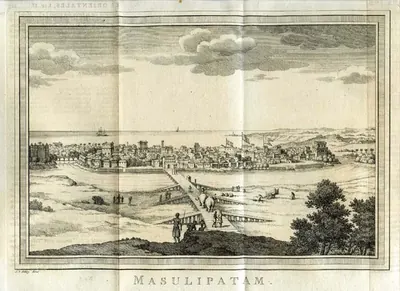 "Masulipatam": engraved view of the town from the landward side, after Bellin, from Prévost's Histoire générale des voyages (1752), when the French held it (1750–59)Drawing · 1752
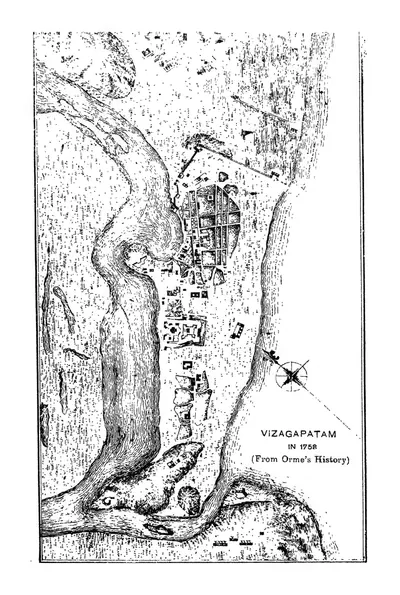 "Vizagapatam in 1758 (From Orme's History)" (Francis 1907, PDF p. 62)Map · 1907
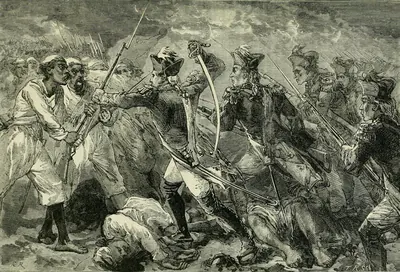 Captain Yorke leading the forlorn hope at Masulipatam (the Commons title of the plate): the storm of 7 April 1759, in which Orme says Yorke led the second division and fell with a ball through each thigh (Cassell's Illustrated History of India, 1879)Drawing · 1879
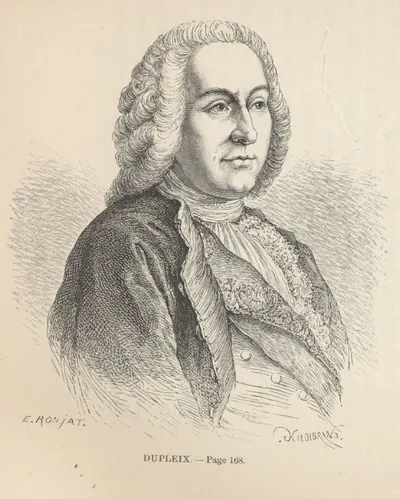 Joseph François Dupleix, Governor of Pondicherry 1742–54: engraved portrait after E. Ronjat (Guizot, A Popular History of France, Vol. VI)Drawing · 19th century
 Plan of the storm "on the night of the 7th April 1759 by the English troops under the command of Lt. Col. Forde" (Masulipatam) (Mackenzie 1883, folding plan, PDF p. 2)Plan · 1883
 Yanaon (Yanam) on the Godavari: engraving by Louis Le Breton, 1857Drawing · 1857
 Yanaon (Yanam), the French settlement on the Godavari: engraving of 1835Drawing · 1835
References
Notes (0)
Sources (14)
Spotted an error on this page? Tell us
Last updated: