Bobbili
Town in the Vizagapatam (now Vizianagaram) country, seat of the Velama zamindars who bore the title Ranga Rao. Bussy and the Raja of Vizianagaram stormed its mud fort on 24 January 1757, when the defenders killed their families and died on the walls. The siege lives on in the Telugu ballad of Bobbili. The family recovered its lands in 1794, and the estate was settled permanently with it in 1801–02.
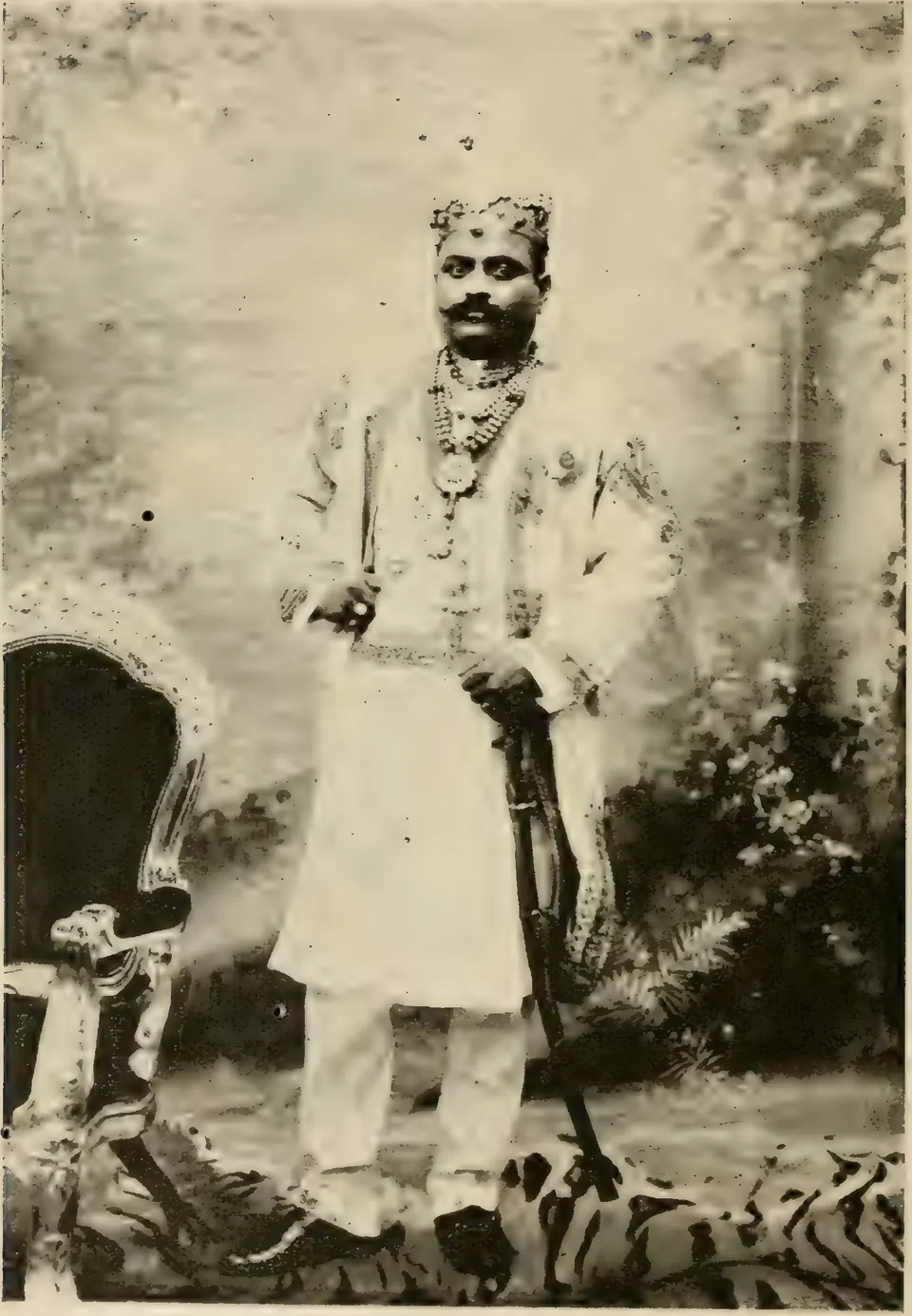
Bobbili is the headquarters of Bobbili taluk, which lies inland in the old Visakhapatnam (then Vizagapatam) district, north-east of Vizianagaram.1 The Suvarnamukhi and Vegavati rivers flow across the taluk.1 Francis’s Vizagapatam gazetteer (1907) gives it 17,387 people.1 It says that the town was known chiefly as the seat of the Bobbili zamindari (landholder’s estate).1 The estate’s peshkash (yearly tribute) of Rs. 83,652 was larger than that of any estate in the district except Vizianagaram.1
The family’s own account (1907) quotes Maclean’s Manual of the Administration for the estate’s five parganas (revenue divisions) and its revenue of Rs. 3,75,000.2 See Gopalakrishna Ranga Rao.
The town and its name
Francis summarises the family papers.1 According to them the founder, Pedda Rayudu, was a Velama descended from the Rajas of Venkatagiri.1 He came into the district in 1652 with Sher Muhammad Khan, Faujdar (military governor) of Srikakulam (then Chicacole).1 His son Lingappa built a fort and founded the town.1
Lingappa called the town Pedda-puli, “great tiger”, after the name of the family’s patron (Sher, tiger).1 This name “was corrupted into Pebbuli and Bebbuli, and at length became Bobbili”.1 The same Faujdar’s train brought the ancestor of the Rajas of Vizianagaram.13 Francis says that “the rivalry between the two houses dates from this period”.13
The siege of 1757
At the end of 1756 the Raja of Vizianagaram persuaded Bussy, the French commander in the Northern Circars, to remove the chief of Bobbili.4 Francis reprints Orme’s description of the fort, as true of the scores of old mud forts of the district.456 It was a square of sun-dried clay about two hundred yards a side, with round towers at the corners.456 It stood deep in a forest pierced by one winding path.456
Bussy attacked at daybreak on 24 January 1757, and two assaults failed.789 Then the defenders killed their women and children, and died fighting on the walls.789 Ranga Rao was shot, and only his infant son was saved.789 Three nights later, two of Ranga Rao’s soldiers killed the Raja of Vizianagaram in his tent.109 See French East India Company.
After the siege
Francis says that the site of the fort “can still be traced on the west side of the town”.11 In 1891 the Maharaja of Bobbili put up an obelisk there, with inscriptions that commemorate the siege.11 The Ranga Rao Charitram, “the popular ballad on the subject”, was still sung all over the district.11
The chief’s brother and infant son escaped.1112 The son, Chinna Ranga Rao, was imprisoned by the Vizianagaram family from 1766 to 1790.1112 In 1794, when the Vizianagaram estate was broken up, the Company restored him to his lands.1112 He died in 1801, and the permanent settlement was made with his adopted son.1112 See Folk traditions.
Footnotes
-
W. Francis, Madras District Gazetteers: Vizagapatam, Vol. I (1907), p. 236 (archive.org (opens in a new tab)). ↩ ↩2 ↩3 ↩4 ↩5 ↩6 ↩7 ↩8 ↩9 ↩10 ↩11 ↩12 ↩13
-
Venkata Swetachalapati Ranga Rao, Maharaja of Bobbili, A Revised and Enlarged Account of the Bobbili Zemindari (1907), p. 22 (archive.org (opens in a new tab)). ↩
-
Francis, Vizagapatam (1907), p. 30 (archive.org (opens in a new tab)). ↩ ↩2
-
Francis, Vizagapatam (1907), p. 237 (archive.org (opens in a new tab)). ↩ ↩2 ↩3 ↩4
-
Robert Orme, A History of the Military Transactions of the British Nation in Indostan, Vol. II (Madras reprint, 1861), p. 255 (archive.org (opens in a new tab)). ↩ ↩2 ↩3
-
Orme, Military Transactions, Vol. II (1861), p. 256 (archive.org (opens in a new tab)). ↩ ↩2 ↩3
-
Orme, Military Transactions, Vol. II (1861), p. 257 (archive.org (opens in a new tab)). ↩ ↩2 ↩3
-
Orme, Military Transactions, Vol. II (1861), p. 258 (archive.org (opens in a new tab)). ↩ ↩2 ↩3
-
Orme, Military Transactions, Vol. II (1861), p. 259 (archive.org (opens in a new tab)). ↩ ↩2 ↩3 ↩4
-
Francis, Vizagapatam (1907), p. 32 (archive.org (opens in a new tab)). ↩
-
Francis, Vizagapatam (1907), p. 241 (archive.org (opens in a new tab)). ↩ ↩2 ↩3 ↩4 ↩5 ↩6 ↩7
-
Ranga Rao, Bobbili Zemindari (1907), p. 25 (archive.org (opens in a new tab)). ↩ ↩2 ↩3 ↩4
Photos
Related
People
Charles de Bussy
1718 CE
French general, born in 1718, who commanded the French troops at the court of the Nizams Muzaffar Jang and Salabat Jang from 1751 to 1758. He raised Salabat Jang to the throne and obtained from him the four Northern Circars for the French Company in 1753. He governed them through the Raja of Vizianagaram and the zamindars. In 1757 he destroyed the fort of Bobbili and took the English factories on the coast. Lally recalled him to the Carnatic in 1758, and he left the Circars to be lost to Colonel Forde.
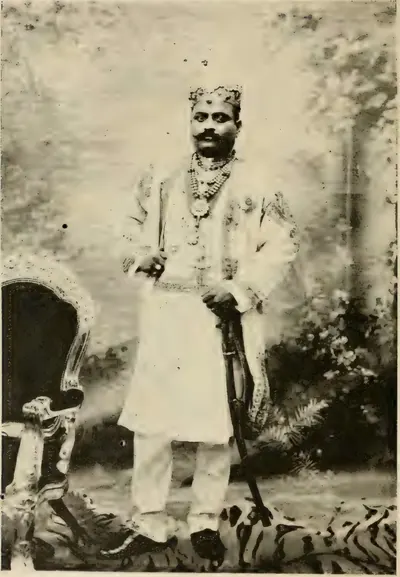
Venkata Swetachalapati Ranga Rao of Bobbili
1862 CE
Raja and later Maharaja of Bobbili in the Vizagapatam district. He was born in 1862, a younger son of the Raja of Venkatagiri, adopted in 1872 by the Rani of Bobbili, and installed in 1881. He visited England in 1893 and was made K.C.I.E. in 1895. He sat in the Madras Legislative Council for the great landholders, where he spoke against the Tenancy Bill, and he received the title of Maharaja at the close of the nineteenth century. In 1926 he became the first Pro-Chancellor of the Andhra University.
Gopalakrishna Ranga Rao of Bobbili
before 1757 CE
Chief of Bobbili, a Velama house in the Vizagapatam country. He refused Bussy's demand that he give up his family's old fort in exchange for other lands. Bussy and the Raja of Vizianagaram stormed Bobbili on 24 January 1757. Ranga Rao had the women and children of the fort killed and died fighting on the walls with his men, but his infant son was saved. Three nights later two of his soldiers killed the Raja of Vizianagaram in his tent. The siege is remembered in the Telugu ballad of Bobbili.
References
Notes (0)
Sources (3)
Spotted an error on this page? Tell us
Last updated: