East India Company
The English East India Company in the Telugu country, from its first landing on the coast in 1611 to the Crown's take-over in 1858. For a century and a half it traded through factories at Masulipatam, Nizampatnam, Madapollam, Viravasaram, Vizagapatam, Injaram and Bendamurlanka, under farmans of the Golconda kings and the Mughals. Its fort at Madras stood on land granted in 1639 through the Nayaka Damarla Venkatadri. After Forde drove out the French it received the Masulipatam country (1759), the five Northern Circars by the emperor's grant of 1765 and the treaties with the Nizam of 1766 and 1768, Guntur (1788), the Ceded Districts of Rayalaseema (1800) and Nellore with the Carnatic (1801). It governed through Chiefs and Councils, then Collectors. It settled the coastal zamindars permanently in 1802–03, and the Rayalaseema cultivators under Thomas Munro's ryotwari system. It broke the power of the Vizianagaram raja at Padmanabham (1794) and of the poligars. After the Guntur famine of 1832–33 it built the Godavari and Krishna anicuts.
Swipe sideways to see the whole chart; tap a bar for details.
Each bar is a ruling power in its region; time runs left to right. Dashed = approximate dates. Select a bar for details.
Show as a list
Vijayanagara & the Qutb Shahis 1336–1687 CE
- Telangana
- Adil Shahis of Bijapur (c. 1489–1686 CE) · Qutb Shahis of Golconda (c. 1518–1687 CE)
- Coastal Andhra
- Qutb Shahis of Golconda (c. 1524–1687 CE)
- Rayalaseema
- Adil Shahis of Bijapur (c. 1568–1686 CE) · Qutb Shahis of Golconda (c. 1579–1687 CE) · Marathas (c. 1677–1687 CE) · Mughal Empire (c. 1686–1724 CE)
Mughals, Asaf Jahis & the British 1687–1948 CE
- Telangana
- Mughal Empire (1687–1724 CE) · British Crown (Madras Presidency) (1860–1947 CE) · Asaf Jahi Nizams of Hyderabad (1724–1948 CE)
- Coastal Andhra
- Nawabs of the Carnatic (Arcot) (c. 1710–1801 CE) · French East India Company (1817–1954 CE) · Mughal Empire (1687–1724 CE) · British Crown (Madras Presidency) (1858–1947 CE) · Asaf Jahi Nizams of Hyderabad (1724–1753 CE) · East India Company (1759–1858 CE)
- Rayalaseema
- Nawabs of Kurnool (c. 1690–1839 CE) · British Crown (Madras Presidency) (1858–1947 CE) · Nawabs of the Carnatic (Arcot) (c. 1710–1801 CE) · Nawabs of Cuddapah (c. 1714–1779 CE) · East India Company (1792–1858 CE) · Mughal Empire (c. 1686–1724 CE) · Morari Rao Ghorpade of Gooty (c. 1741–1776 CE) · Banganapalle State (c. 1724–1948 CE) · Asaf Jahi Nizams of Hyderabad (c. 1724–1800 CE) · Marathas (c. 1743–1774 CE) · Mysore under Haidar Ali and Tipu Sultan (c. 1762–1799 CE)
- Movements
- Godavari hill risings (1858–1862 CE) · Vandemataram and Swadeshi (1905–1911 CE) · Non-cooperation (1920–1922 CE) · Salt satyagraha (1930 CE) · Andhra movement (c. 1911–1953 CE) · Andhra Jana Sangham and Andhra Mahasabha (1921–1946 CE) · Rampa rebellion (Alluri Sitarama Raju) (1922–1924 CE)
Reform, freedom & people's movements 1850–1956 CE
- Telangana
- British Crown (Madras Presidency) (1860–1947 CE) · Asaf Jahi Nizams of Hyderabad (1724–1948 CE)
- Coastal Andhra
- French East India Company (1817–1954 CE) · British Crown (Madras Presidency) (1858–1947 CE) · East India Company (1759–1858 CE)
- Rayalaseema
- British Crown (Madras Presidency) (1858–1947 CE) · East India Company (1792–1858 CE) · Banganapalle State (c. 1724–1948 CE)
- Movements
- Godavari hill risings (1858–1862 CE) · Vandemataram and Swadeshi (1905–1911 CE) · Non-cooperation (1920–1922 CE) · Salt satyagraha (1930 CE) · Andhra movement (c. 1911–1953 CE) · Andhra Jana Sangham and Andhra Mahasabha (1921–1946 CE) · Rampa rebellion (Alluri Sitarama Raju) (1922–1924 CE)
Sultanates
Adil Shahis of Bijapur
Open page- Telangana: c. 1489–1686 CE (c. 197 years)
After the Bahmani break-up part of Mahbubnagar district went to Bijapur (the rest to Golconda) and stayed with it until Aurangzeb annexed Bijapur in 1686; the Raichur district article likewise passes Raichur (which then included the Alampur taluk and Gadwal) from the Bahmanis to the Adil Shahis.
- Rayalaseema: c. 1568–1686 CE (c. 118 years)
Partial, the western uplands only. Adoni taken by Ali Adil Shah's general Ankus Khan in 1568 after a failed siege in 1535-37; Penukonda besieged in the 1570s (dates disputed) and taken in 1652 (Mackenzie MS); Kurnool taken from Gopala Raja early in the 17th century and governed by Abdul Wahab (d. 1618) and later deputies, Siddi Jauhar holding it as his jagir about 1660; the Bellary and Anantapur uplands held through governors and tributary poligars; Bijapur's rights there passed to Shivaji in 1677-80 (Francis); Bijapur fell to Aurangzeb on 12 September 1686, but Siddi Masud held Adoni until 1688 (Sarkar) or 1687 (Bellary gazetteer)
Rulers (9)
Capitals
Monuments
Sources (11)
Kingdoms and empires
Mughal Empire
Open page- Rayalaseema: c. 1686–1724 CE (c. 38 years)
Kurnool passed to the emperor with the Bijapur provinces in 1686 and was later the jagir of Daud Khan Panni and his brother; Adoni (renamed Imtiyazgarh, a Mughal mint) surrendered by Masaud Khan; the uplands of the Haidarabadi Karnatak (Cuddapah, Gandikota, Gooty, Sidhout) came with Golconda in 1687; Anantapur added to the subah of Bijapur; poligars largely independent (Cuddapah gazetteer); Francis dates the Nizam's independence to 1723
- Telangana: 1687–1724 CE (37 years)
Golconda taken on 21 September 1687 and the kingdom annexed as the subah of Haidarabad, governed from Hyderabad by subahdars (Mahabat Khan, Ruhullah Khan, Jan Sipar Khan, Rustam Dil Khan, Yusuf Khan, Mubariz Khan); Kam Bakhsh held Hyderabad as a rival emperor in 1708 until his defeat on 13 January 1709; Mubariz Khan was killed by Nizam-ul-Mulk at Shakar Kheda in October 1724
- Coastal Andhra: 1687–1724 CE (37 years)
Kondapalli gained by bribery in July 1687; Guntur (Murtazanagar), Kondapalli (Mustafanagar), Ellore, Rajahmundry and Chicacole formed the Northern Circars, with Masulipatam as their chief town and a Mughal mint; the Qutb Shahi assessment of 1635 was kept on Aurangzeb's records (Grant)
Rulers
- Shah Jahan (1628–1658 CE)
- Aurangzeb (Alamgir) (1658–1707 CE)
- Bahadur Shah (Shah Alam I) (1707–1712 CE)
- Jahandar Shah (1712–1713 CE)
- Farrukhsiyar (1713–1719 CE)
- Muhammad Shah (1719–1748 CE)
Inscriptions
Sources (14)
Colonial powers
British Crown (Madras Presidency)
Open page- Coastal Andhra: 1858–1947 CE (89 years)
The East India Company's government passed to the Crown by Act of Parliament of 2 August 1858 (Maclean); the Queen's proclamation is dated 4 November (Maclean) and the transfer of the Company's territories 1 November 1858 (Sewell). Ruled through the Governor in Council at Madras, the Board of Revenue and district Collectors. Godavari and Kistna were formed in December 1859, Guntur in 1904 and West Godavari, from the old Kistna, in 1925; the hill tracts of Vizagapatam and Godavari were governed as Agencies under special laws (1839, 1879). Ended with independence in 1947
- Rayalaseema: 1858–1947 CE (89 years)
The Ceded Districts and the Carnatic districts passed to the Crown with the rest of the Company's territories in 1858. Kurnool was made a full Collectorate in 1858, Anantapur was separated from Bellary in 1882 and Chittoor was formed on 1 April 1911; the state of Banganapalle stayed under the Madras Government until the 1920s, when it was placed under an Agent to the Governor-General. Ended with independence in 1947
- Telangana: 1860–1947 CE (87 years)
Partial (the Bhadrachalam and Rekapalli taluks only): ceded by the Nizam by the treaty of 26 December 1860; administered until 1874 as part of the Upper Godavari district of the Central Provinces, then transferred to the Godavari district of Madras and made part of the Godavari Agency in 1879
Rulers (22)
- Lord Harris (1854–1859 CE)
- Sir Charles Trevelyan (1859–1860 CE)
- Sir Henry Ward (1860 CE)
- Sir William Denison (1861–1866 CE)
- Lord Napier (1866–1872 CE)
- Lord Hobart (1872–1875 CE)
… and 16 more
- Duke of Buckingham and Chandos (1875–1880 CE)
- W. P. Adam (1880–1881 CE)
- M. E. Grant Duff (1881–1886 CE)
- Robert Bourke (Lord Connemara) (1886–1890 CE)
- Lord Wenlock (1891–1896 CE)
- Sir Arthur Havelock (1896–1900 CE)
- Lord Ampthill (1900–1906 CE)
- Sir Arthur Lawley (1906–1911 CE)
- Sir Thomas Gibson-Carmichael (1911–1912 CE)
- Lord Pentland (1912–1919 CE)
- Lord Willingdon (1919–1924 CE)
- Viscount Goschen (1924–1929 CE)
- Sir George Stanley (1929–1934 CE)
- Lord Erskine (1934–1940 CE)
- Sir Arthur Hope (1940–1946 CE)
- Sir Archibald Nye (1946–1947 CE)
Sources (11)
Sultanates
Qutb Shahis of Golconda
Open page- Telangana: c. 1518–1687 CE (c. 169 years)
Sultan Quli governed Telingana for the Bahmanis from 1493-95 and declared independence in 1512 (Ferishta, Haig, IG Hyderabad) or 1518 (Bilgrami, from the Golconda mosque inscription of AH 924); he took the forts of the Telugu chiefs, among them Rachakonda, Devarakonda and, from Shitab Khan, Warangal and Khammam (1519-1525 per Bilgrami). Tributary to the Mughals from 1635-36 (khutba and coins in Shah Jahan's name; two lakhs of huns a year). Hyderabad taken by the Mughals in 1656 and 1685; Golconda surrendered on 21 September 1687 (Old Style) and was annexed
- Coastal Andhra: c. 1524–1687 CE (c. 163 years)
Sultan Quli took Kondapalli and fixed the Godavari as his frontier with Orissa (Ellore ceded) some time before his 1530 campaign, and a 1524 record shows him granting villages near Kondapalli and Bezwada; the Godavari gazetteer and IG Madras date the Krishna-Godavari doab to c. 1540 or 'before 1543', and the IG Madras Kistna article to after 1565.
- Rayalaseema: c. 1579–1687 CE (c. 108 years)
Partial; the sources disagree on when Golconda's hold began. IG Madras says Kurnool and Cuddapah were overrun soon after 1565. The Kurnool Manual dates the campaigns that took Gurramkonda (1579) and Gandikota, Nandyal and Musalimadugu (c. 1590). The Cuddapah gazetteer says Golconda only turned to Cuddapah in the early 17th century and never really conquered it. Chandragiri fell to Golconda in 1646.
Rulers (8)
Capitals
Monuments (13)
Inscriptions (7)
- Epitaph of Sultan Quli, Golconda (1543)
- Makka Darwaza inscription, Golconda (1559)
- Jami Masjid inscription, Hyderabad
- Epitaph of Muhammad Quli Qutb Shah, Golconda (1612)
- Ma Saheba tank inscriptions (1625)
- Musa Burj inscription, Golconda fort (1666–67)
… and 1 more
Sources (23)
Kingdoms and empires
Asaf Jahi Nizams of Hyderabad
Open page- Telangana: 1724–1948 CE (224 years)
Asaf Jah, viceroy of the Deccan from 1713, independent after defeating Mubariz Khan at Shakar Kheda (11 October 1724 in Irvine; 1723 in Gribble); Telangana remained the Telugu heart of the Nizam's Dominions, with the samasthans of Gadwal, Wanaparthy, Jatprole, Amarchinta and Palvancha as tributary estates. Regular districts were formed in 1865-66 and the Telugu divisions surveyed and settled by 1905; the districts were redrawn in 1905 and an Executive Council governed from November 1919. The Standstill Agreement with India was signed on 29 November 1947. Indian troops entered the state on 13 September 1948 (the Police Action); the Nizam ordered a ceasefire on 17 September, and a military governor took charge on 18 September
- Coastal Andhra: 1724–1753 CE (29 years)
The Nizam's governor at Rajahmundry collected the tribute of the coastal zamindars; Masulipatam granted to the French by Muzaffar Jang in 1750 and the lands of Nizampatnam and Kondavid by Salabat Jang in 1751; the four Circars of Mustafanagar, Ellore, Rajahmundry and Chicacole assigned to the French on 4 December 1753 to pay Bussy's army
- Rayalaseema: c. 1724–1800 CE (c. 76 years)
Nominal over much of the region (Kurnool and Cuddapah Nawabs, Maratha tribute, Morari Rao at Gooty, Haidar Ali from 1761); the Nizam gained Tipu Sultan's districts by the treaties of 1792 and 1799 and ceded them to the Company by the treaty of 12 October 1800 to pay the subsidiary force (the Ceded Districts)
- Coastal Andhra: 1759–1788 CE (29 years)
Guntur (Murtazanagar) stayed with the Nizam's brother Basalat Jang after the French were driven out; it was excluded from the cessions of 1766 and 1768, rented by the Company in 1779 and restored, and handed over to the Company only in 1788; the Nizam's claims to the Circars' payments were bought out in 1823
Rulers (10)
Capitals
Monuments (11)
Inscriptions
Sources (16)
Kingdoms and empires
Nawabs of the Carnatic (Arcot)
Open page- Coastal Andhra: c. 1710–1801 CE (c. 91 years)
Partial (Nellore and Ongole, the Palnad, the jagir of Udayagiri and the tributary zamindaris of Venkatagiri and Kalahasti). Saadatullah Khan became Nawab of the Carnatic, the coast from Guntur to the Coleroon, in 1710 (Orme) or 1713 (Wilks), and his fauzdar governed Nellore; he granted the Udayagiri jagir in 1720. Under Muhammad Ali Walajah (1749-95) his brother Najib-ullah held Nellore, rebelled in 1757 and was dislodged by an English force in 1762. The revenues were assigned to the Company in 1781-85 and managed by it in 1790-92; by the treaty of 31 July 1801 Azim-ud-daula handed over the government of the Carnatic, and Nellore, Ongole and the Palnad became British
- Rayalaseema: c. 1710–1801 CE (c. 91 years)
Partial (Chittoor taluks). The Nawabs at Arcot, first as deputies under the Nizam, took tribute from the Chittoor and Chendragiri poligars and the Kalahasti and Karvetnagar zamindars; Muhammad Ali gave Chittoor and Chendragiri to his brother Abdul Wahab as a jagir, and the Carnatic was handed to the Company on 31 July 1801.
Rulers
- Saadatullah Khan (c. 1710–1732 CE)
- Dost Ali Khan (1732–1740 CE)
- Safdar Ali Khan (c. 1740–1742 CE)
- Anwar-ud-din Khan (1744–1749 CE)
- Muhammad Ali Khan Walajah (1749–1795 CE)
- Umdat-ul-Umara (1795–1801 CE)
Capitals
Sources (11)
Colonial powers
French East India Company
Open page- Coastal Andhra: 1750–1759 CE (9 years)
Partial at first (Masulipatam and the island of Divi, seized in July 1750 under Muzaffar Jang's grant; Nizampatnam, Narsapur and Kondavid added by Salabat Jang in 1751-52); from December 1753 the four Northern Circars of Mustafanagar (Kondapalli), Ellore, Rajahmundry and Chicacole, granted for the pay of Bussy's army and settled by Bussy in person from July 1754. Forde routed the French at Condore (Chandurti) on 9 December 1758 and stormed Masulipatam on 7-8 April 1759; by the treaty of May 1759 Salabat Jang ceded the Masulipatam country to the English and excluded the French from the Deccan
- Coastal Andhra: c. 1765–1793 CE (c. 28 years)
Partial (Yanam only): the French factory town on the Godavari, ceded to them in 1752, reoccupied after the peace of 1763 (the restored possessions 'were not occupied before 1765'); the French possessions were also in English hands in 1778-83
- Coastal Andhra: 1817–1954 CE (137 years)
Partial (Yanam only): occupied by the English from 1793 (except 1802-03) and handed back in 1817 under the treaties of 1814-15; about 2,258 acres. The Government of India took over the French Establishments, Yanam among them, from 1 November 1954 after the agreement with France of 21 October 1954
Rulers
- Joseph François Dupleix (1750–1754 CE)
- Charles de Bussy (1754–1758 CE)
- Marquis de Conflans (1758–1759 CE)
Capitals
Sources (10)
Colonial powers
East India Company
Open page- Coastal Andhra: 1759–1858 CE (99 years)
Partial at first: the Masulipatam and Nizampatam Circars ceded by Salabat Jang on 14 May 1759 after Forde's defeat of the French. The emperor Shah Alam granted the five Northern Circars on 12 August 1765; by the treaties of 12 November 1766 and 23 February 1768 the Nizam ceded Kondapalli, Ellore, Rajahmundry and Chicacole for a yearly payment (capitalised in 1823), Guntur following in September 1788. Governed through renters until 1769, Chiefs and Councils at Masulipatam and Vizagapatam until 1794, then Collectors; the zamindaris were permanently settled in 1802-03. Nellore, Ongole and the Palnad came with the Carnatic from the Nawab of Arcot on 31 July 1801. Transferred to the Crown in 1858
- Rayalaseema: 1792–1858 CE (66 years)
Partial at first: Kangundi came to the Company with the Baramahal in 1792, when it also began collecting the Kalahasti and Karvetnagar tribute for the Nawab; Punganur and Venkatagirikota (Palmaner) followed from Tipu's lands in 1799. On 12 October 1800 the Nizam ceded the territories he had gained from Mysore in 1792 and 1799, the Ceded Districts of Bellary (with Anantapur) and Cuddapah, with the tribute of the Nawab of Kurnool; Thomas Munro, Principal Collector 1800-1807, reduced the poligars and made the ryotwari settlement. The Nawab of Arcot's Chittoor and Chendragiri country came with the Carnatic in 1801, and the Kurnool Nawab's jagir was annexed in 1839. Transferred to the Crown in 1858
Rulers (23)
- George Pigot (1755–1763 CE)
- Robert Palk (1763–1767 CE)
- Charles Bourchier (1767–1770 CE)
- Josias Du Pré (1770–1773 CE)
- Alexander Wynch (1773–1775 CE)
- Lord Pigot (1775–1776 CE)
… and 17 more
- Sir Thomas Rumbold (1778–1780 CE)
- Lord Macartney (1781–1785 CE)
- Sir Archibald Campbell (1786–1789 CE)
- William Medows (1790–1792 CE)
- Sir Charles Oakeley (1792–1794 CE)
- Lord Hobart (1794–1798 CE)
- Lord Clive (Edward Clive) (1798–1803 CE)
- Lord William Bentinck (1803–1807 CE)
- Sir George Barlow (1807–1813 CE)
- Hugh Elliot (1814–1820 CE)
- Sir Thomas Munro (1820–1827 CE)
- Stephen Rumbold Lushington (1827–1832 CE)
- Sir Frederick Adam (1832–1837 CE)
- Lord Elphinstone (1837–1842 CE)
- Marquis of Tweeddale (1842–1848 CE)
- Sir Henry Pottinger (1848–1854 CE)
- Lord Harris (1854–1859 CE)
Capitals
Monuments
Sources (10)
Kingdoms and empires
Nawabs of Kurnool
Open page- Rayalaseema: c. 1690–1839 CE (c. 149 years)
Partial (Kurnool proper, the taluks of Ramallakota, Nandikotkur, Nandyal and Sirvel). The Mughals took Kurnool in 1686-88 and gave it as a jagir to the Pathan general Daud Khan Panni in the latter part of the seventeenth century (about 1698 in Burhanuddin); his kinsman Ibrahim Khan seized the fort in 1715, and his son Alif Khan acknowledged Asaf Jah in 1724. The French and Salabat Jang stormed Kurnool in March 1751 and held it for the Nizam until Ranmast (Munawwar) Khan recovered it in 1752. The Nawabs paid tribute to the Nizam and, from 1769, to Haidar Ali and Tipu Sultan; in 1800 the Nizam ceded the tribute to the Company, which fixed it in 1804 at a lakh and a quarter of Gadwal rupees, then a lakh. The last Nawab, Ghulam Rasul Khan, was deposed in 1839 and the jagir annexed
Rulers (8)
- Daud Khan Panni (c. 1690–1715 CE)
- Ibrahim Khan (1715–1724 CE)
- Alif Khan (1724–1733 CE)
- Himmat Bahadur Khan (Nawab of Kurnool) (1733–1751 CE)
- Ranmast Khan (Munawwar Khan, Nawab of Kurnool) (1752–1792 CE)
- Alif Khan II (Nawab of Kurnool) (1792–1815 CE)
… and 2 more
- Munawwar Khan II (1815–1823 CE)
- Ghulam Rasul Khan (Nawab of Kurnool) (1823–1839 CE)
Capitals
Sources (6)
Kingdoms and empires
Marathas
Open page- Rayalaseema: c. 1677–1687 CE (c. 10 years)
Partial (the Bellary and Anantapur uplands). Shivaji crossed the Krishna near Kurnool in March 1677, went to Srisailam and sent his army south through the Cuddapah country; Gribble says he took and garrisoned poligars' forts in the Cuddapah and Bellary districts. On his return he took Bellary fort after a 27-day siege (1677-78). In 1680 Bijapur formally ceded its rights over the country round Kopal and Bellary and the poligars paid him tribute (chauth), until Aurangzeb overthrew Maratha power in the district in 1687
- Rayalaseema: c. 1743–1774 CE (c. 31 years)
Partial. The Cuddapah gazetteer says the Nizam ceded Penukonda to the Marathas in 1743 (Grant Duff and the Anantapur gazetteer give Gooty and Penukonda to Morari Rao instead). After Balwant Rao killed the Nawab of Cuddapah near Cuddapah on 24 September 1757 the Marathas held Gurramkonda and Punganur (1755 in Gribble). Gurramkonda went to Haidar Ali through Mir Sahib in 1766-67, was retaken by Trimbak Rao after a two-month siege in 1771 and confirmed to the Marathas by the treaty of 1772, and was lost with Punganur, Sira and Madhugiri to Tipu and Haidar in 1773-74
Rulers
- Shivaji (1674–1680 CE)
- Sambhaji (1680–1689 CE)
- Rajaram (1689–1700 CE)
- Shahu (1708–1749 CE)
Sources (11)
Kingdoms and empires
Nawabs of Cuddapah
Open page- Rayalaseema: c. 1714–1779 CE (c. 65 years)
Partial (the Cuddapah uplands, the circars of Sidhout, Gandikota, Gurramkonda and Cumbum, with the poligar of Punganur as tributary). Pathan (Miana) Nawabs under the Mughals and the Nizams; Abdul Nabi Khan, governor from 1714, was the first to assert real control and raided the Baramahal. After the Maratha general Balwant Rao killed the Nawab Abdul Majid Khan in 1757, Gurramkonda went to the Marathas. The last Nawab, Abdul Halim Khan (from 1761), surrendered to Haidar Ali at Sidhout on 27 May 1779 (Wilks; 1778 in Gribble's local chronology and Brown, 1780 in the Cuddapah gazetteer, 1777 in Kirmani)
Rulers
- Abdul Nabi Khan (Nawab of Cuddapah) (c. 1714–1732 CE)
- Abdul Majid Khan (c. 1732–1757 CE)
- Mohsin Khan (c. 1757–1761 CE)
- Abdul Halim Khan (Nawab of Cuddapah) (1761–1779 CE)
Capitals
Sources (7)
Kingdoms and empires
Morari Rao Ghorpade of Gooty
Open page- Rayalaseema: c. 1741–1776 CE (c. 35 years)
Partial (Gooty, Penukonda, Madakasira, Kodikonda and Tadpatri, with tribute from the Anantapur poligars). The Maratha Morari Rao Ghorpade made the Madakasira poligar pay tribute in 1741, was recognised as chief of Gooty by the first Nizam in 1743-44 and settled there about 1746 (permanent seat 1754). Haidar Ali took Penukonda, Madakasira and Kodikonda in 1762; Morari Rao recovered some forts after the Maratha peace of 1765. Gooty fell to Haidar early in April 1776 (Wilks; 1775 in the Anantapur gazetteer), and Morari Rao died a prisoner at Kabbaldurga
Rulers
Capitals
Sources (5)
Kingdoms and empires
Banganapalle State
Open page- Rayalaseema: c. 1724–1948 CE (c. 224 years)
Partial (a nawabi enclave of about 255 square miles round Banganapalle in the Kurnool district). Muhammad Beg Khan, Mughal killedar of Banganapalle from the late seventeenth century, became a petty Nawab when Asaf Jah made himself independent, and Asaf Jah confirmed the jagir. Tipu Sultan occupied it from 1783 until the family, with the Nizam's troops, won it back at Tammadapalle in 1790. In 1800 the Nizam transferred his control to the East India Company, which took no tribute; the Madras government managed the indebted jagir from 1825 (1832 in the Imperial Gazetteer) to 1848 and restored it by the sanad of 1849. The ruler became a hereditary Nawab in 1876; the Madras government took over the administration on 23 February 1948
Rulers (10)
- Muhammad Beg Khan (c. 1724–1758 CE)
- Muhammad Beg Khan Laug (regent) (c. 1758–1766 CE)
- Fazl Ali Khan (Gulli Nawab) (c. 1766–1782 CE)
- Husain Ali Khan (c. 1782–1783 CE)
- Ghulam Ali Khan (Mansur-ud-daula) of Banganapalle (c. 1790–1821 CE)
- Husain Ali Khan II (c. 1821–1848 CE)
… and 4 more
- Ghulam Muhammad Ali Khan of Banganapalle (1848–1868 CE)
- Fateh Ali Khan, Nawab of Banganapalle (1868–1905 CE)
- Ghulam Ali Khan III (1905–1922 CE)
- Fazl-i-Ali Khan (1922–1948 CE)
Capitals
Sources (5)
Kingdoms and empires
Mysore under Haidar Ali and Tipu Sultan
Open page- Rayalaseema: c. 1762–1799 CE (c. 37 years)
Partial (the Anantapur, Bellary and Cuddapah uplands). Haidar Ali, master of Mysore from 1761, took Penukonda, Madakasira and Kodikonda from Morari Rao of Gooty in 1762 (some went back to Morari Rao in 1764-66). Gurramkonda came to him through Mir Sahib in 1768, was lost to the Marathas in 1771 and recovered by Tipu in 1773-74. He took Bellary in 1775 and Gooty in April 1776 (1775 in the Anantapur gazetteer), and the Nawab of Cuddapah surrendered at Sidhout on 27 May 1779 (1780 in the Cuddapah gazetteer); the Nawab of Kurnool and the poligars of the Bellary and Anantapur country paid him tribute. By the treaty of 18 March 1792 Tipu ceded the Cuddapah taluks, Gurramkonda, Bellary and the Gooty taluks of Tadpatri and Tadimarri to the Nizam; Gooty, Penukonda, Madakasira, Anantapur and the rest of Gurramkonda went to the Nizam after Tipu's death in May 1799, and the Nizam ceded both gains to the Company in 1800
Rulers
Sources (7)
Movements
Godavari hill risings
Open page- Coastal Andhra: 1858–1862 CE (4 years)
Subba Reddi's revolt near Yernagudem in 1858 and disturbances in the Rampa hills, 1858–1862
- Coastal Andhra: 1879–1881 CE (2 years)
The "Rampa rebellion" of 1879, put down in 1881 when its leader Chendrayya was killed
Sources (2)
Movements
Vandemataram and Swadeshi
Open page- Coastal Andhra: 1905–1911 CE (6 years)
Protests against the partition of Bengal; Bipin Chandra Pal's tour of the Telugu districts in April 1907
Sources (1)
Movements
Non-cooperation
Open page- Coastal Andhra: 1920–1922 CE (2 years)
Chirala–Perala (1921), the Palnadu forest satyagraha (1921) and the no-tax campaign of 1922 in Guntur district
Sources (1)
Movements
Salt satyagraha
Open page- Coastal Andhra: 1930 CE
Volunteers from district camps made salt on the coast at Machilipatnam, Chollangi, Mypadu, Vadarevu and elsewhere
Sources (1)
Movements
Andhra movement
Open page- Coastal Andhra: c. 1911–1953 CE (c. 42 years)
The demand for a separate Andhra province, from about 1911; Potti Sriramulu's fast and death in 1952; Andhra State formed on 1 October 1953
- Rayalaseema: c. 1911–1953 CE (c. 42 years)
The demand for a separate Andhra province, from about 1911; Potti Sriramulu's fast and death in 1952; Andhra State formed on 1 October 1953
Sources (3)
Movements
Andhra Jana Sangham and Andhra Mahasabha
Open page- Telangana: 1921–1946 CE (25 years)
Founded in Hyderabad in November 1921; became the Andhra Mahasabha at Jogipet in 1930; its nationalist wing merged into the Hyderabad State Congress in 1946
Sources (1)
Movements
Rampa rebellion (Alluri Sitarama Raju)
Open page- Coastal Andhra: 1922–1924 CE (2 years)
Alluri Sitarama Raju's rising in the Godavari and Vizagapatam agencies, from the raid on Chintapalli police station on 22 August 1922 to his capture and death on 7 May 1924
Sources (1)
Reigns
Each bar is one ruler’s reign; time runs left to right. c. = approximate date.
- George Pigot1755–1763 CE · 8 yrs
- Robert Palk1763–1767 CE · 4 yrs
- Charles Bourchier1767–1770 CE · 3 yrs
- Josias Du Pré1770–1773 CE · 3 yrs
- Alexander Wynch1773–1775 CE · 2 yrs
- Lord Pigot1775–1776 CE · 1 yr
- Sir Thomas Rumbold1778–1780 CE · 2 yrs
- Lord Macartney1781–1785 CE · 4 yrs
- Sir Archibald Campbell1786–1789 CE · 3 yrs
- William Medows1790–1792 CE · 2 yrs
- Sir Charles Oakeley1792–1794 CE · 2 yrs
- Lord Hobart1794–1798 CE · 4 yrs
- Lord Clive (Edward Clive)1798–1803 CE · 5 yrs
- Lord William Bentinck1803–1807 CE · 4 yrs
- Sir George Barlow1807–1813 CE · 6 yrs
- Hugh Elliot1814–1820 CE · 6 yrs
- Sir Thomas Munro1820–1827 CE · 7 yrs
- Stephen Rumbold Lushington1827–1832 CE · 5 yrs
- Sir Frederick Adam1832–1837 CE · 5 yrs
- Lord Elphinstone1837–1842 CE · 5 yrs
- Marquis of Tweeddale1842–1848 CE · 6 yrs
- Sir Henry Pottinger1848–1854 CE · 6 yrs
- Lord Harris1854–1859 CE · 5 yrs
The Governors of Fort St. George (Madras), under whose Council the Company's Telugu districts were governed, from Maclean's list in the Manual of the Administration of the Madras Presidency (Vol. II, 1885); acting governors who held office for less than two years are left out. Locally the territory was run from 1759 by Chiefs in Council at Masulipatam (from Forde's handing over to John Andrews on 15 October 1759) and from 1769 also at Vizagapatam, whose many short tenures the Kistna manual lists; the Chiefs and Councils were replaced by Collectors in 1794. The Ceded Districts had a Principal Collector, Thomas Munro, from 1800 to 1807. Pigot's term began before the Company held any Telugu territory, and Lord Harris was still Governor when the Crown took over in 1858.
The East India Company was chartered in London in 1600.123 It came to the Telugu coast as a trader in 1611, and left it as a government in 1858.123 For its first hundred and fifty years it held a few factories (trading posts), under the protection of the kings of Golconda and then of the Mughals.123 In the next hundred years it took the whole coast from Srikakulam (then Chicacole) to Nellore, and the uplands of Rayalaseema.123 Telangana stayed with the Nizam.123
This page follows the Company in the Telugu districts.123 The French, who held the coast before it, have their own page, French East India Company, as have the Dutch. The Nizams’ side of the treaties is on the Asaf Jahis page. See British Residency, Hyderabad for the Company’s Resident at Hyderabad.
The sources
The Company’s own records lie behind most accounts.45 The fifth report of the House of Commons committee on the Company’s affairs (1812) was reprinted by W. K. Firminger in 1917–18.45 It prints James Grant’s Political Survey of the Northern Circars (1784) and Munro’s reports on the Ceded Districts.45 It also prints a table of every acquisition of the Madras Presidency, with its date.45
The district manuals and gazetteers draw on the records kept in the Collectors’ offices.678 They cover Godavari (Morris, 1878; Hemingway, 1907), Kistna (Mackenzie, 1883), Visakhapatnam (then Vizagapatam; Francis, 1907), Bellary (Francis, 1904) and North Arcot (Stuart, 1895).678 The treaties are in C. U. Aitchison’s Collection of Treaties (Vol. VIII, 1892).9
The factories, 1611–1757
The Fifth Report’s table says that the English “landed at Pettipolee, August 20th, 1611”, from the Globe under Captain Hippon.1 It calls this “the first place at which the English commenced to trade on the Eastern Coast of the continent of India”.1 It says that the first English vessel reached Machilipatnam (then Masulipatam) on 31 August 1611.1 The table identifies Pettipolee as Nizampatnam.1 Morris’s Godavari manual says Pettapollee was “probably Peddapalli” or Nizampatnam (then Nizampatam).6
The local governor and the Dutch troubled the factors.10114 So in 1628 they moved to Armagon on the Nellore coast, where a factory had been founded in 1625–26.10114 In November 1632 the King of Golconda granted a farman (royal order).10114 It let them return to Machilipatnam and trade at his other ports.10114 Morris says “this document was called the Golden Firman”.1011 The Fifth Report calls it the “Golden Phurmaund”.4
A factory at Viravasaram, near Narasapur, followed in 1634–35.112 The Fifth Report lists Petapoli as dissolved and re-settled several times.112 See Machilipatnam and Nizampatnam.
The Fifth Report says that in 1639 the English obtained a grant of a station at Madras.412 The grantor was Sri Ranga Raya, “descendant of the Vijayanagar Kings”, reigning at Chandragiri.412 The grant was “obtained for the Company by the local Governor or Naick, Damarla Venkatadri”.412 He asked that the place be called Chennappa-patnam, “after his father Kari Chennappa”.412 Francis Day, of the Machilipatnam council and head of the factory at Armagon, negotiated it.412 Armagon was abandoned in 1641.412
William Foster edited the Company’s records in 1912.131415 He says that the Dutch records call the Nayak Damarla Venkatappa, “lord of from twelve to fifteen thousand soldiers”.131415 He was the chief supporter of the Raja of Chandragiri.131415 Day landed at Madraspatam on 27 July 1639.131415 The Nayak’s grant “seems to have been dated August 22, 1639”.131415 It promised to build the fort, let the English govern the town for two years, and gave them freedom from customs and the right to coin.131415
After Golconda fell, the rent for Madras became an asset of the Mughal empire.12 Madras, the seat of the Company’s government on the coast, lies outside the Telugu country. See Chandragiri.
Machilipatnam remained the Company’s chief factory in the north.161718 It had subordinate stations at Madapollam, Viravasaram and Petapoli.161718 The Fifth Report dates the Madapollam factory to December 1679.16 Hemingway’s gazetteer says it “was founded about 1678”.1718
The Madras Agent, Streynsham Master, toured the factories in 1679.1920 That July, Madapollam was made independent of Machilipatnam.1920 Morris notes that the cloths of the place “are still called in the English market ‘Madapollams’”.1920
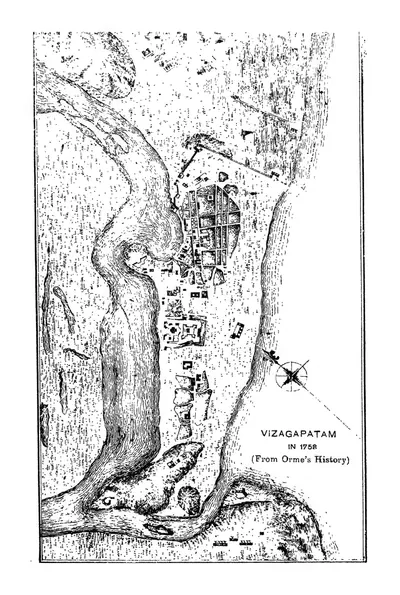
In 1682 the Company settled at Visakhapatnam, largely, Francis says, from fear of interlopers (rival traders).2122 The Fifth Report had found no earlier record, and gives 1683.23
In 1689, during the Company’s war with Aurangzeb, the Machilipatnam factory was seized.24252627 The Visakhapatnam factors were killed.24252627 In 1690 a cowle (grant) from the Mughal general Zulfikar Khan confirmed the factories at “Metchlepatam, Madapollam, Vizagapatam, &c.”.24252627
Injaram, near Yanam, was settled from Visakhapatnam in 1708, and re-established in 1722.2728293031 Bendamurlanka and Nilapalli, on the Godavari mouths, were settled in November 1751.2728293031 See Visakhapatnam.
Cloth
The factories existed to buy cloth.3229 Orme says that Madapollam, Bendamurlanka and Injaram “annually furnished 700 bales for the Company’s market in England”.32 Early in the eighteenth century, Captain Hamilton thought Injaram made “the best and finest longcloth in all India”.29
Morris gives the Company’s spending on muslins and cloth in the Godavari country in the twenty-four years before the factories were closed.33 On average it spent seven lakhs of rupees a year, and in one year more than fourteen lakhs.33
Morris says the mercantile establishments were abolished in 1829, and the Imperial Gazetteer says 1830.273334 The weavers’ trade “was almost annihilated”.2733 Hemingway gives the value of piece-goods exported from the district as fourteen lakhs in 1825, and less than two lakhs in 1842.35 See Crafts and textiles.
From the French war to the five Circars, 1757–1768
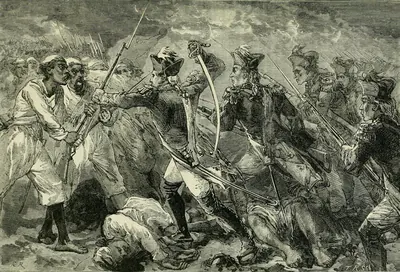
In 1757 Bussy’s French troops took the factories at Madapollam, Bendamurlanka, Injaram and Visakhapatnam.324 In 1758 Clive sent Colonel Francis Forde from Bengal.324 Forde beat the French at Condore in December and stormed Machilipatnam in April 1759, as told on the French East India Company page.324
By the treaty of May 1759 Salabat Jang gave the Company “the whole of the Circar of Masulipatam, with eight districts”.36 He also gave “the Circar of Nizampatam, and the districts of Condavir and Wacalmanuer”.36 These were given “as an enam (or free gift)”.36
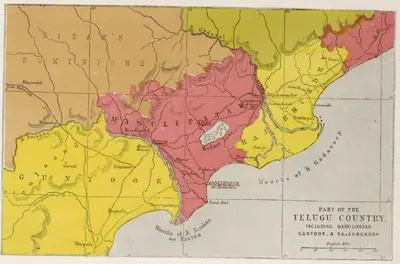
Orme reckoned the territory at 80 miles along the sea and 20 inland, with a revenue of 400,000 rupees.37 The Fifth Report reckoned it at about 700 square miles and 3,50,000 rupees.38 The Fifth Report explains that the “Kondavid” of the treaty was a pargana (sub-district) of fifty-two villages near Machilipatnam.38 It was “not to be confounded with the large district of same name”.38 The report adds the towns of Nilapalli, Bendamurlanka, Antarvedi and others on the Godavari mouths.38
On 15 October 1759 Forde handed the government to John Andrews, the first Chief in Council at Machilipatnam.398
In August 1765 Clive obtained the diwani (revenue rights) of Bengal from the emperor Shah Alam.4041 At the same time he obtained a farman for the five Northern Circars.4041 It recited that Salabat Jang had given Srikakulam and the rest to the French without the emperor’s confirmation.4041 It gave them to the Company “by way of enam or free gift (without the least participation of any person whatever in the same)”.4041
The grant was proclaimed in the fort at Machilipatnam on 3 March 1766, and General Caillaud took Kondapalli.41 Nizam Ali Khan threatened war.4243 Then by the treaty of 12 November 1766, signed by Caillaud at Hyderabad, the Company promised him troops when he needed them.4243 In years when he did not, it would pay nine lakhs of rupees a year for the five Circars:4243
- five lakhs for Rajahmundry, Eluru (then Ellore) and Mustafanagar
- two lakhs each for Srikakulam and Murtazanagar (Guntur)4243
Murtazanagar was left to the Nizam’s brother Basalat Jang for his life.4243
The Nizam then joined Haidar Ali against the Company and was beaten.9444546 After that, a new treaty dated 23 February 1768 at Fort St. George recognised the emperor’s grant and reduced the payment.9444546 The Fifth Report’s table follows a Madras Regulation of 1802.47 It treats this treaty as “the actual cession”, since the farman and the treaty of 1766 had had “no substantial operation”.47
The yearly payment continued until it was capitalised (paid off in one sum).4846 According to Aitchison’s narrative, this was done “for a sum of Rupees 1,66,66,666”.4846 See Kondapalli, Rajahmundry, Eluru and Srikakulam.
Chiefs and Councils, and the Committee of Circuit
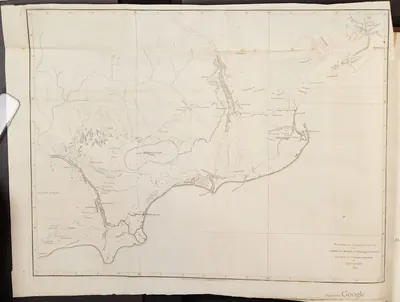
The Company did not at first govern the new Circars itself.467 The Godavari country was leased to Hussain Ali Khan.467 When his lease ended in 1769, “the agents of the old factories and their subordinates were converted into Provincial Chiefs and Councils”.467 The Rajahmundry and Eluru Circars were put under the Chief and Council of Machilipatnam.467 These men “for the next 25 years controlled the entire political, civil and revenue administration”.467 In the same year John Andrews was sent from Machilipatnam to be “the first Chief in Council” at Visakhapatnam.21
The Chiefs dealt with the zamindars (landholders) as owners of their estates, paying a peshkash (tribute) fixed by custom.749 The Muslim governors had held the havili lands round the towns directly.749 The Chiefs kept these lands under their own management.749
Hemingway says the zamindars lived in mud forts and kept armed retainers.49 They took from the cultivator far more than his customary share.49 Clauses bound them to keep only the militia “indispensably necessary”.46 But the Board of Revenue complained in 1794 that these clauses had “never met the smallest attention from the zamindars”.46
In 1775 the Court of Directors ordered a Committee of Circuit, five members of the Madras Council.50 It was to inquire into the produce, people and revenues of the Circars.50 In 1778 Governor Rumbold summoned the zamindars to Madras and made his own five-year settlement, and this interrupted the Committee.50 It was reappointed in 1783.50 It reported on the havili lands on 18 December 1786, and on the zamindaris (landholders’ estates) on 15 February 1787.50
Hemingway says its reports “proved the inefficiency” of the Chiefs and Councils.5152 In 1794 “they and the other Chiefs and Councils in the Northern Circars were abolished, and the country was divided into Collectorates”.5152 A Board of Revenue had been set up at Madras in 1786.51
Guntur, 1788
Guntur, the fifth Circar, stayed with Basalat Jang.445354 The Madras government leased it from him in 1779, but the Governor-General disallowed the lease.445354 When Basalat Jang died in 1782, the Nizam’s officers kept it.445354
In 1788 a Resident was sent to Hyderabad for the first time.4455 The Nizam agreed to give Guntur up in September of that year.4455 The Kistna manual says that “thus did Guntur pass finally under the rule of the Company thirteen years after Lord Clive had obtained the sanads”.55 The Fifth Report dates the sanad (grant) to 18 September 1788.47 See Guntur.
Vizianagaram and Padmanabham, 1794
In the Visakhapatnam country, the Rajas of Vizianagaram had grown stronger than the Company.5657 The Raja Vijayarama Raju, adopted after 1759, and his half-brother Sitarama Raju controlled almost the whole district.5657 The Company settled a peshkash of three lakhs on their estate.5657 With its help they dispossessed the lesser zamindars.5657
By 1793 the Raja’s arrears had reached eight and a half lakhs.5859 On 2 August 1793 Colonel Prendergast took possession of the Vizianagaram fort.5859 The Raja was ordered to leave the district on a pension.5859 Instead he camped at Padmanabham, between Vizianagaram and Bheemunipatnam (then Bimlipatam).5859
Spies reported that he meant “to do as the Bobbili family did formerly”.6061 At dawn on 10 July 1794 Prendergast attacked.6061 “The Raja was killed, with many of his followers.”6061 Of 309 dead on the Raja’s side, 208 were Rajputs, and forty of them lay round his body.6061
Francis’s gazetteer calls Padmanabham “the Flodden of the Rajputs of Vizianagram”.6263 The Raja’s young son Narayana Raju received the estate.6263 In 1796 the dispossessed zamindars were given cowles restoring their lands.6263 See Vijayarama Raju II, Padmanabham and Vizianagaram.
The permanent settlement, 1802–1803
The Court of Directors pressed Madras to follow the permanent settlement made in Bengal in 1793.64 In the Rajahmundry district in 1802–03, the existing zamindars were confirmed in their estates “in perpetuity on a peshkash which was generally fixed at two-thirds of the average gross collections”.64 The Company’s own lands were divided into proprietary estates, or muttas, and sold by auction.64 Regulation XXX of 1802 was meant to protect the under-tenants.64
Francis says that in the Visakhapatnam district too the ancient zamindaris were handed back to their owners in perpetuity.63 The havili land was sold in lots.63
Hemingway judged the result bluntly: “This permanent settlement was a dismal failure.”65 Estates fell into debt and were sold for arrears.65 From 1813–14 the government began to buy them in.65
Thomas Munro, as Governor in 1822, blamed the frequent disturbances on one duty of the government.66 It had to enforce moneylenders’ decrees against zamindars.66 By this, Munro wrote, “we are every day liable to be dragged into a petty warfare among unhealthy hills”.66 See Governance.
The Ceded Districts and Thomas Munro, 1800–1807
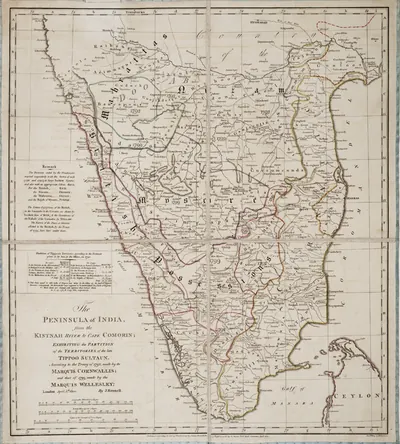
The Rayalaseema country came to the Company by war and treaty.676869 The first piece was the Kangundi zamindari, part of the Baramahal ceded by Tipu Sultan in 1792.676869 In the same year the Company began to collect the tribute of the Kalahasti and Karvetinagar zamindars for the Nawab of Arcot.676869 In 1799 it took Punganur and Venkatagirikota from Tipu’s lands.676869
By the treaty of 12 October 1800, the Nizam ceded to the Company all the territory he had gained from Mysore in 1792 and 1799.702 It yielded about 17,58,000 pagodas, and paid for an enlarged subsidiary force.702
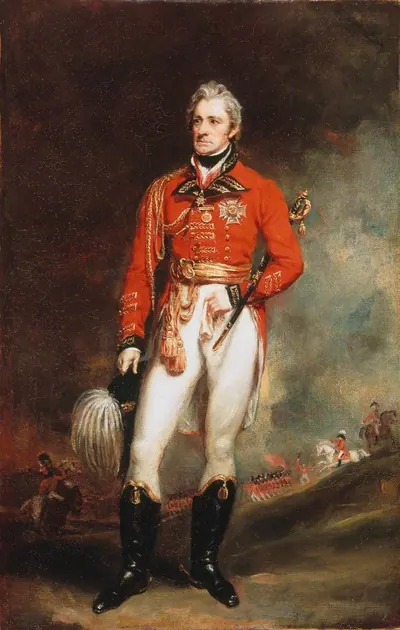
The Bellary gazetteer says that the districts handed over, “Bellary, Anantapur, Cuddapah and part of Kurnool”, “are still known as ‘the Ceded districts’”.71 It says that “Sir Thomas (then Major) Munro was their first (and their most famous) ‘Principal Collector’”.71
The Fifth Report’s table calls it an error to speak of “the Ceded Districts and Kurnool”, as if Kurnool had been ceded separately.72 The Nawab of Kurnool’s tribute passed to the Company with the rest.72 See Nawabs of Kurnool, Kadapa, Bellary and Gooty.
Thomas Munro took charge at the end of 1800.7374 His biographer Bradshaw reckoned that there were then 30,000 armed peons in the districts, under some eighty poligars (local chiefs).75
Munro wrote that the poligars “were almost constantly in rebellion”.76 He wrote that “their reduction and rebellion were equally disastrous to the country”.76 He assessed each at the highest peshkash he had ever paid.76 With General Dugald Campbell’s troops and his own companies of armed peons, he reduced or dispossessed them within a year.76
The Directors in 1804 asked for “more gentle measures”, and Munro defended himself in 1805.77 In 1801–02 he brought in the kulwar or ryotwari settlement that he had used in Salem.78 Under it “every ryot held his land immediately from the Government under a patta from the Collector”.78 He surveyed the districts between 1802 and 1805.78
Munro left in October 1807.79 The Madras government then reported that the people had become as orderly as any of its subjects.79 They had been, it said, “disunited hordes of lawless plunderers and freebooters”.79 The Bellary gazetteer says the people called him their “father”.79 The districts were then split into the collectorates of Bellary and Kadapa (then Cuddapah), and village leases were tried from 1809.79 See Forts and warfare.
The Carnatic, Nellore and Kurnool
The Nawab of Arcot’s Telugu districts were Nellore and Ongole and the Palnad.7280 They came to the Company with the rest of the Carnatic by the treaty of 31 July 1801.7280 The story is on the Nawabs of the Carnatic page. The Kistna manual says the Palnad had until then been “nominally under the sovereignty of the Navab of Arcot”.55
In 1839 the Nawab of Kurnool’s country was annexed, as told on the Nawabs of Kurnool page.3 The Imperial Gazetteer lists it among the later changes in the Presidency’s limits, with the purchase of Tranquebar from the Danes in 1845.3 See Nellore and Kurnool.
Famine and the anicuts
In 1832–33 came “the terrible drought, which is known among Europeans as ‘the Guntur Famine’ and among natives as ‘Nandana’”.8182 The Kistna manual says that it “covered the country with human bones from Ongole to Masulipatam”.8182 It adds that “for twenty years afterwards the cultivation in the Guntur district did not reach its previous limit”.8182 The loss of revenue in Guntur was estimated at 2,27,00,000 rupees.8182
In the Godavari district the famine of 1833 followed a hurricane in 1832.35 A special commissioner, Sir Henry Montgomery, reported in 1844 on the district’s decline.35 Hemingway says his report led to the anicut (dam) at Dowlaishweram.35
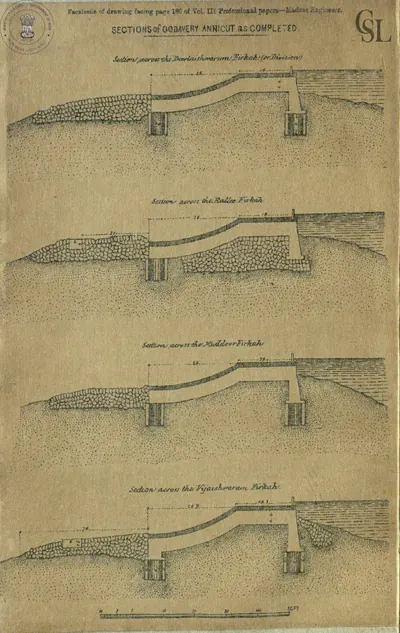
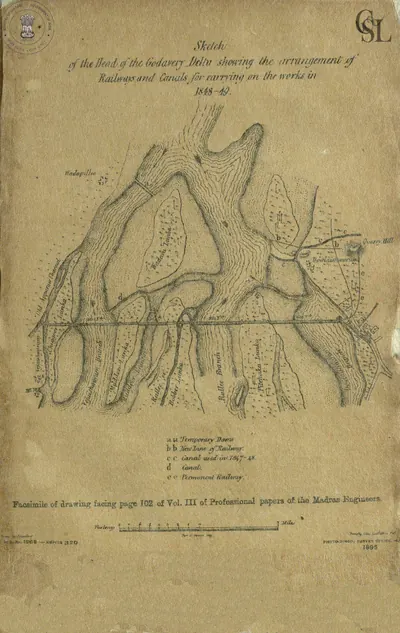
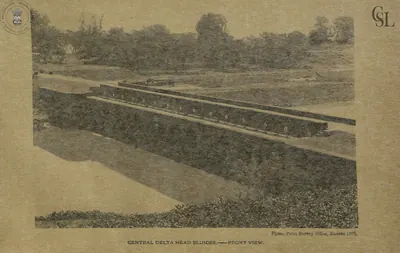
Major Arthur Cotton proposed the Godavari anicut.838485 The Board of Revenue backed it in April 1846, and the Madras government sanctioned it in September 1846.838485 Work began in earnest in April 1847.838485 Morris begins his account: “The District owes this invaluable boon to the genius of Sir Arthur Cotton.”86
In 1852 the government recorded that the anicut “may now be said to have arrived at completion”.8788 By January 1853 it had sanctioned 15,34,952 rupees for the works.8788
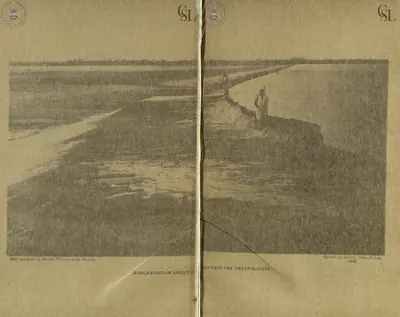
On the Krishna, the Kistna manual says, Captain Lake made a plan “endorsed by Major (now Sir Arthur) Cotton”.899091 It went to a committee in 1849, and the Directors sanctioned it on 5 January 1850.899091 The anicut at Vijayawada (then Bezwada) was built under Captain Orr from 1852.899091 It was finished in May 1855, at a cost of 7,48,765 rupees.899091 The Collector had to force the labour for it from the villages.899091 See Godavari delta works and Rajahmundry.
Forts and troops
The Company’s forts in the Telugu country were mostly old ones.9293 Machilipatnam was “regarded as the seat of Government of the Northern Circars”.9293 It was refortified after an engineer’s report of 1765.9293 The works were estimated at 60,004 pagodas, but had cost 97,274 by 1771.9293
Samalkot near Kakinada (then Cocanada) had barracks from 1786.94 It was then “the principal garrison of the English in the Circar of Rajahmundry”.94 Its fort was pulled down in 1838.94
In the Ceded Districts the force at Bellary under Dugald Campbell supported the civil officers.71 From 1798 the Company’s subsidiary force at Hyderabad stood behind the Nizam.70 After 1800 the Ceded Districts paid for it.70 See Asaf Jahis.
Coins
The Company coined little in the Telugu districts.1827 In 1678 the Madras council hoped the King of Golconda would grant “leave to coin rupees and pice at Madras, to be current throughout the King of Golconda’s dominions”.1827 Firmans of 1692 gave the right to coin.1827 The Visakhapatnam factory asked in 1731 and 1753 for leave to strike copper.95 But “no mint appears to have been established”.95
Edgar Thurston wrote a history of the Company’s coinage.9697 He quotes William Marsden on a double rupee of A.H. 1194 (1780; A.H. is the Islamic way of counting years).9697 It was “struck at Mechli-pattan (Masulipatam) in the 21st year of the auspicious reign”.9697 It was “coined at a city within the English jurisdiction on the Coast of Coromandel”.9697
Thurston lists the coins melted at the Madras mint in 1807–13.9899 The list includes Bunder and “Cacanadie” pagodas, and Bunder, “Kaukenadoo” and Adoni rupees.9899 Munro counted twenty-five sorts of pagodas and fifteen of rupees in circulation in the Ceded Districts.100
Buildings
North of the old fort at Visakhapatnam is the old cemetery, “often wrongly called ‘the Dutch Cemetery’”.101 It has burials from 1699 to 1823.101 Among them are four Chiefs of the settlement: Simon Holcombe (1705), Sandys Davis (1734), Charles Simpson (1741) and Alexander Davidson (1791).101
At Madapollam the gravestone of Katherine Davis still stood in Morris’s time.26 She was the daughter of the Chief John Davis, and died in 1681 aged seventeen months.26 A beam in a large house at Machilipatnam recorded that it “was built in 1790 by William Augustus Dobbyn, Second in Council of Masulipatam”.52
The end of Company rule
With the renewal of its charter in 1833, the Company stopped trading.102 In the words of Maclean’s chronology, it became “solely governors of India and administrators of its revenue”.102 In 1858 the government of India was “transferred from the East India Company to the Crown” by Act of Parliament (2 August).103104 Maclean dates the Queen’s proclamation announcing it to 4 November.103104 Lord Harris, the Company’s last Governor of Madras, stayed on as the Queen’s.103104
The Crown’s government of the Madras Presidency is the subject of the next part of this history.81 So is the forming of the Krishna (then Kistna) and Godavari districts in 1859.81
Where the sources disagree
- The grant of Madras. The Fifth Report’s table dates the grant to 1 March 1639.12 It names Sri Ranga Raya of Chandragiri as the grantor, with the Nayak Damarla Venkatadri obtaining it.12 Foster, from the Company’s letters, dates Day’s landing to 27 July 1639, and the Nayak’s own grant to 22 August 1639.1415
- The first factory. The Fifth Report puts the first landing at Pettipolee (Nizampatnam) on 20 August 1611, and the first ship at Machilipatnam on 31 August 1611.1 Morris says that “the first factory established by the English on the eastern coast of India was at Masulipatam”, in 1611.6
- Madapollam. Founded “about 1678” (Hemingway) or in December 1679 (Fifth Report).1716
- Visakhapatnam. 1682 (Francis, from the Madras consultations) or 1683 (Fifth Report, “supposed date”).2123
- Injaram. Morris and Hemingway date the settlement to 1708.2729 Hemingway adds that it was abandoned and re-established in 1722.29 The Fifth Report dates the factory to June 1722.30
- The 1759 territory. Orme: 80 miles of coast by 20 inland, and 4,00,000 rupees.37 The Kistna manual: sixty miles of coast and twenty inland.105 The Fifth Report: about 700 square miles and 3,50,000 rupees.38
- The payment of 1766. The treaty text in Aitchison gives nine lakhs of rupees a year, as do the Godavari and Visakhapatnam gazetteers.4346 The Kistna manual says eight lakhs.106 The Imperial Gazetteer gives the cost of the promised troops as £90,000.107
- The treaty of 1768. Dated 23 February 1768 in Aitchison and the Godavari gazetteer.4546 26 February in the Fifth Report’s table.47 1 March 1768 in the Imperial Gazetteer.108
- The commutation of 1823. Rs. 1,66,66,666 in Aitchison and Hemingway.4846 “116 2/3 lakhs” in the Imperial Gazetteer.108
- The end of the factories. 1829 (Morris) or 1830 (Imperial Gazetteer).2734
- The Godavari anicut. “Completed in 1850” in the Imperial Gazetteer.34 Morris quotes the government’s order of 1852 that it had “arrived at completion”.87
Footnotes
-
“Acquisitions of Territory by the British in the Presidency of Fort St. George”, in W. K. Firminger (ed.), The Fifth Report from the Select Committee … on the Affairs of the East India Company, Vol. III (1918), p. x, Nos. II–IV (archive.org (opens in a new tab)). ↩ ↩2 ↩3 ↩4 ↩5 ↩6 ↩7 ↩8 ↩9 ↩10 ↩11 ↩12 ↩13
-
Imperial Gazetteer of India: Madras, Vol. I (1908), p. 22 (archive.org (opens in a new tab)). ↩ ↩2 ↩3 ↩4 ↩5 ↩6 ↩7 ↩8
-
Imperial Gazetteer: Madras, Vol. I (1908), p. 23 (archive.org (opens in a new tab)). ↩ ↩2 ↩3 ↩4 ↩5 ↩6 ↩7 ↩8
-
“Acquisitions of Territory”, in Firminger, Fifth Report, Vol. III (1918), p. xi, Nos. IV–V (archive.org (opens in a new tab)). ↩ ↩2 ↩3 ↩4 ↩5 ↩6 ↩7 ↩8 ↩9 ↩10 ↩11 ↩12 ↩13 ↩14 ↩15 ↩16 ↩17 ↩18
-
James Grant, “Political Survey of the Northern Circars” (1784), in Firminger, Fifth Report, Vol. III (1918), p. 13 (archive.org (opens in a new tab)). ↩ ↩2 ↩3 ↩4
-
Henry Morris, A Descriptive and Historical Account of the Godavery District (1878), p. 177 (archive.org (opens in a new tab)). ↩ ↩2 ↩3 ↩4
-
F. R. Hemingway, Madras District Gazetteers: Godavari, Vol. I (1907), p. 160 (archive.org (opens in a new tab)). ↩ ↩2 ↩3 ↩4 ↩5 ↩6 ↩7 ↩8 ↩9 ↩10
-
Gordon Mackenzie, A Manual of the Kistna District (1883), p. 358, “A List of Chiefs in Council, and Collectors of Masulipatam, Guntur and the Kistna District” (archive.org (opens in a new tab)). ↩ ↩2 ↩3
-
C. U. Aitchison, A Collection of Treaties, Engagements and Sanads, Vol. VIII (1892), p. 264 (archive.org (opens in a new tab)). ↩ ↩2 ↩3
-
Morris, Godavery District (1878), p. 179 (archive.org (opens in a new tab)). ↩ ↩2 ↩3 ↩4 ↩5
-
Morris, Godavery District (1878), p. 180 (archive.org (opens in a new tab)). ↩ ↩2 ↩3 ↩4 ↩5
-
“Acquisitions of Territory”, in Firminger, Fifth Report, Vol. III (1918), p. xii, Nos. VI–VII (archive.org (opens in a new tab)). ↩ ↩2 ↩3 ↩4 ↩5 ↩6 ↩7 ↩8 ↩9 ↩10 ↩11
-
William Foster (ed.), The English Factories in India, 1637–1641 (1912), p. xxxvii (archive.org (opens in a new tab)). ↩ ↩2 ↩3 ↩4 ↩5 ↩6
-
Foster, English Factories, 1637–1641 (1912), p. xxxviii (archive.org (opens in a new tab)). ↩ ↩2 ↩3 ↩4 ↩5 ↩6 ↩7
-
Foster, English Factories, 1637–1641 (1912), p. xxxix (archive.org (opens in a new tab)). ↩ ↩2 ↩3 ↩4 ↩5 ↩6 ↩7
-
“Acquisitions of Territory”, in Firminger, Fifth Report, Vol. III (1918), p. xiv, No. IX, Madapollam (archive.org (opens in a new tab)). ↩ ↩2 ↩3 ↩4
-
Hemingway, Godavari (1907), p. 29 (archive.org (opens in a new tab)). ↩ ↩2 ↩3 ↩4
-
Morris, Godavery District (1878), p. 184 (archive.org (opens in a new tab)). ↩ ↩2 ↩3 ↩4 ↩5 ↩6
-
Morris, Godavery District (1878), p. 185 (archive.org (opens in a new tab)). ↩ ↩2 ↩3
-
Morris, Godavery District (1878), p. 188 (archive.org (opens in a new tab)). ↩ ↩2 ↩3
-
W. Francis, Madras District Gazetteers: Vizagapatam, Vol. I (1907), p. 35 (archive.org (opens in a new tab)). ↩ ↩2 ↩3
-
Francis, Vizagapatam (1907), p. 36 (archive.org (opens in a new tab)). ↩
-
“Acquisitions of Territory”, in Firminger, Fifth Report, Vol. III (1918), p. xv, No. XII, Vizagapatam (archive.org (opens in a new tab)). ↩ ↩2
-
Mackenzie, Kistna District (1883), p. 39 (archive.org (opens in a new tab)). ↩ ↩2 ↩3
-
Francis, Vizagapatam (1907), p. 37 (archive.org (opens in a new tab)). ↩ ↩2 ↩3
-
Morris, Godavery District (1878), p. 192 (archive.org (opens in a new tab)). ↩ ↩2 ↩3 ↩4 ↩5
-
Morris, Godavery District (1878), p. 193 (archive.org (opens in a new tab)). ↩ ↩2 ↩3 ↩4 ↩5 ↩6 ↩7 ↩8 ↩9 ↩10 ↩11 ↩12
-
Hemingway, Godavari (1907), p. 212, s.v. Injaram (archive.org (opens in a new tab)). ↩ ↩2
-
Hemingway, Godavari (1907), p. 213, s.v. Injaram and Nilapalli (archive.org (opens in a new tab)). ↩ ↩2 ↩3 ↩4 ↩5 ↩6
-
“Acquisitions of Territory”, in Firminger, Fifth Report, Vol. III (1918), p. xix, No. XXI, Ingeram (archive.org (opens in a new tab)). ↩ ↩2 ↩3
-
“Acquisitions of Territory”, in Firminger, Fifth Report, Vol. III (1918), p. xxi, Bendamurlanka and Nilapalli (archive.org (opens in a new tab)). ↩ ↩2
-
Robert Orme, A History of the Military Transactions of the British Nation in Indostan, Vol. II (Madras reprint, 1861), p. 261 (archive.org (opens in a new tab)). ↩ ↩2 ↩3 ↩4 ↩5
-
Morris, Godavery District (1878), p. 194 (archive.org (opens in a new tab)). ↩ ↩2 ↩3 ↩4
-
Imperial Gazetteer: Madras, Vol. I (1908), p. 273, s.v. Godavari District (archive.org (opens in a new tab)). ↩ ↩2 ↩3
-
Hemingway, Godavari (1907), p. 167 (archive.org (opens in a new tab)). ↩ ↩2 ↩3 ↩4
-
Aitchison, Treaties, Vol. VIII (1892), p. 278, treaty with the Nizam, 1759 (archive.org (opens in a new tab)). ↩ ↩2 ↩3
-
Orme, Military Transactions, Vol. II (1861), p. 493 (archive.org (opens in a new tab)). ↩ ↩2
-
“Acquisitions of Territory”, in Firminger, Fifth Report, Vol. III (1918), p. xxii, No. XXXI, districts ceded by the Nizam, 1759 (archive.org (opens in a new tab)). ↩ ↩2 ↩3 ↩4 ↩5
-
Mackenzie, Kistna District (1883), p. 70 (archive.org (opens in a new tab)). ↩
-
Aitchison, Treaties, Vol. VIII (1892), p. 279, the emperor’s farman for the Northern Circars, 12 August 1765 (archive.org (opens in a new tab)). ↩ ↩2 ↩3 ↩4
-
Mackenzie, Kistna District (1883), p. 73 (archive.org (opens in a new tab)). ↩ ↩2 ↩3 ↩4 ↩5
-
Aitchison, Treaties, Vol. VIII (1892), p. 280, treaty with the Nizam, 12 November 1766, Articles 1–3 (archive.org (opens in a new tab)). ↩ ↩2 ↩3 ↩4 ↩5
-
Aitchison, Treaties, Vol. VIII (1892), p. 281, Articles 3–5 (archive.org (opens in a new tab)). ↩ ↩2 ↩3 ↩4 ↩5 ↩6
-
Aitchison, Treaties, Vol. VIII (1892), p. 265 (archive.org (opens in a new tab)). ↩ ↩2 ↩3 ↩4 ↩5 ↩6 ↩7
-
Aitchison, Treaties, Vol. VIII (1892), p. 285, treaty of 23 February 1768 (archive.org (opens in a new tab)). ↩ ↩2 ↩3
-
Hemingway, Godavari (1907), p. 34 (archive.org (opens in a new tab)). ↩ ↩2 ↩3 ↩4 ↩5 ↩6 ↩7 ↩8 ↩9 ↩10 ↩11 ↩12 ↩13 ↩14
-
“Acquisitions of Territory”, in Firminger, Fifth Report, Vol. III (1918), p. xxiv, No. XXXIV, the five Circars (archive.org (opens in a new tab)). ↩ ↩2 ↩3 ↩4
-
Aitchison, Treaties, Vol. VIII (1892), p. 269 (archive.org (opens in a new tab)). ↩ ↩2 ↩3
-
Hemingway, Godavari (1907), p. 161 (archive.org (opens in a new tab)). ↩ ↩2 ↩3 ↩4 ↩5
-
Hemingway, Godavari (1907), p. 162 (archive.org (opens in a new tab)). ↩ ↩2 ↩3 ↩4 ↩5
-
Hemingway, Godavari (1907), p. 163 (archive.org (opens in a new tab)). ↩ ↩2 ↩3
-
Mackenzie, Kistna District (1883), p. 112 (archive.org (opens in a new tab)). ↩ ↩2 ↩3
-
Mackenzie, Kistna District (1883), p. 82 (archive.org (opens in a new tab)). ↩ ↩2 ↩3
-
Mackenzie, Kistna District (1883), p. 84 (archive.org (opens in a new tab)). ↩ ↩2 ↩3
-
Mackenzie, Kistna District (1883), p. 85 (archive.org (opens in a new tab)). ↩ ↩2 ↩3 ↩4
-
Francis, Vizagapatam (1907), p. 46 (archive.org (opens in a new tab)). ↩ ↩2 ↩3 ↩4
-
Francis, Vizagapatam (1907), p. 47 (archive.org (opens in a new tab)). ↩ ↩2 ↩3 ↩4
-
Francis, Vizagapatam (1907), p. 50 (archive.org (opens in a new tab)). ↩ ↩2 ↩3 ↩4
-
Francis, Vizagapatam (1907), p. 51 (archive.org (opens in a new tab)). ↩ ↩2 ↩3 ↩4
-
Francis, Vizagapatam (1907), p. 52 (archive.org (opens in a new tab)). ↩ ↩2 ↩3 ↩4
-
Francis, Vizagapatam (1907), p. 53 (archive.org (opens in a new tab)). ↩ ↩2 ↩3 ↩4
-
Francis, Vizagapatam (1907), p. 54 (archive.org (opens in a new tab)). ↩ ↩2 ↩3
-
Francis, Vizagapatam (1907), p. 55 (archive.org (opens in a new tab)). ↩ ↩2 ↩3 ↩4 ↩5
-
Hemingway, Godavari (1907), p. 164 (archive.org (opens in a new tab)). ↩ ↩2 ↩3 ↩4
-
Hemingway, Godavari (1907), p. 165 (archive.org (opens in a new tab)). ↩ ↩2 ↩3
-
Hemingway, Godavari (1907), p. 166 (archive.org (opens in a new tab)). ↩ ↩2 ↩3
-
Harold A. Stuart, Madras District Manuals: North Arcot, Vol. I (1895), p. 95 (archive.org (opens in a new tab)). ↩ ↩2 ↩3 ↩4
-
Stuart, North Arcot (1895), p. 96 (archive.org (opens in a new tab)). ↩ ↩2 ↩3 ↩4
-
Stuart, North Arcot (1895), p. 97 (archive.org (opens in a new tab)). ↩ ↩2 ↩3 ↩4
-
Aitchison, Treaties, Vol. VIII (1892), p. 267 (archive.org (opens in a new tab)). ↩ ↩2 ↩3 ↩4
-
W. Francis, Madras District Gazetteers: Bellary (1904), p. 46 (archive.org (opens in a new tab)). ↩ ↩2 ↩3
-
“Acquisitions of Territory”, in Firminger, Fifth Report, Vol. III (1918), p. xxviii, Nos. XLIII–XLIV (archive.org (opens in a new tab)). ↩ ↩2 ↩3 ↩4
-
Francis, Bellary (1904), p. 47 (archive.org (opens in a new tab)). ↩
-
G. R. Gleig, The Life of Major-General Sir Thomas Munro, Vol. I (1830), p. xix (archive.org (opens in a new tab)). ↩
-
John Bradshaw, Sir Thomas Munro and the British Settlement of the Madras Presidency (1894), p. 112 (archive.org (opens in a new tab)). ↩
-
Francis, Bellary (1904), p. 48 (archive.org (opens in a new tab)). ↩ ↩2 ↩3 ↩4
-
Francis, Bellary (1904), p. 49 (archive.org (opens in a new tab)). ↩
-
Francis, Bellary (1904), p. 155 (archive.org (opens in a new tab)). ↩ ↩2 ↩3
-
Francis, Bellary (1904), p. 161 (archive.org (opens in a new tab)). ↩ ↩2 ↩3 ↩4 ↩5
-
Stuart, North Arcot (1895), p. 98 (archive.org (opens in a new tab)). ↩ ↩2
-
Mackenzie, Kistna District (1883), p. 86 (archive.org (opens in a new tab)). ↩ ↩2 ↩3 ↩4 ↩5 ↩6
-
Mackenzie, Kistna District (1883), p. 253 (archive.org (opens in a new tab)). ↩ ↩2 ↩3 ↩4
-
Morris, Godavery District (1878), p. 116 (archive.org (opens in a new tab)). ↩ ↩2 ↩3
-
Morris, Godavery District (1878), p. 118 (archive.org (opens in a new tab)). ↩ ↩2 ↩3
-
Morris, Godavery District (1878), p. 126 (archive.org (opens in a new tab)). ↩ ↩2 ↩3
-
Morris, Godavery District (1878), p. 109 (archive.org (opens in a new tab)). ↩
-
Morris, Godavery District (1878), p. 138 (archive.org (opens in a new tab)). ↩ ↩2 ↩3
-
Morris, Godavery District (1878), p. 139 (archive.org (opens in a new tab)). ↩ ↩2
-
Mackenzie, Kistna District (1883), p. 254 (archive.org (opens in a new tab)). ↩ ↩2 ↩3 ↩4 ↩5
-
Mackenzie, Kistna District (1883), p. 256 (archive.org (opens in a new tab)). ↩ ↩2 ↩3 ↩4 ↩5
-
Mackenzie, Kistna District (1883), p. 257 (archive.org (opens in a new tab)). ↩ ↩2 ↩3 ↩4 ↩5
-
Mackenzie, Kistna District (1883), p. 109 (archive.org (opens in a new tab)). ↩ ↩2 ↩3 ↩4
-
Mackenzie, Kistna District (1883), p. 110 (archive.org (opens in a new tab)). ↩ ↩2 ↩3 ↩4
-
Hemingway, Godavari (1907), p. 214, s.v. Samalkot (archive.org (opens in a new tab)). ↩ ↩2 ↩3
-
Francis, Vizagapatam (1907), p. 42 (archive.org (opens in a new tab)). ↩ ↩2
-
Edgar Thurston, History of the Coinage of the Territories of the East India Company in the Indian Peninsula (1890), p. 37 (archive.org (opens in a new tab)). ↩ ↩2 ↩3 ↩4
-
Thurston, Coinage of the East India Company (1890), p. 38 (archive.org (opens in a new tab)). ↩ ↩2 ↩3 ↩4
-
Thurston, Coinage of the East India Company (1890), p. 46 (archive.org (opens in a new tab)). ↩ ↩2
-
Thurston, Coinage of the East India Company (1890), p. 47 (archive.org (opens in a new tab)). ↩ ↩2
-
Francis, Bellary (1904), p. 158 (archive.org (opens in a new tab)). ↩
-
Francis, Vizagapatam (1907), p. 331 (archive.org (opens in a new tab)). ↩ ↩2 ↩3
-
C. D. Maclean (ed.), Manual of the Administration of the Madras Presidency, Vol. II (1885), p. 264, chronological annals, 1833 (archive.org (opens in a new tab)). ↩ ↩2
-
Maclean, Manual of the Administration, Vol. II (1885), p. 266, chronological annals, 1858 (archive.org (opens in a new tab)). ↩ ↩2 ↩3
-
C. D. Maclean (ed.), Manual of the Administration of the Madras Presidency, Vol. II (1885), pp. 268–270, list of Governors of Fort St. George (archive.org (opens in a new tab)). ↩ ↩2 ↩3
-
Mackenzie, Kistna District (1883), p. 69 (archive.org (opens in a new tab)). ↩
-
Mackenzie, Kistna District (1883), p. 76 (archive.org (opens in a new tab)). ↩
-
Imperial Gazetteer: Madras, Vol. I (1908), p. 185, s.v. Circars, Northern (archive.org (opens in a new tab)). ↩
-
Imperial Gazetteer: Madras, Vol. I (1908), p. 186 (archive.org (opens in a new tab)). ↩ ↩2
Photos
 "Part of the Telugu Country, including Masulipatam, Guntoor, & Rajahmundry", map from the Church Missionary Atlas, 3rd edition, London, 1862 (cropped to the map)Map · 1862
 "Vizagapatam in 1758 (From Orme's History)" (Francis 1907, PDF p. 62)Map · 1907
 Captain Yorke leading the forlorn hope at Masulipatam (the Commons title of the plate): the storm of 7 April 1759, in which Orme says Yorke led the second division and fell with a ball through each thigh (Cassell's Illustrated History of India, 1879)Drawing · 1879
 Godavari anicut: "Sections of Godavery Annicut as completed" (facsimile from Professional Papers, Madras Engineers, vol. III) (Walch 1896, facsimile, PDF p. 45)Drawing · 1896
 Godavari delta: "Sketch of the Head of the Godavery Delta showing the arrangement of" railways and canals for carrying on the works in 1848-49 (Walch 1896, facsimile, PDF p. 58)Map · 1896
 James Rennell, "The Peninsula of India ... exhibiting the partition of the territories of the late Tippoo Sultaun, according to the treaty of 1792 ... and that of 1799" (London, 1800), Royal Museums Greenwich K1047Map · 1800
 Major-General Sir Thomas Munro, later Governor of Madras, in general officer's uniform: portrait by Martin Archer Shee, 1819 (National Army Museum)Other · 1819
 Map of part of the Northern Circars, 1793Map · 1793
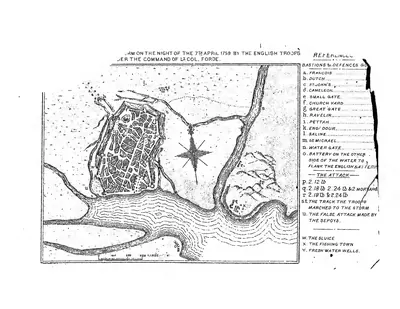 Plan of the storm "on the night of the 7th April 1759 by the English troops under the command of Lt. Col. Forde" (Masulipatam) (Mackenzie 1883, folding plan, PDF p. 2)Plan · 1883
Related
People
Sir Thomas Munro
1761–1827 CE
Sir Thomas Munro (1761–1827) was a Scottish soldier and administrator. As the first Principal Collector of the Ceded Districts of Rayalaseema, from 1800 to 1807, he put down the poligars (local military chiefs) and made the ryotwari settlement with each cultivator. He became Governor of Madras in 1820. He died in office at Pattikonda, then in the Bellary district, on 6 July 1827. In the Ceded Districts he was remembered with ballads and as a 'father'.
Sir Arthur Cotton
1803–1899 CE
Engineer officer of the Madras army (1803–1899). He planned and built the anicut (dam) across the Godavari at Dowlaishweram (1847–1852), which turned the Godavari delta into irrigated rice land. He backed the plan for the Krishna anicut at Bezwada (built 1852–1855). At Vizagapatam he built sea groins and St John's church in 1844. He planned the upper Godavari navigation, of which the Dummagudem anicut survives.
Francis Forde
before 1770 CE
Irish officer of the 39th Foot, sent by Clive from Bengal in 1758. He routed the French under Conflans at Condore (Chandurti) near Pithapuram on 9 December 1758 and stormed Masulipatam in April 1759, so winning the Northern Circars from the French for the East India Company. He had earlier led the English detachment in the failed attack on Nellore (1757). Appointed one of the Company's Supervisors in 1769, he was lost at sea when the frigate Aurora disappeared after leaving the Cape at the end of that year.
Monuments
Dowleswaram anicut
1847–1852 CE
The masonry dam across the Godavari at Dowleswaram, at the head of the delta. Arthur Cotton designed it, and it was built in 1847–52 in four sections joined by the river islands, about 4,000 yards long. Its crest was raised in 1862–67, and again, with self-acting iron shutters, in 1897–99. By 1903–04 its three canal systems watered 662,000 acres of the Godavari delta.
Krishna anicut
1852–1855 CE
The masonry dam across the Krishna at Vijayawada (then Bezwada), at the head of the delta, where the river passes through a gap 1,300 yards wide between two hills. Planned after the Guntur famine of 1832–1833 and sanctioned in 1850, it was built under Captain Orr from 1852 to 1855. In 1903–04 its canals watered over 600,000 acres of government land.
References
Notes (0)
Sources (15)
Spotted an error on this page? Tell us
Last updated: