Matedu inscription of Vemabola Malle-nayaka
Telugu inscriptions of 1120 on a stone pillar at Matedu. They record temples built by Malle-nayaka of the Vemabola family, a soldier of the Kakatiya Prola II under the Chalukya Vikramaditya VI. Their verse family history of a 'Pulinda' family says that his father Reva helped establish the Kakatiya kings.
The temples and the pillar
Matedu lies about 40 miles from Warangal on the road to Khammam. A short way off the road stand two temples side by side in one enclosure.12 One is dedicated to Shiva and the other to Vishnu, and each has an inscription in front of it.12
The 1956 Corpus prints three Telugu records from the sides of one stone pillar there.234 The first is a dated prose grant. The second, on another side, lists gifts of land but names neither donor nor king. The third is a verse account of the donor’s family, cut on the last two sides.234 Its final lines are damaged.234
The Corpus places the dated record in front of the Vishnu temple.25 The 2016 reprint of the Warangal district inscriptions places it in front of the Shiva temple.25 That reprint puts a second dated record in front of the Vishnu temple.25
The grant of 1120
The prose record opens with the titles of the Western Chalukya emperor Tribhuvanamalla (Vikramaditya VI).2 It then names his feudatory (subordinate), the mahamandaleshvara (great provincial lord) Kakatiya Prola, lord of Hanumakonda.2 The editor identified him as Prola II.2 The donor was Vemabola-Boddama-Malle-nayaka, a mahasamanta (great vassal) in Prola’s service, who built temples for Aditya (the Sun) and other gods.2 The modern summary names the gods as Ishvara, Narayana and Aditya, and calls Malle-nayaka a soldier (bantu). It also names the temple architect (sutradhari), Boloju, son of Malloju of Manakondur.5
The date is given in the Chalukya-Vikrama era, year 45, the cyclic year Sarvari, on a Thursday.2 The Corpus gives the day as the seventh of the bright half without naming the month.2
The 2016 reprint reads it as the third of the bright half of Chaitra and converts it to Thursday, 3 March 1120.5 The grants listed include marturus of wet land and plots of dry land in Mallasamudram for the gods Mahadeva, Aditya, Narayana and Vinayaka. Brahmans of the temple quarter and the ascetics who served the temples also received shares.35 A second record, dated the next day, records more gifts by Malle-nayaka.5 They went to a god Malleshvara he had set up and to the temple of Keshava.5
The Vemabola family
The verse record begins with the creation of the four castes. To protect them, it says, Vishnu was born in a fourth line, the Pulinda family, also called the Vemabola family.45 The editor wondered whether this meant Boyas.45
In this family was born Buchana, whose sons were Rama, Appa, Reva and Nacha.45 Reva served the Kakatiyas. He fought their enemies, made the Kakatiya kingdom secure, and received titles and villages from them. The modern summary adds honours and copper-plate charters, and says that he collected tribute for Beta.45 The verse ends with temples to Hari, Hara and Bhaskara and a great tank built by Reva’s son.45
The two editions disagree on one point. The Corpus summary makes Boddamaya and Malla Reva’s two sons, with Boddamaya as the builder.4 The modern summary makes Boddama Reva’s wife and Malla their son.5 This agrees with the donor’s name, Vemabola-Boddama-Malle-nayaka.5 It gives the date of the temples and tank as a Saka year written in word-numerals (numbers written as words).5
Interpretation
P. V. Parabrahma Sastry cited the record as evidence that Reva had collected tribute for Beta II, Prola II’s father. He noted that Reva is also said to have defeated the dayas, the agnates (relatives on the father’s side) of the Kakatiya kings. He read this as a sign of conflict between Prola II and his elder brother Durgaraja.67 In his view Prola may have deposed Durgaraja with the help of Reva and others.67
Footnotes
-
P. Sreenivasachar (ed.), A Corpus of Inscriptions in the Telingana Districts of Andhra Pradesh, Part III (1956), p. 139, No. Wg. 10 (archive.org (opens in a new tab)). Paraphrased. ↩ ↩2
-
Sreenivasachar, Corpus, Part III (1956), p. 140, No. Wg. 10 (archive.org (opens in a new tab)). Paraphrased. ↩ ↩2 ↩3 ↩4 ↩5 ↩6 ↩7 ↩8 ↩9 ↩10 ↩11 ↩12 ↩13 ↩14
-
Sreenivasachar, Corpus, Part III (1956), p. 141, No. Wg. 11 (archive.org (opens in a new tab)). Paraphrased. ↩ ↩2 ↩3 ↩4
-
Sreenivasachar, Corpus, Part III (1956), p. 143, No. Wg. 12 (archive.org (opens in a new tab)). Paraphrased. ↩ ↩2 ↩3 ↩4 ↩5 ↩6 ↩7 ↩8 ↩9
-
Gajjala Vasanta Lakshmi (ed.), Epigraphia Telanganica, vol. 2 (2023), pp. 54–55, Nos. 22–23, summarising Inscriptions of Warangal District (reprint 2016), pp. 62–71. Paraphrased. ↩ ↩2 ↩3 ↩4 ↩5 ↩6 ↩7 ↩8 ↩9 ↩10 ↩11 ↩12 ↩13 ↩14 ↩15 ↩16
-
P. V. Parabrahma Sastry, The Kakatiyas of Warangal (1978), p. 75. ↩ ↩2
-
Parabrahma Sastry, The Kakatiyas of Warangal (1978), p. 76. ↩ ↩2
Photos
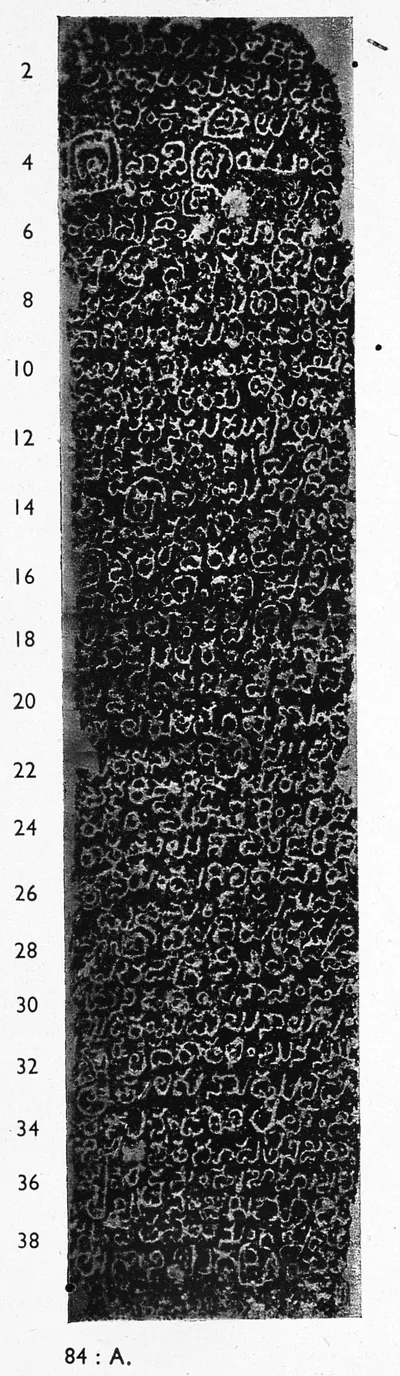 "Māṭēru inscription of Malla", face I (Sreenivasachar, Corpus of Inscriptions in the Telingana Districts III, Plate 8 (PDF p. 198))Inscription rubbing · 1956
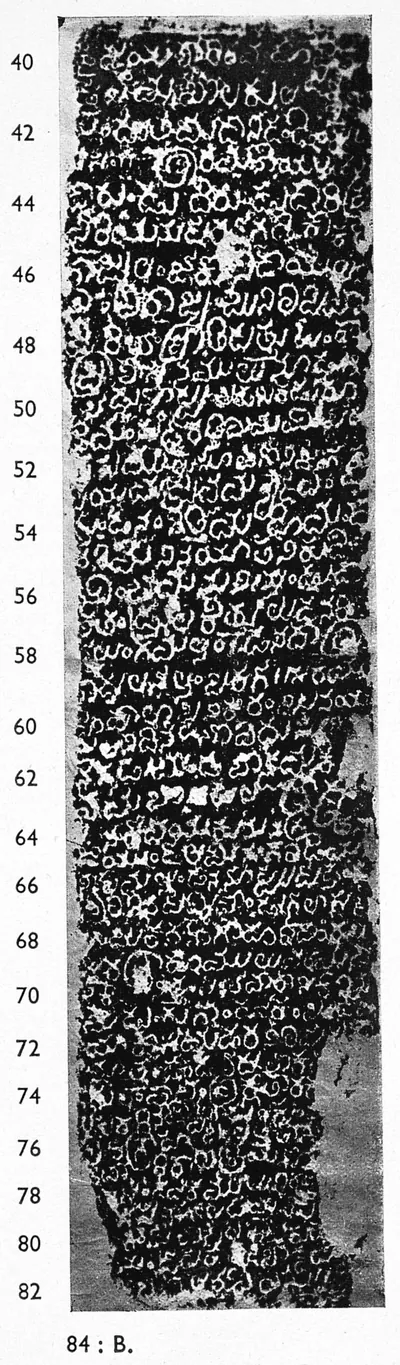 "Māṭēru inscription of Malla", face II (Sreenivasachar, Corpus of Inscriptions in the Telingana Districts III, Plate 8 (PDF p. 198))Inscription rubbing · 1956
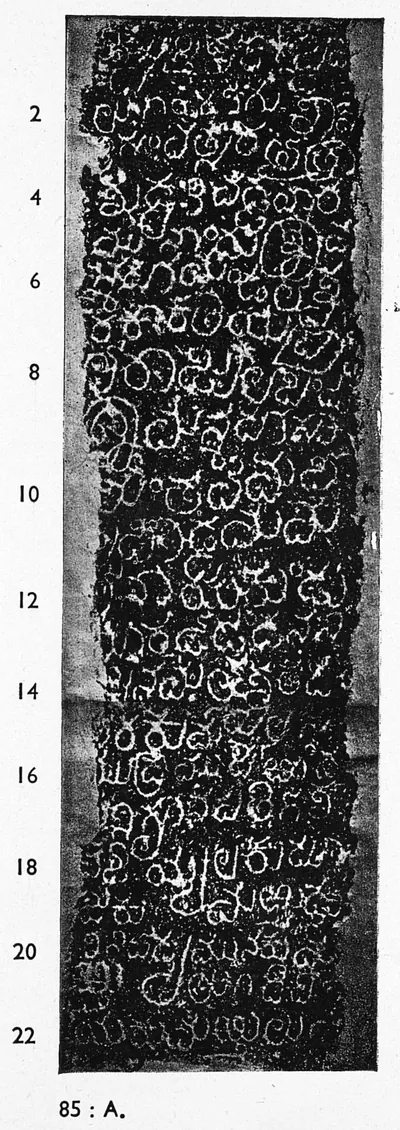 "Māṭēru inscription of Mallēnaya" (Sreenivasachar, Corpus of Inscriptions in the Telingana Districts III, Plate 9 (PDF p. 199))Inscription rubbing · 1956
References
Notes (0)
Sources (3)
Spotted an error on this page? Tell us
Last updated: