Kakatiyas
Dynasty of Anumakonda (Hanamkonda) and Orugallu (Warangal). The Kakatiyas were Rashtrakuta and then Western Chalukya feudatories from the tenth century. They declared their sovereignty under Rudradeva in 1163, and under Ganapatideva they ruled the Telugu country from Telangana to the coast. Rudramadevi reigned as king under the name Rudradeva, and her grandson Prataparudra fell to the Delhi Sultanate in the 1320s. Their rule rested on allied chiefs, nayaka commanders holding land for military service, and village assemblies. It is remembered for its tanks, its temples, the Motupalli sea-trade edict and its court literature.
Swipe sideways to see the whole chart; tap a bar for details.
Each bar is a ruling power in its region; time runs left to right. Dashed = approximate dates. Select a bar for details.
Show as a list
Eastern Chalukyas & the Deccan powers 624–1163 CE
- Telangana
- Chalukyas of Mudigonda (c. 890–1218 CE) · Western Chalukyas of Kalyani (c. 973–1163 CE) · Kakatiyas (c. 1052–1162 CE) · Telugu Chodas of Kanduru (c. 1060–1160 CE)
- Coastal Andhra
- Eastern Gangas of Kalinga (c. 537–1434 CE) · Cholas of Tanjore (c. 999–1135 CE) · Haihayas of Kona and Palnadu (c. 1073–1364 CE) · Kotas of Dharanikota (c. 1100–1276 CE) · Telugu Chodas of Pottapi and Nellore (c. 1106–1316 CE) · Velanati Chodas (c. 1118–1209 CE) · Western Chalukyas of Kalyani (c. 1118–1126 CE)
- Rayalaseema
- Cholas of Tanjore (c. 985–1268 CE) · Western Chalukyas of Kalyani (c. 1000–1190 CE) · Telugu Chodas of Pottapi and Nellore (c. 1120–1268 CE)
Kakatiyas 1163–1323 CE
- Telangana
- Chalukyas of Mudigonda (c. 890–1218 CE) · Kakatiyas (c. 1163–1323 CE)
- Coastal Andhra
- Eastern Gangas of Kalinga (c. 537–1434 CE) · Kakatiyas (c. 1185–1323 CE) · Haihayas of Kona and Palnadu (c. 1073–1364 CE) · Kotas of Dharanikota (c. 1100–1276 CE) · Telugu Chodas of Pottapi and Nellore (c. 1106–1316 CE) · Velanati Chodas (c. 1118–1209 CE) · Pandyas (c. 1260–1264 CE) · Cholas of Tanjore (c. 1135–1264 CE)
- Rayalaseema
- Cholas of Tanjore (c. 985–1268 CE) · Pandyas (1285–1293 CE) · Western Chalukyas of Kalyani (c. 1000–1190 CE) · Kakatiyas (c. 1250–1323 CE) · Telugu Chodas of Pottapi and Nellore (c. 1120–1268 CE) · Hoysalas (c. 1178–1342 CE)
Nayakas, Reddis & Bahmanis 1323–1518 CE
- Telangana
- Delhi Sultanate (Tughluqs) (c. 1323–1336 CE) · Bahmani Sultanate (c. 1347–1518 CE) · Musunuri Nayakas (c. 1336–1368 CE) · Recherla Velamas (Padmanayakas) (c. 1361–1475 CE)
- Coastal Andhra
- Eastern Gangas of Kalinga (c. 537–1434 CE) · Reddis of Kondaveedu (c. 1325–1424 CE) · Haihayas of Kona and Palnadu (c. 1073–1364 CE) · Reddis of Rajahmundry (c. 1386–1448 CE) · Delhi Sultanate (Tughluqs) (c. 1323–1326 CE) · Vijayanagara Empire (c. 1350–1579 CE) · Musunuri Nayakas (c. 1325–1346 CE)
- Rayalaseema
- Vijayanagara Empire (c. 1336–1646 CE) · Reddis of Kondaveedu (c. 1346–1386 CE) · Hoysalas (c. 1178–1342 CE)
Vijayanagara & the Qutb Shahis 1336–1687 CE
- Telangana
- Bahmani Sultanate (c. 1347–1518 CE) · Musunuri Nayakas (c. 1336–1368 CE) · Recherla Velamas (Padmanayakas) (c. 1361–1475 CE)
- Coastal Andhra
- Eastern Gangas of Kalinga (c. 537–1434 CE) · Reddis of Kondaveedu (c. 1325–1424 CE) · Haihayas of Kona and Palnadu (c. 1073–1364 CE) · Reddis of Rajahmundry (c. 1386–1448 CE) · Vijayanagara Empire (c. 1350–1579 CE) · Musunuri Nayakas (c. 1325–1346 CE)
- Rayalaseema
- Vijayanagara Empire (c. 1336–1646 CE) · Reddis of Kondaveedu (c. 1346–1386 CE) · Hoysalas (c. 1178–1342 CE)
Kingdoms and empires
Chalukyas of Mudigonda
Open page- Telangana: c. 890–1218 CE (c. 328 years)
Partial: Mudigonda (Khammam), the Manchikonda district and the Koravi (Kuravi) country, later the Visuru-nadu on the Godavari; feudatories of the Eastern Chalukyas, later of the Chalukyas of Kalyani. No record of the family is dated: start from Kusumayudha I's part in Chalukya-Bhima I's coronation (892), end from Parabrahma Sastry's identification of Kusumaditya and Nagati in a record of 1218. Driven out by the Kakatiyas (Recherla Rudra; Ganapatideva).
Rulers (13)
- Kokiraja (c. 865–890 CE)
- Kusumayudha I (c. 890–915 CE)
- Bijayita (c. 915–940 CE)
- Kusumayudha II (c. 940–965 CE)
- Vijayaditya (c. 965–990 CE)
- Kusumayudha III (c. 990–1015 CE)
… and 7 more
- Nijjiyaraja (c. 1015–1040 CE)
- Kusumayudha IV (Chalukya of Mudigonda) (c. 1040–1065 CE)
- Beta (c. 1065–1090 CE)
- Kusumayudha V (c. 1090–1110 CE)
- Bottu-Beta (c. 1110–1140 CE)
- Kusumaditya (Chalukya of Mudigonda) (c. 1140–1165 CE)
- Nagati (c. 1165–1196 CE)
Capitals
Inscriptions
Sources (4)
Sultanates
Delhi Sultanate (Tughluqs)
Open page- Telangana: c. 1323–1336 CE (c. 13 years)
Province of Tilang after Ulugh Khan (Muhammad bin Tughluq) took Warangal and renamed it Sultanpur (1321 by Barani's date for the campaign, 1323 in Haig and the editors of the Vilasa grant). Earlier Khalji campaigns (1303, 1309-10, 1318) ended in failure or tribute and are not drawn. Lost to a Hindu rising under Kanya Naik (Kapaya Nayaka) soon after the cholera of 1335 (Barani), about 1336-37 (modern historians) or in 1343-44 (Ferishta)
- Coastal Andhra: c. 1323–1326 CE (c. 3 years)
Brief hold on the Godavari delta and the coast: mosque at Rajahmundry built in 1324 by Ulugh Khan's servant Salar Ulwi; the coast retaken by Prolaya Nayaka and his allies between 1325 and 1326
Rulers
- Ala-ud-din Khalji (1296–1316 CE)
- Qutb-ud-din Mubarak Shah (1316–1320 CE)
- Ghiyas-ud-din Tughluq (1320–1325 CE)
- Muhammad bin Tughluq (1325–1351 CE)
Sources (7)
Sultanates
Bahmani Sultanate
Open page- Telangana: c. 1347–1518 CE (c. 171 years)
Western Telangana from 1347 (Kaulas taken or ceded; Bhongir taken late in Bahman Shah's reign, the province of Bidar reaching east to Bhongir); Golconda ceded under Muhammad Shah I (1362 Bilgrami; 1364-65 Haig, IG); Warangal taken in AH 828 (end of 1424 per Haig, 1422 per IG, 1425 per the Kistna Manual) and the rayas of Devarakonda and Rachakonda made tributary. Partial afterwards (Telugu chiefs regained districts under Ahmad I; Devarakonda relieved by Orissa 1459; Warangal held by the Gajapatis 1460 and by Shitab Khan from 1504). Governed for Mahmud Shah by Sultan Quli from 1495-96 until his independence (1512 per Haig; 1518 per Bilgrami, from the Golconda mosque inscription of AH 924)
- Coastal Andhra: c. 1471–1489 CE (c. 18 years)
Rajahmundry and Kondapalli (Ferishta) or Kondavidu (Haig, Burhan-i Ma'asir) taken by Malik Hasan Bahri in AH 876 (1471-72), on the invitation of a claimant to the Orissan throne (the Godavari gazetteer says Purushottama ceded the two districts); Muhammad Shah III at Rajahmundry for nearly three years after his Orissa campaign of 1478, and raided Masulipatam and Kanchi in 1481; Telingana split into the provinces of Rajahmundry and Warangal; Rajahmundry still Bahmani in 1486; the Godavari-Krishna country recovered by the Gajapati Purushottama by 1489
Rulers (18)
- Ala-ud-din Hasan Bahman Shah (1347–1358 CE)
- Muhammad Shah I (1358–1375 CE)
- Mujahid Shah (1375–1378 CE)
- Daud Shah (1378 CE)
- Muhammad Shah II (1378–1397 CE)
- Ghiyas-ud-din (1397 CE)
… and 12 more
- Shams-ud-din Daud (1397 CE)
- Firuz Shah (1397–1422 CE)
- Ahmad Shah I (1422–1435 CE)
- Ala-ud-din Ahmad Shah II (1435–1458 CE)
- Humayun Shah (1458–1461 CE)
- Nizam Shah (1461–1463 CE)
- Muhammad Shah III (1463–1482 CE)
- Mahmud Shah Bahmani (1482–1518 CE)
- Ahmad Shah (c. 1518–1521 CE)
- Ala-ud-din (c. 1521–1523 CE)
- Wali-ullah Shah (c. 1523–1525 CE)
- Kalim-ullah Shah (c. 1525–1527 CE)
Inscriptions
Sources (12)
Kingdoms and empires
Western Chalukyas of Kalyani
Open page- Telangana: c. 973–1163 CE (c. 190 years)
Restored 973 (Korapolu, Medak district, inscription of Ahavamalla Taila II, April 973; earliest near Anumakonda Jammikunta 995). Held through feudatories (Kakatiyas, Polavasa chiefs, Kandur Chodas, Mudigonda chiefs) and the Kollipake (Kolanupaka) province under royal governors and princes; Taila III's death is recorded at Anumakonda in January 1163, when the Kakatiyas became sovereign
- Rayalaseema: c. 1000–1190 CE (c. 190 years)
11th-12th centuries in Anantapur (Vikramaditya VI's inscriptions at Gooty; records of 1113 and 1121), Kurnool (1122) and Tripurantakam (1122, 1126); a Chola chief governed Renadu (Cuddapah) under Vikramaditya VI in 1124; overthrown c. 1189 by the Hoysalas and Yadavas
- Coastal Andhra: c. 1118–1126 CE (c. 8 years)
Vengi: after the Chola viceroy Vikrama Chola left in 1118, Vikramaditya VI ruled "the Vengi 14000 country" (Sewell) through his general Anantapala; records at Draksharama 1120-1124; the Godavari gazetteer has him "undisputed king of Vengi" 1120-1124. Vikrama Chola was again supreme south of the Krishna by 1127. Earlier, only single records (Satyasraya at Chebrolu, 1006)
Rulers (11)
- Taila II (973–997 CE)
- Satyasraya (c. 997–1008 CE)
- Vikramaditya V (c. 1008–1015 CE)
- Jayasimha II (Western Chalukya) (c. 1015–1042 CE)
- Somesvara I (c. 1042–1068 CE)
- Somesvara II (1068–1076 CE)
… and 5 more
- Vikramaditya VI (1076–1126 CE)
- Somesvara III (1126–1138 CE)
- Jagadekamalla II (1138–1150 CE)
- Taila III (c. 1150–1162 CE)
- Somesvara IV (c. 1183–1189 CE)
Capitals
Inscriptions (9)
Sources (9)
Kingdoms and empires
Musunuri Nayakas
Open page- Coastal Andhra: c. 1325–1346 CE (c. 21 years)
Prolaya Nayaka recovered the coast from Delhi in 1325-26 and ruled from Rekapalli on the Godavari (Vilasa grant, about 1330); latest dated Musunuri records on the coast are Kapaya's Guraja grant (February 1346) and his Ganapesvaram inscription (1346-47). Partial: the Reddis of Addanki and the Korukonda chiefs held parts of the coast as Kapaya's kinsmen and subordinates
- Telangana: c. 1336–1368 CE (c. 32 years)
Kapaya Nayaka took Warangal about 1336-37 (Ferishta: 1343-44) and ruled as "lord of the Andhra country" (Pillalamarri inscription, 1357); ceded Kaulas and then Golconda (1364-65) to the Bahmanis; overthrown by the Recherla chief Anapota about 1368 (Kapaya named in the Akkalapundi grant of 1368; Anapota ruling Orugallu in July 1369)
Rulers
Capitals
Inscriptions
Sources (9)
Kingdoms and empires
Kakatiyas
Open page- Telangana: c. 1052–1162 CE (c. 110 years)
Partial: feudatory chiefs of Anumakonda (Hanamkonda) under the Chalukyas of Kalyani. Prola I received the Anumakonda district as a permanent fief from Someshvara I (record of 1053); Prola II's last record as a subordinate is of 1149; Rudradeva subdued the other Telangana chiefs c. 1157–62 (Parabrahma Sastry). Earlier members served the Rashtrakutas (Mangallu grant, c. 956) according to Parabrahma Sastry, a link rejected by Venkataramanayya and Somasekhara Sarma (1960).
- Telangana: c. 1163–1323 CE (c. 160 years)
Sovereign from Rudradeva's Anumakonda inscription of January 1163; capital moved to Orugallu (Warangal) under Ganapatideva. Warangal taken by Ulugh Khan in 1323 (Parabrahma Sastry, after Isami); Barani and the Imperial Gazetteer give 1321.
- Coastal Andhra: c. 1185–1323 CE (c. 138 years)
Rudradeva subdued the Kotas of Dharanikota and the Kondapadumatis (Tripurantakam grant 1185); Ganapatideva annexed Divi (1203) and Velanadu (records from 1209; Jaya governor 1213) and held the coast from the Godavari to the Penna; Kakatiya records at Draksharama from 1212, but the Eastern Gangas held the region north of the Godavari c. 1230–33 and again c. 1262–78; the Telugu Chodas of Nellore were allies; Nellore was lost to the Pandyas c. 1263 and recovered under Prataparudra.
- Rayalaseema: c. 1250–1323 CE (c. 73 years)
Through the Kayastha chiefs (Gangaya Sahini, bahattara-niyogadhipati c. 1250, capital Valluru in Cuddapah); Ambadeva independent c. 1272–1291, until Prataparudra's armies retook Tripurantakam (between 13 June and 11 August 1291) and the Kayastha lands within about eight years.
Rulers (11)
Capitals
Monuments (16)
Inscriptions (36)
- Kazipet Dargah pillar inscription
- Matedu inscription of Vemabola Malle-nayaka
- Gudur pillar inscriptions of the Viriyala family
- Thousand Pillar Temple inscription of Rudradeva
- Karimnagar inscription of Gangadhara
- Warangal fort inscription of Rudradeva
… and 30 more
- Pillalamarri inscription of Recherla Nami-reddi
- Kondaparti inscription of Malyala Chaunda
- Inugurti pillar inscription of Natavadi Rudra
- Bayyaram tank inscription of Mailama
- Chebrolu inscription of Jaya
- Palampet pillar inscription of Recherla Rudra
- Ganapavaram inscription of Devapala
- Warangal toll inscription of Ganapatideva
- Ganapesvaram inscription of Jaya
- Upparapalli pillar inscription of Kataya
- Motupalli pillar inscription of Ganapatideva
- Pakhal lake inscription of Jagadala Mummadi
- Rayaparti fragment of Saka 1169
- Ekamranatha temple inscription of Ganapati
- Nayanapalle inscription of Ganapatideva
- Durgi inscription of Gangaya-sahini
- Sarngapuram plates of Sarngadhara
- Bothpur tank inscription of Malyala Gunda
- Garavapadu plates of Ganapatideva
- Malkapuram pillar inscription of Rudramadevi
- Kotagiri plates of Viryala Sura
- Kolanupaka inscription of Rudramadevi's reign
- Chandupatla inscription
- Panugallu inscription of Immadi Mallikarjuna-nayaka
- Tripurantakam inscription of Ambadeva
- Raichur fort inscription of Gona Vithala
- Mellacheruvu inscription of Prataparudra's reign
- Srirangam inscription of Prataparudra
- Dharmasagar inscription of the minister Malla
- Hanamkonda inscription of Gangadhara
Sources (7)
Kingdoms and empires
Recherla Velamas (Padmanayakas)
Open page- Telangana: c. 1361–1475 CE (c. 114 years)
Anapota at Rachakonda (Rajukonda) and Mada at Devarakonda after their victories of 1361 (family chronicle); Rachakonda fortified in August 1365; Warangal, Bhongir and Rachakonda ruled by July 1369 (Inavolu inscription). The rayas of Devarakonda and Rachakonda paid tribute to Ahmad Shah Bahmani after his capture of Warangal (end of 1424); Devarakonda routed a Bahmani army with Orissan help in 1459; last dated record of the Rachakonda line 1464. End about 1475 per the list of rulers in Epigraphia Telanganica; no source dates the annexation
Rulers (7)
- Singama Nayaka (Recherla) (c. 1336–1361 CE)
- Anapota Nayaka (Recherla) (c. 1361–1384 CE)
- Mada Nayaka (Recherla) (c. 1361–1384 CE)
- Singabhupala (Recherla) (c. 1384–1399 CE)
- Peda Vedagiri (Recherla) (c. 1384–1410 CE)
- Lingama Nayaka (Recherla) (c. 1427–1475 CE)
… and 1 more
- Singama Nayaka, 'Sarvajna' (Rachakonda) (c. 1430–1475 CE)
Capitals
Monuments
Inscriptions
Sources (7)
Kingdoms and empires
Telugu Chodas of Kanduru
Open page- Telangana: c. 1060–1160 CE (c. 100 years)
Partial (Kandurunadu: the Jadcharla and Achampet areas of Mahbubnagar and the Nalgonda and Miryalaguda areas of Nalgonda), ruled from Kodur and Panugallu as feudatories of the Chalukyas of Kalyani; Tondarasa of Kandur governed the Kollipake province in 1088. Prola II restored Udaya Choda at Panugallu about 1131; Rudradeva drove out Bhima and annexed the country in the 1150s (last record of Bhima 1157). The family then held fiefs under the Kakatiyas, with a last record in 1282.
Rulers
- Tondaya II (Tondarasa) of Kandur (1088–1091 CE)
- Bhima Choda III of Kandur (c. 1105–1157 CE)
- Gokarna Choda I (c. 1124–1128 CE)
- Udaya Choda II of Kandur (1136–1176 CE)
- Bhima IV and Gokarna II (1178 CE)
Capitals
Inscriptions
Sources (5)
Kingdoms and empires
Eastern Gangas of Kalinga
Open page- Coastal Andhra: c. 537–1434 CE (c. 897 years)
Partial: only the far north coast (the old Ganjam and Vizagapatam districts, now Srikakulam-Vizianagaram- Visakhapatnam), capital Kalinganagara (Mukhalingam). Earliest dated grant: Jirjingi, near Tekkali, Ganga year 39 (c. 537 on Mirashi's epoch of 498; Fleet put the early grants in the 7th century and Sewell used an epoch of 877-78; the Imperial Gazetteer, the 7th century). Later line in power from the end of the 9th century (Vizagapatam gazetteer): Vajrahasta III crowned 1038; Anantavarman Chodaganga 1078-1146, with records at Mukhalingam, Srikurmam, Simhachalam and Visakhapatnam. South of the Godavari only records and raids (Draksharama 1128-1274; Bendapudi). Ended 1434, when the minister Kapilesvara founded the Gajapati line
Rulers (15)
- Vajrahasta III (Eastern Ganga) (1038–1070 CE)
- Rajaraja I (Eastern Ganga) (1070–1078 CE)
- Anantavarman Chodaganga (c. 1078–1146 CE)
- Madhu-Kamarnava (c. 1146–1152 CE)
- Raghava (c. 1152–1166 CE)
- Rajaraja II (c. 1166–1192 CE)
… and 9 more
- Aniyanka-Bhima (c. 1192–1202 CE)
- Anangabhima III (c. 1219–1253 CE)
- Narasimha I (Eastern Ganga) (c. 1253–1256 CE)
- Bhanudeva I (c. 1256–1275 CE)
- Narasimha II (c. 1275–1306 CE)
- Bhanudeva II (c. 1306–1323 CE)
- Narasimha III (c. 1323–1346 CE)
- Bhanudeva III (c. 1346–1378 CE)
- Narasimha IV (c. 1378–1397 CE)
Capitals
Monuments
Inscriptions (8)
Sources (10)
Kingdoms and empires
Cholas of Tanjore
Open page- Rayalaseema: c. 985–1268 CE (c. 283 years)
Rajaraja I (from 982/985) claims Nulambapadi and had the Vaidumbas of Cuddapah as feudatories. Chola inscriptions in Kurnool are dated 1108 and 1123. The east of Cuddapah (Pottapi-nadu) stayed under Chola suzerainty through the Telugu Chodas until Rajendra III's death in 1268. IG Madras has Cuddapah Chola from the 11th to the 13th century.
- Coastal Andhra: c. 999–1135 CE (c. 136 years)
Overlords of the Eastern Chalukya kings from 999; Kulottunga I's sons ruled Vengi as viceroys 1077-1118; Vengi was lost to the Western Chalukyas after Vikrama-Chola left in 1118, and his records reappear at Chebrolu (1127) and Nidubrolu (1135). Nellore stayed under Chola suzerainty into the 13th century (IG Madras)
- Coastal Andhra: c. 1135–1264 CE (c. 129 years)
Partial (Nellore). After Vengi was lost, Nellore stayed under the Cholas until their 13th-century decline: Rajaraja III is recognised there in 1237 and Rajendra III in 1253, with the Telugu Choda chiefs ruling locally as their vassals. A Tamil record at Punjulurupadu, in the Gudur country, is still dated in the 20th year of Rajendra III, Saka 1185 (1263-64).
Rulers (14)
- Rajaraja I (Chola) (985–1016 CE)
- Rajendra I (Chola) (1012–1043 CE)
- Rajadhiraja I (Chola) (1018–1052 CE)
- Rajendradeva (1052–1063 CE)
- Virarajendra (Chola) (1063–1070 CE)
- Adhirajendra (1070 CE)
… and 8 more
- Kulottunga I (1070–1118 CE)
- Vikrama-Chola (1118–1133 CE)
- Kulottunga II (Chola) (1133–1146 CE)
- Rajaraja II (Chola) (1146–1163 CE)
- Rajadhiraja II (1163–1178 CE)
- Kulottunga III (Chola) (1178–1216 CE)
- Rajaraja III (1216–1246 CE)
- Rajendra III (Chola) (1246–1267 CE)
Capitals
Inscriptions (10)
Sources (9)
Kingdoms and empires
Reddis of Kondaveedu
Open page- Coastal Andhra: c. 1325–1424 CE (c. 99 years)
Capital Addanki, then (from Anavema, after 1361) Kondavidu. Coast south of the Krishna and at times the Godavari delta (Anavema's grants at Vanapalli, Nadupuru, Palivela, Draksharama 1374-81). Start: Mallavaram record of 1325 (Somasekhara Sarma); the Kistna manual says 1328, the Godavari gazetteer has the earliest record in 1344. End disputed: Vijayanagara conquest by 1424 (Somasekhara Sarma), Racha Vema killed 1428 (Kistna manual), overthrown 1427 (Sewell 1884), a Gajapati conquest c. 1420 (village chronicles). From c. 1386 the Godavari country belonged to the separate Rajahmundry kingdom
- Rayalaseema: c. 1346–1386 CE (c. 40 years)
Partial: the Srisailam plateau and the Markapur taluk (records at Tripurantakam, 1346 and 1347; Anavema's Viramantapa at Srisailam, 1378); Prolaya Vema's steps at Srisailam and Ahobilam
Rulers
Capitals
Monuments
Inscriptions (8)
Sources (8)
Kingdoms and empires
Haihayas of Kona and Palnadu
Open page- Coastal Andhra: c. 1073–1364 CE (c. 291 years)
Partial. Kona chiefs of Konamandala (the Godavari delta, Amalapuram taluk), with records at Draksharama and Palakol from Saka 995 (1073) to 1364–65, dependent on the Chola–Chalukya kings and the Velanati Chodas, later on the Kakatiyas; Haihaya chiefs of the Chagi family in the Palnadu (Macherla 1111, Gurazala 1129) as feudatories of the Chalukyas of Kalyani; the Palnadu war of the ballads is undated (proposals 1080–1386).
Rulers
- Rajendra Choda I of Kona (1128 CE)
- Mummadi-Bhima II and Satya I (1135 CE)
- Bhima III (c. 1153–1168 CE)
- Mallideva of Kona (c. 1155–1207 CE)
- Ganapatideva of Kona (c. 1262–1300 CE)
- Bhima-Vallabha (1318 CE)
Inscriptions
Sources (5)
Kingdoms and empires
Reddis of Rajahmundry
Open page- Coastal Andhra: c. 1386–1448 CE (c. 62 years)
Partial: the Godavari delta and the coast north to Simhachalam, capital Rajahmundry. Kataya Vema, minister of Kumaragiri, received "the eastern country" by 1386 (Ramayya; Sewell c. 1380); after his death (c. 1414-16) Allada Reddi, then Allada's sons Allaya Vema and Virabhadra (records 1423-1437, a record of 1444). Godavari gazetteer: family in the Draksharama inscriptions until 1447; a Gajapati record of 1448 at Penugonda marks the end (Somasekhara Sarma); Kapilesvara's minister ruling at Rajahmundry in 1458
Rulers
- Kataya Vema (c. 1386–1415 CE)
- Allada Reddi (c. 1416–1420 CE)
- Allaya Vema and Virabhadra (c. 1423–1448 CE)
Capitals
Inscriptions
Sources (6)
Kingdoms and empires
Kotas of Dharanikota
Open page- Coastal Andhra: c. 1100–1276 CE (c. 176 years)
Partial (the Six-thousand country, Konnatavadi, south of the Krishna about Amaravati–Dharanikota and the Sattenapalle taluk). Line from Bhima I (c. 1100, Sewell); Keta II from about 1182; subdued by the Kakatiya Rudradeva about 1185 and thereafter Kakatiya subordinates and relatives by marriage (Ganapamba, widow of Kota Beta, ruled in the 1250s); last record of a Kota Rudra 1275–76.
Rulers
- Kota Keta II (c. 1182–1209 CE)
- Manma-Keta (Keta III) (c. 1234–1240 CE)
- Kota Beta (c. 1250–1251 CE)
- Ganapamba (c. 1251–1257 CE)
- Bhima IV (1265 CE)
Capitals
Inscriptions
Sources (5)
Kingdoms and empires
Vijayanagara Empire
Open page- Rayalaseema: c. 1336–1646 CE (c. 310 years)
Founded c. 1335-36; Bukka I held Penukonda and Gooty (records of 1352 and a Gooty rock inscription) and his minister built the Bukkarayasamudram tank near Anantapur in 1364; Cuddapah in the 14th century; Kurnool wholly annexed under Krishnadeva Raya. After Talikota (1565) the kings ruled from Penukonda, which held out against Bijapur in 1577 and Golconda in 1589; the country north of Penukonda was lost after Sriranga I's capture (c. 1579-80); Venkatapati II moved to Chandragiri c. 1592; Golconda held the Cuddapah district and took Chandragiri (Chittoor) in 1646. Bijapur and Golconda took most of the region piecemeal after 1565
- Coastal Andhra: c. 1350–1579 CE (c. 229 years)
Vijayanagara officers kept Guntur (Kondavidu, Vinukonda, Bellamkonda) and the governor of Udayagiri kept Nellore after Talikota; Golconda took Kondavidu in April 1579 (Kistna Manual) or 1580 (a Guntur record of 1592 cited by Sewell), though Sewell thinks Guntur was already under Muslim rule by 1576 and the Nellore Manual says the Muslims held Nellore from 1565.
- Telangana: c. 1563–1565 CE (c. 2 years)
To end the confederate invasion of Golconda, Ibrahim Qutb Shah let Rama Raja keep the forts of Ghanpur and Panagal (Mahbubnagar) until Talikota; Ferishta places this after the Kalyani campaign of the early 1560s, the Kistna Manual dates it to 1557.
Rulers (24)
- Harihara I (Vijayanagara) (c. 1336–1355 CE)
- Bukka I (Vijayanagara) (1355–1377 CE)
- Harihara II (1377–1404 CE)
- Bukka II (1404–1406 CE)
- Deva Raya I (1406–1422 CE)
- Vijaya (Bukka III) (1422 CE)
… and 18 more
- Deva Raya II (Vijayanagara) (1422–1446 CE)
- Mallikarjuna (1446–1465 CE)
- Virupaksha (1465–1485 CE)
- Saluva Narasimha (1485–1492 CE)
- Immadi Narasimha (1492–1505 CE)
- Narasa Nayaka (c. 1505 CE)
- Vira Narasimha (1505–1509 CE)
- Krishnadeva Raya (1509–1529 CE)
- Achyuta Raya (1529–1542 CE)
- Venkata I (1542 CE)
- Sadasiva (c. 1542–1569 CE)
- Tirumala (Aravidu) (c. 1569–1572 CE)
- Sriranga I (1572–1586 CE)
- Venkatapati II (Vijayanagara) (1586–1614 CE)
- Sriranga II (1614 CE)
- Rama Deva (1614–1630 CE)
- Pedda Venkata (1630–1642 CE)
- Sriranga III (c. 1642–1670 CE)
Monuments (7)
- Penukonda fort and Gagan Mahal
- Kalahastisvara temple, Srikalahasti
- Virabhadra temple, Lepakshi
- Chandragiri fort and Raja Mahal
- Gooty fort
- Narasimha temples, Ahobilam
… and 1 more
Inscriptions (14)
- Penukonda fort inscription (1354)
- Gooty rock inscription of Bukka I
- Bitragunta grant of Sangama II (1356)
- Bukkarayasamudram tank inscription (1364)
- Tirumala inscriptions of Krishnadeva Raya and his queens (1513–1514)
- Amaravati inscription of Krishnadeva Raya (1515)
… and 8 more
- Mangalagiri and Kaza pillar inscriptions (1515–1518)
- Simhachalam inscriptions of Krishnadeva Raya (1516–1519)
- Srikalahasti inscription of Krishnadeva Raya (1516)
- Kondavidu pillar inscription of Nadindla Gopa (1520)
- Lepakshi temple inscriptions of Achyuta Raya's reign (1533–1538)
- Kanuma grant of Sadasiva (1548)
- Penukonda inscription of Channappa Nayudu (1577)
- Ahobilam inscription of Sriranga I (1584)
Sources (20)
Kingdoms and empires
Telugu Chodas of Pottapi and Nellore
Open page- Coastal Andhra: c. 1106–1316 CE (c. 210 years)
Konidena branch in the Guntur country from 1106 to about 1150; the main line at Nellore (Vikramasimhapura) from Tammusiddhi's anointment in 1205-06, under the Cholas and then the Kakatiyas, who restored Manumasiddhi II; held Kanchi under Tikka I (1209/1223-1248/1250) and Manmasiddhi III. Last date 1316 (Sewell); the Nellore gazetteer finds no Telugu Choda record in Nellore after 1305.
- Rayalaseema: c. 1120–1268 CE (c. 148 years)
Pottapinadu (Pullampet country of Cuddapah), seat of the Madhurantaka Pottapi-Cholas under the Chola emperors: Betta 1120-21, Vimaladitya c. 1125; Pottapi remained their seat until Tikka I moved to Nellore; Manumasiddhi II recorded at Pottapi 1258-59; the country passed to the Kayastha Ambadeva after 1268.
Rulers
- Tammusiddhi (c. 1205–1209 CE)
- Tikka I (Telugu Choda of Nellore) (c. 1209–1248 CE)
- Manumasiddhi II (c. 1248–1290 CE)
- Manmasiddhi III (c. 1290–1316 CE)
Capitals
Inscriptions
Sources (5)
Kingdoms and empires
Velanati Chodas
Open page- Coastal Andhra: c. 1118–1209 CE (c. 91 years)
Chiefs of Velanadu (the Chandavolu country, western Krishna delta), officers of Kulottunga I from 1076 (Gonka I at Chebrolu); Choda (Rajendra Choda I), adopted by Kulottunga, governed Vengi from between 1100 and 1112 and went over to Vikramaditya VI when the Chola viceroy left in 1118. Gonka II claimed rule from Kalahasti to the Mahendra mountain; Rajendra Choda II (1163–1181) held the coast from Darsi to Simhachalam after 1172 (Parabrahma Sastry). Last ruler Prithvisvara (1186; last record 1206); Velanadu Kakatiya by 1209.
Rulers
Capitals
Inscriptions
Sources (7)
Kingdoms and empires
Pandyas
Open page- Coastal Andhra: c. 1260–1264 CE (c. 4 years)
Partial (Nellore). Jatavarman Sundara Pandya I beat the Telugus at Mudugur, drove them to the Krishna and was crowned at Nellore (Aiyangar, from his records); Sewell dates the march to 1260, Parabrahma Sastry the battle to 1263. Aiyangar says the conquest was not permanent and the Nellore gazetteer says Ganapati recovered Nellore almost at once, so the span is short. A later Jatavarman Sundara Pandya, crowned at Nellore after 1276 (Nellore gazetteer), endowed a hall in the Ranganayaka temple there; no source gives the length of this second hold, so it has no span.
- Rayalaseema: 1285–1293 CE (8 years)
Partial (Nandalur, east Cuddapah). Jatavarman Sundara Pandya II has dated records at Nandalur in 1285, 1286 and 1293, six in all from 1286-1293, as Pandya power spread north after the Chola collapse.
Rulers
- Jatavarman Sundara Pandya I (c. 1251–1268 CE)
- Maravarman Kulasekhara I (1268–1311 CE)
- Jatavarman Sundara Pandya (crowned at Nellore) (c. 1276–1293 CE)
Inscriptions
Sources (5)
Kingdoms and empires
Hoysalas
Open page- Rayalaseema: c. 1178–1342 CE (c. 164 years)
Partial (south and west Anantapur: Hemavati, Madakasira, Penukonda, Gooty claim; Rayachoti taluk in the later 13th century). A record at Parigi (Hindupur taluk) of Saka 1100 (1178) shows Ballala II ruling at Dorasamudra; he took Nolambavadi, and his inscription of 1205-06 is at Hemavati. A record at Kodigepalle of 1328 shows Ballala III's minister ruling at Penugonda. Ballala III's inscriptions in Anantapur district run from 1317 through 1320 and 1323 to 1340. He was killed fighting the Sultan of Madurai on 8 September 1342.
Rulers
- Ballala II (Hoysala) (1173–1220 CE)
- Narasimha II (1220–1235 CE)
- Somesvara (1233–1254 CE)
- Narasimha III (1254–1291 CE)
- Ballala III (Hoysala) (1291–1342 CE)
- Ballala IV (Virupaksha) (1342–1343 CE)
Capitals
Sources (6)
Reigns
Each bar is one ruler’s reign; time runs left to right. c. = approximate date.
- Gunda IVc. 955–995 CE · c. 40 yrs
- Beta Ic. 996–1051 CE · c. 55 yrs
- Prola Ic. 1052–1076 CE · c. 24 yrs
- Beta IIc. 1076–1108 CE · c. 32 yrs
- Durgarajac. 1108–1116 CE · c. 8 yrs
- Prola IIc. 1116–1157 CE · c. 41 yrs
- Rudradevac. 1158–1195 CE · c. 37 yrs
- Mahadevac. 1195–1199 CE · c. 4 yrs
- Ganapatidevac. 1199–1262 CE · c. 63 yrs
- Rudramadevic. 1262–1289 CE · c. 27 yrs
- Prataparudrac. 1289–1323 CE · c. 34 yrs
Reign years after the genealogical table of P. V. Parabrahma Sastry, The Kakatiyas of Warangal (1978), p. 36, which misprints Mahadeva's years as 1296–99; years before 1158 are estimates from a few inscriptions. Rudramadevi was co-regent from about 1259–60 and Ganapatideva was still alive in 1269. N. Venkataramanayya and M. Somasekhara Sarma (1960) give Ganapatideva 1199–1261, Rudramadevi 1259–1295 and Prataparudra 1295–1323; Robert Sewell (1932) gives Rudramadevi 1260–1291 and Prataparudra 1291–1330.
Family tree
The rulers and the relatives who explain the succession. Every line rests on a cited statement on a person page; the sources are listed below the tree. Select a card to open that page.
- parent and child
- marriage
- adoption
- the sources disagree (see below)
- brother or sister
- order of succession
Generation 1
- 1Gunda IVc. 955–995 CE
Generation 2
- 2Beta Ic. 996–1051 CESon of Gunda IV
Generation 3
- 3Prola Ic. 1052–1076 CESon of Beta I
Generation 4
- 4Beta IIc. 1076–1108 CESon of Prola I
Generation 5
Generation 6
- Daughter of UdayachodaQueen of RudradevaWife of Rudradeva
- 7Rudradevac. 1158–1195 CESon of Muppamamba and Prola IIHusband of Daughter of Udayachoda
- BayyamambaMother of GanapatidevaWife of Mahadeva
- 8Mahadevac. 1195–1199 CESon of Muppamamba and Prola IIHusband of Bayyamamba
- Repolla DurgaSon of Prola IISon of Prola II
Generation 7
- SomaladeviQueen of GanapatidevaWife of Ganapatideva
- 9Ganapatidevac. 1199–1262 CESon of Bayyamamba and MahadevaHusband of SomaladeviHusband of Narama, Perama
- Narama, PeramaSisters of the general JayaWives of GanapatidevaSister of Jaya (Jayapa)
- Natavadi RudraHusband of MailambaHusband of Mailamba
- MailambaDaughter of Bayyamamba and MahadevaWife of Natavadi Rudra
- KundamambaSister of Ganapatideva; built the KundasamudramDaughter of Bayyamamba and Mahadeva
- Jaya (Jayapa)Brother of Narama, Perama
Generation 8
- VirabhadraOf the Chalukyas of NidadavoluHusband of Rudramadevi
- 10Rudramadevic. 1262–1289 CEDaughter of GanapatidevaWife of Virabhadra
- Kota BetaHusband of Ganapamba
- GanapambaDaughter of GanapatidevaWife of Kota Beta
- Harihara, MurariSons in a later chroniclesources disagree
Generation 9
- MahadevaKakatiya princeHusband of Mummadamma
- MummadammaEldest daughter of RudramadeviDaughter of Virabhadra and RudramadeviWife of Mahadeva
- Induluri AnnayaHusband of Ruyyama
- RuyyamaDaughter of RudramadeviDaughter of Virabhadra and RudramadeviWife of Induluri Annaya
- RudramaWife of the Yadava prince Ellanadevasources disagree
Generation 10
- Visalakshi, LakshmideviQueens of PrataparudraWives of Prataparudra
- 11Prataparudrac. 1289–1323 CESon of Mahadeva and MummadammaHusband of Visalakshi, Lakshmidevi
- AnnamadevaBrother in the chronicle; ancestor claimed by the rajas of Bastarsources disagree
Where the sources disagree
Was Ganapatideva adopted by Rudradeva?
Son of Mahadeva
- Ganapatideva was the son of Mahadeva, the younger brother and successor of Rudradeva, and his queen Bayyambika. →
- E. Hultzsch, "Ganapesvaram Inscription of the Time of Ganapati", Epigraphia Indica III (1894–95), p. 83 (archive.org (opens in a new tab)).
Called the son of Rudradeva, probably by adoption
- An inscription at Upparapalli calls Mahadeva's son Ganapati the son of Rudra, probably by adoption. →
- Parabrahma Sastry, The Kakatiyas of Warangal (1978), p. 100.
Did Ganapatideva have sons?
Two daughters, Rudramadevi and Ganapamba
- Besides Rudramadevi he had a daughter Ganapamba, who married the Kota chief Beta. →
- P. V. Parabrahma Sastry, The Kakatiyas of Warangal (1978), p. 28.
Two sons by other queens (the Pratapa Charitra)
- The Pratapa Charitra says that two sons of Ganapati by other queens, Harihara and Murari, seized the capital. →
- P. V. Parabrahma Sastry, The Kakatiyas of Warangal (1978), p. 118.
- N. Venkataramanayya and M. Somasekhara Sarma, "The Kakatiyas of Warangal", in G. Yazdani (ed.), The Early History of the Deccan, Parts VII–XI (1960), pp. 621–622.
Did Rudramadevi have a third daughter?
Three daughters: Rudrama, wife of Ellanadeva, from the Alapadu grant (Parabrahma Sastry)
- Parabrahma Sastry added a third daughter, also called Rudrama, who married the Yadava prince Ellanadeva. →
- P. V. Parabrahma Sastry, The Kakatiyas of Warangal (1978), pp. 5–6.
- P. V. Parabrahma Sastry, The Kakatiyas of Warangal (1978), p. 128.
Two daughters only (Venkataramanayya and Somasekhara Sarma)
- Venkataramanayya and Somasekhara Sarma name only two daughters, Mummadamma and Ruyyamma. →
- N. Venkataramanayya and M. Somasekhara Sarma, "The Kakatiyas of Warangal", in G. Yazdani (ed.), The Early History of the Deccan, Parts VII–XI (1960), p. 641.
Was Prataparudra adopted by Rudramadevi as her son?
Grandson and successor (Parabrahma Sastry)
- Prataparudra was the son of Mummadamma, eldest daughter of Queen Rudramadevi, and of a Kakatiya prince named Mahadeva. →
- P. V. Parabrahma Sastry, The Kakatiyas of Warangal (1978), p. 128.
- Gajjala Vasanta Lakshmi (ed.), Epigraphia Telanganica, vol. 3 (2023), pp. 79–80.
Adopted as her son and heir (Vidyanatha's play; Venkataramanayya and Somasekhara Sarma)
- The play included in Vidyanatha's Prataparudriya, written at his court, gives the same parents. →
- K. P. Trivedi (ed.), The Prataparudrayasobhushana of Vidyanatha (1909), Introduction, p. xiii (archive.org (opens in a new tab)).
- K. P. Trivedi (ed.), The Prataparudrayasobhushana of Vidyanatha (1909), Introduction, p. xiv (archive.org (opens in a new tab)).
- Venkataramanayya and Somasekhara Sarma also wrote that Rudramadevi adopted him as her son and heir at Ganapatideva's command. →
- N. Venkataramanayya and M. Somasekhara Sarma, "The Kakatiyas of Warangal", in G. Yazdani (ed.), The Early History of the Deccan, Parts VII–XI (1960), p. 642.
Did Prataparudra have a brother Annamadeva?
Brother, in the Pratapa Charitra and the Bastar inscription of 1702–03
- The Pratapa Charitra says that his son Virabhadra was crowned by his brother Annamadeva, who then withdrew to the north-east. →
- P. V. Parabrahma Sastry, The Kakatiyas of Warangal (1978), p. 140.
- The rajas of Bastar, in central India, claimed descent from Annamaraja, called a brother of "Kakati Prataparudra". →
- Hira Lal, "Dantewara Sanskrit and Hindi Inscriptions of Dikpaladeva; Samvat 1760", Epigraphia Indica XII (1913–14), p. 243 (archive.org (opens in a new tab)).
- Cynthia Talbot, Precolonial India in Practice: Society, Region, and Identity in Medieval Andhra (2001), p. 193.
Brother of a later Prataparudra (Hira Lal)
- Its editor Hira Lal thought ten generations too few for four centuries. →
- Hira Lal, "Dantewara Sanskrit and Hindi Inscriptions of Dikpaladeva" (1913–14), p. 244 (archive.org (opens in a new tab)).
- He suggested that Annamaraja was the brother of a later Prataparudra. →
- Hira Lal, "Dantewara Sanskrit and Hindi Inscriptions of Dikpaladeva" (1913–14), p. 244 (archive.org (opens in a new tab)).
Unknown to contemporary records
- Venkataramanayya and Somasekhara Sarma wrote in one place that no contemporary record knows of Annamadeva. →
- N. Venkataramanayya and M. Somasekhara Sarma, "The Kakatiyas of Warangal", in G. Yazdani (ed.), The Early History of the Deccan, Parts VII–XI (1960), p. 642.
- N. Venkataramanayya and M. Somasekhara Sarma, "The Kakatiyas of Warangal", in G. Yazdani (ed.), The Early History of the Deccan, Parts VII–XI (1960), p. 659.
- In another place they wrote that Prataparudra "certainly had" such a brother. →
- N. Venkataramanayya and M. Somasekhara Sarma, "The Kakatiyas of Warangal", in G. Yazdani (ed.), The Early History of the Deccan, Parts VII–XI (1960), p. 642.
- N. Venkataramanayya and M. Somasekhara Sarma, "The Kakatiyas of Warangal", in G. Yazdani (ed.), The Early History of the Deccan, Parts VII–XI (1960), p. 659.
Sources for every line of the tree
- Gunda IV → Beta I (parent and child)
- Beta I was the son of Gunda IV, a Kakatiya general in the service of the Rashtrakuta kings, and the father of Prola I. →
- P. V. Parabrahma Sastry, The Kakatiyas of Warangal (1978), pp. 31, 36, 40–41.
- Beta I was the son of Gunda IV, a Kakatiya general in the service of the Rashtrakuta kings, and the father of Prola I. →
- Beta I → Prola I (parent and child)
- Prola I was the son of Beta I and the father of Beta II, who was also called Tribhuvanamalla. →
- P. V. Parabrahma Sastry, The Kakatiyas of Warangal (1978), pp. 31, 36.
- Prola I was the son of Beta I and the father of Beta II, who was also called Tribhuvanamalla. →
- Prola I → Beta II (parent and child)
- Beta II was the son of Prola I. →
- P. V. Parabrahma Sastry, The Kakatiyas of Warangal (1978), pp. 32, 36.
- Beta II was the son of Prola I. →
- Beta II → Durgaraja and Prola II (parent and child)
- Muppamamba · Prola II (marriage)
- Prola's queen was Muppamamba (Muppama), sister of the Natavadi chief Durgaraja, another Chalukya subordinate. →
- Parabrahma Sastry, The Kakatiyas of Warangal (1978), p. 87.
- J. F. Fleet, Sanskrit and Old-Canarese Inscriptions, No. CXVIII, Indian Antiquary XI (1882), p. 17 (archive.org (opens in a new tab)).
- Prola's queen was Muppamamba (Muppama), sister of the Natavadi chief Durgaraja, another Chalukya subordinate. →
- Muppamamba and Prola II → Rudradeva and Mahadeva (parent and child)
- Rudradeva, often called Rudra I, was the son of the Kakatiya chief Prola II and his queen Muppama. →
- J. F. Fleet, Sanskrit and Old-Canarese Inscriptions, No. CXVIII, Indian Antiquary XI (1882), p. 17 (archive.org (opens in a new tab)).
- E. Hultzsch, Ganapesvaram Inscription of the Time of Ganapati, Epigraphia Indica III (1894–95), p. 83 (archive.org (opens in a new tab)).
- Mahadeva was a son of Prola II and Muppamamba and the younger brother of Rudradeva. →
- E. Hultzsch, Ganapesvaram Inscription of the Time of Ganapati, Epigraphia Indica III (1894–95), p. 83 (archive.org (opens in a new tab)).
- Rudradeva, often called Rudra I, was the son of the Kakatiya chief Prola II and his queen Muppama. →
- Prola II → Repolla Durga (parent and child)
- Durgaraja should not be confused with Repolla Durga, a son of Prola II named in an inscription of 1163 at Draksharama. →
- Parabrahma Sastry, The Kakatiyas of Warangal (1978), p. 32.
- Durgaraja should not be confused with Repolla Durga, a son of Prola II named in an inscription of 1163 at Draksharama. →
- Daughter of Udayachoda · Rudradeva (marriage)
- He married the daughter of the defeated chief Udayachoda and let Udaya keep his lands. →
- Parabrahma Sastry, The Kakatiyas of Warangal (1978), p. 95.
- He married the daughter of the defeated chief Udayachoda and let Udaya keep his lands. →
- Bayyamamba · Mahadeva (marriage)
- Mahadeva's queen was Bayyamamba (Bayyambika), the mother of Ganapati. →
- Hultzsch, Ganapesvaram Inscription (1894–95), p. 90, verses 11–12 (archive.org (opens in a new tab)).
- Parabrahma Sastry, The Kakatiyas of Warangal (1978), p. 104.
- Mahadeva's queen was Bayyamamba (Bayyambika), the mother of Ganapati. →
- Bayyamamba and Mahadeva → Ganapatideva, Mailamba and Kundamamba (parent and child)
- Ganapatideva was the son of Mahadeva, the younger brother and successor of Rudradeva, and his queen Bayyambika. →
- E. Hultzsch, "Ganapesvaram Inscription of the Time of Ganapati", Epigraphia Indica III (1894–95), p. 83 (archive.org (opens in a new tab)).
- They also had two daughters. →
- Parabrahma Sastry, The Kakatiyas of Warangal (1978), p. 104.
- Sewell, The Historical Inscriptions of Southern India (1932), p. 131 (archive.org (opens in a new tab)).
- Mailama (Mailamba) married Rudra of the Natavadi family, the grandson of Mahadeva's maternal uncle Natavadi Durga. →
- Parabrahma Sastry, The Kakatiyas of Warangal (1978), p. 104.
- Sewell, The Historical Inscriptions of Southern India (1932), p. 131 (archive.org (opens in a new tab)).
- Mailamba, also called Mailama, was a daughter of the Kakatiya king Mahadeva and his queen Bayyamamba, and a sister of Ganapatideva. →
- P. V. Parabrahma Sastry, The Kakatiyas of Warangal (1978), p. 104.
- Ganapatideva was the son of Mahadeva, the younger brother and successor of Rudradeva, and his queen Bayyambika. →
- Mailamba · Natavadi Rudra (marriage)
- She married Rudra of the Natavadi family. →
- P. V. Parabrahma Sastry, The Kakatiyas of Warangal (1978), p. 104.
- P. V. Parabrahma Sastry, The Kakatiyas of Warangal (1978), pp. 151–152.
- She married Rudra of the Natavadi family. →
- Rudradeva → Ganapatideva (adoption) · sources disagree
- An inscription at Upparapalli calls Mahadeva's son Ganapati the son of Rudra, probably by adoption. →
- Parabrahma Sastry, The Kakatiyas of Warangal (1978), p. 100.
- An inscription at Upparapalli calls Mahadeva's son Ganapati the son of Rudra, probably by adoption. →
- Somaladevi · Ganapatideva (marriage)
- Parabrahma Sastry's genealogy names his queen as Somaladevi, and the play in Vidyanatha's Prataparudriya calls her Soma. →
- P. V. Parabrahma Sastry, The Kakatiyas of Warangal (1978), p. 36.
- K. P. Trivedi (ed.), The Prataparudrayasobhushana of Vidyanatha (1909), Introduction, p. xvi (archive.org (opens in a new tab)).
- Parabrahma Sastry's genealogy names his queen as Somaladevi, and the play in Vidyanatha's Prataparudriya calls her Soma. →
- Ganapatideva · Narama, Perama (marriage)
- He married Jaya's two sisters, Narama and Perama, and made Jaya a general. →
- E. Hultzsch, "Ganapesvaram Inscription of the Time of Ganapati", Epigraphia Indica III (1894–95), p. 84 (archive.org (opens in a new tab)).
- He married Jaya's two sisters, Narama and Perama, and made Jaya a general. →
- Jaya (Jayapa) · Narama, Perama (brother or sister)
- Jaya's father Pinna-Chodi and mother Damamba had two daughters, Naramba and Peramamba, and three sons, Prithva, Jaya and Narayana. →
- E. Hultzsch, "Ganapesvaram Inscription of the Time of Ganapati", Epigraphia Indica III (1894–95), p. 83 (archive.org (opens in a new tab)).
- E. Hultzsch, "Ganapesvaram Inscription of the Time of Ganapati", Epigraphia Indica III (1894–95), p. 84 (archive.org (opens in a new tab)).
- Jaya's father Pinna-Chodi and mother Damamba had two daughters, Naramba and Peramamba, and three sons, Prithva, Jaya and Narayana. →
- Ganapatideva → Rudramadevi and Ganapamba (parent and child)
- Rudramadevi, also called Rudramba or Rudramamba, was the daughter of the Kakatiya king Ganapatideva. →
- S. Hanumant Rao and Lakshmi Kanta Sastri, The Kotagiri Plates of the Reign of the Kakatiya Queen Rudramamba (1925), p. v (archive.org (opens in a new tab)).
- E. Hultzsch, "Motupalli Pillar-Inscription of Ganapatideva", Epigraphia Indica XII (1913–14), p. 190 (archive.org (opens in a new tab)).
- Besides Rudramadevi he had a daughter Ganapamba, who married the Kota chief Beta. →
- P. V. Parabrahma Sastry, The Kakatiyas of Warangal (1978), p. 28.
- Rudramadevi, also called Rudramba or Rudramamba, was the daughter of the Kakatiya king Ganapatideva. →
- Kota Beta · Ganapamba (marriage)
- Her father gave her in marriage to Beta, a chief of the Kota family of Dhanyakataka (Amaravati), whose descent the inscription traces from Keta through Rudra. →
- E. Hultzsch, "Yenamadala Inscription of Ganapamba", Epigraphia Indica III (1895), p. 94 (archive.org (opens in a new tab)).
- Hultzsch, "Yenamadala Inscription of Ganapamba" (1895), translation, p. 102, verses 10–22 (archive.org (opens in a new tab)).
- Her father gave her in marriage to Beta, a chief of the Kota family of Dhanyakataka (Amaravati), whose descent the inscription traces from Keta through Rudra. →
- Ganapatideva → Harihara, Murari (parent and child) · sources disagree
- The Pratapa Charitra says that two sons of Ganapati by other queens, Harihara and Murari, seized the capital. →
- P. V. Parabrahma Sastry, The Kakatiyas of Warangal (1978), p. 118.
- N. Venkataramanayya and M. Somasekhara Sarma, "The Kakatiyas of Warangal", in G. Yazdani (ed.), The Early History of the Deccan, Parts VII–XI (1960), pp. 621–622.
- The Pratapa Charitra says that two sons of Ganapati by other queens, Harihara and Murari, seized the capital. →
- Virabhadra · Rudramadevi (marriage)
- She married Virabhadra, a prince of the Chalukya family of Nidadavolu in the Godavari region, son of the chief Indushekhara. →
- P. V. Parabrahma Sastry, The Kakatiyas of Warangal (1978), p. 117.
- P. V. Parabrahma Sastry, The Kakatiyas of Warangal (1978), p. 128.
- She married Virabhadra, a prince of the Chalukya family of Nidadavolu in the Godavari region, son of the chief Indushekhara. →
- Virabhadra and Rudramadevi → Mummadamma and Ruyyama (parent and child)
- She had at least two daughters, Mummadamma and Ruyyama. →
- P. V. Parabrahma Sastry, The Kakatiyas of Warangal (1978), p. 128.
- N. Venkataramanayya and M. Somasekhara Sarma, "The Kakatiyas of Warangal", in G. Yazdani (ed.), The Early History of the Deccan, Parts VII–XI (1960), p. 641.
- She had at least two daughters, Mummadamma and Ruyyama. →
- Virabhadra and Rudramadevi → Rudrama (parent and child) · sources disagree
- Parabrahma Sastry added a third daughter, also called Rudrama, who married the Yadava prince Ellanadeva. →
- P. V. Parabrahma Sastry, The Kakatiyas of Warangal (1978), pp. 5–6.
- P. V. Parabrahma Sastry, The Kakatiyas of Warangal (1978), p. 128.
- Parabrahma Sastry added a third daughter, also called Rudrama, who married the Yadava prince Ellanadeva. →
- Ruyyama · Induluri Annaya (marriage)
- Annaya married Ruyyama, a daughter of Queen Rudramadevi. →
- P. V. Parabrahma Sastry, The Kakatiyas of Warangal (1978), p. 128.
- P. V. Parabrahma Sastry, The Kakatiyas of Warangal (1978), p. 163.
- Ruyyama married the minister and general Induluri Annaya. →
- P. V. Parabrahma Sastry, The Kakatiyas of Warangal (1978), p. 128.
- N. Venkataramanayya and M. Somasekhara Sarma, "The Kakatiyas of Warangal", in G. Yazdani (ed.), The Early History of the Deccan, Parts VII–XI (1960), p. 642.
- Annaya married Ruyyama, a daughter of Queen Rudramadevi. →
- Mahadeva · Mummadamma (marriage)
- Mummadamma married a Kakatiya prince named Mahadeva and was the mother of Prataparudra. →
- P. V. Parabrahma Sastry, The Kakatiyas of Warangal (1978), p. 128.
- Mummadamma married a Kakatiya prince named Mahadeva and was the mother of Prataparudra. →
- Mahadeva and Mummadamma → Prataparudra (parent and child)
- Prataparudra was the son of Mummadamma, eldest daughter of Queen Rudramadevi, and of a Kakatiya prince named Mahadeva. →
- P. V. Parabrahma Sastry, The Kakatiyas of Warangal (1978), p. 128.
- Gajjala Vasanta Lakshmi (ed.), Epigraphia Telanganica, vol. 3 (2023), pp. 79–80.
- Prataparudra was the son of Mummadamma, eldest daughter of Queen Rudramadevi, and of a Kakatiya prince named Mahadeva. →
- Rudramadevi → Prataparudra (adoption) · sources disagree
- The play included in Vidyanatha's Prataparudriya, written at his court, gives the same parents. →
- K. P. Trivedi (ed.), The Prataparudrayasobhushana of Vidyanatha (1909), Introduction, p. xiii (archive.org (opens in a new tab)).
- K. P. Trivedi (ed.), The Prataparudrayasobhushana of Vidyanatha (1909), Introduction, p. xiv (archive.org (opens in a new tab)).
- The play included in Vidyanatha's Prataparudriya, written at his court, gives the same parents. →
- Prataparudra · Visalakshi, Lakshmidevi (marriage)
- The Pratapa Charitra names his chief queen as Visalakshi, and an inscription at Yelgedu in the Karimnagar district names another queen, Lakshmidevi. →
- P. V. Parabrahma Sastry, The Kakatiyas of Warangal (1978), p. 140.
- The Pratapa Charitra names his chief queen as Visalakshi, and an inscription at Yelgedu in the Karimnagar district names another queen, Lakshmidevi. →
- Prataparudra · Annamadeva (brother or sister) · sources disagree
- The rajas of Bastar, in central India, claimed descent from Annamaraja, called a brother of "Kakati Prataparudra". →
- Hira Lal, "Dantewara Sanskrit and Hindi Inscriptions of Dikpaladeva; Samvat 1760", Epigraphia Indica XII (1913–14), p. 243 (archive.org (opens in a new tab)).
- Cynthia Talbot, Precolonial India in Practice: Society, Region, and Identity in Medieval Andhra (2001), p. 193.
- The rajas of Bastar, in central India, claimed descent from Annamaraja, called a brother of "Kakati Prataparudra". →
A line from one parent only means that the cited sources name no other parent.
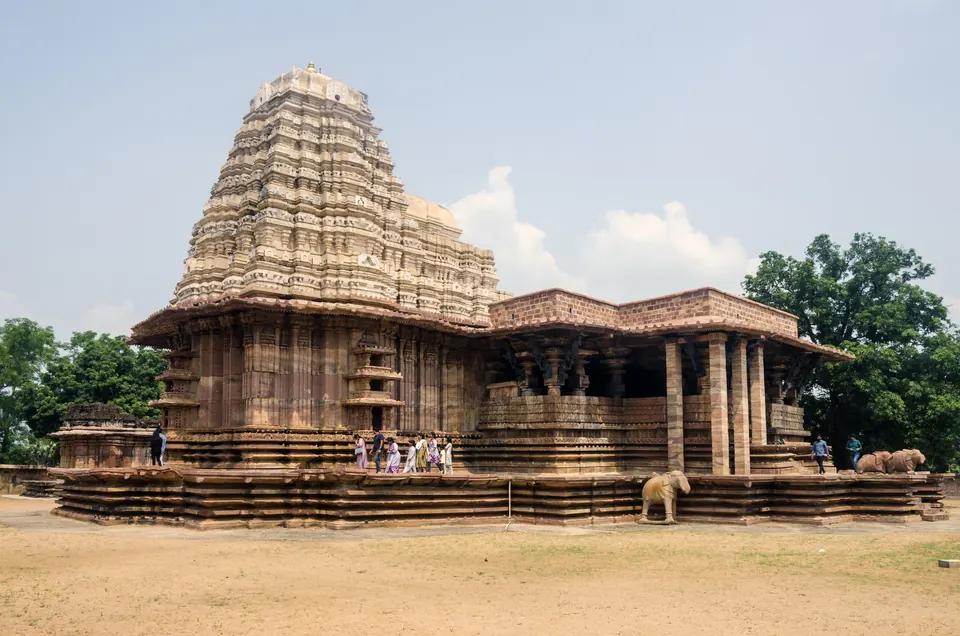
The Kakatiyas were a family of military chiefs who became the ruling dynasty of the Telugu country in the twelfth and thirteenth centuries.1 They ruled first from Anumakonda (Hanamkonda) and then from Orugallu (Warangal), between about 1150 and 1323.1 For about two centuries before that, they served the Rashtrakuta and then the Western Chalukya kings as subordinate chiefs.2
Their sovereign rule is usually dated from Rudradeva’s inscription of January 1163 at the Thousand Pillar Temple.2 It ended when armies of the Delhi Sultanate took Warangal in the 1320s.23
At its height under Ganapatideva, Kakatiya rule reached from Telangana to the coast, between the Godavari and the Penna.45 Its armies campaigned as far as Kanchi.45 The kings kept the modest title of mahamandaleshvara (great lord of a province) throughout, and left their allied chiefs much freedom.67 So historians describe the kingdom as a loose network of subordinate rulers, military commanders and village assemblies, rather than a centralised empire.67
Their reigns are also remembered for great irrigation tanks and the temples of Hanamkonda, Palampet and Warangal.8910 They are remembered too for the sea-trade edict of Motupalli, and the Telugu and Sanskrit writers of their court.8910
The sources
Most of what is known comes from inscriptions.111 P. V. Parabrahma Sastry counted about a dozen copper-plate grants and nearly a thousand stone inscriptions of the period.111 Many were found in the epigraphical survey of the Telangana districts, which the Andhra Pradesh government began in 1964.111
Some of these finds changed the history.121314 Parabrahma Sastry discovered the Bayyaram tank inscription in 1966, and it led him to rewrite the early genealogy.121314 The Chandupatla inscription moved the death of Rudramadevi from about 1295 back to 1289.121314
Contemporary literature adds a little.15 Vidyanatha’s Sanskrit treatise on poetics, the Prataparudriya, was written at the court of Prataparudra.15 Every one of its example verses praises the king.15 Parabrahma Sastry used it for the royal emblem, the family’s descent, and the relationship of Rudramadevi to Ganapatideva and Prataparudra.15
Telugu works supply details of government, religion and service.16 They include the Nitisara on statecraft, which survives only in quotations in a seventeenth-century anthology.16 They also include Palkuriki Somanatha’s Shaiva poems, and the Sivayogasara, a family history of the Induluri ministers.16
The Kridabhiramamu is a Telugu work of about 300 verses, of the fourteenth or fifteenth century.17 In it two friends wander through the streets of Orugallu.17 It describes the city as it was remembered soon after the dynasty fell.17
A third group of sources is the later chronicles:18
- Ekamranatha’s Pratapa Charitra (believed to be of the sixteenth century)
- the Siddheshvara Charitra (seventeenth century)
- the Somadevarajiyamu (eighteenth century)18
Parabrahma Sastry found them almost identical in content, full of legend, and at times misleading.18 For example, they make Rudramadevi Ganapatideva’s wife.18 He used them only for broad outlines.18
The family chronicles of the Velama chiefs are the Velugotivari Vamsavali and the Velugotivari Vamsacharitra.19 They describe the wars of their ancestors in Kakatiya service, but both are late.19
This page keeps the chronicles’ stories apart from what the inscriptions say.1819 The Delhi campaigns of 1303 to 1323 are known from the Persian historians, among them Amir Khusrau, Barani, Isami and Ferishta.2021 Marco Polo described the sea trade of a kingdom he called “Mutfili”.22 His editor Henry Yule identified Mutfili as the Kakatiya kingdom.23
Origins
The name and the Durjaya lineage
The family name comes from Kakati.2425 A fifteenth-century commentator on the Prataparudriya explained Kakati as a form of the goddess Durga worshipped by the family.2425 The Bayyaram tank inscription of Ganapatideva’s reign says instead that the founder of the line lived at a place called Kakati.2425 This place has not been securely identified.2425
The thirteenth-century records trace the kings to a legendary ancestor named Durjaya.262728 The Motupalli edict of 1244–45 traces the line back through the solar race to a Prolaraja of the family of Durjaya.2627 The Bayyaram inscription names Durjaya, then a king Venna who lived at Kakati, then a line of kings called Gunda.28 Other families in Kakatiya service, the Malyala and Viriyala chiefs, also claimed descent from Durjaya.2930
Rashtrakuta generals or Eastern Chalukya officers?
The earliest reference to the family is in the Mangallu copper-plate grant, which Parabrahma Sastry dates to about 956.31 In it a general called Kakartya Gundyana obtains a grant of land from the Eastern Chalukya prince Danarnava.31
Earlier writers took Gundyana to be an Eastern Chalukya officer, and the family to be Telugu in origin.32 The literary historians Chenchiah and Bhujanga Rao, writing in 1928, still described the Kakatiyas as feudatories (subordinate rulers) of the Eastern Chalukyas.33
N. Venkataramanayya and M. Somasekhara Sarma rejected the link altogether, in the Kakatiya chapter of The Early History of the Deccan (1960).34 In their view the names might be related, but there was no ground for believing that the kings of Anumakonda descended from Gundyana.34 The family rose under the Chalukyas of Kalyani, and Beta II was the first to leave records of his own.34
Parabrahma Sastry argued the opposite.3536 He held that Danarnava had seized the Vengi throne with Rashtrakuta help.3536 Gundyana’s forefathers’ names end in “Rashtrakuta”, and Gundyana was a Rashtrakuta general.3536 In this view the family came to the Telugu country in Rashtrakuta service, and passed to the Chalukyas of Kalyani after 973.3536
Status and caste
Later Kakatiya records claimed descent from the solar line of kings, through Durjaya.2637 Ganapatideva’s Motupalli edict, for example, traces the family back to Ikshvaku and Rama.2637
Other inscriptions speak differently.3839 Inscriptions of Ganapatideva’s general Malyala Gunda at Bothpur and Vaddamanu describe the Kakatiyas as born in the fourth varna, the Shudra order.3839 The family married into chiefly houses, such as the Kotas and the Natavadi chiefs, that described themselves the same way.3839
Vidyanatha, at Prataparudra’s court, wrote that the family excelled both the solar and the lunar races.3738 The Malkapuram inscription of the royal preceptor (teacher) calls them Kshatriyas of the solar race.3738
Parabrahma Sastry concluded that the Kshatriya claims were panegyric (praise).3940 P. Sreenivasachar, writing in 1942, regarded any argument about the caste of the ruling family as futile.40 Power, he said, commonly led families to claim Kshatriya rank and descent from the Sun or Moon.40
Emblems and early religion
The early Kakatiyas had close links with Jainism.41 Their first emblem was the eagle (Garuda), which stayed on their banner until Prataparudra’s time.41 Parabrahma Sastry suggested that it had a Jain rather than a Vaishnava meaning, perhaps the Garuda of the Tirthankara Shantinatha.41
As Chalukya feudatories they later adopted the boar (Varaha), which appears on their seals and coins.4243 The Bayyaram inscription says that Prola I’s successors put the boar on their coins and cattle in gratitude to him.4243
Chiefs under the Rashtrakutas and the Chalukyas
The early chiefs held small territories in Telangana under their overlords.44 Gunda IV is thought to have been killed about the end of the tenth century, after the fall of the Rashtrakutas.44 His killer was a chief backed by the new Chalukya king Tailapa II.44 His young son Beta I recovered the family’s position with the help of Kamavasani, wife of the Viriyala chief Erra.44 The Gudur inscription of 1124 tells this story.44
Prola I (c. 1052–1076) fought in the Chalukya prince Vikramaditya’s campaigns.4245 He received the district of Anumakonda from King Trailokyamalla (Someshvara I) as a permanent fief (land held from a lord).4245
Beta II (c. 1076–1108) took the name Tribhuvanamalla from his overlord Vikramaditya VI.46 He won the Sabbi-nadu district through his minister.46 His elder son Durgaraja appears in a single record of 1098, and may have been set aside by his younger brother.46
Prola II (c. 1116–1157) was the most active of these chiefs.4748 As a loyal Chalukya feudatory he defeated rival chiefs around Anumakonda.4748 He captured and released a Tailapa, and restored Udaya Choda to the Kanduru country around Panugallu.4748 He also drove off the Paramara prince Jagaddeva.4748 His last known record as a subordinate is dated 1149.4748 He was killed in battle with chiefs of the coastal Andhra country.4748
J. F. Fleet identified his captive Tailapa with the Chalukya king Taila III.49 Parabrahma Sastry identified him with Kumara Tailapa, a Chalukya prince who held the Kandurunadu region.50
Rudradeva and the claim to sovereignty
Rudradeva (c. 1158–1195) defeated the rival chiefs of Telangana.5152 They were Domma of Nagunuru, Meda of Polavasa, Mailigi, and the Choda chiefs Bhima and Udaya of Kanduru.5152 His inscription of 1163 at Anumakonda celebrates these wars.5152 It records his foundation of the triple temple now called the Thousand Pillar Temple.5152
Fleet published the inscription in 1882.49 He treated Rudradeva as in practice an independent king who had thrown off the Chalukya overlordship.49 But Rudradeva still used the feudatory title mahamandaleshvara.49
Parabrahma Sastry drew on inscriptions found after 1964.1253 He argued that the Kakatiyas did not revolt against their overlords.1253 The Chalukya power at Kalyana was collapsing, and the Kakatiyas became masters of Telangana by putting down the other subordinate chiefs.1253 Rudradeva declared himself sovereign only when no Chalukya claimant came forward.1253
The Velanati chief Rajendra Choda II died in 1181, and Rudradeva then turned to the coast.54 He defeated the Kota chief Dodda Bhima and took Dharanikota.54 He left Bhima’s son Keta II as his subordinate.54 A record at Tripurantakam of 1185 shows his authority south of the Krishna.54
He began the new fort at Orugallu.5556 The Ganapesvaram inscription says that he settled the people of conquered towns there, in new quarters with temples of Rudreshvara.5556
How he died is disputed.5758 Venkataramanayya and Somasekhara Sarma held that he was killed in 1196, in battle with the Yadava (Seuna) king Jaitrapala of Devagiri.57 Their evidence was the Yadava writer Hemadri.57 Parabrahma Sastry found no evidence for this in the Kakatiya records.58 He argued that Hemadri’s passage, as corrected by R. G. Bhandarkar, refers to Rudradeva’s brother Mahadeva.58 Rudradeva’s last known date is April 1195.59
Mahadeva and the disaster at Devagiri
Rudradeva had no children.60 His younger brother Mahadeva succeeded him, perhaps as regent for the young prince Ganapati.60 The one event of the short reign known for certain is Mahadeva’s attack on Devagiri, the Yadava capital.6162 There he died fighting from an elephant at night.6162
Yadava inscriptions add that the Yadava king Jaitugi (Jaitrapala) took the young Ganapati prisoner.6162 Later Jaitugi released him and made him king of the Andhra country.6162 At home, nobles rose in revolt.6364 The general Recherla Rudra held the kingdom together until Ganapati returned.6364
Ganapatideva: expansion to the coast and the south
Ganapatideva (1199–c. 1262) was back on the throne by December 1199.65 An inscription of that date at Manthena calls him the re-establisher of the whole kingdom.65
His generals carried Kakatiya power to the coast.6667 Malyala Chaunda took the island fortress of Divi, at the mouth of the Krishna, by 1203.6667 The Velanati king Prithvishvara was killed in battle some time after 1206.6667 Ganapati married the two sisters of the young Ayya chief Jaya, and made him governor of Velanadu by 1213.6667
He restored Tikka to the throne of the Telugu Chodas of Nellore.685 About 1250 his army under Samanta Bhoja took Kanchi in support of Tikka’s son Manumasiddhi II.685 Manumasiddhi’s envoy to Ganapati’s court was the poet Tikkana.685
His campaigns into Kalinga reached the Aska region of Ganjam.69 But the Eastern Ganga king Anangabhima III soon drove the Kakatiya forces back.69 For many years after that, the Godavari formed the eastern limit of their rule.69
The reign ended in reverses.70 By Parabrahma Sastry’s dating, about 1263 the Pandya king Jatavarman Sundara Pandya defeated the Kakatiyas and their Nellore allies at Muttukur.70 He annexed Nellore and Kanchi.70 Ganapati completed the fort at Orugallu, and moved the capital there from Anumakonda.63
Venkataramanayya and Somasekhara Sarma end his reign in 1261.71 Parabrahma Sastry cites a Durgi inscription of 1269, which still treats Ganapati as the ruling king.72 So he holds that Ganapati was alive in that year, though no longer ruling.72
Rudramadevi and the succession
Ganapatideva had no son, and he named his daughter Rudramadevi his heir.7215 Parabrahma Sastry holds that she ruled jointly with her father from about 1259–60, and alone from 1262.7215 Her records usually call her by a masculine name, Rudradeva Maharaja.7215 For example, an inscription of 1276 at Bothpur is dated while “the Kakatiya king Rudradeva” was ruling the earth from Orugallu.73
Inscriptions settled an old confusion about her.7423 The Kotagiri plates of 1273 call her Ganapati’s daughter.74 But the late chronicles, and Henry Yule’s notes on Marco Polo, had made her Ganapati’s widow.7423
Her succession was opposed.7275 The Pratapa Charitra says that two sons of Ganapati by other queens, Harihara and Murari, seized the capital.7275 In Venkataramanayya and Somasekhara Sarma’s summary of the chronicle, she retook the city and put her half-brothers to death.75 Both histories note that the princes are known only from this late work.7275 But both allow that it may preserve the memory of a real rebellion.7275
Loyal chiefs upheld her rule.7677 Among them were the Kayastha brothers Jannigadeva and Tripurari, and the Recherla chief Prasaditya.7677 The Velama family chronicle gives Prasaditya all the credit.7677 It gives him the titles “establisher of the Kakatiya kingdom” and “grandfather of kings”.7677 But other commanders bore the same or similar titles in inscriptions of 1275 to 1290.7677
Her reign faced pressure on several fronts.78 For about sixteen years the Godavari region shows no Kakatiya records.78 Parabrahma Sastry puts this down to the Eastern Gangas of Orissa, until her generals pushed them back.78
The Yadava king Mahadeva besieged Orugallu.78 The Pratapa Charitra says she drove him back to Devagiri.78 A fragmentary inscription of hers at Bidar shows that her armies did advance into Yadava territory.78
From the 1270s the Kayastha chief Ambadeva built up an independent state in the south-west of the kingdom.7980 He was allied with the Yadavas and the Pandyas.7980 In an inscription of 1290 at Tripurantakam, he claimed to have conquered all the kings of the Andhra country.7980
How and when she died is disputed.81 A Telugu inscription at Chandupatla is dated November 1289.81 It records a gift for the merit of Rudramadevi and her general Mallikarjuna-nayaka, both already dead.81 Parabrahma Sastry suggests that they fell in the war with Ambadeva, though the inscription does not say so.81
Venkataramanayya and Somasekhara Sarma wrote before the Chandupatla record was found.82 They dated her death to the end of 1294, and Prataparudra’s accession to 1295.82 Yule placed the transfer of power in 1292 or 1295.23
Marco Polo wrote that Mutfili had been ruled for some forty years by a queen, whom he does not name.8323 She was a woman “of much discretion”.8323 She “was more beloved by those of her kingdom than ever was Lady or Lord of theirs before”.8323
Prataparudra
Prataparudra was the son of Rudramadevi’s eldest daughter Mummadamma and a Kakatiya prince named Mahadeva.84 Venkataramanayya and Somasekhara Sarma add that Rudramadevi adopted him as her son and heir, at Ganapatideva’s command.82 He was often called Kumara Rudradeva, “Prince Rudradeva”, even after his accession.14 He already shared in the government and wars of his grandmother.14
His first task was Ambadeva.8586 In 1291 his generals drove the Kayastha chief from Tripurantakam, and other armies went against Nellore and the Yadavas.8586 Within about eight years the Kayastha territories were recovered.8586 In 1294 a Kakatiya feudatory took Raichur and Adoni in the Krishna–Tungabhadra doab.8586
He then reorganised the military system, the nayankara.8788 Under it, commanders held land for keeping troops for the king.8788 Records of his reign call him lord of nine lakh archers.8788
Later in the reign his armies went south.8990 About 1316–17 his generals took Kanchi, defeated the Pandyas and reinstated Sundara Pandya.8990 They also fought the Hoysala Ballala III and the small kingdom of Kampili.8990
The Delhi invasions and the fall
The armies of the Delhi Sultanate came to Warangal several times between 1303 and 1323.87 Parabrahma Sastry counts seven encounters, several of them ended by heavy tribute.87
The first expedition under Ala-ud-din Khalji, in 1303, failed.9187 Barani says it arrived in the rains and returned much reduced.91 The Velama chronicle credits the Kakatiya commanders Venna and Potugamti Maili with checking it at Upparapalli.87
In 1309–10 Malik Kafur besieged Warangal for about twenty-five days.219287 Amir Khusrau and Barani describe the storming of the outer mud wall.2192 After it, “Rai Laddar Deo” gave up his treasure, with elephants and horses, and promised yearly tribute.219287 In 1318 Khusrau Khan came to demand the tribute again, and Prataparudra ceded five districts.9394
Ghiyas-ud-din Tughluq sent his son Ulugh Khan, later Sultan Muhammad bin Tughluq, against Warangal.9596 The first siege collapsed when false rumours of the Sultan’s death set off a mutiny in the Delhi camp.9596 Ulugh Khan returned with fresh troops, and took Bidar and Bodhan on the way.9596 He captured Warangal, and its name was changed to Sultanpur.9596
Barani dates the campaign to 721 AH (1321).97 The Imperial Gazetteer gives 1321 for the end of Kakatiya rule.98 Parabrahma Sastry follows the contemporary historian Isami, and places the final five-month siege in 1323.96
Prataparudra was sent towards Delhi as a prisoner.99 According to the Vilasa grant of the Musunuri chief Prolaya Nayaka, he died on the banks of the Narmada on the way.99 A Reddi grant of 1423 says that he departed to the world of the gods by his own wish.99 Parabrahma Sastry reads this as suicide, or a death he asked for.99 The fuller story of these campaigns and their aftermath belongs to the post-Kakatiya period.
After 1323: claimed successors
No inscription of any later Kakatiya king has been found, as Hirananda Sastri noted in 1932.100 The Pratapa Charitra says that Prataparudra’s son Virabhadra was crowned by the late king’s brother Annamadeva.99101 Annamadeva then left for the north-east.99101 Parabrahma Sastry called this groundless.99
Venkataramanayya and Somasekhara Sarma suggested that the chronicler had confused the Kakatiya king with the Gajapati king Prataparudra of Orissa.101 That king’s son Virabhadra was a famous warrior.101 Ferishta speaks of a “Kishan Nayak”, called a son of Prataparudra, who led a rising against the Delhi governors.101 In their view he was the Musunuri chief Kapaya Nayaka, not a Kakatiya.101
The rajas of Bastar, in central India, traced their descent from Annamaraja.102103104 An inscription of Samvat 1760 (1702–03) at Dantewara calls him a brother of “Kakati Prataparudra”.102103104 Its editor Hira Lal doubted that the line went back to the Kakatiya king.102103 The genealogy allots too few generations to four centuries, so he suggested a later Prataparudra.102103
Venkataramanayya and Somasekhara Sarma wrote in one place that no contemporary record knows of Annamadeva.82105 In another place they wrote that Prataparudra “certainly had” such a brother.82105 Parabrahma Sastry thought the claim needed further examination.99 Cynthia Talbot thought the founder of the Bastar family was probably a Telugu warrior who knew the Kakatiya legends.104
Government
The king and the subordinate chiefs
The Kakatiya kings kept the title mahamandaleshvara, at first a feudatory’s rank, throughout their rule.106 Parabrahma Sastry argued that they never claimed imperial status.106 Allied chiefs, such as the Telugu Chodas of Nellore and the coastal mandalikas (local rulers), kept their own administrations.106 Many of their inscriptions do not even name the Kakatiya king.106
Even a copper-plate decree issued by Ganapatideva himself in 1246 says only that Kakatiya Ganapatideva was ruling the earth.107 It does not use the title mahamandaleshvara.107 Parabrahma Sastry saw in this a deliberate, decentralised polity, in which the king demanded only military loyalty.6108 He noted that the one great breach of loyalty was Ambadeva’s revolt.6108
Some records do use grander language.109110 The Pakhal lake inscription calls Ganapati an emperor (chakravartin).109110 A record of 1292 at Terala gives Prataparudra the title narendra-chakravarti, emperor among kings.109110
Cynthia Talbot argued that the polity changed under the last two rulers.111 It moved from loose alliances with old aristocratic families to direct ties with large numbers of new warriors.111
Ministers, offices and divisions
The highest officers were the mahapradhanas (chief ministers).112 Below them came officers called pradhanis, preggadas, amatyas and mantris, whose ranks the inscriptions do not distinguish.112 The administration was divided into seventy-two niyogas, or branches, under an officer called the bahattara-niyogadhipati.112
The Kayastha chief Gangaya Sahini held the post under Ganapatideva.112 After him came the Induluri minister Gannaya and Pomkala Mallaya-preggada.112 Parabrahma Sastry was not sure whether it carried real power or was a title.112 Palace officers included the treasurer (sri-bhandaru), the keeper of the palace gate, and the bearers of the betel-bag and the royal fan.113
The kingdom was divided into nadus (districts), such as Kammanadu, Pakanadu, Renadu, Kandurunadu and Velanadu.114 The nadus were divided into sthalas (groups of villages) of about twenty villages each.114 The capital, with Anumakonda, Mattewada and Orugallu, formed a single sthala.114
Each sthala had its accountant, toll-collector and assessor.115 Each village had its ayagars (village servants), among them the watchman (talari) and the man who shared out tank water.115
Village assemblies and justice
Inscriptions show a society organised in corporate bodies.116 The “eighteen sects of people” (ashtadasa-praja) were represented by assemblies (samayas) of their communities, villages and sthalas.116 Brahman residents formed bodies of mahajanas.116
An inscription of 1292 near Inkirala records how the officer of a local chief politely asked the assemblies of three villages to levy a contribution for a temple.7 Parabrahma Sastry concluded that such assemblies had more power in village matters than the chiefs.7 At Penumuli, villagers rebuked in harsh words a royal officer who had imposed undue taxes on temple lands, and he remitted (cancelled) them.117
Disputes were settled by temporary bodies of mahajanas, with one or two royal officers present.118119 In 1214 Ganapatideva sent two ministers to settle a boundary dispute at Duggirala.118119 In 1246 he decided a quarrel over a canal in the Karimnagar region himself, after an inquiry among the villagers.118119
The nayankara system
Under the nayankara system, the king assigned villages to commanders (nayakas) in place of a salary.88 Each kept a fixed number of elephants, horses and foot soldiers for the king’s wars.88 The Nitisara states the rule.88 Parabrahma Sastry dates the system to Rudramadevi, and its full organisation to Prataparudra.88
Inscriptions of Prataparudra’s reign name such holdings:117120121
- An officer held the nayankara of twenty-two villages around Penumuli.
- Another held the Konduru sthala of eighteen villages.
- Four lenkas (sworn followers) held Kopparam together.
- A special levy for the soldiers (bantela-ayamu) was collected in these holdings.117120121
The later traditions tell a different story.88122123 The Pratapa Charitra says that Prataparudra gave the seventy-seven bastions of his fort to seventy-seven nayakas.88122123 He also divided a portion of the kingdom among them.88122123 Twentieth-century historians called these nayakas Velamas.88122123
The historians do not agree on how far to trust this.8882 Parabrahma Sastry doubted that all of them were Velamas.88 Inscriptions, he noted, name nayakas and lenkas of other groups, including Reddis.88 Venkataramanayya and Somasekhara Sarma found that the nayankaras were held by men of all classes.82 They found that their number was seventy-five rather than seventy-seven, and that there is no evidence that they defended the capital.82
The Velama chronicle credits the Recherla chief Prasaditya with introducing the system under Rudramadevi.124 Talbot pointed out that the chronicle calls the seventy-seven “Padmanayakas”, never Velamas.123125111 Neither name appears as a warrior identity in Kakatiya inscriptions.123125111 In her view the Padmanayaka identity was formed two centuries or more after 1323, partly from the memory of Prataparudra.123125111
The army and the forts
Besides the troops of the nayakas, the king kept his own forces of elephants, cavalry and foot soldiers.126 Their commanders were called gaja-sahini, ashva-sahini and senadhipati.126 According to the chronicles cited by Parabrahma Sastry, Prataparudra had 100 elephants, 20,000 horses and 900,000 foot soldiers.126 He reports these figures as tradition.126
An unpublished inscription is said to record that Ganapatideva brought Gangaya Sahini from the north to train his cavalry.126 The Kayasthas long commanded the Kakatiya horse, and Jaya commanded the elephants.126 The kings often led their armies in person.126 Next to them came a commander-in-chief (sakala-senadhipati), and soldiers received land in place of pay.126
The capital was ringed by three walls:127
- an outer earthen rampart round Kazipet and Anumakonda
- a great mud wall, with a moat and four gates, round Orugallu
- an inner fort of stone with its own moat127
The stone fort has its own page, Warangal Fort.127 The Kridabhiramamu describes its streets, markets and temples.127
Revenue and taxes
Almost everything known about Kakatiya taxation comes from inscriptions that record gifts or remissions of dues to temples and Brahmans.128 Many of the terms remain obscure.128 Parabrahma Sastry divided the taxes into land taxes, taxes on industry and property, taxes on professions, commercial taxes and miscellaneous dues.128 He thought that the Kakatiyas added new taxes to the Chalukya system, perhaps because of land reclamation and irrigation.128
The basic land tax (pannu) was paid in coin.129130 The king’s share of the harvest (pangamu or koluchu) was paid in grain.129130 There were also tributes (kanika), grazing dues (pullari) and house taxes.129130 There were dues on oil mills, looms, potters’ wheels and other crafts.129130
Tolls (sunkamu) were levied in the markets, often on both sales and purchases.131 Their collection was farmed out to contractors, under the eye of royal assessors and accountants.131
Land that was not granted out belonged to the king.132133 It was leased to cultivators for a half, a third, a quarter or a sixth of the crop, according to its quality.132133 New settlers were allowed to clear land free of tax for several years.132133
Tanks and irrigation
Telangana has no great perennial river near the old capitals, and its farming depended on stored water.134 Parabrahma Sastry credits the Kakatiyas with damming streams between hills to form large reservoirs.134 He notes that building a tank was counted among the seven meritorious deeds (sapta-santana).134
There was no department of irrigation.8135 Tanks were built by kings, queens, ministers, chiefs, merchants and priests.8135
- The Pakhal lake was built under Ganapatideva by Jagadalu Mummadi, son of one of his ministers.136137
- The Ramappa lake was built by Recherla Rudra in 1213.136137
- Ganapatideva’s sisters Mailamba and Kundamamba built the Bayyaram tank and the Kundasamudram.136137
- The general Malyala Chaunda built the Chaunda-samudram at Kondaparti.136137
Villages such as Ganapavaram, Rudravaram, Bayyaram and Muppavaram were named after the kings and queens who founded them.138
Inscriptions show a market in water as well.139 Owners of wells with water-lifts (ratanas), and of tanks and canals, sold water to their neighbours.139 Temples received such rights as income.139 Upkeep was paid for by a small share of the harvest, collected from the cultivators for the keeper of the tank.140
Trade
In 1244–45 Ganapatideva set up a pillar at the port of Motupalli, with an edict of safety for sea traders.141142 In E. Hultzsch’s translation, it declares that “formerly kings used to take away by force the whole cargo” of ships wrecked on the shore.141142 But the king now granted “everything besides the fixed duty” to those who had braved the sea.141142 The duty was “one in thirty on (all) exports and imports”.141142 There were fixed rates for sandal, camphor, pearls, pepper, silks and areca-nuts.141142
Yule identified Marco Polo’s “Mutfili” with this port.23 Polo wrote of its diamonds and its buckrams (fine cloths).143 The finest of these “look like tissue of spider’s web”, so that “there is no King nor Queen in the world but might be glad to wear them”.143 Hultzsch concluded that Motupalli was the kingdom’s chief port in the thirteenth century.144
Inland trade was carried on by guilds:145
- local merchants (nakaramu, svadeshi)
- travelling merchants (paradeshi, ubhaya-nanadeshi)
- the old Ayyavali guild, which by now had become largely a name145
A guild at Tripurantakam in 1292 included Reddis, nayudus and herders as well as merchants.145 A Warangal fort inscription of Ganapatideva’s reign, of about 1228, lists the market quarters of the capital and the goods traded in each.146147 These were cloth, indigo, areca-nuts, betel, vegetables and fruit, grain and oil, salt, metals, perfumes, pearls and precious stones, and cotton.146147
Kings and chiefs licensed the guilds, ran weekly fairs (penta) with rented sheds, and appointed royal merchants.148 The Nitisara warns the king against seizing merchandise and raising tolls.149 It also warns him against barring foreign merchants and allowing false weights.149
Society
Society was divided into the four classical varnas and many groups based on occupation.150151 The inscriptions often refer to the people as a whole as “the eighteen sects”.150151 Brahmans served as ministers and even generals, as the Induluri family of Induluri Annaya shows.152153 The ruling family itself was described in inscriptions as Shudra.39
Women of the royal and chiefly families gave land and built temples and tanks, and some ruled.154136 Ganapatideva’s daughter Ganapamba governed the Kota country as a mahamandaleshvara after her husband’s death.154136
Temples were landlords, employers, banks and schools.155156 They employed priests, accountants, musicians, artisans and women dancers.155156 Parabrahma Sastry describes the dancers as married women attached to the temple to perform on behalf of donors.155156
Religion
The early Kakatiyas were close to Jainism.41 Beta I made a gift to a Jain temple at Sanigaram.41 In 1117 the wife of Prola II’s minister built a Jain temple on the Padmakshi hill at Anumakonda.41 Beta II and his sons were initiated into the Kalamukha school of Shaivism by Rameshvara Pandita, head of a monastery at Srisailam.157158
Under Ganapatideva the royal teachers came from the Pashupata Golaki monastery.159160 Its head Vishveshvara Shambhu initiated the king.159160 In 1261 he received the village of Mandadam from Rudramadevi.159160 There he founded a monastery, a college, a feeding house and a maternity home.159160 The family deity was Svayambhudeva, the Shiva of the great temple at the centre of the Warangal fort.16126
Other Shaiva movements grew without royal patronage.162 The Aradhya teachers, among them Mallikarjuna Panditaradhya, preached across the Telugu country.162 Palkuriki Somanatha wrote the Telugu scriptures of the Virashaiva faith of Basava.162
The kings also worshipped Vishnu.163 The boar emblem and the shrines of Vasudeva in their triple temples show it.163 Prataparudra’s general gave a village to the god Ranganatha at Srirangam.163
Buddhism survived in a few places.164165 Rudradeva’s minister Gangadhara set up an image of the Buddha as an incarnation of Vishnu.164165 A chief of Rudradeva’s time wrote that the Shaiva, Vaishnava, Jain and Buddhist faiths differed only in appearance.164165
Literature
Sanskrit held the first place in learning.10 The Thousand Pillar Temple inscription is a short poem by Achintendra.10 The Bothpur inscriptions of Malyala Gunda include a verse arranged in circles, one inside another.10
Vidyanatha’s Prataparudriya is still studied as a manual of poetics.166 Jaya wrote the Nritta Ratnavali, a treatise on dance with a chapter on the regional dances of Andhra.166 Sakalya Malla wrote the Udattaraghava.166 The general Kolani Rudra, of the Induluri family, wrote a commentary on grammar.166 Verses of a court poet named Narasimha survive on the Ekashila rock, the gateways of Warangal fort and a hillock at Ursu near Warangal.167
In Telugu, Tikkana continued the Mahabharata at the court of the Nellore Chodas.168169170 His disciple Marana wrote the Markandeya Purana for a commander of Prataparudra.168169170 The Ranganatha Ramayana, in the native dvipada metre, was written by or for Gona Budda Reddi.171170 The Bhaskara Ramayana, written by several hands, was dedicated in part to the cavalry officer Maraya Sahini.171170
Palkuriki Somanatha’s Basava Purana and Panditaradhya Charitra are the main works of Telugu Shaiva literature.172 Baddena, a Telugu Choda chief, wrote the Nitisastra Muktavali, and is said to be the author of the Sumati Satakam.172173
Dates are uncertain.172174162 Some scholars attribute the Nitisara to Rudradeva, and others to Prataparudra.172 Chenchiah and Bhujanga Rao placed Palkuriki Somanatha in Rudradeva’s reign.174 Parabrahma Sastry made him a contemporary of Prataparudra.162
Art and architecture
The Kakatiya builders inherited the style of the Western Chalukyas.175 They used local granite and sandstone for walls, and black stone for pillars, doorways and sculpture.175 They built superstructures (the towers above the shrines) of brick.175
The main surviving works are these:176
- Rudradeva’s Thousand Pillar Temple at Hanamkonda
- Recherla Rudra’s Ramappa temple at Palampet, of 1213
- the four gateways of the Svayambhu temple in Warangal Fort176
Parabrahma Sastry noted that most of the surviving monuments, apart from the Thousand Pillar Temple, were built not by the kings.177 They were built by their generals of the Recherla family, at Palampet, Ghanpur, Pillalamarri and Nagulapadu.177 Bracket figures, Nandis and dancers in the friezes are typical.178 The dancers have been compared with the regional dances described by Jaya.178
Coins and measures
Each king carried a title ending in gaja-kesari, likening him to a lion facing elephants.179180 The titles appear on seals, coins, standard measures and even tanks:179180
- Prola I and Prola II used ari-gaja-kesari.
- Ganapatideva and Rudramadevi used raya-gaja-kesari.
- Rudradeva and Prataparudra used daya-gaja-kesari.179180
The seal of the Khandavalli copper plates bears the legend Dayagajakesari.18112 This allowed Parabrahma Sastry to assign gold coins with the boar and that legend to Prataparudra.18112 Coins with the legend “Kakati Prataparudra” had earlier been shown to belong to the Gajapati king of that name.18112 The gold gadyana, or mada, was the standard coin.179
Evidence and disagreements
- Origin. Parabrahma Sastry derived the family from Gundyana, a Rashtrakuta general of about 956.35 Venkataramanayya and Somasekhara Sarma rejected the link.34 Older writers made them Eastern Chalukya feudatories.33
- Sovereignty. Fleet saw Rudradeva as throwing off the Chalukya yoke.49 Parabrahma Sastry saw no revolt.53
- Rudradeva’s death. Killed by the Yadavas, according to Venkataramanayya and Somasekhara Sarma.57 No evidence for this, according to Parabrahma Sastry.58
- Rudramadevi’s reign. About 1259–60 or 1262 to 1289 (Parabrahma Sastry, after the Chandupatla inscription).72 1259–1295 (Venkataramanayya and Somasekhara Sarma).182 Or to 1292 or 1295 (Yule).23
- Rudramadevi’s daughters. Three, the second married to the Yadava prince Ellanadeva (Parabrahma Sastry, from the Alapadu grant).183 Or two (Venkataramanayya and Somasekhara Sarma).184
- Prataparudra’s status. Grandson and successor (Parabrahma Sastry).84 Or grandson adopted as son and heir (Venkataramanayya and Somasekhara Sarma).82
- The nayakas. Seventy-seven Velamas (the chronicle as read by twentieth-century historians).88 Seventy-five men of all classes (Venkataramanayya and Somasekhara Sarma).82 Or Padmanayakas, a later identity (Talbot).125
- The end. Warangal fell in 1321 (Barani, Imperial Gazetteer) or 1323 (Parabrahma Sastry, after Isami).979896
Memory
The Kakatiyas were remembered long after 1323.185186187 Chiefs who rose after the fall, such as the Musunuri and Recherla Nayakas and the Reddis, presented themselves as heirs of the Kakatiya kings.185186187 The Pratapa Charitra made Warangal’s seventy-seven bastions a picture of the whole kingdom.185186187 Talbot found that later warrior families of Telangana remembered Prataparudra, rather than Ganapatideva, as the king who raised humble fighters to high rank.111104
For a detailed, source-by-source history of the dynasty, see kakatiya.info (opens in a new tab).
Footnotes
-
P. V. Parabrahma Sastry, The Kakatiyas of Warangal (1978), p. 1. ↩ ↩2 ↩3 ↩4 ↩5
-
P. V. Parabrahma Sastry, The Kakatiyas of Warangal (1978), p. 2. ↩ ↩2 ↩3
-
H. M. Elliot and John Dowson, The History of India as Told by Its Own Historians, vol. III (1871), p. 233 (archive.org (opens in a new tab)). ↩
-
P. V. Parabrahma Sastry, The Kakatiyas of Warangal (1978), p. 177. ↩ ↩2
-
P. V. Parabrahma Sastry, The Kakatiyas of Warangal (1978), p. 113. ↩ ↩2 ↩3 ↩4 ↩5
-
P. V. Parabrahma Sastry, The Kakatiyas of Warangal (1978), p. 176. ↩ ↩2 ↩3 ↩4
-
P. V. Parabrahma Sastry, The Kakatiyas of Warangal (1978), p. 186. ↩ ↩2 ↩3 ↩4
-
P. V. Parabrahma Sastry, The Kakatiyas of Warangal (1978), p. 204. ↩ ↩2 ↩3 ↩4
-
P. V. Parabrahma Sastry, The Kakatiyas of Warangal (1978), p. 254. ↩ ↩2
-
P. V. Parabrahma Sastry, The Kakatiyas of Warangal (1978), p. 293. ↩ ↩2 ↩3 ↩4 ↩5
-
P. V. Parabrahma Sastry, The Kakatiyas of Warangal (1978), pp. 3–6. ↩ ↩2 ↩3
-
P. V. Parabrahma Sastry, The Kakatiyas of Warangal (1978), p. 6. ↩ ↩2 ↩3 ↩4 ↩5 ↩6 ↩7 ↩8 ↩9 ↩10
-
P. V. Parabrahma Sastry, The Kakatiyas of Warangal (1978), p. 7. ↩ ↩2 ↩3
-
P. V. Parabrahma Sastry, The Kakatiyas of Warangal (1978), p. 129. ↩ ↩2 ↩3 ↩4 ↩5
-
P. V. Parabrahma Sastry, The Kakatiyas of Warangal (1978), pp. 8–9. ↩ ↩2 ↩3 ↩4 ↩5 ↩6 ↩7
-
P. V. Parabrahma Sastry, The Kakatiyas of Warangal (1978), pp. 9–10. ↩ ↩2 ↩3
-
P. V. Parabrahma Sastry, The Kakatiyas of Warangal (1978), p. 9. ↩ ↩2 ↩3
-
P. V. Parabrahma Sastry, The Kakatiyas of Warangal (1978), pp. 10–11. ↩ ↩2 ↩3 ↩4 ↩5 ↩6
-
P. V. Parabrahma Sastry, The Kakatiyas of Warangal (1978), pp. 11–12. ↩ ↩2 ↩3
-
P. V. Parabrahma Sastry, The Kakatiyas of Warangal (1978), p. 12. ↩
-
H. M. Elliot and John Dowson, The History of India as Told by Its Own Historians, vol. III (1871), pp. 83–84 (archive.org (opens in a new tab)). ↩ ↩2 ↩3 ↩4
-
Henry Yule and Henri Cordier, The Book of Ser Marco Polo, vol. II (1903), p. 360 (archive.org (opens in a new tab)). ↩
-
Henry Yule and Henri Cordier, The Book of Ser Marco Polo, vol. II (1903), p. 362, note 1 (archive.org (opens in a new tab)). ↩ ↩2 ↩3 ↩4 ↩5 ↩6 ↩7 ↩8 ↩9
-
P. V. Parabrahma Sastry, The Kakatiyas of Warangal (1978), pp. 22–23. ↩ ↩2 ↩3 ↩4
-
J. F. Fleet, “Sanskrit and Old-Canarese Inscriptions, No. CXVIII”, Indian Antiquary XI (1882), p. 12, citing A. C. Burnell (archive.org (opens in a new tab)). ↩ ↩2 ↩3 ↩4
-
E. Hultzsch, “Motupalli Pillar-Inscription of Ganapatideva”, Epigraphia Indica XII (1913–14), p. 188 (archive.org (opens in a new tab)). ↩ ↩2 ↩3 ↩4 ↩5
-
E. Hultzsch, “Motupalli Pillar-Inscription of Ganapatideva”, Epigraphia Indica XII (1913–14), p. 189 (archive.org (opens in a new tab)). ↩ ↩2
-
P. V. Parabrahma Sastry, The Kakatiyas of Warangal (1978), p. 308. ↩ ↩2
-
P. V. Parabrahma Sastry, The Kakatiyas of Warangal (1978), p. 149. ↩
-
P. V. Parabrahma Sastry, The Kakatiyas of Warangal (1978), p. 148. ↩
-
P. V. Parabrahma Sastry, The Kakatiyas of Warangal (1978), pp. 14–15. ↩ ↩2
-
P. V. Parabrahma Sastry, The Kakatiyas of Warangal (1978), p. 14. ↩
-
P. Chenchiah and Raja M. Bhujanga Rao, A History of Telugu Literature (1928), p. 23 (archive.org (opens in a new tab)). ↩ ↩2
-
N. Venkataramanayya and M. Somasekhara Sarma, “The Kakatiyas of Warangal”, in G. Yazdani (ed.), The Early History of the Deccan, Parts VII–XI (1960), p. 577. ↩ ↩2 ↩3 ↩4
-
P. V. Parabrahma Sastry, The Kakatiyas of Warangal (1978), pp. 15–16. ↩ ↩2 ↩3 ↩4 ↩5
-
P. V. Parabrahma Sastry, The Kakatiyas of Warangal (1978), p. 26. ↩ ↩2 ↩3 ↩4
-
P. V. Parabrahma Sastry, The Kakatiyas of Warangal (1978), p. 27. ↩ ↩2 ↩3 ↩4
-
P. V. Parabrahma Sastry, The Kakatiyas of Warangal (1978), p. 28. ↩ ↩2 ↩3 ↩4 ↩5
-
P. V. Parabrahma Sastry, The Kakatiyas of Warangal (1978), p. 29. ↩ ↩2 ↩3 ↩4 ↩5
-
P. Sreenivasachar, A Corpus of Inscriptions in the Telingana Districts, Part I (1942), p. 31 (archive.org (opens in a new tab)). ↩ ↩2 ↩3
-
P. V. Parabrahma Sastry, The Kakatiyas of Warangal (1978), p. 272. ↩ ↩2 ↩3 ↩4 ↩5 ↩6
-
P. V. Parabrahma Sastry, The Kakatiyas of Warangal (1978), p. 45. ↩ ↩2 ↩3 ↩4
-
S. Hanumant Rao and Lakshmi Kanta Sastri, The Kotagiri Plates of the Reign of the Kakatiya Queen Rudramamba (1925), p. 1 (archive.org (opens in a new tab)). ↩ ↩2
-
P. V. Parabrahma Sastry, The Kakatiyas of Warangal (1978), pp. 41–43. ↩ ↩2 ↩3 ↩4 ↩5
-
P. Sreenivasachar (ed.), A Corpus of Inscriptions in the Telingana Districts, Part II (1940), p. 29 (archive.org (opens in a new tab)). ↩ ↩2
-
P. V. Parabrahma Sastry, The Kakatiyas of Warangal (1978), pp. 47–50. ↩ ↩2 ↩3
-
P. V. Parabrahma Sastry, The Kakatiyas of Warangal (1978), pp. 74–87. ↩ ↩2 ↩3 ↩4 ↩5 ↩6
-
J. F. Fleet, “Sanskrit and Old-Canarese Inscriptions, No. CXVIII”, Indian Antiquary XI (1882), p. 17 (archive.org (opens in a new tab)). ↩ ↩2 ↩3 ↩4 ↩5 ↩6
-
J. F. Fleet, “Sanskrit and Old-Canarese Inscriptions, No. CXVIII”, Indian Antiquary XI (1882), p. 10 (archive.org (opens in a new tab)). ↩ ↩2 ↩3 ↩4 ↩5
-
P. V. Parabrahma Sastry, The Kakatiyas of Warangal (1978), pp. 76–87. ↩
-
J. F. Fleet, “Sanskrit and Old-Canarese Inscriptions, No. CXVIII”, Indian Antiquary XI (1882), pp. 17–18 (archive.org (opens in a new tab)). ↩ ↩2 ↩3 ↩4
-
P. V. Parabrahma Sastry, The Kakatiyas of Warangal (1978), pp. 88–97. ↩ ↩2 ↩3 ↩4
-
P. V. Parabrahma Sastry, The Kakatiyas of Warangal (1978), pp. 96–97. ↩ ↩2 ↩3 ↩4 ↩5
-
P. V. Parabrahma Sastry, The Kakatiyas of Warangal (1978), p. 98. ↩ ↩2 ↩3 ↩4
-
P. V. Parabrahma Sastry, The Kakatiyas of Warangal (1978), p. 101. ↩ ↩2
-
E. Hultzsch, “Ganapesvaram Inscription of the Time of Ganapati”, Epigraphia Indica III (1894–95), p. 83 (archive.org (opens in a new tab)). ↩ ↩2
-
N. Venkataramanayya and M. Somasekhara Sarma, “The Kakatiyas of Warangal”, in G. Yazdani (ed.), The Early History of the Deccan, Parts VII–XI (1960), pp. 598–599. ↩ ↩2 ↩3 ↩4
-
P. V. Parabrahma Sastry, The Kakatiyas of Warangal (1978), pp. 99–100. ↩ ↩2 ↩3 ↩4
-
P. V. Parabrahma Sastry, The Kakatiyas of Warangal (1978), p. 100. ↩
-
P. V. Parabrahma Sastry, The Kakatiyas of Warangal (1978), p. 103. ↩ ↩2
-
P. V. Parabrahma Sastry, The Kakatiyas of Warangal (1978), pp. 103–104. ↩ ↩2 ↩3 ↩4
-
E. Hultzsch, “Yenamadala Inscription of Ganapamba”, Epigraphia Indica III (1894–95), p. 101, verse 5 (archive.org (opens in a new tab)). ↩ ↩2 ↩3 ↩4
-
P. V. Parabrahma Sastry, The Kakatiyas of Warangal (1978), p. 116. ↩ ↩2 ↩3
-
L. D. Barnett (ed.), Inscriptions at Palampet and Uparpalli (1919), p. 9, verse 24 (archive.org (opens in a new tab)). ↩ ↩2
-
P. V. Parabrahma Sastry, The Kakatiyas of Warangal (1978), p. 106. ↩ ↩2
-
P. V. Parabrahma Sastry, The Kakatiyas of Warangal (1978), pp. 107–108. ↩ ↩2 ↩3 ↩4
-
E. Hultzsch, “Ganapesvaram Inscription of the Time of Ganapati”, Epigraphia Indica III (1894–95), p. 84 (archive.org (opens in a new tab)). ↩ ↩2 ↩3 ↩4
-
P. V. Parabrahma Sastry, The Kakatiyas of Warangal (1978), p. 109. ↩ ↩2 ↩3
-
P. V. Parabrahma Sastry, The Kakatiyas of Warangal (1978), pp. 110–112. ↩ ↩2 ↩3
-
P. V. Parabrahma Sastry, The Kakatiyas of Warangal (1978), pp. 114–115. ↩ ↩2 ↩3
-
N. Venkataramanayya and M. Somasekhara Sarma, “The Kakatiyas of Warangal”, in G. Yazdani (ed.), The Early History of the Deccan, Parts VII–XI (1960), p. 599. ↩
-
P. V. Parabrahma Sastry, The Kakatiyas of Warangal (1978), p. 118. ↩ ↩2 ↩3 ↩4 ↩5 ↩6 ↩7 ↩8 ↩9 ↩10
-
P. Sreenivasachar (ed.), A Corpus of Inscriptions in the Telingana Districts, Part II (1940), No. 50, translation, p. 141 (archive.org (opens in a new tab)). ↩
-
S. Hanumant Rao and Lakshmi Kanta Sastri, The Kotagiri Plates of the Reign of the Kakatiya Queen Rudramamba (1925), p. v (archive.org (opens in a new tab)). ↩ ↩2 ↩3
-
N. Venkataramanayya and M. Somasekhara Sarma, “The Kakatiyas of Warangal”, in G. Yazdani (ed.), The Early History of the Deccan, Parts VII–XI (1960), pp. 621–622. ↩ ↩2 ↩3 ↩4 ↩5
-
P. V. Parabrahma Sastry, The Kakatiyas of Warangal (1978), p. 119. ↩ ↩2 ↩3 ↩4 ↩5
-
N. Venkataramanayya and M. Somasekhara Sarma, “The Kakatiyas of Warangal”, in G. Yazdani (ed.), The Early History of the Deccan, Parts VII–XI (1960), p. 622. ↩ ↩2 ↩3 ↩4 ↩5
-
P. V. Parabrahma Sastry, The Kakatiyas of Warangal (1978), pp. 120–121. ↩ ↩2 ↩3 ↩4 ↩5 ↩6
-
P. V. Parabrahma Sastry, The Kakatiyas of Warangal (1978), pp. 122–124. ↩ ↩2 ↩3
-
P. V. Parabrahma Sastry, The Kakatiyas of Warangal (1978), pp. 159–160. ↩ ↩2 ↩3
-
P. V. Parabrahma Sastry, The Kakatiyas of Warangal (1978), pp. 125–126. ↩ ↩2 ↩3 ↩4
-
N. Venkataramanayya and M. Somasekhara Sarma, “The Kakatiyas of Warangal”, in G. Yazdani (ed.), The Early History of the Deccan, Parts VII–XI (1960), p. 642. ↩ ↩2 ↩3 ↩4 ↩5 ↩6 ↩7 ↩8 ↩9 ↩10
-
Henry Yule and Henri Cordier, The Book of Ser Marco Polo, vol. II (1903), pp. 359–360 (archive.org (opens in a new tab)). ↩ ↩2 ↩3
-
P. V. Parabrahma Sastry, The Kakatiyas of Warangal (1978), p. 128. ↩ ↩2
-
P. V. Parabrahma Sastry, The Kakatiyas of Warangal (1978), pp. 130–131. ↩ ↩2 ↩3 ↩4
-
P. V. Parabrahma Sastry, The Kakatiyas of Warangal (1978), p. 161. ↩ ↩2 ↩3 ↩4
-
P. V. Parabrahma Sastry, The Kakatiyas of Warangal (1978), p. 132. ↩ ↩2 ↩3 ↩4 ↩5 ↩6 ↩7 ↩8 ↩9
-
P. V. Parabrahma Sastry, The Kakatiyas of Warangal (1978), p. 195. ↩ ↩2 ↩3 ↩4 ↩5 ↩6 ↩7 ↩8 ↩9 ↩10 ↩11 ↩12 ↩13 ↩14 ↩15
-
P. V. Parabrahma Sastry, The Kakatiyas of Warangal (1978), pp. 133–135. ↩ ↩2 ↩3
-
Robert Sewell, The Historical Inscriptions of Southern India (1932), p. 179 (archive.org (opens in a new tab)). ↩ ↩2 ↩3
-
H. M. Elliot and John Dowson, The History of India as Told by Its Own Historians, vol. III (1871), p. 189 (archive.org (opens in a new tab)). ↩ ↩2
-
H. M. Elliot and John Dowson, The History of India as Told by Its Own Historians, vol. III (1871), pp. 202–203 (archive.org (opens in a new tab)). ↩ ↩2 ↩3
-
H. M. Elliot and John Dowson, The History of India as Told by Its Own Historians, vol. III (1871), pp. 560–561 (archive.org (opens in a new tab)). ↩
-
P. V. Parabrahma Sastry, The Kakatiyas of Warangal (1978), p. 134. ↩
-
H. M. Elliot and John Dowson, The History of India as Told by Its Own Historians, vol. III (1871), pp. 231–233 (archive.org (opens in a new tab)). ↩ ↩2 ↩3 ↩4
-
P. V. Parabrahma Sastry, The Kakatiyas of Warangal (1978), pp. 138–139. ↩ ↩2 ↩3 ↩4 ↩5 ↩6
-
H. M. Elliot and John Dowson, The History of India as Told by Its Own Historians, vol. III (1871), p. 231 (archive.org (opens in a new tab)). ↩ ↩2
-
Imperial Gazetteer of India, Provincial Series: Hyderabad State (1909), p. 11 (archive.org (opens in a new tab)). ↩ ↩2
-
P. V. Parabrahma Sastry, The Kakatiyas of Warangal (1978), p. 140. ↩ ↩2 ↩3 ↩4 ↩5 ↩6 ↩7 ↩8
-
Hirananda Sastri, Shitab Khan of Warangal (1932), p. 2 (archive.org (opens in a new tab)). ↩
-
N. Venkataramanayya and M. Somasekhara Sarma, “The Kakatiyas of Warangal”, in G. Yazdani (ed.), The Early History of the Deccan, Parts VII–XI (1960), p. 658. ↩ ↩2 ↩3 ↩4 ↩5 ↩6
-
Hira Lal, “Dantewara Sanskrit and Hindi Inscriptions of Dikpaladeva; Samvat 1760”, Epigraphia Indica XII (1913–14), p. 243 (archive.org (opens in a new tab)). ↩ ↩2 ↩3 ↩4
-
Hira Lal, “Dantewara Sanskrit and Hindi Inscriptions of Dikpaladeva” (1913–14), p. 244 (archive.org (opens in a new tab)). ↩ ↩2 ↩3 ↩4
-
Cynthia Talbot, Precolonial India in Practice: Society, Region, and Identity in Medieval Andhra (2001), p. 193. ↩ ↩2 ↩3 ↩4
-
N. Venkataramanayya and M. Somasekhara Sarma, “The Kakatiyas of Warangal”, in G. Yazdani (ed.), The Early History of the Deccan, Parts VII–XI (1960), p. 659. ↩ ↩2
-
P. V. Parabrahma Sastry, The Kakatiyas of Warangal (1978), pp. 175–176. ↩ ↩2 ↩3 ↩4
-
P. V. Parabrahma Sastry, The Kakatiyas of Warangal (1978), p. 178. ↩ ↩2
-
P. V. Parabrahma Sastry, The Kakatiyas of Warangal (1978), p. 179. ↩ ↩2
-
P. V. Parabrahma Sastry, The Kakatiyas of Warangal (1978), p. 260. ↩ ↩2 ↩3
-
P. V. Parabrahma Sastry, The Kakatiyas of Warangal (1978), p. 261. ↩ ↩2 ↩3
-
Cynthia Talbot, Precolonial India in Practice: Society, Region, and Identity in Medieval Andhra (2001), p. 192. ↩ ↩2 ↩3 ↩4 ↩5 ↩6
-
P. V. Parabrahma Sastry, The Kakatiyas of Warangal (1978), p. 192. ↩ ↩2 ↩3 ↩4 ↩5 ↩6
-
P. V. Parabrahma Sastry, The Kakatiyas of Warangal (1978), p. 194. ↩
-
P. V. Parabrahma Sastry, The Kakatiyas of Warangal (1978), pp. 191–192. ↩ ↩2 ↩3
-
P. V. Parabrahma Sastry, The Kakatiyas of Warangal (1978), p. 193. ↩ ↩2
-
P. V. Parabrahma Sastry, The Kakatiyas of Warangal (1978), pp. 180–181. ↩ ↩2 ↩3
-
P. V. Parabrahma Sastry, The Kakatiyas of Warangal (1978), p. 187. ↩ ↩2 ↩3
-
P. V. Parabrahma Sastry, The Kakatiyas of Warangal (1978), p. 189. ↩ ↩2 ↩3
-
P. V. Parabrahma Sastry, The Kakatiyas of Warangal (1978), pp. 190–191. ↩ ↩2 ↩3
-
P. V. Parabrahma Sastry, The Kakatiyas of Warangal (1978), pp. 195–196. ↩ ↩2
-
P. V. Parabrahma Sastry, The Kakatiyas of Warangal (1978), p. 221. ↩ ↩2
-
Cynthia Talbot, Precolonial India in Practice: Society, Region, and Identity in Medieval Andhra (2001), p. 187. ↩ ↩2 ↩3 ↩4
-
Cynthia Talbot, Precolonial India in Practice: Society, Region, and Identity in Medieval Andhra (2001), p. 190. ↩ ↩2 ↩3 ↩4 ↩5 ↩6 ↩7
-
P. V. Parabrahma Sastry, The Kakatiyas of Warangal (1978), p. 164. ↩
-
Cynthia Talbot, Precolonial India in Practice: Society, Region, and Identity in Medieval Andhra (2001), p. 191. ↩ ↩2 ↩3 ↩4
-
P. V. Parabrahma Sastry, The Kakatiyas of Warangal (1978), p. 196. ↩ ↩2 ↩3 ↩4 ↩5 ↩6 ↩7 ↩8
-
P. V. Parabrahma Sastry, The Kakatiyas of Warangal (1978), p. 174. ↩ ↩2 ↩3 ↩4
-
P. V. Parabrahma Sastry, The Kakatiyas of Warangal (1978), pp. 211–212. ↩ ↩2 ↩3 ↩4
-
P. V. Parabrahma Sastry, The Kakatiyas of Warangal (1978), pp. 214–218. ↩ ↩2 ↩3 ↩4
-
P. V. Parabrahma Sastry, The Kakatiyas of Warangal (1978), pp. 222–228. ↩ ↩2 ↩3 ↩4
-
P. V. Parabrahma Sastry, The Kakatiyas of Warangal (1978), pp. 231–235. ↩ ↩2
-
P. V. Parabrahma Sastry, The Kakatiyas of Warangal (1978), p. 202. ↩ ↩2 ↩3
-
P. V. Parabrahma Sastry, The Kakatiyas of Warangal (1978), p. 212. ↩ ↩2 ↩3
-
P. V. Parabrahma Sastry, The Kakatiyas of Warangal (1978), p. 203. ↩ ↩2 ↩3
-
P. V. Parabrahma Sastry, The Kakatiyas of Warangal (1978), pp. 198–199. ↩ ↩2
-
P. V. Parabrahma Sastry, The Kakatiyas of Warangal (1978), p. 205. ↩ ↩2 ↩3 ↩4 ↩5 ↩6
-
P. V. Parabrahma Sastry, The Kakatiyas of Warangal (1978), p. 206. ↩ ↩2 ↩3 ↩4
-
P. V. Parabrahma Sastry, The Kakatiyas of Warangal (1978), p. 199. ↩
-
P. V. Parabrahma Sastry, The Kakatiyas of Warangal (1978), pp. 207–208. ↩ ↩2 ↩3
-
P. V. Parabrahma Sastry, The Kakatiyas of Warangal (1978), p. 208. ↩
-
Hultzsch, “Motupalli Pillar-Inscription of Ganapatideva” (1913–14), translation, p. 196 (archive.org (opens in a new tab)). ↩ ↩2 ↩3 ↩4 ↩5
-
Hultzsch, “Motupalli Pillar-Inscription of Ganapatideva” (1913–14), translation, p. 197 (archive.org (opens in a new tab)). ↩ ↩2 ↩3 ↩4 ↩5
-
Henry Yule and Henri Cordier, The Book of Ser Marco Polo, vol. II (1903), p. 361 (archive.org (opens in a new tab)). ↩ ↩2
-
E. Hultzsch, “Motupalli Pillar-Inscription of Ganapatideva”, Epigraphia Indica XII (1913–14), p. 190 (archive.org (opens in a new tab)). ↩
-
P. V. Parabrahma Sastry, The Kakatiyas of Warangal (1978), p. 241. ↩ ↩2 ↩3
-
P. V. Parabrahma Sastry, The Kakatiyas of Warangal (1978), p. 242. ↩ ↩2
-
P. V. Parabrahma Sastry, The Kakatiyas of Warangal (1978), p. 247. ↩ ↩2
-
P. V. Parabrahma Sastry, The Kakatiyas of Warangal (1978), pp. 244–249. ↩
-
P. V. Parabrahma Sastry, The Kakatiyas of Warangal (1978), pp. 253–254. ↩ ↩2
-
P. V. Parabrahma Sastry, The Kakatiyas of Warangal (1978), p. 270. ↩ ↩2
-
P. V. Parabrahma Sastry, The Kakatiyas of Warangal (1978), p. 180. ↩ ↩2
-
P. V. Parabrahma Sastry, The Kakatiyas of Warangal (1978), p. 117. ↩
-
P. V. Parabrahma Sastry, The Kakatiyas of Warangal (1978), p. 163. ↩
-
P. V. Parabrahma Sastry, The Kakatiyas of Warangal (1978), p. 166. ↩ ↩2
-
P. V. Parabrahma Sastry, The Kakatiyas of Warangal (1978), pp. 283–286. ↩ ↩2 ↩3
-
P. V. Parabrahma Sastry, The Kakatiyas of Warangal (1978), p. 289. ↩ ↩2 ↩3
-
P. V. Parabrahma Sastry, The Kakatiyas of Warangal (1978), p. 274. ↩
-
P. Sreenivasachar (ed.), A Corpus of Inscriptions in the Telingana Districts, Part II (1940), p. 30 (archive.org (opens in a new tab)). ↩
-
P. V. Parabrahma Sastry, The Kakatiyas of Warangal (1978), pp. 275–277. ↩ ↩2 ↩3 ↩4
-
P. Sreenivasachar, A Corpus of Inscriptions in the Telingana Districts, Part I (1942), pp. 19–20 (archive.org (opens in a new tab)). ↩ ↩2 ↩3 ↩4
-
P. V. Parabrahma Sastry, The Kakatiyas of Warangal (1978), p. 282. ↩
-
P. V. Parabrahma Sastry, The Kakatiyas of Warangal (1978), p. 278. ↩ ↩2 ↩3 ↩4 ↩5
-
P. V. Parabrahma Sastry, The Kakatiyas of Warangal (1978), pp. 279–280. ↩ ↩2 ↩3
-
P. V. Parabrahma Sastry, The Kakatiyas of Warangal (1978), p. 271. ↩ ↩2 ↩3
-
P. V. Parabrahma Sastry, The Kakatiyas of Warangal (1978), pp. 273–274. ↩ ↩2 ↩3
-
P. V. Parabrahma Sastry, The Kakatiyas of Warangal (1978), pp. 293–295. ↩ ↩2 ↩3 ↩4
-
P. V. Parabrahma Sastry, The Kakatiyas of Warangal (1978), pp. 295–296. ↩
-
P. V. Parabrahma Sastry, The Kakatiyas of Warangal (1978), p. 296. ↩ ↩2
-
P. V. Parabrahma Sastry, The Kakatiyas of Warangal (1978), p. 298. ↩ ↩2
-
P. Chenchiah and Raja M. Bhujanga Rao, A History of Telugu Literature (1928), p. 57 (archive.org (opens in a new tab)). ↩ ↩2 ↩3 ↩4
-
P. V. Parabrahma Sastry, The Kakatiyas of Warangal (1978), pp. 297–298. ↩ ↩2
-
P. V. Parabrahma Sastry, The Kakatiyas of Warangal (1978), p. 299. ↩ ↩2 ↩3 ↩4
-
P. Chenchiah and Raja M. Bhujanga Rao, A History of Telugu Literature (1928), p. 56 (archive.org (opens in a new tab)). ↩
-
P. Chenchiah and Raja M. Bhujanga Rao, A History of Telugu Literature (1928), p. 51 (archive.org (opens in a new tab)). ↩ ↩2
-
P. V. Parabrahma Sastry, The Kakatiyas of Warangal (1978), pp. 299–300. ↩ ↩2 ↩3
-
P. V. Parabrahma Sastry, The Kakatiyas of Warangal (1978), pp. 300–302. ↩ ↩2
-
P. V. Parabrahma Sastry, The Kakatiyas of Warangal (1978), p. 157. ↩ ↩2
-
P. V. Parabrahma Sastry, The Kakatiyas of Warangal (1978), p. 303. ↩ ↩2
-
P. V. Parabrahma Sastry, The Kakatiyas of Warangal (1978), p. 262. ↩ ↩2 ↩3 ↩4
-
P. V. Parabrahma Sastry, The Kakatiyas of Warangal (1978), p. 142. ↩ ↩2 ↩3
-
P. V. Parabrahma Sastry, The Kakatiyas of Warangal (1978), pp. 258–259. ↩ ↩2 ↩3
-
N. Venkataramanayya and M. Somasekhara Sarma, “The Kakatiyas of Warangal”, in G. Yazdani (ed.), The Early History of the Deccan, Parts VII–XI (1960), p. 620. ↩
-
P. V. Parabrahma Sastry, The Kakatiyas of Warangal (1978), pp. 5–6. ↩
-
N. Venkataramanayya and M. Somasekhara Sarma, “The Kakatiyas of Warangal”, in G. Yazdani (ed.), The Early History of the Deccan, Parts VII–XI (1960), p. 641. ↩
-
Cynthia Talbot, Precolonial India in Practice: Society, Region, and Identity in Medieval Andhra (2001), p. 178. ↩ ↩2 ↩3
-
Cynthia Talbot, Precolonial India in Practice: Society, Region, and Identity in Medieval Andhra (2001), p. 179. ↩ ↩2 ↩3
-
Cynthia Talbot, Precolonial India in Practice: Society, Region, and Identity in Medieval Andhra (2001), p. 182. ↩ ↩2 ↩3
Photos
 Ramappa Temple, PalampetPhotograph · 2024
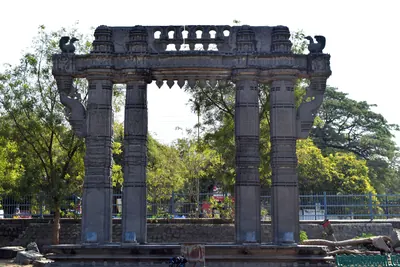 Kakatiya Kala Thoranam, Warangal FortPhotograph · 2018
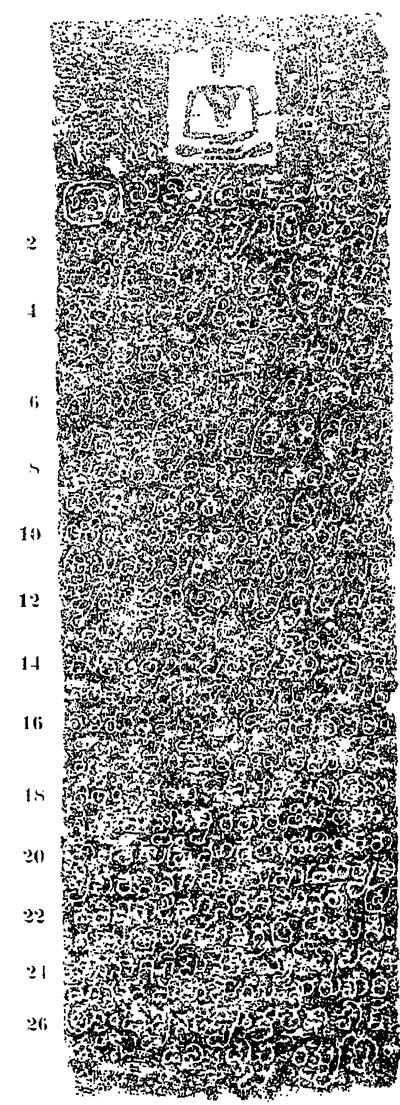 "Anmakonda Inscription of Prola; The Chalukya-Vikrama Year Forty-Two", east face (Epigraphia Indica IX, plate between pp. 262 and 263 (PDF p. 326))Inscription rubbing · 1908
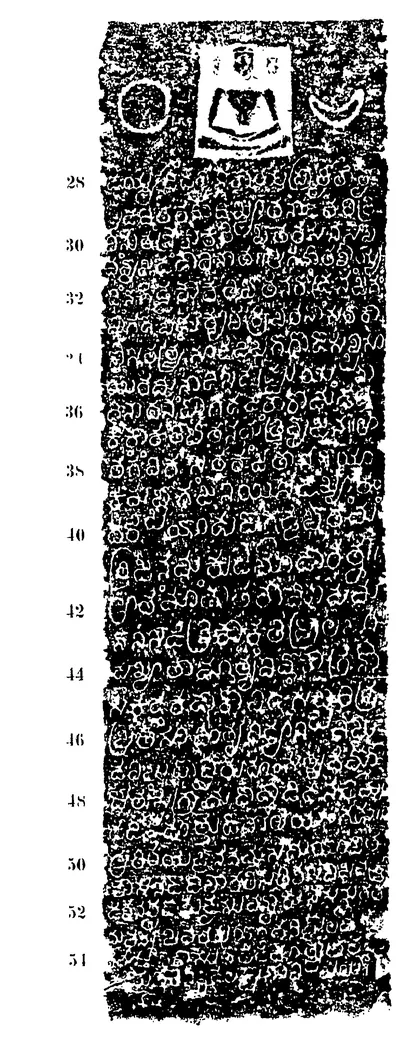 "Anmakonda Inscription of Prola; The Chalukya-Vikrama Year Forty-Two", north face (Epigraphia Indica IX, plate between pp. 262 and 263 (PDF p. 326))Inscription rubbing · 1908
 "Anmakonda Inscription of Prola; The Chalukya-Vikrama Year Forty-Two", south face (Epigraphia Indica IX, plate between pp. 262 and 263 (PDF p. 327))Inscription rubbing · 1908
 "Anmakonda Inscription of Prola; The Chalukya-Vikrama Year Forty-Two", west face (Epigraphia Indica IX, plate between pp. 262 and 263 (PDF p. 327))Inscription rubbing · 1908
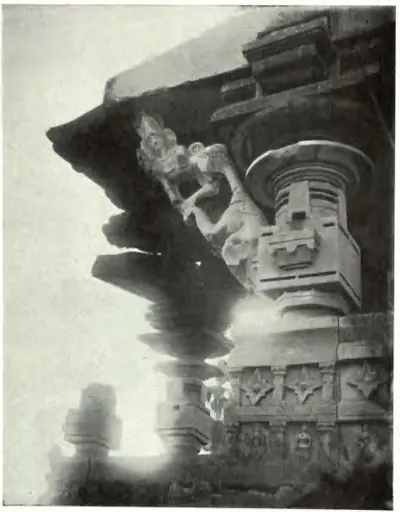 "Another Bracket of the same Temple" (Main Temple of Ghanapur; Hyderabad Arch. Report 1931-32, Pl. V (b) (PDF p. 145))Historic photograph · 1935
 "Bothpur inscription of Malyāla Guṇḍa (dated Saka 1181)", face I (Sreenivasachar, Corpus of Inscriptions in the Telingana Districts II, Plate 48 (PDF p. 316))Inscription rubbing · 1940
 "Bothpur inscription of Malyāla Guṇḍa (dated Saka 1181)", face II (Sreenivasachar, Corpus of Inscriptions in the Telingana Districts II, Plate 48 (PDF p. 316))Inscription rubbing · 1940
 "Bothpur inscription of Malyāla Guṇḍa (dated Saka 1181)", face III (Sreenivasachar, Corpus of Inscriptions in the Telingana Districts II, Plate 49 (PDF p. 318))Inscription rubbing · 1940
 "Bothpur inscription of Malyāla Guṇḍa (dated Saka 1181)", face IV (Sreenivasachar, Corpus of Inscriptions in the Telingana Districts II, Plate 49 (PDF p. 318))Inscription rubbing · 1940
 "Bothpur inscription of Malyāla Guṇḍa (dated Saka 1194)", face I (Sreenivasachar, Corpus of Inscriptions in the Telingana Districts II, Plate 46 (PDF p. 312))Inscription rubbing · 1940
Show all (204)
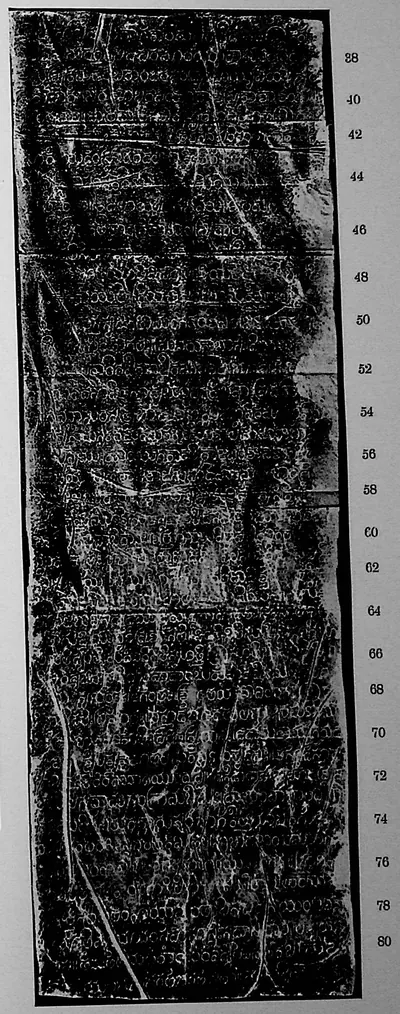 "Bothpur inscription of Malyāla Guṇḍa (dated Saka 1194)", face II (Sreenivasachar, Corpus of Inscriptions in the Telingana Districts II, Plate 46 (PDF p. 312))Inscription rubbing · 1940
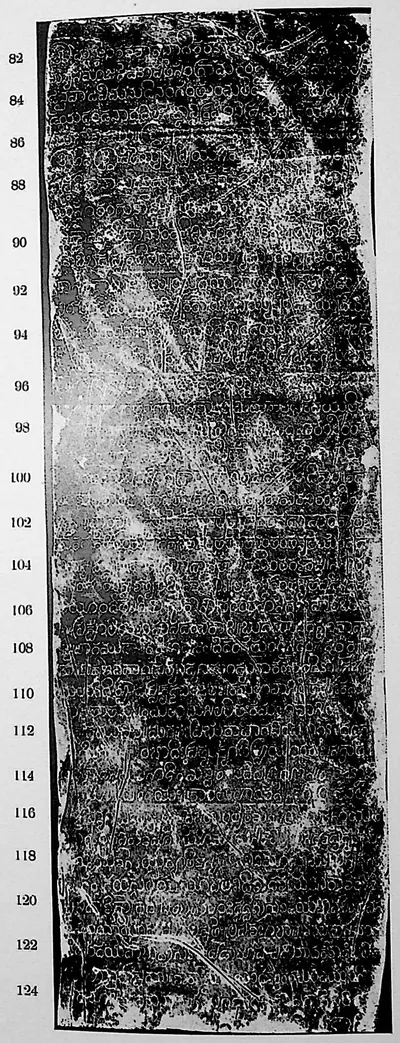 "Bothpur inscription of Malyāla Guṇḍa (dated Saka 1194)", face III (Sreenivasachar, Corpus of Inscriptions in the Telingana Districts II, Plate 47 (PDF p. 314))Inscription rubbing · 1940
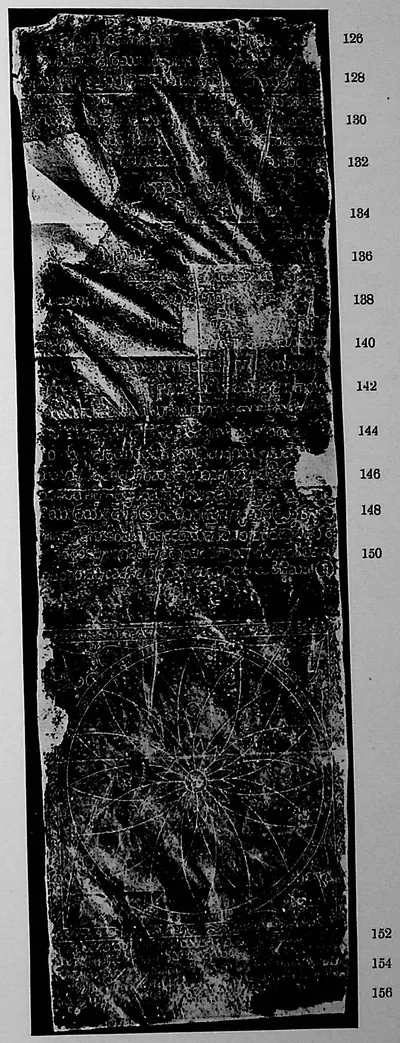 "Bothpur inscription of Malyāla Guṇḍa (dated Saka 1194)", face IV (Sreenivasachar, Corpus of Inscriptions in the Telingana Districts II, Plate 47 (PDF p. 314))Inscription rubbing · 1940
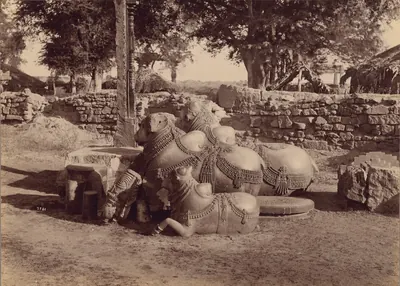 "Bulls or Nadias with Ornamental Carvings, Side View, Warangal", by Lala Deen Dayal, 1887Historic photograph · 1887
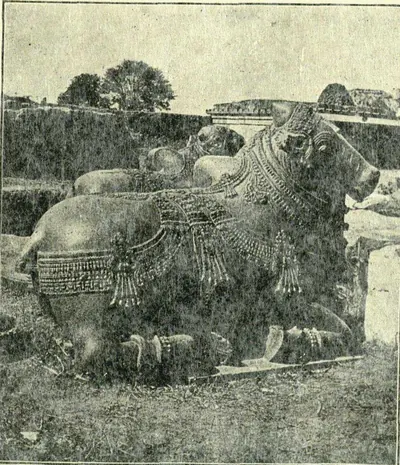 "Carved Stone Bulls in front of the Sambhuni-gudi Temple" (Sastri 1932, Pl. I (b))Book plate · 1932
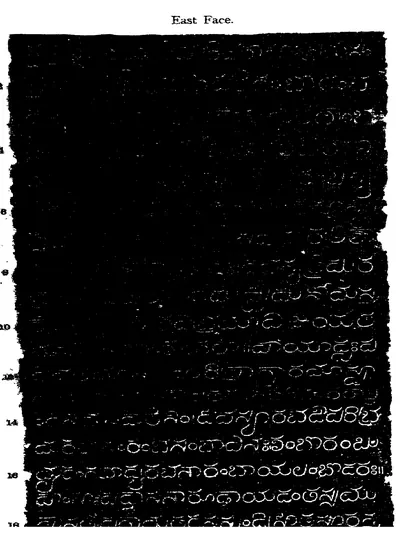 "Chebrolu Pillar Inscription of Jaya; after Saka-Samvat 1135", east face, opening lines (numbered 2 to 18) (Epigraphia Indica V, plate between pp. 146 and 147 (PDF p. 204))Inscription rubbing · 1899
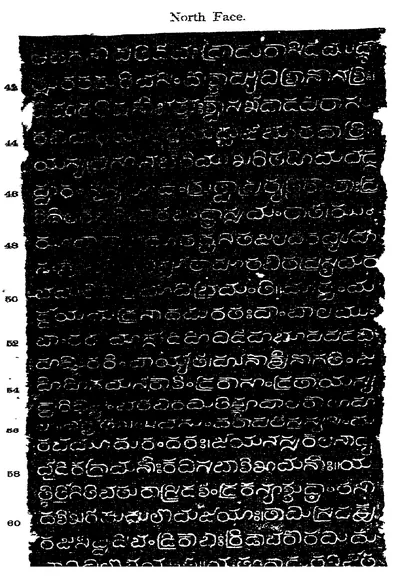 "Chebrolu Pillar Inscription of Jaya; after Saka-Samvat 1135", north face, part (lines numbered 43 to 60) (Epigraphia Indica V, plate between pp. 146 and 147 (PDF p. 204))Inscription rubbing · 1899
 "Chebrolu Pillar Inscription of Jaya; after Saka-Samvat 1135", second page of the plate, lines 116-131 (Epigraphia Indica V, plate between pp. 146 and 147 (PDF p. 205))Inscription rubbing · 1899
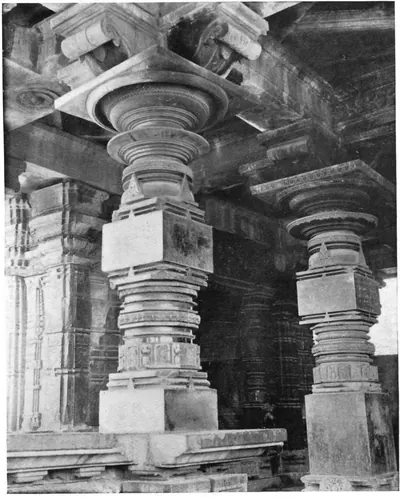 "Detail in Porch, Metropolitan Temple, Hammancondah" (F. B. and W. H. Workman, Through Town and Jungle, 1904, plate p. 128 (PDF leaf 153 of scan ldpd_7460476_000))Historic photograph · 1904
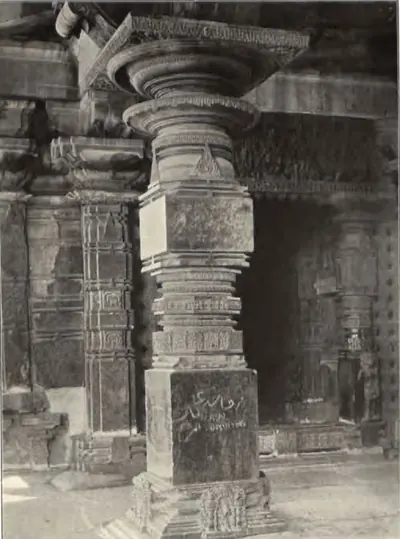 "Detail of Pillar, Thousand-pillared Temple, Warangal" (Hyderabad Arch. Report 1915-16, Pl. VII (b))Book plate · 1917
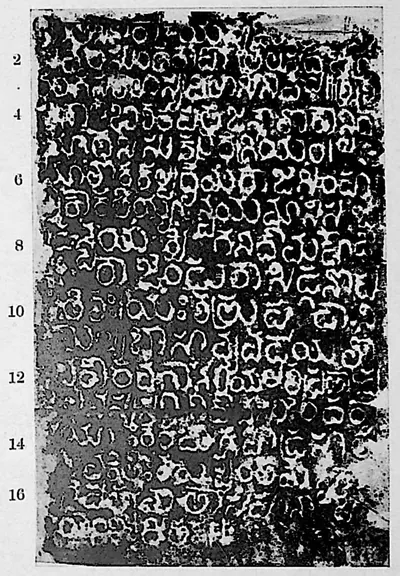 "Dharmasāgar inscription", face I (Sreenivasachar, Corpus of Inscriptions in the Telingana Districts II, Plate 1 (PDF p. 222))Inscription rubbing · 1940
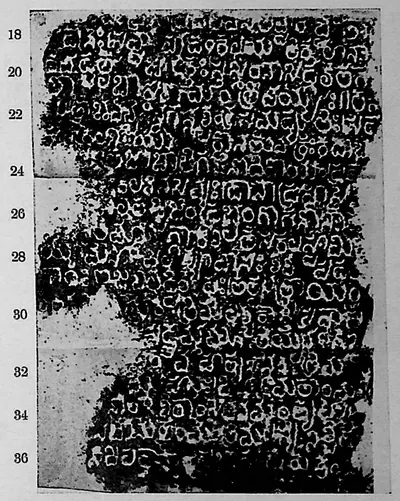 "Dharmasāgar inscription", face II (Sreenivasachar, Corpus of Inscriptions in the Telingana Districts II, Plate 1 (PDF p. 222))Inscription rubbing · 1940
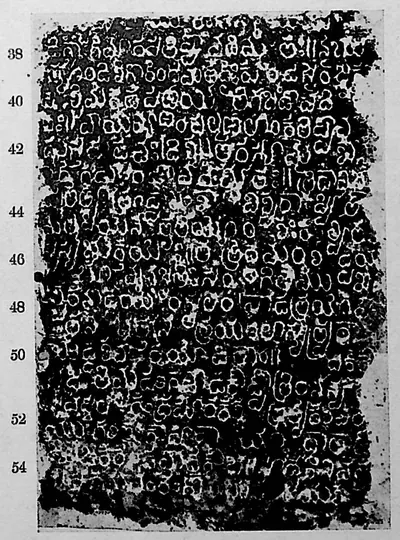 "Dharmasāgar inscription", face III (Sreenivasachar, Corpus of Inscriptions in the Telingana Districts II, Plate 1 (PDF p. 222))Inscription rubbing · 1940
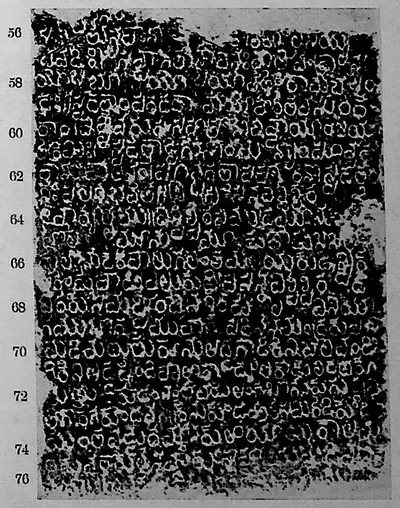 "Dharmasāgar inscription", face IV (Sreenivasachar, Corpus of Inscriptions in the Telingana Districts II, Plate 1 (PDF p. 222))Inscription rubbing · 1940
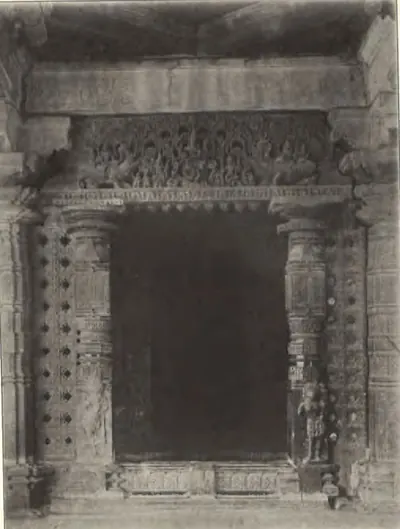 "Door of Shrine, Thousand-pillared Temple, Warangal" (Hyderabad Arch. Report 1915-16, Pl. VIII (b))Book plate · 1917
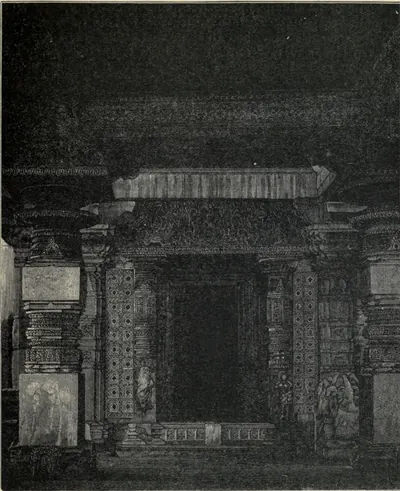 "Doorway of Great Temple at Hanamkonda. (From a Photograph.)" (Fergusson, History of Indian and Eastern Architecture, revised ed. 1910, vol. I, woodcut 252, p. 433 (PDF leaf 497 of scan historyofindiane01ferguoft))Drawing · 1910
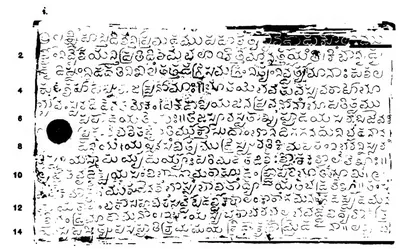 "Garavapadu Grant of Ganapatideva: Saka 1182", plate i (Epigraphia Indica XVIII, plate between pp. 350 and 351 (PDF p. 452))Inscription rubbing · 1926
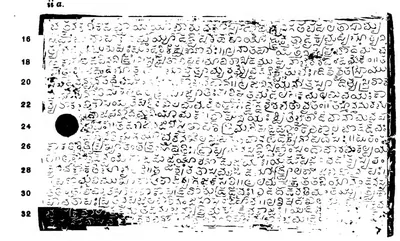 "Garavapadu Grant of Ganapatideva: Saka 1182", plate ii a (Epigraphia Indica XVIII, plate between pp. 350 and 351 (PDF p. 452))Inscription rubbing · 1926
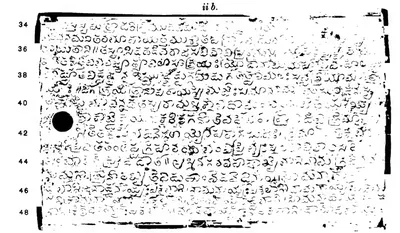 "Garavapadu Grant of Ganapatideva: Saka 1182", plate ii b (Epigraphia Indica XVIII, plate between pp. 350 and 351 (PDF p. 453))Inscription rubbing · 1926
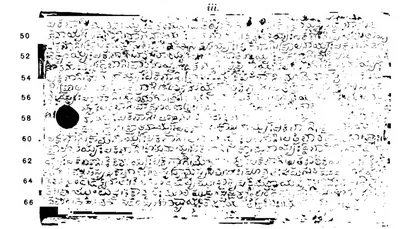 "Garavapadu Grant of Ganapatideva: Saka 1182", plate iii (Epigraphia Indica XVIII, plate between pp. 350 and 351 (PDF p. 453))Inscription rubbing · 1926
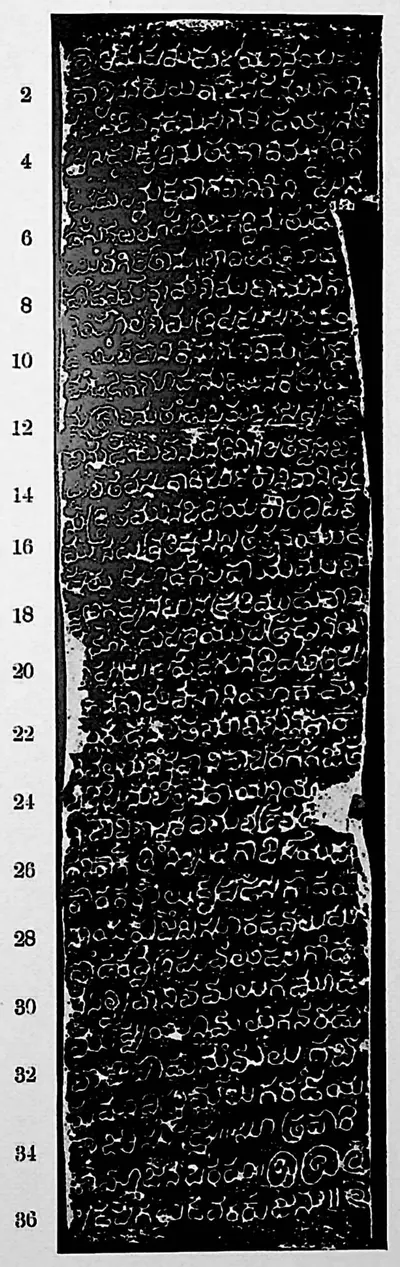 "Gūḍūr inscription of Kāmasāni" (Sreenivasachar, Corpus of Inscriptions in the Telingana Districts II, Plate 26 (PDF p. 272))Inscription rubbing · 1940
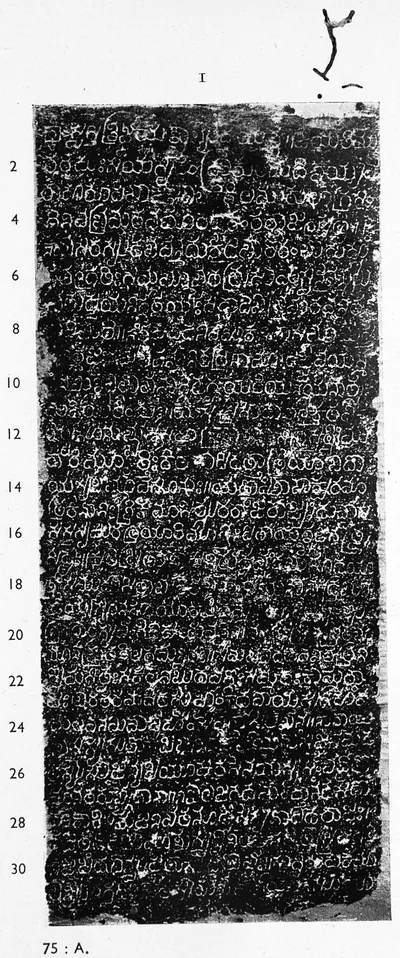 "Hanamakoṇḍa inscription of Gaṅgādhara", face I (Sreenivasachar, Corpus of Inscriptions in the Telingana Districts III, Plate 4 (PDF p. 194))Inscription rubbing · 1956
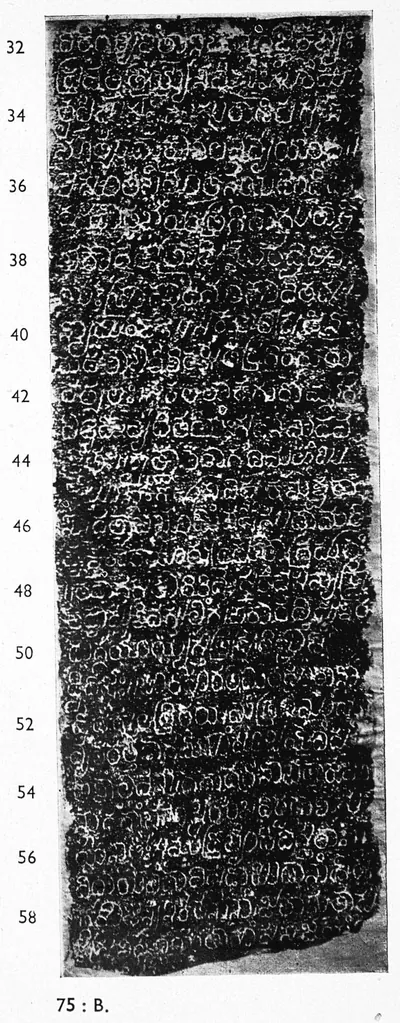 "Hanamakoṇḍa inscription of Gaṅgādhara", face II (Sreenivasachar, Corpus of Inscriptions in the Telingana Districts III, Plate 4 (PDF p. 194))Inscription rubbing · 1956
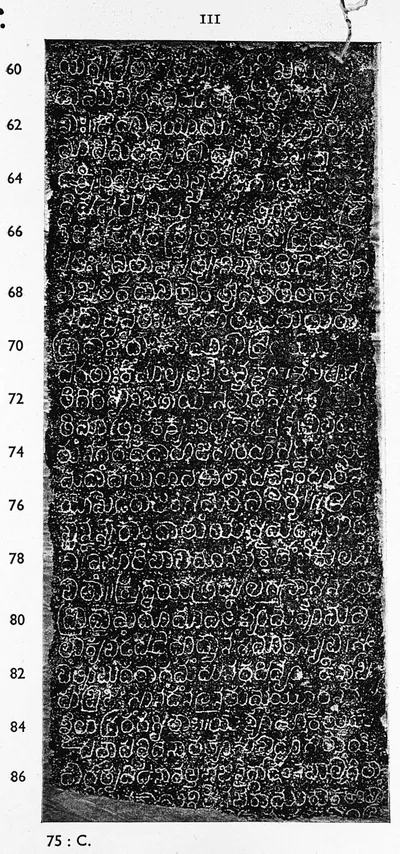 "Hanamakoṇḍa inscription of Gaṅgādhara", face III (Sreenivasachar, Corpus of Inscriptions in the Telingana Districts III, Plate 5 (PDF p. 195))Inscription rubbing · 1956
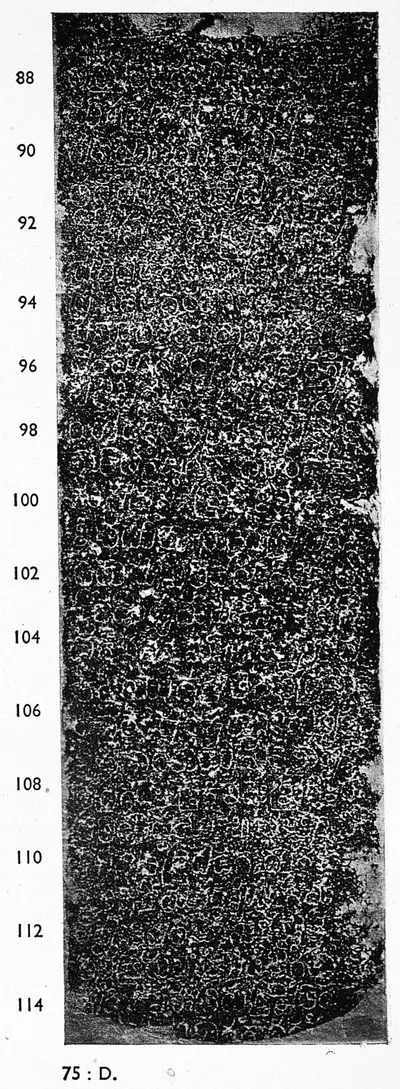 "Hanamakoṇḍa inscription of Gaṅgādhara", face IV (Sreenivasachar, Corpus of Inscriptions in the Telingana Districts III, Plate 5 (PDF p. 195))Inscription rubbing · 1956
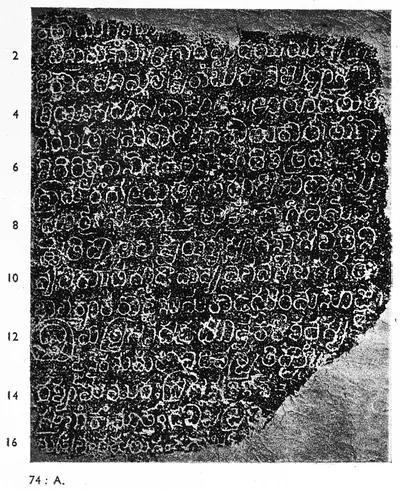 "Hanumakoṇḍa inscription of Gaṃgādhara", face I (Sreenivasachar, Corpus of Inscriptions in the Telingana Districts III, Plate 2 (PDF p. 192))Inscription rubbing · 1956
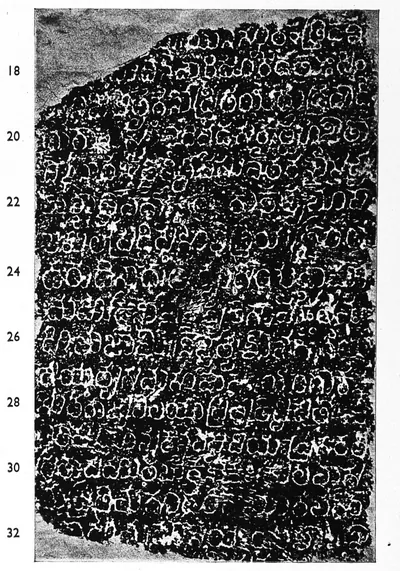 "Hanumakoṇḍa inscription of Gaṃgādhara", face II (Sreenivasachar, Corpus of Inscriptions in the Telingana Districts III, Plate 2 (PDF p. 192))Inscription rubbing · 1956
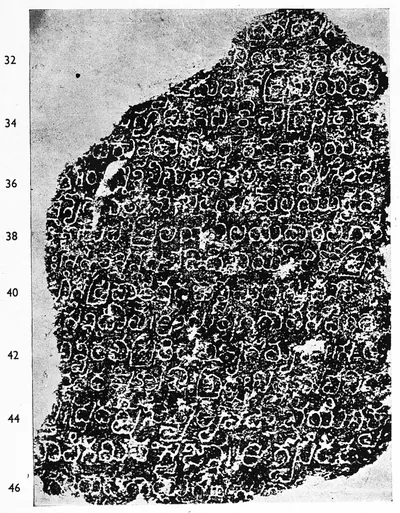 "Hanumakoṇḍa inscription of Gaṃgādhara", face III (Sreenivasachar, Corpus of Inscriptions in the Telingana Districts III, Plate 3 (PDF p. 193))Inscription rubbing · 1956
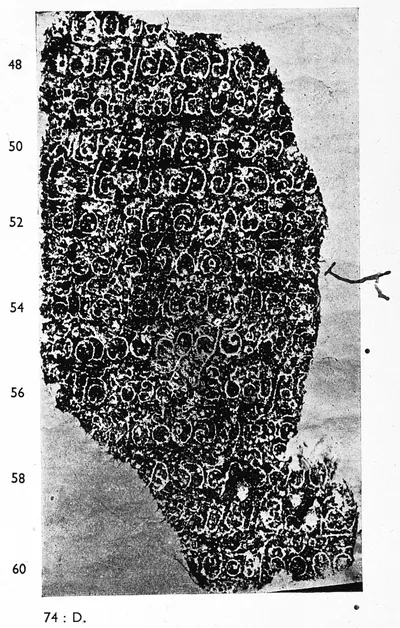 "Hanumakoṇḍa inscription of Gaṃgādhara", face IV (Sreenivasachar, Corpus of Inscriptions in the Telingana Districts III, Plate 3 (PDF p. 193))Inscription rubbing · 1956
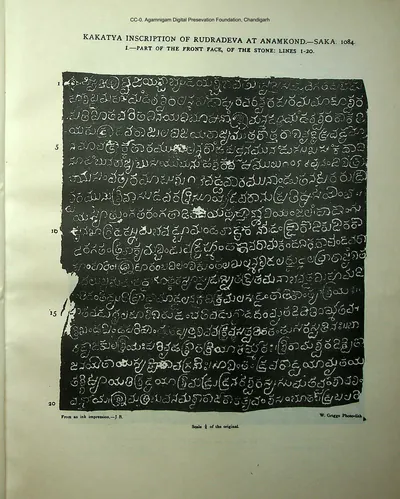 "Kakatya inscription of Rudradeva at Anamkond, Saka 1084. I: Part of the front face of the stone, lines 1-20" (Indian Antiquary XI, Plate I (PDF p. 26))Inscription rubbing · 1882
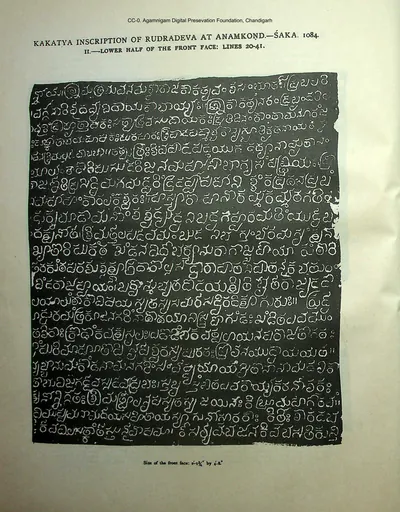 "Kakatya inscription of Rudradeva at Anamkond, Saka 1084. II: Lower half of the front face, lines 20-41" (Indian Antiquary XI, Plate II (PDF p. 27))Inscription rubbing · 1882
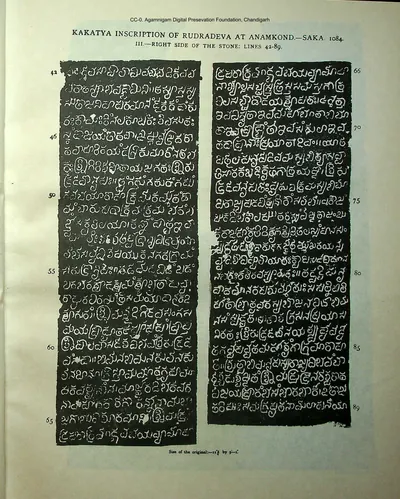 "Kakatya inscription of Rudradeva at Anamkond, Saka 1084. III: Right side of the stone, lines 42-89" (Indian Antiquary XI, Plate III (PDF p. 30))Inscription rubbing · 1882
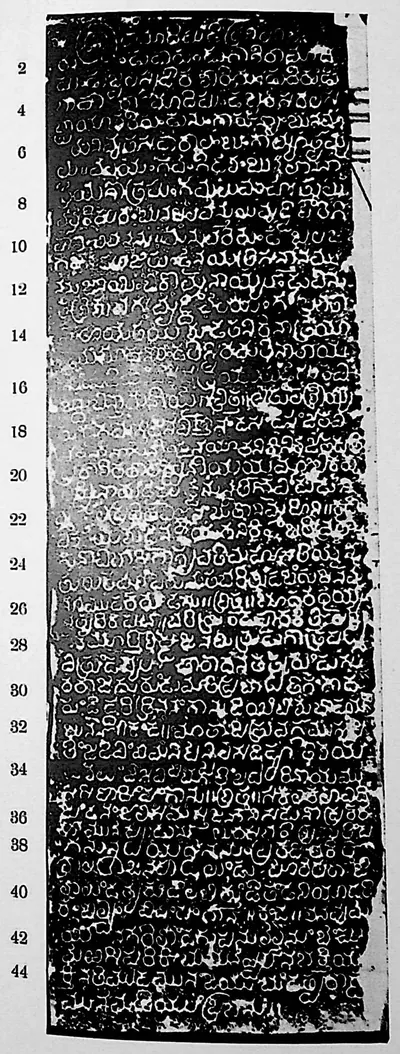 "Karimnagar inscription of Gaṅgādhara", face I (Sreenivasachar, Corpus of Inscriptions in the Telingana Districts II, Plate 53 (PDF p. 326))Inscription rubbing · 1940
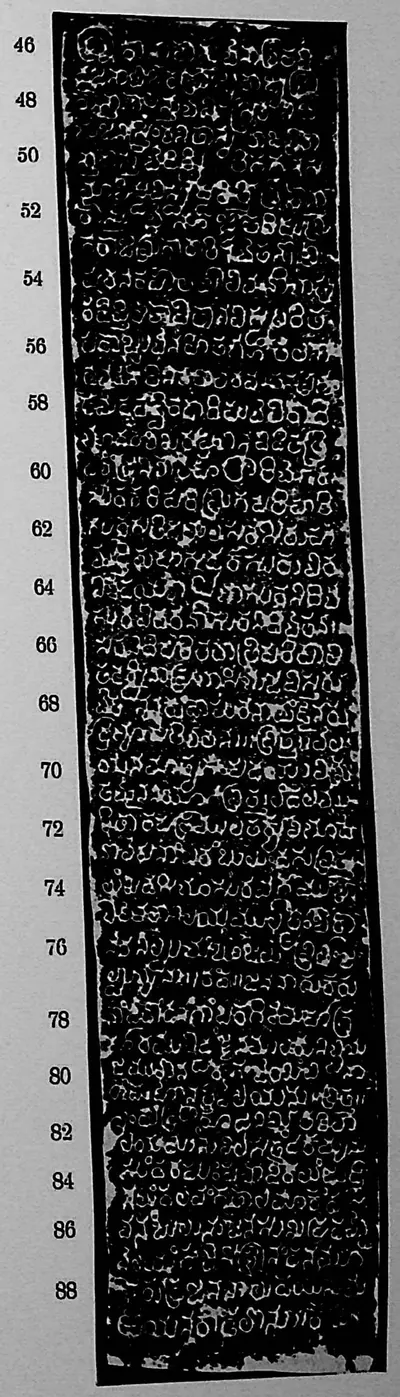 "Karimnagar inscription of Gaṅgādhara", face II (Sreenivasachar, Corpus of Inscriptions in the Telingana Districts II, Plate 53 (PDF p. 326))Inscription rubbing · 1940
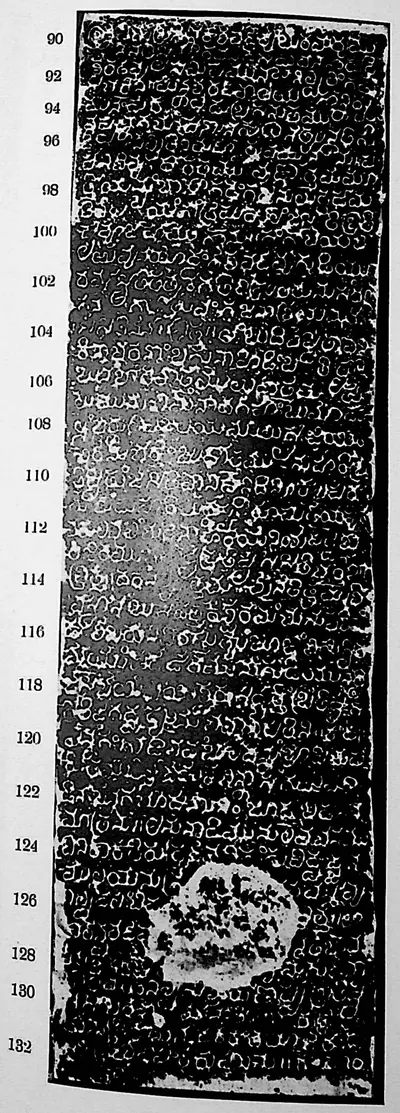 "Karimnagar inscription of Gaṅgādhara", face III (Sreenivasachar, Corpus of Inscriptions in the Telingana Districts II, Plate 54 (PDF p. 328))Inscription rubbing · 1940
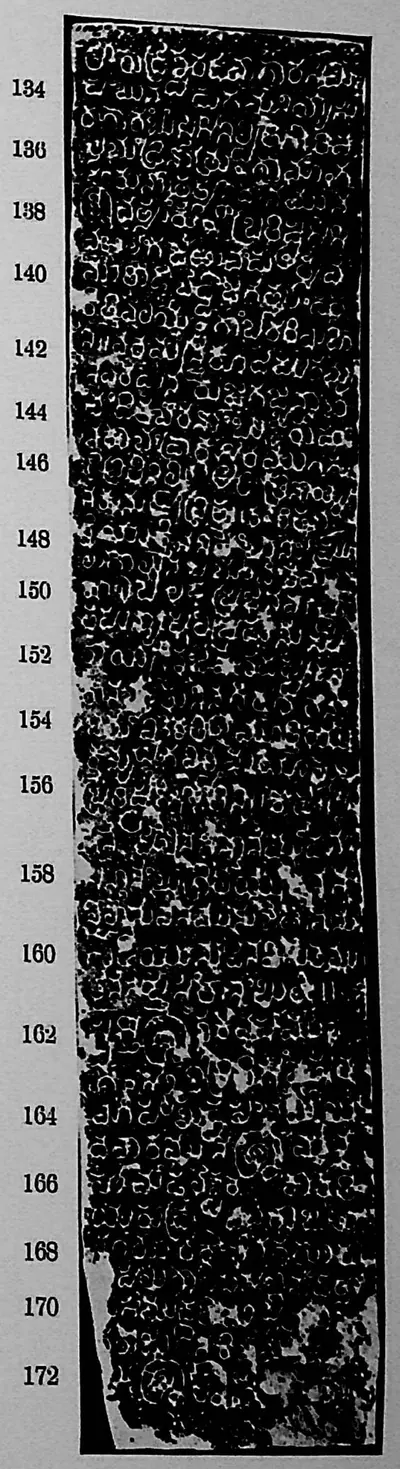 "Karimnagar inscription of Gaṅgādhara", face IV (Sreenivasachar, Corpus of Inscriptions in the Telingana Districts II, Plate 54 (PDF p. 328))Inscription rubbing · 1940
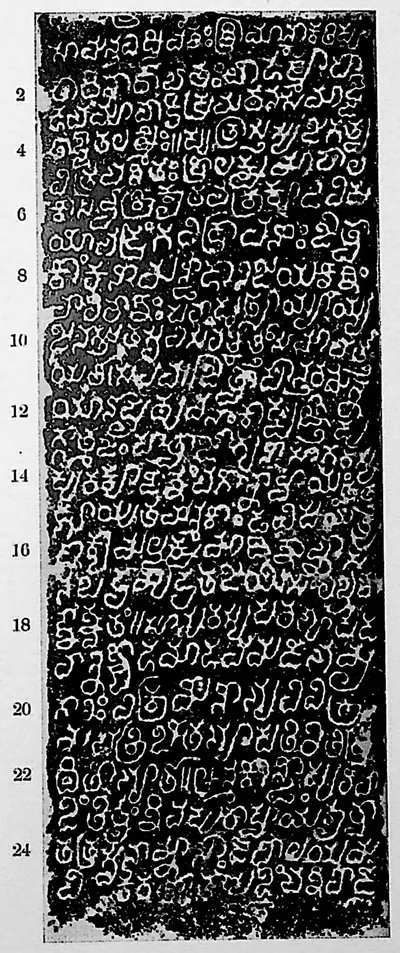 "Kāzipet inscription in the Dargāh", face I (Sreenivasachar, Corpus of Inscriptions in the Telingana Districts II, Plate 9 (PDF p. 238))Inscription rubbing · 1940
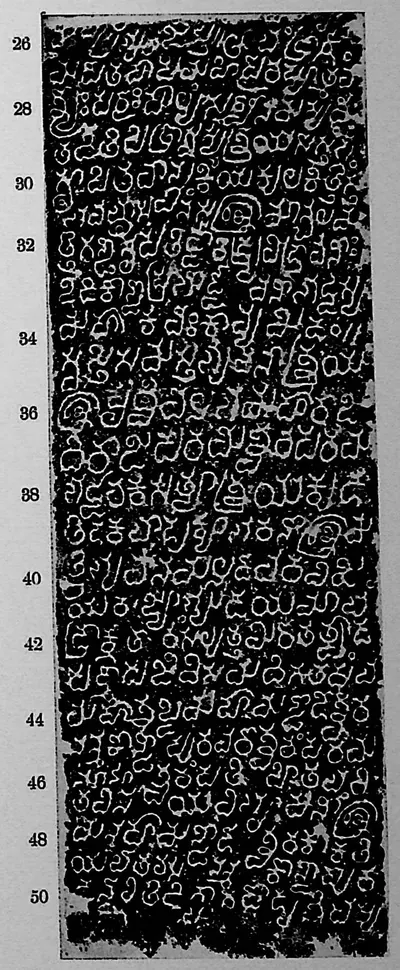 "Kāzipet inscription in the Dargāh", face II (Sreenivasachar, Corpus of Inscriptions in the Telingana Districts II, Plate 9 (PDF p. 238))Inscription rubbing · 1940
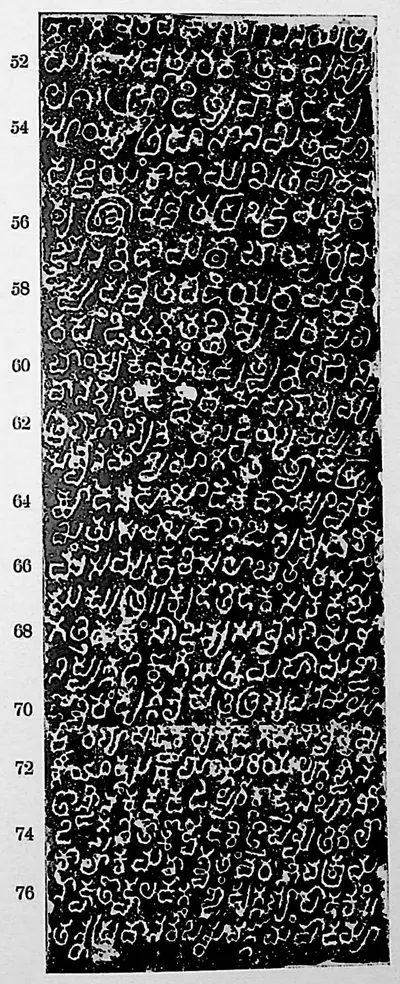 "Kāzipet inscription in the Dargāh", face III (Sreenivasachar, Corpus of Inscriptions in the Telingana Districts II, Plate 10 (PDF p. 240))Inscription rubbing · 1940
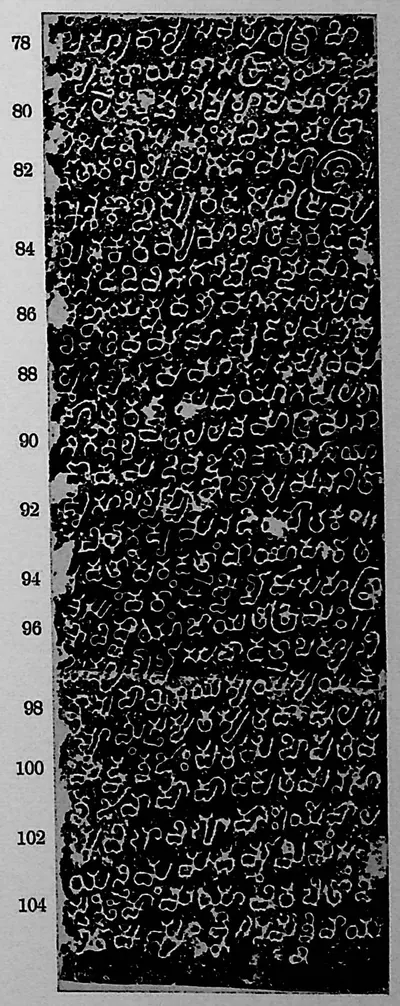 "Kāzipet inscription in the Dargāh", face IV (Sreenivasachar, Corpus of Inscriptions in the Telingana Districts II, Plate 10 (PDF p. 240))Inscription rubbing · 1940
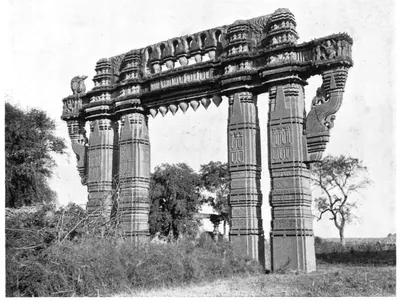 "Kirti Stambha or Toran, Warangal" (F. B. and W. H. Workman, Through Town and Jungle, 1904, p. 131 (PDF leaf 156 of scan ldpd_7460476_000))Historic photograph · 1904
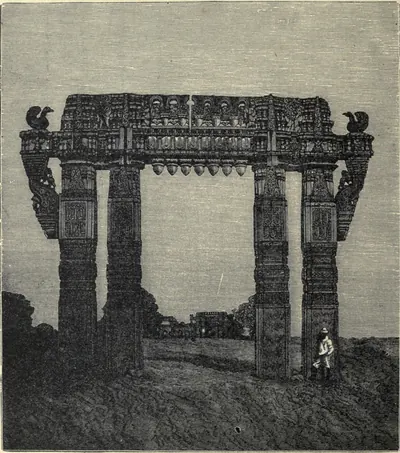 "Kirtti Stambha at Orangal. (From a Photograph.)" (Fergusson, History of Indian and Eastern Architecture, revised ed. 1910, vol. I, woodcut 253, p. 434 (PDF leaf 498 of scan historyofindiane01ferguoft))Drawing · 1910
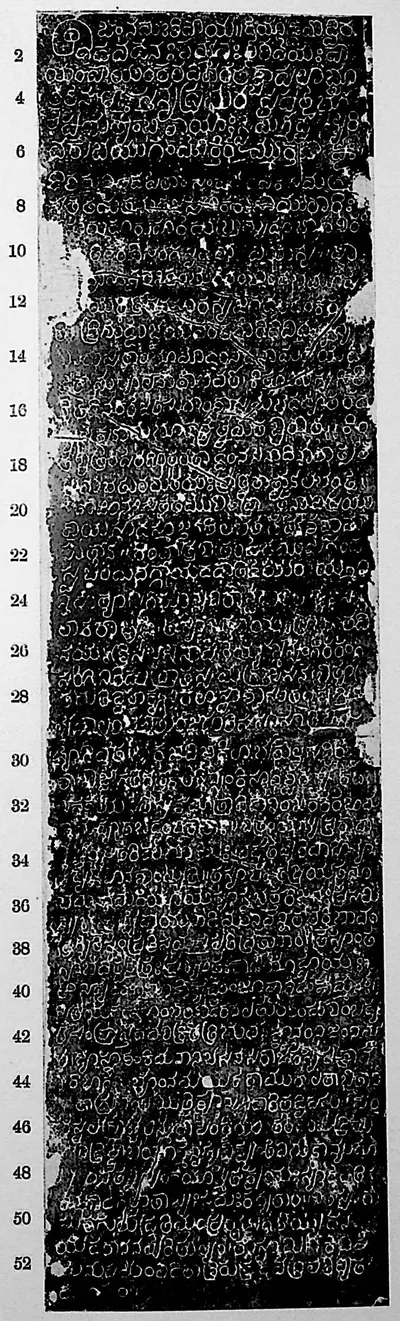 "Koṇḍiparti inscription of Cauṇḍa", face I (Sreenivasachar, Corpus of Inscriptions in the Telingana Districts II, Plate 11 (PDF p. 242))Inscription rubbing · 1940
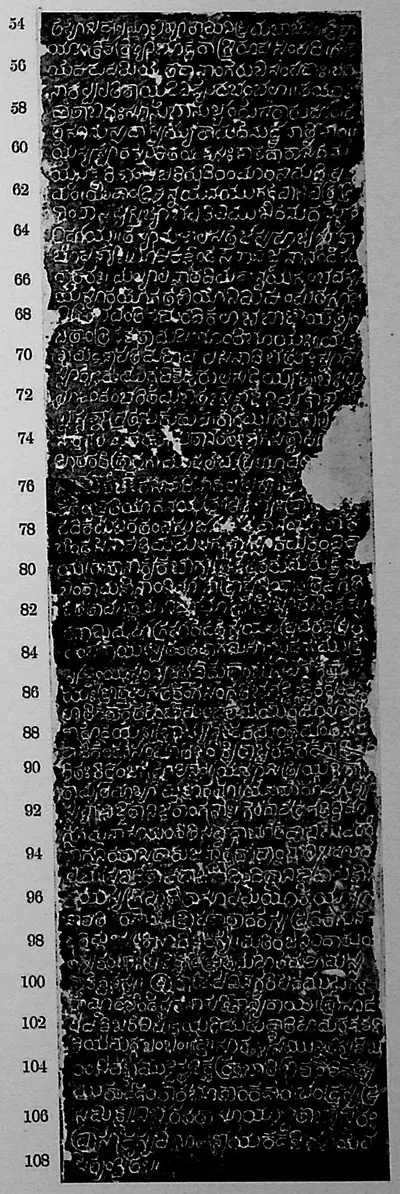 "Koṇḍiparti inscription of Cauṇḍa", face II (Sreenivasachar, Corpus of Inscriptions in the Telingana Districts II, Plate 11 (PDF p. 242))Inscription rubbing · 1940
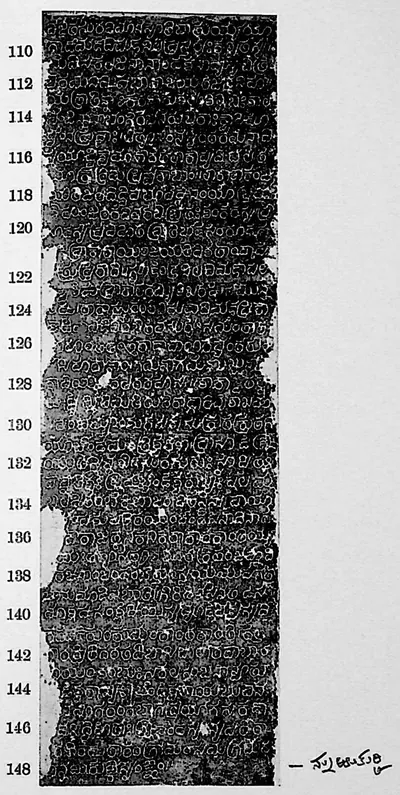 "Koṇḍiparti inscription of Cauṇḍa", face III (Sreenivasachar, Corpus of Inscriptions in the Telingana Districts II, Plate 12 (PDF p. 244))Inscription rubbing · 1940
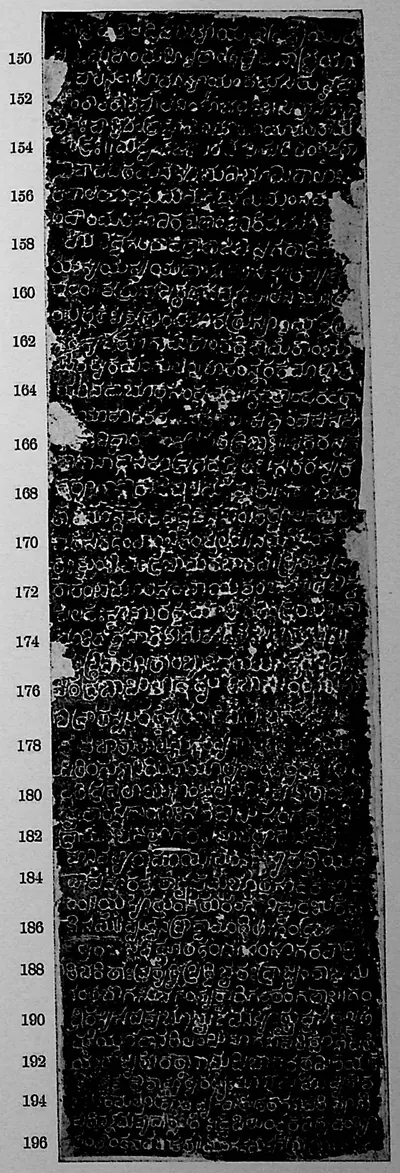 "Koṇḍiparti inscription of Cauṇḍa", face IV (Sreenivasachar, Corpus of Inscriptions in the Telingana Districts II, Plate 12 (PDF p. 244))Inscription rubbing · 1940
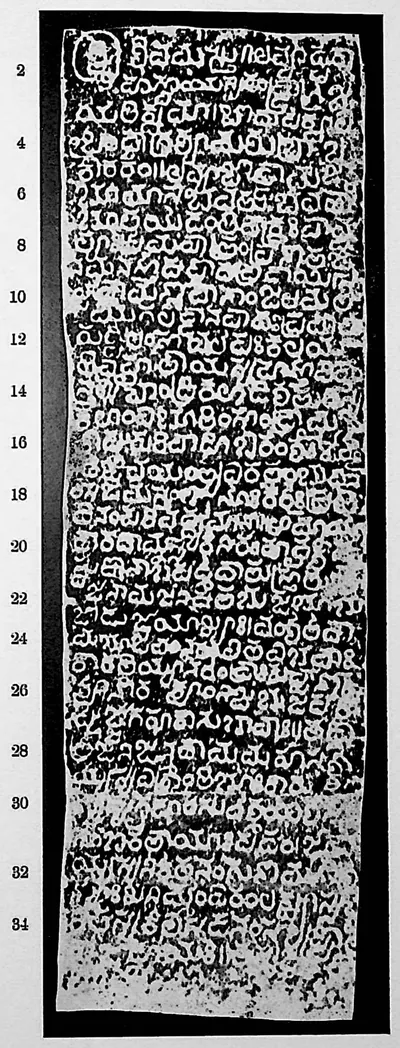 "Kulpak inscription", face I (Sreenivasachar, Corpus of Inscriptions in the Telingana Districts II, Plate 27 (PDF p. 274))Inscription rubbing · 1940
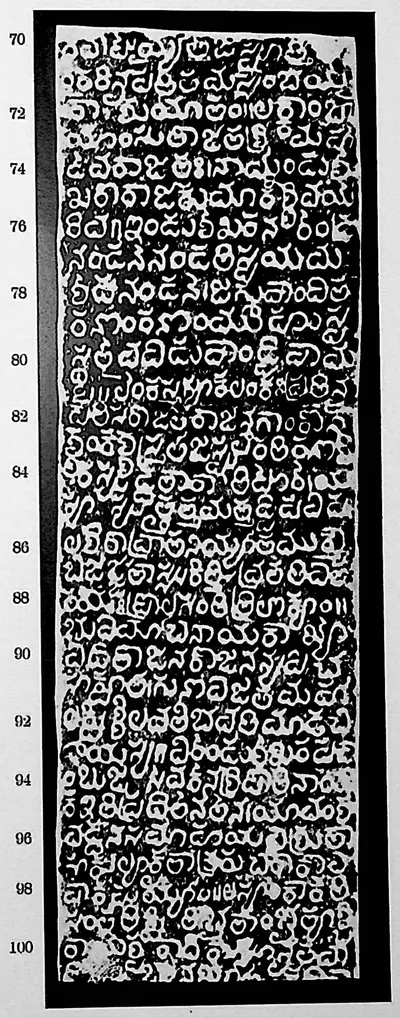 "Kulpak inscription", face I (Sreenivasachar, Corpus of Inscriptions in the Telingana Districts II, Plate 28 (PDF p. 276))Inscription rubbing · 1940
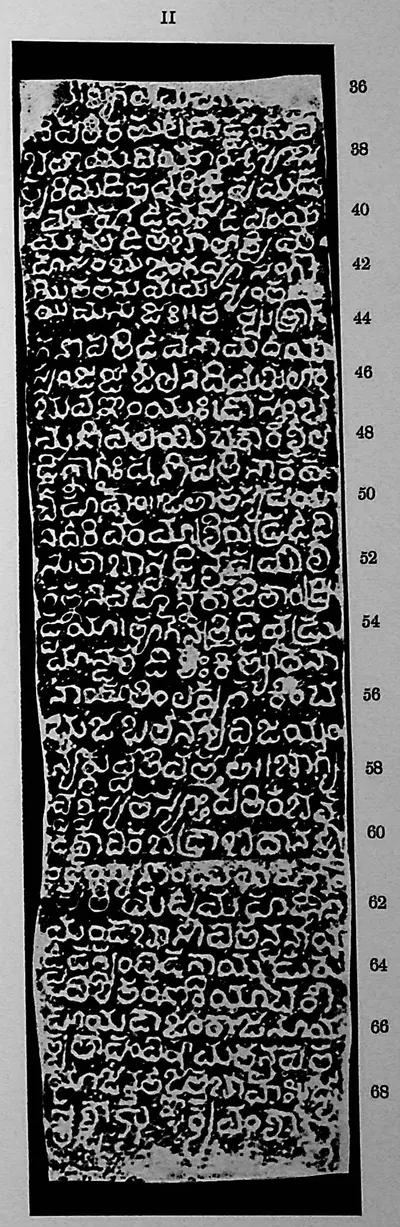 "Kulpak inscription", face II (Sreenivasachar, Corpus of Inscriptions in the Telingana Districts II, Plate 27 (PDF p. 274))Inscription rubbing · 1940
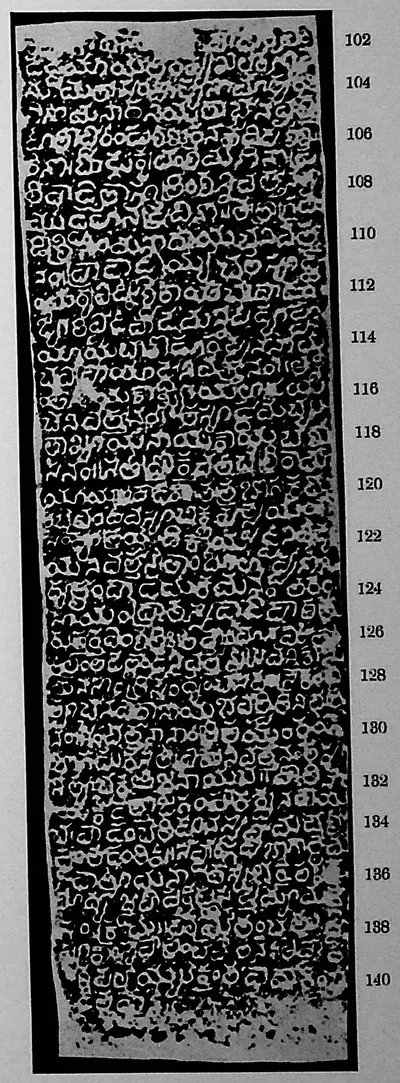 "Kulpak inscription", face II (Sreenivasachar, Corpus of Inscriptions in the Telingana Districts II, Plate 28 (PDF p. 276))Inscription rubbing · 1940
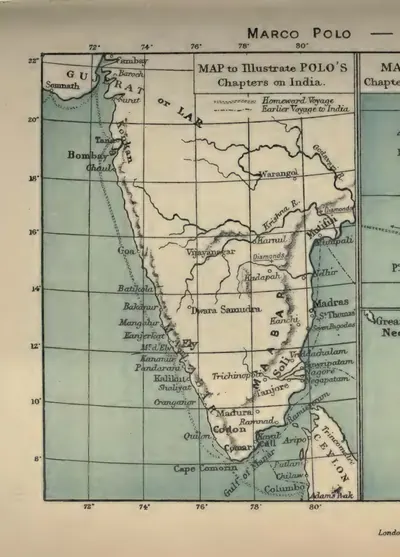 "Map to illustrate Polo's chapters on India" (Marco Polo, Book III) (Yule & Cordier 1903, to face p. 312 (PDF p. 363, lower part))Map · 1903
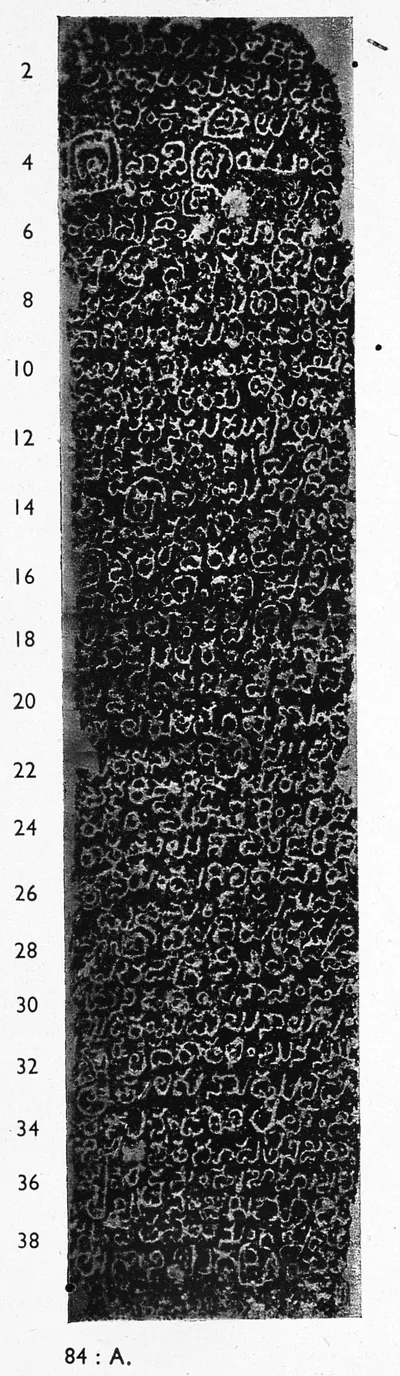 "Māṭēru inscription of Malla", face I (Sreenivasachar, Corpus of Inscriptions in the Telingana Districts III, Plate 8 (PDF p. 198))Inscription rubbing · 1956
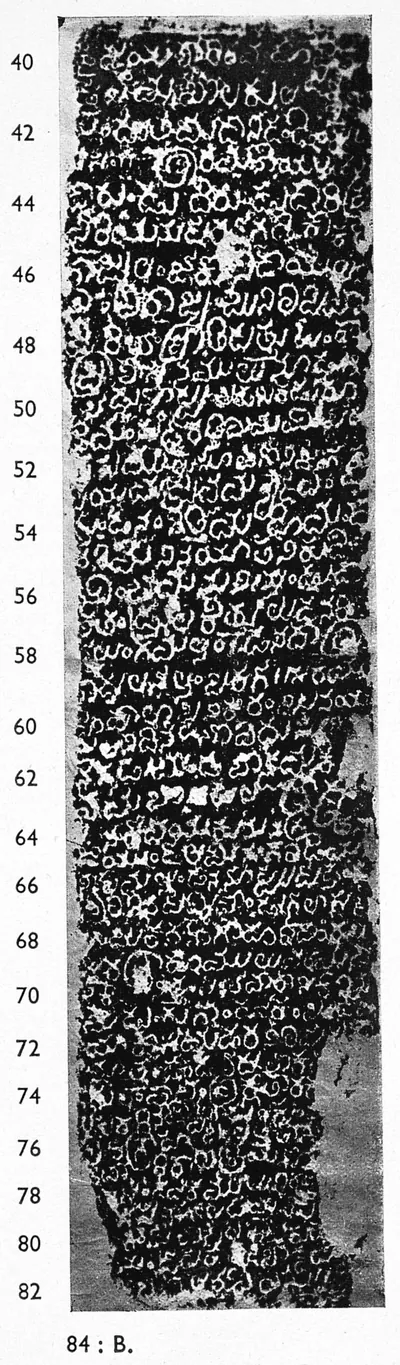 "Māṭēru inscription of Malla", face II (Sreenivasachar, Corpus of Inscriptions in the Telingana Districts III, Plate 8 (PDF p. 198))Inscription rubbing · 1956
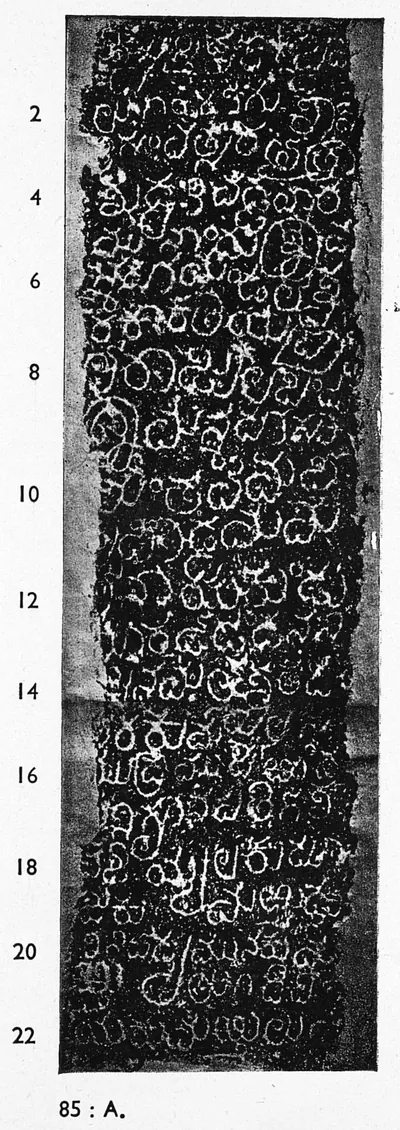 "Māṭēru inscription of Mallēnaya" (Sreenivasachar, Corpus of Inscriptions in the Telingana Districts III, Plate 9 (PDF p. 199))Inscription rubbing · 1956
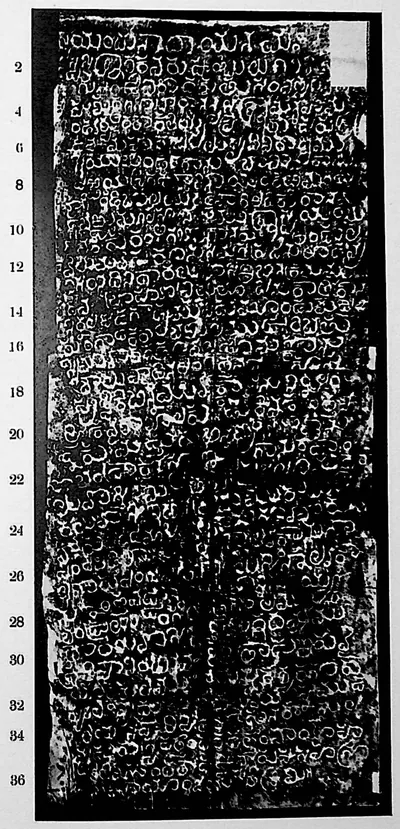 "Mēllacheruvu inscription" (Sreenivasachar, Corpus of Inscriptions in the Telingana Districts II, Plate 29 (PDF p. 278))Inscription rubbing · 1940
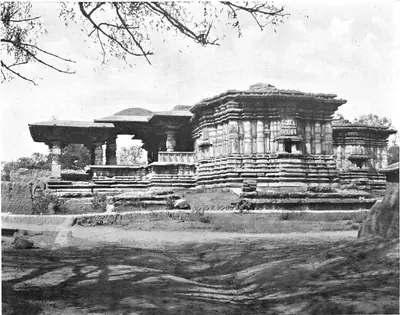 "Metropolitan Temple, Hammancondah" (F. B. and W. H. Workman, Through Town and Jungle, 1904, plate p. 129 (PDF leaf 154 of scan ldpd_7460476_000))Historic photograph · 1904
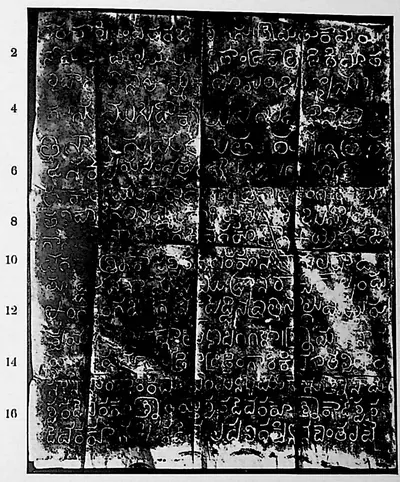 "Nāgulapāḍu inscription of Nāmaya, Kāmaya and Mallaya", face I (Sreenivasachar, Corpus of Inscriptions in the Telingana Districts II, Plate 32 (PDF p. 284))Inscription rubbing · 1940
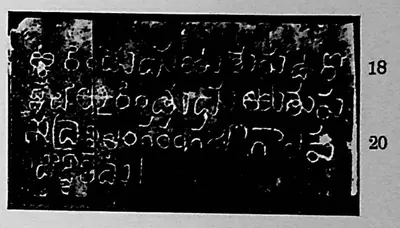 "Nāgulapāḍu inscription of Nāmaya, Kāmaya and Mallaya", face II (Sreenivasachar, Corpus of Inscriptions in the Telingana Districts II, Plate 32 (PDF p. 284))Inscription rubbing · 1940
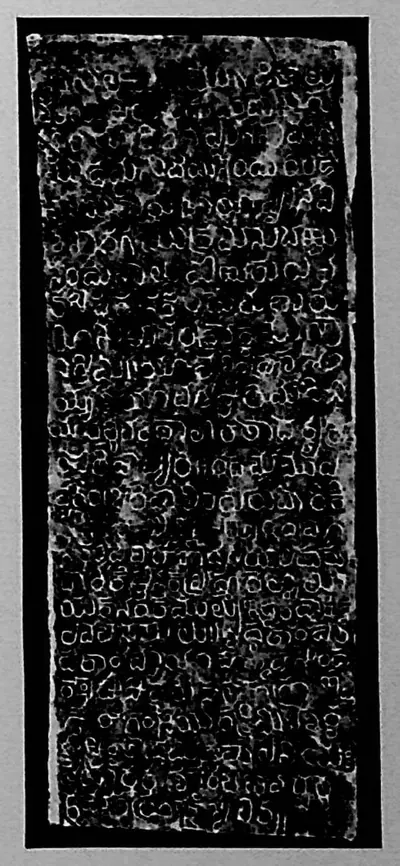 "Nāgulapāḍu inscription of Rēcerla Kāṭreḍḍi", lower piece (Sreenivasachar, Corpus of Inscriptions in the Telingana Districts II, Plate 29 (PDF p. 278))Inscription rubbing · 1940
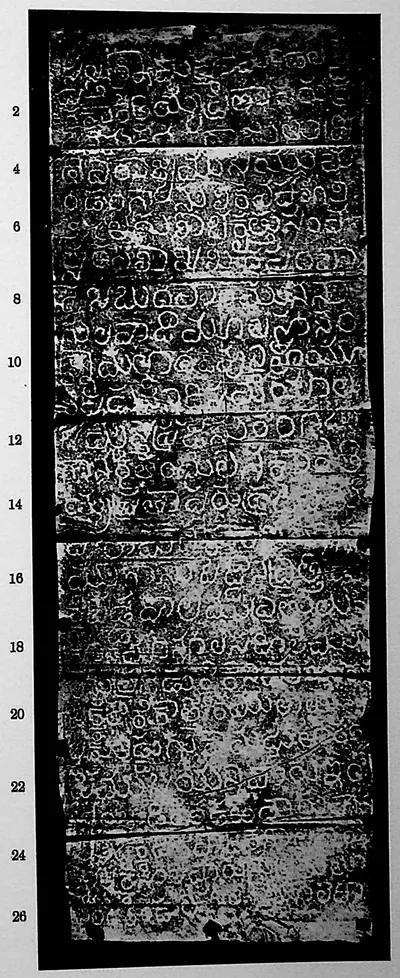 "Nāgulapāḍu inscription of Saka 1225" (Sreenivasachar, Corpus of Inscriptions in the Telingana Districts II, Plate 31 (PDF p. 282))Inscription rubbing · 1940
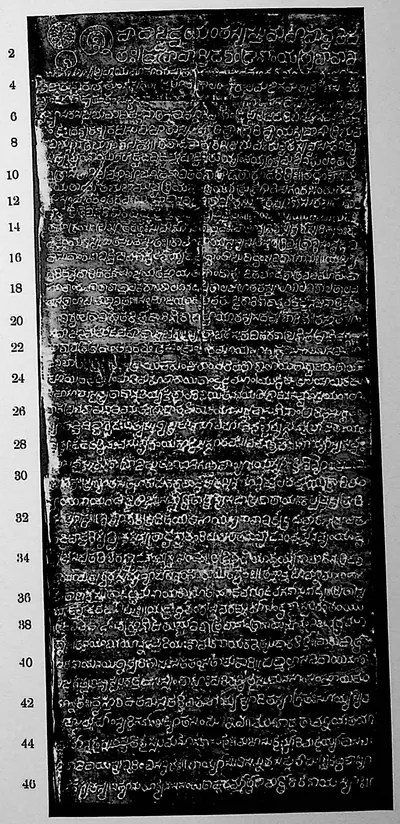 "Pillalamaṟṟi inscription of Eṟaka-sāni", face I (Sreenivasachar, Corpus of Inscriptions in the Telingana Districts II, Plate 41 (PDF p. 302))Inscription rubbing · 1940
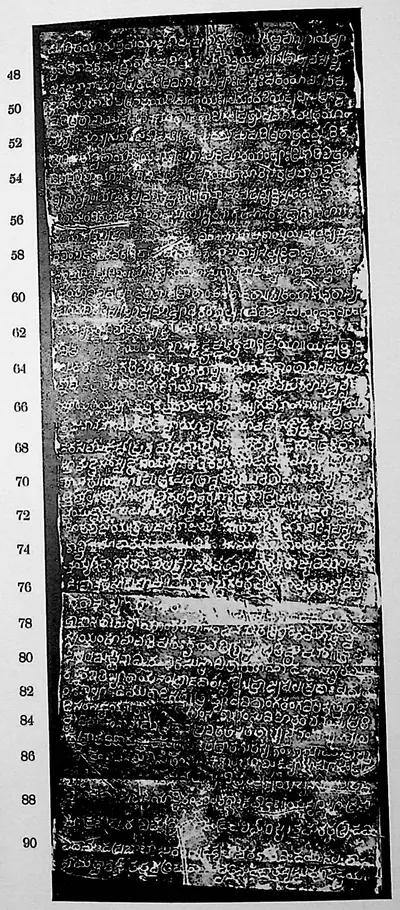 "Pillalamaṟṟi inscription of Eṟaka-sāni", face II (Sreenivasachar, Corpus of Inscriptions in the Telingana Districts II, Plate 42 (PDF p. 304))Inscription rubbing · 1940
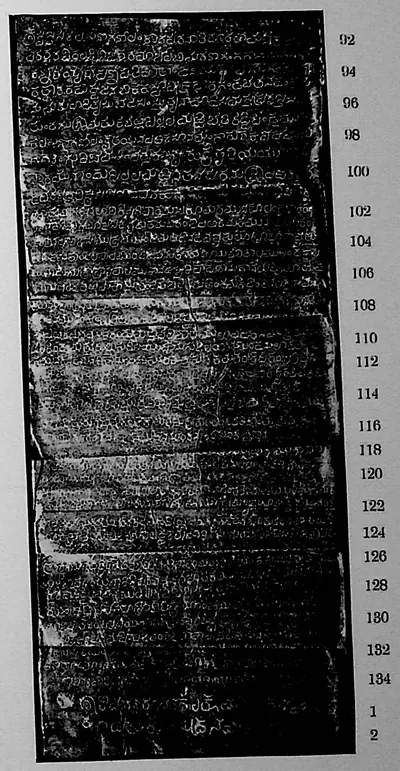 "Pillalamaṟṟi inscription of Eṟaka-sāni", face III (Sreenivasachar, Corpus of Inscriptions in the Telingana Districts II, Plate 42 (PDF p. 304))Inscription rubbing · 1940
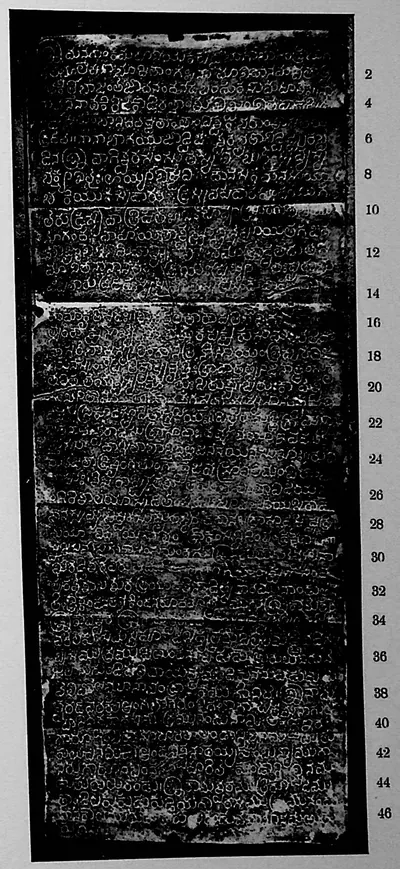 "Pillalamaṟṟi inscription of Nāmi-Reḍḍi (dated Saka 1117)" (Sreenivasachar, Corpus of Inscriptions in the Telingana Districts II, Plate 36 (PDF p. 292))Inscription rubbing · 1940
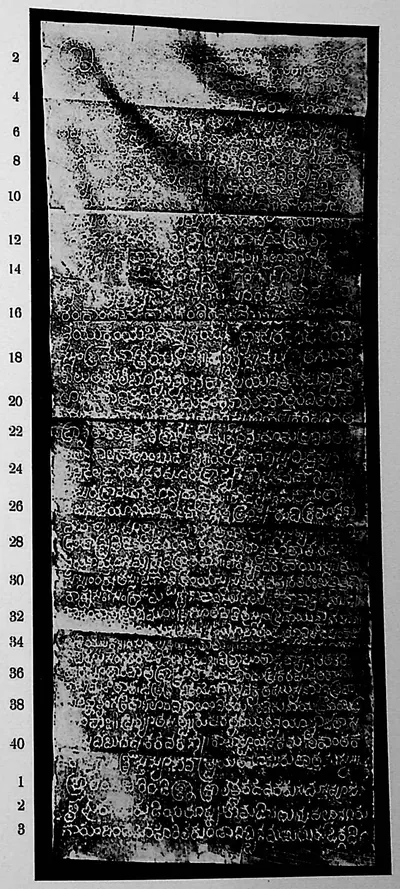 "Pillalamaṟṟi inscription of Nāmi-Reḍḍi (dated Saka 1124)", face I (Sreenivasachar, Corpus of Inscriptions in the Telingana Districts II, Plate 38 (PDF p. 296))Inscription rubbing · 1940
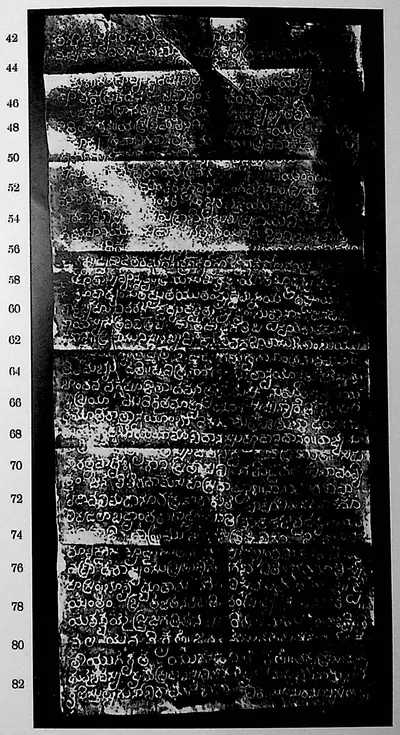 "Pillalamaṟṟi inscription of Nāmi-Reḍḍi (dated Saka 1124)", face II (Sreenivasachar, Corpus of Inscriptions in the Telingana Districts II, Plate 39 (PDF p. 298))Inscription rubbing · 1940
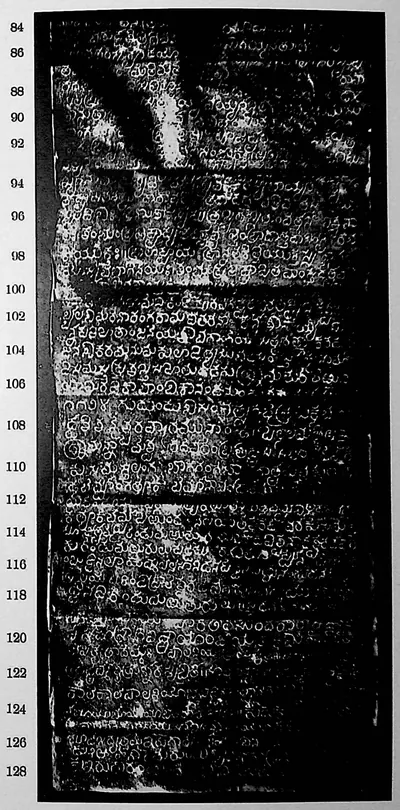 "Pillalamaṟṟi inscription of Nāmi-Reḍḍi (dated Saka 1124)", face III (Sreenivasachar, Corpus of Inscriptions in the Telingana Districts II, Plate 40 (PDF p. 300))Inscription rubbing · 1940
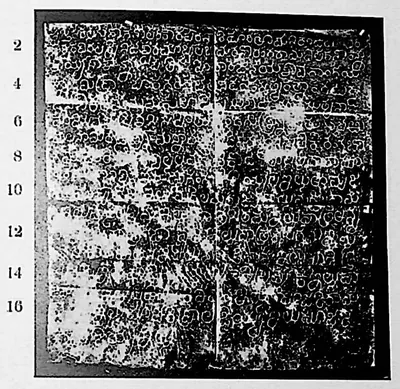 "Pillalamaṟṟi inscription of Rēceṟuvula Nāmi-Reḍḍi" (Sreenivasachar, Corpus of Inscriptions in the Telingana Districts II, Plate 36 (PDF p. 292))Inscription rubbing · 1940
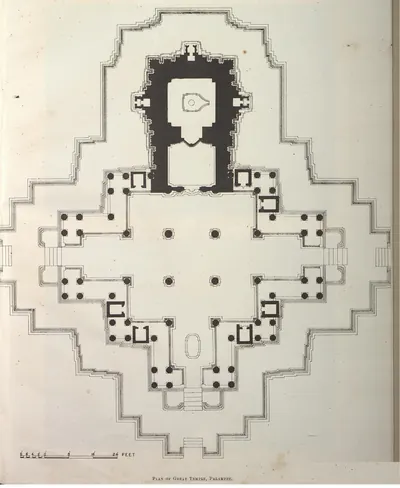 "Plan of Great Temple, Palampet" (Yazdani 1922, Pl. XXX (PDF p. 20))Plan · 1922
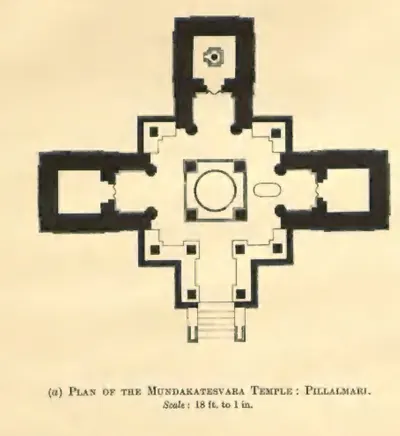 "Plan of the Mundakatesvara Temple: Pillalmari" (Hyderabad Arch. Report 1926-27, Pl. II (a) (PDF p. 57))Plan · 1929
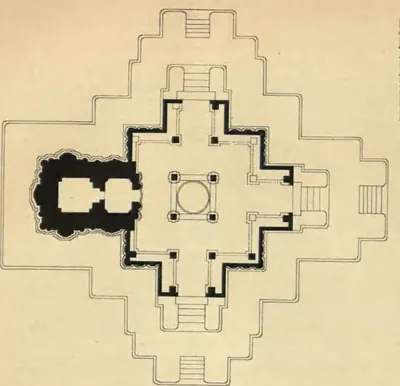 "Plan of the Northern Temple of Nagulpad: Nalgonda District" (Hyderabad Arch. Report 1927-28, Pl. II (b))Drawing · 1929
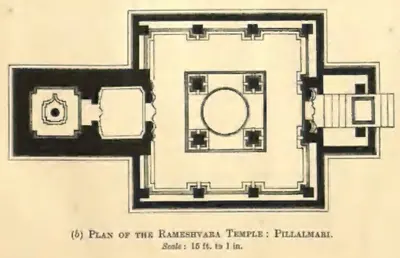 "Plan of the Rameshvara Temple: Pillalmari" (Hyderabad Arch. Report 1926-27, Pl. I (b) (PDF p. 55))Plan · 1929
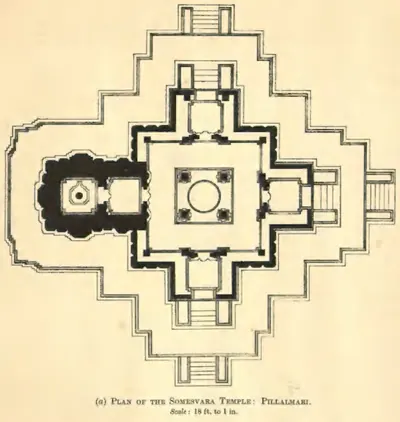 "Plan of the Somesvara Temple: Pillalmari" (Hyderabad Arch. Report 1926-27, Pl. I (a) (PDF p. 55))Plan · 1929
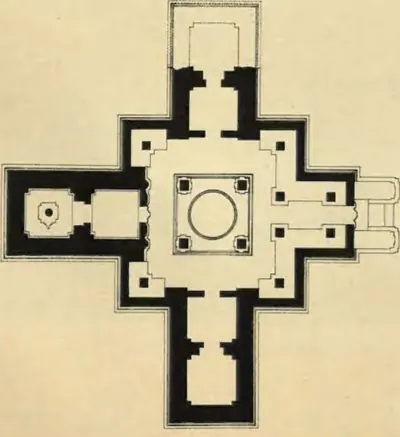 "Plan of the Southern Temple of Nagulpad: Nalgonda District" (Hyderabad Arch. Report 1927-28, Pl. II (a))Drawing · 1929
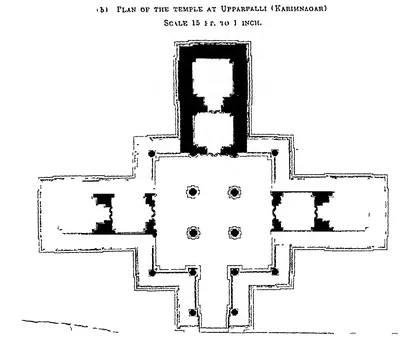 "Plan of the temple at Upparpalli (Karimnagar)" (Hyderabad Arch. Report 1916-17, Pl. III (b) (PDF p. 64))Plan · 1918
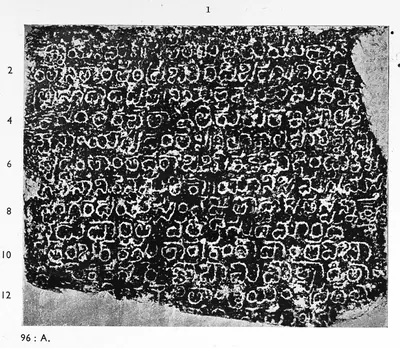 "Rāyaparti inscription of Mahādēva", face I (Sreenivasachar, Corpus of Inscriptions in the Telingana Districts III, Plate 11 (PDF p. 201))Inscription rubbing · 1956
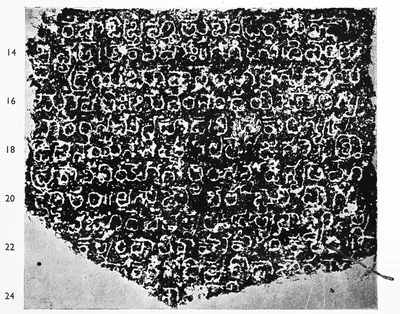 "Rāyaparti inscription of Mahādēva", face II (Sreenivasachar, Corpus of Inscriptions in the Telingana Districts III, Plate 11 (PDF p. 201))Inscription rubbing · 1956
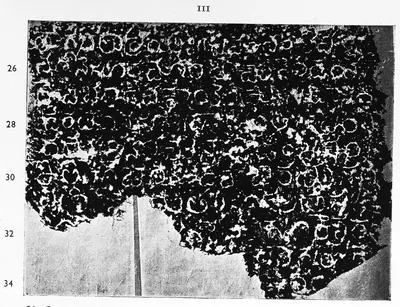 "Rāyaparti inscription of Mahādēva", face III (Sreenivasachar, Corpus of Inscriptions in the Telingana Districts III, Plate 12 (PDF p. 202))Inscription rubbing · 1956
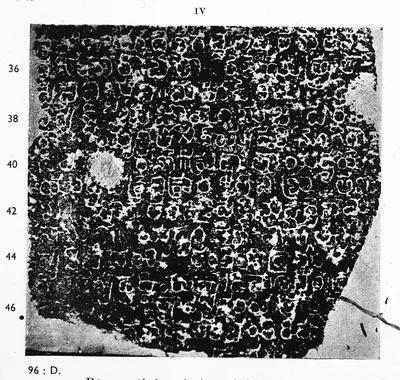 "Rāyaparti inscription of Mahādēva", face IV (Sreenivasachar, Corpus of Inscriptions in the Telingana Districts III, Plate 12 (PDF p. 202))Inscription rubbing · 1956
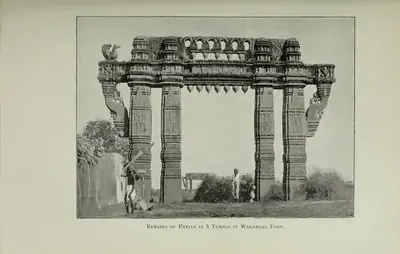 "Remains of Entrance to Temple in Warangal Fort" (Gribble 1896, PDF p. 109)Historic photograph · 1896
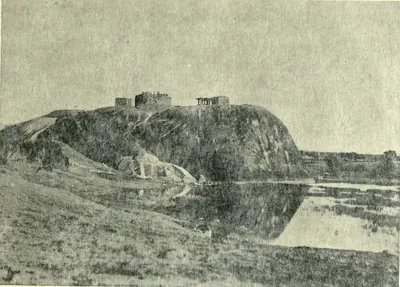 "Rock of the Warangal Fort" (Sastri 1932, Pl. I (a))Book plate · 1932
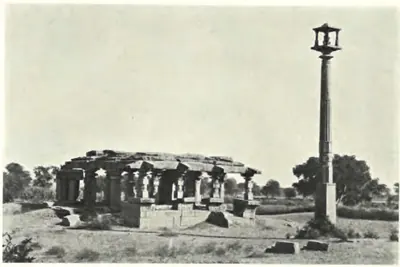 "Ruined Vishnu Temple at Nagnur: Karimnagar District" (Hyderabad Arch. Report 1927-28, Pl. IX (a) (PDF p. 133))Historic photograph · 1929
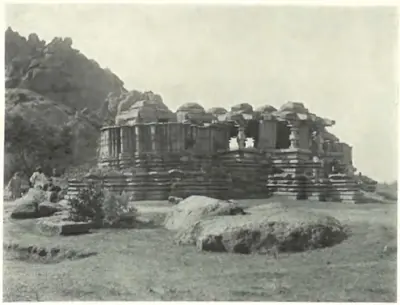 "Siva Temple at Nagnur: Karimnagar District" (Hyderabad Arch. Report 1927-28, Pl. IX (b) (PDF p. 133))Historic photograph · 1929
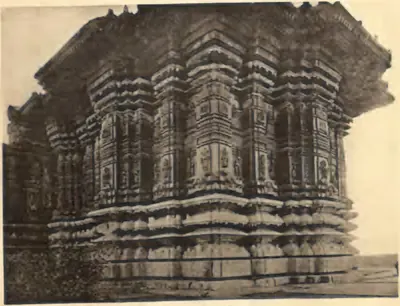 "Temple No. 1: Carving" (Nagulapadu; Hyderabad Arch. Report 1926-27, Pl. VIII (b) (PDF p. 79))Historic photograph · 1929
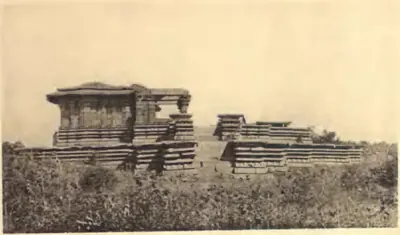 "Temple No. 1: Nagulpad (Nalgonda)" (Hyderabad Arch. Report 1926-27, Pl. VIII (a) (PDF p. 79))Historic photograph · 1929
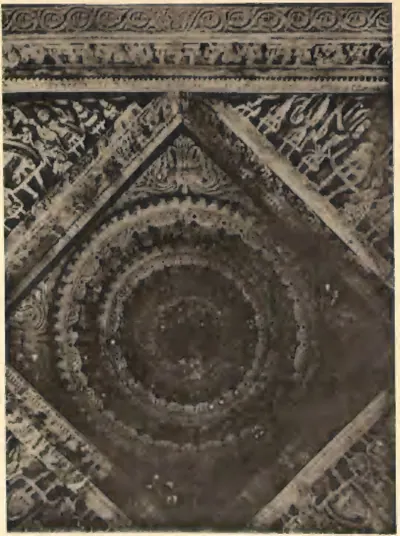 "Temple No. 2: Ceiling" (Nagulapadu; Hyderabad Arch. Report 1926-27, Pl. IX (b) (PDF p. 81))Historic photograph · 1929
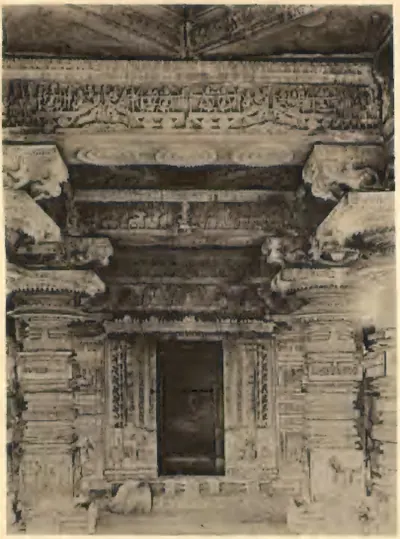 "Temple No. 2: Nagulpad (Nalgonda)" (Hyderabad Arch. Report 1926-27, Pl. IX (a) (PDF p. 81))Historic photograph · 1929
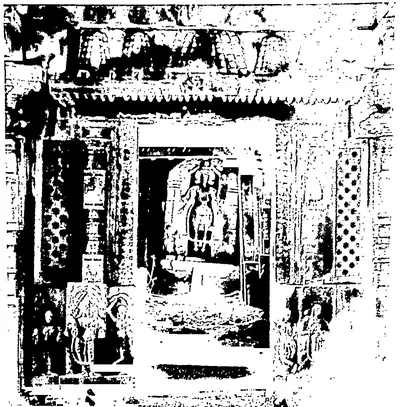 "The same: Shrine door" (A temple at Katachpur, Warangal District; Hyderabad Arch. Report 1935-36, Pl. XIII (b) (PDF p. 120 of the local copy))Historic photograph · 1939
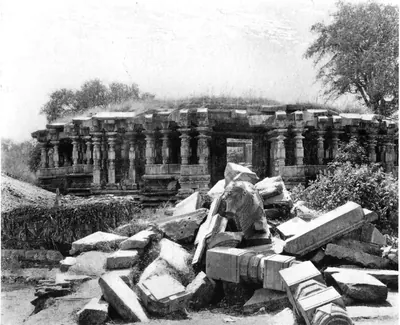 "Thousand Pillared Hall, Hammancondah" (F. B. and W. H. Workman, Through Town and Jungle, 1904, plate p. 127 (PDF leaf 152 of scan ldpd_7460476_000))Historic photograph · 1904
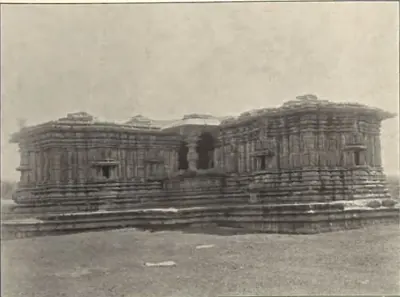 "Thousand-pillared Temple, Warangal" (Hyderabad Arch. Report 1915-16, Pl. VI (b))Book plate · 1917
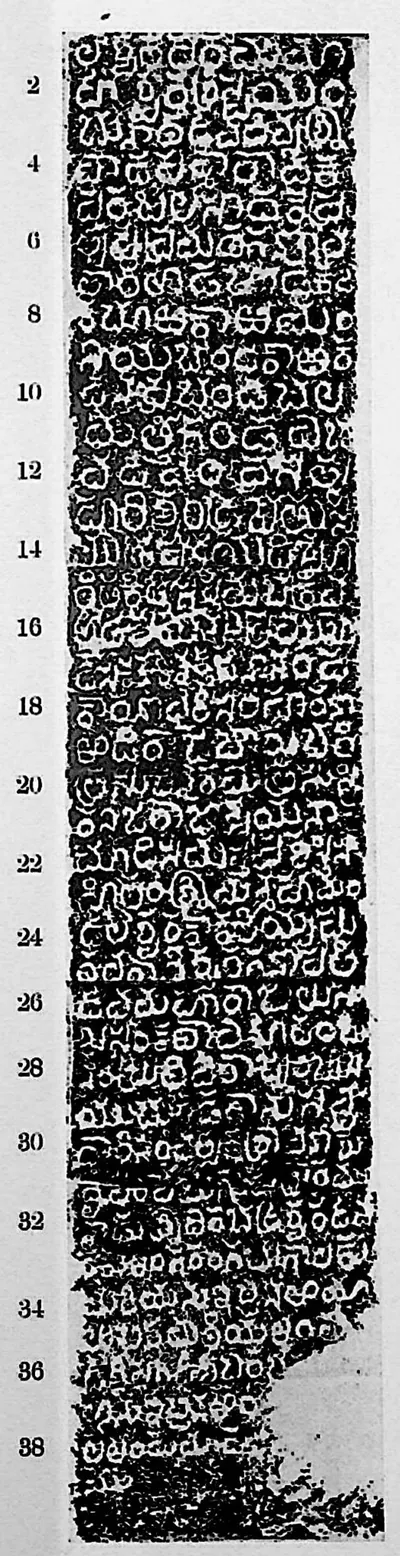 "Warangal inscription at Khan Saheb Gardens", face I (Sreenivasachar, Corpus of Inscriptions in the Telingana Districts II, Plate 19 (PDF p. 258))Inscription rubbing · 1940
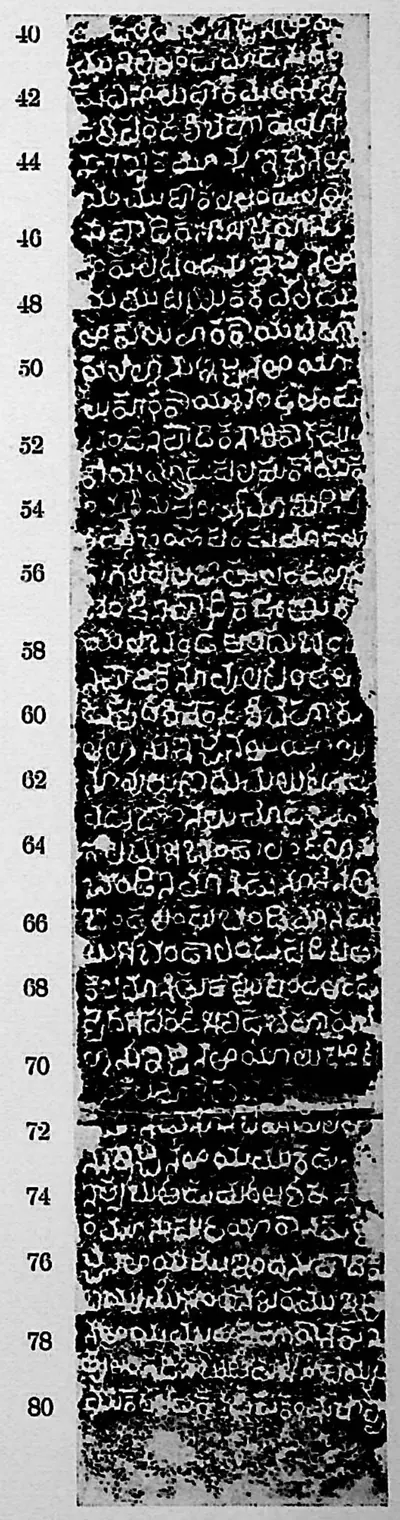 "Warangal inscription at Khan Saheb Gardens", face II (Sreenivasachar, Corpus of Inscriptions in the Telingana Districts II, Plate 19 (PDF p. 258))Inscription rubbing · 1940
 "Warangal inscription at Khan Saheb Gardens", face III (Sreenivasachar, Corpus of Inscriptions in the Telingana Districts II, Plate 19 (PDF p. 258))Inscription rubbing · 1940
 "Warangal inscription of Kakati Rudra-deva", face I (Sreenivasachar, Corpus of Inscriptions in the Telingana Districts III, Plate 1 (PDF p. 191))Inscription rubbing · 1956
 "Warangal inscription of Kakati Rudra-deva", face II (Sreenivasachar, Corpus of Inscriptions in the Telingana Districts III, Plate 1 (PDF p. 191))Inscription rubbing · 1956
 "Warangal inscription of Kakati Rudra-deva", face III (Sreenivasachar, Corpus of Inscriptions in the Telingana Districts III, Plate 1 (PDF p. 191))Inscription rubbing · 1956
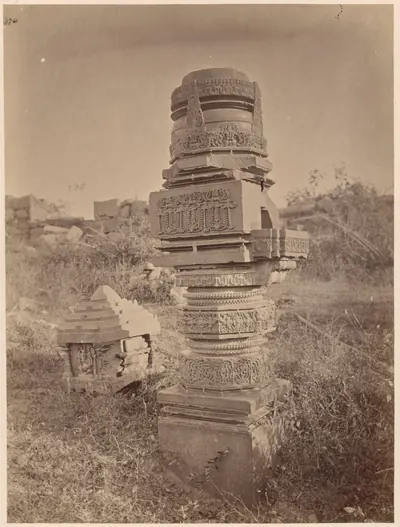 A carved pillar standing alone among ruins at Warangal, 1850-1886Historic photograph · c. 1850-1886
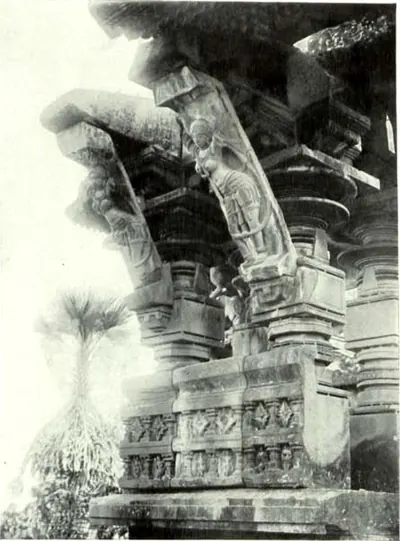 A Figure-Bracket of the Main Temple of Ghanapur (Hyderabad Arch. Report 1931-33, Pl. V (a); described in the report for 1932-33, pp. 53-54)Historic photograph · 1935
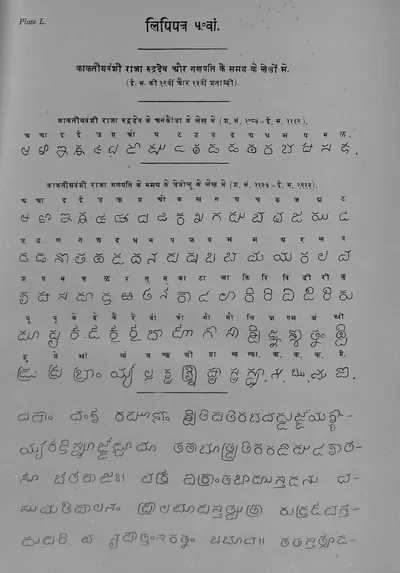 Alphabet table from the inscriptions of the time of the Kakatiya kings Rudradeva and Ganapati, 12th and 13th centuries CE (Anumakonda inscription, Saka 1084; Chebrolu inscription, Saka 1135) (Ojha, Bharatiya Prachin Lipimala, 1918, Plate 50)Book plate · 1918
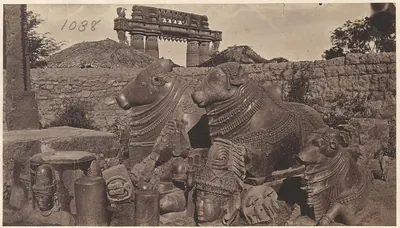 Carved stone bulls at Warangal Fort, 1850-1886Historic photograph · c. 1850-1886
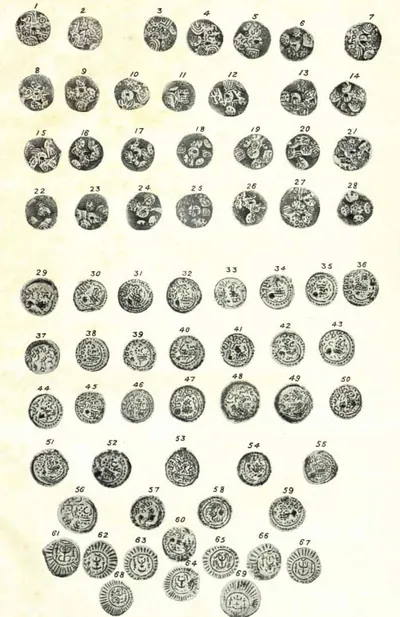 Coins of Western and Eastern Chalukyas (Hyderabad Arch. Report 1925-26, Pl. XVIII); P. V. Parabrahma Sastry (1978, pp. 259–262) assigns the boar-marked coins to Ganapatideva, Rudramadevi and PrataparudraCoin · 1928
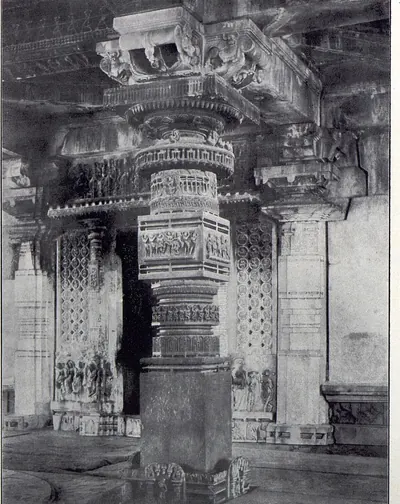 Detail of Pillar, Great Temple, Palampet (Yazdani 1922, Pl. XXXI (a))Historic photograph · 1922
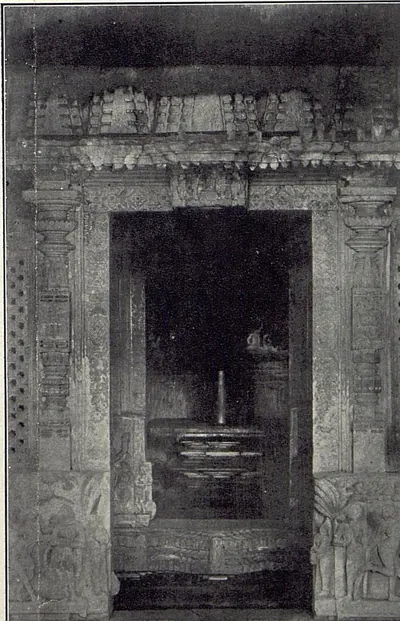 Doorway of Temple at the western end of the Ramappa Lake Band, Palampet (Yazdani 1922, Pl. XXVIII (c))Historic photograph · 1922
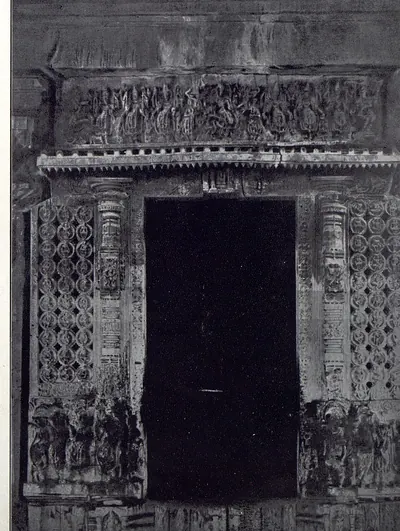 Doorway, Great Temple, Palampet (Yazdani 1922, Pl. XXXI (b))Historic photograph · 1922
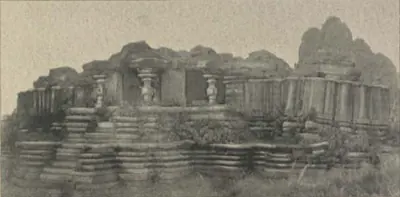 Elgandal (Karimnagar): "Temple at Angnoor, Elgandal" (Campbell 1898, p. 474)Historic photograph · 1898
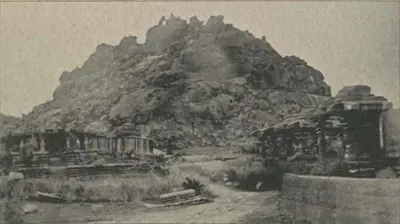 Elgandal (Karimnagar): "Temple at Angnoor, Elgandal" (Campbell 1898, p. 474)Historic photograph · 1898
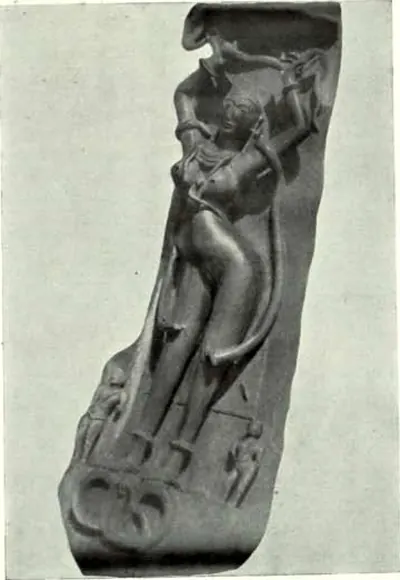 Figure Brackets, Ramappa Temple, Warangal (Hyderabad Arch. Report 1914-15, Pl. V (a))Historic photograph · 1916
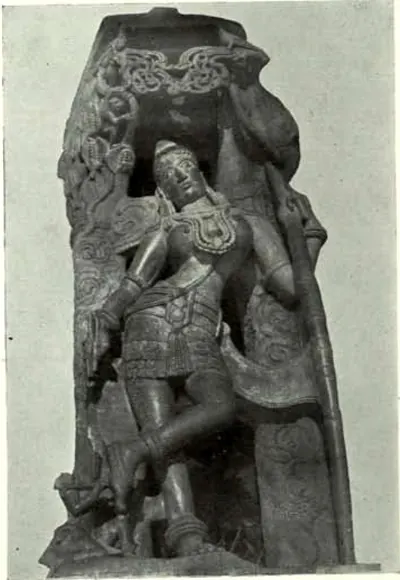 Figure Brackets, Ramappa Temple, Warangal (Hyderabad Arch. Report 1914-15, Pl. V (b))Historic photograph · 1916
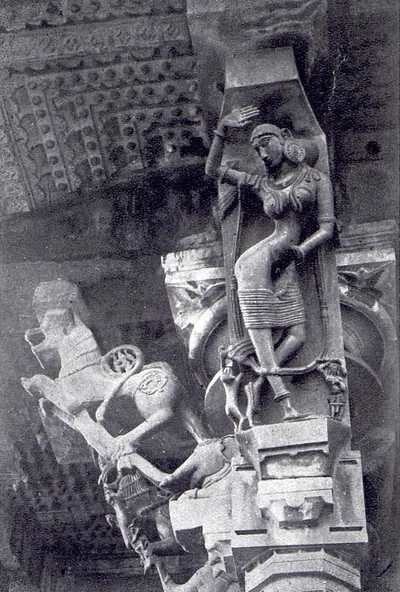 Figure-bracket, Great Temple, Palampet (Yazdani 1922, Pl. XXXII (a))Historic photograph · 1922
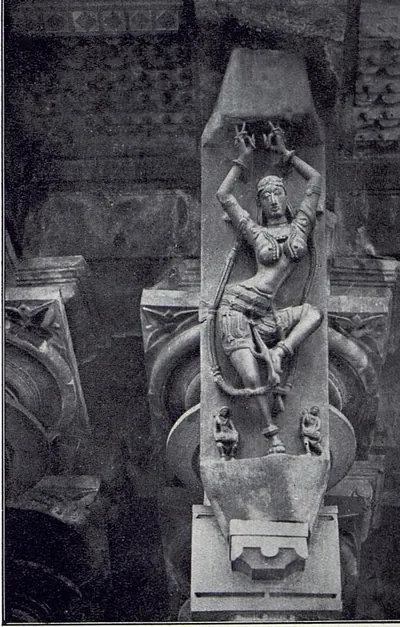 Figure-bracket, Great Temple, Palampet (Yazdani 1922, Pl. XXXII (b), printed "Another")Historic photograph · 1922
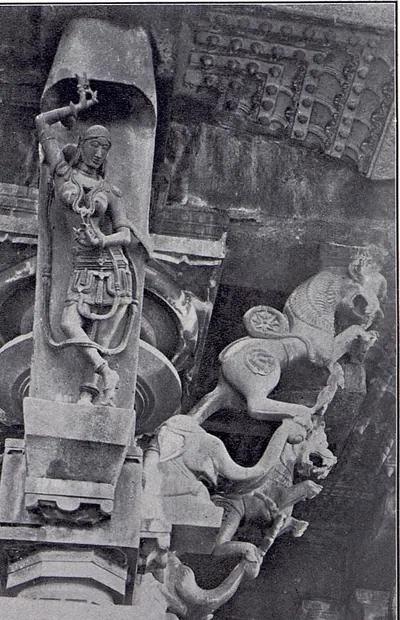 Figure-bracket, Great Temple, Palampet (Yazdani 1922, Pl. XXXII (c), printed "Another")Historic photograph · 1922
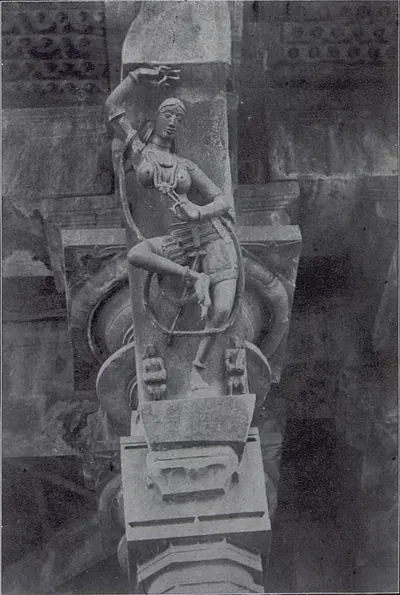 Figure-bracket, Great Temple, Palampet (Yazdani 1922, Pl. XXXII (d), printed "Another")Historic photograph · 1922
 Fresco Painting, Narasimhadeva Temple, Pillalmari (Hyderabad Arch. Report 1926-27, Pl. VII (a))Historic photograph · 1929
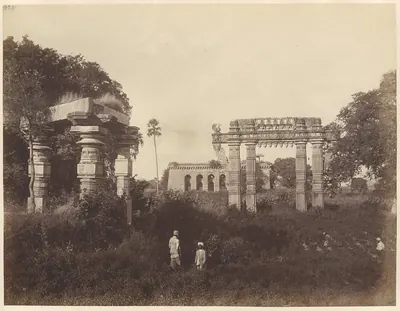 Gateway and temple ruins, Warangal, 1870sHistoric photograph · 1870s
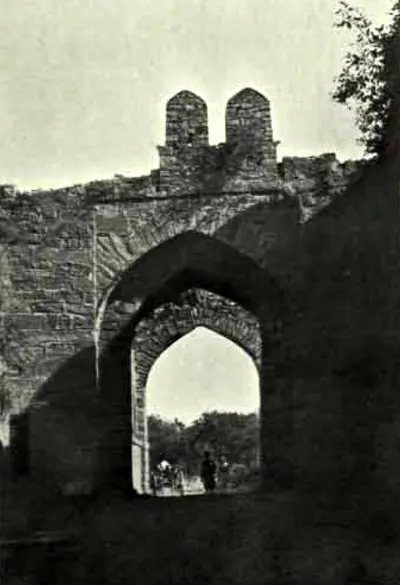 Gateway, Warangal Fort (Hyderabad Arch. Report 1925-26, Pl. XVII (b))Historic photograph · 1928
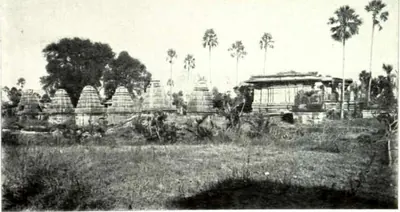 Ghanapur Temples: Warangal District, General View (Hyderabad Arch. Report 1931-33, Pl. IV (a); described in the report for 1932-33, pp. 53-54)Historic photograph · 1935
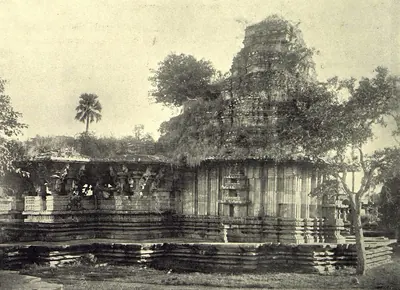 Great Temple, Palampet: view from N.-W. (Yazdani 1922, Pl. XXVII (a))Historic photograph · 1922
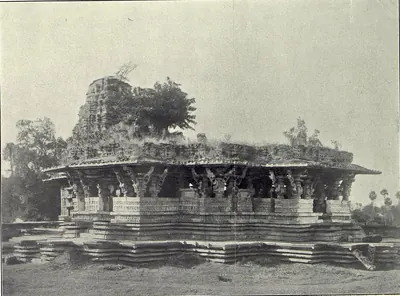 Great Temple, Palampet: view from S.-E. (Yazdani 1922, Pl. XXVIII (a))Historic photograph · 1922
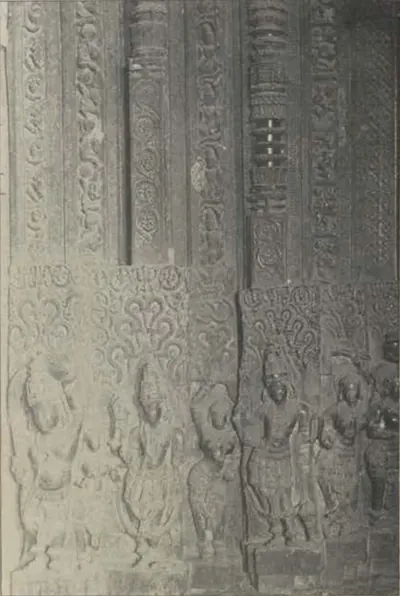 Hanamkonda: "Carved Figures, 1,000-Pillared Temple" (Campbell 1898, p. 486)Historic photograph · 1898
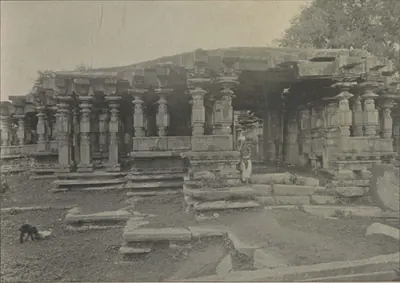 Hanamkonda: "Detached Hall, 1,000-Pillared Temple, Hanamkonda" (Campbell 1898, p. 481)Historic photograph · 1898
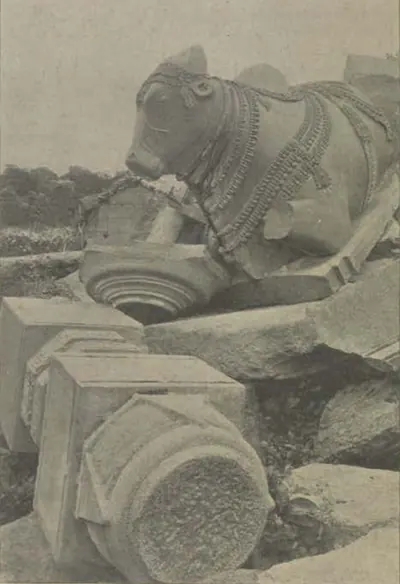 Hanamkonda: "Fallen Pavilion, 1,000-Pillared Temple" (Campbell 1898, p. 483)Historic photograph · 1898
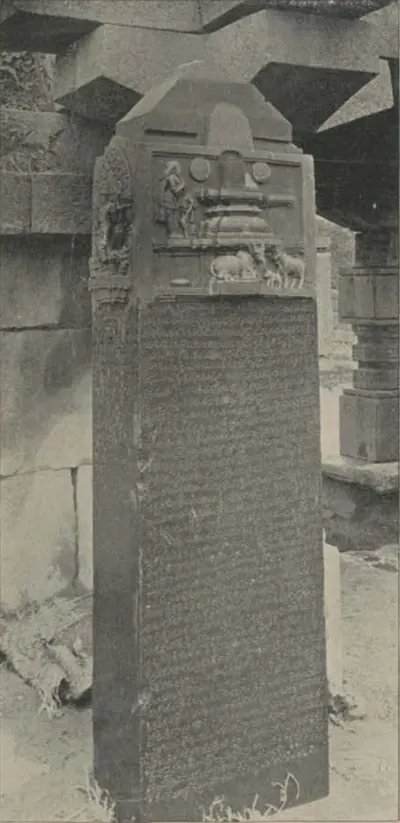 Hanamkonda: "Inscription, 1,000-Pillared Temple" (Campbell 1898, p. 484)Historic photograph · 1898
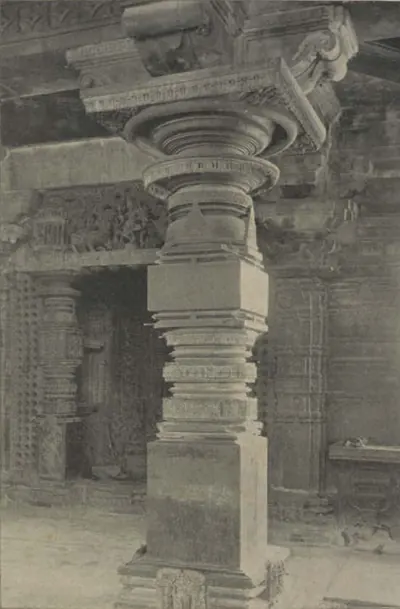 Hanamkonda: "Pillar with Inscription, 1,000-Pillared Temple" (Campbell 1898, p. 482)Historic photograph · 1898
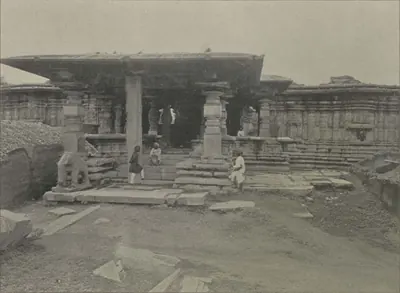 Hanamkonda: "The 1,000-Pillared Temple, Hanamkonda" (Campbell 1898, p. 481)Historic photograph · 1898
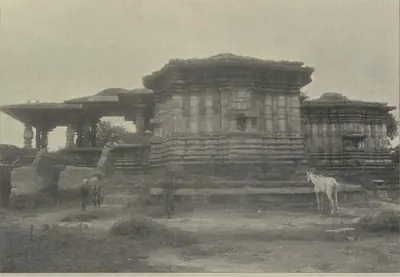 Hanamkonda: "The 1,000-Pillared Temple, Hanamkonda" (Campbell 1898, p. 486)Historic photograph · 1898
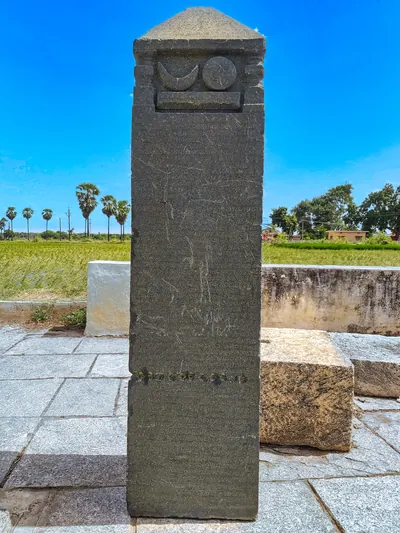 Inscribed pillar at the Mukkantesvara temple, KusumanchiPhotograph · 2021
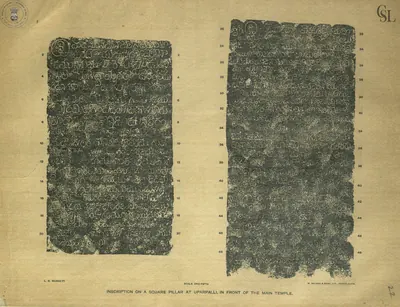 Inscription on a square pillar at Uparpalli, in front of the main temple (first two faces) (Barnett 1919)Inscription rubbing · 1919
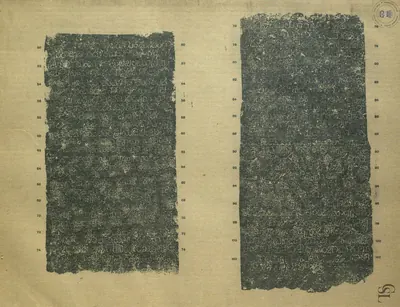 Inscription on a square pillar at Uparpalli, in front of the main temple (remaining faces) (Barnett 1919)Inscription rubbing · 1919
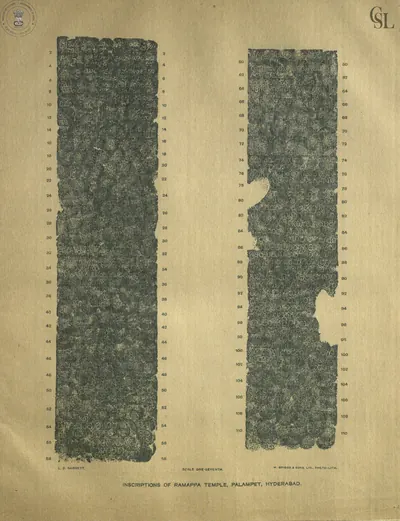 Inscriptions of Ramappa temple, Palampet (pillar inscription, first two faces) (Barnett 1919)Inscription rubbing · 1919
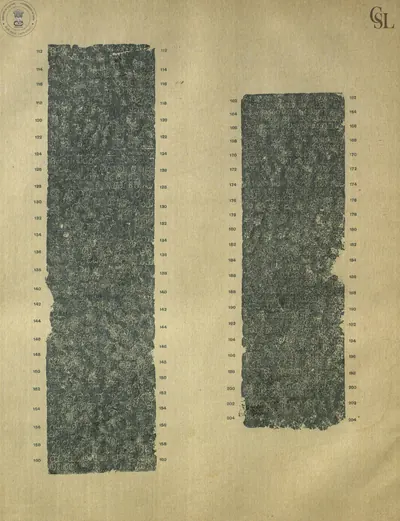 Inscriptions of Ramappa temple, Palampet (pillar inscription, remaining faces) (Barnett 1919)Inscription rubbing · 1919
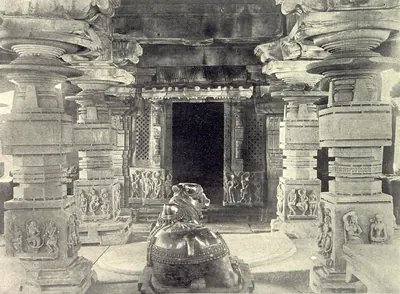 Interior of Temple at the eastern end of the Ramappa Lake Band, Palampet (Warangal) (Yazdani 1922, Pl. XXVII (b))Historic photograph · 1922
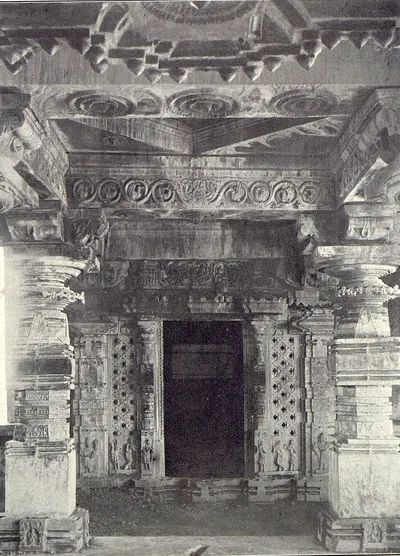 Interior of the Temple at Uparpalle, Warangal District (Yazdani 1922, Pl. XXIX (a))Historic photograph · 1922
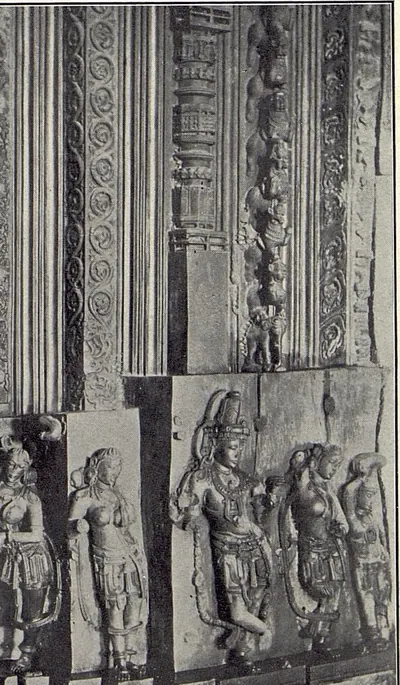 Jamb of Door, Great Temple, Palampet (Yazdani 1922, Pl. XXVIII (b))Historic photograph · 1922
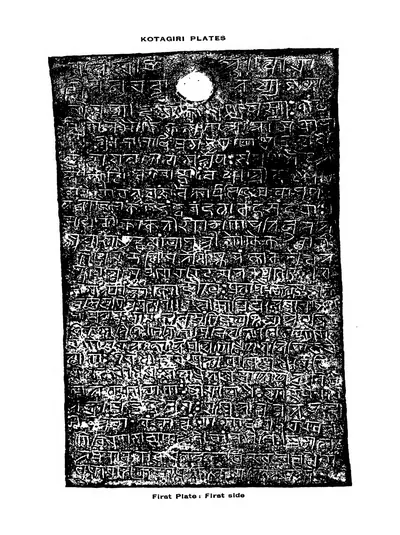 Kotagiri plates of the reign of the Kakatiya queen Rudramamba, A.D. 1273: First plate: first side (Kotagiri Plates 1925)Inscription rubbing · 1925
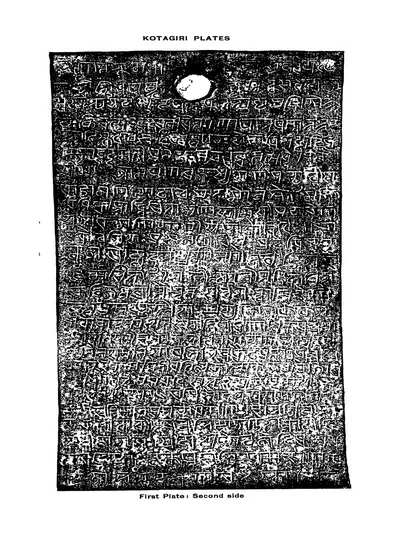 Kotagiri plates of the reign of the Kakatiya queen Rudramamba, A.D. 1273: First plate: second side (Kotagiri Plates 1925)Inscription rubbing · 1925
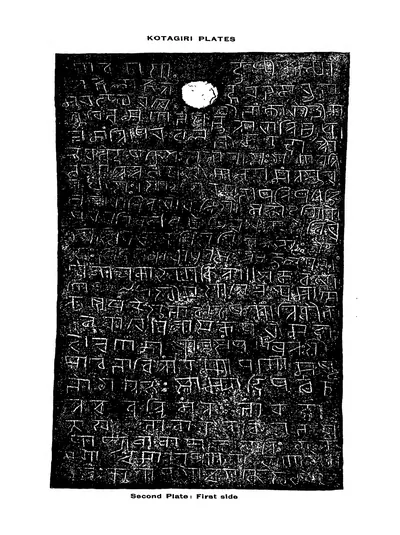 Kotagiri plates of the reign of the Kakatiya queen Rudramamba, A.D. 1273: Second plate: first side (Kotagiri Plates 1925)Inscription rubbing · 1925
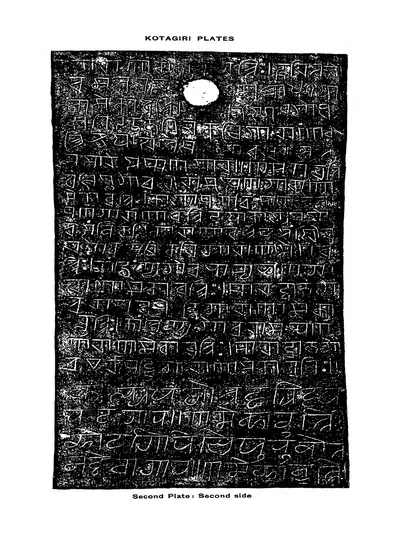 Kotagiri plates of the reign of the Kakatiya queen Rudramamba, A.D. 1273: Second plate: second side (Kotagiri Plates 1925)Inscription rubbing · 1925
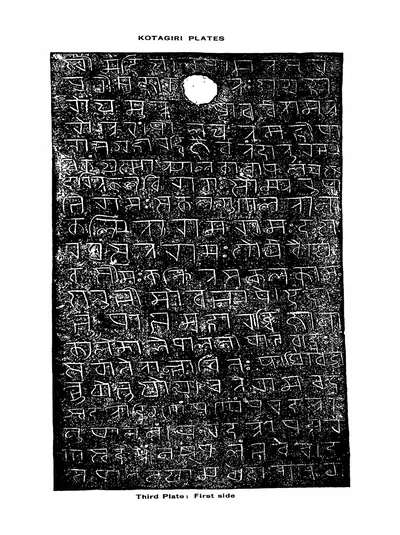 Kotagiri plates of the reign of the Kakatiya queen Rudramamba, A.D. 1273: Third plate: first side (Kotagiri Plates 1925)Inscription rubbing · 1925
 Laknavaram LakePhotograph · 2024
 Line 1 of the Thousand Pillar Temple inscription of Rudradeva, Hanamkonda, 1163: "Om Svasti Srir=vvijayas=ch=abhyudayas=cha bhavatu" (Indian Antiquary XI, Plate I, detail)Inscription rubbing · 1882
 Line 6 of the Hanamkonda inscription, with the year "Saka-varshamulu 1084" in Telugu-Kannada figures (Indian Antiquary XI, Plate I, detail)Inscription rubbing · 1882
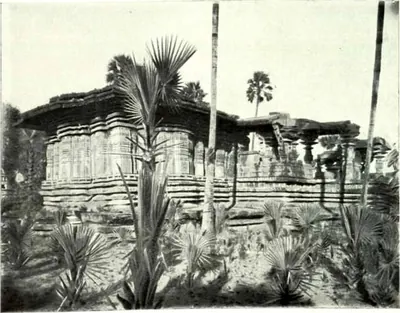 Main Temple of Ghanapur (Hyderabad Arch. Report 1931-33, Pl. IV (b); described in the report for 1932-33, pp. 53-54)Historic photograph · 1935
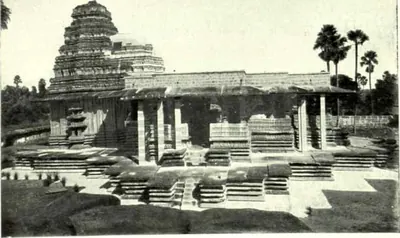 Main Temple of Ramappa (Palampet): After Restoration (Hyderabad Arch. Report 1931-32, Pl. II (b))Historic photograph · 1935
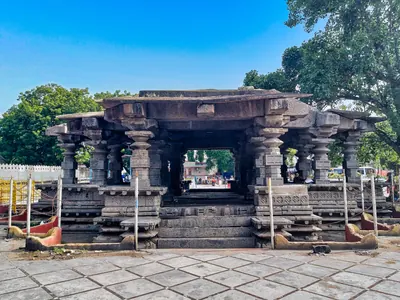 Mallikarjuna temple mandapa, InavoluPhotograph · 2021
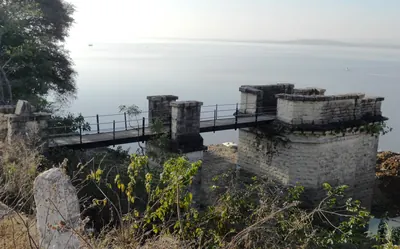 Masonry tower on Ramappa LakePhotograph · 2015
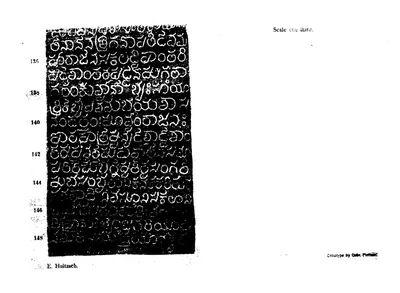 Motupalli pillar inscription of Ganapatideva, A.D. 1244-45 (part of the plate) (Epigraphia Indica XII, plate (PDF p. 258))Inscription rubbing · 1914
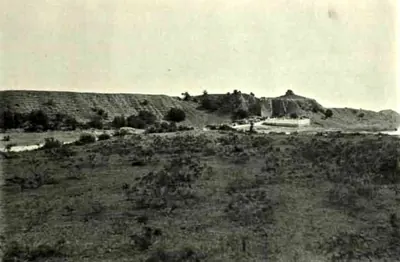 Mud Walls, Warangal Fort (Hyderabad Arch. Report 1925-26, Pl. XVII (a))Historic photograph · 1928
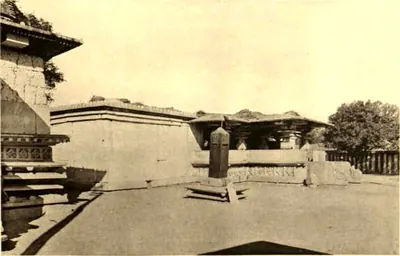 Mukandesvara Temple, Pillalmari: General View (Hyderabad Arch. Report 1926-27, Pl. VII (b))Historic photograph · 1929
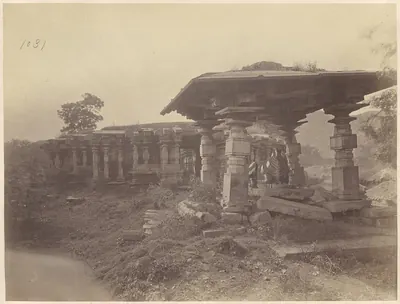 Nandi pavilion, Thousand Pillar Temple, 1850-1886Historic photograph · c. 1850-1886
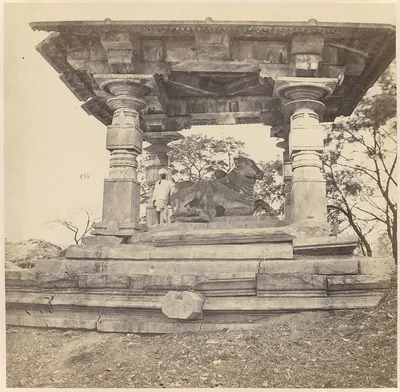 Nandi under a porch, Thousand Pillar Temple, 1850-1886Historic photograph · c. 1850-1886
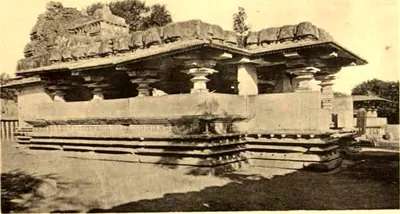 Narasimhadeva Temple, Pillalmari (Hyderabad Arch. Report 1926-27, Pl. VI (a))Historic photograph · 1929
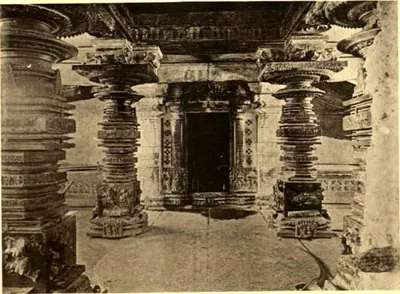 Narasimhadeva Temple, Pillalmari: Interior (Hyderabad Arch. Report 1926-27, Pl. VI (b))Historic photograph · 1929
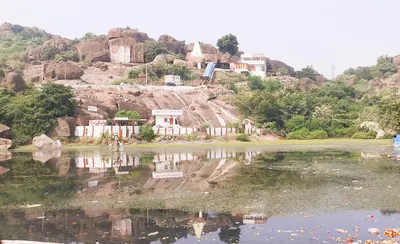 Padmakshi hill, HanamkondaPhotograph · 2023
 Pakhal LakePhotograph · 2009
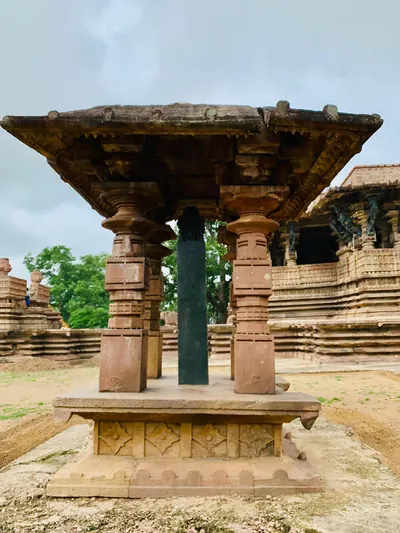 Pavilion of the Ramappa foundation inscription pillarPhotograph · 2019
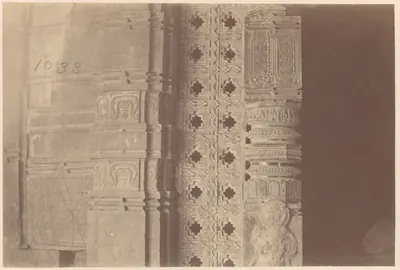 Pierced screen and carved jamb at a doorway, Thousand Pillar Temple, 1850-1886Historic photograph · c. 1850-1886
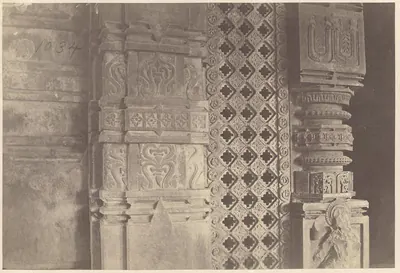 Pierced screen and pillar, Thousand Pillar Temple, 1850-1886Historic photograph · c. 1850-1886
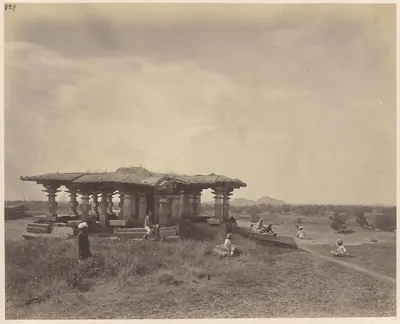 Pillared pavilion in Warangal Fort, 1850-1886Historic photograph · c. 1850-1886
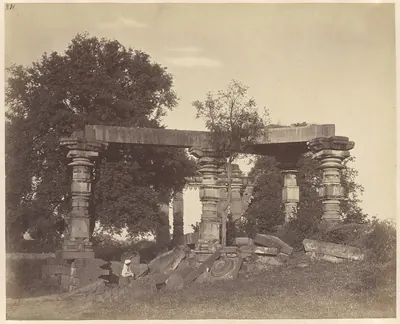 Pillared ruin at Warangal Fort, 1850-1886Historic photograph · c. 1850-1886
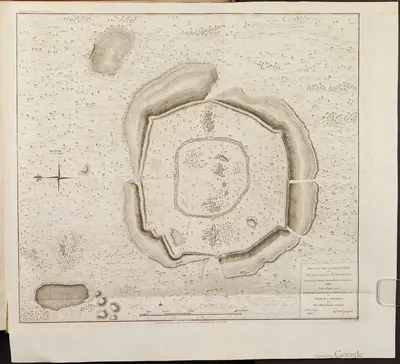 Plan of the Fort of Warangal, 1793Map · 1793
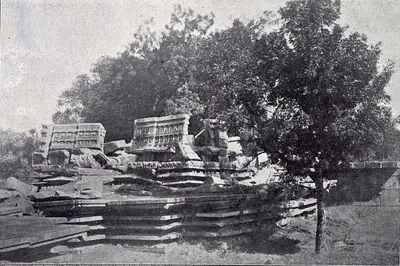 Ruined Nandi Pavilion, Great Temple, Palampet (Yazdani 1922, Pl. XXXIII (b))Historic photograph · 1922
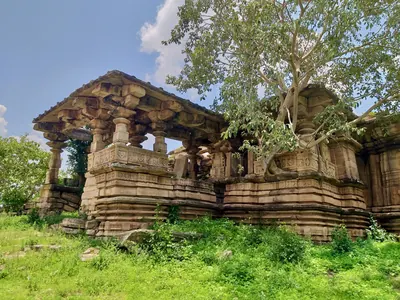 Ruined Siva temple at KhammampalliPhotograph · 2021
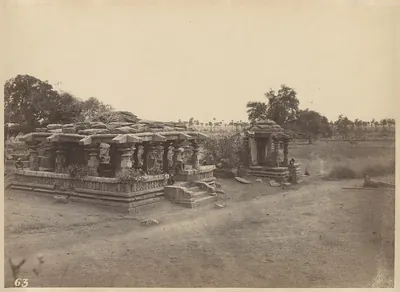 Ruined temple in Warangal Fort, 1850-1886Historic photograph · c. 1850-1886
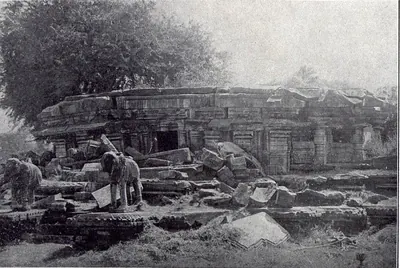 Ruined Temple, North of Great Temple, Palampet (Yazdani 1922, Pl. XXXIII (c))Historic photograph · 1922
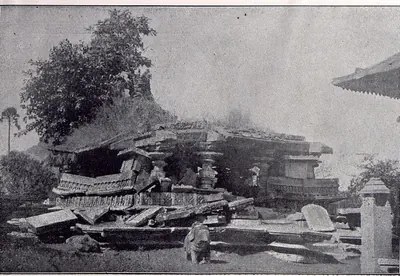 Ruined Temple: N.-W. of Great Temple, Palampet (Yazdani 1922, Pl. XXXIII (a))Historic photograph · 1922
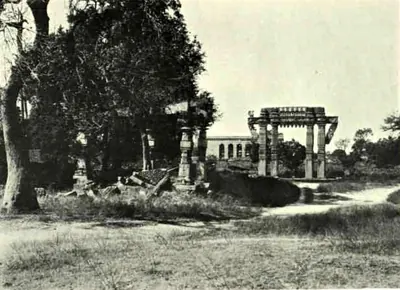 Ruins of the Old Temple, Warangal Fort (Hyderabad Arch. Report 1925-26, Pl. XVI (a))Historic photograph · 1928
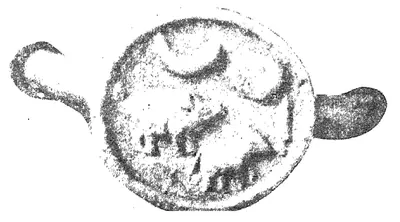 Seal of the Garavapadu grant of Ganapatideva, Saka 1182 (Epigraphia Indica XVIII, plate "Garavapadu Grant of Ganapatideva: Saka 1182")Book plate · 1926
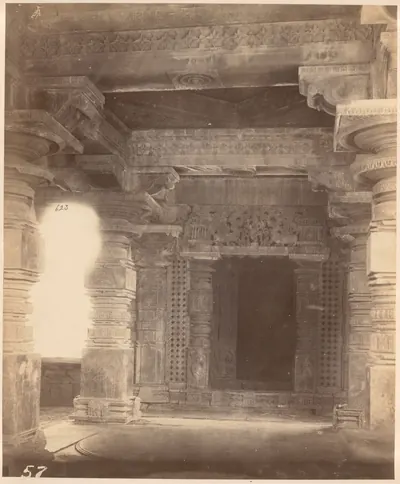 Shrine doorway inside the Thousand Pillar Temple (negative 57), 1850-1886Historic photograph · c. 1850-1886
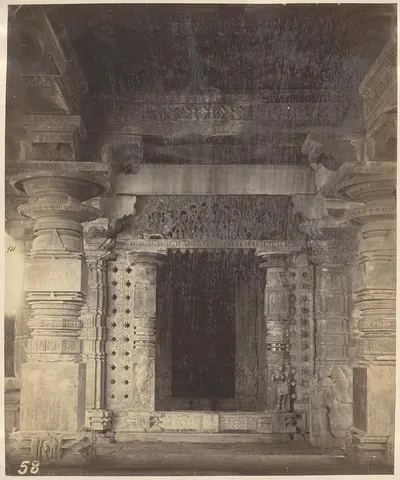 Shrine doorway, Thousand Pillar Temple, 1850-1886Historic photograph · c. 1850-1886
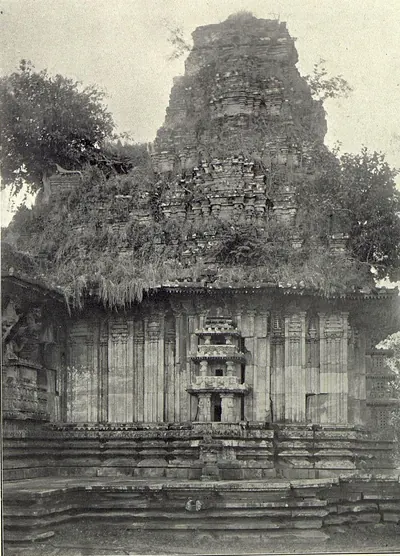 Sikhara, Great Temple, Palampet (Yazdani 1922, Pl. XXIX (b))Historic photograph · 1922
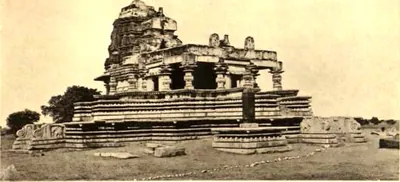 Somesvara Temple, Pillalmari: General View (Hyderabad Arch. Report 1926-27, Pl. V (a))Historic photograph · 1929
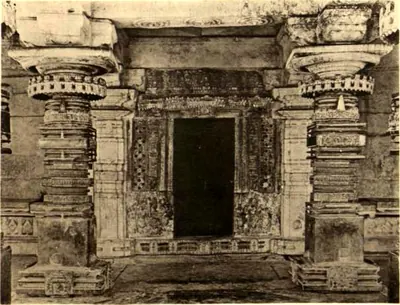 Somesvara Temple, Pillalmari: Interior (Hyderabad Arch. Report 1926-27, Pl. V (b))Historic photograph · 1929
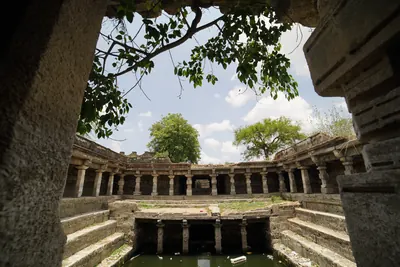 Stepwell at Shivanagar, WarangalPhotograph · 2016
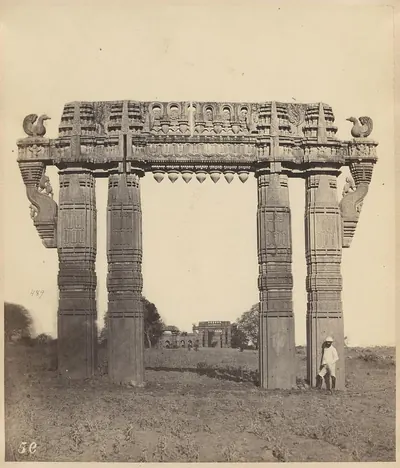 Stone gateway (torana), Warangal Fort, 1850-1886Historic photograph · c. 1850-1886
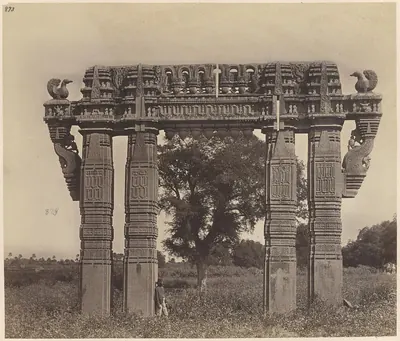 Stone gateway with trees behind, Warangal Fort, 1850-1886Historic photograph · c. 1850-1886
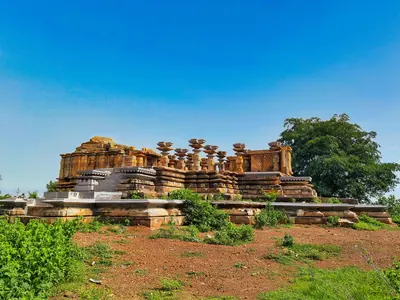 Temple ruins at Jakaram during restorationPhotograph · 2021
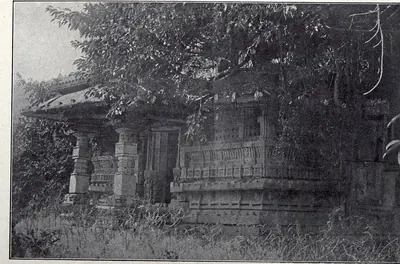 Temple, West of Great Temple, Palampet (Yazdani 1922, Pl. XXXIII (d))Historic photograph · 1922
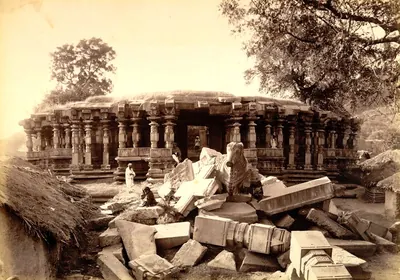 The Thousand Pillar Temple, Hanamkonda, with fallen stones, about 1885Historic photograph · c. 1885
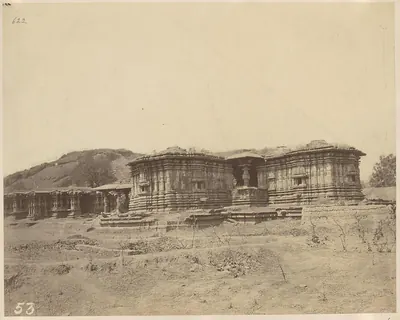 Thousand Pillar Temple below the hill, 1850-1886Historic photograph · c. 1850-1886
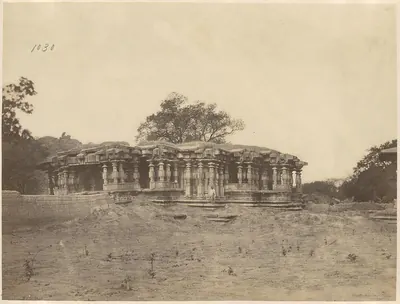 Thousand Pillar Temple with a tree on the roof, 1850-1886Historic photograph · c. 1850-1886
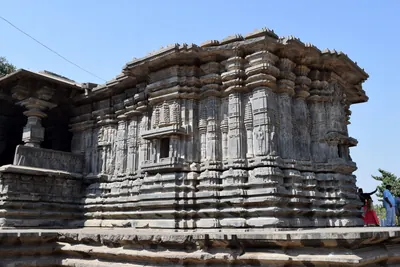 Thousand Pillar Temple, HanamkondaPhotograph · 2018
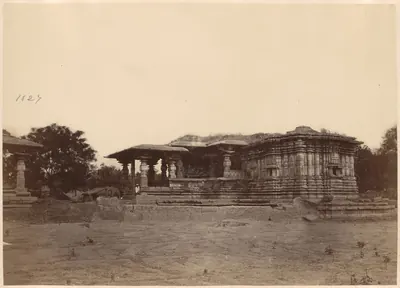 Thousand Pillar Temple, Hanamkonda, from the side, 1850-1886Historic photograph · c. 1850-1886
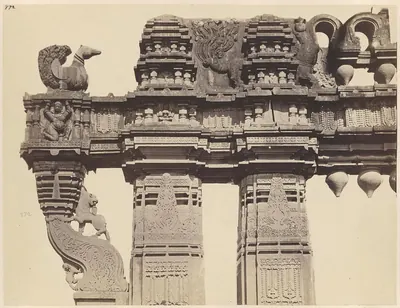 Top of a stone gateway, Warangal Fort, 1850-1886Historic photograph · c. 1850-1886
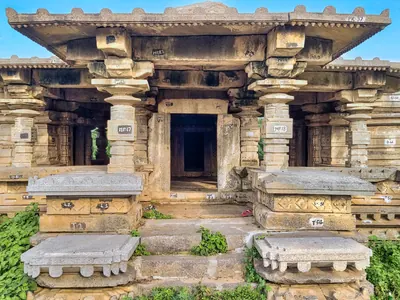 Trikuta temple at KondaparthiPhotograph · 2021
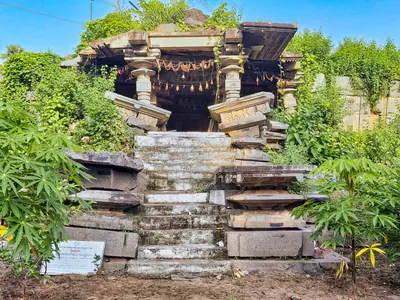 Trikuta temple ruins at KatakshapurPhotograph · 2021
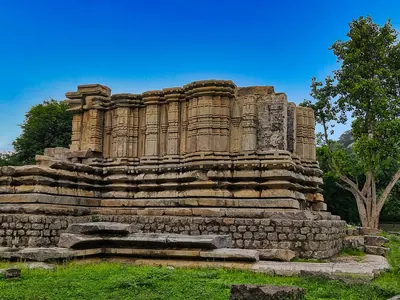 Trikuta temple ruins at NidigondaPhotograph · 2021
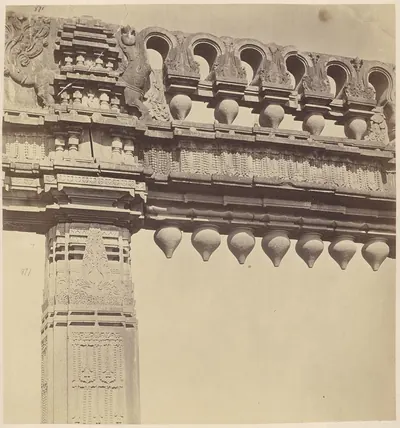 Upper part of a stone gateway, Warangal Fort, 1850-1886Historic photograph · c. 1850-1886
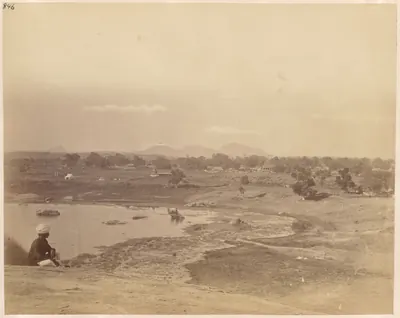 View from a hill in Warangal Fort over water and fields, 1850-1886Historic photograph · c. 1850-1886
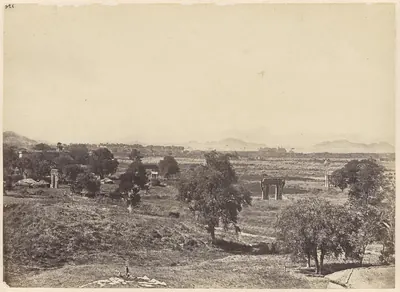 View from a hill in Warangal Fort, 1850-1886Historic photograph · c. 1850-1886
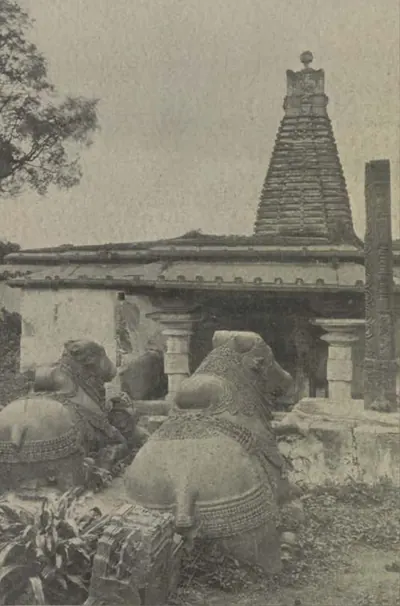 Warangal: "Half-buried Temple, Warangal" (Campbell 1898, p. 479)Historic photograph · 1898
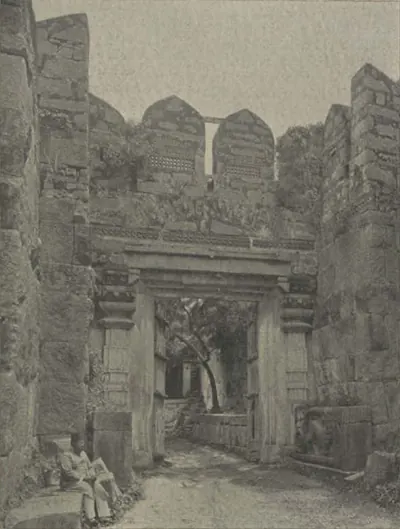 Warangal: "Inner Western Gate, Warangal Fort" (Campbell 1898, p. 478)Historic photograph · 1898
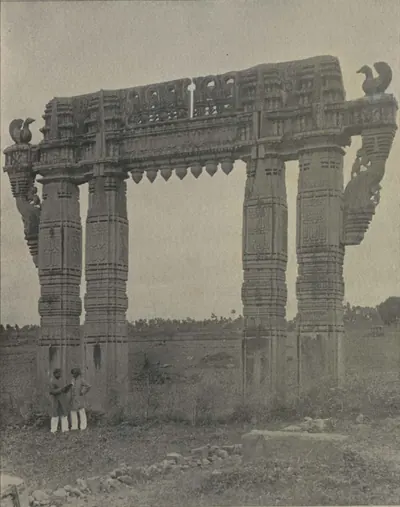 Warangal: "The Gate of Victory, Warangal" (Campbell 1898, p. 477)Historic photograph · 1898
Related
People
Beta I
c. 996–1051 CE
Early Kakatiya chief (c. 996–1051), also called Garuda Beta. As a boy he lost his father in war, and later he won back the family's position. His one known record, an inscription of 1051 at Sanigaram, is the oldest Kakatiya record after the Mangallu grant.
Prola I
c. 1052–1076 CE
Kakatiya chief (c. 1052–1076), son of Beta I. He fought for the Western Chalukya king Trailokyamalla (Someshvara I), who gave him the district of Anumakonda as a permanent fief (land held from a king). He bore the title ari-gaja-kesari, and the family's boar emblem was later credited to him.
Beta II
c. 1076–1108 CE
Kakatiya chief (c. 1076–1108) who took the name Tribhuvanamalla from his overlord, the Western Chalukya king Vikramaditya VI. He held Anumakonda as a Chalukya feudatory (subordinate ruler) and won the Sabbi-nadu district through his minister. He gave lands to the Kalamukha Shaiva teacher Rameshvara Pandita.
Durgaraja
c. 1108–1116 CE
Elder son of the Kakatiya chief Beta II. He is known from a single inscription of 1098 at Kazipet. He may have ruled briefly between about 1108 and 1116, before his younger brother Prola II took power.
Prola II
c. 1116–1157 CE
Kakatiya chief (r. c. 1116–1157), son of Beta II and father of Rudradeva. As a Western Chalukya feudatory (subordinate ruler) he defeated the rival chiefs around Anumakonda. He was killed in battle with chiefs of the coastal Andhra country.
Rudradeva
c. 1158–1195 CE
Kakatiya ruler (c. 1158–1195) who defeated the rival chiefs of Telangana. He proclaimed his family's independence in the Thousand Pillar Temple inscription of 1163, and began the fortified capital at Orugallu (Warangal).
Mahadeva
c. 1195–1199 CE
Kakatiya king (r. c. 1195–1199), younger brother of Rudradeva and father of Ganapatideva. He was killed in a night battle while attacking the capital of the Yadava (Seuna) kings.
Recherla Rudra
c. 1195–1213 CE
General of the Kakatiya kings Rudradeva, Mahadeva and Ganapatideva, of the Recherla family. He held the kingdom together after Mahadeva's death at Devagiri, and he drove out the Mudigonda chief Nagati. In 1213 he founded the Rudreshvara (Ramappa) temple and its lake at Palampet.
Ganapatideva
c. 1199–1262 CE
Kakatiya king (r. 1199–c. 1262) whose sixty-year reign carried Kakatiya power from Telangana to the coast and the far south. He moved the capital to Orugallu (Warangal). His reign produced the Motupalli sea-trade edict and the Ramappa and Ganapesvaram temples.
Jaya (Jayapa)
c. 1209–1253 CE
General and minister of the Kakatiya king Ganapatideva, of the Ayya family of Divi. Ganapati married his two sisters and made him commander of the elephant troops and governor of Velanadu. He built the Ganapesvara temple on Divi in 1231 and wrote the Nritta Ratnavali, a Sanskrit treatise on dance.
Gangaya Sahini
c. 1239–1257 CE
Kayastha chief and cavalry commander of the Kakatiya king Ganapatideva. The king made him head of the seventy-two branches of administration (bahattara-niyogadhipati) and gave him a great fief from Panugallu to the Cuddapah country, which he ruled from Valluru. His nephews Jannigadeva, Tripurari and Ambadeva succeeded him, and the last rebelled against Rudramadevi.
Vishveshvara Shambhu
c. 1250–1261 CE
Shaiva teacher of the Pashupata Golaki monastery, and preceptor (teacher) of the Kakatiya king Ganapatideva and of Rudramadevi. Rudramadevi granted him the village of Mandadam on the Krishna in 1261. There he founded a monastery with a college, a feeding house and a maternity and health home. He also founded monasteries and temples elsewhere in the Telugu country.
Malyala Gunda
c. 1259–1276 CE
General (dandanatha) of the Malyala family under the Kakatiya rulers Ganapatideva and Rudramadevi, known from his inscriptions of 1259 and 1272 at Bothpur in the Mahbubnagar district. They are elaborate Sanskrit poems by the scholar Isvara-suri, and they state that the Kakatiyas were born in the fourth varna. He had died by 1276–77, when his widow Kuppamamba, daughter of Gona Buddhaya, built a temple for his merit.
Rudramadevi
c. 1262–1289 CE
Daughter and successor of the Kakatiya king Ganapatideva. She ruled from Orugallu (Warangal) under the masculine title Rudradeva Maharaja from about 1260. She faced rebels, the Yadavas, the Eastern Gangas and the revolt of the Kayastha Ambadeva, and died in 1289 according to the Chandupatla inscription (1294–95 in older accounts). Henry Yule and E. Hultzsch identified her with the just and beloved queen praised, without a name, by Marco Polo.
Ambadeva (Kayastha)
c. 1272–1294 CE
Kayastha chief (r. 1272–c. 1294) of Valluru in the Cuddapah country, and nephew of Gangaya Sahini. He threw off the authority of the Kakatiya queen Rudramadevi and built an independent state south-west of the Krishna with Yadava and Pandya support. He proclaimed his victories at Tripurantakam in 1290. Prataparudra's armies drove him from Tripurantakam in 1291.
Induluri Annaya
c. 1289–1323 CE
Brahman minister and general of the Induluri family, son-in-law of Queen Rudramadevi and a chief minister (mahapradhana) of Prataparudra. In 1291 he led the Kakatiya army that won back Tripurantakam from the Kayastha chief Ambadeva. He later governed the Vengi country.
Prataparudra
c. 1289–1323 CE
Last Kakatiya king (r. 1289–c. 1323; 1295–1323 in older accounts) and grandson of Rudramadevi. He crushed the Kayastha revolt, reorganised the nayankara military system, and paid tribute to Delhi after the sieges of 1310 and 1318. He was captured when Ulugh Khan took Warangal in the 1320s. Later warrior families remembered him as the king who raised them to rank.
Vidyanatha
c. 1289–1323 CE
Court poet of the last Kakatiya king Prataparudra. He wrote the Prataparudriya (Prataparudra-yashobhushana), a Sanskrit book on the theory of poetry whose example verses all praise the king. Its model play, the Prataparudra-kalyana, is one of the few literary sources from the time for the Kakatiya court.
Gona Budda Reddi
Chief of the Gona family in the Kakatiya period, named in its colophons as the author of the Ranganatha Ramayana, the Telugu Ramayana in the native dvipada metre. His sons completed it with the Uttara Ramayana. His daughter Kuppamamba was the wife of Ganapatideva's general Malyala Gunda.
Mailamba
Kakatiya princess, daughter of Mahadeva and sister of Ganapatideva, married to the Natavadi chief Rudra. She built the tank at Bayyaram, a village named after her mother Bayyamamba. Its inscription, found in 1966, is the main source for the early genealogy of the Kakatiyas.
Marana
Telugu poet of the late Kakatiya period, a pupil of Tikkana, who wrote the Markandeya Puranamu and dedicated it to Nagaya Gannaya, an officer of the last Kakatiya king, Prataparudra. Its story of the birth of Svarochisha Manu later became the basis of Allasani Peddana's Manucharitramu. The poem's mention of Prataparudra's officers makes it a source for Kakatiya history.
Monuments
Padmakshi Temple, Hanamkonda
1117 CE
A small, plain temple on the hill south of Hanamkonda, now worshipped as the goddess Padmakshi. The inscribed pillar in front of it records that in December 1117, in the reign of the Kakatiya Prola II, Mailama, wife of the minister Beta, built a Jaina temple, the Kadalalaya-basadi, on the hill. H. Krishna Sastri took the temple to be that basadi and called it the earliest known building of the Kakatiya period.
Thousand Pillar Temple
1163 CE
The triple-shrined Rudreshvara temple at Hanamkonda, dedicated to Shiva, Vishnu and Surya. The Kakatiya ruler Rudradeva consecrated it in January 1163 and inscribed on it the record of his family's rise to power.
Temples of Nagunur
c. 1171 CE
Ruined temples at Nagunur, six miles north-east of Karimnagar. The chief one is a large triple-shrined Shiva temple of red stone and granite. Nagunur was the seat of Gangadhara, a minister of the Kakatiya king Rudradeva. According to P. V. Parabrahma Sastry, Gangadhara built Shiva temples there. An inscribed pillar said to come from Nagunur is dated 13 January 1171, in Rudradeva's time.
Temples of Pillalamarri
c. 1195 CE
Three twelfth- and thirteenth-century temples at Pillalamarri near Suryapet. Chiefs of the Recherla family, who served the Kakatiya kings, built them. A pillar inscription of 1195, in the reign of Rudradeva, records that Recherla Namireddi built three temples there. Another pillar, of 1208, stands beside the Somesvara temple. G. Yazdani surveyed them in 1926–27 and uncovered a painting of the churning of the ocean in one of them.
Choundesvara Temple, Kondaparti
1203 CE
A temple of Choundesvara and a tank, the Chaunda-samudra, at Kondaparti near Warangal. Both were built by Chaunda of the Malyala family, a general of the Kakatiya king Ganapatideva. His inscription there of 1203 records his part in Ganapatideva's conquest of the Divi island.
Ghanpur Temples (Kota Gullu)
c. 1213 CE
A walled group of twenty-two sandstone shrines at Ghanpur near Mulug, eight miles from Palampet. The main temple follows the plan of the Ramappa temple and has black-stone bracket figures like those at Palampet. Hyderabad's Archaeological Department made the group known in 1932–33. It found no inscription and dated it by its style to the time of the Palampet temples. P. V. Parabrahma Sastry gave it to the Kakatiya general Recherla Rudra.
Ramappa Lake
1213 CE
The large reservoir at Palampet beside which the Ramappa (Rudreshvara) temple stands. P. V. Parabrahma Sastry, following the temple's inscription of 1213, gives it to the Kakatiya general Recherla Rudra, who probably built it together with the temple. Hyderabad's Archaeological Department counted it among the great tanks of the Kakatiya rulers.
Ramappa Temple
1213 CE
The Rudreshvara temple at Palampet, founded by the Kakatiya general Recherla Rudra in 1213 beside the Ramappa lake. It is famous for its bracket figures, carved dark-stone pillars and lightweight brick tower. It has been a UNESCO World Heritage Site since 2021.
Temples of Nagulapadu
c. 1234 CE
Two richly carved temples in the deserted walled town of Nagulapadu on the Musi, south of Suryapet. Members of the Recherla family built them in the reign of the Kakatiya king Ganapatideva. Inscriptions in them are dated 1234 and 1258, and a pillar before them names Prataparudra in 1303.
Upparapalli Temple
c. 1236 CE
A ruined triple-shrined Shiva temple at Uparpalli (Upparapalli) in the old Karimnagar district. A square pillar in front of it carries a Telugu inscription of 24 January 1236, in the reign of the Kakatiya king Ganapatideva. It records lands given to the god by Kataya, son of a minister of the general Recherla Rudra. Henry Cousens thought the temple was of the same age as those at Hanamkonda and Palampet.
Bayyaram Tank
A large tank at Bayyaram in the old Khammam district, called Dharmakirti-samudra. It was built by Mailama (Mailamba), sister of the Kakatiya king Ganapatideva and wife of Natavadi Rudra. The inscribed granite pillar that records it, found in 1965, gives the fullest genealogy (family history) of the Kakatiya family.
Katakshapur Temples
Two ruined granite Shiva temples on the southern bund of the Katakshapur (Katachpur) tank, beside the Warangal–Mulug road. Hyderabad's Archaeological Department surveyed them in 1935–36. It found no inscription, but judged from their plan and workmanship that they were of the same age as the Palampet, Ghanpur and Thousand Pillar temples.
Laknavaram Lake
A large reservoir in the forests of the old Warangal district. P. V. Parabrahma Sastry counts it among the big tanks of the Kakatiya period, fed, like the Pakhal and Bayyaram tanks, by streams from one plateau. No builder or inscription is recorded for it in the sources used here.
Mailaradeva Temple, Inavolu
The temple of Mailaradeva at Inavolu (Ainavolu) near Warangal, with a star-shaped pillared hall and stone gateways in its walled court. S. Gopalakrishna Murthy, in 1964, recorded the local tradition that the Kakatiya king Rudradeva built the main temple. He suggested that one of Ganapatideva's generals added the hall, and saw its gateways as forerunners of the great toranas (arched gateways) of Warangal fort.
Pakhal Lake
A great reservoir east of Narsampet, formed by a dam about a mile long across the Pakhal river and covering some 13 square miles when full. Local tradition recorded in 1900 gave it to Pratapa Rudra, or to a 'Raja Khaldya' sixteen centuries earlier. P. V. Parabrahma Sastry, citing the inscription on the bund, gives it to Jagadalu Mummadi, son of a minister, in the reign of the Kakatiya king Ganapatideva.
Warangal Fort
The fortified Kakatiya capital of Orugallu, a round city ringed by an earthen wall and a stone wall with moats. Its central Svayambhu temple survives as four carved stone gateways. The fort held out against Delhi armies from 1310 and finally fell to them in the 1320s.
Inscriptions
Kazipet Dargah pillar inscription
1090–1098 CE
A damaged Sanskrit and Kannada pillar inscription, now in the Dargah at Kazipet near Hanamkonda. It records a Kakatiya grant of 1090 to a Kalamukha teacher of Srisailam. It also records that Beta II's son Dugga-Tribhuvanamalla set up the pillar in 1098. Its verses are the main source for the earliest Kakatiya chiefs, Beta I, Prola I and Beta II.
Matedu inscription of Vemabola Malle-nayaka
1120 CE
Telugu inscriptions of 1120 on a stone pillar at Matedu. They record temples built by Malle-nayaka of the Vemabola family, a soldier of the Kakatiya Prola II under the Chalukya Vikramaditya VI. Their verse family history of a 'Pulinda' family says that his father Reva helped establish the Kakatiya kings.
Gudur pillar inscriptions of the Viriyala family
c. 1124 CE
Undated Telugu verses on a pillar at Gudur near Jangaon, a pillar that also carries a Kannada record of 1124. They tell how the Viriyala chief Erra and the lady Kamasani restored the boy Beta, the Kakatiya chief, to his position. It is the only early account of the near-collapse of the Kakatiya family in the late tenth century.
Thousand Pillar Temple inscription of Rudradeva
1163 CE
A Telugu and Sanskrit inscription of January 1163 CE at the Thousand Pillar Temple in Hanamkonda. It records that Rudradeva consecrated the temple's three gods. It also tells of the wars by which he and his father Prola II made the Kakatiyas masters of Telangana.
Karimnagar inscription of Gangadhara
1171 CE
Telugu verse inscription of January 1171 on a pillar at Karimnagar. In it Gangadhara, a Brahmin from the Vengi country who served the Kakatiya chiefs Prola II and Rudradeva, lists the agrahara (Brahmin village), temples, tanks and gardens he founded. Among them are temples at Anumakonda and an image of Vishnu as the Buddha.
Warangal fort inscription of Rudradeva
c. 1183 CE
A broken Sanskrit inscription of Saka 1105 (1183–84) found inside Warangal fort. It records King Rudradeva's gift of the village of Modapalli and repeats verses of his Thousand Pillar Temple inscription. A short Telugu record of his brother Mahadeva comes from the same fort.
Pillalamarri inscription of Recherla Nami-reddi
1202 CE
A Sanskrit and Telugu pillar inscription of March 1202 at Pillalamarri near Suryapet, in the reign of Ganapatideva. It records the Nameshvara temple and the tanks and lands that the general Nami-reddi of the Recherla family gave to it. It also gives the family tree of the Pillalamarri branch of the Recherla generals.
Kondaparti inscription of Malyala Chaunda
1203 CE
A Sanskrit inscription of April 1203 on a pillar at Kondaparti near Warangal. It records the temple of Chaundeshvara and the gift of a village by Malyala Chaunda, commander-in-chief of the young Kakatiya king Ganapatideva. It gives the family line of the Malyala generals. P. V. Parabrahma Sastry read it as the record of the Kakatiya conquest of the Divi island.
Inugurti pillar inscription of Natavadi Rudra
c. 1206 CE
Sanskrit pillar inscription in Nagari script at Inugurti, dated in a Saka year read as 1128 (about 1206), in which the Natavadi chief Rudra, husband of Ganapatideva's sister Mailama, records three Shiva temples named after himself and his parents; with two shorter records of Mailama at the same village.
Bayyaram tank inscription of Mailama
c. 1209 CE
An undated Sanskrit pillar inscription of the reign of Ganapatideva, at the great Bayyaram tank. His sister Mailama (Dharmakirti), wife of Natavadi Rudra, set it up. Found in 1965–66, it gives the only long family history of the Kakatiyas, from Venna of Kakati to Ganapati, and it changed the history of the family's origins.
Chebrolu inscription of Jaya
1213 CE
Sanskrit and Telugu inscription on a pillar of the Nagesvara temple at Chebrolu. It records that the Kakatiya king Ganapatideva gave the town to his general Jaya in Saka 1135 (1213–14), the earliest proved date of his reign, and it lists the lands of the town's temples. It marks the Kakatiya takeover of Velanadu, the country of the Velanati Chodas.
Palampet pillar inscription of Recherla Rudra
1213 CE
A Sanskrit verse inscription of 31 March 1213 on a basalt pillar at the Ramappa temple. It praises the Kakatiya king Ganapatideva and records the temples, town and gifts of his general Recherla Rudra.
Ganapavaram inscription of Devapala
1214 CE
A damaged Sanskrit pillar inscription of January 1214 at Ganapavaram in the Huzurnagar taluk. It records how Devapala founded the town of Ganapatipura and its Rudreshvara temple. Devapala's father had served the Paramara prince Jagaddeva, and Devapala was then taken into the service of the Kakatiya Prola II.
Warangal toll inscription of Ganapatideva
1228 CE
A damaged Telugu pillar inscription of July 1228 near the entrance to Warangal fort. It lists the dues that native and foreign merchants paid to the god Virabhadreshvara on dozens of goods, from areca nuts and salt to camphor, musk, silk and pearls. It is the fullest early record of trade and units of measure in the Kakatiya capital.
Ganapesvaram inscription of Jaya
1231 CE
A Sanskrit and Telugu inscription of April 1231 on Divi island in the Krishna delta. It records the Shiva temple that Ganapatideva's general Jaya (Jayapa) built and named Ganapeshvara after his king.
Upparapalli pillar inscription of Kataya
1236 CE
A Telugu verse and prose inscription of 24 January 1236 on a pillar at Upparapalli near Warangal. It records the temple gifts of Kataya, son of Recherla Rudra's Brahman minister Raje-nayaka, made with Ganapatideva's approval. It names Recherla Rudra's parents and Raje-nayaka's campaigns from Bhokkera to Daksharama.
Motupalli pillar inscription of Ganapatideva
1244 CE
Edict of Saka 1166 (1244–45 CE) set up at the port of Motupalli. In it the Kakatiya king Ganapatideva promised sea traders safety for wrecked cargoes and fixed the customs duty on their goods.
Pakhal lake inscription of Jagadala Mummadi
c. 1245 CE
Undated Sanskrit pillar inscription on the bund of the Pakhal lake, from the reign of Ganapatideva. It records that Jagadala Mummadi, son of the king's chief minister Bayyana-nayaka, built the great tank and a town called Ganapapura beside it. It also gives a solar family line of the Kakatiyas.
Rayaparti fragment of Saka 1169
1247 CE
A damaged Sanskrit verse inscription of Saka 1169 (1247) on a slab at Rayaparti, south-east of Warangal. It names a king Rudra who died, his successors Surya and Beta, a lady Suramba and a king Mahadeva. Its editors disagree about who these people were.
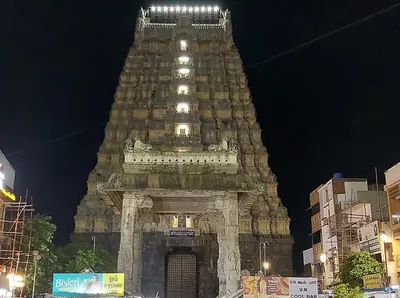
Ekamranatha temple inscription of Ganapati
1249 CE
A Sanskrit inscription in Grantha script of June 1249 on a wall of the Ekamranatha temple at Kanchipuram. It records a village given by Ganapati's minister and general Samanta-Bhoja, governor of Kanchi. It is evidence that the Kakatiya kingdom then reached the Tamil country.
Nayanapalle inscription of Ganapatideva
c. 1249 CE
An undated, damaged Telugu prose inscription of the 13th century at Nayanapalle, near Motupalli in the Bapatla country. It records that the Kakatiya king Ganapatideva, on a southern campaign, killed Bayyana and Tikkana, who had burnt Nellore. He also won over the Chola Kulottunga Rajendra-Choda and received elephants from the ruler of Nellore. Its editor dated it about 1249 and linked it with the literary story of how Ganapati restored the Telugu Choda king Manumasiddhi II.
Durgi inscription of Gangaya-sahini
c. 1251 CE
An inscription of Saka 1173 (1251–52) in the Vankesvara temple at Durgi in Palnadu. It records the temple founded by an agent of Gangaya-sahini, who governed the country from Panugallu to Marjavadi for the Kakatiya king Ganapatideva. It also records the village Gangaya-sahini gave the temple, and gives an account of the Kakatiya family.
Sarngapuram plates of Sarngadhara
1255 CE
A Sanskrit copper-plate grant of Saka 1176 (1254–55) from the Darsi division of the Nellore district. In 1926 it was the earliest Kakatiya copper-plate charter known. In it Sarngadhara, son of Ganapatideva's vassal Madhava of Addanki, gave the village of Sarngapuram to Brahmans for the merit of his master.
Bothpur tank inscription of Malyala Gunda
1259 CE
A Telugu and Sanskrit pillar inscription of 1259 at Bothpur in the Mahbubnagar district. It records the tanks, temples and Brahmin endowments of the general Malyala Gunda, who served Ganapatideva of Orugallu. The scholar-poet Ishvara-suri composed it. It is the record that places the Kakatiya dynasty in the fourth caste.
Garavapadu plates of Ganapatideva
1260 CE
A Sanskrit copper-plate grant of 12 April 1260. In it Tikka, a general and son of the Kakatiya king Ganapatideva's minister Devaraja, gave the village of Garavapadu to fifty Brahmans. It traces the Kakatiyas to Karikala Chola and names Kakati as the place where the family began.
Malkapuram pillar inscription of Rudramadevi
1261 CE
A long Sanskrit inscription of 25 March 1261, cut on a huge pillar at Malkapuram near Amaravati. It records Rudramadevi's gift of Mandara to the royal teacher Visvesvara Sambhu of the Golaki matha. It also lists the temple, college, feeding-house, hospital and maternity home that he founded there.
Kotagiri plates of Viryala Sura
1273 CE
Three Sanskrit copper plates of 31 December 1273, found in a tank at Birkur in the Bodhan taluk. They record the gift of a new village, Vejjalapuri or Vainayakapuri, to Brahmans and a Vishnu temple by Sura of the Viryala family. Sura was a feudatory (subordinate ruler) in the reign of Rudramadevi, whom the plates call Ganapati's daughter.
Kolanupaka inscription of Rudramadevi's reign
1279 CE
A Sanskrit pillar inscription of December 1279 in the Somanatha temple at Kolanupaka. It gives the Kakatiya line from Prola II to the reigning queen Rudradevi (Rudramadevi). It also records a canal and temple gifts made under her Chalukya relative Indushekhara, nephew of her husband Virabhadra.
Chandupatla inscription
1289 CE
A short Telugu inscription of November 1289 from Chandupatla near Nalgonda. It records a gift for the merit of Rudramadevi and her general Mallikarjuna-nayaka after both had died. It is the main evidence for the year of the queen's death.
Panugallu inscription of Immadi Mallikarjuna-nayaka
1290 CE
A Sanskrit and Telugu pillar inscription of May 1290 in the Chaya-Someshvara temple at Panugallu. The son of Rudramadevi's general Nissanka Mallikarjuna made it for the merit of the new king Kumara Rudradeva (Prataparudra). It calls the king the daughter's son of Ganapatideva's successor Rudradeva, that is, of Rudramadevi.
Tripurantakam inscription of Ambadeva
1290 CE
A Sanskrit and Telugu inscription of Saka 1212 (1290) at the Tripurantakesvara temple, Tripurantakam. In it the Kayastha chief Ambadeva confirms the temple's villages and lists his wars against Rudramadevi's nobles, without naming any overlord. It is the main record of the rebellion that troubled the end of her reign.
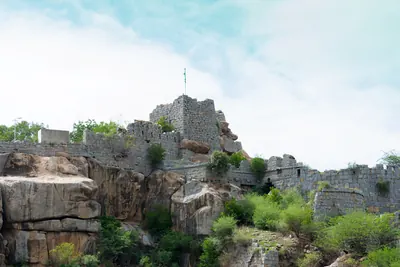
Raichur fort inscription of Gona Vithala
1294 CE
Inscription of November 1294 on a slab in the rampart of Raichur fort. It records that Vithala-natha, guardian of the realm of Prataparudra's commander Gona Gannaya-reddi, took Adoni, Tumbalam, Manvi and Haluva, entered Raichur and built its stone fort. It is among the earliest dated records of Prataparudra's reign.
Mellacheruvu inscription of Prataparudra's reign
1312 CE
A Telugu inscription of January 1312 at Mellacheruvu in the Huzurnagar taluk. In it the Velamas and all the people of the village, on the authority of the nayamkara holder of a royal officer, endowed the local Shiva temple. They gave land, and fixed levies on grain and on merchants, weavers and shepherds.
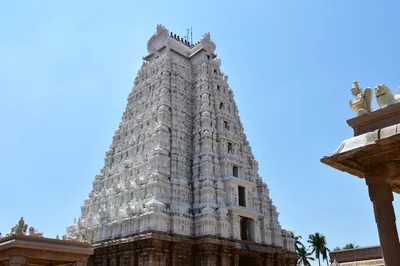
Srirangam inscription of Prataparudra
1317 CE
A Telugu inscription in Grantha script of 28 March 1317 in the Ranganatha temple at Srirangam. It records that Prataparudra's general Devari-nayaka defeated Vira-Pandya and the Kerala king Ravivarman Kulasekhara at Tiruvadikunram. He then put Sundara-Pandya back on his throne.
Dharmasagar inscription of the minister Malla
An undated Sanskrit and Telugu pillar inscription of Ganapatideva's reign at Dharmasagar near Hanamkonda. It records land given by the minister Malla to the god Prasanna-Vishveshvara of Elakurki. It also records how the land was shared among temple musicians, dancers and priests.
Hanamkonda inscription of Gangadhara
A broken, undated Sanskrit verse inscription from Hanamkonda. It records that Gangadhara, minister of the Kakatiya Rudradeva, built a temple of Prasanna-Keshava, tanks and shrines. It also describes the wars of Prola II and Rudradeva against Medaraja of Polavasa and other chiefs.
References
Notes (0)
Sources (16)
Spotted an error on this page? Tell us
Last updated: