Padmakshi temple inscription of Prola II
A Kannada and Sanskrit inscription on a four-sided pillar in front of the Padmakshi temple, on a small hill at Hanamkonda. It is dated in Chalukya-Vikrama year 42, which F. Kielhorn calculated as 24 December 1117. It names the Western Chalukya king Vikramaditya VI as overlord, and his feudatory, the Kakatiya Prola, son of Beta, ruling at Anmakunda. It records a Jaina temple built on the hill by the wife of Prola's minister. When H. Krishna Sastri published it in 1908, it was the earliest known Kakatiya record.
The pillar
The small Padmakshi temple stands on a small hill to the south of Hanamkonda.12 H. Krishna Sastri edited this inscription in Epigraphia Indica in 1908.12 He found the temple “devoid of any architectural pretensions”, unlike the later Kakatiya buildings.12 The rock beside it is carved with a row of seated Jaina images.12 In front of the temple stands an inscribed square pillar of black granite.12
At the top of each face, in a sunk panel, is a seated Jaina ascetic.12 On the east face he has a cow and calf on one side, and a dagger and shield on the other.12 On the north face he has the sun and moon beside him.12
From the carvings and the text, Krishna Sastri concluded that the temple was first dedicated to the Jaina goddess Kadalalaya.2 He thought that the Brahmans who later took it over worshipped her as Padmakshi, a form of Durga.2
The text runs over all four faces in 112 lines, in “bold and clear Kanarese characters of the twelfth century”.3 The opening prayer and the verses that curse anyone who breaks the gift are in Sanskrit.3 The rest is Kannada prose and verse.3
Contents
The record begins with a prayer to the Jina.34 It places itself in the reign of the Western Chalukya king Tribhuvanamalladeva, Vikramaditya VI.34 It names his feudatory, the mahamandalesvara (great lord) Kakati Beta, “the lord of Anmakunda, the best of towns”.34 It says that Beta’s hereditary minister, the general Vaija, brought his master to the feet of the Chalukya emperor.34 Vaija made him ruler of the district of Sabbi-sayira, the “Sabbi thousand”.34
Vaija’s son, the pergade (officer) Beta, became minister of Kakati Prola.4 Beta’s wife Mailama built the Kadalalaya-basadi, a Jaina temple, on the top of the hill.4
The record then gives the gift and its date.4 In Chalukya-Vikrama year 42, the cyclic year Hemalambi, at the winter solstice, Mailama gave six mattar of land.4 This was while the king Kakatiya Polalarasa, son of the mandalika Tribhuvanamalla, was ruling at Ammakunde.4 The land lay below a tank that her husband Betana had built and named after her, and she set up the pillar.4
A second gift was ten mattar of land below the Kuchikere tank, belonging to Orumgallu (Warangal).4 It was made by the mahamandalesvara Melarasa of Ugravadi, a member of the family of Madhavavarman.4 F. Kielhorn worked out the date as Monday, 24 December 1117.4 P. B. Desai’s summary of 1961 gives 25 December.5
Significance
Krishna Sastri called this “the earliest Kakatiya record and the only one of Prola found so far”.6 He took Beta to be the first historical member of the family.6 He thought that Beta’s title Tribhuvanamalla was borrowed from Vikramaditya VI.6 He took Prola to have continued as a feudatory of the same king.6
Robert Sewell, citing this inscription, wrote that Beta’s son Prola II “had only lately succeeded his father”.7 Later discoveries pushed the family’s records back to 1051 and 1053.8 These were the dates that P. V. Parabrahma Sastry gave for the last record of Beta I and the first of Prola I.8 See Beta I, Prola I and Beta II.
P. V. Parabrahma Sastry read the donor of the second gift as Medaraja, of the Polavasa family of chiefs, whose capital was Polasa.910 He listed this gift among the six known records of that family.910
Footnotes
-
H. Krishna Sastri, “Anmakonda Inscription of Prola; the Chalukya-Vikrama Year Forty-Two”, Epigraphia Indica IX (1908), p. 256 (archive.org (opens in a new tab)). ↩ ↩2 ↩3 ↩4 ↩5 ↩6 ↩7 ↩8
-
Krishna Sastri, “Anmakonda Inscription of Prola” (1908), p. 257 (archive.org (opens in a new tab)). ↩ ↩2 ↩3 ↩4 ↩5 ↩6 ↩7 ↩8 ↩9 ↩10
-
Krishna Sastri, “Anmakonda Inscription of Prola” (1908), p. 258 (archive.org (opens in a new tab)). ↩ ↩2 ↩3 ↩4 ↩5 ↩6 ↩7 ↩8
-
Krishna Sastri, “Anmakonda Inscription of Prola” (1908), p. 259, with F. Kielhorn’s note on the date (archive.org (opens in a new tab)). ↩ ↩2 ↩3 ↩4 ↩5 ↩6 ↩7 ↩8 ↩9 ↩10 ↩11 ↩12 ↩13 ↩14
-
P. B. Desai, introduction to P. Sreenivasachar, Kannada Inscriptions of Andhra Pradesh (Andhra Pradesh Government Archaeological Series 3, 1961), p. 24, No. 68 (archive.org (opens in a new tab)). Paraphrased. ↩
-
Krishna Sastri, “Anmakonda Inscription of Prola” (1908), p. 260 (archive.org (opens in a new tab)). ↩ ↩2 ↩3 ↩4
-
Robert Sewell, The Historical Inscriptions of Southern India (1932), p. 96 (archive.org (opens in a new tab)). Paraphrased except for the short phrase quoted. ↩
-
P. V. Parabrahma Sastry, The Kakatiyas of Warangal (1978), p. 45. ↩ ↩2
-
Parabrahma Sastry, The Kakatiyas of Warangal (1978), p. 58. ↩ ↩2
-
Parabrahma Sastry, The Kakatiyas of Warangal (1978), p. 59. ↩ ↩2
Photos
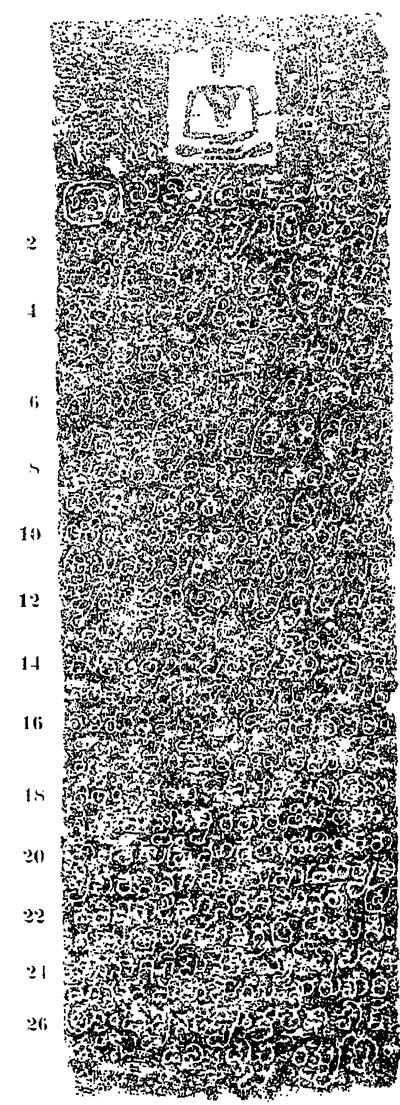 "Anmakonda Inscription of Prola; The Chalukya-Vikrama Year Forty-Two", east face (Epigraphia Indica IX, plate between pp. 262 and 263 (PDF p. 326))Inscription rubbing · 1908
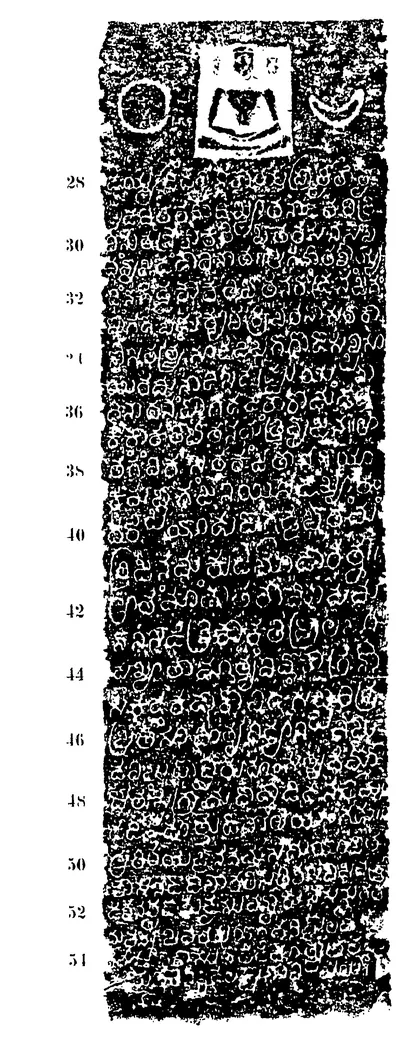 "Anmakonda Inscription of Prola; The Chalukya-Vikrama Year Forty-Two", north face (Epigraphia Indica IX, plate between pp. 262 and 263 (PDF p. 326))Inscription rubbing · 1908
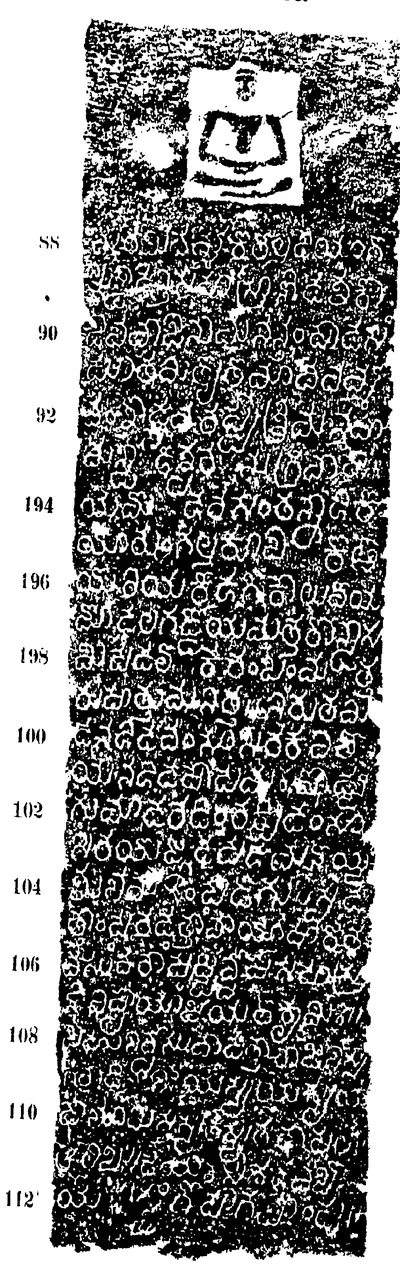 "Anmakonda Inscription of Prola; The Chalukya-Vikrama Year Forty-Two", south face (Epigraphia Indica IX, plate between pp. 262 and 263 (PDF p. 327))Inscription rubbing · 1908
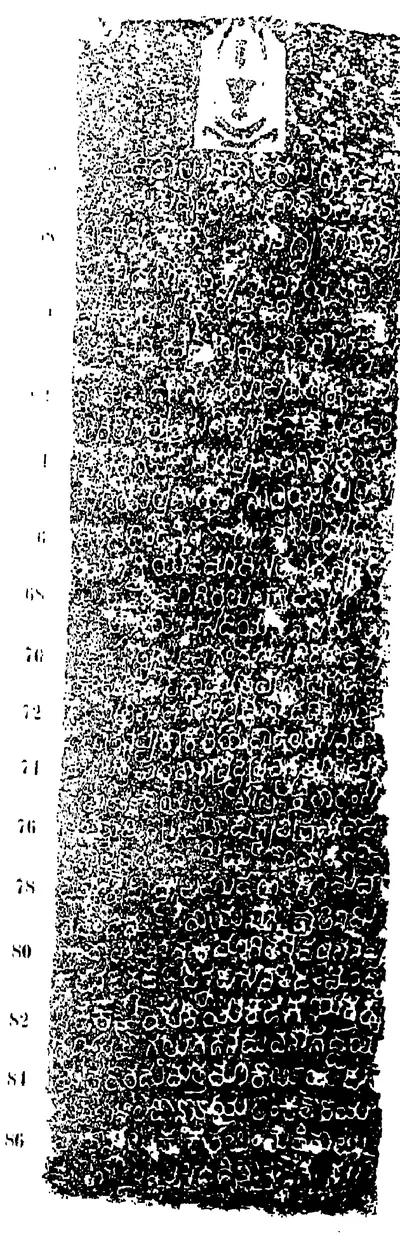 "Anmakonda Inscription of Prola; The Chalukya-Vikrama Year Forty-Two", west face (Epigraphia Indica IX, plate between pp. 262 and 263 (PDF p. 327))Inscription rubbing · 1908
References
Notes (0)
Sources (4)
Spotted an error on this page? Tell us
Last updated: