Prola II
Kakatiya chief (r. c. 1116–1157), son of Beta II and father of Rudradeva. As a Western Chalukya feudatory (subordinate ruler) he defeated the rival chiefs around Anumakonda. He was killed in battle with chiefs of the coastal Andhra country.
Coming to power
Prola II was the younger son of Beta II.1 P. V. Parabrahma Sastry concluded that his succession was not peaceful and that Prola took power from his elder brother Durgaraja.23
Even before he came to power, Prola defended Anumakonda (Hanamkonda) against Jagaddeva.45 Jagaddeva was a Paramara prince who had governed Kollipaka, the neighbouring Chalukya province.45 Prola’s earliest known record, at the Padmakshi temple in Anumakonda, is dated in the 42nd year of the Chalukya Vikrama era (1117). It records a Jain temple built by Mailama, wife of his minister Betana, and a gift of land to it by the Polavasa chief Medaraja II. Parabrahma Sastry thought that Prola had come to power in 1116.6
Robert Sewell cited an inscription of 24 December 1117 that shows him as having recently succeeded to his father’s place.7
Wars as a Chalukya subordinate
His son Rudradeva set up an inscription of 1163 at the Thousand Pillar Temple, which lists Prola’s victories. In J. F. Fleet’s translation, the record says this:8
- Prola took captive “the glorious Tailapadeva, the ornament of the Chalukyas”, and then let him go “from goodwill (produced) by (his) devotion”.8
- He captured Govindaraja and gave his kingdom to King Udaya.8
- Gunda, lord of Mantrakuta, was defeated, his head shaved and his breast branded with the sign of a boar.8
- Jagaddeva, who had surrounded Anumakonda, was forced to withdraw.8
The Ganapesvaram inscription of 1231 repeats the list:910
- Mantena-Gunda was cut down
- Tailapadeva lost his elephants and horses
- Govinda-dandesa was driven from the field
- King Chododaya was restored to his kingdom910
The Palampet inscription of 1213 gives the credit for Gunda’s death to Kama of the Recherla family, the commander of Prola’s army.11
Historians disagree over who Tailapa was. Fleet identified him as the Western Chalukya king Taila III (r. 1150–1163).1213 The Imperial Gazetteer of 1909 says that Proda Raja captured Taila III.1213
Sewell dated the defeat to about 1155, though in this passage he calls the Kakatiya king Prola I.14 Drawing on newly found inscriptions, Parabrahma Sastry identified Tailapa instead as Kumara Tailapa, a younger brother of King Someshvara III. From 1110 to 1137 Tailapa held the Kandurunadu region, in the south of present Telangana, as his appanage (a prince’s estate). He tried to make himself independent. Parabrahma Sastry dates his capture to the time of Jagadekamalla II’s campaign in Telangana, between 1138 and 1141.1516
According to Parabrahma Sastry, some time before 1136 Prola acted for the king.1718 He drove the Chalukya general Govindaraja out of the Panugallu kingdom, around Nalgonda, and restored it to Udaya Choda, whose father Gokarna had been killed.1718 Later, in the presence of Jagadekamalla II, Prola put to flight a chief named Eda. Parabrahma Sastry thought that Prola killed Gunda of Manthena in the same campaign.1920
This Gunda was a younger brother of the Polavasa chief Medaraja.1920 Fleet had read the word that Parabrahma Sastry takes as Eda’s name as part of a comparison, with Gunda fleeing “like a lamb”.819 A broken inscription of Rudradeva’s minister Gangadhara adds that Prola crossed the Krishna, worshipped Mallikarjuna at Srisailam and set up a pillar of victory there. That pillar has not been found.21
Sewell’s genealogy describes Prola II as having fought the Chalukyas.22 Parabrahma Sastry found no evidence that Prola ever revolted. In his view Prola was the one loyal Chalukya feudatory in Telangana, and put down rebels for his king.1623 Prola’s last known record, at Sanigaram, is dated 25 March 1149 and names him as a feudatory of Jagadekamalla II.24
Death
According to an inscription at Draksharama, Prola was killed by Chodayaraja of the Kota family and by Satya and Mallideva. Satya and Mallideva were Haihaya chiefs of the Kona country. A Pithapuram inscription of 1195 confirms this. A chief named Mahadevaraja, a subordinate of the Eastern Chalukya king Malla Vishnuvardhana, also claimed to have killed him. Parabrahma Sastry concluded that Prola died in battle, probably while trying to conquer coastal Andhra.25
His death fell between 1149 and 1158, and Parabrahma Sastry’s table ends his rule in 1157.26 He saw Rudradeva’s later conquest of the Velanadu kingdom as revenge for his father’s death.27
Family and court
Prola’s queen was Muppamamba (Muppama), sister of the Natavadi chief Durgaraja, another Chalukya subordinate.258 The Ganapesvaram inscription names two of their sons, Rudradeva and Mahadeva, who ruled in turn.28 Other records name three more sons: Harihara, Ganapati and Repolla Durgaraja.125
E. Hultzsch recorded Prola’s surname as Jagatikesarin.29 Like Prola I, he used the title ari-gaja-kesari on coins and named tanks after it, such as the Kesari-samudra.3031
Prola took Gangadhara of the Vellaki family into his service and put him in charge of Anumakonda.27 Rameshvara Pandita, the Kalamukha Shaiva teacher of the family, enjoyed Prola’s patronage.3233
The Imperial Gazetteer credits Proda Raja with founding Warangal, and Sewell describes him as ruling with Warangal as his capital.347 Parabrahma Sastry credits Rudradeva with laying out the new fort at Orugallu (Warangal).27
Footnotes
-
P. V. Parabrahma Sastry, The Kakatiyas of Warangal (1978), pp. 32, 36. ↩ ↩2
-
Parabrahma Sastry, The Kakatiyas of Warangal (1978), pp. 50, 74–76. ↩
-
Gajjala Vasanta Lakshmi (ed.), Epigraphia Telanganica, vol. 2 (2023), pp. 28, 30, reprinting P. V. Parabrahma Sastry, “Sanigaram Epigraphs of the Early Kakatiyas”, Epigraphia Andhrica IV (1975). ↩
-
Parabrahma Sastry, The Kakatiyas of Warangal (1978), pp. 73, 75, 86. ↩ ↩2
-
Parabrahma Sastry, The Kakatiyas of Warangal (1978), p. 74. ↩
-
Robert Sewell, The Historical Inscriptions of Southern India (1932), p. 96 (archive.org (opens in a new tab)). ↩ ↩2
-
J. F. Fleet, Sanskrit and Old-Canarese Inscriptions, No. CXVIII, Indian Antiquary XI (1882), p. 17 (archive.org (opens in a new tab)). ↩ ↩2 ↩3 ↩4 ↩5 ↩6 ↩7
-
E. Hultzsch, Ganapesvaram Inscription of the Time of Ganapati, Epigraphia Indica III (1894–95), p. 89 (archive.org (opens in a new tab)). ↩ ↩2
-
Hultzsch, Ganapesvaram Inscription (1894–95), p. 83 (archive.org (opens in a new tab)). ↩ ↩2
-
L. D. Barnett (ed.), Inscriptions at Palampet and Uparpalli (1919), pp. 2, 8, verse 15 (archive.org (opens in a new tab)). ↩
-
Fleet, Sanskrit and Old-Canarese Inscriptions, No. CXVIII (1882), p. 10 (archive.org (opens in a new tab)). ↩ ↩2
-
Imperial Gazetteer of India, Provincial Series: Hyderabad State (1909), p. 163 (archive.org (opens in a new tab)). ↩ ↩2
-
Sewell, The Historical Inscriptions of Southern India (1932), p. 110 (archive.org (opens in a new tab)). ↩
-
Parabrahma Sastry, The Kakatiyas of Warangal (1978), pp. 76–77, 81–84. ↩
-
Parabrahma Sastry, The Kakatiyas of Warangal (1978), pp. 84–87. ↩ ↩2
-
Parabrahma Sastry, The Kakatiyas of Warangal (1978), pp. 64, 78–81. ↩ ↩2
-
Parabrahma Sastry, The Kakatiyas of Warangal (1978), p. 86. ↩ ↩2
-
Parabrahma Sastry, The Kakatiyas of Warangal (1978), pp. 85–86. ↩ ↩2 ↩3
-
Parabrahma Sastry, The Kakatiyas of Warangal (1978), p. 76. ↩ ↩2
-
Parabrahma Sastry, The Kakatiyas of Warangal (1978), p. 86. ↩
-
Sewell, The Historical Inscriptions of Southern India (1932), p. 355 (archive.org (opens in a new tab)). ↩
-
Parabrahma Sastry, The Kakatiyas of Warangal (1978), pp. 81, 84, 87. ↩
-
Epigraphia Telanganica, vol. 2 (2023), pp. 31–32. ↩
-
Parabrahma Sastry, The Kakatiyas of Warangal (1978), p. 87. ↩ ↩2 ↩3
-
Parabrahma Sastry, The Kakatiyas of Warangal (1978), pp. 35–36. ↩
-
Parabrahma Sastry, The Kakatiyas of Warangal (1978), p. 101. ↩ ↩2 ↩3
-
Hultzsch, Ganapesvaram Inscription (1894–95), p. 90 (archive.org (opens in a new tab)). ↩
-
E. Hultzsch, Yenamadala Inscription of Ganapamba, Epigraphia Indica III (1894–95), p. 95 (archive.org (opens in a new tab)). ↩
-
Parabrahma Sastry, The Kakatiyas of Warangal (1978), pp. 45, 142. ↩
-
E. Hultzsch, Motupalli Pillar-Inscription of Ganapatideva, Epigraphia Indica XII (1914), p. 189 (archive.org (opens in a new tab)). ↩
-
Parabrahma Sastry, The Kakatiyas of Warangal (1978), p. 50. ↩
-
Parabrahma Sastry, The Kakatiyas of Warangal (1978), pp. 274–275. ↩
-
Imperial Gazetteer: Hyderabad State (1909), p. 173 (archive.org (opens in a new tab)). ↩
Photos
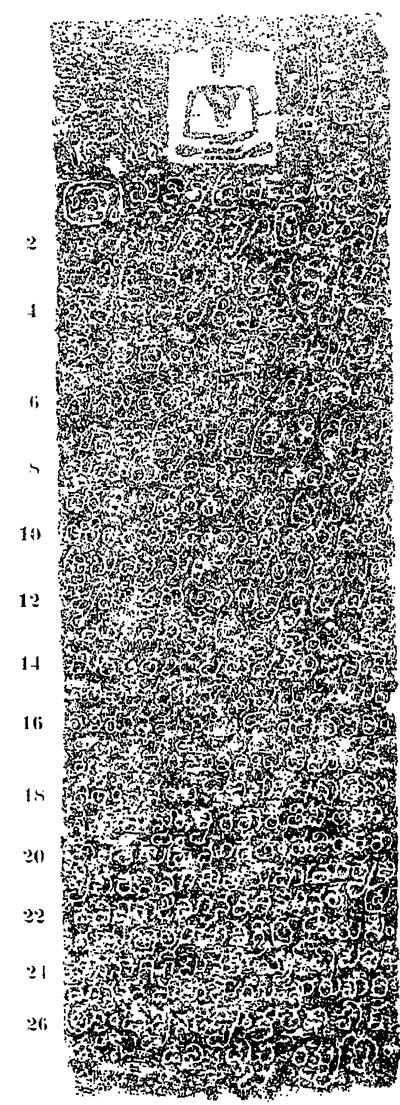 "Anmakonda Inscription of Prola; The Chalukya-Vikrama Year Forty-Two", east face (Epigraphia Indica IX, plate between pp. 262 and 263 (PDF p. 326))Inscription rubbing · 1908
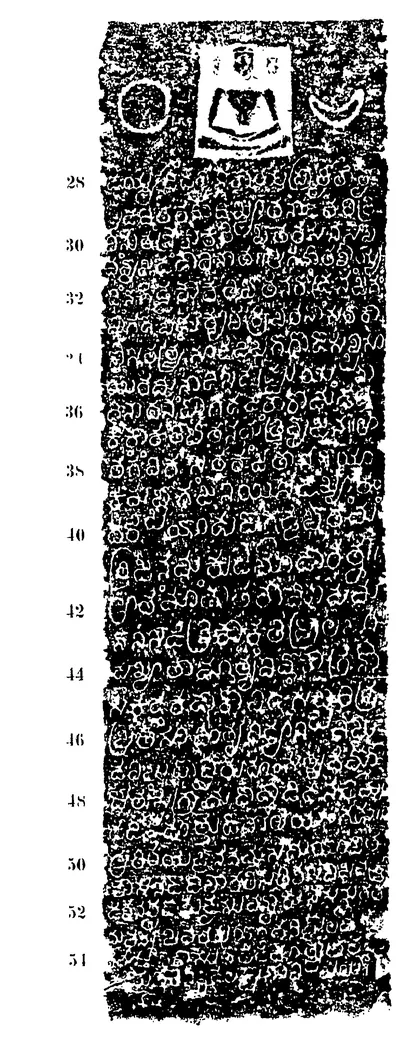 "Anmakonda Inscription of Prola; The Chalukya-Vikrama Year Forty-Two", north face (Epigraphia Indica IX, plate between pp. 262 and 263 (PDF p. 326))Inscription rubbing · 1908
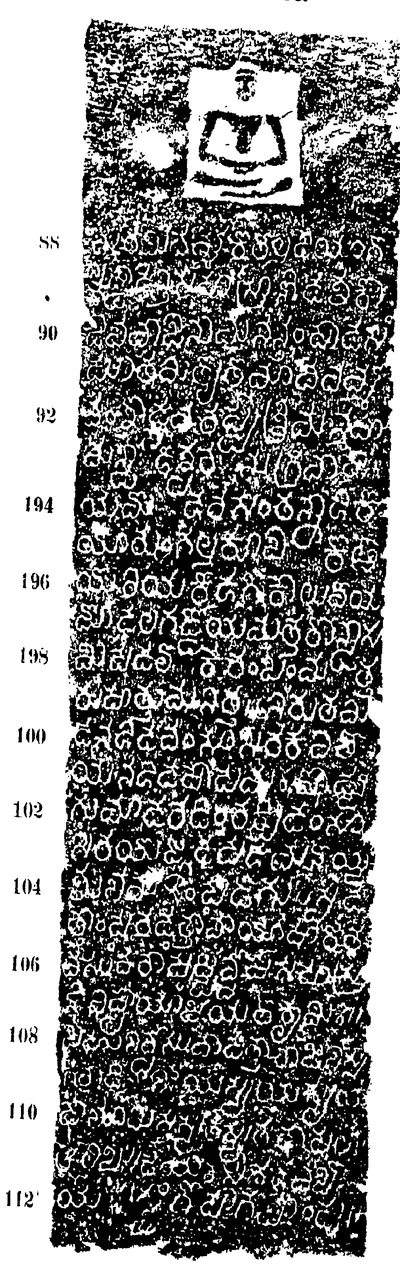 "Anmakonda Inscription of Prola; The Chalukya-Vikrama Year Forty-Two", south face (Epigraphia Indica IX, plate between pp. 262 and 263 (PDF p. 327))Inscription rubbing · 1908
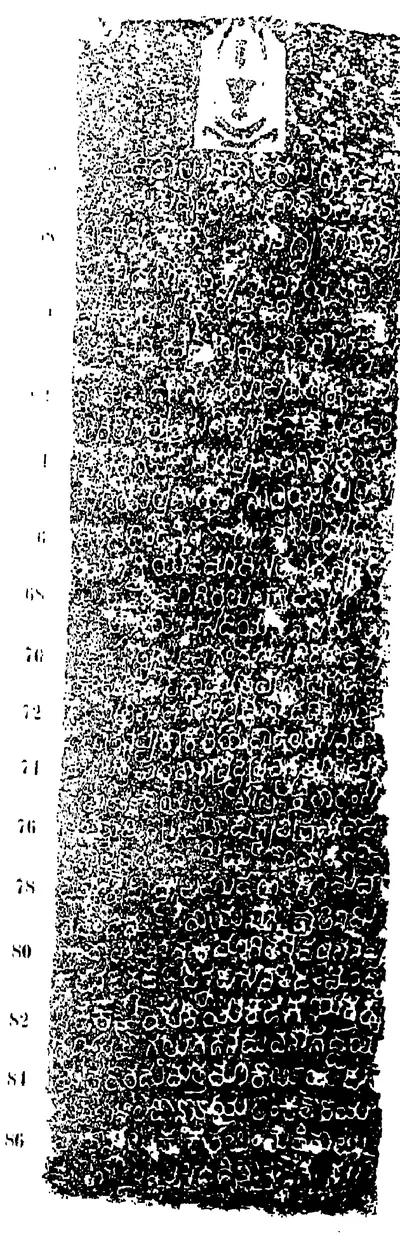 "Anmakonda Inscription of Prola; The Chalukya-Vikrama Year Forty-Two", west face (Epigraphia Indica IX, plate between pp. 262 and 263 (PDF p. 327))Inscription rubbing · 1908
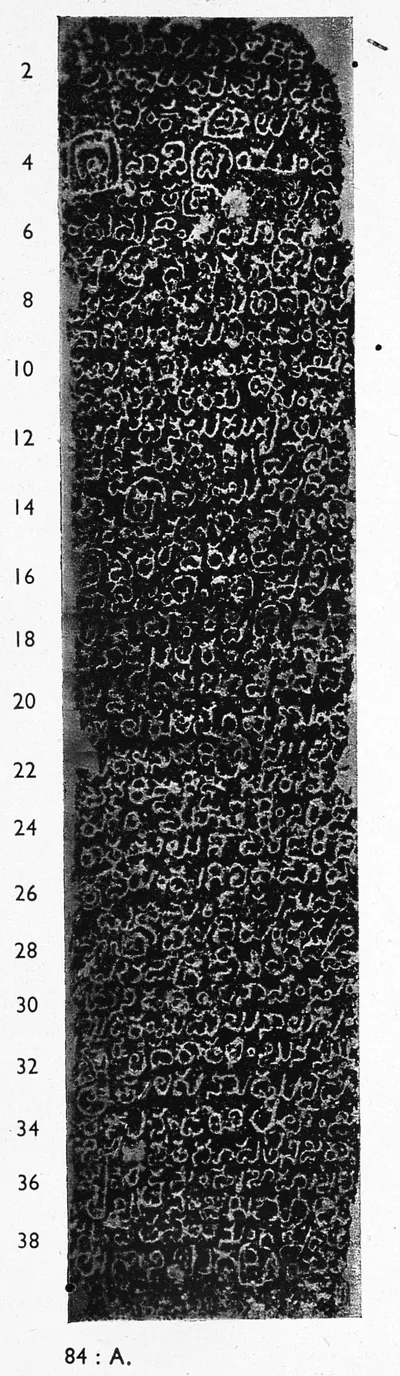 "Māṭēru inscription of Malla", face I (Sreenivasachar, Corpus of Inscriptions in the Telingana Districts III, Plate 8 (PDF p. 198))Inscription rubbing · 1956
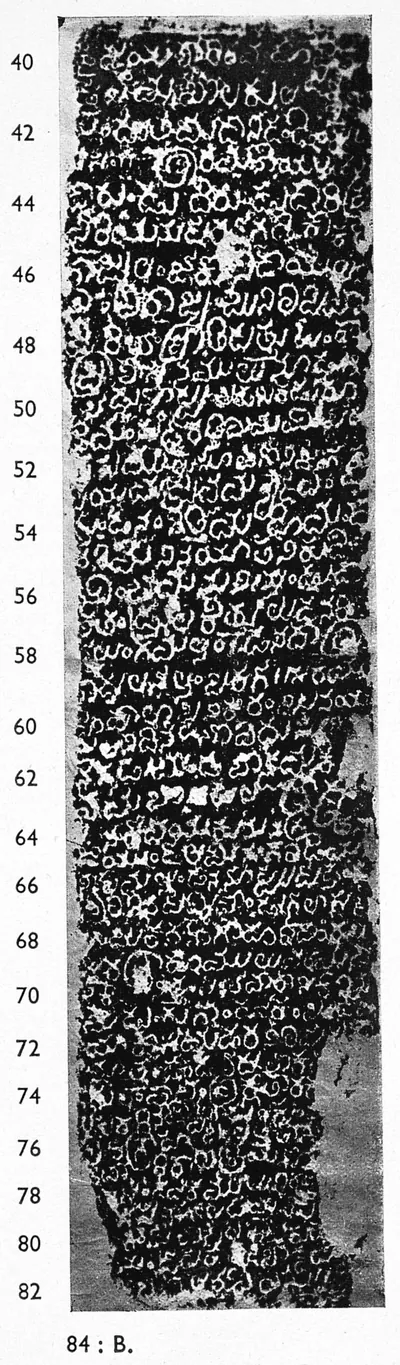 "Māṭēru inscription of Malla", face II (Sreenivasachar, Corpus of Inscriptions in the Telingana Districts III, Plate 8 (PDF p. 198))Inscription rubbing · 1956
Related
Dynasties

References
Notes (0)
Sources (8)
Spotted an error on this page? Tell us
Last updated: