Beta II
Kakatiya chief (c. 1076–1108) who took the name Tribhuvanamalla from his overlord, the Western Chalukya king Vikramaditya VI. He held Anumakonda as a Chalukya feudatory (subordinate ruler) and won the Sabbi-nadu district through his minister. He gave lands to the Kalamukha Shaiva teacher Rameshvara Pandita.
Name and family
Beta II was the son of Prola I. He had two sons, Durgaraja and Prola II.1
The records of his successors usually call him Tribhuvanamalla.2 E. Hultzsch explained that Beta was his real name and Tribhuvanamalla a title borrowed from his overlord, the Western Chalukya king Tribhuvanamalla Vikramaditya VI. One Hanamkonda inscription uses both names, and a record at Kanchi calls him Betma.2
The Thousand Pillar Temple inscription of 1163 opens its genealogy with him.3 J. F. Fleet, its editor, observed that it gave “the name of Tribhuvanamalla, the grandfather of Rudradeva; but supplies us with no details in respect of him”.3 The inscription praises him only in general terms, as a worshipper of Shiva’s feet.4 He is called Beta II in most histories. P. V. Parabrahma Sastry’s 1975 thesis counted an earlier Beta, and so called him Beta III.51
Under Vikramaditya VI
His earliest known record, at Hanamkonda, is dated Saka 1001 (1079; Saka is an Indian way of counting years).6 It calls him Vikrama-chakri, “a Vishnu in valour”, and records his gift of land, and of his own house, to the god Prolesvara in the temple of Betesvara.67 Parabrahma Sastry argued that Beta began his career at about the time of Vikramaditya VI’s accession in 1076. He suggested that the king gave Beta the title Vikrama-chakri as a reward.7 In his view, the reward was for the help that Prola I and Beta had given the king against his brother Someshvara II.7
Robert Sewell wrote that Vikramaditya VI granted the territory of Anumakonda to Tribhuvanamalla Beta.8 Parabrahma Sastry credited the grant to Beta’s father Prola I and the earlier king Trailokyamalla.9
In 1082 Beta gave land, a house site and twelve gadyanas (coins) to the Virakamala Jinalaya. The record describes him as mahamandaleshvara (great provincial lord) and lord of Anmakondapura. Medarasa, a chief of Polavasa, had built this Jain temple.10 Some writers took the order of names in this record as a sign that Beta had been made Medaraja’s subordinate as a punishment for backing Someshvara II. Parabrahma Sastry found no evidence for this and held that the two chiefs held their lands independently.11
Sabbi-nadu and Jagaddeva
From 1104 to 1108 Jagaddeva, a prince of the Paramara royal family of Malwa, governed the province of Kollipaka, west of Anumakonda.12 An inscription at Sanigaram dated 10 January 1107 records a gift by Jagaddeva’s general Kondamayya. It names Beta, lord of Anumakonda, before Jagaddeva, which Parabrahma Sastry read as a sign of Beta’s higher rank.1314
Prola II’s inscription of 1117 at the Padmakshi temple speaks of Beta’s minister Vaija.1415 It says that Vaija persuaded the king to give Beta the whole of Sabbi-nadu, the “Sabbi one thousand” district.1415 Parabrahma Sastry argued that this transfer cost Jagaddeva territory and turned him against the Kakatiyas. When Jagaddeva later besieged Anumakonda, Beta’s son Prola drove him off. Parabrahma Sastry was not sure whether Beta was still alive by then.16
Fleet and other early writers had identified this Jagaddeva with a Santara chief of the same name, as Sewell did.1517
Patron of Shaivism
The Kazipet Darga inscription praises Beta as a lion to the elephants of the Malava and Chola kings. It says that he laid out a garden and a tank called Shivapura at Anumakonda.187 It adds that he built a temple there named after himself, the Betesvara.187
On the solar eclipse of 24 November 1090, the Shivapura settlement was granted to Rameshvara Pandita.1920 He was a Kalamukha Shaiva ascetic and head of the Mallikarjuna Silamatha at Srisailam.1920 Parabrahma Sastry concluded that Rameshvara Pandita initiated Beta II and his sons Durgaraja and Prola II into the Kalamukha school.21
The Sanigaram records call Beta a devotee of Shiva (parama-maheshvara).22 Rameshvara Pandita served as the royal teacher of both Beta II and Prola II.22 Beta also gave to Jain temples, as his gift of 1082 shows.10
Dates
Parabrahma Sastry dates Beta II to about 1076–1108.23 The two dates in the Kazipet Darga inscription are 1090 and 1098.2024 Before the Sanigaram inscription of 1107 was found, these were taken as his last.2024 When and how his rule passed to his sons is not recorded. See Durgaraja.
Footnotes
-
P. V. Parabrahma Sastry, The Kakatiyas of Warangal (1978), pp. 32, 36. ↩ ↩2
-
E. Hultzsch, Motupalli Pillar-Inscription of Ganapatideva, Epigraphia Indica XII (1914), p. 189 (archive.org (opens in a new tab)). ↩ ↩2
-
J. F. Fleet, Sanskrit and Old-Canarese Inscriptions, No. CXVIII, Indian Antiquary XI (1882), p. 10 (archive.org (opens in a new tab)). ↩ ↩2
-
Fleet, Sanskrit and Old-Canarese Inscriptions, No. CXVIII (1882), p. 17 (archive.org (opens in a new tab)). ↩
-
P. V. Parabrahma Sastry, The Kakatiyas and Their Times (PhD thesis, Karnatak University, 1975), p. 43. ↩
-
P. Sreenivasachar (ed.), A Corpus of Inscriptions in the Telingana Districts, Part II (1940), p. 25 (archive.org (opens in a new tab)). ↩ ↩2
-
Parabrahma Sastry, The Kakatiyas of Warangal (1978), p. 47. ↩ ↩2 ↩3 ↩4 ↩5
-
Robert Sewell, The Historical Inscriptions of Southern India (1932), p. 96 (archive.org (opens in a new tab)). ↩
-
Parabrahma Sastry, The Kakatiyas of Warangal (1978), p. 45. ↩
-
Parabrahma Sastry, The Kakatiyas of Warangal (1978), pp. 48, 58. ↩ ↩2
-
Parabrahma Sastry, The Kakatiyas of Warangal (1978), pp. 60–61. ↩
-
Parabrahma Sastry, The Kakatiyas of Warangal (1978), pp. 69–70. ↩
-
Parabrahma Sastry, The Kakatiyas of Warangal (1978), pp. 70–72. ↩
-
Gajjala Vasanta Lakshmi (ed.), Epigraphia Telanganica, vol. 2 (2023), pp. 26–29, reprinting P. V. Parabrahma Sastry, “Sanigaram Epigraphs of the Early Kakatiyas”, Epigraphia Andhrica IV (1975). ↩ ↩2 ↩3
-
Parabrahma Sastry, The Kakatiyas of Warangal (1978), pp. 72–73. ↩
-
Sewell, The Historical Inscriptions of Southern India (1932), p. 114 (archive.org (opens in a new tab)). ↩
-
Sreenivasachar, Corpus, Part II (1940), p. 29 (archive.org (opens in a new tab)). ↩ ↩2
-
Sreenivasachar, Corpus, Part II (1940), p. 30 (archive.org (opens in a new tab)). ↩ ↩2
-
Parabrahma Sastry, The Kakatiyas of Warangal (1978), pp. 47–48. ↩ ↩2 ↩3 ↩4
-
Parabrahma Sastry, The Kakatiyas of Warangal (1978), p. 274. ↩
-
Parabrahma Sastry, The Kakatiyas of Warangal (1978), p. 275. ↩ ↩2
-
Parabrahma Sastry, The Kakatiyas of Warangal (1978), pp. 35–36. ↩
Photos
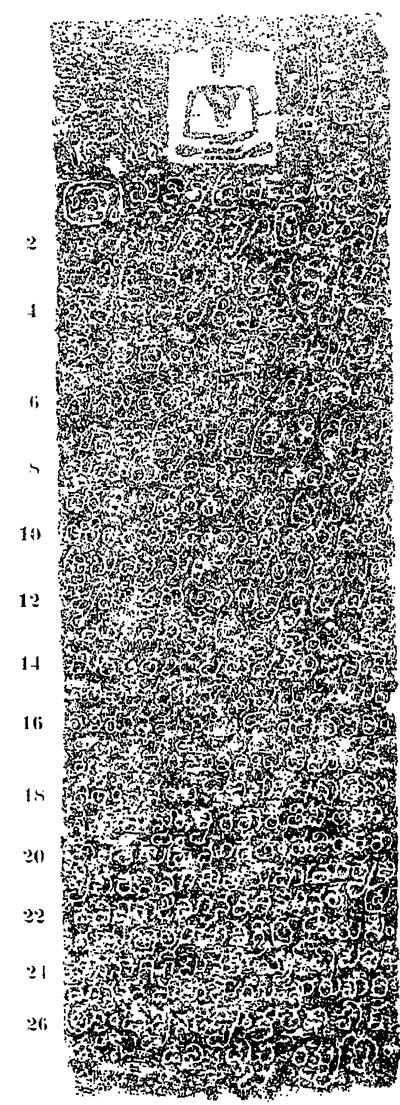 "Anmakonda Inscription of Prola; The Chalukya-Vikrama Year Forty-Two", east face (Epigraphia Indica IX, plate between pp. 262 and 263 (PDF p. 326))Inscription rubbing · 1908
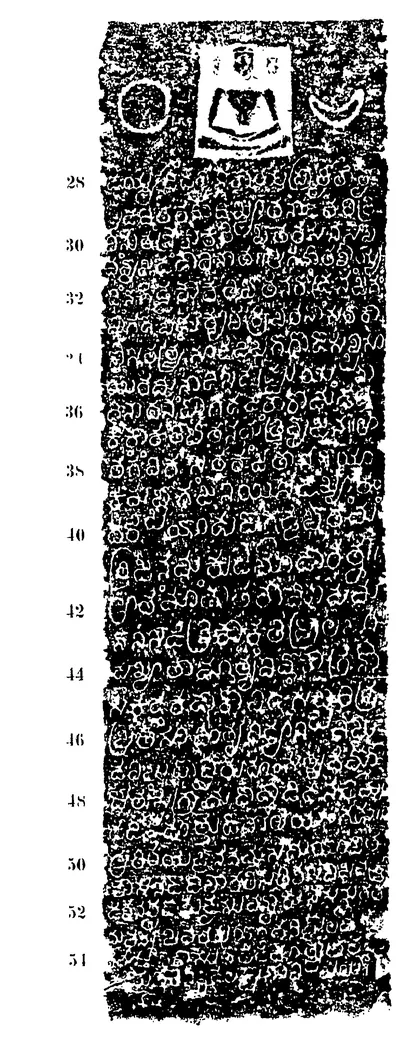 "Anmakonda Inscription of Prola; The Chalukya-Vikrama Year Forty-Two", north face (Epigraphia Indica IX, plate between pp. 262 and 263 (PDF p. 326))Inscription rubbing · 1908
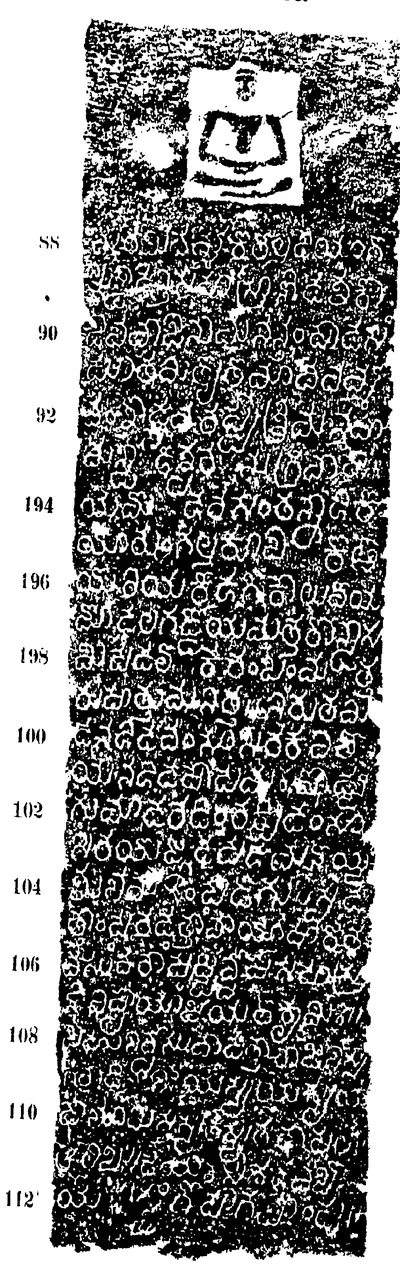 "Anmakonda Inscription of Prola; The Chalukya-Vikrama Year Forty-Two", south face (Epigraphia Indica IX, plate between pp. 262 and 263 (PDF p. 327))Inscription rubbing · 1908
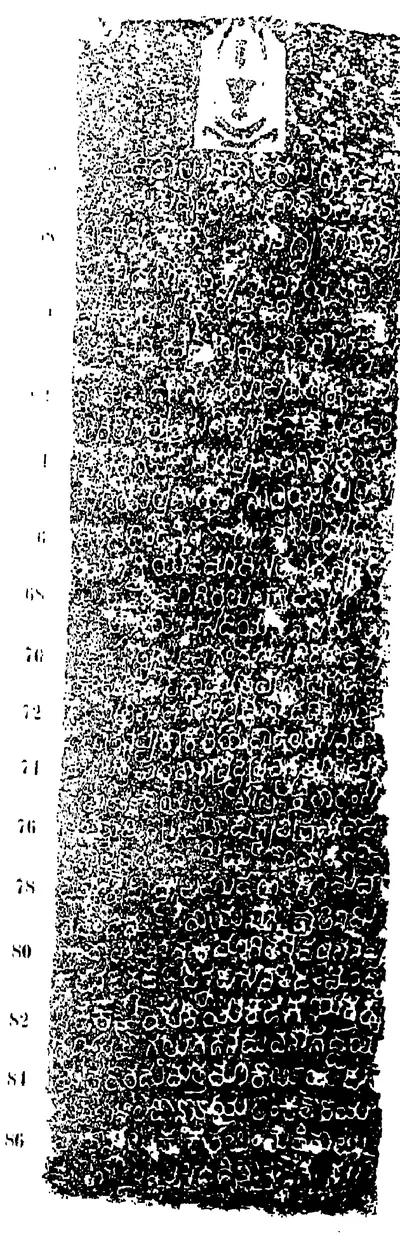 "Anmakonda Inscription of Prola; The Chalukya-Vikrama Year Forty-Two", west face (Epigraphia Indica IX, plate between pp. 262 and 263 (PDF p. 327))Inscription rubbing · 1908
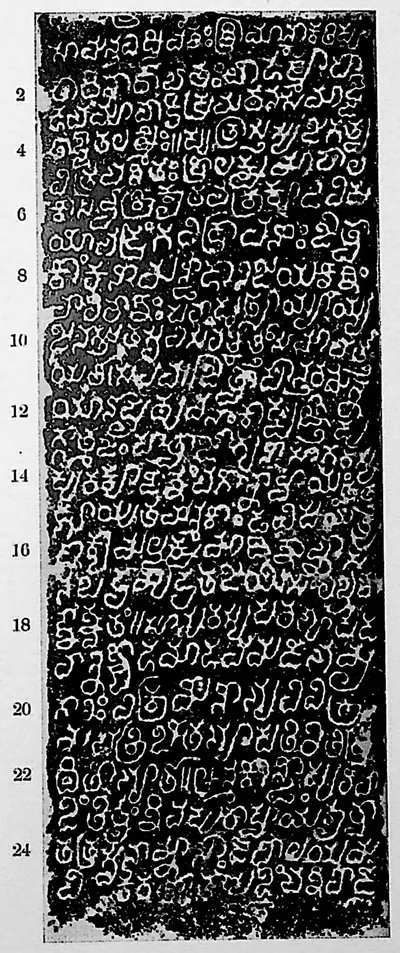 "Kāzipet inscription in the Dargāh", face I (Sreenivasachar, Corpus of Inscriptions in the Telingana Districts II, Plate 9 (PDF p. 238))Inscription rubbing · 1940
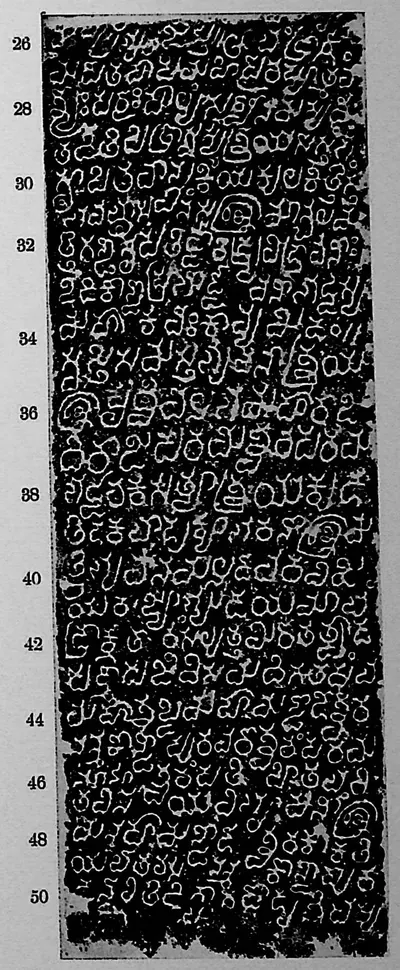 "Kāzipet inscription in the Dargāh", face II (Sreenivasachar, Corpus of Inscriptions in the Telingana Districts II, Plate 9 (PDF p. 238))Inscription rubbing · 1940
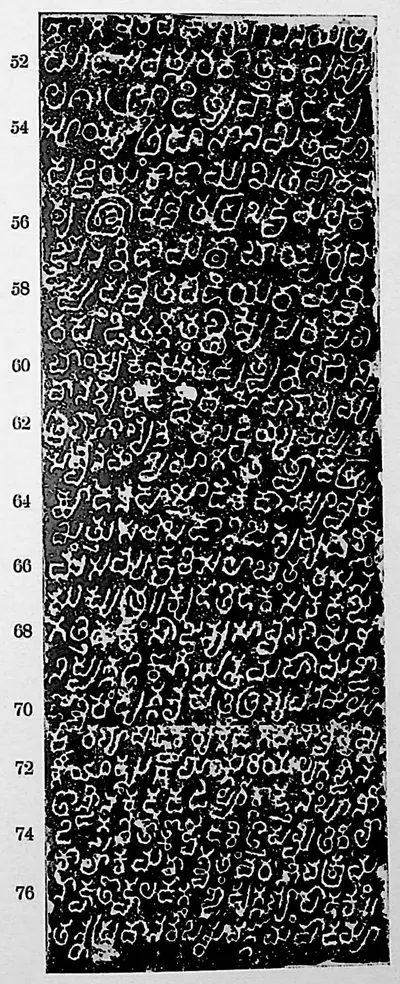 "Kāzipet inscription in the Dargāh", face III (Sreenivasachar, Corpus of Inscriptions in the Telingana Districts II, Plate 10 (PDF p. 240))Inscription rubbing · 1940
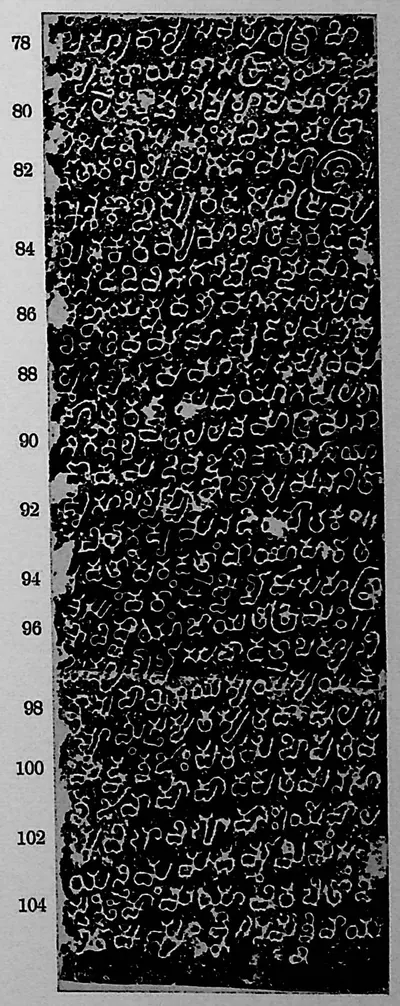 "Kāzipet inscription in the Dargāh", face IV (Sreenivasachar, Corpus of Inscriptions in the Telingana Districts II, Plate 10 (PDF p. 240))Inscription rubbing · 1940
Related
Dynasties

References
Notes (0)
Sources (7)
Spotted an error on this page? Tell us
Last updated: